
Top 7 Best Omega-3 for Inflammation (2026)
7 picks — ranked by our 50/50 methodology
- #1Best overall
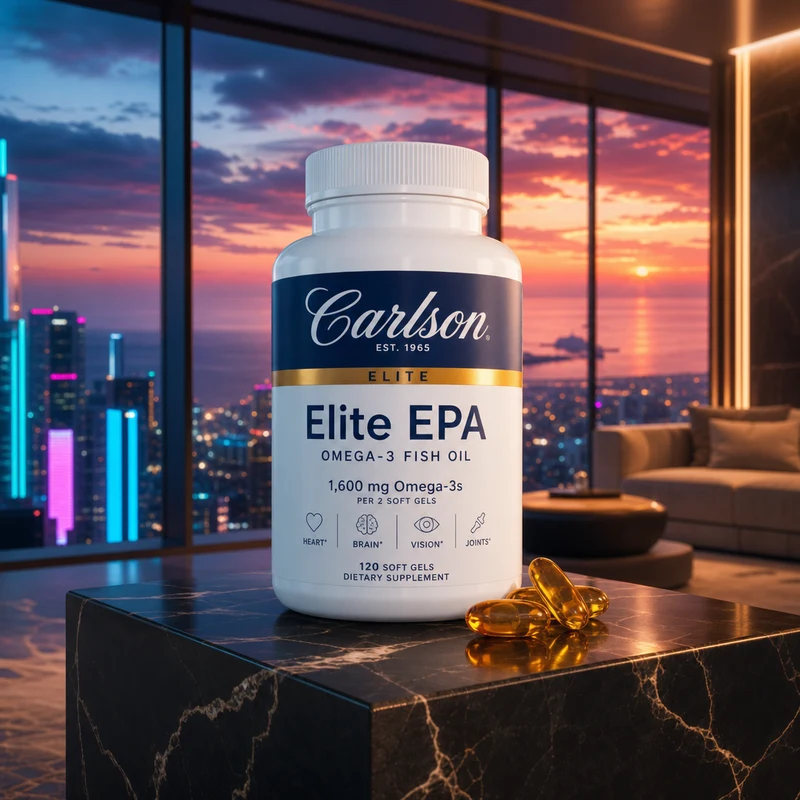
Carlson Elite EPA 1600 mg
Carlson · High-EPA re-esterified TG · IFOS 5-star · 60 softgels9.4/10SAC Product Score™SAC Product Score™ — how it breaks down- EPA+DHA dose + form30%9.5
- IFOS / oxidation + heavy-metal testing25%10.0
- Source sustainability + provenance20%9.0
- Cost per gram EPA15%7.5
- Real-world response + tolerance10%9.0
The best anti-inflammatory omega-3 on the shelf: 1600 mg of near-pure EPA per serving in re-esterified triglyceride form — the cleanest, highest expression of the EPA-dominant resolvin ratio you can buy — dual-certified IFOS 5-star + Friend of the Sea, so you also get the public TOTOX freshness that stops a rancid bottle from working against you.
- Form
- Re-esterified triglyceride (rTG) — pure EPA-dominant, anchovy/sardine
- EPA per serving
- 1600 mg pure EPA (trace DHA, ~50 mg) — 2 softgels, the resolvin ratio maxed
- Supply
- 60 softgels · 30 servings · ~1 month at the 2-softgel dose (stack up for 2-4 g/day)
- Testing
- IFOS 5-star (public per-batch TOTOX) + Friend of the Sea — top-tier freshness + sustainability
Pros- 1600 mg pure EPA — the cleanest, highest EPA:DHA ratio on the list, maxing the resolvin / SPM pathway (Sublette 2011)
- IFOS 5-star with public per-batch TOTOX — the freshness verification that matters most for inflammation, since rancid oil is pro-inflammatory
- Re-esterified triglyceride form — 30-50% better absorption than ethyl-ester EPA concentrates (Dyerberg 2010)
- Closest consumer-grade analogue to prescription icosapent ethyl (Vascepa, the 4 g pure-EPA drug) at ~1/6 the cost
Cons- Trace DHA — if you also want DHA for cognition or general balance, this is single-purpose (pair with #4 or go Thorne #2)
- $1.50/g of EPA is premium pricing — roughly 2x Nordic Naturals (#4) per gram; the price of near-pure EPA
- Only 30 servings per bottle at the 2-softgel dose — a 2-4 g/day inflammation protocol burns through it fast
Our take — If your goal is inflammation, joints, or an RA adjunct, this is the bottle that matches the mechanism cleanest. The resolution pathway runs on EPA (Sublette 2011 found EPA-dominance, EPA:DHA ≥2:1, drove the effect while DHA-dominant formulas showed nothing), and Elite EPA's near-pure EPA in rTG form is the most extreme — and cleanest — expression of that ratio you can buy without a prescription. It also closes the freshness gap that matters more for inflammation than anything else: IFOS 5-star with a public TOTOX score means you're not risking a rancid, pro-inflammatory bottle. The premium ($1.50/g of EPA, ~2x Nordic Naturals) is the trade, and it buys nothing for a general-health buyer — but for the inflammation use case it's exactly right. Need EPA-dominance plus meaningful DHA and NSF Certified for Sport? Thorne (#2). For the across-the-board ranking, see Best Omega-3.
- #2Best clinical-tier
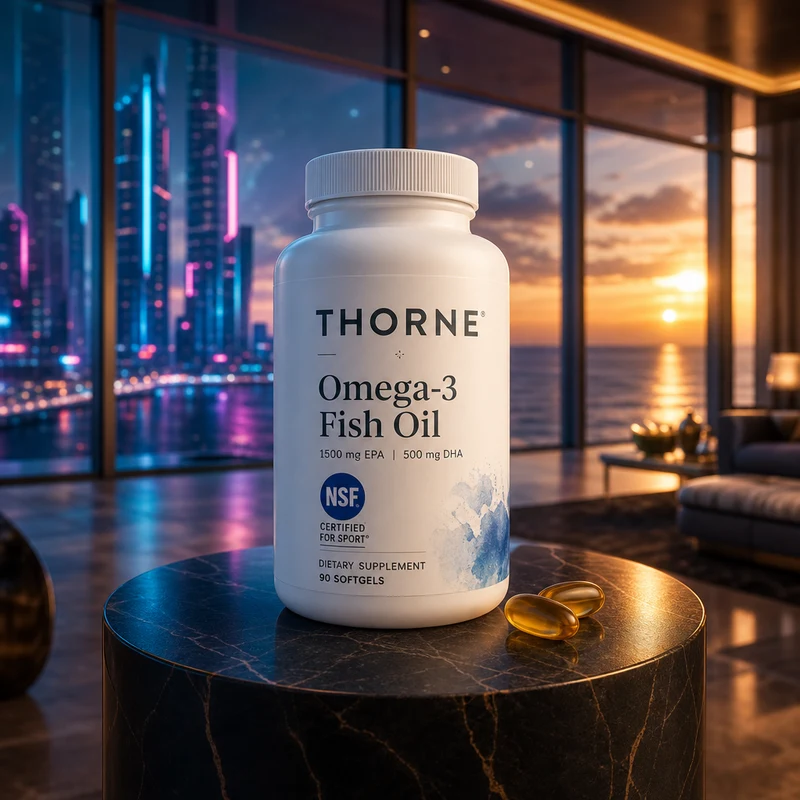
Thorne Super EPA Pro
Thorne · EPA-dominant TG · NSF Certified for Sport · 120 softgelsSAC Product Score™ — how it breaks down- EPA+DHA dose + form30%9.0
- IFOS / oxidation + heavy-metal testing25%9.5
- Source sustainability + provenance20%8.5
- Cost per gram EPA+DHA15%7.5
- Real-world response + tolerance10%9.0
The clinical-tier anti-inflammatory pick: an EPA-dominant ~2:1 ratio at the inflammation threshold, meaningful DHA on top, and NSF Certified for Sport on every batch — from the brand integrative clinicians and US Olympic teams stock by default. The cleanest RA-adjunct and tested-athlete bottle on the list.
- Form
- Triglyceride (TG), EPA-dominant — anchovy/sardine/mackerel, molecular-distilled
- EPA+DHA per serving
- 1300 mg (~860 EPA / ~440 DHA, ~2:1 ratio) — 2 softgels
- Supply
- 120 softgels · 60 servings · ~2 months at 2 caps/day (stack up for 2-4 g/day)
- Testing
- NSF Certified for Sport — every batch, 270+ banned substances + freshness, NSF-accredited labs
Pros- ~2:1 EPA:DHA lands the EPA-dominant inflammation ratio (Sublette 2011) while keeping ~440 mg DHA per serving
- NSF Certified for Sport on every batch — verifies freshness, heavy metals, and banned substances; decisive for tested athletes on a high dose
- 1300 mg EPA+DHA per serving in clean triglyceride form — stacks cleanly to a 2-4 g/day inflammation dose
- Clinical-grade brand QC — Mayo Clinic, Cleveland Clinic, US Olympic Committee, UFC supplier; the default RA-adjunct bottle
Cons- Not pure re-esterified TG — the absorption edge vs an rTG bottle is small but real
- $1.08/g is premium — $10/month more than Sports Research (#3) for the sport-cert tier
- Slightly less pure-EPA than Carlson (#1) — if you want the absolute maximum EPA, Carlson edges it
Our take — The right buy when you want the inflammation ratio in a clinical-grade, athlete-safe bottle. The ~2:1 EPA:DHA sits right at the EPA-dominant threshold the effect literature points to (Sublette 2011) while still delivering meaningful DHA — most balanced fish oils under-shoot the ratio, and pure-EPA bottles (Carlson #1) drop the DHA entirely; Thorne is calibrated between them. NSF Certified for Sport on every batch covers the freshness and heavy-metal axes that matter for a high anti-inflammatory dose and makes it federation-safe, which is exactly why it's the cleanest RA-adjunct and tested-athlete pick here. The $42/month reflects the clinical-grade QC and the EPA-concentration step. For the absolute maximum EPA, Carlson (#1) is cleaner; for high-dose value, Sports Research (#3) is cheaper. Buy Thorne when you want EPA-dominance + DHA + NSF in one bottle.
- #3Best value
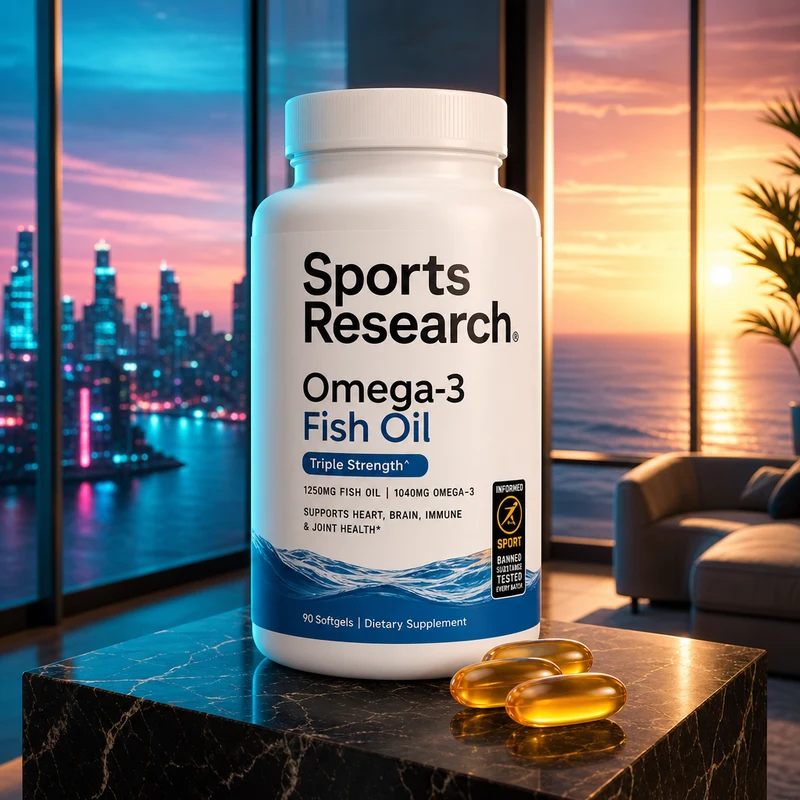
Sports Research Triple Strength Omega-3 1250 mg
Sports Research · Triple-strength rTG · Informed Sport · 90 softgels8.7/10SAC Product Score™SAC Product Score™ — how it breaks down- EPA+DHA dose + form30%9.0
- IFOS / oxidation + heavy-metal testing25%9.0
- Source sustainability + provenance20%8.5
- Cost per gram EPA+DHA15%8.5
- Real-world response + tolerance10%9.0
The value way to run a high anti-inflammatory dose: 1250 mg EPA+DHA — the highest single-cap dose on this list — in re-esterified triglyceride form, Informed Sport certified, at the best cost-per-gram of any certified rTG bottle here. Two caps gets you to 2.5 g/day cheaply; the balanced-leaning ratio is the one trade-off vs the EPA-dominant leaders.
- Form
- Re-esterified triglyceride (rTG) — triple-strength concentrate, anchovy + sardine
- EPA+DHA per serving
- 1250 mg (688 EPA / 488 DHA) — ONE softgel, balanced-leaning EPA (~1.4:1)
- Supply
- 90 softgels · 90 servings · ~3 months at 1 cap/day (2-3 caps for an inflammation dose)
- Testing
- Informed Sport — per-batch banned-substance + heavy-metal screening at LGC (ISO 17025)
Pros- Highest single-cap dose here — 1250 mg EPA+DHA per rTG softgel makes stacking to a 2-4 g/day inflammation dose easy and cheap
- Best cost-per-gram (~$0.85/g) of any sport-certified rTG pick — the affordable way to run high-dose omega-3 long-term
- Re-esterified triglyceride form — 30-50% better absorption than ethyl ester, and oxidises slower
- Informed Sport certified — per-batch banned-substance + metals screening for NCAA / NFL / MLB / NHL / MLS athletes
Cons- Balanced-leaning ~1.4:1 ratio under-shoots the EPA-dominant inflammation target — Carlson (#1) and Thorne (#2) lead on the ratio
- Informed Sport (not IFOS 5-star specifically) covers metals + freshness but isn't the same public-TOTOX cert
- Larger single softgel — swallow-sensitive users may prefer two smaller caps
Our take — The best-value bottle for running a high anti-inflammatory dose without overspending. It lands the highest single-cap dose here in clean rTG form at the lowest cost-per-gram of any certified pick — at ~$0.85/g, two or three caps gets you to a 2-4 g/day inflammation dose for a fraction of what the EPA-dominant leaders cost. The one honest trade-off for this specific goal is the ratio: at ~1.4:1 it's balanced-leaning rather than EPA-dominant, so it under-shoots the resolvin-optimised ≥2:1 that Carlson (#1) and Thorne (#2) hit. For a budget-conscious buyer who'll run a genuinely high total dose — where sheer EPA grams partly compensate for the ratio — it's the smart pick, and the Informed Sport stamp makes it federation-safe in the bargain. Want the optimal EPA ratio? Step up to Carlson (#1) or Thorne (#2). For the across-the-board ranking, see Best Omega-3.
- #4Best balanced all-rounder
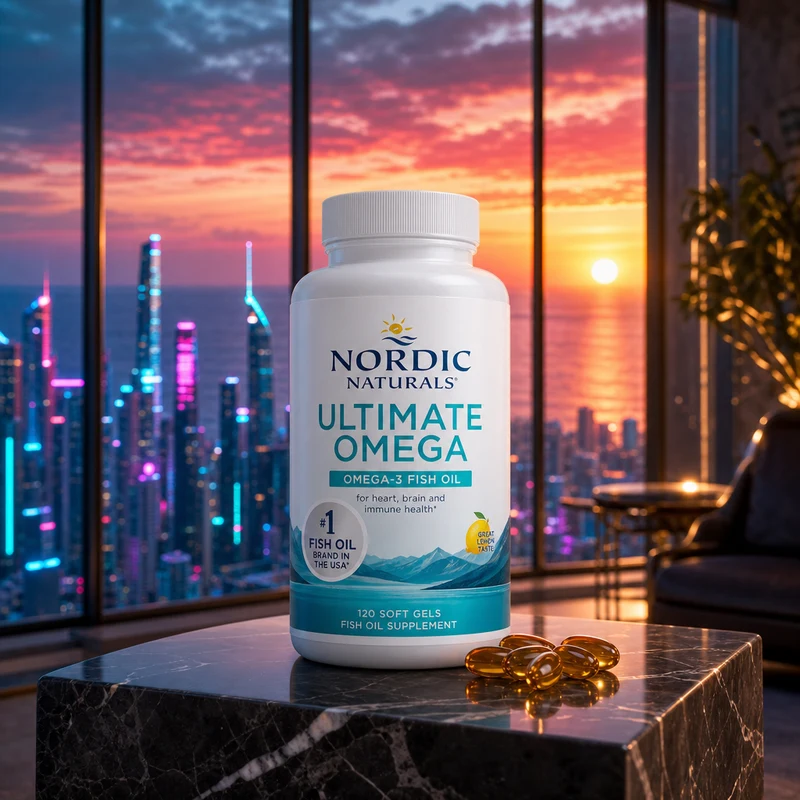
Nordic Naturals Ultimate Omega 1280 mg
Nordic Naturals · Re-esterified TG · IFOS 5-star · 120 softgels (lemon)8.5/10SAC Product Score™SAC Product Score™ — how it breaks down- EPA+DHA dose + form30%9.5
- IFOS / oxidation + heavy-metal testing25%10.0
- Source sustainability + provenance20%9.0
- Cost per gram EPA+DHA15%8.5
- Real-world response + tolerance10%9.5
The balanced all-rounder if you want one bottle that fights inflammation AND covers everything else: 1280 mg EPA+DHA per serving in rTG form, IFOS 5-star with public TOTOX, lemon softgels that don't burp. It under-shoots the EPA-dominant ratio, but the freshness pedigree and tolerance are best-in-class.
- Form
- Re-esterified triglyceride (rTG) — anchovy + sardine, molecular-distilled
- EPA+DHA per serving
- 1280 mg (650 EPA / 450 DHA) — 2 lemon softgels, balanced ~1.4:1
- Supply
- 120 softgels · 60 servings · ~2 months at 2 caps/day (3-4 for an inflammation dose)
- Testing
- IFOS 5-star — public per-batch TOTOX + heavy-metal reports, verifiable by lot
Pros- IFOS 5-star with public per-batch TOTOX (typically <10) — exactly the freshness verification an inflammation buyer needs, since rancid oil is pro-inflammatory
- Re-esterified triglyceride form — 30-50% better absorption than ethyl ester (Dyerberg 2010)
- Lemon softgels produce almost no fishy burp — the best adherence on the list for running a high dose long-term
- Balanced 1.4:1 ratio covers general health, mood, and cardiovascular too — the one-bottle pick if inflammation isn't your only goal
Cons- Balanced ratio under-shoots the EPA-dominant inflammation target — Carlson (#1) and Thorne (#2) feed the resolvin pathway harder
- 650 mg EPA per serving means 3-4 softgels/day to hit a high EPA dose, raising the effective cost
- Not NSF / Informed Sport — drug-tested athletes should use Thorne (#2) or Sports Research (#3)
Our take — The pick if you want a single bottle that does a real job on inflammation while also covering everything else omega-3 is good for. On the two non-ratio inflammation criteria it's best-in-class: IFOS 5-star with a public, verifiable TOTOX score (the freshness that stops rancid pro-inflammatory oil) and rTG absorption, plus the lemon softgels that make a high daily dose actually sustainable. Where it slips to #4 for THIS goal is the ratio — at a balanced ~1.4:1 it under-shoots the EPA-dominant ≥2:1 the resolvin pathway wants, so you're leaning on total EPA grams rather than the optimal ratio, and at 650 mg EPA/serving that means 3-4 softgels a day. If inflammation is your only goal, the EPA-dominant leaders (#1, #2) are the sharper tools; if you want one clean, fresh, well-tolerated bottle for inflammation plus general health, this is it. For the across-the-board ranking where this is our overall #1, see Best Omega-3.
- #5Best DHA-dominant / sustainable
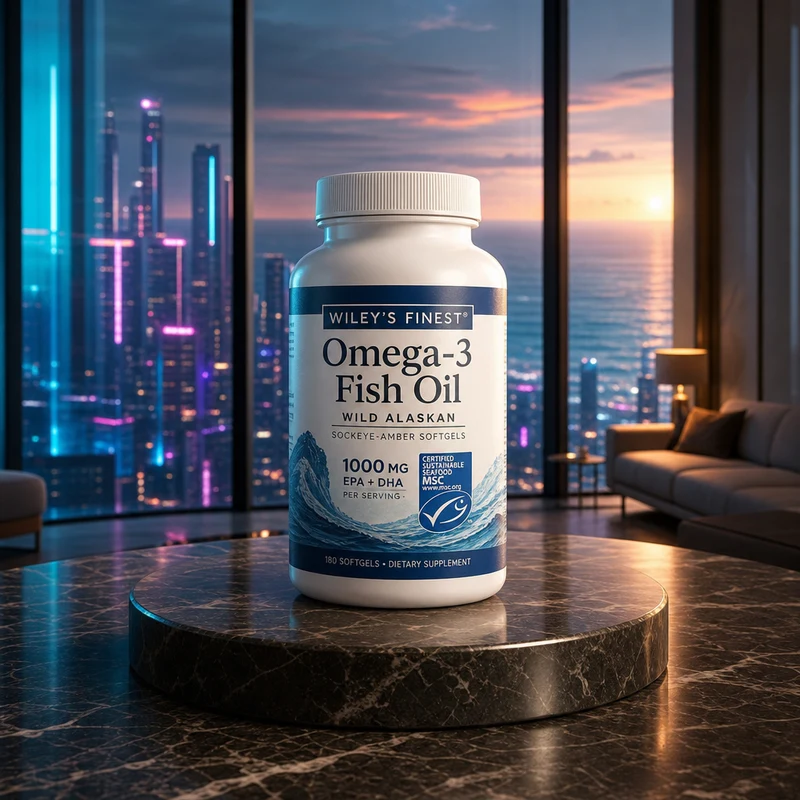
Wiley's Finest Wild Alaskan Fish Oil 1000 mg
Wiley's Finest · Wild-source rTG · IFOS 5-star + MSC · 60 softgels8.2/10SAC Product Score™SAC Product Score™ — how it breaks down- EPA+DHA dose + form30%8.5
- IFOS / oxidation + heavy-metal testing25%9.5
- Source sustainability + provenance20%10.0
- Cost per gram EPA+DHA15%7.5
- Real-world response + tolerance10%8.5
Still a clean, fresh, high-quality anti-inflammatory bottle — IFOS 5-star + MSC-certified wild Alaskan in rTG form — but DHA-dominant (450 EPA / 550 DHA), so it under-shoots the EPA ratio inflammation protocols want. The pick if you also want DHA, sustainability certification, and a single-softgel dose.
- Form
- Re-esterified triglyceride (rTG) — wild Alaskan pollock + sockeye salmon
- EPA+DHA per serving
- 1000 mg (450 EPA / 550 DHA) — ONE softgel, DHA-dominant
- Supply
- 60 softgels · 60 servings · ~2 months at 1 cap/day (2-4 for an inflammation dose)
- Testing
- IFOS 5-star (public TOTOX) + MSC-certified sustainable fishery (boat-to-bottle)
Pros- IFOS 5-star — public per-batch TOTOX freshness, exactly what an inflammation buyer needs to avoid rancid pro-inflammatory oil
- MSC-certified wild Alaskan fishery — the strictest sustainability standard in the category, layered on top of IFOS
- Re-esterified triglyceride form — 30-50% better absorption than ethyl ester, oxidises slower
- Still delivers 450 mg EPA per softgel — a real anti-inflammatory contribution alongside the DHA
Cons- DHA-dominant 450/550 ratio is the wrong direction for the EPA-driven resolvin pathway — the main reason it sits at #5 for this goal
- Mid-trophic fish (pollock + salmon) — slightly higher contaminant bioconcentration than anchovy/sardine (still below FDA limits per IFOS)
- Not NSF / Informed Sport — drug-tested athletes need Thorne (#2) or Sports Research (#3)
Our take — A genuinely high-quality bottle that ranks lower here purely because of the ratio, not the quality. On freshness and form it's everything an inflammation buyer should want — IFOS 5-star with a public TOTOX score (the rancid-oil defence), MSC sustainability on top, and rTG absorption — and 450 mg EPA per softgel still makes a real anti-inflammatory contribution. But for THIS goal the DHA-dominant 450/550 ratio points the wrong way: the resolvin pathway runs on EPA, so a DHA-dominant bottle under-shoots the mechanism the EPA-dominant leaders (#1, #2) target directly. Buy it if you want a clean, sustainable, well-tested bottle that gives you DHA as well as EPA — for cognition or pregnancy co-benefit alongside the anti-inflammatory effect — and you're comfortable trading the optimal ratio for breadth. For maximum anti-inflammatory effect, Carlson (#1) or Thorne (#2). For the across-the-board ranking, see Best Omega-3.
- #6Best vegan (algae)
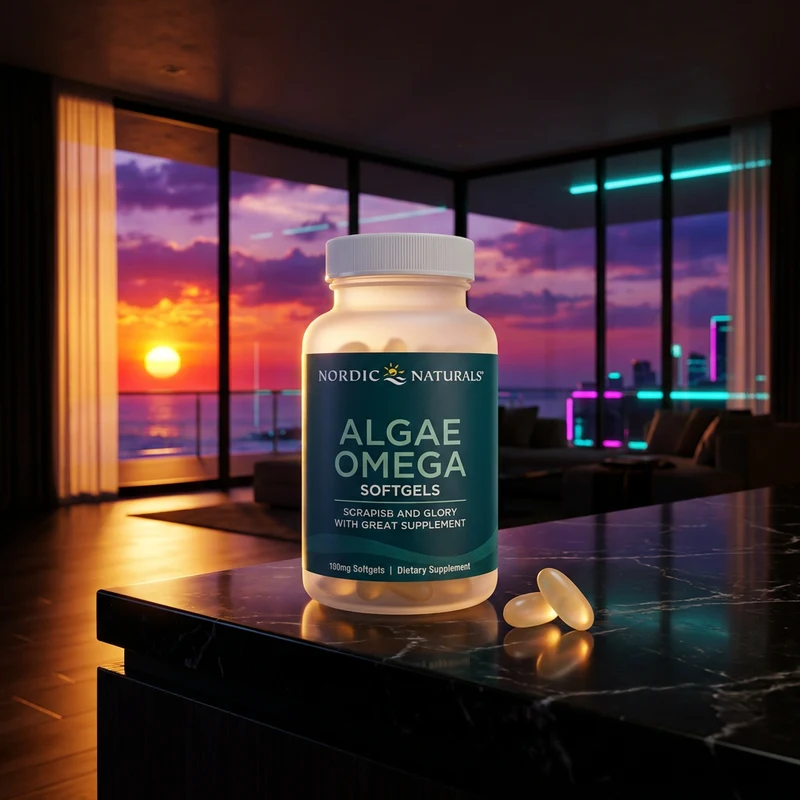
Nordic Naturals Algae Omega
Nordic Naturals · Certified-vegan Schizochytrium algae oil · 120 softgels7.8/10SAC Product Score™SAC Product Score™ — how it breaks down- EPA+DHA per dose30%8.0
- Source + purity (algae chain)25%9.5
- Vegan / Non-GMO certification20%9.8
- Cost per EPA+DHA mg15%7.0
- Real-world response10%9.0
The vegan anti-inflammatory option, and the only real one if fish oil is off your table: pre-formed EPA+DHA from Schizochytrium algae in a genuinely vegan softgel, non-inferior to fish oil in a 2025 RCT. DHA-dominant and lower-dose, so reaching an anti-inflammatory dose takes more capsules and more money — but it works where flax can't.
- Form
- Triglyceride-form Schizochytrium algae oil (fermentation-grown, hexane-free)
- EPA+DHA per serving
- 585 mg (195 EPA / 390 DHA) + ~130 mg other omega-3s — 2 softgels, DHA-dominant
- Supply
- 120 softgels · 60 servings · ~2 months at 1 serving/day (more for an inflammation dose)
- Testing
- Third-party tested, hexane-free, AVA-certified vegan (shell included), Non-GMO
Pros- Pre-formed EPA+DHA from algae — flax/chia ALA barely converts to the EPA that drives the resolvin pathway, so this is the only vegan source that works
- Genuinely vegan gelatin-free softgel SHELL — not plant oil wrapped in an animal-gelatin capsule
- Schizochytrium fermentation source sidesteps the mercury/PCB bioaccumulation — and the oxidation risk — of ocean fish
- 2025 RCT (PMID 41096614): algae oil non-inferior to fish oil for raising blood EPA+DHA
Cons- DHA-dominant (~195 EPA / 390 DHA) — the wrong ratio direction for the EPA-driven anti-inflammatory mechanism
- Lower dose density (585 mg per 2-softgel serving) means 4-6+ softgels/day to reach a 2-4 g/day inflammation dose
- ~2-3x the cost per gram of fish oil — the vegan tax bites hardest at the high doses inflammation needs
Our take — The easy recommendation for one reader and the wrong product for another. If you're vegan, vegetarian, or fish-allergic and you want an anti-inflammatory omega-3, this is it — the only plant option that actually works, because flax ALA barely converts to the EPA the resolvin pathway needs. Algae Omega delivers pre-formed EPA+DHA from the source fish get theirs from, in a genuinely vegan softgel, non-inferior to fish oil in a 2025 RCT. For the inflammation goal specifically it carries two honest penalties that drop it to #6: it's DHA-dominant (wrong ratio direction for EPA-driven resolution) and lower-dose, so hitting a 2-4 g/day anti-inflammatory dose takes 4-6+ softgels and the 2-3x per-gram price compounds. None of that is a quality flaw — it's the economics and chemistry of plant omega-3. If you eat fish, the EPA-dominant fish-oil picks (#1-#3) are sharper anti-inflammatory tools; if fish oil is genuinely off your table, stop comparison-shopping — this is the best vegan omega-3 made.
- #7Best krill / astaxanthin
Onnit Krill Oil 1000 mg
Onnit · Phospholipid-bound Antarctic krill + astaxanthin · 60 softgels7.5/10SAC Product Score™SAC Product Score™ — how it breaks down- EPA+DHA dose + form30%7.0
- IFOS / oxidation + heavy-metal testing25%7.5
- Source sustainability + provenance20%8.0
- Cost per gram EPA+DHA15%5.5
- Real-world response + tolerance10%9.0
The krill pick for the fish-oil-intolerant who still want an anti-inflammatory angle: phospholipid-bound EPA+DHA plus astaxanthin — a potent antioxidant in its own right — with the best burp profile on the board. The catch for inflammation is dose: only ~250 mg EPA+DHA per cap, so reaching a 2-4 g/day target gets expensive fast.
- Form
- Phospholipid-bound EPA+DHA (krill oil) + natural astaxanthin co-factor
- EPA+DHA per serving
- ~250 mg combined per softgel + ~80 µg astaxanthin (low per-cap dose)
- Supply
- 60 softgels · ~30-60 days depending on dose (4-8 caps/day for an inflammation dose)
- Testing
- Third-party tested; Antarctic source under CCAMLR management (MSC chain-of-custody)
Pros- Best burp profile on the board — phospholipid-bound krill produces almost no fishy repeat, easing high-dose adherence
- Astaxanthin co-factor — a potent antioxidant with its own anti-inflammatory following, that also stabilises the oil against oxidation
- Antarctic CCAMLR-managed source — the lowest-contaminant marine omega-3 (krill eat phytoplankton)
- Phospholipid form carries a modest (~10-20%) per-mg absorption edge over free-form
Cons- Only ~250 mg EPA+DHA per softgel — reaching a 2-4 g/day inflammation dose needs 8-16 caps and is the priciest path on the list
- ~$2.40/g of EPA+DHA — roughly 3x fish oil, and the high anti-inflammatory dose multiplies that gap brutally
- Shellfish allergens — krill are crustaceans; a disqualifier for fish/shellfish-allergic users (go algae #6)
Our take — Included as the honest answer to one real problem — 'I've tried even premium fish oil and the burps make me quit, but I still want an anti-inflammatory omega-3' — not as a value or dose recommendation. Krill's phospholipid format produces dramatically less marine reflux than even the cleanest rTG fish oil, and the astaxanthin adds a genuine antioxidant co-factor with its own anti-inflammatory following plus natural oil-stability. But for the inflammation goal the dose math is brutal: at only ~250 mg EPA+DHA per cap and ~$2.40/g, reaching a real 2-4 g/day anti-inflammatory dose means 8-16 capsules a day and well over $100/month — versus $30-60 from the EPA-dominant fish-oil picks. Pick krill specifically when fish-oil intolerance is the blocker and the astaxanthin angle appeals; default to the EPA-dominant fish oils (#1-#3) when it isn't. And if you have a shellfish allergy, do not buy krill — go algae (#6) for the same actives with zero crustacean exposure. For the across-the-board ranking, see Best Omega-3.

▸ Affiliate disclosure: every Amazon link uses our Associates tag (superachieverclub-20). We earn a small commission at no cost to you; it funds independent reviews. We never accept payment to change a ranking.
Omega-3 for inflammation works — but only if you buy for EPA, dose, and freshness
- 01
EPA — not DHA — is the anti-inflammatory fatty acid, so buy for the ratio.
EPA is the substrate the body converts into resolvins and other specialised pro-resolving mediators (SPMs) that actively switch inflammation off, distinct from NSAIDs that block prostaglandin synthesis upstream. The clinical effect literature follows the mechanism: Sublette 2011 found EPA-dominant formulations (EPA:DHA ≥2:1) drove the effect while DHA-dominant ones did not. So the ratio leads — an EPA-dominant bottle, not the balanced general-health pick.
- 02
Dose to the inflammation window — a real 2-4 g/day of actives, not the 1 g floor.
Inflammatory endpoints ran on a real 2-4 g/day of combined EPA+DHA weighted toward EPA (Mozaffarian 2008; REDUCE-IT used 4 g/day pure EPA, Bhatt 2019), not the 1 g general-health floor hiding inside a '1000 mg fish oil' label. Read the EPA + DHA actives on the panel and dose to target — often 2-4 quality softgels.
- 03
Freshness matters more here than for any other goal — rancid oil is pro-inflammatory.
Oxidised (rancid) fish oil is itself pro-inflammatory, the exact opposite of why you bought it, so a high-TOTOX bottle can work against you — and a flavour coat hides it. The defence is IFOS 5-star with a public per-batch TOTOX score (<26, best <10) you can verify by lot.
- 04
Form decides absorption — default to triglyceride/rTG over ethyl ester.
Triglyceride/rTG absorbs 30-50% better than the ethyl-ester concentrate that fills the aisle (Dyerberg 2010) and oxidises slower. At the high doses an inflammation protocol needs, that absorption gap compounds into meaningfully more delivered EPA.
Sublette 2011 EPA-dominance (PMID 21939614); Bhatt 2019 REDUCE-IT (PMID 30415628); Mozaffarian 2008 (PMID 18606981); Dyerberg 2010 TG vs EE (PMID 20638827); Harris 2008 Omega-3 Index (PMID 18774613).
How we ranked these seven for inflammation
Every pick was scored 0-10 across five inflammation-specific criteria, then weighted to a composite. EPA dose and EPA:DHA ratio carries the most weight because EPA is the substrate for the resolvins that actively resolve inflammation, and the effect literature converges on EPA-dominance (EPA:DHA ≥2:1, Sublette 2011) — so near-pure and EPA-dominant bottles (Carlson, Thorne) rise to the top while DHA-dominant ones (Wiley's Finest) drop. IFOS / TOTOX freshness is weighted higher than on any other omega-3 list because oxidised oil is mechanistically pro-inflammatory — a rancid bottle can push in the exact wrong direction, so a public, verifiable per-batch TOTOX score is close to non-negotiable here. Triglyceride (rTG) form is the absorption axis, and it compounds at the high 2-4 g/day doses inflammation protocols use (Dyerberg 2010). Third-party testing (heavy metals, NSF / Informed Sport) is the quality and athlete-safety filter. Cost per gram of EPA is the tiebreaker — and it bites harder here than on a general-health list, because the dose is high. The result reorders the umbrella roster: the two EPA-dominant bottles lead, the balanced and DHA-dominant fish oils follow, and algae and krill stay situational picks for the buyers who need them.
- EPA dose + EPA:DHA ratio30%
The core inflammation lever. EPA is the substrate for the resolvin / SPM pathway, and the effect literature converges on EPA-dominance (EPA:DHA ≥2:1, Sublette 2011). Near-pure EPA (Carlson) scores highest; EPA-dominant ~2:1 (Thorne) next; balanced (Nordic Naturals, Sports Research) is workable but under-shoots; DHA-dominant (Wiley's Finest, algae) is marked down for this goal. Per-serving EPA in the high-dose range scores best because inflammation runs on 2-4 g/day.
- IFOS / TOTOX freshness25%
Weighted higher than on any other omega-3 list, because oxidised (rancid) oil is mechanistically PRO-inflammatory — the opposite of the goal. IFOS 5-star with a public per-batch TOTOX score (<26 GOED ceiling, best <10) = full credit; a sport cert covering freshness + metals (NSF / Informed Sport) = high credit; generic 'third-party tested' without published TOTOX = partial; no freshness claim = 0. The one signal a buyer can verify by lot.
- Triglyceride (rTG) form20%
Triglyceride and re-esterified triglyceride (rTG) absorb 30-50% better than ethyl ester at the same dose (Dyerberg 2010) and oxidise slower — and at the high 2-4 g/day doses inflammation needs, that gap compounds into materially more delivered EPA. rTG scores highest among fish oils; ethyl ester is marked down; algae (TG-form) and krill (phospholipid) judged in context.
- Third-party testing & athlete safety15%
Heavy-metal panels and sport certifications. IFOS heavy-metal reports, NSF Certified for Sport, and Informed Sport all score well — the sport certs are decisive for drug-tested athletes running a high anti-inflammatory dose. Internal-only QC scores lowest. Overlaps with the freshness axis but graded separately for the metals + banned-substance dimension.
- Cost per gram of EPA10%
Monthly cost divided by daily EPA delivered — the tiebreaker, and it bites harder here than on a general-health list because the dose is high. Quality rTG fish oil runs ~$0.85-1.50/g; algae costs 2-3x (the vegan tax); krill is priciest at a tiny ~250 mg/cap. A high-dose buyer feels per-gram price most, so it breaks ties between otherwise-comparable EPA-dominant bottles.


The bottom line
- 01
Carlson Elite EPA (#1) is the default anti-inflammatory buy for almost anyone.
Near-pure EPA at 1600 mg/serving maxes the resolvin ratio (Sublette 2011), in rTG form for absorption, with IFOS 5-star + Friend of the Sea for the public TOTOX freshness that stops a rancid, pro-inflammatory bottle. It's the cleanest expression of the EPA-dominant ratio you can buy without a prescription.
- 02
From there it's a decision tree, not a popularity contest — match the bottle to your case.
Want EPA-dominance plus meaningful DHA and NSF Certified for Sport in one clinical-grade bottle — the cleanest RA-adjunct or tested-athlete pick? Thorne Super EPA Pro (#2). Running a genuinely high dose on a budget? Sports Research Triple Strength (#3), best cost-per-gram, balanced-leaning ratio the one trade. Vegan or fish-allergic: Nordic Naturals Algae Omega (#6); quit fish oil over burps and want the astaxanthin angle: Onnit Krill (#7).
- 03
The buying rule, with the honest caveats: EPA-dominant, high-dose, verified fresh — and patient.
For inflammation, pick EPA-dominant (EPA:DHA ≥2:1, because EPA feeds the resolvin pathway), read the EPA+DHA actives and dose to a real 2-4 g/day taken with a fatty meal, and verify freshness with IFOS 5-star and a public TOTOX score. Don't judge it by feel in week one — joints, stiffness, and CRP move over 8-12 weeks, not days. And if you're using omega-3 as an RA adjunct, coordinate the high dose with your rheumatologist — it complements treatment, it doesn't replace it.
Every claim ranked above traces back to one of these
Peer-reviewed studies, meta-analyses and clinical trials behind the picks. Click any citation to read the abstract on PubMed.
- [1]Sublette 2011 (EPA-dominance)
Meta-analysis of the effects of eicosapentaenoic acid (EPA) in clinical trials in depression
Meta-analysis of 15 RCTs found EPA-dominant formulations (EPA:DHA ≥60%, i.e. ≥2:1) significantly drove the effect vs placebo, while DHA-dominant formulations did not. The reference establishing EPA-dominance as the formulation requirement — the basis for ranking the EPA-dominant bottles (Carlson #1, Thorne #2) at the top of this inflammation cohort and the 'lead with EPA' rule.
- [2]Bhatt 2019 (REDUCE-IT)
Cardiovascular Risk Reduction with Icosapent Ethyl for Hypertriglyceridemia
4 g/day of icosapent ethyl (pure EPA) over 4.9 years reduced major adverse cardiovascular events by 25% vs placebo in statin-treated high-risk adults. The landmark high-dose pure-EPA outcome trial — it anchors both the EPA-dominant case and the 2-4 g/day high-dose window used throughout this inflammation ranking.
- [3]Mozaffarian 2008
Omega-3 fatty acids and cardiovascular disease: effects on risk factors, molecular pathways, and clinical events
Comprehensive review of omega-3 effects, including the anti-inflammatory and molecular pathways, at 2-4 g/day combined EPA+DHA. The reference review behind the 2-4 g/day high-dose window this inflammation cohort doses to, above the 1 g general-health floor.
- [4]Dyerberg 2010 (TG vs EE bioavailability)
Bioavailability of marine n-3 fatty acid formulations
Direct head-to-head bioavailability comparison: triglyceride (TG) and re-esterified triglyceride (rTG) forms showed 30-50% higher EPA+DHA incorporation into blood lipids than ethyl ester (EE) at identical doses. The trial that anchors the 'rTG form' axis — and it compounds at the high doses an inflammation protocol uses.
- [5]Harris 2008 (Omega-3 Index)
The omega-3 index: a new risk factor for death from coronary heart disease?
Defined the Omega-3 Index (RBC EPA+DHA as % of total fatty acids) as a risk biomarker — 8%+ associated with the lowest CHD mortality, against a Western average of 4-5%. The biomarker behind the week-8-12 steady-state timeline and the honest way to confirm an inflammation protocol has built enough EPA substrate.
More Omega-3 guides
Every form, format and use-case in the Omega-3 cluster — each ranked with the same methodology, so you can jump straight to the angle that fits you.
- Best Omega-3 SupplementsThe definitive omega-3 buying guide — the single best pick for each need across fish oil, algae, and krill. Total EPA+DHA per serving, triglyceride form, and IFOS freshness separate the real ones from under-dosed ethyl ester.
- Best Krill Oil SupplementsKrill oil ranked by actual EPA/DHA per serving, phospholipid + astaxanthin content, and cost-per-mg — with the honest verdict on when fish oil is the smarter buy.
- Best Omega-3 Fish OilOmega-3s ranked by EPA+DHA dose, triglyceride vs ethyl-ester form, IFOS/TOTOX oxidation testing, sustainability — the bottles that survive the rancidity audit.
- Best Omega-3 for WomenThe same 10-product omega-3 roster re-scored for women — prenatal/preconception DHA (Coletta 2010), postpartum + perimenopausal mood (Freeman 2006), post-menopause heart, skin/hair/nails, swallowability, and a higher-ranked vegan algal pick.