
Iron: Benefits, Dosage & Side Effects (2026)
Iron is the essential oxygen-carrying mineral; correcting a documented deficiency reverses fatigue and anemia — but supplementing when already replete risks overload.
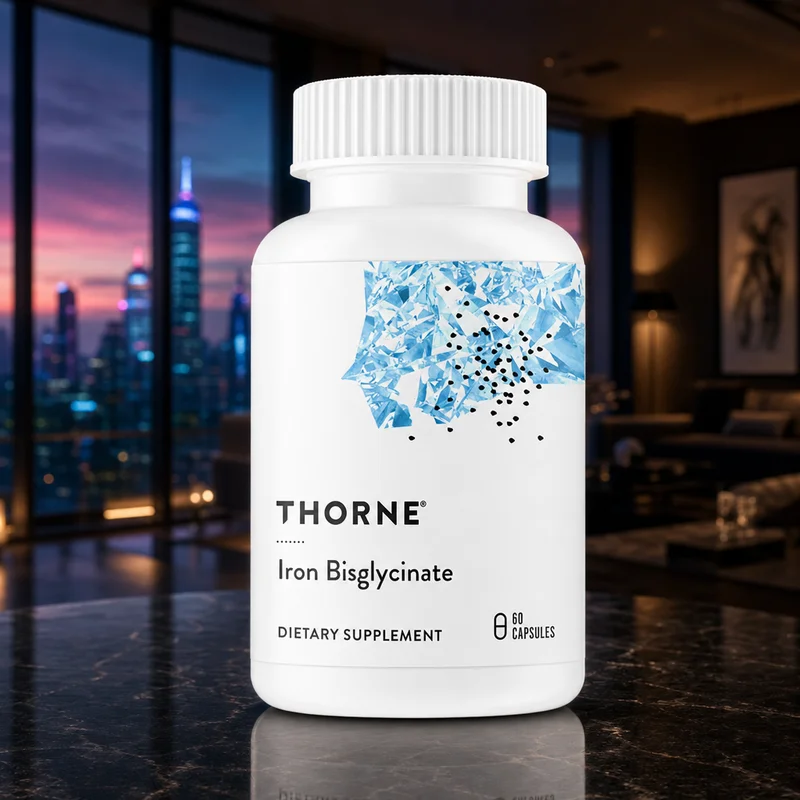
Thorne Iron Bisglycinate 25 mg
What is Iron?
Iron is an essential trace mineral whose central job is carrying oxygen. About two-thirds of the body's iron sits inside hemoglobin, the protein in red blood cells that ferries oxygen from the lungs to every tissue; the rest is held in myoglobin (muscle oxygen storage), in mitochondrial enzymes that generate cellular energy, and in ferritin, the storage protein that acts as the body's iron savings account. Dietary iron comes in two forms with very different absorption: heme iron from meat, poultry and fish (roughly 15-35% absorbed, largely diet-independent) and nonheme iron from plants, fortified foods and supplements (roughly 2-20%, and heavily modulated by everything else in the meal). Crucially, the body has no active route to excrete iron — it defends its stores by tightly regulating how much it lets in, which is exactly why more is not automatically better.
Iron deficiency is the most common nutritional deficiency on earth. Kassebaum 2014 (PMID 24297872) estimated global anemia prevalence at 32.9%, with iron deficiency the single leading cause worldwide. It falls hardest on menstruating women, pregnancy, and young children. Deficiency develops in stages: first ferritin stores are quietly drained (iron depletion, often with still-normal hemoglobin), then red-cell production starts to suffer (iron-deficient erythropoiesis), and only later does frank iron-deficiency anemia appear. Because the earliest stage is invisible on a standard hemoglobin check, people can feel exhausted, cold, breathless, or notice hair thinning and restless legs while their "blood count" still reads normal — the deficit is in the stores, not yet the hemoglobin.
The single most important thing to understand is that iron is a test-first supplement, the opposite of a "take it daily just in case" nutrient. Ferritin (ideally with a full iron panel) is the key marker; it tells you whether the stores are actually low. Supplement only when deficiency is documented, because the body cannot dump an excess — blind or high-dose iron in someone who is already replete buys nothing but GI misery and, over time, the real risk of iron overload. So the honest framing is precise: iron is a near-miraculous fix for the people who are genuinely deficient, and the wrong choice for everyone else.
How it works
The mechanism is oxygen delivery. Inside hemoglobin, iron's ferrous (Fe2+) center is what actually grabs and releases oxygen molecules; without enough iron the body makes fewer, smaller and paler red cells (the classic microcytic, hypochromic picture of iron-deficiency anemia), so less oxygen reaches the tissues and you feel the result as fatigue, breathlessness on exertion, and poor stamina. But iron is not only in blood — it sits in myoglobin and in the iron-dependent enzymes of the mitochondrial electron-transport chain, so falling iron stores drag down cellular energy production even before anemia shows up. That is why non-anemic women with merely low ferritin can feel genuinely wiped out, and why correcting the deficiency lifts the fatigue. The essential caveat: this only works if the tiredness was actually caused by iron deficiency. Iron does nothing for fatigue in someone whose stores are already full.
Absorption is governed by hepcidin, the master hormone that decides how much iron the gut lets through. A single iron dose pushes hepcidin up for roughly a day, which blunts absorption of the next dose — so hammering iron twice a day is self-defeating. Stoffel 2017 (PMID 29032957) showed alternate-day single morning doses were absorbed better than consecutive daily dosing (cumulative fractional absorption 21.8% vs 16.3%) and better than twice-daily splits, because spacing lets hepcidin fall between doses. Vitamin C is the classic enhancer of nonheme absorption at the single-meal level, but Cook & Reddy 2001 (PMID 11124756) found that effect largely washes out across a whole day's complete diet — so it is a modest lever, not a magic pairing. The real inhibitors to time around your dose are calcium, tannins in coffee and tea, phytates in whole grains, and antacids/PPIs.
Form and tolerability decide whether people actually stick with it. Ferrous sulfate is the cheap standard salt, but it is hard on the gut — Tolkien 2015 (PMID 25700159), a meta-analysis of 43 trials, put the odds of GI side effects at roughly 2.3× placebo. Ferrous bisglycinate chelate is generally better tolerated at lower elemental doses and rebuilds stores at least as well: Milman 2014 (PMID 24152889) found 25 mg of bisglycinate matched 50 mg of ferrous sulfate for preventing iron deficiency in pregnancy with fewer complaints, and Name 2018 (PMID 30280670) found bisglycinate raised ferritin and MCH more than iron polymaltose. Repletion is slow regardless of form — reticulocytes rise within about a week, hemoglobin over 2-3 months, and ferritin stores over 3-6 months — so the discipline is to keep going, dose smart, and retest before you stop.
At-a-glance facts
- What it does
- Carries oxygen (hemoglobin/myoglobin) and powers mitochondrial energy enzymes — deficiency causes fatigue, pallor and breathlessness
- Test first
- Ferritin (plus a full iron panel) is the key marker — supplement only when deficiency is documented, never blind
- Best-tolerated form
- Ferrous bisglycinate chelate — gentler on the gut than ferrous sulfate at lower elemental doses (Milman 2014, Name 2018)
- Typical therapeutic dose
- ~40-100 mg elemental iron; but frequency matters more than piling on milligrams
- Dose schedule
- Alternate-day single morning doses absorb better than daily or twice-daily (Stoffel 2017 — hepcidin resets between doses)
- Time to effect
- Reticulocytes ~1 week, hemoglobin normalizes over 2-3 months, ferritin stores rebuild over 3-6 months
- Absorption levers
- Vitamin C helps modestly (whole-diet effect is small — Cook & Reddy 2001); separate from coffee, tea, calcium, antacids/PPIs
- Cost (US)
- Cheap — roughly $5-15/month for a good bisglycinate; ferrous sulfate is cheaper still
Evidence: For correcting a documented iron deficiency or iron-deficiency anemia, the evidence is definitive and causal — replacing iron reliably restores hemoglobin and reverses the associated fatigue, and iron deficiency is the world's leading cause of anemia (Kassebaum 2014, PMID 24297872). Dosing and form are well-studied too: alternate-day dosing absorbs better (Stoffel 2017, PMID 29032957), ferrous sulfate causes significant GI side effects (Tolkien 2015, PMID 25700159), and bisglycinate chelate is gentler while building stores at least as well (Milman 2014, PMID 24152889; Name 2018, PMID 30280670). The one honest limit: this level-5 rating applies to deficient people — in the iron-replete, supplementing has no benefit and carries overload risk.
Who it's for — and who it isn't
- Menstruating women with heavy or long periods — chronic menstrual blood loss is the number-one cause of iron deficiency in the developed world, and the group most likely to benefit
- Pregnant women or those planning pregnancy — iron demand rises sharply to build the baby's blood supply; a gentler chelate like bisglycinate (Milman 2014) can prevent deficiency with fewer GI complaints
- Vegetarians and vegans — plant foods provide only lower-bioavailability nonheme iron, so stores run down more easily even on an otherwise good diet
- Endurance athletes, especially female distance runners — foot-strike hemolysis plus sweat and GI losses make low ferritin common and a real cause of flat training
- Anyone with a documented low ferritin or iron-deficiency anemia and unexplained fatigue — this is the person for whom iron is a genuine, evidence-backed fix
- Anyone who hasn't tested — iron is a test-first nutrient; supplementing blind means you might be treating a deficiency you don't have
- Men and postmenopausal women with no documented deficiency — they lose very little iron and carry the highest risk of gradual overload from routine supplementing
- People with hemochromatosis or any iron-overload condition — extra iron is actively harmful, depositing in the liver, heart and pancreas
- Anyone taking iron 'for energy' while already iron-replete — it will not lift fatigue that isn't caused by iron deficiency, and only adds GI side effects and overload risk
Week-by-week, what happens
- Week 1Reticulocyte response — the marrow begins pumping out new red cells within days of adequate iron. You won't feel much yet; this is a lab signal, not a symptom change.
- Week 2-4Hemoglobin starts climbing (often ~1 g/dL over 2-4 weeks in the deficient). Early energy and reduced breathlessness can begin here if iron deficiency was the real cause of the fatigue.
- Month 2-3Hemoglobin typically normalizes and symptomatic fatigue relief consolidates. This is the window to judge whether iron was the answer — but stores are still not refilled.
- Month 3-6The stores phase: keep dosing to rebuild ferritin. Stopping the moment hemoglobin looks normal is the classic mistake that leads to relapse — retest ferritin before you quit.
Safety & contraindications
- Test before you treat. Iron has no active excretion route, so supplementing when you're not deficient offers no benefit and gradually risks overload — get ferritin/iron studies first and let the result decide.
- Iron overload is a real condition. People with hereditary hemochromatosis (or repeated transfusions) accumulate iron they can't clear; excess iron is pro-oxidant and deposits in the liver, heart and pancreas. Never supplement into a high ferritin.
- GI side effects are the main reason people quit. Ferrous sulfate roughly doubles the odds of constipation, nausea and cramps versus placebo (Tolkien 2015, PMID 25700159). Alternate-day dosing, a bisglycinate chelate, and taking it with a little food all reduce this.
- Keep iron supplements away from children. Accidental iron overdose is one of the leading causes of poisoning fatalities in young kids — store it locked and out of reach.
- Mind drug interactions. Iron blunts absorption of levothyroxine, fluoroquinolone and tetracycline antibiotics, and bisphosphonates — separate them by 2-4 hours. Antacids, PPIs and H2 blockers reduce iron absorption in return.
- Don't megadose to 'speed it up.' Higher and more frequent dosing raises hepcidin and can actually lower net absorption (Stoffel 2017) while worsening side effects. Repletion is a months-long process — retest, don't guess.
All articles on Iron
Best Iron Supplements
9 iron supplements ranked on form and bioavailability, dose appropriateness, GI tolerance and safety, third-party testing and value per serving.
Read →MegaFood Blood Builder Review
Iron plus the B12, folate and vitamin C your body actually needs to build red blood cells — not iron alone.
Read →Nature Made Iron 65 mg (Ferrous Sulfate) Review
The cheapest, most classic iron there is — USP-verified ferrous sulfate at about a nickel a tablet. Effective, but the harshest form on your gut.
Read →NOW Foods Iron 18 mg Review
The gentlest, lowest-dose pick — 18 mg of Ferrochel bisglycinate, right at the women's RDA, for maintenance and mild shortfalls.
Read →Nutricost Iron Bisglycinate 25 mg Review
The exact same gentle Ferrochel bisglycinate as our #1, at roughly a third the cost per capsule and four times the count.
Read →Pure Encapsulations OptiFerin-C Review
The premium, hypoallergenic take on iron-plus-vitamin-C: gentle bisglycinate chelate and 100 mg of C in a tight clinician-channel formula.
Read →Solgar Gentle Iron 25 mg Review
A heritage-brand 'Gentle Iron' bisglycinate — vegan, allergen-free and easy on the stomach at a fair everyday price.
Read →Thorne Iron Bisglycinate 25 mg Review
The gold-standard iron pill: gentle bisglycinate chelate at a proper repletion dose, and the only pick here with a product-level NSF Certified for Sport seal.
Read →Three Arrows Iron Repair (Heme Iron) Review
The only heme-iron pick here — the best-absorbed, least acid-dependent form, certified Low-FODMAP for sensitive guts.
Read →Vitron-C High Potency Iron + Vitamin C Review
A once-daily 65 mg carbonyl iron with 125 mg vitamin C — a high dose in a form far safer than ferrous salts in an accidental overdose.
Read →FAQ
I'm always tired — should I just take iron?
Only if you're actually deficient. Iron reliably fixes fatigue caused by low iron, but it does nothing for tiredness from other causes, and it carries overload risk if your stores are already full. Get a ferritin test (ideally a full iron panel) first. Low ferritin — even with a normal hemoglobin — is the situation where iron genuinely helps; a normal or high ferritin means the fatigue is coming from somewhere else and iron won't touch it.
Which form of iron is best, and which is gentlest on my stomach?
Ferrous salts (like ferrous sulfate) are the cheap standard and work, but they're the hardest on the gut — Tolkien 2015 (PMID 25700159) found roughly double the odds of GI side effects versus placebo. Ferrous bisglycinate chelate is generally much better tolerated at lower elemental doses and builds stores at least as well: Milman 2014 (PMID 24152889) matched 25 mg of bisglycinate to 50 mg of sulfate in pregnancy with fewer complaints. If sulfate wrecks your stomach, switch to a bisglycinate before you give up.
Should I take iron every day?
Counterintuitively, alternate-day dosing often beats daily. Each dose raises the hormone hepcidin for about a day, which blocks absorption of the next dose. Stoffel 2017 (PMID 29032957) showed that single morning doses on alternate days were absorbed better than consecutive daily doses or twice-daily splits. So for repletion, a single dose every other day is a legitimate, often better, strategy — and it's gentler on the gut. Follow your clinician's plan, but more frequent is not more effective.
Do I need to take vitamin C with my iron?
It helps a little, not a lot. Vitamin C boosts nonheme iron absorption when measured from a single meal, which is where the popular advice comes from. But Cook & Reddy 2001 (PMID 11124756) found that across a whole day's complete diet the effect largely washes out. So a glass of orange juice won't hurt, but the bigger, more reliable levers are choosing a well-absorbed form, dosing on alternate days, and keeping iron away from coffee, tea, calcium and antacids.
Can I take too much iron?
Yes, and it matters because your body can't excrete the excess. Routine supplementing when you're not deficient — common in men and postmenopausal women who take a 'general' iron pill — can slowly build toward overload, and people with hereditary hemochromatosis are at real risk. Excess iron is pro-oxidant and deposits in the liver, heart and pancreas. Acute overdose is also a top cause of poisoning deaths in children, so store it locked away. This is why iron is a test-and-retest nutrient, not a set-and-forget one.
When and how should I take iron for the best absorption?
Take a single dose in the morning, on alternate days if you're repleting, ideally on a relatively empty stomach — but with a little food if that's the only way you tolerate it. Keep it 2 hours away from coffee, tea, dairy/calcium, antacids and PPIs, all of which cut absorption. And separate it from levothyroxine and certain antibiotics by several hours. Expect a slow build: hemoglobin over 2-3 months, full ferritin stores over 3-6 — then retest before deciding to stop.
Sources & further reading
- Kassebaum 2014 (global anemia burden)A systematic analysis of global anemia burden from 1990 to 2010
Global Burden of Disease analysis: worldwide anemia prevalence was 32.9% in 2010, with iron deficiency the single leading cause. Establishes iron deficiency as the most common nutritional deficiency, hitting women of reproductive age and children hardest.
- Stoffel 2017 (alternate-day dosing)Iron absorption from oral iron supplements given on consecutive versus alternate days and as single morning doses versus twice-daily split dosing in iron-depleted women: two open-label, randomised controlled trials
In iron-depleted women, alternate-day single doses gave higher cumulative fractional iron absorption (21.8%) than consecutive daily dosing (16.3%), because each dose raises hepcidin and suppresses absorption of the next. Practical basis for spacing iron rather than piling it on.
- Tolkien 2015 (GI side effects meta-analysis)Ferrous sulfate supplementation causes significant gastrointestinal side-effects in adults: a systematic review and meta-analysis
Meta-analysis of 43 trials: oral ferrous sulfate roughly doubled the odds of gastrointestinal side effects versus placebo (OR ~2.32). Quantifies the tolerability problem that drives non-adherence and motivates gentler forms and dosing schedules.
- Milman 2014 (bisglycinate in pregnancy)Ferrous bisglycinate 25 mg iron is as effective as ferrous sulfate 50 mg iron in the prophylaxis of iron deficiency and anemia during pregnancy in a randomized trial
Randomised trial in pregnancy: 25 mg of ferrous bisglycinate prevented iron deficiency and anemia as effectively as 50 mg of ferrous sulfate — half the elemental iron — with fewer gastrointestinal side effects. Evidence that a well-absorbed chelate can lower the effective dose.
- Cook & Reddy 2001 (vitamin C, whole diet)Effect of ascorbic acid intake on nonheme-iron absorption from a complete diet
When measured across a complete daily diet rather than a single test meal, varying ascorbic acid intake (51-247 mg/day) produced no significant difference in nonheme iron absorption. Tempers the popular 'always pair iron with vitamin C' advice — the whole-diet effect is modest.