
Vitron-C High Potency Iron + Vitamin C Review
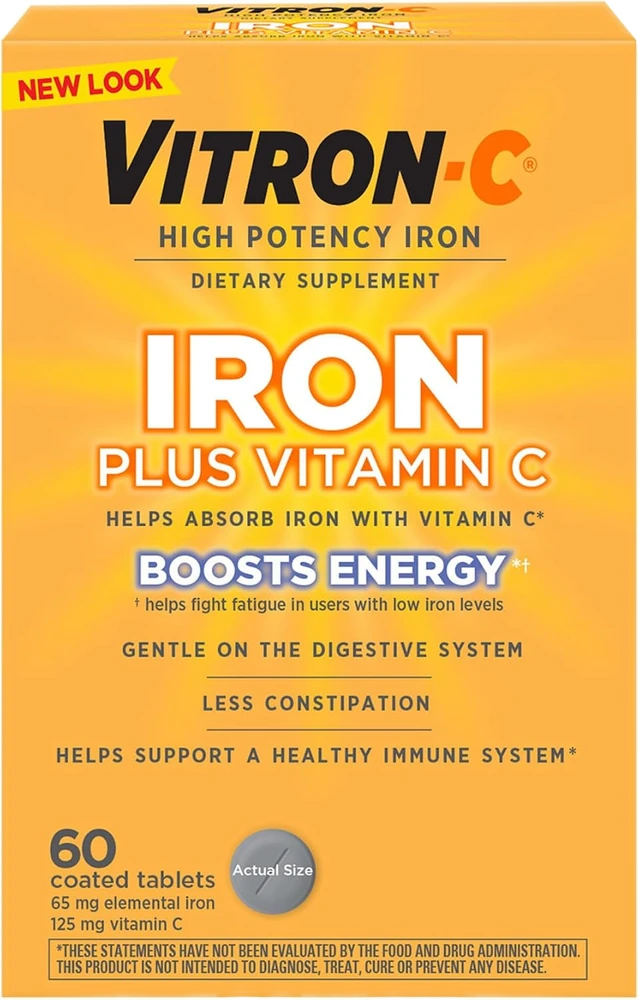 #8 of 9 · Safest High-Dose✓ Label verified · Supplement Facts read Sep 7, 2026
Real retailer photo, cut out. Label unedited.
Consider it. High dose with a genuine safety margin. Carbonyl iron is far safer than ferrous salts if accidentally overdosed, and the 125 mg vitamin C is a legitimate in-meal absorption aid.
~$10.99~$0.18
Why It Scores 6.8 — And The Label Line Behind Each Number
Form & Bioavailability
30% of scoreCarbonyl iron is elemental iron that absorbs slowly and is acid-dependent; safer but less efficiently absorbed than a chelate, which can slow ferritin recovery. The 125 mg vitamin C helps within a meal.
- Form
- Carbonyl iron + vitamin C
Dose Appropriateness
20% of score65 mg elemental once daily is a high repletion dose — effective for correcting deficiency, though higher than many people need.
GI Tolerance & Safety
20% of scoreThe standout safety trait: carbonyl iron is far safer than ferrous salts in accidental overdose. But 'gentle' is relative — 65 mg still causes GI complaints in many users.
Third-Party Testing & Purity
20% of scoreDye-free, gluten-free and vegan, but no third-party testing is stated — the weakest verification among the mid-pack picks.
- Testing
- None third-party stated
Value per Serving
10% of scoreAt ~$0.18 per tablet it is inexpensive and widely available for a high-dose iron-plus-C product.
- Size
- 60 tablets (60 servings)
- Serving
- 1 tablet daily
- Price (approx.)
- ~$10.99
- Cost / serving
- ~$0.18
- More Specs
- Elemental iron
- 65 mg iron + 125 mg C per tablet
- Free-from
- Dyes, gluten; vegan
Label verified. Every figure read from the Supplement Facts photo, Sep 7, 2026.
Marketing Claims Vs. Reality
Carbonyl iron is far safer than ferrous salts in an accidental overdose
Carbonyl iron must be solubilized by stomach acid before absorption, which slows uptake and reduces acute toxicity — the reason it is generally preferred where accidental pediatric ingestion is a concern.
125 mg vitamin C is co-formulated to aid non-heme absorption
Vitamin C enhances non-heme iron uptake within a meal, but over a complete daily diet the effect is modest (Cook & Reddy 2001, PMID 11124756).
A high 65 mg dose that is gentle
Carbonyl iron's slow absorption softens the profile, but 65 mg elemental still produces GI complaints in many users, and high-dose iron GI effects are well documented (Tolkien 2015).
Third-party tested for purity
No third-party testing is stated for this product; verification rests on the brand alone.
What Our Test Actually Found
The safety case is real
Carbonyl iron is elemental iron that the stomach must dissolve before it can be absorbed. That self-limiting step is why it carries a lower acute-overdose risk than ferrous salts — a meaningful advantage in households with young children.
'Gentle' is relative at 65 mg
Slow absorption helps, but 65 mg is still a high elemental dose, and plenty of users report nausea or constipation. Do not expect chelate-level comfort just because the form is safer in overdose.
Slow absorption cuts both ways
The same acid-dependent, gradual uptake that makes carbonyl iron safer can also mean a slower ferritin rise than a well-absorbed chelate. If speed of repletion matters, that is a genuine trade-off.
Vitamin C helps, testing is missing
The 125 mg vitamin C is a legitimate, if modest, in-meal absorption aid. The bigger gap is verification: no third-party testing is stated, which is why it ranks below the tested picks despite the appealing safety angle.
Full analysis: all pros & cons (8), buy if / skip if
- Carbonyl iron absorbs slowly and is far safer than ferrous salts in overdose
- 125 mg vitamin C co-formulated to aid non-heme absorption
- High 65 mg elemental dose, once daily
- Dye-free and widely available
- Inexpensive per serving
- No third-party testing stated
- Still 65 mg elemental — 'gentle' is relative and GI upset still occurs
- Slow, acid-dependent absorption can mean a slower ferritin rise
- You want a high dose with a safer-in-overdose form (households with children)
- You prefer once-daily dosing at a high elemental amount
- You want vitamin C co-formulated to aid absorption
- You tolerate higher-dose iron and want it dye-free
- You want the gentlest form or fastest ferritin rise (choose a chelate)
- You want independent third-party testing
Carbonyl iron is far safer than ferrous salts if accidentally overdosed, and the 125 mg vitamin C is a legitimate in-meal absorption aid. The trade-offs: no third-party testing stated, real GI upset at 65 mg, and slow absorption that can slow ferritin recovery.
Vitron-C is the pick if you want a high dose with a real safety margin. Carbonyl iron absorbs slowly and is the form toxicologists prefer around children because of its lower acute overdose risk. But it is not independently tested, the 65 mg dose still causes GI complaints, and that slow, acid-dependent absorption can blunt how fast your ferritin climbs.
The high dose with a safety margin

The pick if you want a high dose with a real safety margin — carbonyl iron is the form toxicologists prefer around children. But it is not independently tested, the high dose still causes GI complaints, and the slow absorption can blunt how fast your ferritin climbs. The vitamin C is a legitimate, if modest, add.
If This Doesn’t Fit — Try These
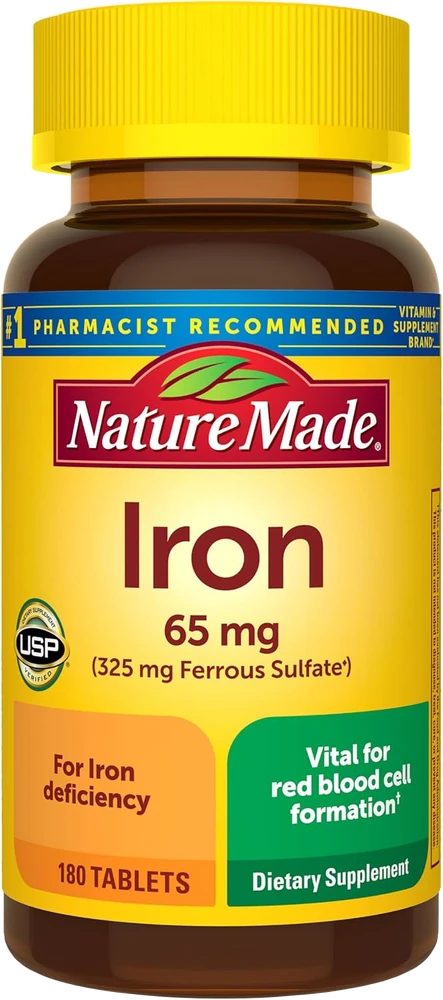 09
09Nature Made Iron 65 mg
Our take: it works and it's dirt cheap, which is exactly the trap.
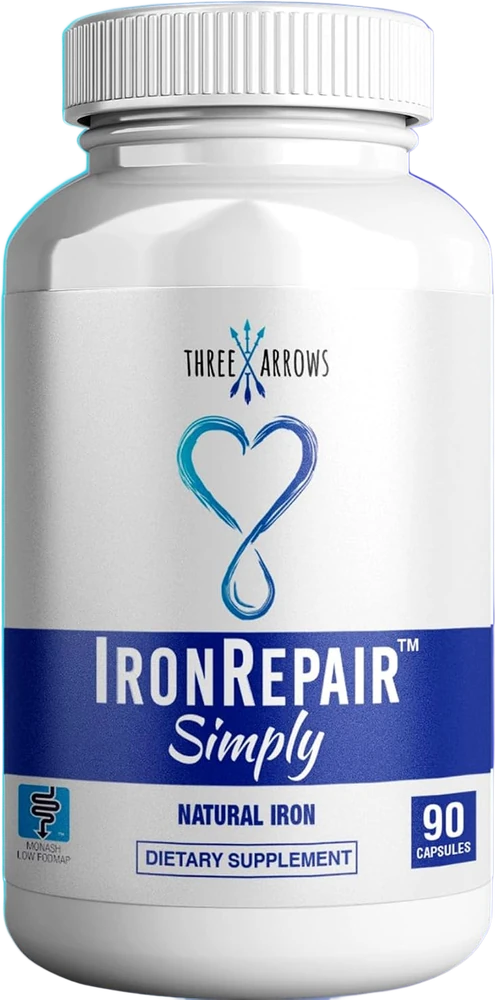 05
05Three Arrows Iron Repair
Our take: if ferrous salts and even chelates wreck your gut, heme iron is the escape hatch — genuinely the gentlest, best-absorbed option.
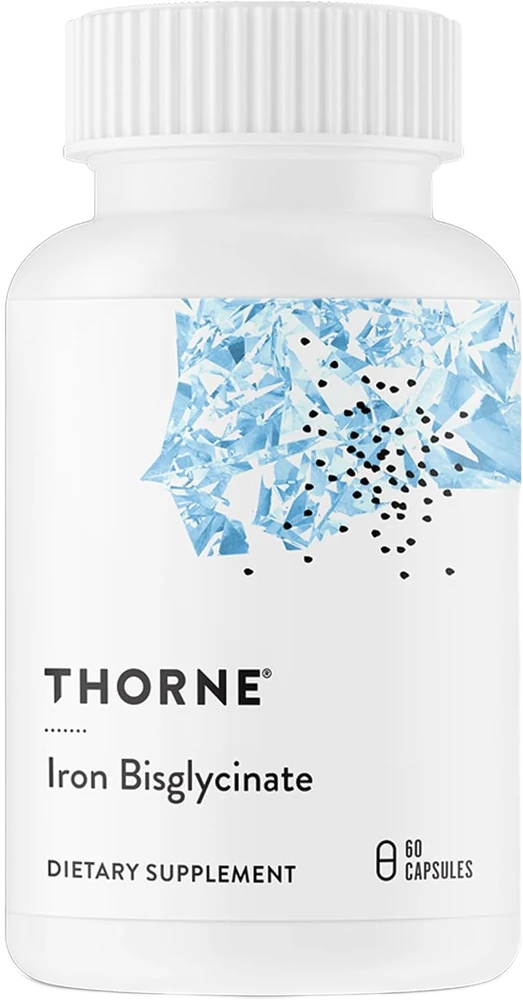 01
01Thorne Iron Bisglycinate
Our take: if you have confirmed low iron and want one bottle to trust, this is it.
Quick Answers
Why is carbonyl iron considered safer?
It is elemental iron that the stomach must dissolve before absorbing, which slows uptake and lowers acute-overdose toxicity. That makes it the form generally preferred where accidental ingestion by children is a concern.
Is 65 mg gentle?
Only relatively. The slow absorption softens the profile, but 65 mg is a high dose and many users still get nausea or constipation (Tolkien 2015). It is safer, not necessarily comfortable.
Will it raise my ferritin fast?
Possibly slower than a chelate. The same acid-dependent, gradual absorption that improves safety can mean a slower ferritin rise, so a well-absorbed bisglycinate may repletion faster.
Is it third-party tested?
No third-party testing is stated. If independent verification matters to you, a USP-verified or NSF-certified option ranks higher on that axis.
Sources & Further Reading
2 peer-reviewed sources, each linked to PubMed
- [1] Tolkien Z, et al. PLoS One. 2015;10(2):e0117383. PMID 25700159 — Ferrous sulfate supplementation causes significant gastrointestinal side-effects in adults: a systematic review and meta-analysis. High-dose oral iron commonly causes GI complaints, tempering 'gentle' framing even for a slower-absorbing form.
- [2] Cook JD, Reddy MB. Am J Clin Nutr. 2001;73(1):93-98. PMID 11124756 — Effect of ascorbic acid intake on nonheme-iron absorption from a complete diet. Co-formulated vitamin C has a modest real-world effect on iron absorption over a complete diet.
Affiliate disclosure: every Amazon link uses our Associates tag (superachieverclub-20). We earn a small commission at no cost to you; it funds independent reviews. We never accept payment to change a ranking.