
Glucosamine & Chondroitin: Benefits, Dosage & Side Effects (2026)
Glucosamine and chondroitin are cartilage building-block supplements for osteoarthritis; the evidence is genuinely mixed — largely null overall in the landmark GAIT trial, with a possible benefit in moderate-to-severe knee pain and a meaningful difference between sulfate and HCl forms.
The Glucosamine & Chondroitin market in numbers
Our independent analysis of 11 glucosamine & chondroitin products, scored on three proprietary indices — the SAC Product Score™, Transparency Index™, and real Cost-Per-Effective-Dose™. Updated October 2026.
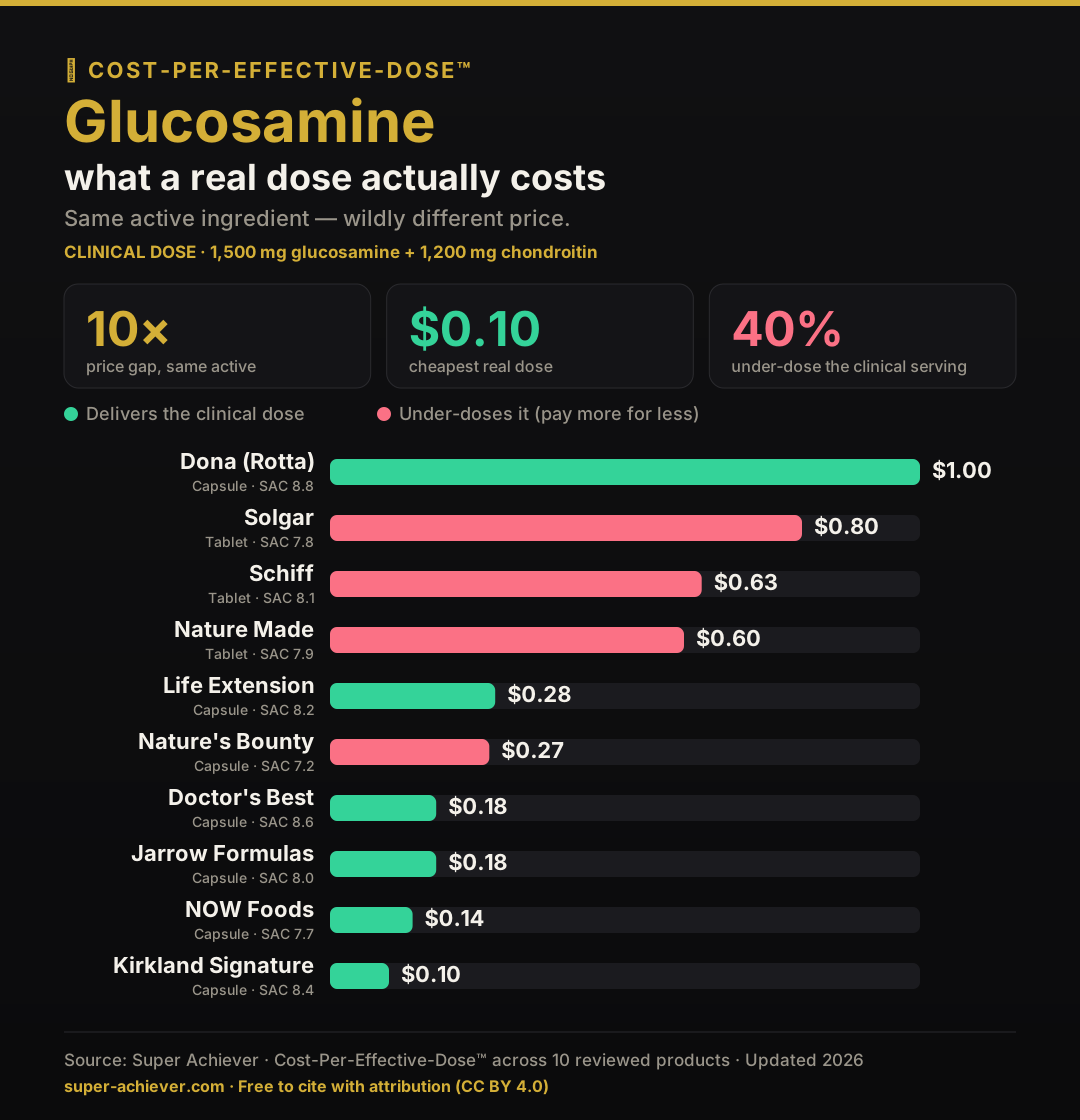
| # | Product | SAC Product Score™ | TXI™ | CPED™ | |
|---|---|---|---|---|---|
| 1 | Dona Crystalline Glucosamine SulfateCapsule | 8.8 | 20 | $1.00 | |
| 2 | Doctor's Best Glucosamine Chondroitin MSMCapsule | 8.6 | 20 | $0.18 | |
| 3 | Kirkland Signature Glucosamine ChondroitinCapsule | 8.4 | 20 | $0.10 | Best value |
| 4 | Life Extension Glucosamine/ChondroitinCapsule | 8.2 | 20 | $0.28 | |
| 5 | Nutricost Glucosamine Sulfate 1500 mgCapsule | 8.2 | 20 | $0.16 | |
| 6 | Schiff Move Free Advanced Plus MSMTablet | 8.1 | 0 | $0.63 | Under-dosed |
| 7 | Jarrow Formulas Glucosamine + Chondroitin + MSMCapsule | 8.0 | 20 | $0.18 | |
| 8 | Nature Made Glucosamine ChondroitinTablet | 7.9 | 45 | $0.60 | Most transparent |
| 9 | Solgar Glucosamine Chondroitin MSMTablet | 7.8 | 0 | $0.80 | Under-dosed |
| 10 | NOW Foods Glucosamine & ChondroitinCapsule | 7.7 | 40 | $0.14 | |
| 11 | Nature's Bounty Glucosamine Chondroitin ComplexCapsule | 7.2 | 0 | $0.27 | Under-dosed |
Methodology. SAC Product Score™ blends our editorial rating (RCT quality, dose, safety, value) 50/50 with community ratings. Transparency Index™ (0-100) = third-party certification (0-50) + public batch COA (0-30) + dose honesty (0-20). Cost-Per-Effective-Dose™ is the real price of one clinical dose, not one marketed "serving". Free to cite with attribution to Super Achiever.
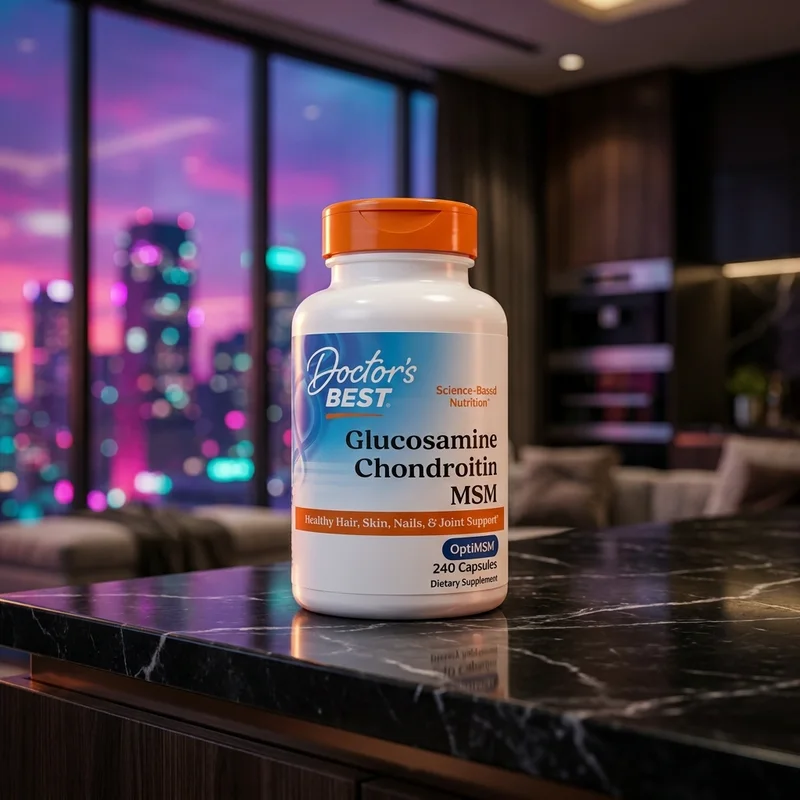
Doctor's Best Glucosamine Chondroitin MSM
What is Glucosamine & Chondroitin?
Glucosamine and chondroitin are naturally-occurring components of cartilage, sold together as the original and still best-known joint-health supplement. Glucosamine is an amino sugar the body uses to build glycosaminoglycans and proteoglycans — the molecules that give cartilage its cushioning. Chondroitin is one of those glycosaminoglycans directly, and it helps cartilage retain water and resist compression. The logic of supplementing is intuitive: provide the raw materials, support cartilage maintenance, slow osteoarthritis. The reality is more complicated and less flattering than the marketing.
Form is the first complication, and it's a big one. Glucosamine comes as glucosamine SULFATE and glucosamine HYDROCHLORIDE (HCl). The bulk of the positive European trial evidence used a specific patented CRYSTALLINE glucosamine sulfate (the prescription 'Rotta' preparation, dosed once daily at 1,500 mg), whereas much of the cheaper OTC supplement market — especially in the US — uses glucosamine HCl, which has thinner supporting data. A label that just says 'glucosamine 1500 mg' without specifying crystalline sulfate is not necessarily the form the better trials studied. Chondroitin sulfate is dosed around 1,200 mg/day and is usually combined with glucosamine.
So the honest framing is: this is the legacy joint supplement with the longest track record and the most real-world use — but also a supplement whose best clinical data is form-specific and whose largest, most rigorous trial was mostly negative.
How it works
Mechanistically, glucosamine and chondroitin supply substrate for cartilage matrix synthesis and may have mild anti-inflammatory effects on the joint — but the clinical results haven't matched the tidy mechanism. The landmark test was the NIH-funded GAIT trial (Clegg 2006, PMID 16495392), a large, rigorous, placebo- and celecoxib-controlled study of glucosamine, chondroitin, and the combination in knee osteoarthritis. Overall, none of the supplement arms separated significantly from placebo on the primary pain outcome. An exploratory subgroup analysis hinted that the glucosamine+chondroitin COMBINATION might help patients with moderate-to-severe knee pain — but that subgroup was only ~22% of participants, the analysis was not the primary endpoint, and the authors explicitly cautioned it needs confirmation. It has never been definitively confirmed.
The Cochrane review of glucosamine RCTs (Towheed, PMID 15846645) reached a consistent conclusion: pooled across all trials glucosamine looked modestly better than placebo for pain, but when the analysis was restricted to the highest-quality, lowest-bias studies, the benefit largely disappeared — except in trials using the specific Rotta-brand crystalline glucosamine sulfate, which showed a real function benefit. In other words, much of glucosamine's apparent effect tracks with study quality and brand/formulation rather than a robust, universal cartilage effect.
The practical read: glucosamine and chondroitin are very safe and well-tolerated, the downside of a trial is essentially just cost, and a real subgroup of moderate-to-severe knee-OA patients do report benefit. But the evidence does not support it as a first-line joint supplement for everyone — curcumin and undenatured type II collagen (UC-II) have cleaner, more consistent data.
At-a-glance facts
- Trial dose
- Glucosamine 1,500 mg/day + Chondroitin 1,200 mg/day
- Form matters
- Patented crystalline glucosamine SULFATE has better data than glucosamine HCl
- Evidence verdict
- Mixed — largely null overall (GAIT), possible moderate-severe-pain subgroup benefit
- Time to felt effect
- 2-3 months if you respond — run it as a defined trial
- Safety
- Very well tolerated; main caveat is shellfish-derived sourcing
- Cost range (US)
- $10-25 / month for the combination
- Better-evidenced alternatives
- Curcumin (matched ibuprofen), UC-II collagen (beat this combo in one trial)
- Stack note
- Often stacked with curcumin + omega-3 (inflammation) — different mechanism, no overlap
Evidence: Genuinely mixed. The NIH GAIT trial (Clegg 2006, PMID 16495392) found no significant overall benefit versus placebo, with only an unconfirmed moderate-to-severe-pain subgroup signal. The Cochrane review (Towheed, PMID 15846645) found the apparent benefit shrank in high-quality trials and concentrated in studies using patented crystalline glucosamine sulfate. Safe and worth a responder trial, but not a first-line joint supplement on the evidence.
Who it's for — and who it isn't
- People with moderate-to-severe knee osteoarthritis — the one subgroup where GAIT hinted the glucosamine+chondroitin combination might help
- Anyone who has personally responded to it before — individual response is real and idiosyncratic; if it worked for you, that's valid data
- Patients who want the most-studied, longest-track-record joint supplement and are willing to run a 2-3 month responder trial
- People specifically buying patented crystalline glucosamine SULFATE (1,500 mg once daily) — the form behind most of the positive European data
- Anyone wanting the strongest-evidence joint supplement first — curcumin and UC-II collagen have cleaner, more consistent RCT data
- People with mild osteoarthritis — the possible benefit was concentrated in the moderate-to-severe subgroup, not mild pain
- Shellfish-allergic individuals — most glucosamine is derived from shellfish (look for fermented/vegetarian glucosamine if needed)
- Anyone expecting a quick result — if it works at all, it takes 2-3 months; judge it on a defined trial, then stop if nothing changes
Week-by-week, what happens
- Week 1-4No change expected — glucosamine/chondroitin act slowly on cartilage maintenance, not acute pain.
- Month 2-3If you're a responder (most likely with moderate-to-severe knee OA), pain + function improvements show here. This is the decision window.
- Month 3+No benefit by now? You're probably a non-responder — stop and reallocate to better-evidenced options (curcumin, UC-II collagen). Responders continue.
Safety & contraindications
- Very well tolerated — the most common complaints are mild GI symptoms (nausea, heartburn). One of the safest joint supplements available.
- Most glucosamine is derived from shellfish (shrimp/crab shells). Shellfish-allergic individuals should choose a fermented or 'vegetarian' glucosamine, or avoid.
- Mild interaction signal with warfarin — some reports of increased INR when glucosamine/chondroitin is added. If you're anticoagulated, tell your prescriber and monitor.
- Diabetes: glucosamine is an amino sugar, and early concerns about blood-sugar effects have largely not held up at supplement doses — but monitor if you're diabetic and starting it.
- Buy a product that specifies the form (ideally crystalline glucosamine sulfate) and publishes third-party testing — the supplement market here is wide and quality varies.
All articles on Glucosamine & Chondroitin
Best Glucosamine & Chondroitin Supplements
Glucosamine & chondroitin ranked honestly — mixed evidence, so we prioritise the patented crystalline-sulfate form, a responder-trial mindset, and value.
Read →Doctor's Best Glucosamine Chondroitin MSM Review
The clean, full-dose combo to start your responder trial with.
Read →Dona Crystalline Glucosamine Sulfate Review
The one glucosamine form the high-quality evidence actually favors.
Read →Jarrow Formulas Glucosamine + Chondroitin + MSM Review
The full-spectrum combo for buyers who read the panel.
Read →Kirkland Signature Glucosamine Chondroitin Review
The cheapest legitimate full-dose combo — the ideal first trial.
Read →Life Extension Glucosamine/Chondroitin Review
The premium combo that earns its markup on form and transparency.
Read →Nature Made Glucosamine Chondroitin Review
The verified, trustworthy mainstream combo — testing-first buyers' pick.
Read →Nature's Bounty Glucosamine Chondroitin Complex Review
The supermarket-shelf budget combo — fine to start with, with caveats.
Read →NOW Foods Glucosamine & Chondroitin Review
The dependable, well-tested budget-plus combo — check the form.
Read →Nutricost Glucosamine Sulfate 1500 mg Review
1,500 mg glucosamine sulfate (KCl) once daily, the cheapest 3-month trial on the list, testing claim unverified. 8.2/10.
Read →Schiff Move Free Advanced Plus MSM Review
The convenient, recognizable combo — if you can live with light chondroitin.
Read →Solgar Glucosamine Chondroitin MSM Review
The trusted clean-label combo — you pay for the brand, not the formula.
Read →FAQ
Does glucosamine and chondroitin actually work for joint pain?
Honestly: for most people, the rigorous evidence is underwhelming. The big NIH GAIT trial (Clegg 2006, PMID 16495392) found no significant overall benefit versus placebo. The one bright spot was an exploratory subgroup of patients with moderate-to-severe knee pain, where the combination MIGHT have helped — but that was preliminary and never confirmed. The Cochrane review found the apparent benefit largely vanished in high-quality studies, except those using one specific patented form. So: it's safe, a real subset of people respond, and it's worth a 2-3 month trial if you have moderate-severe knee OA — but it shouldn't be your first choice, and the marketing oversells it.
Glucosamine sulfate vs HCl — does the form matter?
Yes, and it's the most overlooked point. Most of the positive European trial data used a specific PATENTED CRYSTALLINE GLUCOSAMINE SULFATE (the prescription 'Rotta' preparation, 1,500 mg once daily). Much of the cheap OTC market — especially in the US — uses glucosamine HYDROCHLORIDE (HCl), which has thinner evidence. If you're going to try glucosamine, look for crystalline glucosamine sulfate and the 1,500 mg once-daily dose the trials used, not just 'glucosamine 1500 mg' of an unspecified form.
Should I take glucosamine or curcumin for my knees?
On the current evidence, curcumin first. Curcumin matched ibuprofen for knee-OA pain in a head-to-head RCT and has consistent meta-analytic support, while glucosamine's largest rigorous trial was mostly negative. Undenatured type II collagen (UC-II) also beat glucosamine+chondroitin directly in one trial. Glucosamine's main argument is its long safety record and the responder subgroup — so a reasonable approach is curcumin (± UC-II collagen and omega-3) as the base, and a glucosamine trial only if those don't fully resolve moderate-to-severe pain.
How long until I know if it's working?
Give it 2-3 months, then make a decision. Glucosamine and chondroitin act slowly on cartilage maintenance, not acute pain, so the first weeks tell you nothing. If you have a meaningful reduction in pain and stiffness by month 3, you're a responder — continue. If there's no change, you're most likely a non-responder; stop and put the money toward better-evidenced options rather than taking it indefinitely on hope.
Sources & further reading
- Clegg 2006 (GAIT, NEJM)Glucosamine, chondroitin sulfate, and the two in combination for painful knee osteoarthritis
Large NIH-funded RCT (~1,580 patients) of glucosamine, chondroitin, the combination, celecoxib, and placebo. No supplement arm beat placebo significantly on the primary knee-pain outcome overall; an exploratory moderate-to-severe-pain subgroup (~22% of patients) hinted the combination might help, but the authors flagged it as preliminary and requiring confirmation.
- Towheed (Cochrane review)Glucosamine therapy for treating osteoarthritis (Cochrane systematic review)
Systematic review of glucosamine RCTs: pooled results favoured glucosamine for pain, but the benefit shrank toward null when restricted to the highest-quality, lowest-bias studies — and concentrated in trials using the patented Rotta-brand crystalline glucosamine sulfate, underscoring that form and study quality drive the apparent effect.