
Nature's Bounty Glucosamine Chondroitin Complex Review
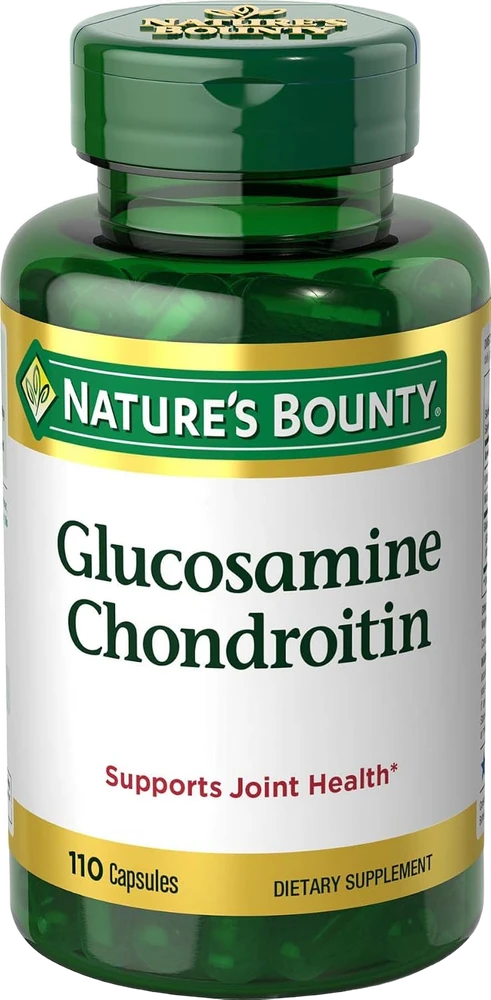 #11 of 11 · Mass-market budget
Real retailer photo, cut out. Label unedited.
Consider it. The supermarket-shelf budget combo — fine to start with, with caveats. A real glucosamine-chondroitin product at a true budget price from a familiar mass-market brand, and a low-stakes way to begin a trial if it's what's on the shelf.
$15 / month (110 caps)$0.27 / serving
Why It Scores 6.8 — And The Label Line Behind Each Number
Form honesty (evidence-graded)
35% of scoreGlucosamine HCl — the weakest-evidenced of the glucosamine forms, since the Cochrane data favor crystalline sulfate. Paired with a chondroitin 'complex' whose actual dose the label can obscure. In a category where form is precisely what the high-quality evidence rewards, this is the lowest form tier on the list, and it's the main reason for the #10 ranking.
- Active form
- Glucosamine HCl + chondroitin 'complex'
- Per serving
- ~1,500 mg glucosamine + chondroitin complex (verify the real chondroitin mg on the panel)
- Form note
- HCl is the weakest-evidenced glucosamine form; chondroitin dose can run under 1,200 mg
Dose alignment with the trials
25% of scoreGlucosamine is typically at the full ~1,500 mg, but the chondroitin arrives as a 'complex' that can come in below the 1,200 mg the trials used — and chondroitin is the aisle's most commonly under-dosed ingredient. You have to read the panel to find the real number. If it's well under trial dose, you're effectively buying glucosamine with a chondroitin garnish.
Third-party testing + label accuracy
25% of scoreNature's Bounty is cGMP-certified with standard mass-market QC — adequate, and the brand is a familiar, long-established name. But there's no standout independent third-party certification (USP/NSF), and the 'complex' framing reduces label transparency on the very ingredient most worth verifying. Nature Made (#7) offers a USP mark for similar money.
- Testing
- Nature's Bounty QC, cGMP-certified — no standout third-party cert
- Manufacturer
- Nature's Bounty (long-established mass-market house brand)
Cost per 3-month responder trial
15% of scoreAbout $15/month (~$0.27/serving) — genuinely cheap and available everywhere, which is its real appeal. The catch is that Kirkland (#2) is even cheaper per serving AND delivers the verified full 1,200 mg chondroitin, so Nature's Bounty isn't even the best-value budget option. Good price, just not category-leading value once you account for the under-dose risk.
- Bottle
- 110 capsules · ~1 month supply
- Price
- ~$15 / month = ~$0.27 per serving
- More Specs
- Availability
- Stocked in essentially every supermarket and drugstore
Marketing Claims Vs. Reality
Supports joint comfort, flexibility, and mobility.
Real for a subset of users, oversold for everyone. GAIT (Clegg 2006, PMID 16495392) found glucosamine + chondroitin was NOT significantly better than placebo for knee-OA pain overall, with only an exploratory moderate-to-severe-pain subgroup signal. A responder trial — not a guaranteed joint fix — and that's before the form and dose caveats.
A complex of glucosamine and chondroitin.
Technically true, but the 'complex' framing is exactly the issue. It can mean the chondroitin is blended down to a level below the 1,200 mg the trials used. Read the panel for the real chondroitin milligrams before relying on it — chondroitin is the most commonly under-dosed ingredient in the category.
Trusted Nature's Bounty quality.
Fair as far as it goes — the brand is cGMP-certified with standard mass-market QC and a long track record. But 'trusted quality' here is internal/standard manufacturing, not an independent third-party certification like USP (Nature Made #7) or NSF. Reasonable baseline assurance; not an outside verifier's stamp.
What Our Test Actually Found
The 'complex' label is the one thing to read before you trust it
Chondroitin is expensive, and it's the most commonly under-dosed ingredient in the joint aisle. The word 'complex' on this bottle can mean the chondroitin is delivered below the 1,200 mg/day the trials used — blended with cheaper fillers to keep the price down. The glucosamine is usually at the full ~1,500 mg, but the chondroitin is the half worth verifying. Thirty seconds reading the supplement-facts panel tells you the real number. If it's well under 1,200 mg, treat this as a glucosamine product with a chondroitin garnish rather than a true full-dose combo.
HCl is the weakest-evidenced glucosamine form
Nature's Bounty uses glucosamine hydrochloride (HCl). The Cochrane review (Towheed 2005, PMID 15846645) found glucosamine's apparent benefit shrank in high-quality trials and concentrated in studies using patented crystalline glucosamine SULFATE — not HCl. That doesn't make HCl worthless; at full dose it's a legitimate trial. But in a category where form is what the evidence rewards, HCl is the bottom tier, and it's a core reason this bottle ranks last. If form quality matters, the crystalline sulfate (Dona, #1) is the evidence-favored choice.
Kirkland does the budget job better — for similar money
The awkward fact for Nature's Bounty is that the cheapest pick on the list also out-specs it. Kirkland (#2) is cheaper per serving AND lists the verified full 1,200 mg chondroitin at proper strength. So the one thing Nature's Bounty competes on — budget convenience — Kirkland does better, with a transparent full dose instead of a 'complex.' Nature's Bounty's edge is purely availability: it's on the supermarket shelf today, whereas Kirkland means a Costco membership or an online order. If you're ordering deliberately, that edge evaporates.
It's the honest 'fine, with caveats' entry — not a quality failure
Ranking last doesn't mean it's bad. Nature's Bounty is a real glucosamine-chondroitin product from a cGMP-certified mass-market brand, and as a low-stakes way to start a trial with whatever's on the shelf, it's perfectly serviceable. The ranking simply reflects that every axis the category competes on — form, verified dose, third-party certification, value — has a pick that does it a little better for similar money. Buy it for convenience and a no-commitment start; just go in knowing what you're trading away.
Run the trial, then upgrade if you respond
Treat Nature's Bounty as a trial-starter. Take the full daily serving with food for 8-12 weeks and judge it honestly on your own joints — glucosamine acts slowly, so the first weeks tell you nothing. The 110-cap bottle is about a month, so you'll buy two or three to complete a real trial. If your stiffness and morning ache are clearly better by month 3, you're a responder — and that's the moment to upgrade to Kirkland (#2) for the verified full dose or Dona (#1) for the best-evidenced form. If nothing changes, you're most likely a non-responder; stop and reallocate to better-evidenced joint options like curcumin or UC-II collagen.
Full analysis: all pros & cons (8), buy if / skip if
- Cheap and available in every supermarket and drugstore in the country
- Real glucosamine + chondroitin at a true budget price
- Recognizable mass-market brand for buyers who want something familiar
- Fine as a low-stakes way to start a trial if it's what's on the shelf today
- The chondroitin 'complex' label can disguise a dose below the 1,200 mg trial level — read the panel
- Glucosamine HCl form, the weakest-evidenced of the glucosamine forms
- No standout third-party certification — Kirkland (#2) is cheaper AND hits the full chondroitin dose
- Like the whole category, the averaged trial benefit is modest — a trial, not a guarantee
- It's the bottle already in front of you and you want a low-stakes way to start
- You want a familiar, recognizable mass-market brand at a true budget price
- You're fine reading the panel to confirm the actual chondroitin milligrams
- You just want to test whether you respond before investing in a better form
- You're ordering deliberately — Kirkland (#2) is cheaper AND hits the full chondroitin dose
- You want the best-evidenced form — crystalline glucosamine sulfate is at #2
- You want an independent third-party mark — Nature Made (#7) is USP Verified
A real glucosamine-chondroitin product at a true budget price from a familiar mass-market brand, and a low-stakes way to begin a trial if it's what's on the shelf. The honest catches: the chondroitin 'complex' can disguise a dose below the 1,200 mg trial level, the glucosamine is the weakest-evidenced HCl form, and Kirkland (#2) is cheaper AND lists the verified full dose. Read the panel; upgrade if you're ordering deliberately.
Nature's Bounty is the bottle you'll see in every supermarket and drugstore in the country — the recognizable mass-market combo at a true budget price. It's a real glucosamine-chondroitin product, and if it's already in your cart there's no harm in starting a trial with it. But it lands at #10 for honest reasons: the chondroitin arrives as a 'complex' that can come in under the trial dose, the glucosamine is the weakest-evidenced HCl form, and for almost the same money Kirkland (#2) gives you the verified full 1,200 mg of chondroitin. Buy it for convenience; upgrade if you're ordering deliberately. Here's the full breakdown — and exactly what to read on the panel before you trust it.
The supermarket budget combo — buy for convenience, upgrade if ordering deliberately.

Nature's Bounty is the honest 'it's fine, with caveats' entry on the list. It's a real glucosamine-chondroitin product at a true budget price, and if it's the bottle already in your cart at the supermarket, there's no harm in starting your trial with it — glucosamine is well tolerated and the downside is small. As a no-commitment way to test whether you respond at all, it does the job. But it ranks #10 for reasons worth taking seriously. The chondroitin arrives as a 'complex' that can come in under the 1,200 mg the trials used, so you have to read the panel to know what you're actually getting. The glucosamine is the weakest-evidenced HCl form. And for almost the same money, Kirkland (#2) gives you the verified full 1,200 mg chondroitin, while Nature Made (#7) adds a USP mark and Dona (#1) brings the best-evidenced crystalline sulfate. So buy this for convenience and a low-stakes start; the moment you're ordering deliberately rather than grabbing what's on the shelf, upgrade. Read the panel, run the full serving for 3 months, and make an honest keep-or-upgrade call.
If This Doesn’t Fit — Try These
 04
Life Extension Glucosamine Chondroitin
Life Extension is the premium pick that actually justifies its price in this category.
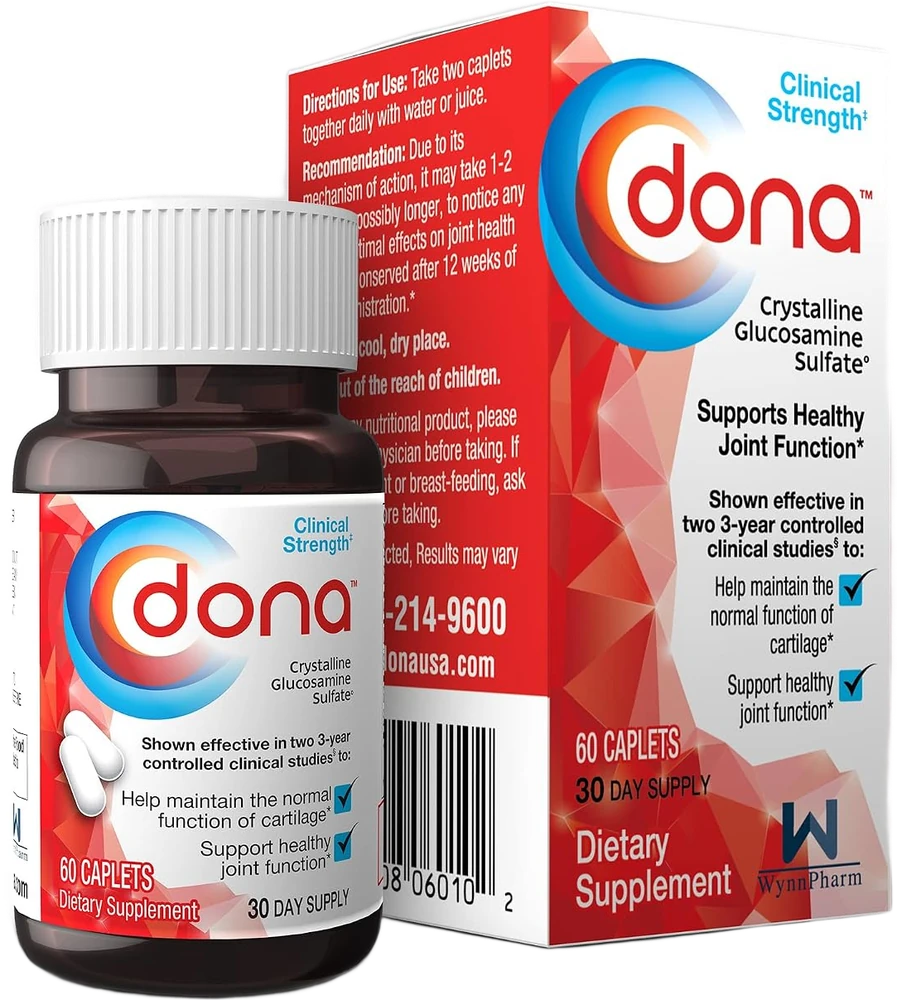 01
Dona Crystalline Glucosamine Sulfate
If you are going to take glucosamine seriously, this is the form to take.
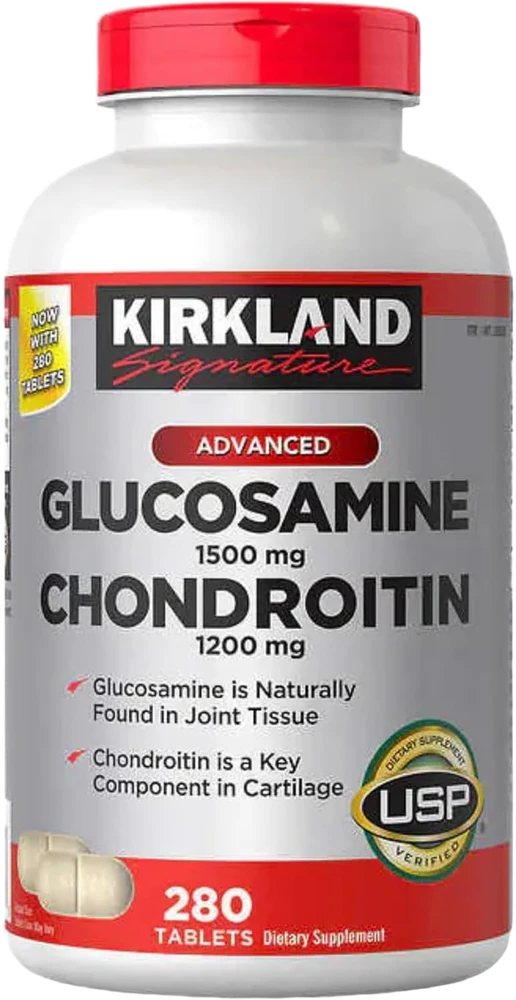 02
Kirkland Glucosamine Chondroitin
If you just want to find out whether you respond to glucosamine-chondroitin without spending real money, buy Kirkland.
Quick Answers
What does the chondroitin 'complex' on the label actually mean?
It's the single most important thing to check on this bottle. 'Chondroitin complex' is a marketing phrase, not a guaranteed dose — it often means the chondroitin is blended with other ingredients and delivered at a level below the 1,200 mg/day the GAIT and other trials used. Chondroitin is an expensive ingredient, and it's the most commonly under-dosed component in the entire joint-supplement aisle. So before you rely on this for the chondroitin half of the combo, read the supplement-facts panel and find the actual milligram figure for chondroitin. If it's well under 1,200 mg, you're essentially buying a glucosamine product with a chondroitin garnish. For almost the same money, Kirkland (#2) lists the verified full 1,200 mg.
Is glucosamine HCl as good as the sulfate form?
No — HCl is the weakest-evidenced of the glucosamine forms, and that's a real (if modest) knock. The Cochrane review (Towheed 2005, PMID 15846645) found glucosamine's apparent benefit concentrated in trials using patented crystalline glucosamine SULFATE; the HCl form used here has thinner supporting data. That doesn't make HCl useless — at the full dose it's a legitimate trial — but if form quality matters to you, the crystalline sulfate (Dona, #1) is the evidence-favored pick, and several combos higher on the list use sulfate on at least some SKUs. Nature's Bounty's HCl form is part of why it sits at the bottom of the ranking.
If it's cheap and on the shelf, is there any harm in just starting with it?
No real harm — and that's the honest case for it. If you're standing in the supermarket and this is the bottle in front of you, it's a real glucosamine-chondroitin product and a low-stakes way to begin an 8-12 week trial. Glucosamine is very well tolerated, so the downside is small. The only thing you're giving up versus ordering deliberately is form (HCl vs sulfate) and a verified full chondroitin dose. So: fine as a convenience start; if you find you're a responder and want to continue, that's the moment to upgrade to Kirkland (#2) for the verified dose or Dona (#1) for the best form.
Why does it rank last if it's a real product at a good price?
Because almost everything it does, another pick on the list does a little better for similar money — and the ranking rewards that. Kirkland (#2) is cheaper per serving AND lists the full 1,200 mg chondroitin. Nature Made (#7) carries a USP Verified third-party mark. Doctor's Best (#3) and the sulfate picks bring better form. Nature's Bounty's combination of glucosamine HCl (weakest form), a chondroitin 'complex' that can under-dose, and no standout third-party certification leaves it as the honest 'it's fine, with caveats' entry. It's genuinely usable — it just isn't the best version of any single thing the category competes on.
How should I run the trial, and is it safe?
Run it like any bottle in this category: take the full daily serving with food for 8-12 weeks, then make an honest keep-or-stop call, because glucosamine works slowly on cartilage maintenance, not acute pain. The 110-capsule bottle is roughly a month, so you'll buy two or three to complete a proper trial. Safety is reassuring — glucosamine is one of the safest joint supplements, usually causing at most mild GI upset. Standard caveats apply: it's typically shellfish-derived (shellfish-allergic buyers should avoid or find a fermented source), there's a mild warfarin interaction signal (tell your prescriber if anticoagulated), and diabetics should monitor blood sugar when starting, though concerns at supplement doses have largely not held up.
Sources & Further Reading
2 peer-reviewed sources, each linked to PubMed
- [1] Clegg 2006 (GAIT) PMID 16495392 — Glucosamine, chondroitin sulfate, and the two in combination for painful knee osteoarthritis. The NIH-funded GAIT trial (~1,583 patients) found glucosamine HCl, chondroitin sulfate, and the combination were NOT significantly better than placebo for knee-OA pain overall, with only an exploratory moderate-to-severe-pain subgroup signal. Why even a familiar mass-market combo like Nature's Bounty is framed as a responder trial, not a proven fix — and why under-dosing the chondroitin matters.
- [2] Towheed 2005 (Cochrane) PMID 15846645 — Glucosamine therapy for treating osteoarthritis. Cochrane review: glucosamine's apparent benefit shrank in high-quality trials and concentrated in studies using patented crystalline glucosamine SULFATE. The basis for grading Nature's Bounty's glucosamine HCl as the weakest-evidenced form, and for ranking the crystalline sulfate (#2) and verified-dose combos above it.
Affiliate disclosure: every Amazon link uses our Associates tag (superachieverclub-20). We earn a small commission at no cost to you; it funds independent reviews. We never accept payment to change a ranking.