
Schiff Move Free Advanced Plus MSM Review
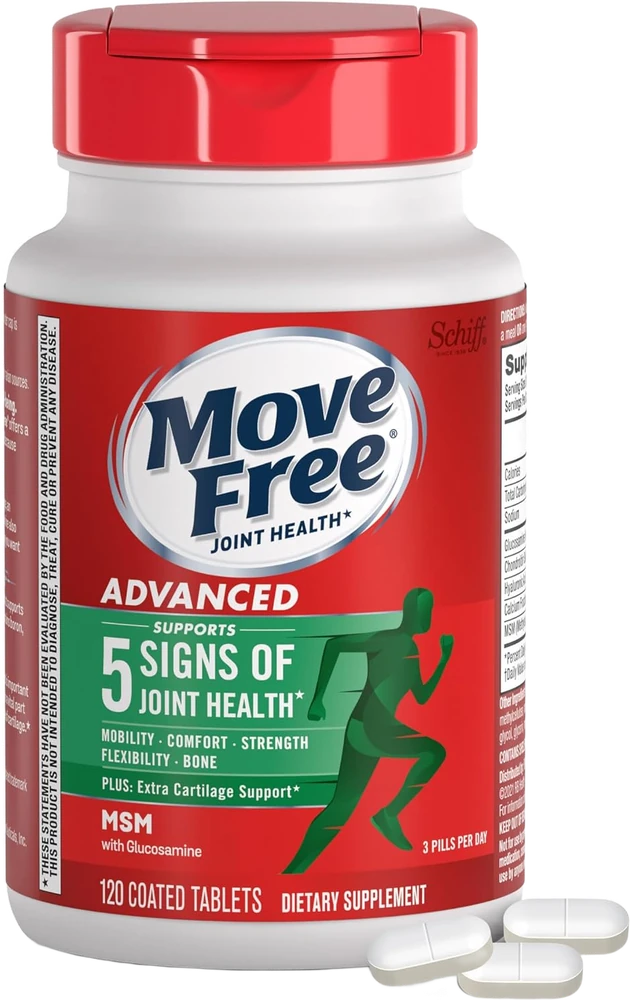 #9 of 11 · Best combo
Real retailer photo, cut out. Label unedited.
Consider it. The convenient, recognizable combo — if you can live with light chondroitin. Full glucosamine dose + MSM + hyaluronic acid in just 2 tablets a day, from the best-known joint brand in every US pharmacy.
$25 / month (80 tablets · 2/day, ~40-day supply)$0.63 / 2-tablet serving
Why It Scores 7.3 — And The Label Line Behind Each Number
Form honesty (evidence-graded)
35% of scoreGlucosamine HCl + chondroitin + MSM + hyaluronic acid. The glucosamine is the weaker-evidenced HCl form, and the chondroitin — while present — typically sits below the trial dose, so the 'Advanced' formula effectively leans on glucosamine + MSM. The hyaluronic acid is a small narrative add. Honest mid-grade.
- Active form
- Glucosamine HCl + chondroitin + MSM + hyaluronic acid
- Per serving
- 1,500 mg glucosamine + chondroitin + MSM (per 2 tablets)
Dose alignment with the trials
25% of scoreDelivers the full 1,500 mg glucosamine in 2 tablets — that part is trial-aligned and convenient. But the chondroitin usually comes in under the 1,200 mg the trials used, so you're trialing a glucosamine-plus-MSM stack more than the classic 1,500/1,200 combo. Glucosamine dose: good. Chondroitin dose: light.
Third-party testing + label accuracy
25% of scoreMajor-brand QC with USP-style manufacturing and nationwide availability — Schiff is an established, reputable maker. But no headline USP/NSF mark on this SKU, which matters in a category where chondroitin is the most frequently under-dosed ingredient. Reputable, but not independently verified the way Nature Made (#7) is.
- Testing
- Major-brand QC, USP-style manufacturing; widely available
- Manufacturer
- Schiff (established US supplement brand)
Cost per 3-month responder trial
15% of scoreAbout $25/month (~$75 for the trial) — inside the fair band, but pricier than Kirkland (#2, ~$13) or Doctor's Best (#3) for broadly similar or better actives. You're partly paying for brand recognition and the 2-tablet convenience. Reasonable, not the value leader.
- Bottle
- 80 tablets · ~40 days at 2/day
- Price
- ~$25 / 80-tablet bottle = ~$0.63 per 2-tablet serving
- More Specs
- Pill load
- 2 tablets/day — lightest of any full-glucosamine combo on the list
- Chondroitin note
- Typically below the 1,200 mg trial dose — verify on the panel
Marketing Claims Vs. Reality
America's #1 joint health supplement brand.
Move Free is genuinely among the best-selling and most recognizable joint-supplement lines in US retail, available in essentially every pharmacy. The popularity claim is real — though popularity reflects brand and distribution, not superior evidence over cheaper combos.
Supports joint comfort, mobility, and flexibility.
Real for a subset of users, oversold for everyone. GAIT (Clegg 2006, PMID 16495392) found glucosamine + chondroitin was NOT significantly better than placebo overall; only an exploratory moderate-to-severe-pain subgroup may have benefited. Worth a responder trial, not a guaranteed mobility fix.
Advanced formula with MSM and hyaluronic acid for extra support.
MSM and hyaluronic acid are genuinely in the formula and don't interfere with anything — but their joint evidence is thin, and the 'Advanced' framing partly compensates for a chondroitin dose that usually sits below the trial level. Real ingredients, but they don't make the combo more proven than glucosamine alone.
Just two tablets a day for full joint support.
True and a genuine convenience advantage — the full 1,500 mg glucosamine in 2 tablets versus the 4 capsules the other full-dose combos require. The trade is the chondroitin dose, but the 2-tablet claim itself is accurate.
What Our Test Actually Found
The 2-tablet convenience is real — and so is what it costs you
Move Free's standout feature is genuine: it delivers the full 1,500 mg glucosamine in just 2 tablets a day, versus the 4 capsules every other full-dose combo on our list demands. For a supplement whose entire value depends on taking it consistently for months, that lighter pill load is a legitimate adherence advantage. But the tablets get that small partly by trimming the chondroitin, which is the expensive, bulky ingredient. So the convenience is real — and it's paid for in chondroitin dose. That's the central trade-off of this bottle.
You're trialing glucosamine-plus-MSM more than the classic 1,500/1,200 combo
Be clear about what's actually in the tablet. The full glucosamine dose is there, but the chondroitin typically comes in under the 1,200 mg the trials used, so the 'Advanced' formula effectively leans on glucosamine + MSM + a little hyaluronic acid. If your mental model is 'I'm running the classic glucosamine-chondroitin combo trial,' adjust it — you're running a glucosamine-HCl-plus-MSM trial. Whether that matters is debatable (the category evidence is mixed regardless of chondroitin dose), but you should know what you're testing.
Brand familiarity is worth something — just not a dose premium
Move Free is the joint brand people recognize, stocked in every US pharmacy, which makes reorders and offline backup trivial. For buyers who want something familiar and trusted from a shelf they already shop, that's a real, if soft, benefit. What it doesn't justify is paying more than Kirkland (#2) for fewer chondroitin milligrams. If the brand name genuinely makes you more likely to stick with the trial, the small premium is defensible. If you're indifferent to branding, the cheaper full-dose combos are the better buy.
It's the weaker-evidenced HCl form, like most combos
Move Free uses glucosamine HCl, not the crystalline sulfate the Cochrane data favor (the Dona form at #2). That puts it in the same evidence tier as the other US combos — fine for a convenience-first trial, but a step below crystalline sulfate on form-quality. If you specifically want the best-evidenced form, this isn't it; if you want a recognizable, low-pill-load combo and accept the HCl form, Move Free does that job. We rank it #3 for convenience and brand, with honest marks-off for chondroitin dose and form.
Run the trial, then apply the stop rule
Use Move Free the same disciplined way as any bottle in this category: take 2 tablets daily for 8-12 weeks, then judge it honestly on your own joints. Better stiffness and morning ache? Keep going — it's cheap, safe, and convenient. Nothing after 3 months? You're most likely a non-responder; stop and reallocate to better-evidenced joint options (curcumin, UC-II collagen). The convenience makes the trial easier to complete, which is exactly why a 2-tablet combo can be a sensible first experiment even with its lighter chondroitin.
Full analysis: all pros & cons (8), buy if / skip if
- The category's most recognized combo — glucosamine + chondroitin + MSM + hyaluronic acid in one tablet line
- Only 2 tablets/day for the full glucosamine dose — the lightest pill load of any full-glucosamine combo on the list
- Available in every pharmacy in America, so reorders and offline backup are trivial
- MSM + hyaluronic acid round out the joint-comfort angle buyers want from this category
- Chondroitin dose is typically below the 1,200 mg trial level — the 'Advanced' formula leans on glucosamine + MSM
- Glucosamine HCl form, not the better-evidenced crystalline sulfate (#2)
- Pricier per month than Kirkland or Doctor's Best for broadly similar actives
- No headline USP/NSF cert — major-brand QC but not independently verified like Nature Made (#7)
- You want the lightest pill load of any full-glucosamine combo — just 2 tablets/day
- You value pharmacy-shelf availability and the most recognizable joint brand
- You want MSM and hyaluronic acid rounding out the combo
- Adherence is your bottleneck and a simpler regimen helps you stick to the trial
- You want the chondroitin at the full 1,200 mg trial dose — it usually comes in lighter here
- You want the best-evidenced form — this is HCl, not crystalline sulfate (#2)
- You want the best price for the actives — Kirkland (#2) is cheaper for more chondroitin
Full glucosamine dose + MSM + hyaluronic acid in just 2 tablets a day, from the best-known joint brand in every US pharmacy. A reasonable convenience-first combo trial. The honest catch: the chondroitin usually sits below the 1,200 mg trial level, and it's the weaker-evidenced HCl form. Buy for the light pill load and brand familiarity; go to #1 or #4 if you want the chondroitin at full strength for less.
Move Free is the bottle most people picture when they hear 'joint supplement,' and as a combo trial it's perfectly reasonable: the full 1,500 mg glucosamine dose, MSM, a little hyaluronic acid, and only two tablets a day. Its real edge is convenience — the lightest pill load of any full-glucosamine combo on our list, from the most recognizable joint brand on the drugstore shelf. The honest catch, and the reason it lands at #8 rather than higher, is that the chondroitin usually comes in under the trial dose, so you're really trialing a glucosamine-HCl-plus-MSM stack more than the classic 1,500/1,200 combo. If you want convenience and brand familiarity from a pharmacy shelf, it's a fine place to run your 3-month trial. If you want the chondroitin at full dose, Doctor's Best (#3) or Kirkland (#2) deliver it for less. Here's the full breakdown.
The convenient, familiar combo — fine for a trial, light on chondroitin.

Move Free is a perfectly reasonable place to run a glucosamine combo trial if convenience and brand familiarity are what you value. The full glucosamine dose in just 2 tablets a day is a genuine adherence advantage, MSM and hyaluronic acid round out the formula, and the pharmacy-shelf availability makes it the easiest bottle on the list to reorder. For the buyer who wants something recognizable and low-effort, it does the job. The reasons it lands at #8 rather than higher are honest ones: the chondroitin usually comes in under the trial dose, so you're really trialing a glucosamine-HCl-plus-MSM stack rather than the classic 1,500/1,200 combo; it's the weaker-evidenced HCl form; and it costs more than Kirkland for broadly similar or fewer actives. If you want the chondroitin at full strength, Doctor's Best (#3) or Kirkland (#2) deliver it for less. If you want the best-evidenced form, that's the Dona crystalline sulfate (#1). But if the 2-tablet convenience and a trusted brand are what get you to actually complete a 3-month trial, Move Free is a defensible choice — just go in knowing what's in the tablet.
If This Doesn’t Fit — Try These
 04
Life Extension Glucosamine Chondroitin
Life Extension is the premium pick that actually justifies its price in this category.
 01
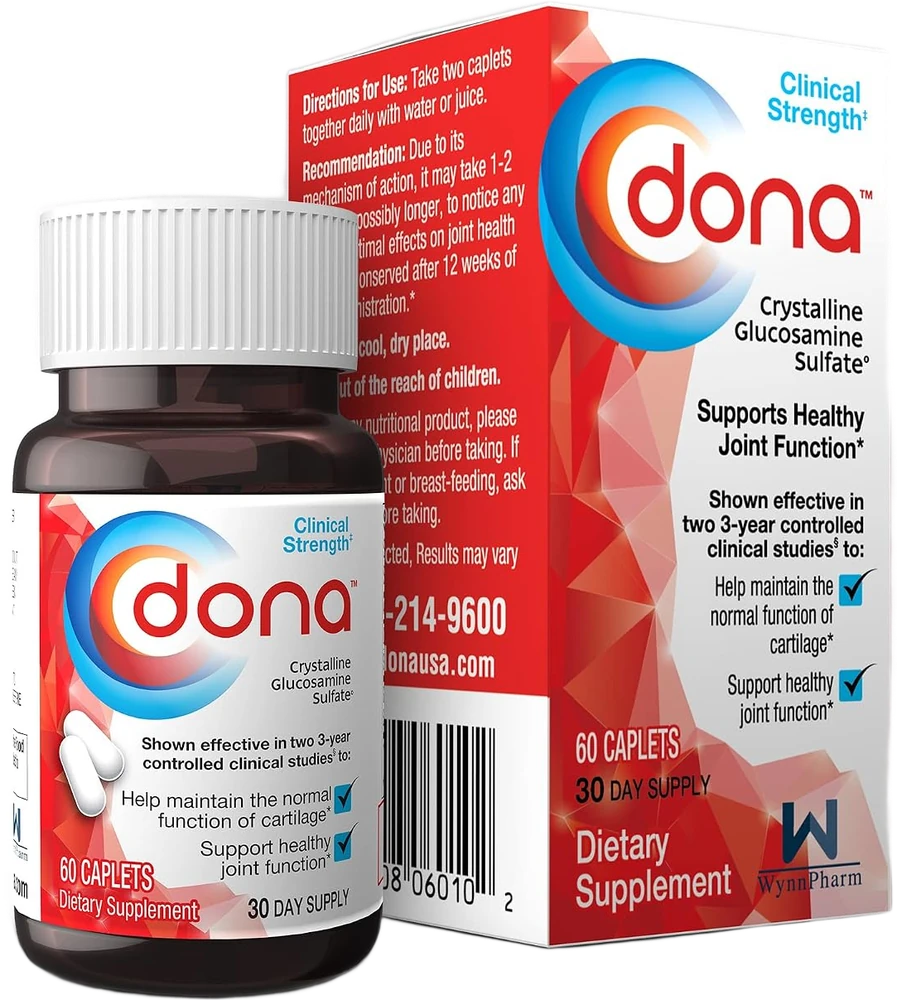
Dona Crystalline Glucosamine Sulfate
If you are going to take glucosamine seriously, this is the form to take.
 02
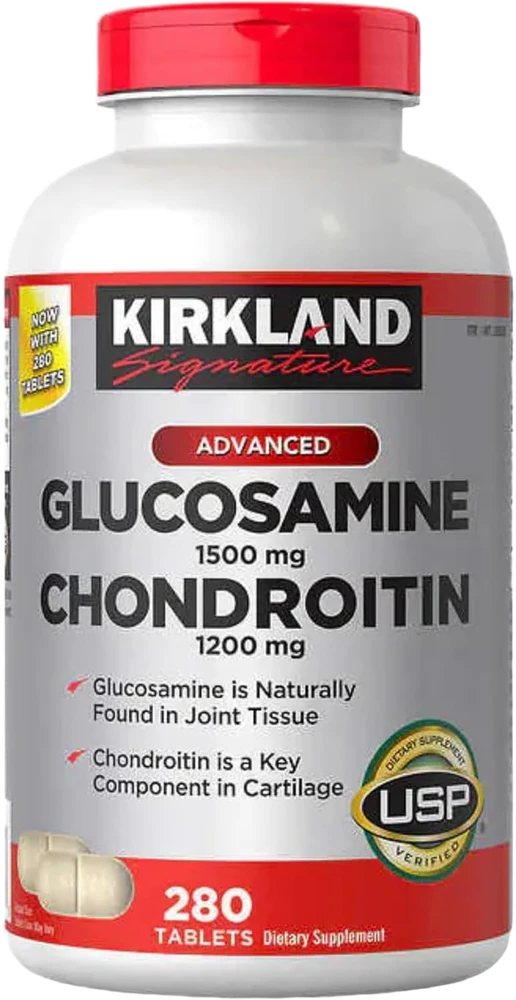
Kirkland Glucosamine Chondroitin
If you just want to find out whether you respond to glucosamine-chondroitin without spending real money, buy Kirkland.
Quick Answers
Is Move Free's chondroitin dose really below the trial level?
Usually, yes — and it's the most important thing to know about this bottle. The trials that anchor the category (GAIT, the Dona crystalline-sulfate studies) used ~1,200 mg/day chondroitin. The 'Advanced' formula typically leans on the full glucosamine dose plus MSM and hyaluronic acid, with chondroitin coming in lighter. So you're really trialing a glucosamine-HCl-plus-MSM stack more than the classic 1,500/1,200 combo. That's not necessarily bad — the category evidence is mixed regardless of chondroitin dose — but if you specifically want the chondroitin at full strength, Doctor's Best (#3) or Kirkland (#2) deliver it for less.
Only 2 tablets a day — how does it fit the full glucosamine dose?
That's Move Free's main practical selling point: it delivers the full 1,500 mg glucosamine in just 2 tablets, versus the 4 capsules the other full-dose combos require. The lighter pill load is genuinely easier to stick to for the months a real trial needs. The catch is what gets traded to make the tablets that small — the chondroitin dose. If you hate swallowing capsules and adherence is your bottleneck, the 2-tablet convenience is a legitimate reason to choose this over the 4-cap combos.
What do the MSM and hyaluronic acid add?
They round out the joint-comfort angle people actually buy this category for. MSM (methylsulfonylmethane) has its own modest joint-comfort signal in small trials; hyaluronic acid is a component of joint fluid and is included at a small dose for the cushioning narrative. Both are reasonable inclusions that don't interfere with anything — but treat them as supporting cast, not the headline. The core of what you're trialing is still glucosamine, and the averaged evidence for the whole combo stays modest. Don't let the 'kitchen-sink' label convince you it's more proven than glucosamine alone.
Move Free or the cheaper full-dose combos — which should I get?
Decide by what you value. Move Free wins on convenience and brand familiarity: 2 tablets a day, available in every pharmacy in America, the most recognizable joint brand on the shelf. The cheaper full-dose combos (Kirkland #2 at ~$13/month, Doctor's Best #3) win on chondroitin dose and price — they actually deliver the 1,200 mg chondroitin the trials used, for less money. If pill-load and brand trust matter most, Move Free. If you want the full classic dose of both actives at the best price, go with Kirkland or Doctor's Best.
How long should I trial it before deciding?
8-12 weeks, then make an honest keep-or-stop call. Glucosamine and the combo ingredients act slowly on cartilage maintenance, not acute pain, so the first weeks tell you nothing. If your stiffness and morning ache are meaningfully better by month 3, you're a responder — continue. If nothing has changed, you're most likely a non-responder, and the smart move is to stop. This is a cheap, safe, time-boxed trial with a real stop rule — not a supplement to take indefinitely on hope.
Is it safe, and any interactions?
Very well tolerated — usually just mild GI symptoms (nausea, heartburn) at worst, and it's one of the safest joint supplements around. The standard glucosamine caveats apply: it's typically shellfish-derived, so shellfish-allergic people should look for a fermented/vegetarian source or avoid it; there's a mild interaction signal with warfarin (possible raised INR), so anticoagulated users should tell their prescriber and monitor; and diabetics should monitor blood sugar when starting, though concerns at supplement doses have largely not held up.
Sources & Further Reading
2 peer-reviewed sources, each linked to PubMed
- [1] Clegg 2006 (GAIT) PMID 16495392 — Glucosamine, chondroitin sulfate, and the two in combination for painful knee osteoarthritis. The NIH-funded GAIT trial (~1,583 patients) found glucosamine HCl, chondroitin sulfate, and the combination were NOT significantly better than placebo for knee-OA pain overall. Only an exploratory moderate-to-severe-pain subgroup may have benefited — the reason a convenient HCl combo like Move Free is framed as a responder trial, not a proven mobility fix.
- [2] Towheed 2005 (Cochrane) PMID 15846645 — Glucosamine therapy for treating osteoarthritis. Cochrane review: glucosamine's apparent benefit shrank in high-quality trials and concentrated in studies using patented crystalline glucosamine SULFATE. Move Free uses the weaker-evidenced HCl form, placing it a tier below the crystalline sulfate pick (#2) on form-quality.
Affiliate disclosure: every Amazon link uses our Associates tag (superachieverclub-20). We earn a small commission at no cost to you; it funds independent reviews. We never accept payment to change a ranking.