
Top 8 Best Retinol Serums & Creams (2026)
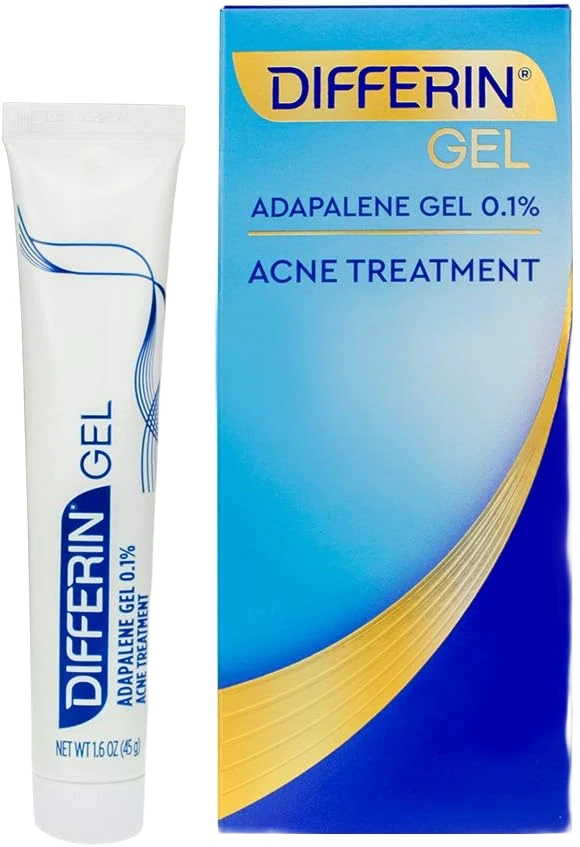 01 · Best overall✓ Product photos checked Sep 7, 2026
Best overall (true OTC retinoid): Differin Adapalene Gel 0.1%
The one OTC product that isn't really "retinol" — it's a true synthetic retinoid that binds the receptor directly, no conversion needed. The strongest evidence base on the shelf, and it costs less than almost everything below it.
$13 / 45g pump (~90-day supply)≈ $4.30 / month of use
Why it wins: all five scores, pros & cons, full label
- A real retinoid — works without the conversion penalty every retinol below it pays
- Deepest evidence base you can buy OTC: dozens of acne RCTs plus procollagen/anti-aging data (Kang 2005)
- Was prescription-only until 2016 — genuine dermatological potency at a drugstore price
- Remarkably cheap per month; a single pump lasts around 90 days
- It's a gel built for acne first — drier skin will need a moisturizer layered over it
- Still causes a real purge and dryness in weeks 1–4; you must start 2–3×/week, not daily
- No added barrier extras (niacinamide/ceramides) — you buffer it yourself with your moisturizer
- Active
- Adapalene 0.1% (third-gen retinoid)
- Mechanism
- Binds retinoic-acid receptor directly — no conversion
- Best for
- Acne + anti-aging; the OTC powerhouse
- Format
- Lightweight gel, 45g metered pump

Our take — If you only take one thing from this list, take this: the most effective retinoid you can buy without a doctor is also one of the cheapest. Adapalene is a true retinoid — it skips the conversion queue that weakens every retinol below it — and it has the strongest data on the shelf for both acne and, increasingly, wrinkles. It's a bare gel with no hand-holding ingredients, so start twice a week, moisturize over it, and ride out the purge. Wear sunscreen daily and never use it while pregnant. For almost everyone, this $13 tube outperforms serums four times its price.
 02
02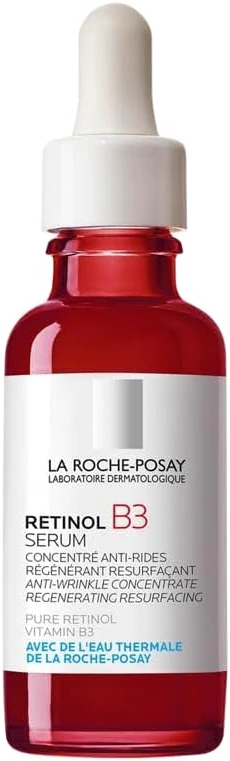 03
03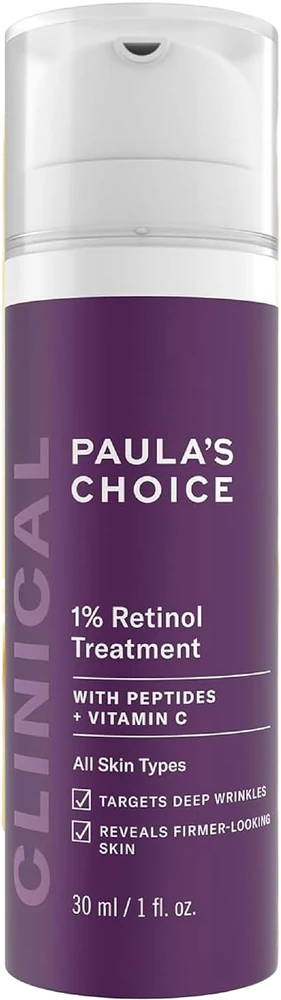 04
04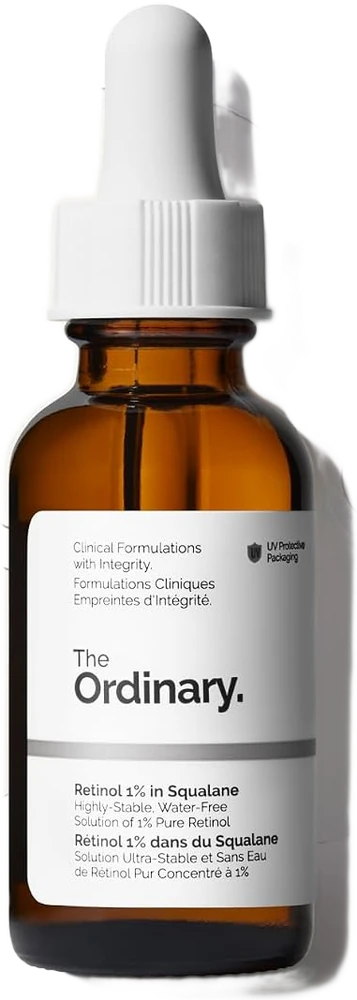 05
05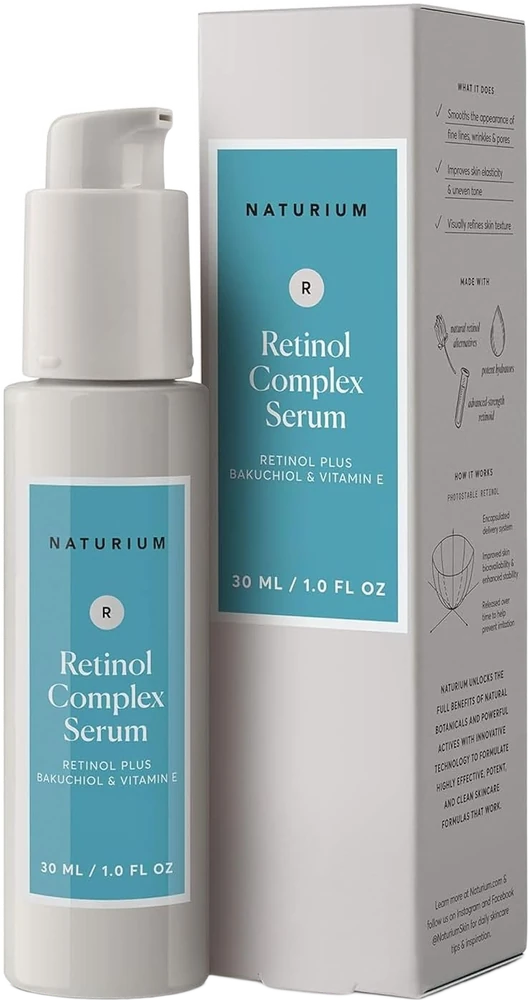 06
06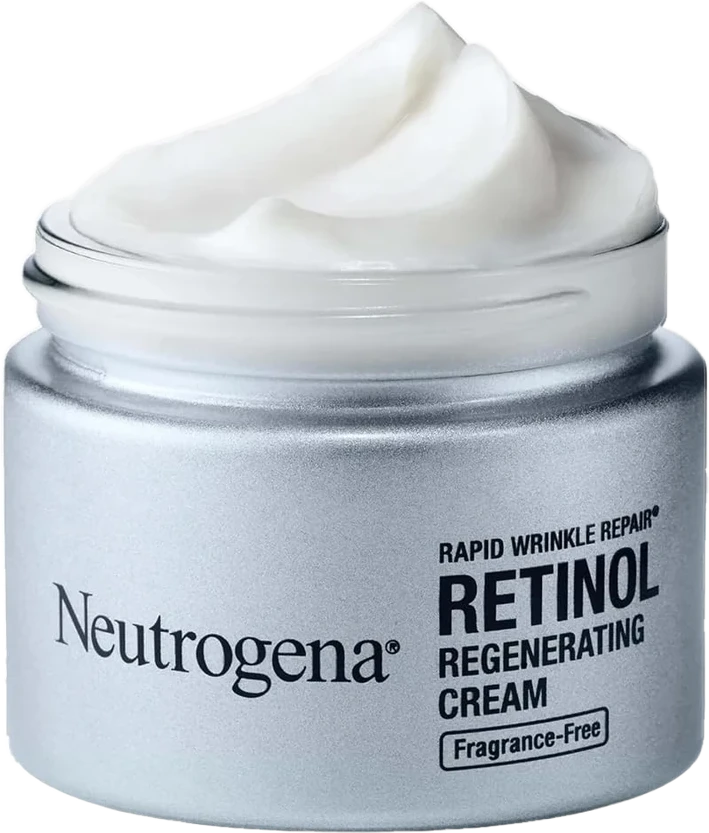 07
07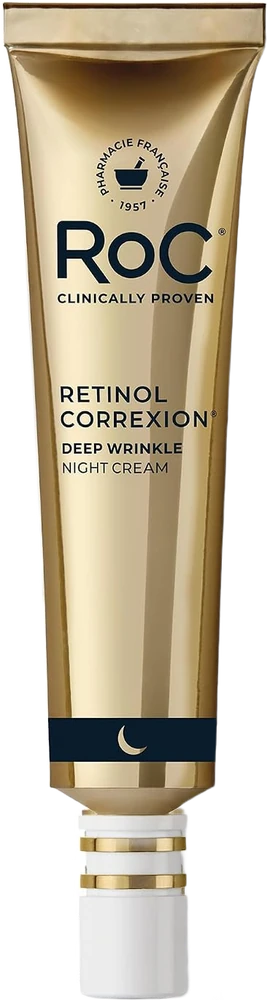 08
08Who Wins Which Aspect
Sorted by overall SAC Product Score™ — the official ranking.
| # | Pick | Score | Form + proven mechanism30% | Tolerability + barrier support25% | Evidence + concentration for the user20% | Formulation quality + stability15% | Cost per month of real use10% | Cost Per Dose | Buy |
|---|---|---|---|---|---|---|---|---|---|
| 01 | | 9.4 | 9.91 | 8.63 | 9.91 | 8.83 | 9.62 | ≈ $4.30 / month of use | Check price |
| A real retinoid — works without the conversion penalty every retinol below it paysIt's a gel built for acne first — drier skin will need a moisturizer layered over it | |||||||||
| 02 | | 9.0 | 8.63 | 9.61 | 8.63 | 9.02 | 9.43 | ≈ $10 / month of use | Check price |
| Encapsulated retinol releases gradually — more active reaching skin with markedly less irritationConcentration isn't disclosed and it's a gentle one — experienced users may find it mild | |||||||||
| 03 | | 8.6 | 8.4 | 9.22 | 8.2 | 9.02 | 8.0 | ≈ $15 / month of use | Check price |
| Combines pure retinol (fast) with gradual-release retinol (sustained, gentler) for balancePremium price for a mid-strength retinol serving | |||||||||
| 04 | | 8.5 | 8.82 | 7.8 | 8.82 | 9.21 | 7.6 | ≈ $20 / month of use | Check price |
| A real 1% retinol built with a controlled-release system to temper how hard it hitsPremium price — the most expensive per-ounce pick here | |||||||||
| 05 | | 8.4 | 8.63 | 7.6 | 8.63 | 8.0 | 9.91 | ≈ $4.50 / month of use | Check price |
| A true 1% retinol for under $10 — the best raw strength-per-dollar on the listRaw, non-encapsulated 1% is potent and can irritate — NOT a beginner's first bottle | |||||||||
| 06 | | 8.2 | 8.2 | 8.2 | 8.2 | 8.4 | 8.4 | ≈ $8 / month of use | Check price |
| Layered retinoid forms spread the workload — encapsulated retinol carries the effect, bakuchiol softens it"Complex" blends spread the dose thin — total retinoid strength is modest | |||||||||
| 07 | | 7.9 | 7.8 | 7.6 | 7.8 | 7.8 | 8.8 | ≈ $8 / month of use | Check price |
| Retinol and moisturizer in one step — hyaluronic acid offsets retinol dryness as you goRetinol strength isn't disclosed and skews on the lower, gentler side | |||||||||
| 08 | | 7.6 | 7.6 | 7.6 | 7.4 | 7.6 | 8.2 | ≈ $8 / month of use | Check price |
| A long-standing, widely-trusted retinol with a real track record for wrinklesJar packaging exposes retinol to light and air with every open — worse for stability than a tube or pump | |||||||||
The Other 7, Ranked
- 02
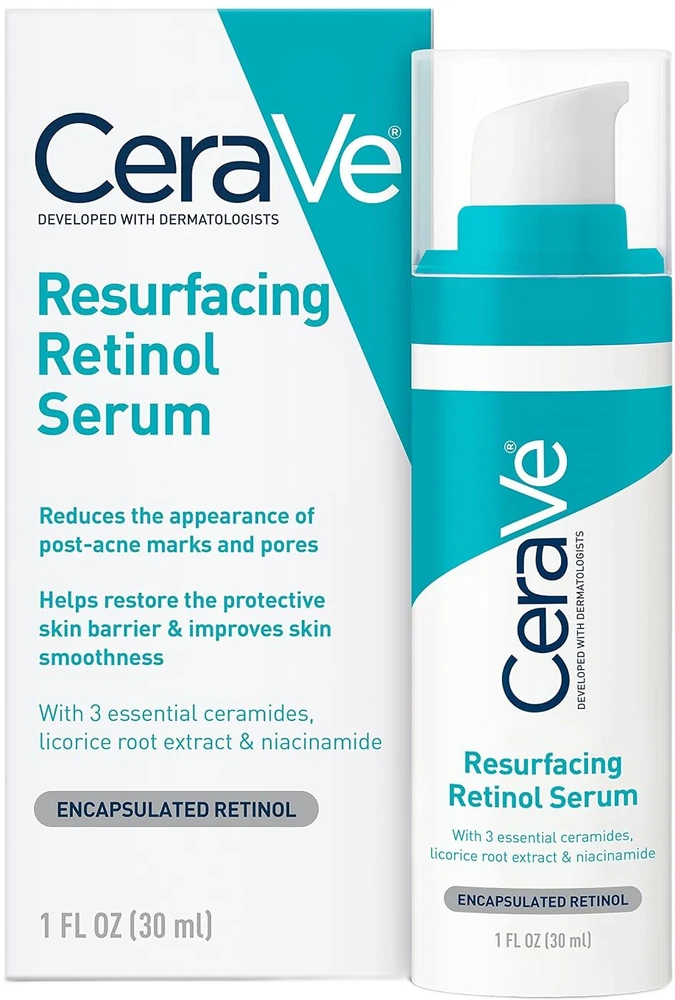
Best for beginners (gentlest effective): CeraVe Resurfacing Retinol Serum
9.0SAC Score™The best on-ramp for anyone new to retinol or with a fragile barrier — encapsulated retinol for gradual release, buffered by three essential ceramides and niacinamide so it smooths skin without wrecking it.
StrongestTolerability + barrier support9.61WeakestForm + proven mechanism8.6- Active
- Encapsulated retinol (gradual release)
- Barrier support
- 3 essential ceramides + niacinamide
- Best for
- Beginners, sensitive skin, post-acne marks
All five scores, pros & cons, full label
What We Like- Encapsulated retinol releases gradually — more active reaching skin with markedly less irritation
- Ceramides + niacinamide directly reinforce the barrier retinol otherwise strains
- Fragrance-free and non-comedogenic — a genuinely sensitive-skin-friendly formula
- Targets post-acne marks and texture; forgiving enough to become a lasting habit
What You Live With- Concentration isn't disclosed and it's a gentle one — experienced users may find it mild
- 1 oz bottle is small for the price versus a bare high-% serum
- Encapsulated + buffered means slower visible results than a nuclear retinol (that's the trade you want early)
- Base
- Fragrance-free, non-comedogenic, licorice root extract
Our take — This is the retinol we hand to anyone starting out, because the biggest reason retinol "doesn't work" is that people quit it — and this one is built to be kept. Encapsulation smooths the release so you get the active with far less of the sting, and the ceramide-plus-niacinamide base repairs the barrier as the retinol works it. It's not the strongest bottle here, and that's the point: a gentle formula you use for a year beats a harsh one you abandon in a fortnight. Start twice weekly, layer sunscreen every morning, skip it in pregnancy. The single best first retinol on this list.
- 03
Best for sensitive skin: La Roche-Posay Retinol B3 Serum
8.6SAC Score™A dermatologist-brand serum that pairs pure and gradual-release retinol with a generous dose of niacinamide (vitamin B3) and glycerin — engineered so sensitive skin can tolerate a real retinol.
StrongestTolerability + barrier support9.22WeakestCost per month of real use8.0- Active
- Pure retinol + gradual-release retinol
- Barrier support
- Niacinamide (B3) + glycerin
- Best for
- Sensitive skin wanting a serious formula
All five scores, pros & cons, full label
What We Like- Combines pure retinol (fast) with gradual-release retinol (sustained, gentler) for balance
- High niacinamide content calms redness and reinforces the barrier as the retinol works
- La Roche-Posay's sensitive-skin formulation pedigree — fragrance-free and dermatologist-tested
- Lightweight, absorbs cleanly, layers well under moisturizer and SPF
What You Live With- Premium price for a mid-strength retinol serving
- Still a real retinol — introduce slowly despite the sensitive-skin positioning
- Small 30ml bottle; runs out faster than a drugstore tube
- Base
- Fragrance-free, tested on sensitive skin
Our take — When sensitive skin still wants a properly-built retinol rather than a token one, this is the pick. Blending pure retinol for immediate action with a gradual-release fraction for staying power, then backing both with a heavy pour of niacinamide, is exactly the formulation logic that lowers the quit rate. It's more expensive than the drugstore options and the dose is moderate rather than maximal — but you're paying for tolerability engineering that works. Introduce it slowly anyway, wear sunscreen every morning, and avoid it in pregnancy. The best sensitive-skin serum on the list.
- 04
Best premium 1%: Paula's Choice CLINICAL 1% Retinol Treatment
8.5SAC Score™The best-formulated 1% on the list — a full 1% retinol wrapped in peptides, vitamin C, and licorice extract, with a controlled-release delivery system meant to make a strong dose more usable.
StrongestFormulation quality + stability9.21WeakestCost per month of real use7.6- Active
- Retinol 1% (controlled-release delivery)
- Support
- Peptides + vitamin C + licorice extract
- Best for
- Experienced users wanting a complete high-% formula
All five scores, pros & cons, full label
What We Like- A real 1% retinol built with a controlled-release system to temper how hard it hits
- Peptides and vitamin C add complementary anti-aging pathways beyond the retinol
- Licorice extract helps counter the redness and hyperpigmentation retinol can provoke
- Fragrance-free with stability-minded packaging — a genuinely complete formulation
What You Live With- Premium price — the most expensive per-ounce pick here
- Still a 1% retinol: potent, and not where a beginner should start despite the buffering
- Effective, but it's raw retinol (not a retinoid) — it can't escape the conversion penalty adapalene sidesteps
- Base
- Fragrance-free, opaque airless-style packaging
Our take — If you've decided you want a 1% retinol and you want it formulated properly rather than bare, this is the one to buy. The controlled-release delivery, peptides, vitamin C, and licorice turn a strong dose into a comparatively usable one, and the whole package is fragrance-free and stability-conscious. What it can't do is beat adapalene on mechanism — it's still retinol paying the conversion tax — and it costs several times more than #1. For an experienced user who values a complete high-end 1% formula and will pay for it, it's the premium pick. Buffer, ramp slowly, SPF daily, never in pregnancy.
- 05
Best budget (real 1%): The Ordinary Retinol 1% in Squalane
8.4SAC Score™A genuine 1% retinol at a price that undercuts everything on the list — squalane softens the delivery, but this is high-strength, non-encapsulated retinol for skin that has already built tolerance.
StrongestCost per month of real use9.91WeakestTolerability + barrier support7.6- Active
- Retinol 1% (raw, high-strength)
- Base
- Squalane (softens delivery, limits water loss)
- Best for
- Experienced users; maximum strength on a budget
All five scores, pros & cons, full label
What We Like- A true 1% retinol for under $10 — the best raw strength-per-dollar on the list
- Squalane base cushions the delivery and curbs the trans-epidermal water loss retinol causes
- Opaque packaging protects the retinol from light degradation
- Part of a coherent, honestly-labeled range with 0.2% and 0.5% steps to work up from
What You Live With- Raw, non-encapsulated 1% is potent and can irritate — NOT a beginner's first bottle
- No niacinamide or ceramides to buffer it; you provide the barrier support yourself
- 1% is the top of the range — most people should start at The Ordinary's 0.2% or 0.5% instead
- Format
- Opaque dropper bottle
Our take — The best-value real retinol on the list, with an honest caveat stapled to it: 1% raw retinol is strong, and this bottle rewards experience, not eagerness. The squalane base takes some of the edge off and the opaque packaging keeps the active alive, but there's no encapsulation and no barrier team behind it — so if you're new, buy The Ordinary's 0.2% or 0.5% first and climb here later. For a tolerant user who wants maximum strength for pocket change, nothing beats it on price. Buffer with moisturizer, go slow, and wear sunscreen. Never in pregnancy.
- 06
Best buffered blend (bakuchiol): Naturium Retinol Complex Serum
8.2SAC Score™A multi-form retinol blend — encapsulated retinol plus a gentler retinol ester plus plant-derived bakuchiol — designed to deliver results with a softer irritation profile than a single high-% retinol.
StrongestFormulation quality + stability8.4WeakestForm + proven mechanism8.2- Active
- Encapsulated retinol + retinol ester + bakuchiol
- Approach
- Multiple retinoid forms for gentler cumulative effect
- Best for
- Retinol-curious users wanting a soft landing
All five scores, pros & cons, full label
What We Like- Layered retinoid forms spread the workload — encapsulated retinol carries the effect, bakuchiol softens it
- Bakuchiol is a plant compound shown to give retinol-like benefits with less irritation
- Encapsulation plus a squalane-like base keeps the delivery gentle and stable
- Strong value for a multi-form serum from a well-regarded affordable brand
What You Live With- "Complex" blends spread the dose thin — total retinoid strength is modest
- Bakuchiol's evidence, while promising, is far thinner than retinol's or adapalene's
- Effective-retinol content is under-disclosed, so it's hard to place precisely on strength
- Base
- Vegan, cruelty-free, fragrance-considered
Our take — Naturium's approach is to hedge — combine encapsulated retinol with a gentler ester and bakuchiol so no single form has to be aggressive — and for a cautious user that's a sensible soft landing. The encapsulation and the bakuchiol both pull toward tolerability, which is where most people fail. The honest trade-off is strength and clarity: spreading the load across forms means the total retinoid punch is moderate, and bakuchiol's data doesn't approach retinol's, let alone adapalene's. Buy it as a comfortable step up from nothing, not as a maximum-strength treatment. Sunscreen daily; not in pregnancy.
- 07
Best drugstore workhorse: Neutrogena Rapid Wrinkle Repair Retinol
7.9SAC Score™The accessible drugstore standard — a retinol moisturizer combining Neutrogena's Retinol SA with hyaluronic acid, so the retinol and its moisturizer arrive in one affordable, easy-to-find step.
StrongestCost per month of real use8.8WeakestTolerability + barrier support7.6- Active
- Retinol SA (Neutrogena's stabilized retinol)
- Support
- Hyaluronic acid + glucose complex
- Best for
- Convenient all-in-one retinol + moisturizer
All five scores, pros & cons, full label
What We Like- Retinol and moisturizer in one step — hyaluronic acid offsets retinol dryness as you go
- Widely available and fragrance-free; easy to restock anywhere, no hunting
- Larger 1.7 oz size gives a low cost per month of use
- One of the most-reviewed, most-recognized retinol products in the drugstore aisle
What You Live With- Retinol strength isn't disclosed and skews on the lower, gentler side
- As a cream-moisturizer hybrid, delivery is less targeted than a dedicated serum
- A solid generalist rather than a standout on any single axis
- Format
- Fragrance-free cream, 1.7 oz (larger size)
Our take — Neutrogena Rapid Wrinkle Repair is the dependable drugstore workhorse: a stabilized retinol folded into a hyaluronic-acid moisturizer so beginners get the active and the barrier support in one grab-and-go step. It's fragrance-free, cheap per month, and available literally everywhere, which matters more for compliance than enthusiasts admit. The catch is that it's a gentle, undisclosed strength in a hybrid cream, so it won't satisfy someone chasing maximum potency. As an easy, forgiving entry point — or a travel and restock backup — it earns its spot. Sunscreen every morning; not for use in pregnancy.
- 08
Best classic wrinkle cream: RoC Retinol Correxion Deep Wrinkle Night Cream
7.6SAC Score™The time-tested drugstore wrinkle cream — RoC's stabilized pure retinol in a rich night cream that's been a dermatologist-adjacent staple for deep wrinkles for two decades.
StrongestCost per month of real use8.2WeakestEvidence + concentration for the user7.4- Active
- Pure retinol (RoC stabilized)
- Support
- Essential mineral complex, rich cream base
- Best for
- Deep wrinkles; a simple, proven night routine
All five scores, pros & cons, full label
What We Like- A long-standing, widely-trusted retinol with a real track record for wrinkles
- Rich night-cream base offsets dryness — a self-buffering all-in-one for mature skin
- Simple, no-nonsense formula and price; easy to find and repurchase
- RoC's stabilized retinol is a credible, established delivery approach
What You Live With- Jar packaging exposes retinol to light and air with every open — worse for stability than a tube or pump
- Basic formula: no encapsulation, no niacinamide/ceramide barrier team
- Contains fragrance — not ideal for reactive or fragrance-sensitive skin
- Format
- Night cream in a 1 oz jar
Our take — RoC Retinol Correxion is the old reliable of drugstore retinol — a stabilized pure retinol in a cushioning night cream that has quietly worked on wrinkles for twenty years. Its virtues are simplicity and a proven history; the rich base doubles as its own buffer, which suits mature, drier skin. But it lands at #8 because the formula is basic by 2026 standards: a jar (the weakest packaging for a light-and-air-sensitive active), no encapsulation, no barrier-support ingredients, and added fragrance. Buy it if you want simple, time-tested, and easy to find. For better mechanism (#1) or gentler modern formulation (#2), look higher. Sunscreen daily; never in pregnancy.
The Guide In Four Short Lessons
Ignore the percentage on the box.
It is the most misleading spec in skincare. '1% retinol' does not put you 1% of the way to a prescription, because retinol must convert on the skin before it works.
Consider adapalene first.
Adapalene 0.1% binds the retinoic-acid receptor directly, with no conversion, and has been OTC since 2016. It carries the strongest evidence you can buy without a doctor.
Choose a formula you will still use at month three.
Encapsulated, stabilized retinol reaches the skin with less irritation, and niacinamide and ceramides cut the redness and flaking that make people quit.
Peer-reviewed: Mukherjee 2006 (PMID 18046911), Kang 2003 (PMID 12833014), Kong 2016 (PMID 26578346) — full scoring in the methodology below.
Retinol can't be ranked on percentage, because the number on the box is the most misleading spec in skincare — a raw 1% retinol that oxidizes in a clear jar delivers less active, more harshly, than a well-encapsulated 0.5%. So we ranked on what actually reaches your receptors and whether you'll still be using the product in three months. Form and proven mechanism carries the most weight: a true retinoid that needs no conversion (adapalene) outranks encapsulated retinol, which outranks raw retinol — and we apply the conversion penalty honestly rather than pretend every 'retinol' is equal. Tolerability and barrier support is next and nearly as important, because the retinol people quit doesn't work: niacinamide, ceramides, squalane, and encapsulation measurably reduce the irritation that ends most retinol routines by week two. Evidence and concentration matched to the user rewards the right strength for the stage — a gentle formula backed by data beats a big number backed by marketing. Formulation quality and stability covers the unglamorous stuff that decides potency: opaque or airless packaging, a clean base, and no fragrance in the sensitive-skin picks. Cost per month of real use and real-world response settles ties. We reward gentle-but-effective over the highest percentage, deliberately.
Form + proven mechanism · 30%
A true retinoid that binds the receptor directly (adapalene) beats encapsulated retinol, which beats raw retinol — because OTC retinol must convert through two enzymatic steps before it's active, and each step loses potency. We rank by what actually reaches the receptor, and we state the conversion penalty plainly instead of treating a big percentage as if it equaled a prescription.
Tolerability + barrier support · 25%
Niacinamide, ceramides, squalane, and encapsulation aren't label padding — they measurably cut the redness, flaking, and stinging that make people abandon retinol in week two. A formula gentle enough to keep using scores high; an aggressive one that triggers a quit scores low. The best retinol is the one still in your routine at month three.
Evidence + concentration for the user · 20%
The right strength for the stage, backed by data. Adapalene 0.1% and encapsulated 0.2–0.5% for beginners; a real 1% for experienced skin that has built tolerance. A well-evidenced gentle formula outranks an under-studied high percentage — we don't reward strength for its own sake.
Formulation quality + stability · 15%
Retinol degrades in light and air, so opaque or airless packaging is a genuine potency issue, not a nicety. A clean, well-buffered base (squalane, glycerin) and no added fragrance in the sensitive-skin picks earn credit; a clear jar of raw retinol loses it.
Cost per month of real use · 10%
What a month of actual use costs, and how the formula behaves in the real world — pilling, pump vs. dropper, how fast it absorbs. Tiebreaker between picks in the same tier. Note that a $12 adapalene tube lasting three months can out-value a $60 serum.

How retinoids work
- 1
The conversion chain
Skin can only 'read' retinoic acid. OTC retinol must convert twice on your skin (retinol → retinaldehyde → retinoic acid), losing potency at each step. Adapalene (Differin) is the OTC exception: a true retinoid that binds the receptor directly, no conversion tax — which is why it leads this list.
- 2
Turnover acceleration
Activated retinoid receptors speed up skin-cell turnover: pores stop clogging (the acne effect), rough surface cells clear faster, and tone looks fresher. This is also what causes the early 'purge' — it's the mechanism working, not failing.
- 3
Collagen remodeling
Retinoids increase procollagen production and suppress the enzymes (MMPs) that break collagen down. That double action is the fine-lines-and-firmness effect — and it's the slowest one, measured in months, not weeks.
- 4
Retinization — the adjustment cost
Weeks one to four bring dryness, flaking and sensitivity while skin adapts. Buffer with moisturizer, start twice a week, ramp slowly — and wear SPF every morning, because retinoids increase photosensitivity and sun undoes the collagen work. (Skip retinoids entirely in pregnancy.)
What to expect on a retinoid
Retinization (the rough patch)
Dryness, flaking, mild redness, possibly a purge of small breakouts as turnover accelerates. Normal and temporary — respond by slowing frequency, not quitting. Buffer with a ceramide moisturizer.
Acne + texture respond
Clogged pores clear and skin surface smooths — the first unmistakable payoff, and the reason adapalene carries dozens of acne RCTs. If you made it here, the hard part is over.
Tone + fine lines
Evenness improves and fine lines soften as collagen remodeling gets going. Nightly-tolerance is usually reached in this window; photos judge progress better than mirrors.
The deep remodeling
Deeper wrinkle improvement is a 6-to-12-month effect in the studies — retinoids reward boring consistency. The gains persist only with continued use and daily SPF; sun exposure without sunscreen actively reverses them.
The bottom line
Buy Differin Adapalene Gel 0.1% (#1) — the most effective OTC option, and one of the cheapest.
It's a true retinoid that binds your receptors directly, skipping the conversion penalty every retinol here pays, and it carries the deepest evidence base you can buy without a prescription. For most people that $13 tube is the correct first purchase for both acne and early anti-aging.
New or sensitive skin starts with CeraVe (#2); then match the bottle to the buyer.
Encapsulated retinol buffered by ceramides and niacinamide is the formula most likely to still be in your routine at month three. From there: tolerant budget, The Ordinary 1% (#3); sensitive but serious, La Roche-Posay B3 (#4); a bakuchiol soft landing, Naturium (#5); the best-built 1%, Paula's Choice (#6); easy all-in-one, Neutrogena (#7); the proven classic, RoC (#8).
Don't buy the percentage — buy mechanism, wear SPF daily, never in pregnancy.
Encapsulation, barrier support, and proven mechanism beat a big number every time, which is why a 0.1% retinoid tops a shelf full of 1% retinols. Start low and slow, buffer with moisturizer, wear SPF 30+ every single morning, and never use any topical retinoid in pregnancy.
Quick Answers
What is the best retinol pick overall?
Differin Adapalene Gel 0.1% by Differin (Galderma) is our #1 pick (SAC score 9.4/10). If you only take one thing from this list, take this: the most effective retinoid you can buy without a doctor is also one of the cheapest. Adapalene is a true retinoid — it skips the conversion queue that weakens every retinol below it — and it has the strongest data on the shelf for both acne and, increasingly, wrinkles. It's a bare gel with no hand-holding ingredients, so start twice a week, moisturize over it, and ride out the purge. Wear sunscreen daily and never use it while pregnant. For almost everyone, this $13 tube outperforms serums four times its price.
What is the best budget option?
The Ordinary Retinol 1% in Squalane at $9 / 30ml. The best-value real retinol on the list, with an honest caveat stapled to it: 1% raw retinol is strong, and this bottle rewards experience, not eagerness. The squalane base takes some of the edge off and the opaque packaging keeps the active alive, but there's no encapsulation and no barrier team behind it — so if you're new, buy The Ordinary's 0.2% or 0.5% first and climb here later. For a tolerant user who wants maximum strength for pocket change, nothing beats it on price. Buffer with moisturizer, go slow, and wear sunscreen. Never in pregnancy.
How much do these picks cost?
Across our ranked picks, prices run from about $9 to $60 — exact price and cost per serving are listed on every pick card above.
How were these picks ranked?
Retinol can't be ranked on percentage, because the number on the box is the most misleading spec in skincare — a raw 1% retinol that oxidizes in a clear jar delivers less active, more harshly, than a well-encapsulated 0.5%. So we ranked on what actually reaches your receptors and whether you'll still be using the product in three months. Form and proven mechanism carries the most weight: a true retinoid that needs no conversion (adapalene) outranks encapsulated retinol, which outranks raw retinol — and we apply the conversion penalty honestly rather than pretend every 'retinol' is equal. Tolerability and barrier support is next and nearly as important, because the retinol people quit doesn't work: niacinamide, ceramides, squalane, and encapsulation measurably reduce the irritation that ends most retinol routines by week two. Evidence and concentration matched to the user rewards the right strength for the stage — a gentle formula backed by data beats a big number backed by marketing. Formulation quality and stability covers the unglamorous stuff that decides potency: opaque or airless packaging, a clean base, and no fragrance in the sensitive-skin picks. Cost per month of real use and real-world response settles ties. We reward gentle-but-effective over the highest percentage, deliberately.
Every Claim Ranked Above Traces Back To One Of These
3 peer-reviewed sources, each linked to PubMed
- [1] Mukherjee 2006 PMID 18046911 — Retinoids in the treatment of skin aging: an overview of clinical efficacy and safety. Overview of topical retinoids in skin aging: retinol and other retinoids improve fine lines, wrinkles, and skin texture by binding retinoic-acid receptors and stimulating dermal collagen synthesis, with the caveat that OTC retinol must first convert to retinoic acid and is therefore milder than prescription tretinoin. The mechanistic anchor for ranking the class and for the conversion-penalty framing used throughout.
- [2] Kang 2003 PMID 12833014 — Assessment of adapalene gel for the treatment of actinic keratoses and lentigines: a randomized trial. Randomized trial showing adapalene gel improved actinically (sun) damaged skin — reducing lentigines and actinic keratoses and remodeling photodamaged skin with increased procollagen — while being well tolerated. Supports ranking adapalene #1 not only for its acne evidence but for a genuine anti-aging mechanism, as a receptor-binding retinoid that needs no conversion.
- [3] Kong 2016 PMID 26578346 — A comparative study of the effects of retinol and retinoic acid on histological, molecular, and clinical properties of human skin. Comparative study of retinol versus retinoic acid on human skin: a stabilized retinol produced measurable improvements in wrinkles and skin quality with better tolerability than retinoic acid, confirming that well-formulated (stabilized/encapsulated) retinol delivers real benefit at a gentler irritation profile. The evidence behind rewarding encapsulation and barrier support over raw high-percentage retinol.
Affiliate disclosure: every Amazon link uses our Associates tag (superachieverclub-20). We earn a small commission at no cost to you; it funds independent reviews. We never accept payment to change a ranking.