
Differin Adapalene Gel 0.1% Review
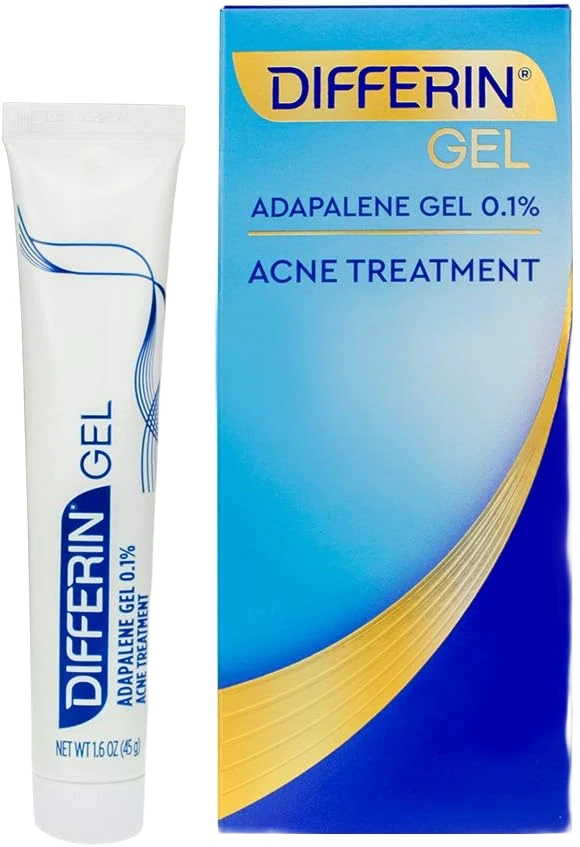 #1 of 8 · Best overall✓ Product photos checked Sep 7, 2026
Real retailer photo, cut out. Label unedited.
Buy it. The most effective retinoid you can buy without a prescription — and one of the cheapest. Adapalene is a true retinoid: it binds the receptor directly, so it skips the conversion penalty every retinol here pays, and it has the deepest OTC evidence base (dozens of acne RCTs plus Kang 2003 and a 2025 aging RCT).
$13 / 45g pump (~90-day supply)≈ $4.30 / month of use
Why It Scores 9.4 — And The Label Line Behind Each Number
Form + proven mechanism
30% of scoreThe only true retinoid on the list. Adapalene binds the retinoic-acid receptor directly, so unlike every retinol here it pays no conversion tax — the single biggest reason it earns a near-perfect mechanism score. It's the same 0.1% molecule that was prescription-only until 2016, not a diluted cosmetic analogue.
- Mechanism
- Binds retinoic-acid receptor directly — no enzymatic conversion
Tolerability + barrier support
25% of scoreAdapalene is the best-tolerated of the prescription-grade retinoids and the gel is oil-free and non-comedogenic — but it ships with no niacinamide, ceramides, or squalane, so barrier support is on you. A real purge and dryness in weeks 1–4 is expected, which keeps it just short of the barrier-loaded serums above it on this axis.
Evidence + concentration for the user
20% of score0.1% is the exact studied OTC dose, and the evidence is unmatched on the shelf: dozens of acne RCTs plus Kang 2003 for photodamage and a 2025 RCT for skin ageing. Strength and data are perfectly matched to what the buyer actually receives — no guessing at an undisclosed percentage.
- Active
- Adapalene 0.1% (third-generation synthetic retinoid)
Formulation quality + stability
15% of scoreAdapalene is unusually photostable for a retinoid, and it ships in an opaque 45g metered pump that protects the active from light and doses it consistently. Points come off only because it's a minimalist gel base with no supporting actives — deliberately simple rather than sophisticated.
Cost per month of real use
10% of scoreAbout $13 for a pump lasting roughly 90 days is near $4.30 a month — cheaper than serums a quarter of its clinical pedigree. The only reason it isn't a perfect 10 is the extra moisturizer drier users must buy and layer over it.
- Size
- 45 g metered pump (~90-day supply)
- Price
- ≈ $13 / 45 g pump (≈ $4.30 per month of use)
- More Specs
- Format
- Lightweight oil-free gel
- Base
- Oil-free, fragrance-free, non-comedogenic; no added barrier actives
- Best for
- Acne plus early anti-aging — the OTC powerhouse
- Regulatory
- FDA-approved OTC acne treatment (Rx-to-OTC switch, 2016)
Photos checked.This product has no Supplement Facts panel; the retailer's listing photos were reviewed Sep 7, 2026.
Marketing Claims Vs. Reality
Clears and helps prevent acne breakouts.
Adapalene is an FDA-approved OTC acne active backed by dozens of randomized trials; this is the best-substantiated claim on the product and the reason it was granted the Rx-to-OTC switch in 2016.
The first prescription-strength retinoid available without a prescription.
The OTC gel is 0.1% adapalene — the identical concentration sold as prescription Differin — so 'prescription strength' is literally accurate for the 0.1% dose. The 0.3% strength does remain prescription-only, so the phrase applies to this SKU specifically.
Restores skin's texture and tone.
True for post-acne texture and pigment, and Kang 2003 plus a 2025 ageing RCT support a genuine anti-aging effect — but the product is developed and marketed primarily as an acne treatment, so the rejuvenation framing is real yet secondary to its labeled use.
Oil-free, fragrance-free and non-comedogenic.
These are straightforward, checkable formulation facts consistent with the ingredient list. Note they are manufacturer formulation statements, not clinical endpoints.
Gentle enough for everyday use.
Adapalene is the gentlest of the strong retinoids, but a real purge, dryness and flaking in weeks 1–4 are common, and starting daily rather than 2–3×/week is how most people fail. 'Everyday' is a destination you ramp toward, not a starting instruction.
What Our Test Actually Found
A retinoid, not a retinol — that's the entire point
Every OTC retinol must convert on your skin through two enzymatic steps (retinol → retinaldehyde → retinoic acid) before your receptors can read it, and each step loses potency. Adapalene is already receptor-active — it binds directly, no conversion. That's why a 0.1% adapalene outperforms a shelf of 1% retinols: the number on the box is meaningless if most of the molecule never becomes active.
The deepest OTC evidence base, now including anti-aging RCTs
Adapalene's acne evidence is unmatched on the drugstore shelf, and its anti-aging case is no longer speculative: Kang 2003 showed it remodels photodamaged skin and raises procollagen, and a 2025 randomized controlled trial found adapalene 0.1% cream improved measured signs of female skin ageing with good tolerability. Few things you can buy without a doctor have this weight of data behind them.
A bare gel — you supply the barrier support
There's no niacinamide, ceramide, or squalane here. That keeps the formula clean and cheap, but it means the barrier work is on you: layer a plain moisturizer over the gel (or apply moisturizer first to buffer), especially if your skin runs dry. Drier skin types will find it 'stings' less as a sandwich than as a solo layer.
Start slow, or the purge will make you quit
The early dryness, flaking and small breakouts are normal and temporary — a signal to slow down, not stop. Begin 2–3 times a week, ramp up over weeks not days, and don't chase results by using more. The people who 'can't tolerate adapalene' almost always started daily.
Unbeatable cost-per-month for genuine dermatological potency
At roughly $13 for a ~90-day pump, this is about $4.30 a month for a molecule that was prescription-only a decade ago. It quietly out-values serums four times its price — and price still didn't earn it the #1 spot here; mechanism and evidence did, with cost as the tiebreaker it happens to also win.
Full analysis: all pros & cons (8), buy if / skip if
- A true retinoid — works without the conversion penalty every retinol below it pays
- Deepest OTC evidence base: dozens of acne RCTs plus procollagen/anti-aging data (Kang 2003, Tran 2025)
- Was prescription-only until 2016 — genuine dermatological potency at a drugstore price
- Opaque metered pump protects the active and doses consistently
- Remarkably cheap per month; a single pump lasts around 90 days
- A bare acne gel with no niacinamide/ceramide buffer — drier skin must moisturize over it
- Causes a real purge and dryness in weeks 1–4; must be started 2–3×/week, not daily
- Positioned and tested primarily for acne, so anti-aging is an evidence-backed secondary use rather than its labeled one
- You want the single most effective OTC option, for acne or early anti-aging, and are willing to ramp in slowly
- You want prescription-grade dermatological potency at a drugstore price
- You already use a moisturizer you can layer over a bare gel
- You value proven mechanism and evidence over a big percentage on the box
- You have a fragile barrier or very reactive skin and want a buffered, hand-holding formula — start with CeraVe (#2) instead
- You want an all-in-one retinol-plus-moisturizer step with no extra layering
- You're pregnant or breastfeeding — no topical retinoid is appropriate
Adapalene is a true retinoid: it binds the receptor directly, so it skips the conversion penalty every retinol here pays, and it has the deepest OTC evidence base (dozens of acne RCTs plus Kang 2003 and a 2025 aging RCT). At ~$13 for a ~90-day pump it's also the cheapest per month. The trade-offs are real: it's a bare gel with no niacinamide/ceramide buffer, and it causes a genuine purge in weeks 1–4, so start 2–3×/week and moisturize over it. Sunscreen every morning is mandatory; never in pregnancy.
Differin Adapalene Gel 0.1% is the outlier that reorders the entire retinol shelf, because it isn't retinol at all — it's adapalene, a third-generation synthetic retinoid that binds the retinoic-acid receptor directly and skips the two enzymatic conversion steps every over-the-counter retinol has to pay. It was prescription-only in the US until 2016, and the OTC tube is the same 0.1% concentration dermatologists once wrote scripts for. Its evidence base is the deepest you can buy without a doctor: dozens of acne RCTs plus a real anti-aging record, including Kang 2003 (adapalene remodels photodamaged skin and raises procollagen) and a 2025 randomized trial of adapalene 0.1% specifically for skin ageing. At roughly $13 for a pump that lasts about 90 days, it is also cheaper per month than nearly everything ranked beneath it. The one honest catch: it is a bare acne gel with no barrier extras, so drier skin has to moisturize over it, and everyone has to ramp in slowly to ride out the early purge.
If you take one thing from this list, take this: the most effective OTC retinoid is also one of the cheapest.

Adapalene skips the conversion queue that weakens every retinol on this page, and it carries the strongest data on the shelf for both acne and, increasingly, wrinkles. For most people, this ~$13 tube is the correct first purchase — it simply outperforms serums several times its price on the axis that matters, proven mechanism. The honest caveats are that it's a bare gel with no barrier team and it causes a genuine purge, so start twice a week, buffer it with moisturizer, and be patient through weeks 1–4. Wear SPF 30+ every morning and never use it in pregnancy. Only skip it if your barrier is too fragile to ramp a strong retinoid — in which case the buffered CeraVe serum at #2 is the gentler on-ramp built exactly for you.
If This Doesn’t Fit — Try These
 02
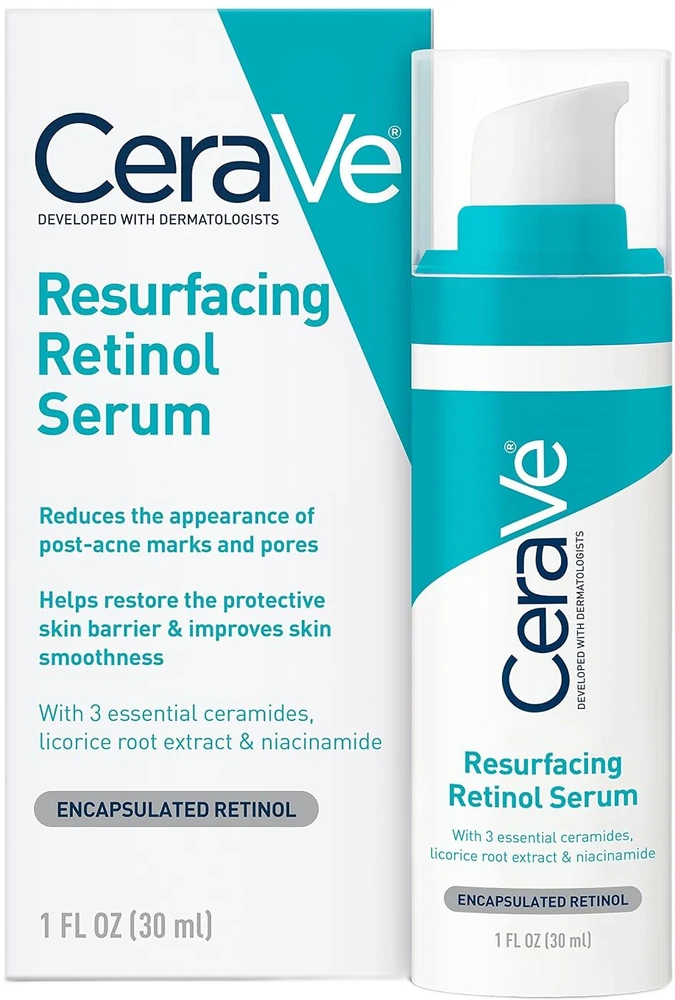
02CeraVe Resurfacing Retinol Serum
This is the retinol we hand to anyone starting out, because the biggest reason retinol "doesn't work" is that people quit it — and this one is built to be kept.
 03
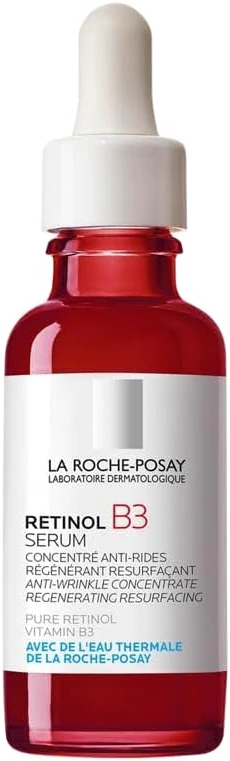
03La Roche-Posay Retinol B3
When sensitive skin still wants a properly-built retinol rather than a token one, this is the pick.
 06
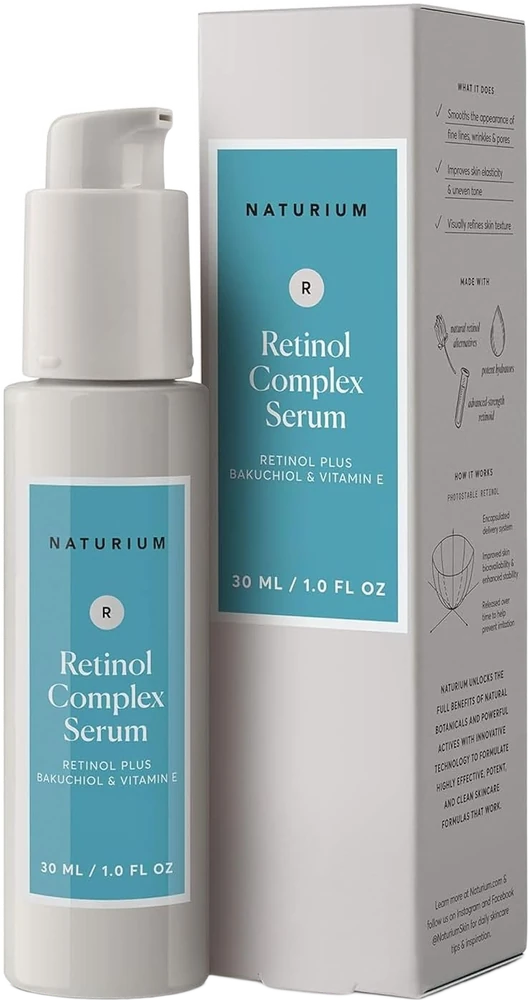
06Naturium Retinol Complex
Naturium's approach is to hedge — combine encapsulated retinol with a gentler ester and bakuchiol so no single form has to be aggressive — and for a cautious user that's a sensible soft landing.
Quick Answers
Is adapalene the same as retinol?
No — and that's why it's ranked first. Retinol is a precursor your skin has to convert through two enzymatic steps before it becomes retinoic acid, the form your receptors actually read, and potency is lost at each step. Adapalene is already a receptor-active synthetic retinoid, so it works without that conversion. That's the mechanistic reason a 0.1% adapalene outperforms a shelf full of 1% retinols.
It says it's for acne — can I use it for wrinkles?
Yes, with realistic expectations. The product is labeled and tested primarily for acne, but the anti-aging evidence is genuine: Kang 2003 showed adapalene remodels photodamaged skin and raises procollagen, and a 2025 RCT found adapalene 0.1% improved measured signs of skin ageing. It won't work overnight — collagen remodeling takes months — and daily sunscreen is what protects the gains.
Why does my skin get worse in the first few weeks?
That's the retinoid purge — early dryness, flaking, and small breakouts as cell turnover accelerates. It's normal and temporary. The fix is to slow down, not stop: use it 2–3 times a week, buffer with moisturizer, and ramp up over several weeks. Pushing through with less frequency (not more product) is how you get past it.
Do I need a separate moisturizer with it?
For most people, yes. It's a bare gel with no built-in barrier ingredients, so layering a plain moisturizer over it — or applying moisturizer first to buffer — cuts the dryness considerably, especially if your skin runs dry. And SPF 30+ every morning is non-negotiable with any retinoid.
Can I use it while pregnant?
No. Topical retinoids, including adapalene, are contraindicated in pregnancy and breastfeeding. Stop before conception if you're planning, and ask your doctor about pregnancy-safe alternatives like azelaic acid or bakuchiol.
Sources & Further Reading
3 peer-reviewed sources, each linked to PubMed
- [1] Kang 2003 PMID 12833014 — Assessment of adapalene gel for the treatment of actinic keratoses and lentigines: a randomized trial. Randomized trial in which adapalene gel improved actinically (sun) damaged skin — reducing lentigines and actinic keratoses and remodeling photodamage — while being well tolerated. Supports adapalene's anti-aging mechanism as a receptor-binding retinoid that needs no conversion, not just its acne record.
- [2] Tran 2025 PMID 40990960 — Effectiveness and tolerability of adapalene cream 0.1% in the treatment of female skin ageing: a randomised controlled trial. Randomized controlled trial of adapalene cream 0.1% versus no treatment over six months in women with moderate skin ageing, reporting improvement in standardized ageing scores with good tolerability. Direct clinical support for adapalene's anti-aging use, not only its acne indication.
- [3] Mukherjee 2006 PMID 18046911 — Retinoids in the treatment of skin aging: an overview of clinical efficacy and safety. Overview establishing that retinoids improve fine lines, wrinkles and texture by binding retinoic-acid receptors and stimulating dermal collagen, with the explicit caveat that OTC retinol must first convert to retinoic acid and is therefore milder than a receptor-active retinoid. The mechanistic anchor for the conversion-penalty framing that puts adapalene first.
Affiliate disclosure: every Amazon link uses our Associates tag (superachieverclub-20). We earn a small commission at no cost to you; it funds independent reviews. We never accept payment to change a ranking.