
La Roche-Posay Retinol B3 Serum Review
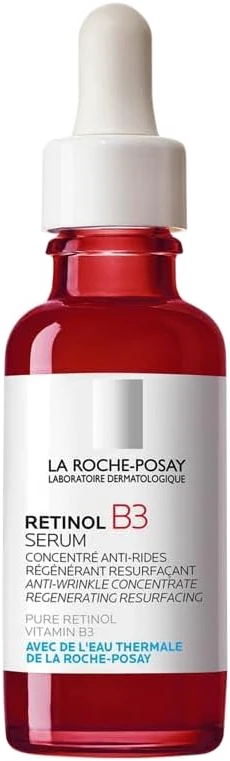 #3 of 8 · Best for sensitive skin✓ Product photos checked Sep 7, 2026
Real retailer photo, cut out. Label unedited.
Buy it. The best sensitive-skin serum here — real retinol, engineered to be tolerated. Pure retinol for immediate action plus a gradual-release fraction for gentler staying power, backed by a heavy dose of niacinamide and glycerin that calms redness and reinforces the barrier — the tolerability logic that keeps sensitive skin compliant.
$45 / 30ml≈ $15 / month of use
Why It Scores 8.6 — And The Label Line Behind Each Number
Form + proven mechanism
30% of scoreA smart dual-form design: pure retinol for immediate action plus a gradual-release fraction for gentler sustained delivery. It's still retinol paying the conversion penalty, and the exact strength isn't disclosed, so it can't match a receptor-active retinoid — but the balanced two-form approach is a genuine mechanism strength for the sensitive-skin buyer.
Tolerability + barrier support
25% of scoreNear the top of the list on this axis. A high niacinamide content calms redness and reinforces the barrier as the retinol works, glycerin adds humectant support, and the gradual-release fraction softens the peak. Fragrance-free and dermatologist-tested seals a formula built to keep reactive skin compliant.
- Barrier support
- Niacinamide (vitamin B3) + glycerin
Evidence + concentration for the user
20% of scoreThe class evidence for retinol plus niacinamide's barrier and anti-redness data support the design (Mukherjee 2006), and the moderate dose is well-matched to sensitive skin. It loses a little for an undisclosed concentration and a strength that's deliberately moderate rather than maximal — the right call for the target user, but not a high-dose showcase.
- Active
- Pure retinol + gradual-release retinol (concentration not disclosed)
Formulation quality + stability
15% of scoreA well-built serum: fragrance-free, dermatologist-tested, lightweight, clean-layering, with the niacinamide and glycerin support integrated rather than tacked on. Strong formulation quality; the main deduction is the small 30 ml size relative to the price.
Cost per month of real use
10% of scoreAt about $45 for 30 ml (~$15/month) it's a premium price for a mid-strength serving, and the small bottle runs out faster than a drugstore tube. It absorbs cleanly and layers well, but on pure cost per month it's mid-pack — you're paying for the tolerability engineering.
- Size
- 30 ml serum
- Price
- ≈ $45 / 30 ml (≈ $15 per month of use)
- More Specs
- Base
- Fragrance-free, dermatologist-tested for sensitive skin
- Best for
- Sensitive skin wanting a serious, well-buffered retinol
- Texture
- Lightweight; absorbs cleanly, layers under moisturizer and SPF
- Brand pedigree
- La Roche-Posay sensitive-skin formulation line
Photos checked.This product has no Supplement Facts panel; the retailer's listing photos were reviewed Sep 7, 2026.
Marketing Claims Vs. Reality
Combines pure retinol with gradual-release retinol.
The dual-form design is stated on the label and is a legitimate, checkable formulation approach — pure retinol for immediate action plus an encapsulated/gradual-release fraction for gentler sustained delivery.
Niacinamide (B3) calms redness and strengthens the barrier.
Niacinamide's barrier-support and anti-redness effects are well documented in the dermatology literature, and including it at meaningful levels is exactly what reduces retinol's quit rate. A well-substantiated component claim.
Suitable for sensitive skin.
Fairer than most given the fragrance-free base, niacinamide buffering and gradual-release fraction — but it's still a real retinol, so sensitive users must introduce it slowly (twice weekly) rather than treat the positioning as license to use it nightly from the start.
Visibly reduces wrinkles and fine lines.
The class evidence supports retinol improving fine lines and texture (Mukherjee 2006), so the direction is right — but the magnitude depends on an undisclosed, deliberately moderate strength and on consistent use, and results build over months, not weeks.
Fragrance-free and dermatologist-tested.
These are checkable formulation and testing statements consistent with the label and the brand's sensitive-skin line. They are manufacturer formulation/testing claims, not peer-reviewed efficacy endpoints.
What Our Test Actually Found
Tolerability engineering you can actually feel
Blending pure retinol for immediate action with a gradual-release fraction for staying power, then backing both with a heavy pour of niacinamide and glycerin, is precisely the formulation logic that lowers the quit rate. For reactive skin, that engineering is the difference between a serum you keep and one that goes in a drawer after two weeks.
Niacinamide is doing real work here
This isn't label padding: niacinamide calms the redness retinol provokes and supports the barrier it strains, and glycerin holds water in the skin as turnover accelerates. On a bare retinol you'd buy these separately — here they're integrated, which is a large part of why it tolerates well on sensitive skin.
Sensitive-skin positioning, but still a real retinol
Don't let 'for sensitive skin' fool you into nightly use from day one. It's a genuine retinol, so start twice a week, buffer with moisturizer, and ramp over weeks. The formula lowers the irritation ceiling; it doesn't remove it.
You pay a premium for a moderate dose
At about $45 for 30 ml it's pricier than the drugstore options, and the strength is moderate rather than maximal — you're buying tolerability, not raw punch. If you want maximum strength for the money, The Ordinary's 1% (#5) is far cheaper; if you want the deepest evidence base, adapalene (#1) is both stronger on mechanism and cheaper.
How to run it
Start twice weekly at night, layer moisturizer over it if needed, and wear SPF 30+ every morning — retinoids raise photosensitivity. Never use it in pregnancy or while breastfeeding. Introduced slowly, it's one of the more comfortable real retinols you can put on reactive skin.
Full analysis: all pros & cons (7), buy if / skip if
- Combines pure retinol (immediate) with gradual-release retinol (sustained, gentler) for balance
- High niacinamide content calms redness and reinforces the barrier as the retinol works
- La Roche-Posay sensitive-skin pedigree — fragrance-free and dermatologist-tested
- Lightweight, absorbs cleanly, and layers well under moisturizer and SPF
- Premium price for a moderate-strength, undisclosed-concentration serving
- Still a real retinol — must be introduced slowly despite the sensitive-skin positioning
- Small 30 ml bottle runs out faster than a drugstore tube
- You have sensitive or reactive skin but want a properly-built retinol, not a watered-down one
- You want niacinamide's redness-calming, barrier support built into the same bottle
- You value a fragrance-free, dermatologist-tested sensitive-skin formulation
- You want a balanced pure-plus-gradual-release delivery rather than a single harsh dose
- You want maximum strength or the cheapest cost per month — the 1% picks and adapalene beat it there
- You want a receptor-active retinoid with the deepest evidence — buy adapalene (#1)
- You're pregnant or breastfeeding — no topical retinoid is appropriate
Pure retinol for immediate action plus a gradual-release fraction for gentler staying power, backed by a heavy dose of niacinamide and glycerin that calms redness and reinforces the barrier — the tolerability logic that keeps sensitive skin compliant. It's fragrance-free and dermatologist-tested. The trade-offs are a premium price for a moderate dose and a small 30 ml bottle, and it's still a real retinol you must introduce slowly. SPF every morning; never in pregnancy.
La Roche-Posay Retinol B3 is the pick for when sensitive skin still wants a properly-built retinol rather than a token one. It combines pure retinol, for immediate action, with a gradual-release fraction, for sustained but gentler delivery, then backs both with a heavy pour of niacinamide (vitamin B3) and glycerin — exactly the formulation logic that lowers the quit rate. It carries La Roche-Posay's sensitive-skin pedigree: fragrance-free, dermatologist-tested, lightweight, and clean-layering under moisturizer and SPF. It's more expensive than the drugstore options and the dose is moderate rather than maximal, so you're paying for tolerability engineering, not raw punch — and it's still a real retinol, so 'sensitive-skin' positioning doesn't excuse you from introducing it slowly. For reactive skin that wants a serious serum it earns its rank; for maximum strength or the deepest evidence base, look elsewhere on the list.
The best sensitive-skin serum on the list — you pay for tolerability engineering that works.

When reactive skin wants a properly-built retinol rather than a token one, this is the pick. Pairing pure retinol for immediate action with a gradual-release fraction for staying power, then backing both with a heavy dose of niacinamide, is exactly the logic that keeps people compliant past week two. It's more expensive than the drugstore options and the dose is moderate rather than maximal — but that's the trade you want on sensitive skin, and the engineering is genuine. Introduce it slowly anyway, wear sunscreen every morning, and avoid it in pregnancy. If you want maximum strength or the deepest evidence, look to the 1% picks or adapalene; for comfort on reactive skin, this leads.
If This Doesn’t Fit — Try These
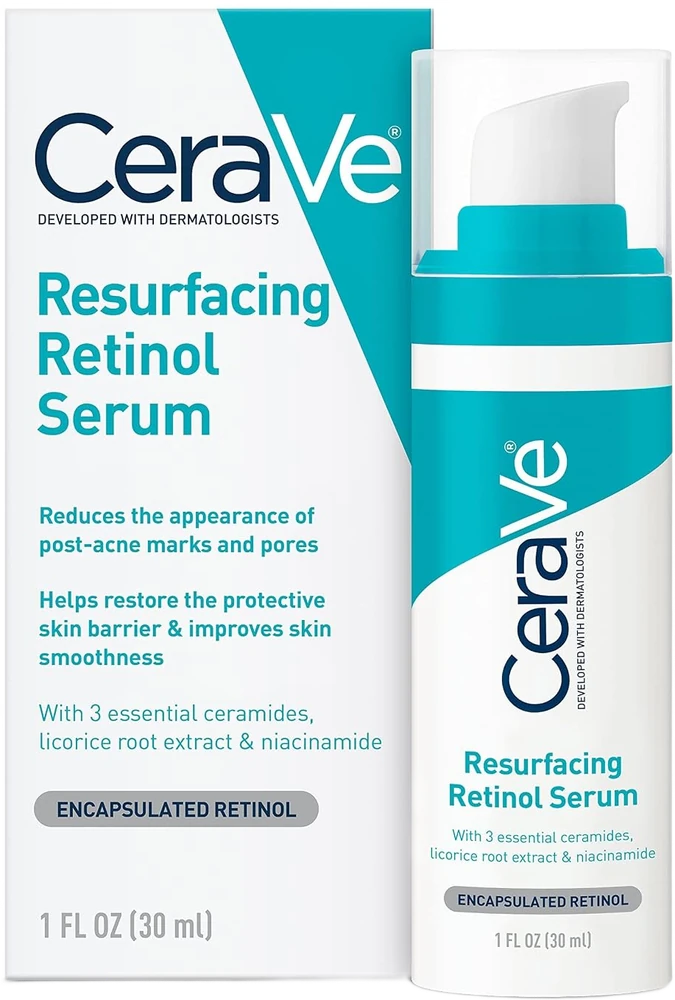 02
CeraVe Resurfacing Retinol Serum
This is the retinol we hand to anyone starting out, because the biggest reason retinol "doesn't work" is that people quit it — and this one is built to be kept.
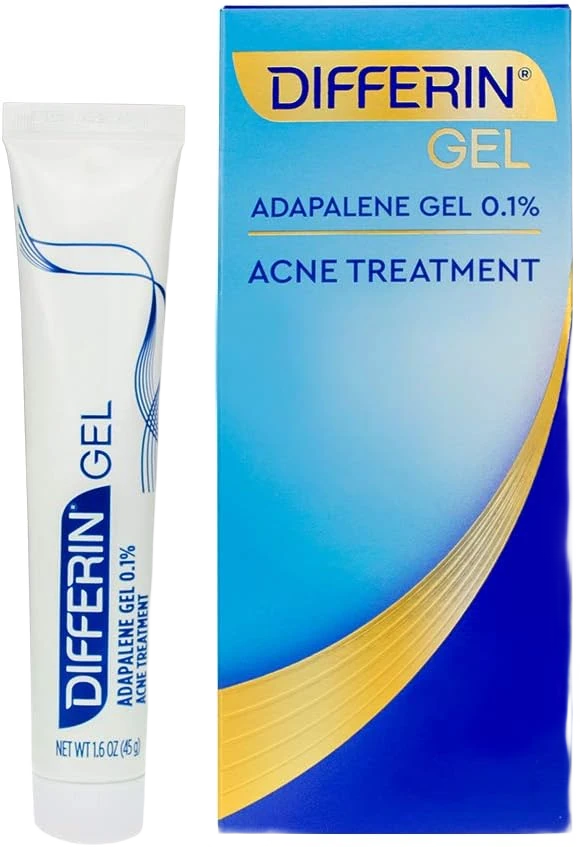 01
Differin Adapalene Gel 0.1%
If you only take one thing from this list, take this: the most effective retinoid you can buy without a doctor is also one of the cheapest.
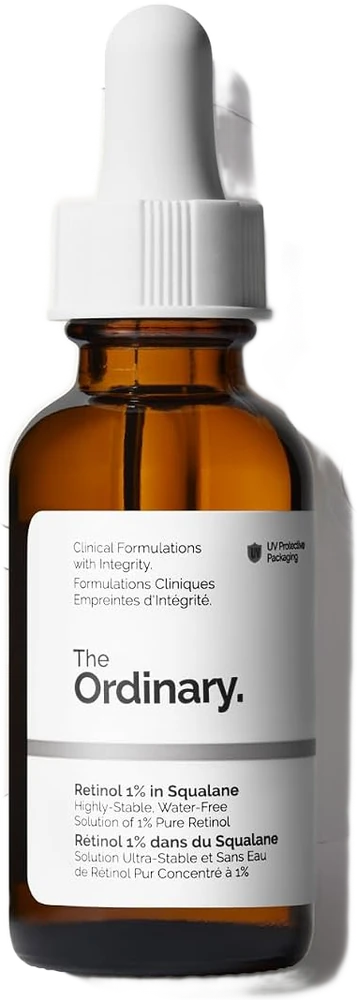 05
The Ordinary Retinol 1%
The best-value real retinol on the list, with an honest caveat stapled to it: 1% raw retinol is strong, and this bottle rewards experience, not eagerness.
Quick Answers
I have sensitive skin — can I really use a retinol?
Often yes, if it's built for tolerability and introduced slowly. This serum pairs a gradual-release retinol fraction with a heavy dose of niacinamide and glycerin to calm redness and support the barrier, which is what makes a real retinol usable on reactive skin. Start twice a week, buffer with moisturizer, and slow down if you flare rather than stopping.
What strength of retinol is in it?
La Roche-Posay doesn't disclose the exact percentage, and it's a deliberately moderate one. That's a fair criticism if you want to know precisely what you're getting — but for sensitive skin, the dual-form delivery and niacinamide buffering matter more than the number. If a disclosed strength matters to you, The Ordinary (#5) labels its exact 1%.
Is it worth the premium over drugstore retinols?
If you specifically need sensitive-skin tolerability, the niacinamide-buffered, gradual-release engineering is what you're paying for, and it's genuine. If you just want maximum strength per dollar, The Ordinary's 1% is far cheaper, and if you want the deepest evidence base, adapalene (#1) is stronger on mechanism and cheaper still.
Can I use it around my eyes or with other actives?
Apply it to the face avoiding the immediate eye area unless a product is specifically eye-safe, and don't stack it with other strong actives (like acids or vitamin C) in the same routine while you're building tolerance. Keep the routine simple, buffer with moisturizer, and always wear SPF the next morning.
Sources & Further Reading
2 peer-reviewed sources, each linked to PubMed
- [1] Mukherjee 2006 PMID 18046911 — Retinoids in the treatment of skin aging: an overview of clinical efficacy and safety. Overview confirming topical retinol improves fine lines, wrinkles and texture via receptor binding and collagen stimulation, while noting OTC retinol is milder than prescription forms because it must convert. Supports the efficacy of a moderate-strength retinol serum and the value of gentler delivery.
- [2] Kong 2016 PMID 26578346 — A comparative study of the effects of retinol and retinoic acid on histological, molecular, and clinical properties of human skin. Human-skin comparison showing a stabilized retinol delivers genuine wrinkle and skin-quality improvement with better tolerability than retinoic acid. Underpins the value of a gradual-release, well-buffered retinol design for sensitive skin.
Affiliate disclosure: every Amazon link uses our Associates tag (superachieverclub-20). We earn a small commission at no cost to you; it funds independent reviews. We never accept payment to change a ranking.