
CeraVe Resurfacing Retinol Serum Review
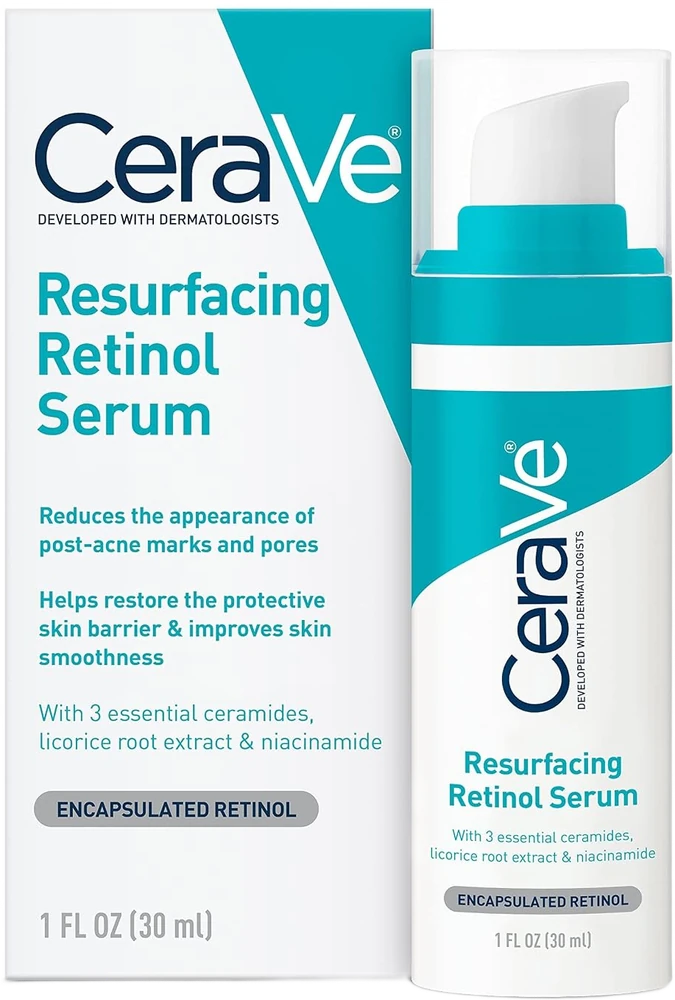 #2 of 8 · Best for beginners✓ Product photos checked Sep 7, 2026
Real retailer photo, cut out. Label unedited.
Buy it. The single best first retinol on the list — built to be tolerated, so you actually keep using it. Encapsulated retinol releases gradually for less irritation, and the ceramide-plus-niacinamide base repairs the barrier as the retinol works — the formula most likely to still be in your routine at month three.
$20 / 1 fl oz≈ $10 / month of use
Why It Scores 9.0 — And The Label Line Behind Each Number
Form + proven mechanism
30% of scoreEncapsulated retinol is a genuine step above raw retinol — the encapsulation shields the active and releases it gradually, so more reaches skin over time with less irritation. It's still retinol paying the conversion penalty (unlike adapalene at #1), and the exact percentage isn't disclosed, which caps the score below the receptor-active leader.
Tolerability + barrier support
25% of scoreThis is the axis it wins. Gradual-release encapsulation plus three essential ceramides and niacinamide directly reinforce the barrier retinol otherwise strains — the combination that measurably cuts the redness, flaking and stinging that make people quit. Fragrance-free and non-comedogenic seals a genuinely sensitive-skin-friendly profile.
- Barrier support
- 3 essential ceramides + niacinamide
Evidence + concentration for the user
20% of scoreThe class evidence for retinol on texture and post-acne marks is solid (Mukherjee 2006), and encapsulated retinol delivering real benefit at a gentler profile is supported by Kong 2016. It loses a little for the undisclosed concentration and a gentle dose that's matched to beginners rather than experienced skin — which is exactly the right call for the buyer it targets.
- Active
- Encapsulated retinol (gradual release; concentration not disclosed)
Formulation quality + stability
15% of scoreA clean, well-considered formula: fragrance-free, non-comedogenic, licorice root extract, and an opaque bottle appropriate for a light-sensitive active. Encapsulation itself aids stability. The main deduction is the small 1 oz size and the undisclosed strength that makes precise dosing hard to judge.
Cost per month of real use
10% of scoreAt about $20 for roughly two months of use (~$10/month), it's mid-priced but drugstore-accessible and behaves well in real life — absorbs cleanly, layers under moisturizer and SPF without pilling. The small bottle is the only knock on value.
- Size
- 1 fl oz (30 ml) serum
- Price
- ≈ $20 / 1 fl oz (≈ $10 per month of use)
- More Specs
- Base
- Fragrance-free, non-comedogenic, licorice root extract
- Best for
- Beginners, sensitive skin, post-acne marks and texture
- Developed with
- Dermatologists (brand statement)
- Packaging
- Opaque bottle — appropriate for a light-sensitive active
Photos checked.This product has no Supplement Facts panel; the retailer's listing photos were reviewed Sep 7, 2026.
Marketing Claims Vs. Reality
Encapsulated retinol releases gradually for less irritation.
Encapsulation as a gradual-release delivery system is a legitimate, disclosed formulation approach, and stabilized/encapsulated retinol delivering benefit at a gentler profile is supported in principle by Kong 2016. But the 'less irritation' benefit is a comparative marketing claim without a published head-to-head for this SKU, and the concentration isn't disclosed, so the magnitude can't be verified.
Three essential ceramides help restore the skin barrier.
Ceramides are well-documented barrier lipids, and reinforcing the barrier while a retinoid strains it is exactly the mechanism that reduces retinol's quit rate. This is CeraVe's core, well-substantiated formulation strength.
Helps fade post-acne marks and smooth skin texture.
Retinol does improve texture and post-inflammatory marks over time per the class evidence (Mukherjee 2006), so the direction is right — but results are gradual and modest at a gentle undisclosed dose, and this is a slow-and-steady formula, not a fast corrector.
Fragrance-free, non-comedogenic, developed with dermatologists.
These are checkable formulation and brand-process facts consistent with the label. They're manufacturer statements about formulation, not peer-reviewed clinical endpoints.
Suitable for sensitive skin.
Fairer than most: the buffered, fragrance-free, encapsulated design genuinely lowers the irritation ceiling. But it's still a retinol, so sensitive users must introduce it slowly (twice weekly) rather than treat 'sensitive-skin-friendly' as license to use it nightly from day one.
What Our Test Actually Found
The retinol most likely to still be in your routine at month three
Adherence is the hidden variable in every retinol result: the active only works if you keep applying it. Encapsulation smooths the release so you get the retinol with far less of the sting, and the ceramide-plus-niacinamide base repairs the barrier as the retinol works it. That combination is precisely what lowers the week-two quit rate — which is why this is the beginner pick even though it isn't the strongest.
Barrier support isn't label padding here — it's the strategy
Niacinamide calms redness and supports the barrier; ceramides replace the lipids retinol depletes. On a raw high-% serum you'd have to add these yourself. Building them into the same bottle is what makes this tolerable enough to become a lasting habit rather than a two-week experiment.
Gentle by design — experienced users will find it mild
The flip side of tolerability is potency: this is a gentle, undisclosed strength, so if you've already built tolerance to a real 1% you may find it underwhelming. That's the correct trade for a beginner and the wrong one for a veteran — match the bottle to your stage, not to the biggest number.
Small bottle, fair-not-cheap price
At 1 fl oz for about $20 it's more expensive per ounce than a bare drugstore serum, and you're paying for the encapsulation and barrier team rather than raw retinol. For the buyer it targets that's money well spent; for someone who just wants maximum strength per dollar, The Ordinary (#5) is the value play.
How to actually use it
Start twice a week at night on dry skin, ramp up as tolerated over several weeks, and pair with a plain moisturizer if needed. SPF 30+ every morning is mandatory — retinoids raise photosensitivity. Never use it in pregnancy or while breastfeeding.
Full analysis: all pros & cons (8), buy if / skip if
- Encapsulated retinol releases gradually — more active reaching skin with markedly less irritation
- Three ceramides plus niacinamide directly reinforce the barrier retinol otherwise strains
- Fragrance-free and non-comedogenic — a genuinely sensitive-skin-friendly profile
- Targets post-acne marks and texture while staying forgiving enough to become a lasting habit
- Drugstore-accessible and behaves well in real use — absorbs cleanly, no pilling
- Retinol concentration isn't disclosed, and it's a gentle one — experienced users may find it mild
- 1 oz bottle is small for the price versus a bare high-% serum
- Still retinol, not a receptor-active retinoid — it pays the conversion penalty adapalene avoids
- You're new to retinol or have sensitive, easily-irritated skin and want the gentlest effective option
- You want barrier support (ceramides + niacinamide) built in rather than bought separately
- You're targeting post-acne marks and uneven texture and value a formula you'll actually stick with
- You want fragrance-free and non-comedogenic as non-negotiables
- You're an experienced retinol user chasing maximum strength — an undisclosed gentle dose will feel mild
- You want a receptor-active retinoid with the deepest evidence — buy adapalene (#1) instead
- You're pregnant or breastfeeding — no topical retinoid is appropriate
Encapsulated retinol releases gradually for less irritation, and the ceramide-plus-niacinamide base repairs the barrier as the retinol works — the formula most likely to still be in your routine at month three. It's fragrance-free, non-comedogenic, and forgiving enough to become a habit. The trade-offs are honest: the strength isn't disclosed and it's a gentle one, so experienced users may find it mild, and the 1 oz bottle is small for the price. Start twice a week, wear SPF every morning, skip it in pregnancy.
CeraVe Resurfacing Retinol Serum is the bottle we hand to anyone starting out, because the single biggest reason retinol 'doesn't work' is that people quit it in week two — and this one is engineered to be kept. It pairs encapsulated retinol, which releases gradually so more active reaches skin with markedly less sting, with CeraVe's signature barrier team of three essential ceramides plus niacinamide, the ingredients that measurably reduce the redness and flaking that end most retinol routines. It's fragrance-free and non-comedogenic, developed with dermatologists, and aimed squarely at beginners, sensitive skin, and post-acne marks. It is not the strongest bottle on this list, and that's the point: a gentle formula you use for a year beats a nuclear one you abandon in a fortnight. The honest trade-offs are that the retinol concentration isn't disclosed and the 1 oz bottle is small for the money — you're paying for tolerability engineering, not raw potency.
The best first retinol on the list — because a gentle formula you keep beats a harsh one you quit.

The biggest reason retinol fails people is that they abandon it, and this serum is built to prevent exactly that: encapsulation smooths the release, and the ceramide-plus-niacinamide base repairs the barrier as the retinol works. It's not the strongest bottle here, and it doesn't need to be — for a beginner or a sensitive-skin user, tolerability is what predicts a good outcome twelve months out. The honest caveats are an undisclosed gentle strength and a small bottle, so experienced skin chasing maximum potency should look to the 1% picks and the deepest evidence base should look to adapalene at #1. Start twice weekly, layer SPF every morning, skip it in pregnancy. As a first retinol, nothing on this page is a safer bet.
If This Doesn’t Fit — Try These
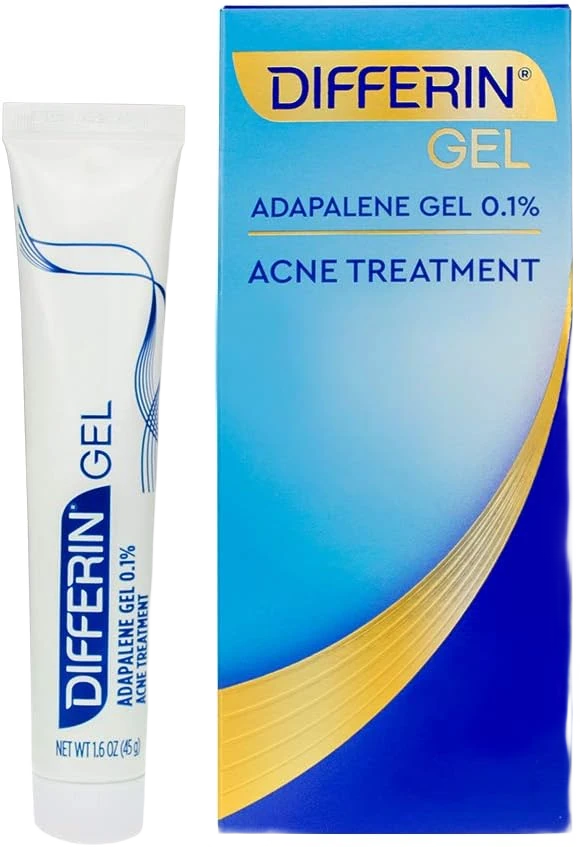 01
Differin Adapalene Gel 0.1%
If you only take one thing from this list, take this: the most effective retinoid you can buy without a doctor is also one of the cheapest.
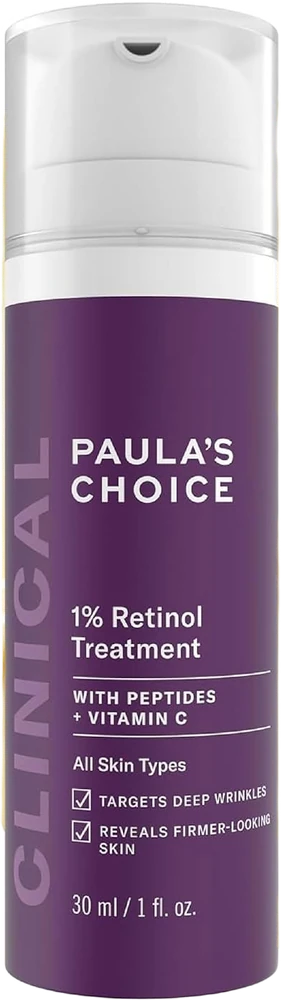 04
Paula's Choice Clinical 1% Retinol
If you've decided you want a 1% retinol and you want it formulated properly rather than bare, this is the one to buy.
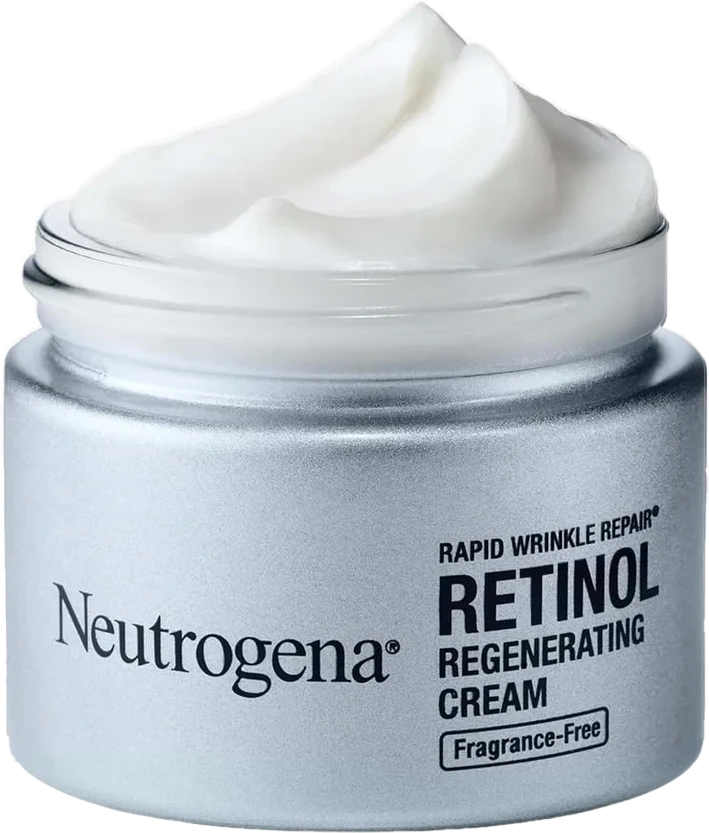 07
Neutrogena Rapid Wrinkle Repair
Neutrogena Rapid Wrinkle Repair is the dependable drugstore workhorse: a stabilized retinol folded into a hyaluronic-acid moisturizer so beginners get the active and the barrier support in one grab-and-go step.
Quick Answers
I've never used retinol — is this really the one to start with?
Yes. The most common way retinol 'fails' is that people quit when the irritation hits, and this serum is specifically built to prevent that: encapsulated retinol releases gradually for less sting, and the ceramides and niacinamide repair the barrier as it works. Start twice a week and it's about as forgiving an introduction to retinol as you'll find.
What percentage of retinol is in it?
CeraVe doesn't disclose the exact concentration, and it's a deliberately gentle one. That's a fair criticism if you want to know precisely what you're getting — but for a beginner, the encapsulation and barrier support matter more than the number. If a disclosed strength is important to you, The Ordinary (#5) labels its exact 1%.
Will it be strong enough to see results?
For texture, post-acne marks and early smoothing, yes — but gradually. This is a slow-and-steady formula, not a fast corrector, and results build over months with consistent use plus daily sunscreen. If you've already built tolerance to a real 1% and want more punch, step up to a higher-strength pick.
Is it actually okay for sensitive skin?
It's one of the gentler options because it's fragrance-free, non-comedogenic, encapsulated and barrier-buffered. But it's still a retinol, so introduce it slowly — twice weekly, buffered with moisturizer — rather than nightly from day one. If your skin flares, drop the frequency, don't stop.
Sources & Further Reading
2 peer-reviewed sources, each linked to PubMed
- [1] Kong 2016 PMID 26578346 — A comparative study of the effects of retinol and retinoic acid on histological, molecular, and clinical properties of human skin. Comparative human-skin study showing a stabilized retinol produced measurable improvement in wrinkles and skin quality with better tolerability than retinoic acid, though of smaller magnitude. The evidence behind rewarding a well-formulated, gentler retinol over a harsh raw high percentage.
- [2] Mukherjee 2006 PMID 18046911 — Retinoids in the treatment of skin aging: an overview of clinical efficacy and safety. Overview confirming topical retinol improves fine lines, texture and pigmentation via receptor binding and collagen stimulation, while noting OTC retinol converts to retinoic acid and is milder than prescription forms. Supports the texture and post-acne-mark benefits of an encapsulated retinol serum.
Affiliate disclosure: every Amazon link uses our Associates tag (superachieverclub-20). We earn a small commission at no cost to you; it funds independent reviews. We never accept payment to change a ranking.