
Top 12 Best Digestive Enzyme Supplements (2026)
 01 · Best overall✓ Label verified · Supplement Facts read Sep 7, 2026
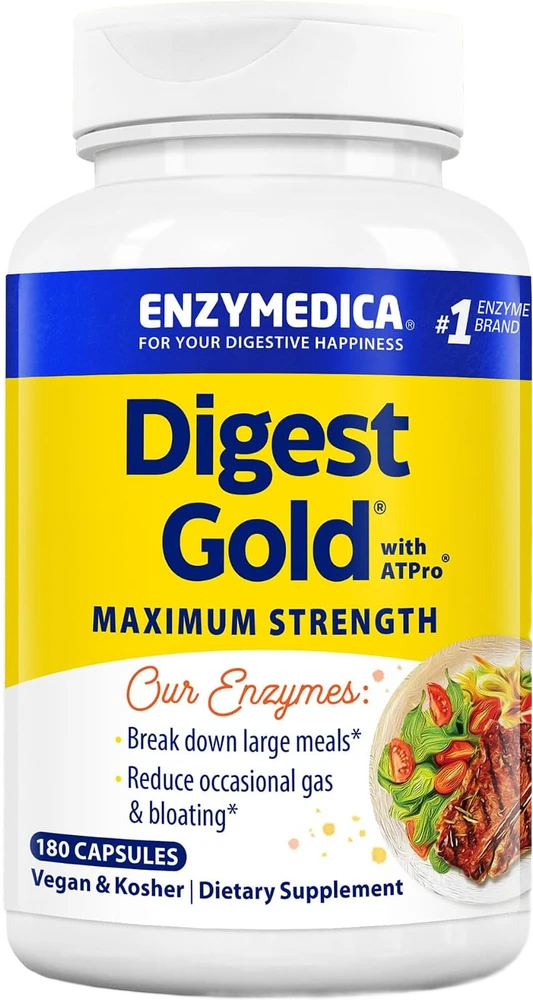
Best overall: Enzymedica Digest Gold + ATPro
The 20-year category benchmark — the highest-activity broad enzyme blend for big mixed meals, the safest all-purpose pick if you don't have one single food trigger.
$30 / month$0.50 / 1-capsule meal dose
Why it wins: all five scores, pros & cons, full label
- Highest-activity broad blend on the list — Enzymedica's Thera-blend enzymes are processed to stay active across a range of stomach pH, so more enzyme reaches the food
- Covers carbs, protein, fat, fiber, dairy AND beans (includes both lactase and alpha-galactosidase) in one capsule — the best single-bottle answer for varied heavy meals
- Activity units are disclosed per enzyme rather than hidden in a milligram 'proprietary blend' — exactly the dose honesty this category usually lacks
- The most-reviewed, longest-trusted enzyme product in the category — the default benchmark everything else is measured against
- A broad blend is the right tool only if you have heavy/mixed meals or vague fullness — if your problem is specifically dairy or specifically beans, a targeted single-enzyme pick (#6, or an alpha-gal blend) is cheaper and just as effective
- Premium price per capsule versus budget broad-spectrum blends like NOW or Nutricost
- Per serving
- Amylase, protease, lipase, lactase, cellulase, alpha-galactosidase + more (1 capsule)
- Bottle
- Available 45/90/120/240 ct (~1.5-8 months at 1/meal as needed)
- Testing
- Vegan, non-GMO, gluten/dairy-free, GMP-manufactured, activity-unit labeled
- Form
- 14-enzyme broad-spectrum blend (acid-stable Thera-blend) + ATP cofactor

Our take — If you want one bottle for big mixed meals and don't have a single identifiable food trigger, this is the pick — and it's the benchmark for good reason. Digest Gold delivers the highest activity across the widest enzyme spread, with acid-stable processing so the enzymes actually survive to do their job, and it discloses activity units instead of hiding behind a proprietary milligram number. The honest caveat is the same one that governs this whole category: a broad blend is most worth it when your meals are heavy and varied or your symptoms are non-specific. If dairy alone or beans alone are the culprit, buy the targeted enzyme instead and save money. For everyone else chasing general heavy-meal comfort, start here.
 02
02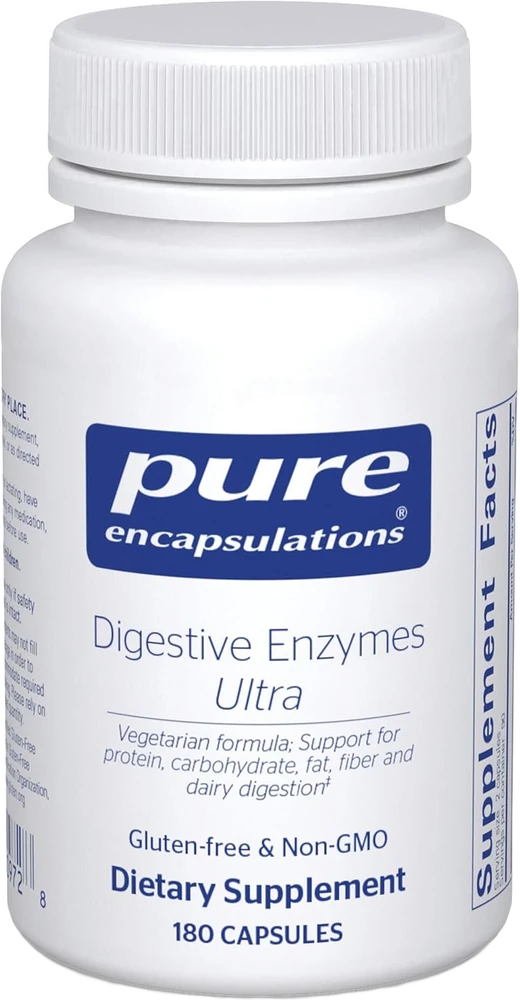 03
03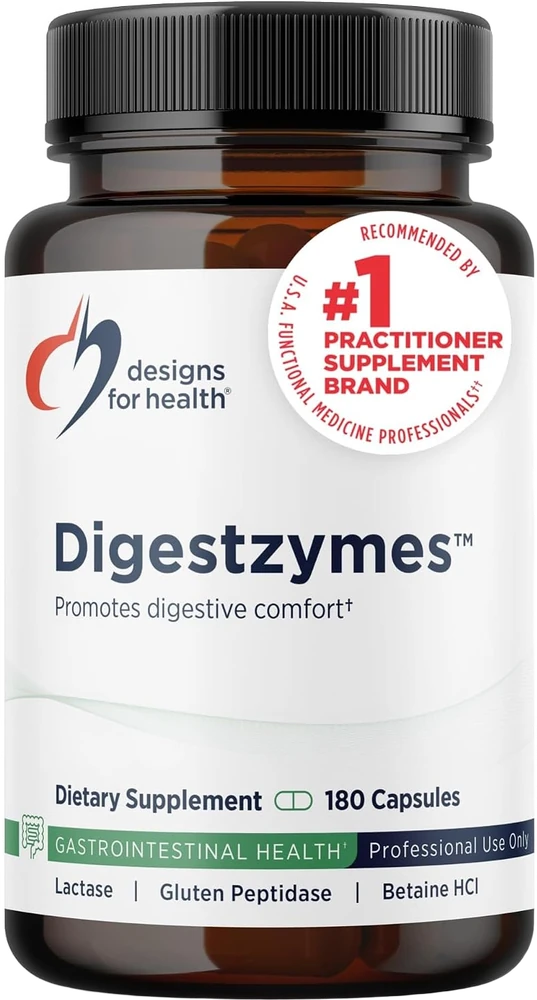 04
04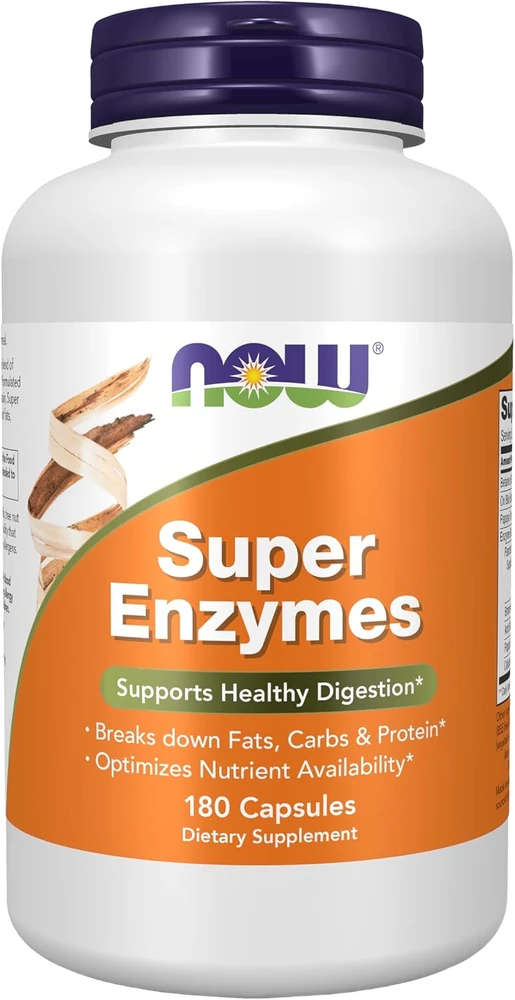 05
05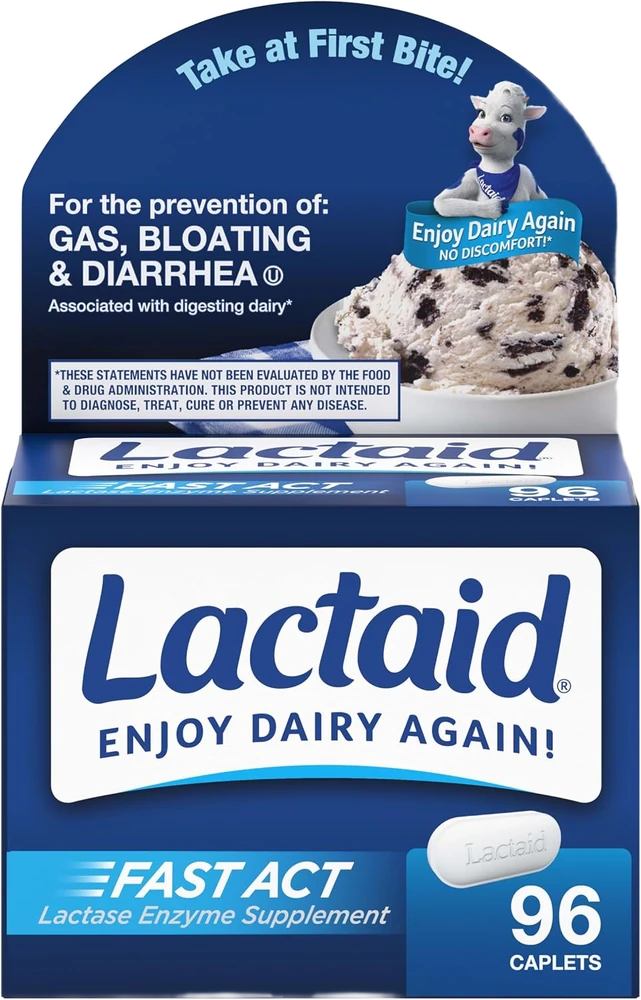 06
06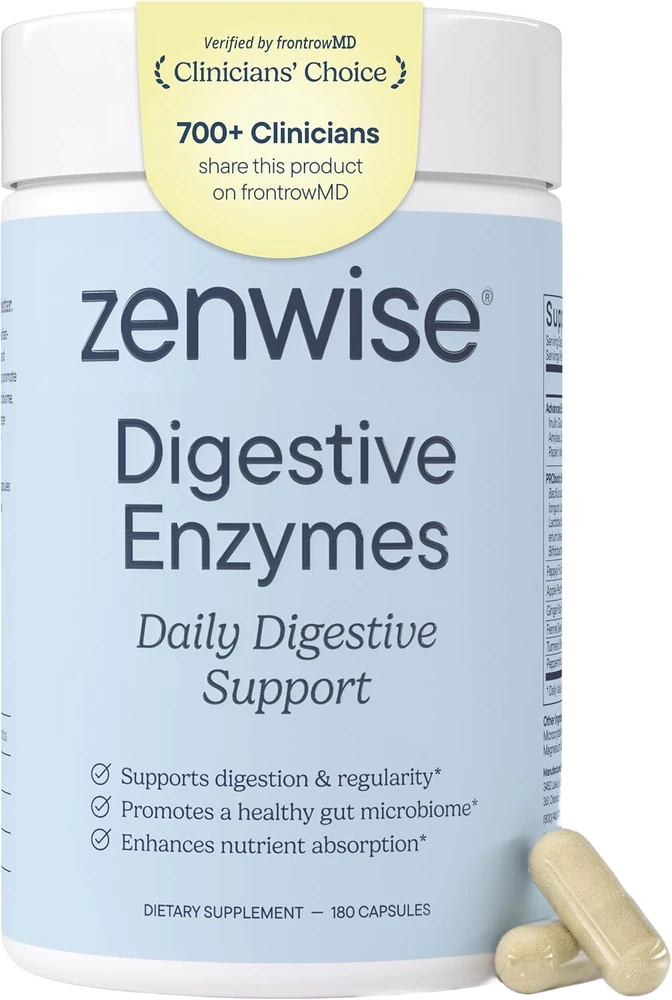 07
07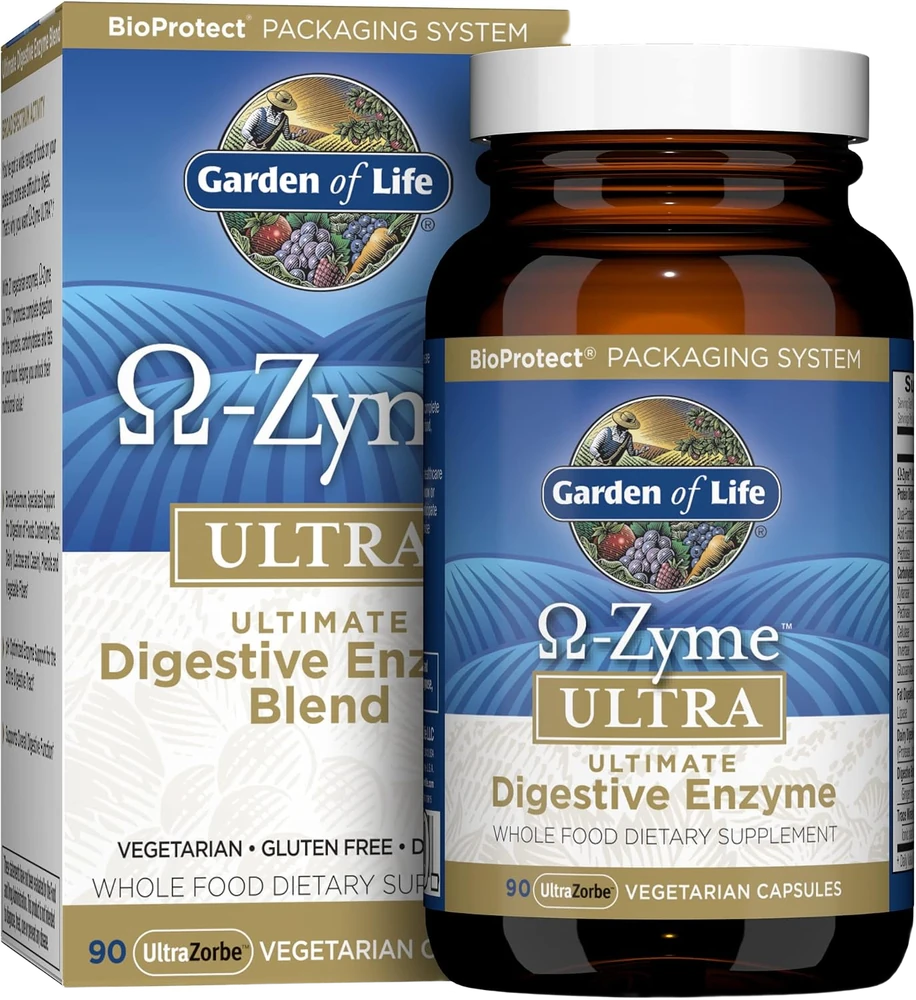 08
08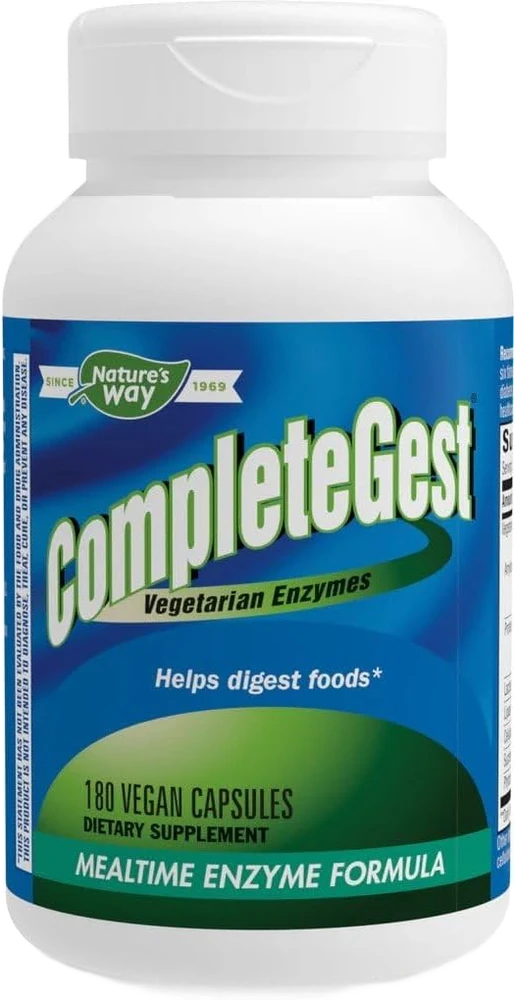 09
09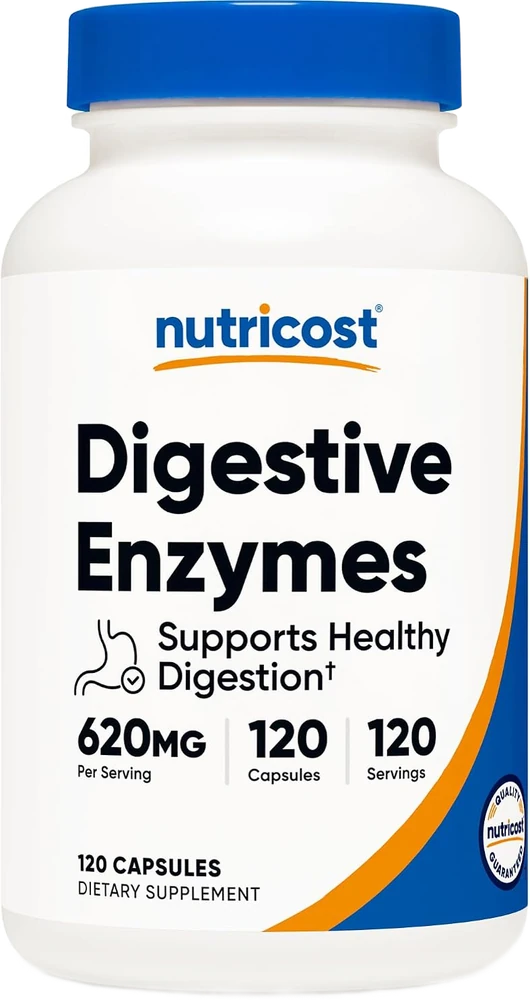 10
10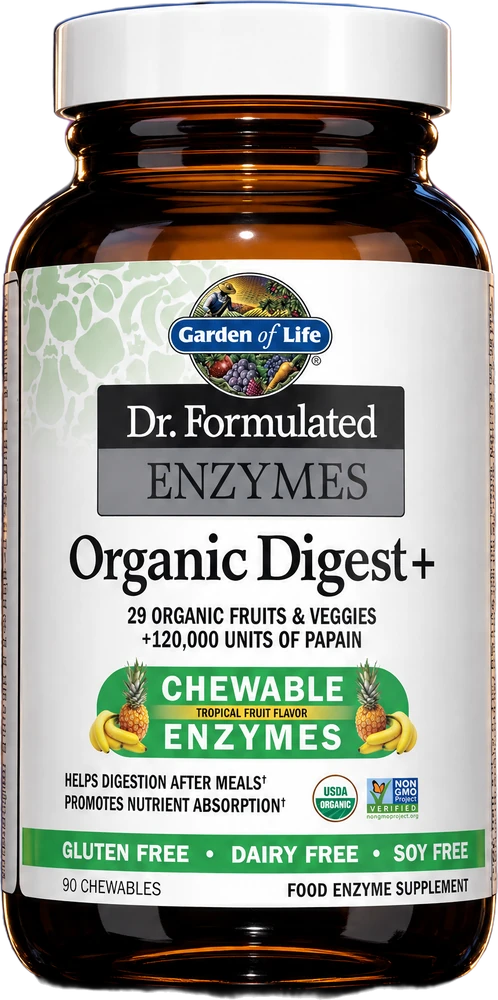 11
11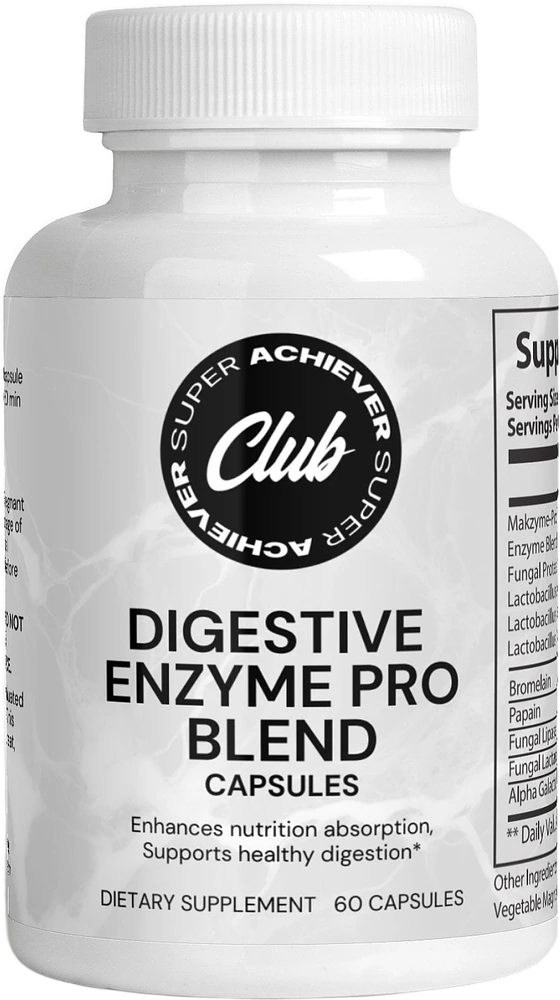 12
12Who Wins Which Aspect
Sorted by overall SAC Product Score™ — the official ranking.
| # | Pick | Score | Enzyme match + problem fit30% | Activity units + dose honesty25% | Third-party testing + manufacturing quality20% | Value per meal-dose15% | Real-world response10% | Cost Per Dose | Buy |
|---|---|---|---|---|---|---|---|---|---|
| 01 | | 9.3 | 9.51 | 9.51 | 9.02 | 8.52 | 9.51 | $0.50 / 1-capsule meal dose | Check price |
| Highest-activity broad blend on the list — Enzymedica's Thera-blend enzymes are processed to stay active across a range of stomach pH, so more enzyme reaches the foodA broad blend is the right tool only if you have heavy/mixed meals or vague fullness — if your problem is specifically dairy or specifically beans, a targeted single-enzyme pick (#6, or an alpha-gal blend) is cheaper and just as effective | |||||||||
| 02 | | 9.2 | 9.51 | 9.02 | 9.51 | 8.52 | 9.02 | $0.37 / 2-capsule meal dose | Check price |
| Targets LOW STOMACH ACID specifically — betaine HCl + pepsin acidify the stomach so protein digestion and downstream enzyme activation work, a different and often-overlooked mechanism from 'more enzymes'Betaine HCl is NOT for everyone — anyone with reflux, gastritis, an active or suspected ulcer, or on acid-reducing meds (PPIs/H2 blockers) should avoid it or talk to a clinician first | |||||||||
| 03 | | 8.9 | 9.02 | 9.02 | 9.51 | 8.03 | 8.53 | $0.53 / 1-capsule meal dose | Check price |
| Hypoallergenic, excipient-free formulation — the cleanest label of any broad blend here, built for sensitive and allergy-prone GI tractsClinician-brand pricing makes it the most expensive broad blend on the list per capsule | |||||||||
| 04 | | 8.6 | 9.02 | 8.53 | 8.53 | 8.52 | 8.53 | $0.47 / 2-capsule meal dose | Check price |
| Combines betaine HCl + pepsin (low-acid support) with a full enzyme panel — covers both the acid mechanism and the enzyme mechanism in one formulaContains betaine HCl, so the same contraindications apply — avoid with reflux, gastritis, ulcers, or acid-reducing meds without clinician guidance | |||||||||
| 05 | | 8.5 | 8.53 | 8.0 | 8.53 | 9.51 | 8.53 | $0.13 / 1-capsule meal dose | Check price |
| By far the best value on the list — pancreatic enzymes, ox bile AND betaine HCl together for a fraction of the premium HCl picks (#2, #4)Contains betaine HCl, so the reflux / gastritis / ulcer / acid-reducer contraindications apply here too | |||||||||
| 06 | | 8.3 | 9.51 | 7.5 | 7.5 | 8.03 | 9.02 | $0.29 / caplet | Check price |
| The most evidence-backed pick on the list for its specific job — supplemental lactase improves both breath-hydrogen and symptoms versus placebo in lactose-intolerant people (Ojetti 2010), and lactose-hydrolyzed milk causes far fewer symptoms than regular milk (Suarez 1995)Does ONE thing — it only addresses lactose. It does nothing for beans, fat, protein, fiber, or general fullness, so it's useless if dairy isn't your trigger | |||||||||
| 07 | | 7.7 | 7.5 | 7.5 | 8.0 | 7.5 | 8.0 | $0.43 / 2-capsule serving | Check price |
| Combines enzymes with prebiotic inulin and probiotics, so it doubles as a daily gut-balance product, not just a mealtime enzymeDoing three jobs at once means each is somewhat under-dosed — the enzyme activity, probiotic count, and prebiotic dose are all lower than a dedicated single-purpose product would deliver | |||||||||
| 08 | | 7.6 | 8.53 | 6.0 | 8.0 | 7.5 | 8.0 | $0.62 / 2-capsule meal dose | Check price |
| The widest enzyme spread here — 21 plant-based enzymes hit carbs, fats, proteins, fiber, and harder-to-digest foods, including lactase and alpha-galactosidaseMore enzymes isn't automatically better — a 21-enzyme panel spreads activity across many enzymes, so individual activity units per enzyme can be lower than a focused blend | |||||||||
| 09 | | 7.6 | 7.5 | 7.5 | 7.5 | 7.5 | 8.0 | $0.33 / 2-capsule meal dose | Check price |
| Solid, reliable mainstream vegan blend covering carbs, protein, fat, and dairy (includes lactase) for everyday fullness and gasA solid generalist rather than a standout — it doesn't lead on activity units, breadth, or purity the way the higher picks do | |||||||||
| 10 | | 7.5 | 7.5 | 7.0 | 7.5 | 8.52 | 7.5 | $0.13 / 1-capsule meal dose | Check price |
| Maximum enzyme variety per dollar — an 18+ enzyme blend including lactase AND alpha-galactosidase, so it covers both dairy and beans cheaplyActivity-unit transparency and per-enzyme potency aren't on the level of Enzymedica or the clinician brands — '620 mg of 18 enzymes' spreads thin, so individual activity can be modest | |||||||||
| 11 | | 7.1 | 6.5 | 7.0 | 8.0 | 7.5 | 7.0 | $0.26 / 1-chewable serving | Check price |
| All 13 enzymes carry their own activity unit, so the label can be compared line by line with other blendsThe panel declares no amylase and no alpha-galactosidase, so starch and bean complaints are not covered; the listing's amylase line is not on the panel | |||||||||
| 12 | | 6.5 | 6.5 | 7.0 | 5.5 | 6.5 | 7.0 | $0.58 | Check price |
| Activity units printed for every enzyme, not just milligramsNo amylase listed, so starch is not covered | |||||||||
The Other 11, Ranked
- 02
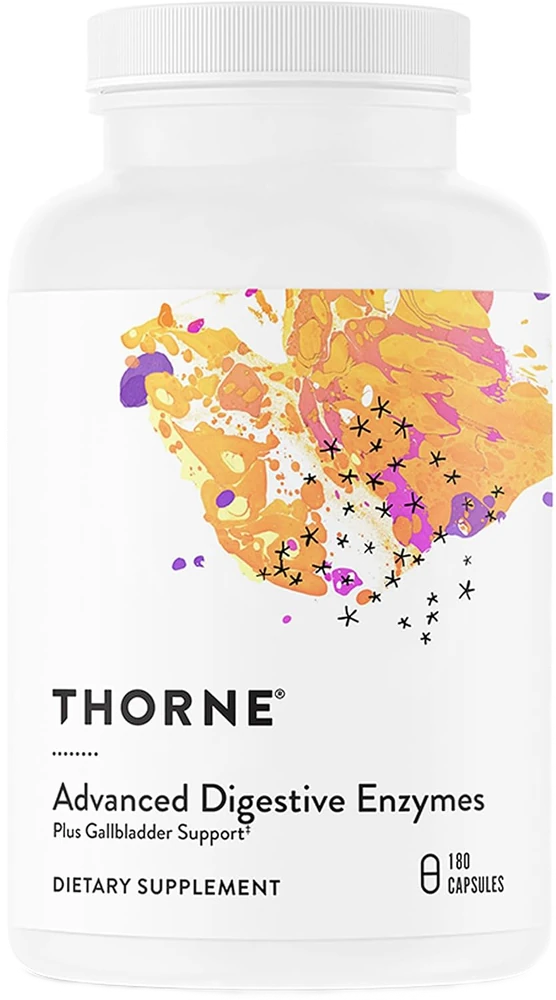
Best for low stomach acid: Thorne Advanced Digestive Enzymes
9.2SAC Score™An acid-and-bile powerhouse for weak stomach acid — not just enzyme volume, but the betaine HCl that protein digestion actually depends on, with Thorne's clinician-grade QC.
StrongestEnzyme match + problem fit9.51WeakestValue per meal-dose8.5- Per serving
- 480 mg betaine HCl + pepsin + pancreatin + ox bile (2 capsules)
- Bottle
- 180 capsules (~3 months at 2/day as needed)
- Testing
- NSF Certified, Thorne clinician-grade QC, GMP-manufactured
All five scores, pros & cons, full label
What We Like- Targets LOW STOMACH ACID specifically — betaine HCl + pepsin acidify the stomach so protein digestion and downstream enzyme activation work, a different and often-overlooked mechanism from 'more enzymes'
- Adds pancreatin (amylase/protease/lipase) and ox bile, so it covers fat and protein digestion alongside the acid support — a genuinely complete heavy-protein-meal formula
- NSF Certified and Thorne's QC is among the strongest in the industry — the integrative-medicine channel standard
- The right answer for the buyer who feels protein meals sit 'like a brick' — a classic low-acid pattern that broad plant-enzyme blends don't address
What You Live With- Betaine HCl is NOT for everyone — anyone with reflux, gastritis, an active or suspected ulcer, or on acid-reducing meds (PPIs/H2 blockers) should avoid it or talk to a clinician first
- If your problem is dairy or beans rather than low acid, this is the wrong tool — a lactase or alpha-galactosidase pick fits better and costs less
- Form
- Betaine HCl + pepsin + pancreatin (amylase/protease/lipase) + ox bile
Our take — Thorne Advanced Digestive Enzymes is the pick when the problem is low stomach acid, not enzyme quantity. The betaine HCl + pepsin core acidifies the stomach so protein actually breaks down and the digestive cascade fires properly, and the added pancreatin and ox bile round it out for heavy, fatty, protein-dense meals. It's the formula for people who feel a steak or a big protein plate sitting undigested for hours. The serious caveat: betaine HCl is contraindicated with reflux, gastritis, ulcers, or acid-reducing medication, so this is a targeted tool, not a casual everyday enzyme. Matched to the right buyer, it's the best low-acid formula here, with NSF certification and Thorne's pedigree behind it.
- 03
Best hypoallergenic: Pure Encapsulations Digestive Enzymes Ultra
8.9SAC Score™Clean, comprehensive and no-filler — the safe pick for sensitive, allergy-prone, or IBS guts, with both lactase and alpha-galactosidase covering dairy and beans.
StrongestThird-party testing + manufacturing quality9.51WeakestValue per meal-dose8.0- Per serving
- 391 mg enzyme blend, activity-unit disclosed (1 capsule)
- Bottle
- 180 capsules (~6 months at 1/meal as needed)
- Testing
- Hypoallergenic, no unnecessary excipients, third-party tested raw materials
All five scores, pros & cons, full label
What We Like- Hypoallergenic, excipient-free formulation — the cleanest label of any broad blend here, built for sensitive and allergy-prone GI tracts
- Includes both lactase (dairy) and alpha-galactosidase (beans/gassy veg), so it covers the two most common specific food triggers in one capsule
- DPP-IV activity targets gluten and casein peptides, useful for buyers sensitive to those proteins
- Pure Encapsulations is the clinician-preferred brand used in integrative-medicine practices, with consistent QC and transparent activity-unit labeling
What You Live With- Clinician-brand pricing makes it the most expensive broad blend on the list per capsule
- Like any broad blend, it's most valuable for sensitive guts with real intolerances — a healthy gut with no specific trigger may not notice much
- Form
- 13-enzyme hypoallergenic blend incl. DPP-IV, lactase, alpha-galactosidase
Our take — If you have a sensitive or allergy-prone gut and want a clean, comprehensive enzyme without fillers, dyes, or unnecessary excipients, Pure Encapsulations Digestive Enzymes Ultra is the answer. It's the hypoallergenic pick the integrative-medicine world reaches for, and crucially it covers both of the most common specific triggers — dairy (lactase) and beans/gassy veg (alpha-galactosidase) — plus DPP-IV for gluten and casein peptides. You pay clinician-brand prices for that purity, and the honest framing still applies: it shines for sensitive guts with real intolerances, less so for someone with no defined problem. For chemically sensitive buyers, it's the safest comprehensive option here.
- 04
Best clinical (HCl + DPP-IV): Designs for Health Digestzymes
8.6SAC Score™Practitioner-grade for protein digestion plus gluten and dairy peptide breakdown — a betaine-HCl formula with DPP-IV that bridges low-acid support and targeted intolerance coverage.
StrongestEnzyme match + problem fit9.02WeakestActivity units + dose honesty8.5- Per serving
- Betaine HCl + pepsin + broad enzymes incl. DPP-IV (2 capsules)
- Bottle
- 180 capsules (~3 months at 2/day as needed)
- Testing
- Practitioner-channel QC, GMP-manufactured, activity-unit labeled
All five scores, pros & cons, full label
What We Like- Combines betaine HCl + pepsin (low-acid support) with a full enzyme panel — covers both the acid mechanism and the enzyme mechanism in one formula
- DPP-IV activity specifically targets gluten and casein peptides, plus lactase for dairy — strong for buyers with multiple protein/dairy sensitivities
- Practitioner-grade brand with transparent activity-unit labeling and a clinical reputation
- Lipase content supports fat digestion alongside the protein focus, making it a genuinely complete heavy-meal option
What You Live With- Contains betaine HCl, so the same contraindications apply — avoid with reflux, gastritis, ulcers, or acid-reducing meds without clinician guidance
- Practitioner pricing and a 2-capsule serving make it pricier per dose than the budget HCl pick (NOW Super Enzymes)
- Form
- Multi-enzyme + betaine HCl + pepsin + DPP-IV + lactase + lipase
Our take — Designs for Health Digestzymes is the clinical bridge pick — it pairs betaine HCl + pepsin for low stomach acid with a DPP-IV-containing enzyme panel for gluten, casein, and dairy peptides, so it suits buyers whose problems span both 'protein sits heavy' and 'specific proteins bother me.' It's a practitioner-channel formula with honest activity-unit labeling and a solid clinical reputation. The trade-offs are price and the betaine HCl contraindications it shares with the Thorne pick — not for anyone with reflux, gastritis, ulcers, or on acid-reducers. For the buyer who needs both acid support and targeted peptide coverage, it's the most complete clinical option on the list.
- 05
Best value: NOW Super Enzymes
8.5SAC Score™The proven budget workhorse — pancreatic enzymes, bile and betaine HCl together at a fraction of premium prices, from NOW's trusted household-brand QC.
StrongestValue per meal-dose9.51WeakestActivity units + dose honesty8.0- Per serving
- Pancreatin + bile + betaine HCl + plant proteases (1 capsule)
- Bottle
- 180 capsules (~6 months at 1/meal as needed)
- Testing
- NOW in-house QC labs, GMP-certified facility, identity-tested
All five scores, pros & cons, full label
What We Like- By far the best value on the list — pancreatic enzymes, ox bile AND betaine HCl together for a fraction of the premium HCl picks (#2, #4)
- Genuinely versatile: pancreatin covers fat/protein/carbs, ox bile supports fat digestion, betaine HCl adds low-acid support, bromelain and papain add plant proteases
- NOW's in-house QC is among the most consistent in the industry, with 30+ years of household-brand trust
- Large 180-capsule bottle gives an excellent runway at the as-needed meal dose
What You Live With- Contains betaine HCl, so the reflux / gastritis / ulcer / acid-reducer contraindications apply here too
- Activity-unit disclosure is good but not as granular as the clinician brands; no lactase or alpha-galactosidase, so it's not the pick if dairy or beans are your specific trigger
- Form
- Pancreatin (amylase/protease/lipase) + bromelain + papain + ox bile + betaine HCl
Our take — NOW Super Enzymes is the budget workhorse that punches well above its price. You get pancreatic enzymes, ox bile, and betaine HCl — the same core mechanisms as the premium HCl formulas — plus bromelain and papain, at roughly a third of the cost. It's the smart pick for a buyer who wants real pancreatic and acid support for heavy, fatty, protein-dense meals without paying clinician-brand prices. Two honest caveats: it carries the same betaine HCl contraindications (skip it with reflux, gastritis, ulcers, or acid-reducers), and it has no lactase or alpha-galactosidase, so for a pure dairy or bean problem you want a targeted pick instead. For general heavy-meal value, nothing here beats it.
- 06
Best for lactose intolerance: Lactaid Fast Act Lactase Caplets
8.3SAC Score™The specialist — the trusted single-purpose lactase for dairy, and the most evidence-backed product on this list when your one problem is lactose.
StrongestEnzyme match + problem fit9.51WeakestActivity units + dose honesty7.5- Per serving
- 9,000 FCC ALU lactase (1 caplet with the first bite of dairy)
- Bottle
- 96 caplets (taken only with dairy meals, so months of supply for most)
- Testing
- Kosher, mainstream OTC brand QC, FCC activity-unit labeled
All five scores, pros & cons, full label
What We Like- The most evidence-backed pick on the list for its specific job — supplemental lactase improves both breath-hydrogen and symptoms versus placebo in lactose-intolerant people (Ojetti 2010), and lactose-hydrolyzed milk causes far fewer symptoms than regular milk (Suarez 1995)
- Clean 9,000 FCC ALU lactase dose with honest activity-unit labeling — exactly what a lactase product should disclose
- Single-purpose and inexpensive per use because you only take it with dairy, not every meal
- Lactaid is the trusted, widely available household name for lactose intolerance, easy to find anywhere
What You Live With- Does ONE thing — it only addresses lactose. It does nothing for beans, fat, protein, fiber, or general fullness, so it's useless if dairy isn't your trigger
- Must be timed with the first bite of dairy to work, and very high-lactose loads may need more than one caplet
- Form
- Single-enzyme lactase (beta-galactosidase) caplet
Our take — Lactaid Fast Act sits mid-table (#6) only because it's the narrowest product here — but for the right buyer it's the single best pick on the page, and the most strongly evidence-supported. If dairy is your one and only problem, you don't need a 14-enzyme blend; you need lactase, and this delivers a clean, honestly-labeled 9,000 FCC ALU dose timed to your dairy meal. The trial record is squarely behind it: supplemental lactase improves breath-hydrogen and symptoms versus placebo, and lactose-hydrolyzed milk is far better tolerated than regular milk. Buy it if and only if lactose is the culprit — match the enzyme to the food, and for dairy, this is the match.
- 07
Best 3-in-1: Zenwise Digestive Enzymes + Probiotics & Prebiotics
7.7SAC Score™Amazon's bestselling all-in-one — enzymes plus pre- and probiotics for buyers who want enzyme support and daily gut-balance maintenance in a single capsule.
StrongestThird-party testing + manufacturing quality8.0WeakestEnzyme match + problem fit7.5- Per serving
- Enzyme blend + inulin + probiotic cultures (2 capsules)
- Bottle
- 180 capsules (~3 months at 2/day)
- Testing
- GMP-manufactured, brand QC
All five scores, pros & cons, full label
What We Like- Combines enzymes with prebiotic inulin and probiotics, so it doubles as a daily gut-balance product, not just a mealtime enzyme
- Amazon's bestselling enzyme product by volume — huge review base and consistent availability
- Bromelain and papain add plant proteases for protein digestion alongside the broad enzyme panel
- Convenient for buyers who'd rather take one capsule for both enzymes and gut maintenance than separate products
What You Live With- Doing three jobs at once means each is somewhat under-dosed — the enzyme activity, probiotic count, and prebiotic dose are all lower than a dedicated single-purpose product would deliver
- Probiotics are a daily-maintenance idea while enzymes are a per-meal idea, so the combined dosing schedule is a compromise for both
- Form
- Multi-enzyme blend + bromelain + papain + prebiotic inulin + probiotics
Our take — Zenwise is the convenient 3-in-1 — Amazon's bestselling enzyme product because it bundles enzymes, prebiotic inulin, and probiotics into one capsule for buyers who want general gut maintenance plus some mealtime enzyme support. If you value simplicity and want a single daily gut product, it's a reasonable, well-reviewed choice. The honest caveat is the inherent compromise of any combo: spreading the formula across three jobs means the enzyme activity, the probiotic count, and the prebiotic dose are each lower than a focused product, and enzymes (per-meal) and probiotics (daily) don't share an ideal schedule. Good for convenience-first buyers; not the pick if you need a strong dose of any one component.
- 08
Most comprehensive blend: Garden of Life Omega-Zyme Ultra
7.6SAC Score™The widest enzyme spread on the list — 21 plant-based enzymes covering carbs, fats, proteins, fiber, and hard-to-digest foods, with no betaine HCl so it's gentler.
StrongestEnzyme match + problem fit8.53WeakestActivity units + dose honesty6.0- Per serving
- Broad 21-enzyme panel incl. lactase, alpha-galactosidase, cellulase (2 capsules)
- Bottle
- 90 capsules (~1.5 months at 2/meal as needed)
- Testing
- Vegetarian, non-GMO, GMP-manufactured
All five scores, pros & cons, full label
What We Like- The widest enzyme spread here — 21 plant-based enzymes hit carbs, fats, proteins, fiber, and harder-to-digest foods, including lactase and alpha-galactosidase
- No betaine HCl, so it avoids the reflux/gastritis contraindications and suits buyers who want broad coverage without acid support
- Plant-based and vegetarian, with added ginger and turmeric for buyers who want a botanical digestive angle
- A strong choice for varied plant-heavy or fiber-heavy diets where many different substrates need covering
What You Live With- More enzymes isn't automatically better — a 21-enzyme panel spreads activity across many enzymes, so individual activity units per enzyme can be lower than a focused blend
- Smaller 90-count bottle at a 2-capsule serving means a shorter runway and higher cost per month than NOW
- Form
- 21 plant-based enzymes + ginger & turmeric, no betaine HCl
Our take — Garden of Life Omega-Zyme Ultra is the most comprehensive plant-based blend on the list, with 21 enzymes covering the widest range of substrates — carbs, fats, proteins, fiber, and the hard-to-digest stuff — plus ginger and turmeric. Because it has no betaine HCl, it's the gentler broad option for buyers who want wide coverage without acid support or its contraindications. The honest trade-off is that breadth can dilute depth: spreading activity across 21 enzymes can mean lower units per individual enzyme than a focused formula. Best for varied, plant-heavy, fiber-rich diets where many different foods need covering and you'd rather not use HCl.
- 09
Best mealtime vegan blend: Nature's Way CompleteGest
7.6SAC Score™A reliable mainstream vegan formula for everyday fullness, gas, and fat digestion — a no-drama broad blend from a long-trusted household brand.
StrongestReal-world response8.0WeakestEnzyme match + problem fit7.5- Per serving
- Broad enzyme blend incl. lactase + bile support (2 capsules)
- Bottle
- 180 capsules (~3 months at 2/meal as needed)
- Testing
- Vegetarian, GMP-manufactured, household-brand QC
All five scores, pros & cons, full label
What We Like- Solid, reliable mainstream vegan blend covering carbs, protein, fat, and dairy (includes lactase) for everyday fullness and gas
- Includes bile-support components for fat digestion, useful after fatty meals
- Nature's Way is a long-established household brand with broad retail availability as an offline backup
- Reasonable mid-tier price per meal-dose for a complete everyday blend
What You Live With- A solid generalist rather than a standout — it doesn't lead on activity units, breadth, or purity the way the higher picks do
- 2-capsule serving and mid-tier activity mean it's outclassed on value by NOW and on depth by the clinician blends
- Form
- Vegan multi-enzyme: amylase, protease, lipase, lactase + bile + herbs
Our take — Nature's Way CompleteGest is the dependable mainstream vegan pick — a no-drama broad blend that covers carbs, protein, fat, and dairy (it includes lactase) plus bile support, from a household brand you can buy almost anywhere. It's a perfectly reasonable everyday formula for general fullness, gas, and fat digestion. It lands mid-pack honestly: it doesn't lead on activity units, enzyme breadth, or label purity, so it's outvalued by NOW (#5) and outclassed on depth by the clinician blends. Buy it if you want a reliable, widely available vegan enzyme and brand familiarity matters more than topping any single spec.
- 10
Best cheap broad-spectrum: Nutricost Digestive Enzymes 620mg
7.5SAC Score™Maximum enzyme variety per dollar — a no-frills 18-enzyme broad blend that includes both lactase and alpha-galactosidase, so it covers dairy and beans on a budget.
StrongestValue per meal-dose8.52WeakestActivity units + dose honesty7.0- Per serving
- 620 mg enzyme blend (1 capsule)
- Bottle
- 120 veggie capsules (~4 months at 1/meal as needed)
- Testing
- GMP-manufactured, third-party tested, veggie capsules
All five scores, pros & cons, full label
What We Like- Maximum enzyme variety per dollar — an 18+ enzyme blend including lactase AND alpha-galactosidase, so it covers both dairy and beans cheaply
- Excellent value at roughly $0.13 per capsule, matching NOW for the lowest cost-per-dose on the list
- Veggie capsules and a clean, no-frills label — Nutricost's whole model is delivering recognizable ingredients without markup
- A sensible budget entry point for testing whether a broad blend helps before committing to a premium brand
What You Live With- Activity-unit transparency and per-enzyme potency aren't on the level of Enzymedica or the clinician brands — '620 mg of 18 enzymes' spreads thin, so individual activity can be modest
- Budget broad-spectrum positioning means it's a generalist; for a serious single problem, a targeted pick will outperform it
- Form
- 18+ enzyme broad blend incl. lactase, bromelain, alpha-galactosidase
Our take — Nutricost Digestive Enzymes is the cheap broad-spectrum pick — maximum enzyme variety per dollar, including both lactase and alpha-galactosidase, which means it nominally covers dairy and beans for the price of a coffee. It's the sensible way to test whether a broad blend does anything for you before paying premium money. The honest trade-off is potency and transparency: spreading 620 mg across 18+ enzymes keeps individual activity units modest, and the label isn't as granular as Enzymedica's. As a low-risk budget experiment or a backup broad blend it's excellent value; for a serious, specific digestive problem, a targeted or higher-activity pick will do more.
- 11
Organic chewable: Garden of Life Dr. Formulated Enzymes Organic Digest+
7.1SAC Score™A gentle organic chewable with 13 enzymes, each printed in its own activity unit, and NSF Gluten-Free and Non-GMO Project Verified both confirmed at the certifier. Light on strength: lipase is 250 FIP, lactase 150 ALU, and the panel declares no amylase or alpha-galactosidase.
StrongestThird-party testing + manufacturing quality8.0WeakestEnzyme match + problem fit6.5- Per serving
- 1 chewable tablet after each meal or snack: papain 120,000 PU, protease 1,800 HUT, lipase 250 FIP, lactase 150 ALU, bromelain 1,200 PU
- Not on the panel
- Amylase, alpha-galactosidase, probiotics
- Bottle
- 90 chewables (90 servings, 30 days at one after each of three meals)
All five scores, pros & cons, full label
What We Like- All 13 enzymes carry their own activity unit, so the label can be compared line by line with other blends
- NSF Gluten-Free and Non-GMO Project Verified both confirmed at the certifier
- One pleasant tropical-fruit chewable per serving on an organic whole-food base, with papain at 120,000 PU leading a protein-digesting set
What You Live With- The panel declares no amylase and no alpha-galactosidase, so starch and bean complaints are not covered; the listing's amylase line is not on the panel
- Lipase 250 FIP and lactase 150 ALU per tablet are far below the capsule blends; all enzymes and 29 foods share one 260 mg blend
- Not in NSF's contents-tested (173) or Certified for Sport listings, and no batch certificate of analysis found
- Form
- 13 enzymes + 29 organic fruits & vegetables in a 260 mg blend · acacia fiber 125 mg
- Testing
- NSF Gluten-Free and Non-GMO Project Verified (checked at the certifier) — USDA Organic and vegan marks printed, not checked; no NSF 173 or Sport
Our take — Organic Digest+ is the organic chewable for the buyer who dislikes capsules and wants a label that prints an activity unit for every enzyme. The formula leans toward protein, with papain at 120,000 PU alongside bromelain, protease and peptidase, and the two seals we could check, NSF Gluten-Free and Non-GMO Project Verified, both came back positive. It ranks low because of the amounts and the gaps: lipase is 250 FIP, lactase 150 ALU, and the panel declares no amylase or alpha-galactosidase, so starch, dairy and bean triggers are not its job. The Amazon listing says amylase; the panel does not. For a heavy mixed meal, Enzymedica Digest Gold is stronger; for a gentle, organic, one-a-meal habit it is a fair buy.
- 12
Our own brand: Super Achiever Multi Digestive Enzyme
6.5SAC Score™Our own enzyme capsule: activity units printed for every enzyme. It ranks last because the amounts are modest, there is no amylase and no testing is stated.
StrongestActivity units + dose honesty7.0WeakestThird-party testing + manufacturing quality5.5- Per serving
- Protease 2,500 HUT, lipase 1,500 FIP, lactase 600 LacU, alpha-galactosidase 300 GalU, bromelain, papain, 1 capsule
- Cost per serving
- $0.58
- Bottle
- 60 vegetable capsules
All five scores, pros & cons, full label
What We Like- Activity units printed for every enzyme, not just milligrams
- Covers protein, fat, lactose and bean sugars
- Vegan capsule, short inactive list
What You Live With- No amylase listed, so starch is not covered
- Enzyme amounts are modest next to the ranked broad-spectrum blends
- Not on the panel
- Amylase
- Certifications
- None on the label
Our take — An honestly labelled general enzyme. The ranked picks either go much stronger on a single job or offer a broader, tested blend.
Digestive Enzymes In Four Short Lessons
Match the enzyme to the food that bothers you.
Dairy points to lactase, beans and cruciferous vegetables to alpha-galactosidase, and diagnosed fat maldigestion to a pancreatic blend. A matched enzyme has real trial support.
Skip the broad blend if nothing specific is wrong.
A healthy pancreas already secretes a large reserve of amylase, protease and lipase. Without an intolerance or insufficiency, an 18-enzyme capsule often does little beyond placebo.
Read activity units, not milligrams.
Activity units and dose honesty carry a quarter of our score. If heavy protein meals sit like a brick, the issue may be low stomach acid, which more enzymes will not fix.
Ranked on enzyme-to-problem match, activity-unit dose honesty, third-party testing, value per meal-dose, and real-world response — full scoring in the methodology below. Evidence base: Suarez 1995 (PMID 7776987), Ojetti 2010 (PMID 20391953), Di Stefano 2007 (PMID 17151807), Ianiro 2016 (PMID 26806042).
Each pick was scored 0-10 across five criteria, then weighted to a final composite. Enzyme match and problem fit carries the most weight because this is the entire game with digestive enzymes: a product is only as good as its fit to YOUR problem. Lactase for dairy, alpha-galactosidase for beans and gassy vegetables, and pancreatic lipase for fat maldigestion all have real randomized-trial support — but a broad blend aimed at "everyone" with no defined trigger has weak evidence, because a healthy pancreas already secretes plenty of enzymes. Activity units and dose honesty is second: the number that matters is the enzyme's activity (FCC/USP units like FCC ALU for lactase, GalU for alpha-galactosidase, FIP/USP lipase units), not a milligram weight of an undisclosed proprietary blend, and acid-stable enzymes that survive the stomach score higher. Third-party testing is the quality and allergen gate — enzymes are often taken by sensitive GI patients, so NSF, GMP, and clean allergen control matter. Value is judged per meal-dose for the job the product actually does, and real-world response anchors the math to bloating, heavy-meal comfort, and specific-food tolerance. We explicitly reward honest, targeted formulas and penalize kitchen-sink blends that imply everyone needs them.
Enzyme match + problem fit · 30%
Does the formula target a real, defined digestive problem? The strongest evidence is for matched enzymes: lactase for lactose (Suarez 1995, Ojetti 2010), alpha-galactosidase for beans and gas (Di Stefano 2007), and pancreatic enzymes for maldigestion/insufficiency (Ianiro 2016). A single-purpose product that nails its target (lactase-only for dairy) scores high for the right buyer; a broad 14-21 enzyme blend scores well as a general heavy-meal pick but is explicitly NOT positioned as something everyone needs. Betaine-HCl + pepsin formulas are scored on a separate axis — they address LOW STOMACH ACID, not enzyme volume.
Activity units + dose honesty · 25%
We read the activity-unit column, not the milligram front-of-label. Lactase should declare FCC ALU (e.g. ~9,000 ALU is a real meal dose), alpha-galactosidase should declare GalU, lipase/protease/amylase should declare FCC/USP/FIP activity. Formulas that publish per-enzyme activity units score full marks; those that hide a big 'proprietary blend' milligram number without activity disclosure lose points. Acid-stable / pH-tolerant enzymes that survive the stomach earn extra credit, since an enzyme denatured by gastric acid never reaches the food.
Third-party testing + manufacturing quality · 20%
NSF certification, GMP manufacturing, allergen-free / hypoallergenic formulation, and a clean excipient profile. Because enzyme buyers are disproportionately people with sensitive or compromised GI tracts (IBS, intolerances, post-illness), filler load and allergen control matter more here than in most categories. NSF-certified and hypoallergenic practitioner brands score highest on this gate.
Value per meal-dose · 15%
Cost per meal-serving for the job the product actually does — not raw bottle price. A cheap broad blend taken by someone with no real problem is not 'good value,' it's wasted money. For the matched single-purpose picks (lactase, alpha-gal), value is judged against how often you'll actually need a dose. The budget broad-spectrum and HCl picks win this axis on price-per-meal for buyers who genuinely use them.
Real-world response · 10%
Reported relief for the specific complaint — dairy bloating, bean/veg gas, heavy-meal fullness, fat maldigestion, or low-acid heaviness — aligned with the trial record. Products that match a documented mechanism (lactase, alpha-galactosidase, pancreatin, betaine HCl) score higher than vague 'gut health' blends that lean on probiotics or herbs to carry an under-dosed enzyme panel.
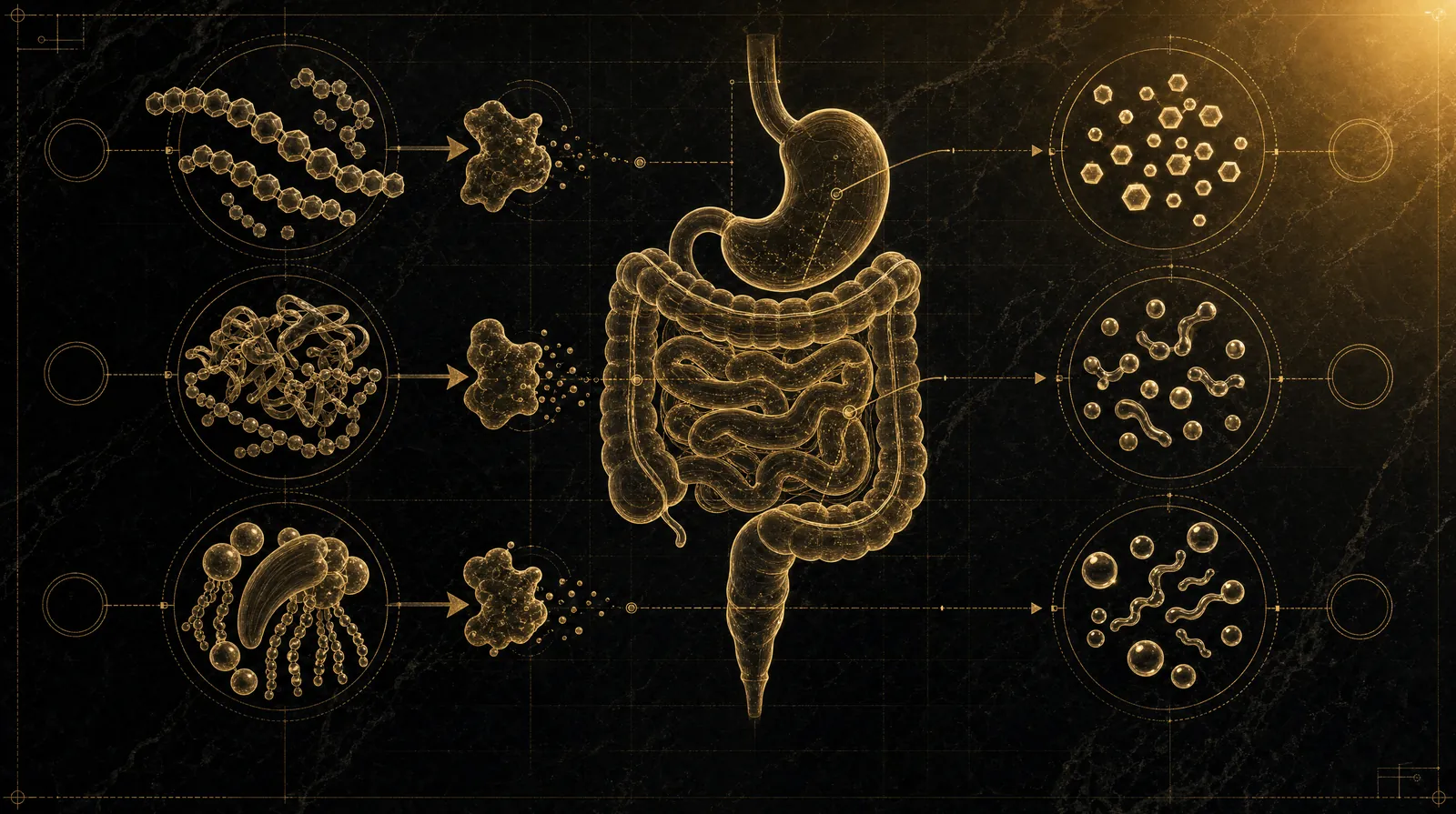
How digestive enzymes work
- 1
Breaking macros into absorbables
Digestive enzymes (proteases, lipases, amylases, and targeted ones like lactase) chop proteins, fats and carbs into pieces small enough to absorb. Taken with a meal, they supplement what your own pancreas and gut produce.
- 2
Match the enzyme to the problem
Lactase for dairy, alpha-galactosidase for beans/cruciferous gas, lipase for fat-heavy meals. A broad blend helps general bloating; a targeted enzyme fixes a specific trigger — which is why enzyme-to-problem fit is our heaviest axis.
- 3
Activity units, not milligrams
Enzymes are measured by activity units (FCC), not weight — a 500 mg blend can be weaker than a 200 mg one. Honest activity-unit labeling is the second axis, because the number on the front often is not the potent one.
- 4
Support, not cure
They ease digestion of trigger foods; they do not fix the underlying gut condition. For diagnosed insufficiency (e.g. pancreatic), that is a prescription conversation — honest scope-setting we keep on every pick.
What to expect from digestive enzymes
Immediate, if matched
Take with the trigger meal and relief (less bloating, gas, heaviness) can be same-meal. Lactase before ice cream is the clearest example — near-instant when the enzyme fits the food.
Dialing the match
Learn which meals need which enzyme. General blends smooth heavy or mixed meals; specific problems want specific enzymes. Mismatched enzymes do nothing, which is a fit issue, not a failure.
Consistent comfort
With the right match used at the right meals, post-meal comfort becomes reliable. This is a with-food tool, not a once-daily background supplement.
See a doctor for persistent issues
Ongoing digestive trouble deserves a diagnosis — enzymes manage symptoms, but persistent pain or malabsorption needs medical work-up, not just a bigger blend.
The bottom line
Enzymedica Digest Gold (#1) is the high-activity broad benchmark for big, varied meals.
For big mixed meals and general fullness with no single food trigger, this 20-year category benchmark is the pick: the highest activity across the widest enzyme spread, acid-stable processing so the enzymes survive, and activity units disclosed instead of a proprietary milligram number. Around $30/month.
Once you know your specific problem, a targeted pick beats the broad benchmark.
Budget with real pancreatic and acid support: NOW Super Enzymes (#5) at around $12/month. Protein meals that sit like a brick (low stomach acid): Thorne Advanced Digestive Enzymes (#2). Sensitive or allergy-prone gut: Pure Encapsulations Ultra (#3); dairy only: Lactaid Fast Act lactase (#6), the most evidence-backed pick; beans and gassy veg: an alpha-galactosidase blend like Pure Encapsulations (#3) or Nutricost (#10).
The rule: match the enzyme to the food, and buy a blend only when a real problem exists.
The single biggest mistake in this category is buying a broad enzyme blend when you don't actually have a problem it solves — for someone with no intolerance, insufficiency, or low-acid symptoms it often does little beyond placebo. If it's one food, buy the one enzyme and skip the blend. And if betaine HCl is involved, respect the contraindications — reflux, gastritis, ulcers, and acid-reducing medication are reasons to avoid it or check with a clinician first.
Quick Answers
What is the best digestive enzymes pick overall?
Enzymedica Digest Gold + ATPro by Enzymedica is our #1 pick (SAC score 9.3/10). If you want one bottle for big mixed meals and don't have a single identifiable food trigger, this is the pick — and it's the benchmark for good reason. Digest Gold delivers the highest activity across the widest enzyme spread, with acid-stable processing so the enzymes actually survive to do their job, and it discloses activity units instead of hiding behind a proprietary milligram number. The honest caveat is the same one that governs this whole category: a broad blend is most worth it when your meals are heavy and varied or your symptoms are non-specific. If dairy alone or beans alone are the culprit, buy the targeted enzyme instead and save money. For everyone else chasing general heavy-meal comfort, start here.
What is the best budget option?
NOW Super Enzymes at $12 / month. NOW Super Enzymes is the budget workhorse that punches well above its price. You get pancreatic enzymes, ox bile, and betaine HCl — the same core mechanisms as the premium HCl formulas — plus bromelain and papain, at roughly a third of the cost. It's the smart pick for a buyer who wants real pancreatic and acid support for heavy, fatty, protein-dense meals without paying clinician-brand prices. Two honest caveats: it carries the same betaine HCl contraindications (skip it with reflux, gastritis, ulcers, or acid-reducers), and it has no lactase or alpha-galactosidase, so for a pure dairy or bean problem you want a targeted pick instead. For general heavy-meal value, nothing here beats it.
How much do these picks cost?
Across our ranked picks, prices run from about $12 to $48 — exact price and cost per serving are listed on every pick card above.
How were these picks ranked?
Each pick was scored 0-10 across five criteria, then weighted to a final composite. Enzyme match and problem fit carries the most weight because this is the entire game with digestive enzymes: a product is only as good as its fit to YOUR problem. Lactase for dairy, alpha-galactosidase for beans and gassy vegetables, and pancreatic lipase for fat maldigestion all have real randomized-trial support — but a broad blend aimed at "everyone" with no defined trigger has weak evidence, because a healthy pancreas already secretes plenty of enzymes. Activity units and dose honesty is second: the number that matters is the enzyme's activity (FCC/USP units like FCC ALU for lactase, GalU for alpha-galactosidase, FIP/USP lipase units), not a milligram weight of an undisclosed proprietary blend, and acid-stable enzymes that survive the stomach score higher. Third-party testing is the quality and allergen gate — enzymes are often taken by sensitive GI patients, so NSF, GMP, and clean allergen control matter. Value is judged per meal-dose for the job the product actually does, and real-world response anchors the math to bloating, heavy-meal comfort, and specific-food tolerance. We explicitly reward honest, targeted formulas and penalize kitchen-sink blends that imply everyone needs them.
Every Claim Ranked Above Traces Back To One Of These
4 peer-reviewed sources, each linked to PubMed
- [1] Suarez 1995 PMID 7776987 — A comparison of symptoms after the consumption of milk or lactose-hydrolyzed milk by people with self-reported severe lactose intolerance. Randomized double-blind crossover in adults with self-reported severe lactose intolerance: lactose-hydrolyzed (lactase-treated) milk produced significantly fewer symptoms than regular milk at a controlled lactose load. The foundational trial showing that removing/hydrolyzing lactose — exactly what supplemental lactase does — meaningfully reduces symptoms in true lactose malabsorbers, and that the enzyme must be matched to the offending sugar.
- [2] Ojetti 2010 PMID 20391953 — The effect of oral supplementation with Lactobacillus reuteri or tilactase in lactose intolerant patients: randomized trial. Randomized trial in 60 lactose-intolerant patients: tilactase (supplemental lactase) taken before a lactose breath test strongly improved both breath-hydrogen excretion and gastrointestinal symptoms versus placebo. Direct RCT evidence that a lactase enzyme supplement works for lactose intolerance — the basis for ranking single-purpose lactase (Lactaid) as the evidence-backed pick when dairy is the trigger.
- [3] Di Stefano 2007 PMID 17151807 — The effect of oral alpha-galactosidase on intestinal gas production and gas-related symptoms. Randomized double-blind placebo-controlled study: oral alpha-galactosidase taken with a high-dose bean meal significantly reduced breath-hydrogen production and the severity of flatulence and gas-related symptoms. The trial behind the Beano mechanism — alpha-galactosidase breaks down the indigestible raffinose-family sugars in beans and cruciferous vegetables, and is the enzyme to match to a beans/gas problem.
- [4] Ianiro 2016 PMID 26806042 — Digestive Enzyme Supplementation in Gastrointestinal Diseases. Review of digestive-enzyme supplementation across GI conditions: pancreatic enzymes are established for exocrine pancreatic insufficiency and fat maldigestion, lactase for lactose intolerance, and conjugated bile acids for fat digestion — while evidence for broad enzyme blends in people without a defined deficiency or intolerance is far weaker. The reference framing this ranking's core honesty: enzymes are useful matched to a real insufficiency or specific food, weaker as a general 'everyone' supplement.
Affiliate disclosure: every Amazon link uses our Associates tag (superachieverclub-20). We earn a small commission at no cost to you; it funds independent reviews. We never accept payment to change a ranking.