
Thorne Advanced Digestive Enzymes Review
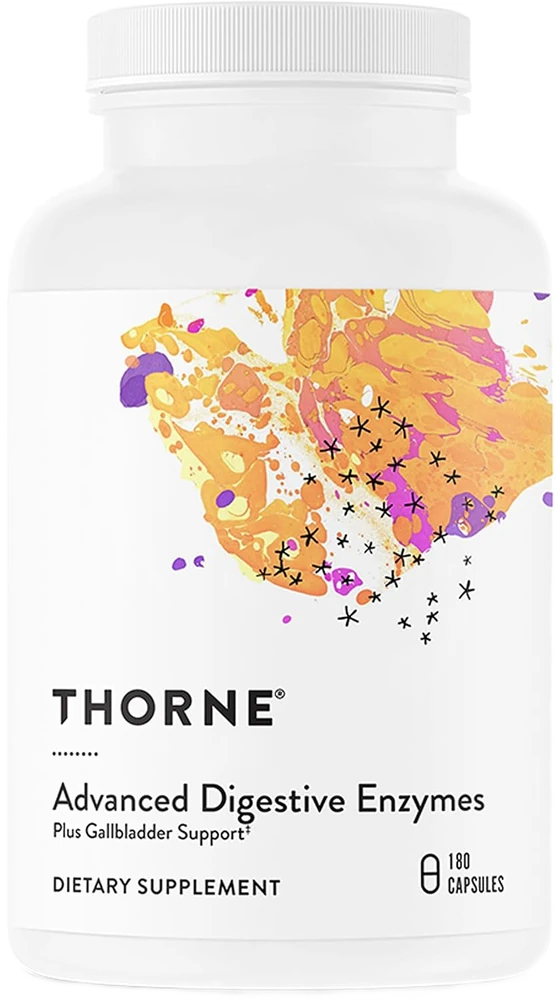 #2 of 12 · Best for low stomach acid✓ Label verified · Supplement Facts read Sep 7, 2026
Real retailer photo, cut out. Label unedited.
Consider it. The low-stomach-acid powerhouse — excellent for the right buyer, contraindicated for many. Betaine HCl + pepsin acidify the stomach so protein digestion works, with pancreatin and ox bile rounding it out for heavy, fatty, protein-dense meals.
$33 / month$0.37 / 2-capsule meal dose
Why It Scores 9.2 — And The Label Line Behind Each Number
Enzyme match + problem fit
30% of scoreTargets LOW STOMACH ACID specifically — betaine HCl + pepsin acidify the stomach so protein digestion and downstream enzyme activation work, a genuinely different and often-overlooked mechanism. Pancreatin + ox bile cover fat and protein, making it a complete heavy-meal formula for the low-acid buyer. Top marks for problem fit — for the right, specific buyer.
Activity units + dose honesty
25% of scoreDiscloses 480 mg betaine HCl plus pepsin, pancreatin and ox bile per 2-capsule serving with clear component breakdown — honest labeling for the acid-and-bile mechanism rather than a vague blend. Pancreatin supplies real lipase/protease/amylase activity alongside the acid support.
- Per serving
- 480 mg betaine HCl + pepsin + pancreatin + ox bile (2 capsules)
Third-party testing + manufacturing quality
20% of scoreNSF Certified and Thorne's QC is among the strongest in the industry — the integrative-medicine channel standard. For a category where buyers often have sensitive or compromised GI tracts, that testing pedigree is the top of this gate.
- Testing
- NSF Certified, Thorne clinician-grade QC, GMP-manufactured
Value per meal-dose
15% of scoreAbout $0.37 per 2-capsule meal dose from a 180-capsule bottle (~3 months as needed) — reasonable for a clinician-grade NSF-certified HCl formula. NOW Super Enzymes (#5) delivers the same core mechanisms cheaper, but without NSF or Thorne's QC depth.
- Bottle
- 180 capsules (~3 months at 2/qualifying meal as needed)
- Price
- ~$33 / month = ~$0.37 per 2-capsule meal dose
Real-world response
10% of scoreThe right answer for the buyer who feels protein meals sit undigested — a classic low-acid pattern that broad plant-enzyme blends don't fix. Matched to that mechanism, real-world relief reports are strong; matched to the wrong problem (dairy, beans), it does little.
- Form
- Betaine HCl + pepsin + pancreatin (amylase/protease/lipase) + ox bile
- More Specs
- Primary mechanism
- Acidifies the stomach for protein digestion (low-acid support), not just added enzymes
- Best-fit meal
- Heavy, protein-dense, or fatty meals that sit 'like a brick'
- Contraindications
- Reflux/GERD, gastritis, ulcers, or acid-reducing meds (PPIs/H2 blockers)
- Not for
- A pure dairy problem (use lactase) or bean/gas problem (use alpha-galactosidase)
Label verified. Every figure read from the Supplement Facts photo, Sep 7, 2026.
Marketing Claims Vs. Reality
Betaine HCl supports stomach acidity and protein digestion.
Betaine HCl supplies hydrochloric acid to acidify the stomach, and pepsin is the acid-activated protein enzyme — together they support protein digestion in people with genuinely low stomach acid. Mechanistically sound for the specific low-acid buyer. The caveat is the contraindication list, not the mechanism.
Pancreatin and ox bile support digestion of fats and a complete meal.
Pancreatin supplies lipase, protease and amylase, and ox bile provides conjugated bile components that aid fat emulsification and absorption. Pancreatic enzymes are the established therapy for fat maldigestion and exocrine pancreatic insufficiency (de la Iglesia-Garcia 2017). Real and well-matched to heavy, fatty meals.
NSF Certified and made to clinician-grade quality standards.
Thorne is NSF-certified with QC among the strongest in the supplement industry, and is the default brand of much of the integrative-medicine channel. Auditable and the top of the testing gate in this category.
Suitable for everyday digestive support.
Overstated. This is a TARGETED low-acid tool, not an everyday catch-all — betaine HCl is contraindicated with reflux, gastritis, ulcers, and acid-reducing meds, and offers little to someone with normal acid. Accurate for the specific low-acid buyer, misleading as a casual daily supplement.
What Our Test Actually Found
This solves a problem broad enzyme blends can't touch — low stomach acid
The central reason this pick exists: a plant-enzyme blend adds enzymes but does nothing about stomach acidity, and for the buyer whose real issue is too little acid, that's the wrong lever. Betaine HCl + pepsin acidify the stomach so protein digestion and the downstream enzyme cascade actually fire. If you feel protein meals sit undigested for hours and you have no reflux history, this addresses the root cause that Enzymedica (#1) or Pure Encapsulations (#3) can't.
The contraindications are not a footnote — they're the gate
Betaine HCl is contraindicated with reflux/GERD, gastritis, active or suspected ulcers, and acid-reducing medication (PPIs, H2 blockers). Adding hydrochloric acid to an already-irritated or acid-suppressed stomach can worsen symptoms or cause harm. This is the single most important thing to get right before buying: if any of those apply to you, this is not your product — choose a non-HCl blend or a targeted single enzyme instead, and talk to a clinician if you're unsure whether your symptoms are low acid or reflux.
It's a genuinely complete heavy-meal formula — acid plus fat support
Beyond the betaine HCl, the pancreatin (lipase/protease/amylase) and ox bile make this a complete tool for heavy, fatty, protein-dense meals: acid support so protein breaks down, plus lipase and bile so fat is digested and absorbed. Pancreatic enzymes are the established, RCT-backed therapy for true fat maldigestion (de la Iglesia-Garcia 2017) — though diagnosed exocrine pancreatic insufficiency needs correctly dosed prescription enzymes (PERT), not an OTC supplement.
Wrong tool for dairy or beans — match the enzyme to the food
If your problem is lactose, you need lactase, which has direct RCT support (Ojetti 2010); if it's beans and gassy veg, you need alpha-galactosidase (Di Stefano 2007). Thorne Advanced is built for low acid and heavy protein/fat meals — buying it for a dairy or bean problem means taking a contraindication-carrying acid supplement for a job a cheap single enzyme does better. The category rewards matching the enzyme to the specific food or deficit.
NSF + Thorne QC is the reassurance the category often lacks
Because enzyme and HCl products are disproportionately taken by people with sensitive or compromised GI tracts, manufacturing quality matters more here than in most categories. Thorne's NSF certification and clinician-grade QC put this at the top of the testing gate. You pay a modest premium over NOW Super Enzymes (#5), which delivers similar core mechanisms cheaper but without NSF certification or Thorne's depth of testing.
Full analysis: all pros & cons (7), buy if / skip if
- Targets LOW STOMACH ACID specifically — betaine HCl + pepsin acidify the stomach so protein digestion and downstream enzyme activation work, a mechanism broad blends don't address
- Adds pancreatin (amylase/protease/lipase) and ox bile, covering fat and protein digestion — a genuinely complete heavy-protein-meal formula
- NSF Certified with clinician-grade QC among the strongest in the industry
- The right answer for the buyer whose protein meals sit 'like a brick' — a classic low-acid pattern
- Betaine HCl is NOT for everyone — avoid with reflux, gastritis, an active or suspected ulcer, or acid-reducing meds (PPIs/H2 blockers), or talk to a clinician first
- Wrong tool if your problem is dairy or beans — a lactase or alpha-galactosidase pick fits better and costs less
- Pricier per dose than the budget HCl alternative (NOW Super Enzymes, #5), and a 2-capsule serving
- Heavy protein meals reliably sit 'like a brick' for hours — the classic low-acid pattern
- You want acid support (betaine HCl/pepsin) PLUS pancreatin and ox bile for fatty meals in one formula
- You want NSF certification and clinician-grade QC behind a low-acid enzyme product
- You've ruled out reflux/gastritis/ulcers and you don't take acid-reducing medication
- You have reflux/GERD, gastritis, an ulcer, or take a PPI/H2 blocker — betaine HCl can worsen it
- Your problem is specifically dairy (buy lactase, #6) or beans (buy an alpha-gal product)
- You just want general enzyme coverage with no contraindications — Enzymedica Digest Gold (#1) is safer
Betaine HCl + pepsin acidify the stomach so protein digestion works, with pancreatin and ox bile rounding it out for heavy, fatty, protein-dense meals. It's the best low-acid formula here, with NSF certification and Thorne's pedigree. But betaine HCl is NOT for everyone: skip it if you have reflux, gastritis, ulcers, or take acid-reducing meds, and skip it if your real problem is dairy (buy lactase) or beans (buy alpha-galactosidase). 'Consider,' not blanket 'buy,' precisely because the right buyer is specific.
Thorne Advanced Digestive Enzymes solves a different problem from every broad blend on this list. Where a plant-enzyme blend adds more enzymes, Thorne leads with betaine HCl + pepsin — it acidifies the stomach so protein actually breaks down and the downstream digestive cascade fires properly — then adds pancreatin (amylase/protease/lipase) and ox bile for fat. It's the formula for the buyer who feels a steak or a big protein plate sitting undigested for hours, the classic low-stomach-acid pattern that broad enzyme blends simply don't address. NSF certification and Thorne's clinician-grade QC sit behind it. This is a targeted tool, not a casual everyday enzyme, and it comes with a serious caveat we put front and center: betaine HCl is contraindicated with reflux, gastritis, ulcers, or acid-reducing medication. Add hydrochloric acid to an already-irritated or acid-suppressed stomach and you can make things worse. So this pick is right for a fairly specific buyer — low acid, heavy protein/fat meals, no reflux history — and wrong for someone whose real problem is dairy or beans. We read the supplement-facts panel, mapped it against the web-verified pancreatic-enzyme evidence, and here's the full breakdown.
The best low-stomach-acid formula here — for a specific buyer who clears the contraindications.

Thorne Advanced Digestive Enzymes is the pick when the problem is low stomach acid, not enzyme quantity. The betaine HCl + pepsin core acidifies the stomach so protein actually breaks down and the digestive cascade fires properly, and the added pancreatin and ox bile round it out for heavy, fatty, protein-dense meals. It's the formula for people who feel a steak or a big protein plate sitting undigested for hours, and it carries NSF certification and Thorne's pedigree behind it. The serious caveat is why we rate it 'consider' rather than a blanket 'buy': betaine HCl is contraindicated with reflux, gastritis, ulcers, or acid-reducing medication, so this is a targeted tool, not a casual everyday enzyme. And if your problem is dairy or beans rather than low acid, this is the wrong tool — a lactase or alpha-galactosidase pick fits better and costs less. Matched to the right buyer — low acid, heavy protein/fat meals, no reflux history — it's the best low-acid formula on this list. Get the diagnosis right first, then buy with confidence.
If This Doesn’t Fit — Try These
 05
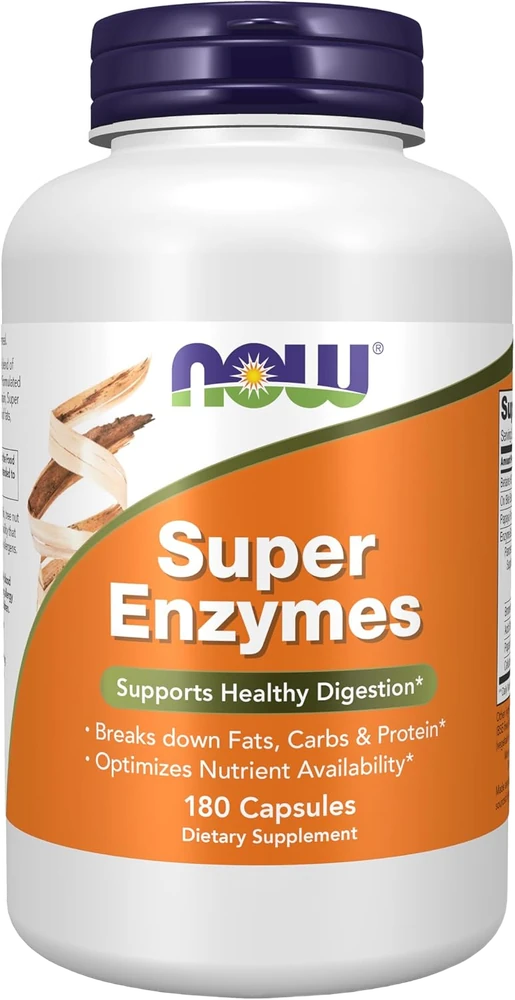
NOW Super Enzymes
NOW Super Enzymes is the budget workhorse that punches well above its price.
 04
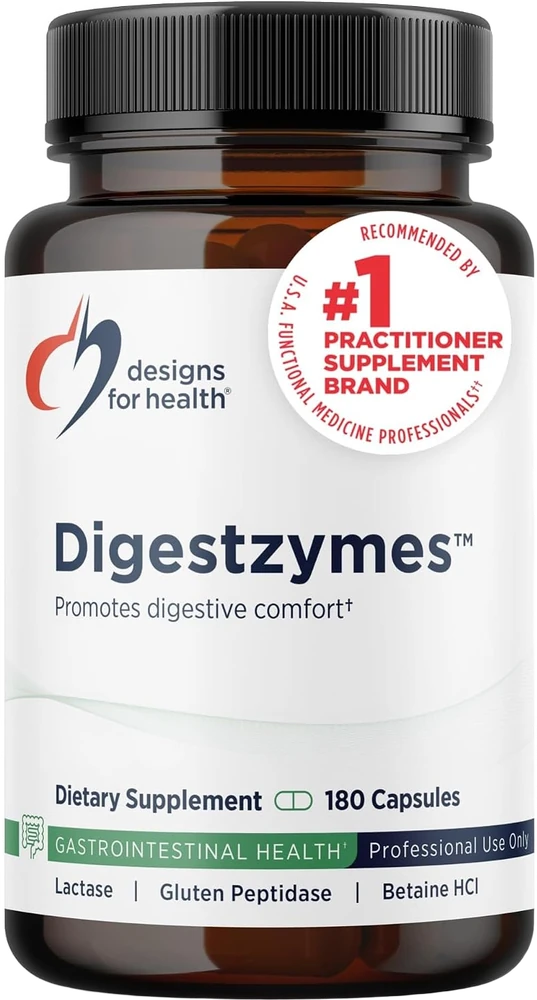
Designs for Health Digestzymes
Designs for Health Digestzymes is the clinical bridge pick — it pairs betaine HCl + pepsin for low stomach acid with a DPP-IV-containing enzyme panel for gluten, casein, and dairy peptides, so it suits buyers whose problems span both 'protein sits heavy' and 'specific proteins bother me.' It's a practitioner-channel formula with honest activity-unit labeling and a solid clinical reputation.
 01
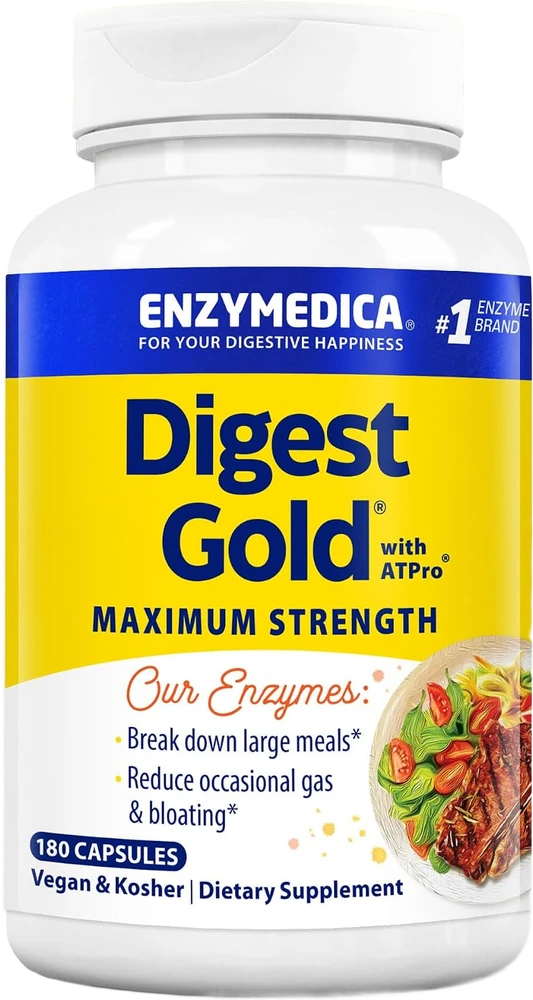
Enzymedica Digest Gold
If you want one bottle for big mixed meals and don't have a single identifiable food trigger, this is the pick — and it's the benchmark for good reason.
Quick Answers
How do I know if I actually have low stomach acid?
The classic pattern this formula targets is heavy protein meals that sit 'like a brick' for hours — a feeling of fullness, heaviness, and slow digestion after steak or a protein-dense plate, often with mild burping. Low stomach acid (hypochlorhydria) becomes more common with age and with long-term acid-suppressing medication. Crucially, the symptoms overlap with the OPPOSITE problem (too much acid / reflux), which is why you must not self-diagnose into betaine HCl if you have heartburn or reflux — that points the other way. If you're unsure, or if you have any reflux/gastritis history, talk to a clinician before starting an HCl product. The right buyer here is fairly specific.
Who should NOT take betaine HCl?
This is the most important safety point. Avoid betaine HCl entirely — or talk to a clinician first — if you have reflux/GERD, gastritis, an active or suspected peptic ulcer, or if you take acid-reducing medication (PPIs like omeprazole, or H2 blockers like famotidine). Adding hydrochloric acid to an already-irritated or acid-suppressed stomach can worsen symptoms or cause harm. Betaine HCl is a targeted tool for low stomach acid, not a general digestive aid — if any of those conditions apply to you, choose a non-HCl enzyme blend like Enzymedica Digest Gold (#1) or a targeted single enzyme instead.
How is this different from a regular enzyme blend like Enzymedica?
Different mechanism entirely. A broad enzyme blend (Enzymedica #1) adds amylase, protease and lipase to help break food down — but it does nothing about stomach acidity. Thorne's formula leads with betaine HCl + pepsin, which acidifies the stomach so protein digestion and the downstream enzyme cascade actually fire, then adds pancreatin and ox bile on top. So if your problem is genuinely too little acid (protein sitting heavy), Thorne addresses the root cause that a plant-enzyme blend can't. If your pancreas and acid are fine and you just want general enzyme coverage for mixed meals, the broad blend is the safer, no-contraindication choice.
Is this the right pick if dairy or beans are my problem?
No — this is the wrong tool for those. If dairy is your trigger, you need lactase (Lactaid #6), which has direct RCT support for lactose (Ojetti 2010). If beans and gassy vegetables are the problem, you need alpha-galactosidase (Di Stefano 2007 is the Beano evidence). Thorne Advanced is built around low stomach acid and heavy protein/fat meals, not lactose or raffinose. Buying an HCl powerhouse for a dairy problem means taking a contraindication-carrying acid supplement you don't need, for a job a cheap single enzyme does better. Match the enzyme to the food.
Does the ox bile and pancreatin help with fatty meals?
Yes — that's a genuine strength of this formula for the right buyer. Pancreatin supplies lipase (plus amylase and protease), and ox bile provides conjugated bile components that help emulsify and absorb dietary fat. For someone whose heavy, fatty, protein-dense meals digest poorly, the combination of acid support (betaine HCl/pepsin) plus fat support (pancreatin/ox bile) makes this a genuinely complete heavy-meal formula. Pancreatic enzymes are the established therapy for true fat maldigestion and exocrine pancreatic insufficiency (de la Iglesia-Garcia 2017) — though diagnosed insufficiency needs correctly dosed prescription enzymes, not an OTC supplement.
How many capsules and when do I take them?
The serving is 2 capsules, taken with a meal — ideally a heavy, protein-dense, or fatty meal that you know sits badly, not every meal by default. Take them at the start of the meal so the betaine HCl and enzymes mix with the food. Because this is a targeted low-acid tool rather than a daily catch-all, use it for the specific meals where the brick-in-the-stomach pattern shows up. The 180-capsule bottle runs about 3 months at 2 capsules per qualifying meal. If you ever get burning or worsened reflux, stop — that's a signal betaine HCl is the wrong tool for you.
Sources & Further Reading
4 peer-reviewed sources, each linked to PubMed
- [1] de la Iglesia-Garcia 2017 PMID 27941156 — Efficacy of pancreatic enzyme replacement therapy in chronic pancreatitis: systematic review and meta-analysis. Meta-analysis of 17 RCTs (511 patients): pancreatic enzyme replacement therapy significantly improved fat absorption, nutritional parameters, GI symptoms and quality of life versus placebo. Establishes pancreatin's role for fat maldigestion — the mechanism behind Thorne's pancreatin + ox bile component. Note: true exocrine insufficiency needs prescription PERT, not an OTC blend.
- [2] Ianiro 2016 PMID 26806042 — Digestive Enzyme Supplementation in Gastrointestinal Diseases. Review across GI conditions: pancreatic enzymes are established for exocrine pancreatic insufficiency and fat maldigestion, lactase for lactose, and bile acids for fat digestion — while broad blends in people without a defined deficit have far weaker support. Frames Thorne Advanced as a targeted low-acid/fat-digestion tool for a specific buyer, not a daily catch-all.
- [3] Ojetti 2010 PMID 20391953 — The effect of oral supplementation with Lactobacillus reuteri or tilactase in lactose intolerant patients: randomized trial. RCT: supplemental lactase improved breath-hydrogen and symptoms versus placebo in lactose-intolerant patients. Cited here to make the honest point that if dairy is your trigger, lactase — not a betaine-HCl formula — is the right, cheaper, evidence-backed match.
- [4] Di Stefano 2007 PMID 17151807 — The effect of oral alpha-galactosidase on intestinal gas production and gas-related symptoms. Placebo-controlled study: oral alpha-galactosidase with a bean meal significantly reduced breath-hydrogen and flatulence. Cited to underline that a beans/gas problem is matched by alpha-galactosidase, not by Thorne's low-acid HCl formula — match the enzyme to the food.
Affiliate disclosure: every Amazon link uses our Associates tag (superachieverclub-20). We earn a small commission at no cost to you; it funds independent reviews. We never accept payment to change a ranking.