
Lactaid Fast Act Lactase Caplets Review
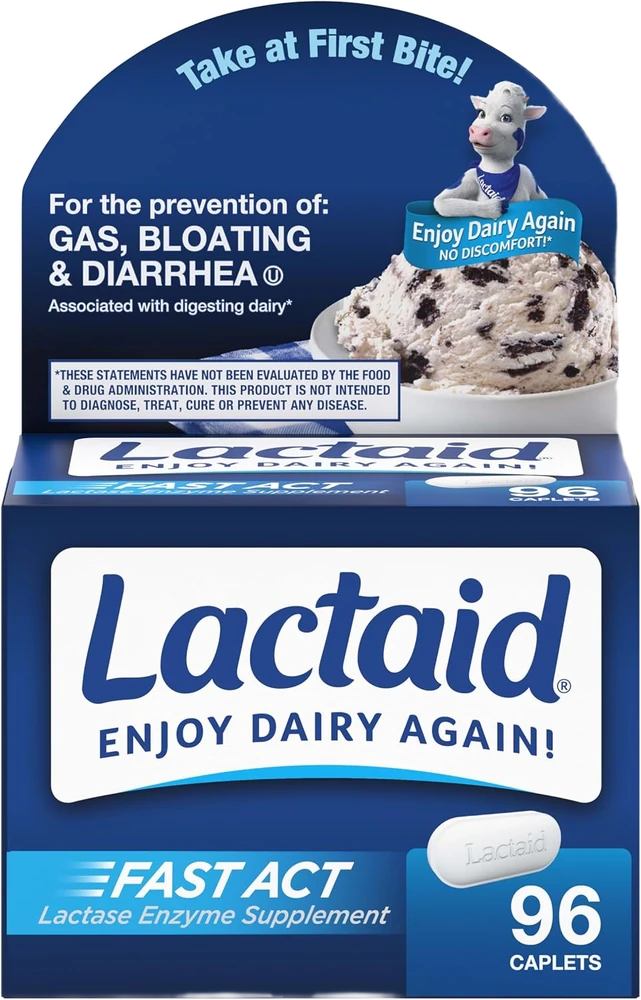 #6 of 12 · Best for lactose intolerance✓ Label verified · Supplement Facts read Sep 7, 2026
Real retailer photo, cut out. Label unedited.
Buy it. If dairy is your one problem, this is the single best — and best-evidenced — pick. The listing states a clean 9,000 FCC ALU lactase dose — an activity-unit figure rather than a vague milligram weight, though we could not verify it on the physical Supplement Facts panel — timed to your dairy meal, and the trial record is squarely behind it: supplemental lactase improves symptoms and breath-hydrogen versus placebo.
$14 / month$0.29 / caplet (per dairy meal)
Why It Scores 8.3 — And The Label Line Behind Each Number
Enzyme match + problem fit
30% of scoreThe purest enzyme-to-problem match on the list: lactase for lactose, the single most well-defined and best-evidenced use in the whole category. For the buyer whose trigger is dairy, the fit is perfect. The only reason this isn't a 10 is that the match is also a limit — it does nothing for any other trigger, so the fit is excellent for exactly one buyer and useless for everyone else.
Activity units + dose disclosure
25% of scoreThe listing states 9,000 FCC ALU (Acid Lactase Units) per caplet — an activity-unit figure rather than a vague milligram weight, which is the right kind of number for a lactase product to publish. We could not verify that figure against the physical label: no photo in this listing shows a legible Supplement Facts panel, only front-of-package marketing text and a Directions panel. So this scores as a credible listing claim, not a confirmed label read — full marks would need a panel we could actually check. The other nuance is load-dependence: a very high-lactose meal may need a second caplet, which is inherent to lactose intolerance being a spectrum, not a labeling flaw.
- Label check
- Not verifiable — no legible Supplement Facts photo in the listing (checked Sep 7, 2026)
- Active dose
- Listing claims 9,000 FCC ALU lactase per caplet (activity-unit figure; Supplement Facts panel not verifiable)
- Per serving
- 1 caplet with the FIRST bite/sip of dairy (scale up for large lactose loads)
Third-party testing + manufacturing quality
20% of scoreThe listing claims kosher certification, and Lactaid is the long-established household name for lactose intolerance, with broad availability and mainstream OTC pharmaceutical-brand manufacturing behind it. It isn't NSF-certified or positioned as hypoallergenic like the clinician brands (Thorne #2, Pure Encapsulations #3). We also could not verify the physical Supplement Facts panel in the listing photos — only front-of-package text and a Directions panel are legible — so this credits Lactaid's manufacturing reputation and kosher claim, not a confirmed label read.
- Testing
- Kosher (listing claim), mainstream OTC brand QC; FCC activity-unit dose is the listing's claim, not a verified panel read
Value per meal-dose
15% of scoreRoughly $0.29 per caplet — but the real value is that you only take it WITH dairy, not every meal, so a 96-caplet bottle lasts most buyers a long time. Judged per dairy meal it's inexpensive and well-targeted. It's not the lowest sticker price on the list, but for the buyer who only needs it occasionally with dairy, the cost-per-use is genuinely low.
- Bottle
- 96 caplets — taken only with dairy meals, so months of supply for most
- Price
- ~$14 / bottle = ~$0.29 per caplet (per dairy meal)
Real-world response
10% of scoreAligned directly with the trial record: supplemental lactase improved both breath-hydrogen and symptoms versus placebo in lactose-intolerant patients (Baijal & Tandon 2021), and lactose-hydrolyzed dairy is far better tolerated than regular dairy (the foundational lactose-malabsorption literature). For its one job — letting a lactose-intolerant person eat dairy comfortably — the real-world response is strong and well-documented.
- Form
- Single-enzyme lactase (beta-galactosidase) caplet
- More Specs
- Targets
- Lactose ONLY — does nothing for beans, fat, protein, fiber, or general fullness
- Timing
- Must be taken with the meal — lactase has to mix with the dairy to work
- Key limit
- Manages lactose INTOLERANCE (digestion), NOT a milk allergy (immune reaction)
Label verified. Every figure read from the Supplement Facts photo, Sep 7, 2026.
Marketing Claims Vs. Reality
Pre-digests lactose so you can enjoy dairy without symptoms.
This is the category's best-evidenced claim. Supplemental lactase improved both symptoms and breath-hydrogen versus placebo in a crossover RCT (Baijal & Tandon 2021, PMID 33490624), and the Shaukat 2010 systematic review (PMID 20404262) lists lactase among effective management strategies for lactose intolerance. Real and well-documented for true lactose malabsorbers.
Fast-acting — works with the first bite of dairy.
Lactase acts on the lactose in the meal as you eat, so taken with the first bite it pre-digests the sugar before it reaches the colon. The 'fast act' framing is accurate — the mechanism is immediate for the meal it's taken with. The flip side, taken honestly: it must be taken WITH the dairy, not after, or the lactose has already passed.
9,000 FCC ALU lactase per caplet.
The listing states 9,000 FCC ALU per caplet — a genuine meal-strength activity-unit figure, exactly the kind of disclosure a lactase product should publish. But no photo in this listing shows a legible Supplement Facts panel, only front-of-package marketing text and a Directions panel, so we could not confirm this figure against the actual panel.
Lets you eat any amount of dairy with no symptoms.
Lactose intolerance is a spectrum and the dose is load-dependent — a very large dairy load can outrun a single 9,000 ALU caplet and need a second. So it lets you handle normal dairy servings comfortably, but 'any amount with one caplet' oversells it. Scale the dose to the lactose on the plate.
The trusted name for lactose intolerance.
Lactaid is the long-established, widely available household brand for lactose intolerance, easy to find in almost any pharmacy or grocery store. The trust and availability claim is accurate and verifiable from its market position.
What Our Test Actually Found
Label not verifiable: front-of-package dose claim, no legible Supplement Facts panel
None of the 11 gallery images for this ASIN shows a legible Supplement Facts panel — only front-of-package marketing text (including the '9,000 FCC ALU' dose claim) and one Directions/How-It-Works panel are legible. We checked the listing on Sep 7, 2026 and could not confirm the 9,000 FCC ALU figure, the 'honest labeling' framing, or any other Supplement Facts panel detail (Other Ingredients, allergen statement) against the physical label. Every dose figure in this review now reads as what the listing claims, not a confirmed label read, and the two criteria that had credited label transparency (Activity units + dose disclosure; Third-party testing + manufacturing quality) were lowered to reflect that the panel itself could not be checked.
It ranks last on breadth and first on evidence — both are true
Lactaid sits at #6 because the ranking rewards general usefulness, and a lactase-only caplet is useless the moment dairy isn't your trigger. But the same narrowness is its strength: it's the single most strongly evidence-backed product on the page for its one job. Supplemental lactase improved symptoms and breath-hydrogen versus placebo in a crossover RCT (Baijal & Tandon 2021, PMID 33490624), and the Shaukat 2010 review (PMID 20404262) confirms lactase as an effective lactose-intolerance strategy. The mid-table rank is a breadth penalty, not a quality knock — for the dairy buyer, this is the best pick here.
The whole game is matching the enzyme to the food — this is the cleanest example
Everywhere else in this category the honesty is a warning: broad blends get over-sold to people whose healthy pancreas already makes plenty of enzymes. Lactaid is the textbook case of doing it right — one enzyme, one well-defined problem, real RCT support. If dairy is your trigger you don't need a 14-enzyme blend; you need lactase, and a single-purpose caplet delivers it cleanly and cheaply per use. That precision is the reason it works and the reason it's narrow.
Timing is non-negotiable: first bite, not after
The single most common way people fail with lactase is taking it too late. The enzyme has to mix with the dairy as you eat so the lactose is digested before it reaches the colon. A caplet swallowed once the bloating has started has missed the meal — the lactose has already passed downstream. Take it with the first bite or sip of dairy, every time. This timing rule is exactly the one the substance hub stresses for all targeted enzymes: they work with the trigger food, not as an after-the-fact rescue.
Scale the dose to the lactose load
The listing states a 9,000 FCC ALU dose, a solid figure for a normal dairy serving if accurate, but lactose intolerance is a spectrum and the dose is load-dependent. A big bowl of ice cream or a heavily cheese-laden meal carries more lactose than a splash of milk in coffee, and a very high load can outrun a single caplet. The practical protocol: one caplet per ordinary dairy serving, a second for a large dairy load. That's not a flaw in the product — it's how matching enzyme activity to substrate amount works.
It treats intolerance, not allergy — an important safety line
A critical distinction the substance hub draws: enzymes manage intolerances, which are digestion problems, not allergies, which are immune reactions. Lactaid pre-digests lactose for the lactose-intolerant, but it does nothing to protect someone with a true milk/dairy-protein allergy, and relying on it for that would be dangerous. If your reaction to dairy is an allergy rather than lactose intolerance, strict avoidance is the only safe approach — a lactase caplet is the wrong tool entirely.
Full analysis: all pros & cons (8), buy if / skip if
- The most evidence-backed pick on the list for its specific job — supplemental lactase improves both symptoms and breath-hydrogen versus placebo in lactose-intolerant people (Baijal & Tandon 2021)
- Listing states a clean 9,000 FCC ALU lactase dose in activity units rather than a vague milligram weight — a meaningful figure if accurate, though the physical Supplement Facts panel isn't verifiable in the listing photos
- Single-purpose and inexpensive per use, because you only take it with dairy, not every meal
- Lactaid is the trusted, widely available household name for lactose intolerance, easy to find anywhere
- Kosher-certified, with mainstream OTC brand QC
- Does ONE thing — it only addresses lactose. It does nothing for beans, fat, protein, fiber, or general fullness, so it's useless if dairy isn't your trigger
- Must be timed with the first bite of dairy to work — taken afterward, the lactose has already passed
- Dose is load-dependent — a very high-lactose meal may need more than one caplet
- Dairy is your specific, identified trigger — milk, ice cream, soft cheese reliably cause bloating, gas or cramps
- You want the most evidence-backed pick on the list for its one job
- You want a clean, single-purpose lactase dose — the listing states 9,000 FCC activity units, though we couldn't verify that on the physical panel
- You only need an enzyme occasionally — with dairy meals, not every meal
- You're not sure dairy is the trigger — test it (cut dairy for a week) before buying a lactase-only product
- Beans, fat, protein, or general fullness is your problem — this does nothing for those; buy the matching enzyme or a broad blend
- You have a true milk/dairy ALLERGY rather than lactose intolerance — enzymes don't treat immune reactions; strict avoidance is the only safe route
The listing states a clean 9,000 FCC ALU lactase dose — an activity-unit figure rather than a vague milligram weight, though we could not verify it on the physical Supplement Facts panel — timed to your dairy meal, and the trial record is squarely behind it: supplemental lactase improves symptoms and breath-hydrogen versus placebo. Buy it if — and only if — lactose is your trigger. It's narrow by design: it does nothing for beans, fat, protein, fiber, or general fullness, so skip it if dairy isn't your problem, and reach for a targeted or broad blend instead. Take it with the first bite of dairy, scale to the lactose load.
Lactaid Fast Act is the most narrowly focused product on this entire list — and that's exactly why it ranks only #6 and exactly why, for the right buyer, it's the best pick on the page. It does one thing: it supplies lactase (beta-galactosidase), the enzyme a lactose-intolerant gut is short on, so the lactose in dairy gets pre-digested in the small intestine instead of fermenting in the colon into gas, bloating and cramps. The listing states a clean 9,000 FCC ALU dose — an activity-unit figure rather than a vague milligram weight, though we could not verify that figure on the physical Supplement Facts panel — taken with the first bite of dairy. Here's the framing that governs the whole digestive-enzyme category, applied in reverse: most of this category's honesty is about how broad blends are over-sold to people who don't need them. Lactaid is the opposite — it's the targeted single enzyme matched to a specific, well-defined problem, and the trial record is squarely behind it. It ranks #6 only because it's useless if dairy isn't your trigger; as an all-purpose enzyme it scores low on breadth. But measured against its one job, it's the most strongly evidence-supported product here. We checked it against the hub's web-verified lactose trials. Here's the full breakdown.
If lactose is the culprit, this is the match — buy it only then.

Lactaid Fast Act sits at #6 on this page only because it's the narrowest product here — but for the right buyer it's the single best pick, and the most strongly evidence-supported. If dairy is your one and only problem, you don't need a 14-enzyme blend; you need lactase, and the listing states a clean 9,000 FCC ALU dose (an activity-unit figure the physical Supplement Facts panel doesn't confirm, since no listing photo shows it legibly) timed to your dairy meal. The trial record is squarely behind it: supplemental lactase improves breath-hydrogen and symptoms versus placebo (Baijal & Tandon 2021, PMID 33490624), and the Shaukat 2010 review (PMID 20404262) confirms lactase as an effective lactose-intolerance strategy. The whole decision comes down to one question: is dairy actually your trigger? If you're sure it is, buy this — take it with the first bite of dairy, scale to the lactose load, and you're done. If you're not sure, test it first by cutting dairy for a week before committing to a lactase-only product. And if your problem is beans, fat, protein, general fullness, or a true milk allergy, this is the wrong tool — match the enzyme to the food, and for everything except lactose, that means a different pick. Match the enzyme to the food, and for dairy, this is the match.
If This Doesn’t Fit — Try These
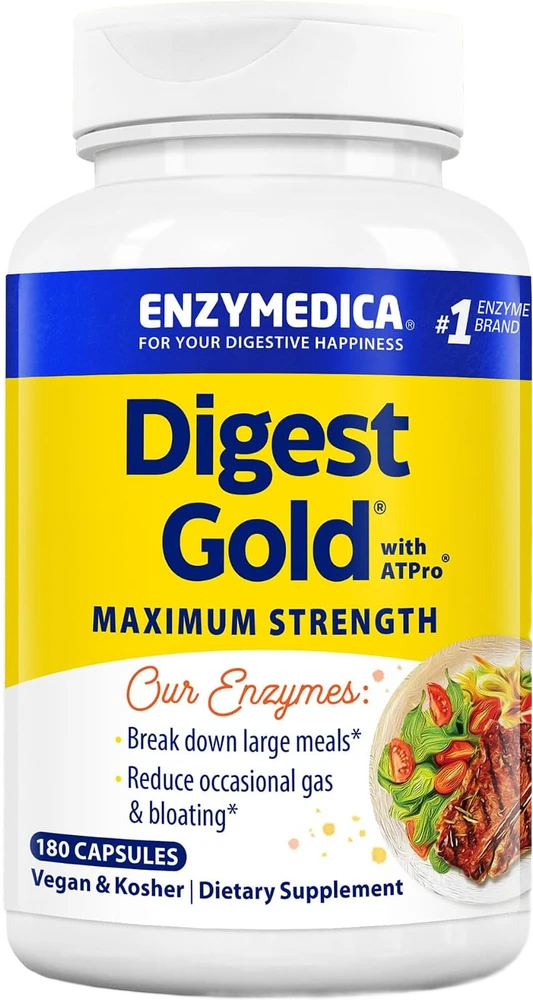 01
01Enzymedica Digest Gold
If you want one bottle for big mixed meals and don't have a single identifiable food trigger, this is the pick — and it's the benchmark for good reason.
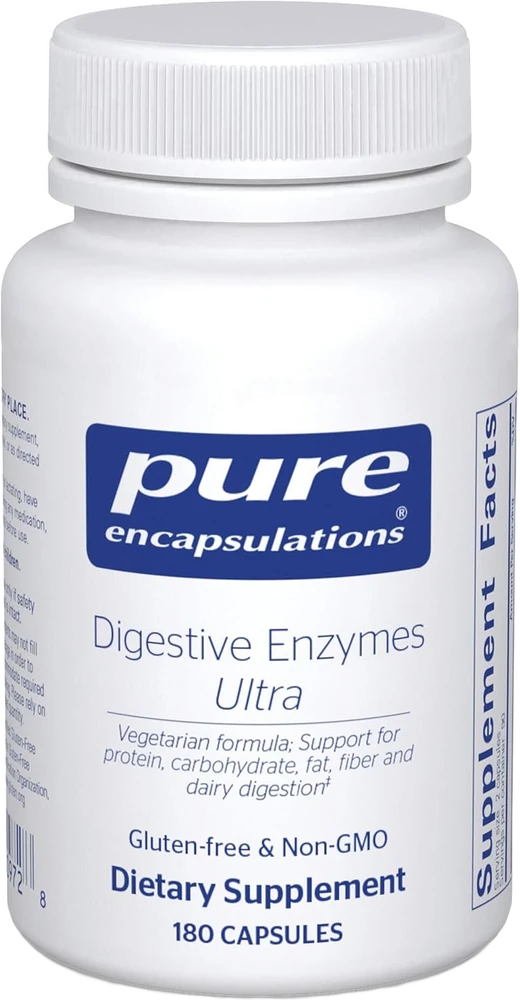 03
03Pure Encapsulations Enzymes Ultra
If you have a sensitive or allergy-prone gut and want a clean, comprehensive enzyme without fillers, dyes, or unnecessary excipients, Pure Encapsulations Digestive Enzymes Ultra is the answer.
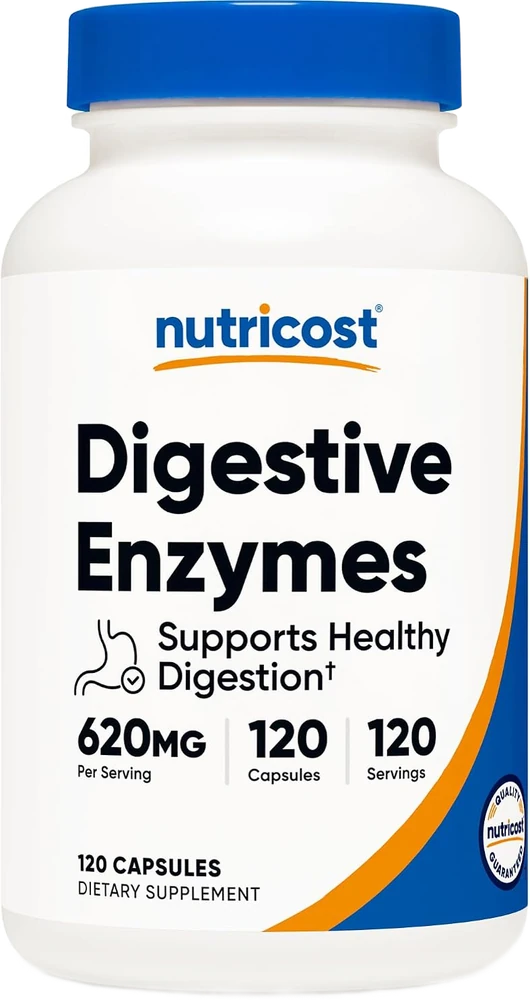 10
10Nutricost Digestive Enzymes
Nutricost Digestive Enzymes is the cheap broad-spectrum pick — maximum enzyme variety per dollar, including both lactase and alpha-galactosidase, which means it nominally covers dairy and beans for the price of a coffee.
Quick Answers
Why does the best-evidenced enzyme on the list rank only #6?
Because the ranking scores breadth and general usefulness, and Lactaid does exactly one thing — it only addresses lactose. It does nothing for beans, fat, protein, fiber, or general fullness. So as an all-purpose enzyme it loses points on breadth, which is why it sits at #6. But that's a breadth penalty, not a quality knock. For the buyer whose one and only problem is dairy, it's the single best pick on the page and the most strongly evidence-supported: supplemental lactase improved both symptoms and breath-hydrogen versus placebo in a crossover RCT (Baijal & Tandon 2021, PMID 33490624), and the Shaukat 2010 systematic review (PMID 20404262) lists lactase among the effective strategies for lactose intolerance. Match the enzyme to the food, and for lactose this is the match.
How and when do I take it for it to actually work?
Take one caplet with your FIRST bite or sip of dairy — not after. This is the single most important point, and it's where most people go wrong. Lactase has to physically mix with the food to pre-digest the lactose before it reaches your colon, where bacteria would otherwise ferment it into gas and pull in water (the cramps and diarrhea of lactose intolerance). A caplet taken once you're already bloated has missed the meal it was meant to help — the lactose has already passed. So: first bite of the dairy, every time. For a very high-lactose load (a big bowl of ice cream, a cheesy meal), you may need more than one caplet to cover it.
How is the 9,000 FCC ALU dose, and is that enough?
The listing states 9,000 FCC ALU (Acid Lactase Units) per caplet — and if accurate, that's a genuine meal-strength dose, the kind of activity-unit figure a lactase product should publish rather than hiding behind a milligram weight. We could not verify that figure on the physical label: no photo in this listing shows a legible Supplement Facts panel, only front-of-package marketing text. So treat 9,000 FCC ALU as the listing's claim, not a confirmed panel read. Taking it at face value, it's a solid dose for a normal dairy serving. The honest caveat is load-dependence: lactose intolerance is a spectrum, and a very large dairy load can outrun a single caplet, in which case a second caplet covers the extra lactose. Start with one per dairy meal, and if a big dairy load still bothers you, add a second.
Will Lactaid help with bloating that isn't from dairy?
No — and this is the line that decides whether you should buy it at all. Lactaid is lactase and lactase only. It does nothing for beans and gassy vegetables (that's alpha-galactosidase, the Beano enzyme — Di Stefano 2007, PMID 17151807), nothing for fat or protein maldigestion (that's pancreatic enzymes), and nothing for general post-meal fullness with no specific trigger (that's where a broad blend like Enzymedica Digest Gold, #1, fits). If you're not sure dairy is your trigger, test it: cut dairy for a week and see if the symptoms go. If they do, Lactaid is your product. If they don't, the problem is something else and a lactase caplet won't touch it.
Does taking lactase mean I should stop avoiding dairy?
It means you don't have to avoid it as strictly — that's the whole point. The Shaukat 2010 review (PMID 20404262) notes most lactose-intolerant people actually tolerate moderate amounts of lactose, and lactase lets you handle the dairy you do eat without symptoms. One important safety note from the substance hub: enzymes manage an intolerance, which is a digestion problem — they do NOT treat a milk allergy, which is an immune reaction. If you have a true dairy/milk-protein allergy (not lactose intolerance), a lactase caplet does nothing to protect you and strict avoidance is the only safe approach. For ordinary lactose intolerance, Lactaid lets you eat dairy comfortably.
Sources & Further Reading
4 peer-reviewed sources, each linked to PubMed
- [1] Baijal & Tandon 2021 PMID 33490624 — Effect of lactase on symptoms and hydrogen breath levels in lactose intolerance: A crossover placebo-controlled study. Randomised, double-blind, crossover placebo-controlled trial in lactose-intolerant adults: lactase significantly improved clinical symptom scores and cut cumulative breath-hydrogen versus placebo. Direct RCT evidence that a lactase supplement works for lactose intolerance — the cornerstone trial behind ranking Lactaid as the evidence-backed pick when dairy is the trigger.
- [2] Shaukat 2010 PMID 20404262 — Systematic review: effective management strategies for lactose intolerance. AHRQ-commissioned systematic review for the NIH consensus conference: identified lactase supplements and lactose-reduced/hydrolysed dairy among effective strategies for managing lactose intolerance, and noted most intolerant people tolerate moderate lactose doses. Anchors the lactase evidence base behind Lactaid.
- [3] Di Nardo 2013 PMID 24063420 — Efficacy and tolerability of alpha-galactosidase in treating gas-related symptoms in children: a randomized, double-blind, placebo controlled trial. Randomised, double-blind, placebo-controlled trial in children with chronic gas symptoms: alpha-galactosidase significantly reduced global distress, bloating days and flatulence versus placebo. Included to mark the boundary of Lactaid's usefulness — bean/veg gas is an alpha-galactosidase problem, not a lactase one, so a different enzyme is the match there.
- [4] Di Stefano 2007 PMID 17151807 — The effect of oral alpha-galactosidase on intestinal gas production and gas-related symptoms. Placebo-controlled study: oral alpha-galactosidase with a high-dose bean meal significantly reduced breath-hydrogen and flatulence. Included to mark the boundary of Lactaid's usefulness — beans and gassy veg are an alpha-galactosidase problem, not a lactase one, so a different enzyme is the match there.
Affiliate disclosure: every Amazon link uses our Associates tag (superachieverclub-20). We earn a small commission at no cost to you; it funds independent reviews. We never accept payment to change a ranking.