
Nutricost Digestive Enzymes 620mg Review
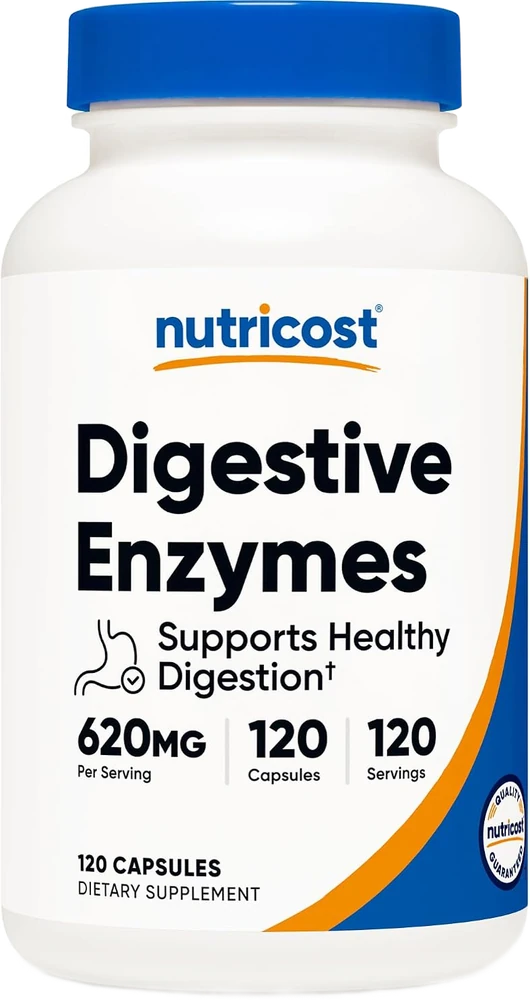 #10 of 12 · Best cheap broad-spectrum✓ Label verified · Supplement Facts read Sep 7, 2026
Real retailer photo, cut out. Label unedited.
Consider it. Maximum enzyme variety per dollar — the low-risk budget experiment. Nutricost is the cheapest broad-spectrum blend on the list: 18+ enzymes including both lactase and alpha-galactosidase, at ~$0.13 per capsule.
$15 / month$0.13 / 1-capsule meal dose
Why It Scores 7.5 — And The Label Line Behind Each Number
Enzyme match + problem fit
30% of scoreAn 18+ enzyme broad blend that nominally covers a lot — carbs, protein, fat, plus dairy (lactase) and beans (alpha-galactosidase). Good breadth for varied meals on a budget. The honest asterisk: it's a generalist, and for a serious single trigger a targeted single enzyme at a proper dose is the more reliable match than a thin slice of a budget blend.
Activity units + dose honesty
25% of scoreThis is where the budget positioning shows. '620 mg of 18+ enzymes' is a total milligram weight, not granular per-enzyme activity-unit disclosure, and spreading that mass across 18+ enzymes keeps each one's activity modest. Acceptable for a no-frills budget blend, but it isn't the FCC/USP per-enzyme transparency Enzymedica (#1) or the clinician brands publish.
- Per serving
- 1 capsule with the first bite of a varied/heavy meal
Third-party testing + manufacturing quality
20% of scoreGMP-manufactured, third-party tested, in veggie capsules — solid for a value brand whose model is recognizable ingredients without markup. It isn't NSF-certified like Thorne (#2) or positioned as hypoallergenic like Pure Encapsulations (#3), but for a budget broad blend the quality gate is reasonable and the label is clean.
- Testing
- GMP-manufactured, third-party tested, veggie capsules
Value per meal-dose
15% of scoreThe product's strongest axis: roughly $0.13 per capsule, matching NOW (#5) for the lowest cost-per-dose on the list, while cramming in 18+ enzymes including lactase and alpha-galactosidase. As a low-risk budget experiment or a backup broad blend, the value is excellent — you get broad variety for the price of a coffee.
- Bottle
- 120 veggie capsules (~4 months at 1/meal as needed)
- Price
- ~$15 / month = ~$0.13 per 1-capsule meal dose
Real-world response
10% of scoreA well-reviewed budget blend with reasonable reports of help for varied-meal fullness and gas. As with any broad blend the response is real for buyers with genuinely varied diets or non-specific symptoms and muted for healthy guts — and at modest per-enzyme activity, it tends to do less on a serious single trigger than a focused, properly-dosed product.
- Form
- 18+ enzyme broad blend incl. lactase, bromelain, alpha-galactosidase
- More Specs
- Blend weight
- 620 mg enzyme blend per capsule (total mg, not per-enzyme activity)
- Targeted enzymes
- Includes both lactase (dairy) and alpha-galactosidase (beans/gassy veg)
- Acid mechanism
- None — no betaine HCl; not a low-stomach-acid specialist
- Best use
- Low-risk budget trial of a broad blend, or a cheap backup
Label verified. Every figure read from the Supplement Facts photo, Sep 7, 2026.
Marketing Claims Vs. Reality
18+ digestive enzymes for complete digestive support.
The blend genuinely includes 18+ enzymes covering carbs, protein, fat, plus lactase and alpha-galactosidase, so the broad-variety claim holds. The honest nuance: variety is not the same as potency — spreading 620 mg across 18+ enzymes keeps individual activity modest, so 'complete support' means broad coverage at modest per-enzyme strength.
Includes lactase and alpha-galactosidase for dairy and beans.
Both enzymes are in the formula, and both have direct RCT support for their specific jobs (lactase: Baijal & Tandon 2021, PMID 33490624; alpha-galactosidase: Di Stefano 2007, PMID 17151807). Accurate that it covers dairy and beans nominally — with the caveat that a budget blend's per-enzyme dose may be lower than a dedicated single-purpose product.
620 mg of enzymes — a high-potency blend.
Milligram weight is not potency for enzymes — activity units (FCC/USP) are what matter, and 620 mg spread across 18+ enzymes leaves each one's activity modest. The big milligram number reads as strength but doesn't disclose per-enzyme activity, which is exactly the transparency gap the category's top picks close and this one doesn't.
Premium-quality enzymes without the premium price.
The value is real — ~$0.13/capsule with broad variety is excellent — but 'premium-quality' oversells it on potency and transparency. It's GMP-made and clean-labeled, yet it doesn't match Enzymedica's activity and per-enzyme disclosure or the clinician brands' purity. Accurate as great value, not as premium quality.
Clean, no-frills label with no unnecessary additives.
Veggie capsules and a no-frills label are consistent with Nutricost's whole model of delivering recognizable ingredients without markup. Verifiable on the supplement-facts panel — a genuine point in the product's favor for a budget pick.
What Our Test Actually Found
The right product to run the category's core experiment cheaply
The honest question hanging over every broad enzyme blend is whether it does anything for you — and for many people the answer is 'not much,' because a healthy pancreas already makes plenty of enzymes. That makes the cheapest broad blend the smart vehicle for an honest test. Nutricost at ~$0.13 per capsule lets you trial a broad blend with your varied or heavy meals for two to four weeks and find out, exactly the decision window the substance hub frames, without sinking premium money into the question. Clear benefit → step up if you want more potency; no benefit → you've spent the minimum to learn you're in the healthy-gut group.
Milligrams aren't potency — read the 620 mg honestly
The headline '620 mg of 18+ enzymes' looks like strength, but enzyme potency is measured in activity units (FCC/USP), not gross milligram mass, and spreading 620 mg across 18+ different enzymes keeps each one's activity modest. The category's top picks (Enzymedica #1, the clinician brands) publish per-enzyme activity units so you can see the dose; Nutricost doesn't disclose at that level. Read the milligram figure as 'broad variety on a budget,' not as proof of high per-enzyme potency — that's the honest interpretation.
It covers dairy and beans nominally — but a serious single trigger wants a focused dose
Including both lactase and alpha-galactosidase is a genuine point in Nutricost's favor at the price: for a varied meal hitting several triggers, one cheap capsule nominally covers them. But at modest per-enzyme activity, a budget blend may deliver less lactase or alpha-galactosidase than a dedicated product. So if dairy alone is your serious trigger, a focused lactase product (Lactaid, #6) at a proper dose is the more reliable match (Baijal & Tandon 2021, PMID 33490624), and a focused alpha-galactosidase product is the better choice for a real beans/gas problem (Di Stefano 2007, PMID 17151807; Di Nardo 2013, PMID 24063420).
No betaine HCl — broad coverage, but not a low-acid tool
Nutricost is a plant/microbial-style enzyme blend with no betaine HCl, so it carries none of the reflux/gastritis/ulcer/acid-reducer contraindications of the HCl picks — a point in its favor for buyers who want broad coverage gently. The flip side is the same as for the other no-HCl blends: it does nothing for genuine low stomach acid, the heavy-protein-meal-sitting-like-a-brick problem the betaine-HCl picks (Thorne #2, NOW #5, Designs for Health #4) are built to solve. Broad and cheap, but not a low-acid specialist.
Best as a budget experiment or backup, not for a serious specific problem
The clean summary: Nutricost is excellent value as a low-risk way to test whether a broad blend helps you, and as a cheap backup broad blend for occasional varied meals. Where it's the wrong pick is a serious, specific digestive problem — for a defined single trigger a targeted enzyme at a proper dose will do more, and for someone who wants maximum surviving activity across a broad blend, Enzymedica Digest Gold (#1) delivers higher potency and per-enzyme disclosure. Match the spend to the job: cheap broad blend for the experiment, focused or premium product for a real, defined problem.
Full analysis: all pros & cons (8), buy if / skip if
- Maximum enzyme variety per dollar — an 18+ enzyme blend including lactase AND alpha-galactosidase, so it nominally covers both dairy and beans cheaply
- Excellent value at roughly $0.13 per capsule, matching NOW (#5) for the lowest cost-per-dose on the list
- Veggie capsules and a clean, no-frills label — Nutricost's whole model is delivering recognizable ingredients without markup
- A sensible, low-risk budget entry point for testing whether a broad blend helps before committing to a premium brand
- No betaine HCl, so it avoids the reflux/gastritis/ulcer contraindications of the HCl picks
- Activity-unit transparency and per-enzyme potency aren't on the level of Enzymedica or the clinician brands — '620 mg of 18+ enzymes' is a total milligram weight, not granular activity disclosure, so individual activity is modest
- Budget broad-spectrum positioning means it's a generalist; for a serious single trigger, a targeted single enzyme at a proper dose will outperform a thin slice of a budget blend
- Like any broad blend, it's the right tool only for varied meals or non-specific fullness — and being cheap doesn't change whether a healthy gut actually needs one
- You want to test whether a broad blend does anything for you before paying premium money
- You want maximum enzyme variety per dollar, including lactase AND alpha-galactosidase, on a budget
- You want a cheap backup broad blend for occasional varied or heavy meals
- You prefer veggie capsules and a clean, no-frills label without markup
- You want high per-enzyme potency and granular activity-unit disclosure — Enzymedica Digest Gold (#1) leads there
- Your problem is one serious single trigger (dairy or beans) — a dedicated single enzyme at a proper dose is more reliable
- You have no specific intolerance or insufficiency — a broad blend does little for a healthy gut, even a cheap one
Nutricost is the cheapest broad-spectrum blend on the list: 18+ enzymes including both lactase and alpha-galactosidase, at ~$0.13 per capsule. Buy it as a low-risk way to test whether a broad blend helps you before paying premium money, or as a budget backup broad blend. Skip it if you want high per-enzyme potency and granular activity-unit disclosure (Enzymedica #1 leads there), if your problem is one single food (a targeted enzyme is the more reliable match), or if you have no real digestive problem at all — a broad blend does little for a healthy gut, cheap or not.
Nutricost Digestive Enzymes is the cheap broad-spectrum pick — maximum enzyme variety per dollar. It packs 18+ enzymes into a 620 mg blend, including both of the most common targeted enzymes (lactase for dairy and alpha-galactosidase for beans and gassy veg), in veggie capsules at roughly $0.13 each — matching NOW (#5) for the lowest cost-per-dose on the list. Nutricost's whole model is delivering recognizable ingredients without markup, and that's exactly what this is: a broad enzyme blend stripped of premium pricing. That makes it the sensible low-risk way to answer the question that governs this entire category: does a broad enzyme blend actually do anything for me? Because the honest answer for many people is 'not much' — a healthy pancreas already makes plenty of enzymes — the cheapest broad blend is the right vehicle for an honest test before paying premium money. The trade-off is real, though: spreading 620 mg across 18+ enzymes keeps individual activity modest, and the label isn't as granular as Enzymedica's per-enzyme disclosure. We checked it against the hub's web-verified trials. Here's the full breakdown.
The cheap broad-spectrum experiment — buy it to find out, not for a serious problem.

Nutricost Digestive Enzymes is the cheap broad-spectrum pick — maximum enzyme variety per dollar, 18+ enzymes including both lactase and alpha-galactosidase, at the lowest cost-per-dose on the list. It nominally covers dairy and beans for the price of a coffee, which makes it the sensible way to test whether a broad blend does anything for you before paying premium money. For a low-risk experiment or a cheap backup broad blend, the value is genuinely excellent. The honest trade-off is potency and transparency: spreading 620 mg across 18+ enzymes keeps individual activity modest, and the label isn't as granular as Enzymedica's per-enzyme disclosure. So it's the wrong pick for a serious, specific problem. The category's governing rule decides the rest: if dairy alone is the culprit buy a focused lactase product (Lactaid, #6) at a proper dose, if beans alone are the problem buy a focused alpha-galactosidase product, if the issue is low stomach acid buy an HCl pick, and if you have no real digestive problem a broad blend will do little — cheap or not. Buy Nutricost to run the experiment cheaply; if it works and you want more, step up to a higher-activity blend.
If This Doesn’t Fit — Try These
 01
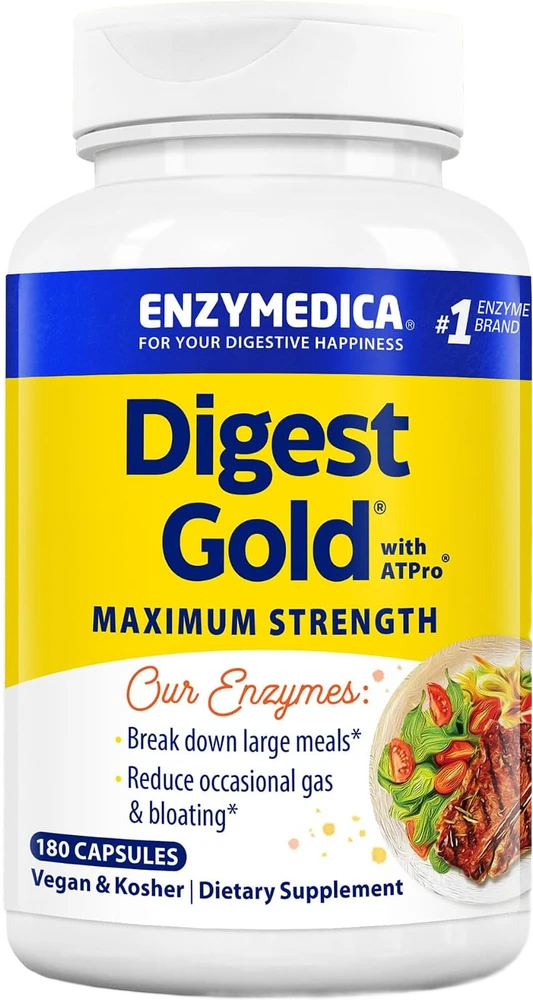
01Enzymedica Digest Gold
If you want one bottle for big mixed meals and don't have a single identifiable food trigger, this is the pick — and it's the benchmark for good reason.
 05
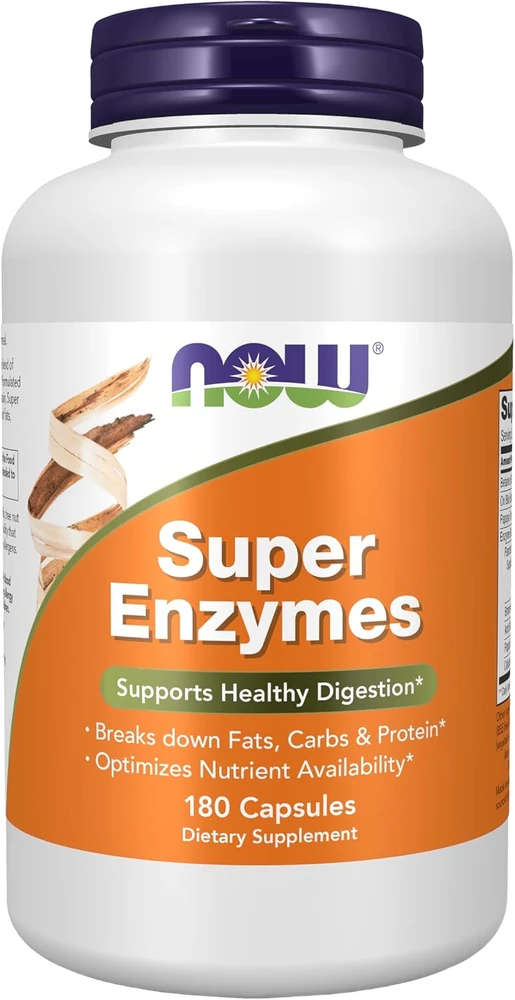
05NOW Super Enzymes
NOW Super Enzymes is the budget workhorse that punches well above its price.
 06
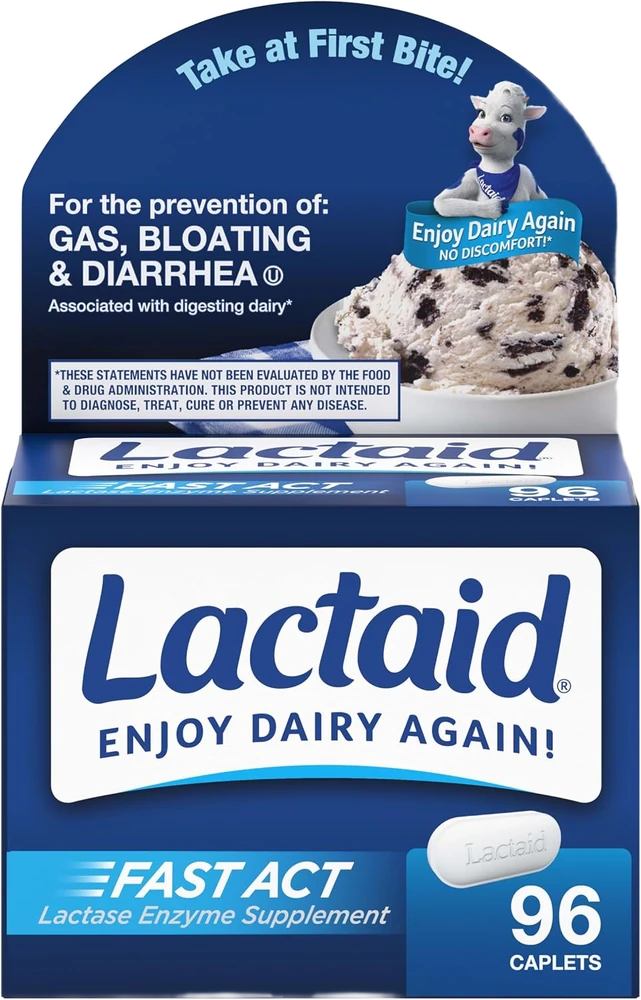
06Lactaid Fast Act
Lactaid Fast Act sits mid-table (#6) only because it's the narrowest product here — but for the right buyer it's the single best pick on the page, and the most strongly evidence-supported.
Quick Answers
Is Nutricost good, or just cheap?
It's genuinely good value for what it is — a low-risk way to find out whether a broad enzyme blend helps you at all, before committing real money to a premium brand. At roughly $0.13 per capsule it matches NOW (#5) for the lowest cost-per-dose on the list, and it crams in 18+ enzymes including both lactase and alpha-galactosidase. The honest limit is that 'cheap and broad' has a cost: spreading 620 mg across 18+ enzymes keeps the activity per individual enzyme modest, and the label isn't as granular on per-enzyme activity units as Enzymedica (#1) or the clinician brands. So: good value as a budget experiment or a backup broad blend, not the pick for a serious, specific digestive problem where a targeted or higher-activity product will do more.
Does the 620 mg figure tell me how strong it is?
Not really — and this is the most important honest point about budget broad blends. '620 mg of 18+ enzymes' is a total milligram weight, not an activity disclosure. What actually matters for an enzyme is its activity (FCC/USP units like FCC ALU for lactase or GalU for alpha-galactosidase), not the gross milligram mass, and spreading 620 mg across 18+ different enzymes means each individual enzyme's share — and its activity — is modest. The top picks (Enzymedica #1, the clinician brands) publish per-enzyme activity units so you can see the dose; Nutricost's disclosure isn't on that level. Read the milligram number as 'broad variety on a budget,' not as proof of high potency.
It contains lactase and alpha-galactosidase — does that mean it covers dairy and beans?
Nominally, yes — and that's a real point in its favor at the price. The blend includes lactase (for dairy) and alpha-galactosidase (the Beano enzyme, for beans and gassy veg), both of which have direct RCT support for their specific jobs (lactase: Baijal & Tandon 2021, PMID 33490624; alpha-galactosidase: Di Stefano 2007, PMID 17151807; Di Nardo 2013, PMID 24063420). The honest caveat is the same potency point: at modest per-enzyme activity, a budget blend may not deliver as much lactase or alpha-galactosidase as a dedicated single-purpose product. So for a varied meal it covers both cheaply; but if dairy alone or beans alone is your serious, specific trigger, a focused single enzyme at a proper dose is the more reliable match.
Should I buy Nutricost or spend more on a premium blend?
Start with Nutricost if you're not yet sure a broad blend helps you. Because broad blends only clearly benefit a subset of people — those with genuinely varied diets, non-specific fullness, or real intolerances — the smart sequence is to run the cheap experiment first: take Nutricost consistently with your heavy or varied meals for two to four weeks and judge honestly. Clear, repeatable improvement → you now know a broad blend works for you, and you can decide whether to step up to a higher-activity option like Enzymedica Digest Gold (#1) for more potency and per-enzyme disclosure. No noticeable difference → you're likely in the healthy-gut group that doesn't benefit, and you've spent the minimum to find out. Don't pay premium money to discover something a $15 bottle would have told you.
Should I take a broad blend like this with every meal?
No — and this is the central honesty of the whole category. A healthy pancreas already secretes a large reserve of amylase, protease and lipase, so for someone with no specific intolerance and no insufficiency, a broad blend often does little beyond placebo — as the digestive-enzymes substance hub lays out, the evidence is strong for matched enzymes (lactase for lactose, pancreatic enzymes for maldigestion) but far weaker for broad blends in people without a defined deficit. Use Nutricost for genuinely varied, heavy or rich meals that reliably sit badly, or as a low-risk trial — not as a reflexive daily habit when there's no problem to solve. The cheap price makes it the right vehicle for an honest test, but it doesn't change whether you actually need one.
Sources & Further Reading
4 peer-reviewed sources, each linked to PubMed
- [1] de la Iglesia-Garcia 2017 PMID 27941156 — Efficacy of pancreatic enzyme replacement therapy in chronic pancreatitis: systematic review and meta-analysis. Meta-analysis of RCTs in chronic-pancreatitis patients: pancreatic enzyme replacement significantly improved fat absorption, nutrition and symptoms. Establishes that enzymes work powerfully when they replace a real deficit — the contrast that frames Nutricost's honest positioning: a cheap broad blend is a fine experiment, but it isn't replacing a deficiency a healthy gut doesn't have.
- [2] Ullah 2023 PMID 37976892 — Efficacy of digestive enzyme supplementation in functional dyspepsia: A monocentric, randomized, double-blind, placebo-controlled, clinical trial. RCT in 120 functional-dyspepsia patients: a multi-enzyme blend over 2 months reduced symptom severity and improved quality of life and sleep versus placebo. Encouraging but limited evidence that a broad multi-enzyme blend like Nutricost can help non-specific post-meal symptoms — the best-fit use case, and the reason a cheap trial is reasonable.
- [3] Baijal & Tandon 2021 PMID 33490624 — Effect of lactase on symptoms and hydrogen breath levels in lactose intolerance: A crossover placebo-controlled study. Randomised, double-blind, crossover placebo-controlled trial in lactose-intolerant adults: lactase significantly improved symptom scores and cut breath-hydrogen versus placebo. Validates the lactase component of Nutricost for dairy — though for a serious dairy-only problem a single, properly-dosed lactase product is the more reliable match.
- [4] Di Stefano 2007 PMID 17151807 — The effect of oral alpha-galactosidase on intestinal gas production and gas-related symptoms. Placebo-controlled study: oral alpha-galactosidase with a high-dose bean meal significantly reduced breath-hydrogen and flatulence. Validates the alpha-galactosidase in Nutricost for beans and gassy vegetables — with the caveat that a serious legume/gas problem is better matched by a focused, properly-dosed product.
Affiliate disclosure: every Amazon link uses our Associates tag (superachieverclub-20). We earn a small commission at no cost to you; it funds independent reviews. We never accept payment to change a ranking.