
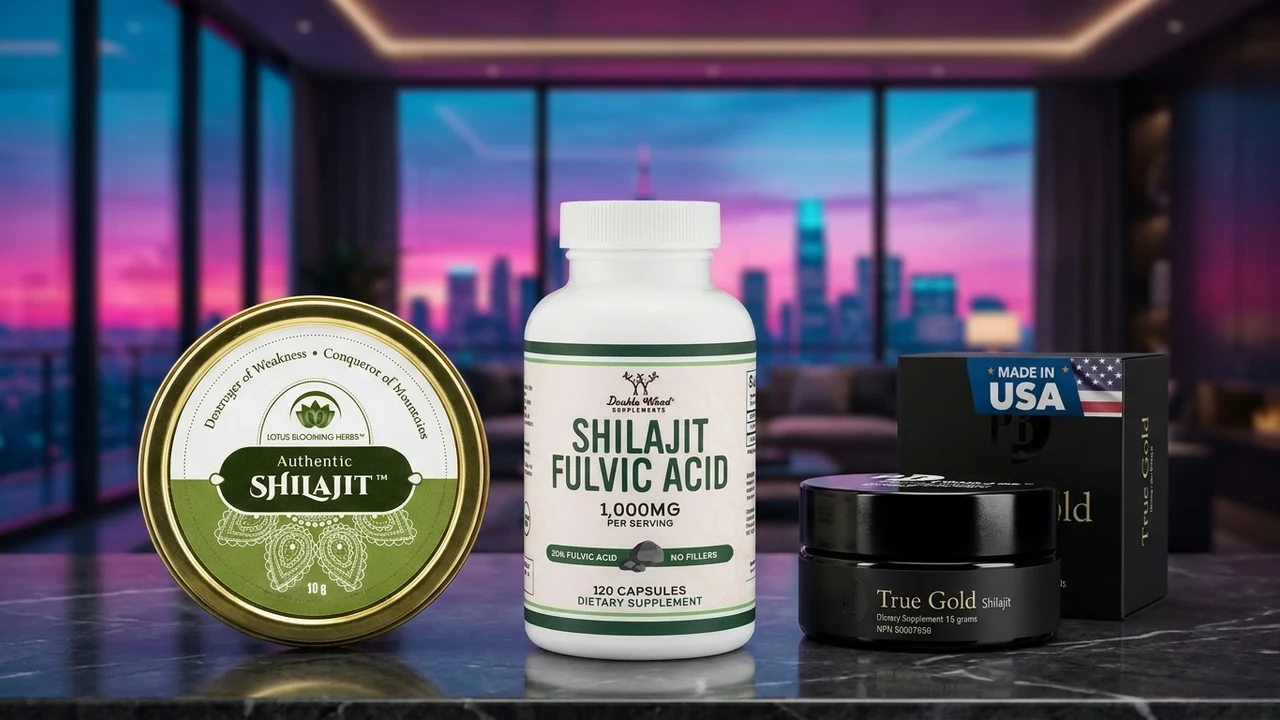
Top 9 Best Shilajit for Testosterone (2026)
9 picks — ranked by our 50/50 methodology
- #1Best overall (most credible resin)
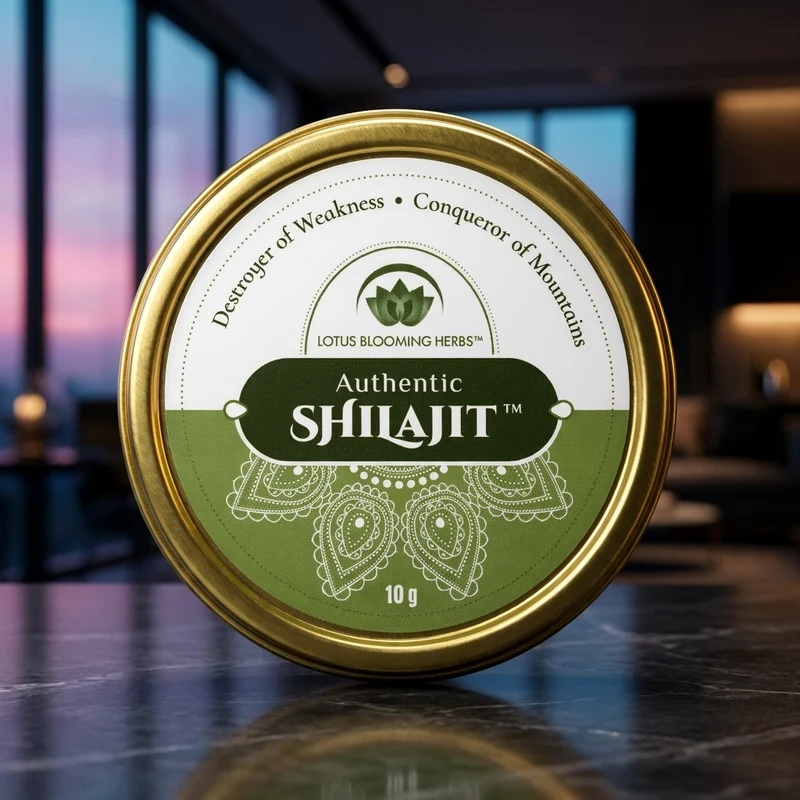
Lotus Blooming Herbs Authentic Shilajit
Lotus Blooming Herbs · Gold-grade purified Himalayan resin, wild-crafted above 16,000 ft · 10 g jar8.4/10SAC Product Score™SAC Product Score™ — how it breaks down- Purity & source transparency30%8.9
- Form & dose honesty25%8.2
- Safety & testing disclosure20%8.2
- Value per month15%8.1
- Real-world use10%8.2
The best authentic resin: one of the oldest authentic-shilajit brands in the US, with direct in-Himalaya sourcing (no middlemen), traditional purification, and the strongest safety language in this lineup — its listing states third-party, FDA-registered, cGMP-certified independent US lab testing for safety (though still not a published heavy-metal panel).
- Form
- Pure traditional resin (gold-grade, wild-crafted above 16,000 ft)
- Fulvic %
- Not disclosed (cites fulvic acid, no number)
- Dose
- Pea-sized portion (traditional dosing, no mg on listing)
- Testing
- Listing states independent third-party, FDA-registered, cGMP US lab 'tested for safety' — no explicit heavy-metal panel shown
- Origin
- Personally sourced + purified in the Himalayas, no middlemen
Pros- Strongest safety language in the lineup — independent third-party, FDA-registered, cGMP US lab 'tested for safety'
- Direct in-Himalaya sourcing and traditional purification with no middlemen; wild-crafted above 16,000 ft
- 100% pure traditional resin — the unprocessed full-spectrum form shilajit purists prefer, no fillers
Cons- Steepest price per gram here — a small 10 g jar at about $60
- No fulvic-acid percentage disclosed, and pea-sized dosing is imprecise vs capsules
- "Tested for safety" is not the same as a published lead/arsenic/mercury/thallium panel — none is shown
Our take — If you want the real thing — authentic, traditionally purified Himalayan resin from a brand that has been doing this longer than almost anyone in the US — Lotus Blooming Herbs is the pick. It earns #1 not because it proves it's clean (no listing here does) but because it makes the strongest, most specific safety statement in the category: independent third-party, FDA-registered, cGMP lab testing for safety, on top of direct Himalayan sourcing with no middlemen. You pay the steepest per-gram price in the lineup and you accept pea-sized dosing and an undisclosed fulvic percentage. Read the safety FAQ, accept that even the best listing here stops short of a published metals panel, and if you want authentic resin and can stomach the price, this is the one.
- #2Best value + most transparent
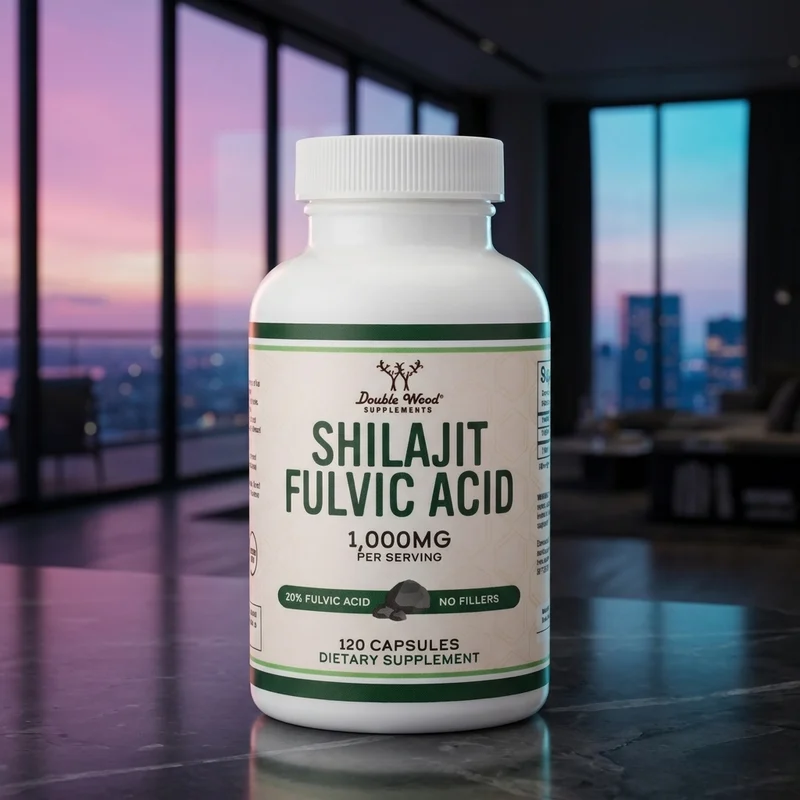
Double Wood Shilajit Capsules
Double Wood Supplements · Himalayan shilajit standardized to 20% fulvic acid · 120 capsules8.3/10SAC Product Score™SAC Product Score™ — how it breaks down- Purity & source transparency30%8.4
- Form & dose honesty25%7.6
- Safety & testing disclosure20%8.4
- Value per month15%8.9
- Real-world use10%8.4
The transparency pick in a category that hides its numbers: the only product here that discloses a fulvic-acid percentage — 20%, which is 200 mg of fulvic acid per 1,000 mg serving — with no fillers and a stated third-party testing program, at a value price.
- Form
- Shilajit powder in capsule (no resin experience)
- Fulvic %
- 20% disclosed — the ONLY pick to state a number (200 mg fulvic / serving)
- Dose
- 1,000 mg shilajit extract per serving (200 mg fulvic acid)
- Testing
- Listing states 'rigorous third-party testing' — no specific certifier or heavy-metal panel named
- Diet
- No fillers; vegan and gluten-free per listing overview
Pros- Discloses what nearly every shilajit brand hides: standardized 20% fulvic acid, 200 mg per 1,000 mg serving
- No fillers — pure standardized shilajit powder; vegan and gluten-free per the listing
- Strong cost-per-serving (~$0.17) with a stated third-party testing program
Cons- Powder-in-capsule form loses the traditional resin texture and full-spectrum experience
- Third-party testing is claimed in general terms only — no certifier and no heavy-metal panel named
- Standardizing to fulvic % isn't the same as proving low heavy metals — a different (still-missing) test
Our take — Double Wood is what you buy when you're tired of shilajit brands refusing to tell you anything. It's the only product in this lineup that states a fulvic-acid percentage — 20%, or 200 mg per 1,000 mg serving — which lets you actually compare potency instead of trusting a tar blob. No fillers, vegan, gluten-free, a stated third-party testing program, and roughly $0.17 a serving make it the value-and-transparency leader. Two honest caveats keep it at #2 rather than #1: capsules sacrifice the resin experience, and disclosing a fulvic percentage is NOT the same as publishing a heavy-metal panel (which it still doesn't). For most buyers who want a precise, affordable, label-honest entry point, this is the smart capsule.
- #3Best premium resin
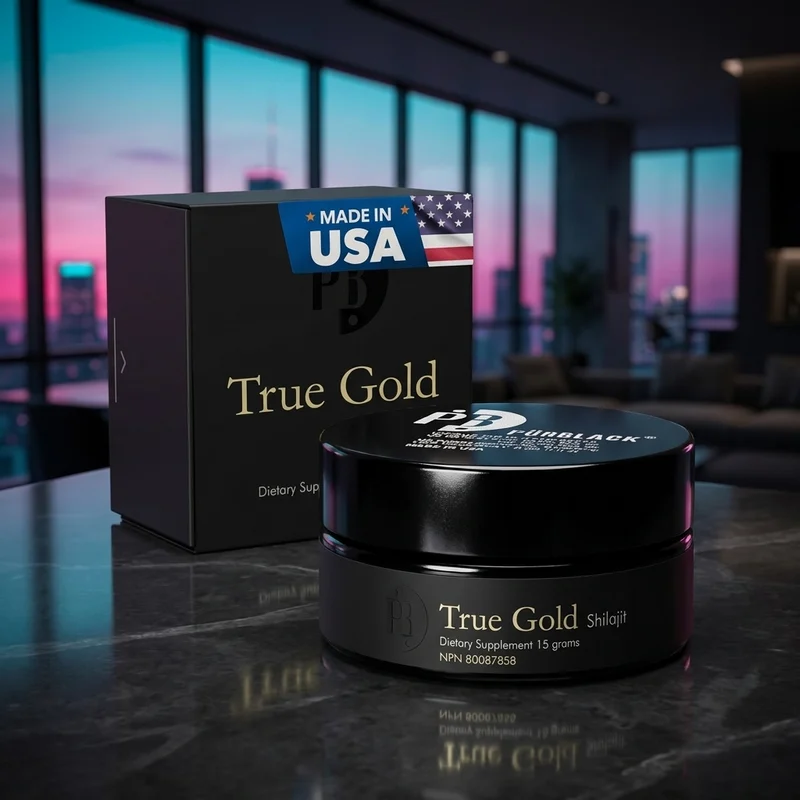
Pürblack Live Resin with True Gold
Pürblack · Gold-infused (555 PPM) fifth-generation live resin, made in USA · ~30 g jarSAC Product Score™ — how it breaks down- Purity & source transparency30%8.6
- Form & dose honesty25%7.9
- Safety & testing disclosure20%7.9
- Value per month15%7.3
- Real-world use10%7.9
The premium-resin upgrade: a US-made, gold-infused (true gold, 555 PPM) live resin with 85+ trace minerals and high fulvic and ashless humic acids, lab-tested for purity and potency per the listing — for buyers who want the most engineered shilajit on the market rather than a raw commodity jar.
- Form
- Gold-infused live resin (555 PPM true gold), made in USA, GMP-certified facilities
- Fulvic %
- Not disclosed (high fulvic + ashless humic acids cited, no number)
- Dose
- Resin portion; servings stated inconsistently (title says 30, bullets say 60)
- Testing
- Listing states lab-tested for purity and potency — no explicit heavy-metal panel shown
- Origin
- Himalayan + other high-altitude ranges (less origin-specific)
Pros- True-gold infusion at 555 PPM plus 85+ trace minerals — a genuinely differentiated premium formula
- Made in the USA in GMP-certified facilities and lab-tested for purity and potency per the listing
- High fulvic and ashless humic acid content cited; sustainably harvested from high-altitude ranges
Cons- By far the most expensive pick here (~$93)
- Listing is internally inconsistent on servings (title says 30, bullets say 60) and discloses no fulvic %
- Sourced from 'Himalayan and other mountain ranges' — less origin-specific than single-source rivals
Our take — Pürblack is the connoisseur's resin: a US-made, gold-infused, fifth-generation "live resin" that positions itself as the most engineered shilajit you can buy, with a listing that claims lab testing for purity and potency. If you've decided you want resin and you want the premium end of it, it's a defensible splurge. But it lands at #3, not higher, for honest reasons: it's the most expensive product here by a wide margin, its own listing can't agree on how many servings are in the jar, it discloses no fulvic percentage, and — like everything else on this list — "lab-tested for purity" stops short of a published heavy-metal panel. Buy it as a premium experience, not as proof of superior cleanliness.
- #4Best clinical extract (the studied form)
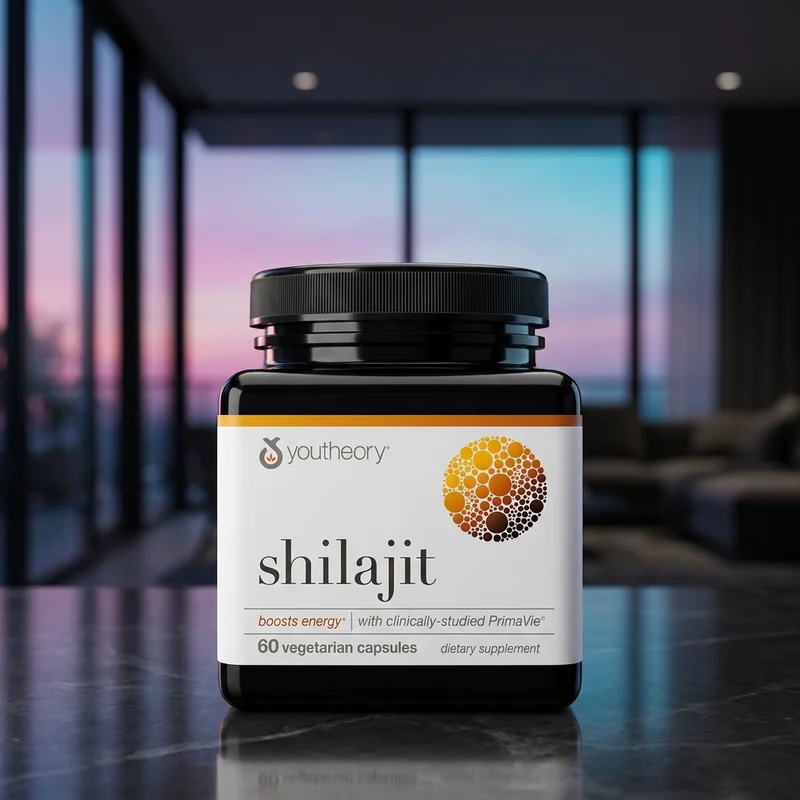
Youtheory Shilajit (PrimaVie)
Youtheory · PrimaVie patent-protected, ultra-purified Himalayan shilajit extract · 60 capsulesSAC Product Score™ — how it breaks down- Purity & source transparency30%7.9
- Form & dose honesty25%7.9
- Safety & testing disclosure20%8.6
- Value per month15%7.9
- Real-world use10%7.3
The clinical-extract pick: PrimaVie is the patented, purified shilajit ingredient behind most of the published human research — including Pandit 2016 (testosterone) and Keller 2019 (fatigue and strength) — here from a mainstream, gluten-free brand carrying a third-party-tested badge.
- Form
- PrimaVie — patent-protected, ultra-purified Himalayan shilajit extract (capsule)
- Fulvic %
- Not stated as a number on the listing (PrimaVie is standardized, % not on-pack)
- Dose
- 500 mg PrimaVie shilajit per serving (the dose used in Pandit 2016 and Keller 2019)
- Testing
- Listing carries a '3rd party tested' badge; cites GMP-certified manufacturing — no explicit heavy-metal panel shown
- Evidence
- PrimaVie is the branded extract used in the published human trials
Pros- PrimaVie is the exact patented, purified extract used in the human studies (Pandit 2016, Keller 2019)
- 500 mg per serving matches the dose those trials used — the cleanest evidence-to-product match here
- Mainstream gluten-free brand with a third-party-tested badge and GMP-certified manufacturing per listing
Cons- 500 mg/day is the studied dose, but hard-charging users expecting a 'big' resin dose may want more
- 30-day supply per bottle makes cost-per-day higher than bulk capsule rivals
- A '3rd party tested' badge is reassurance, not a published heavy-metal panel
Our take — If you care most about taking the exact thing the research studied, this is your pick. PrimaVie is the patented, ultra-purified shilajit extract behind the testosterone RCT (Pandit 2016) and the fatigue/strength RCT (Keller 2019), and Youtheory delivers it at the same 500 mg/day dose those trials used — the tightest evidence-to-product match in the lineup, from a mainstream brand with a third-party-tested badge. It sits at #4 only because it's a moderate-dose, 30-day bottle at a per-day cost above the bulk capsules, and because — say it with me — a testing badge is not a published metals panel. For the evidence-led buyer, the studied extract at the studied dose is exactly the right call.
- #5Best value resin
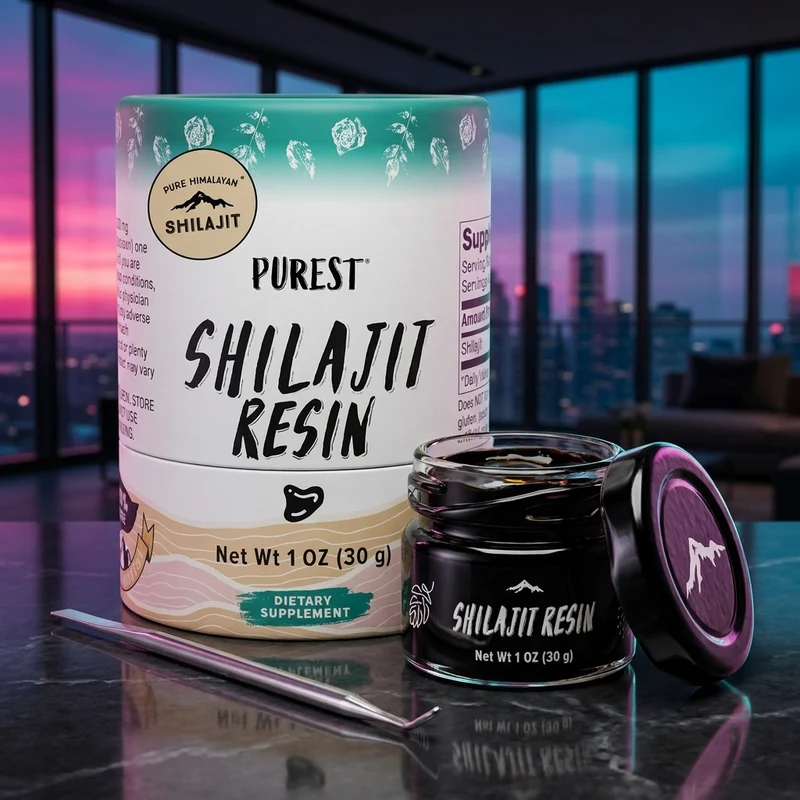
Pure Himalayan Shilajit Resin (Grade A)
Pure Himalayan Shilajit · Grade A resin, 85+ trace minerals · 30 g jar7.7/10SAC Product Score™SAC Product Score™ — how it breaks down- Purity & source transparency30%7.8
- Form & dose honesty25%7.8
- Safety & testing disclosure20%7.0
- Value per month15%8.3
- Real-world use10%7.8
The value-resin pick: a 30 g jar at 200 mg per serving whose title states 3rd-party US lab testing, giving the lowest cost-per-serving of any resin here — with one honesty flag buyers should know up front.
- Form
- Grade A resin, non-chemical extraction, no fillers (light-protected glass jar + spoon)
- Fulvic %
- Not disclosed (naturally derived fulvic acid cited, no number)
- Dose
- 200 mg resin per serving (pea-sized, dissolved in warm liquid)
- Testing
- Title states '3rd-Party US Lab Tested' — no explicit heavy-metal panel shown
- Origin flag
- Brand named 'Pure Himalayan Shilajit' but its own bullet says harvested from the Siberian Mountains
Pros- Title states 3rd-party US lab testing; non-chemical extraction with no fillers or additives
- 30 g jar at 200 mg servings is the best resin value here by months of supply
- Light-protected glass jar with a dosing spoon included
Cons- Honesty flag: brand is named 'Pure Himalayan Shilajit' but the listing's own bullet says the resin is harvested from the Siberian Mountains
- No fulvic-acid percentage disclosed; 200 mg serving is on the light side for resin users
- '3rd-party US lab tested' in the title is a claim, not a published heavy-metal panel
Our take — On pure economics, this is the resin value leader: a 30 g jar at 200 mg servings, a title that claims third-party US lab testing, non-chemical extraction, and a proper light-protected glass jar with a spoon — all for about $35. The reason it sits at #5 and not higher is an honesty flag we won't paper over: the brand is called "Pure Himalayan Shilajit," but its own listing bullet says the resin is harvested from the Siberian Mountains, not the Himalayas. That doesn't make it bad — Siberian (Altai) shilajit is legitimate — but a brand name that contradicts its own origin statement costs real points on transparency. Buy it for the value and the testing claim, go in knowing where it actually comes from, and don't mistake the title's testing line for a metals panel.
- #6Best Ayurvedic-heritage value
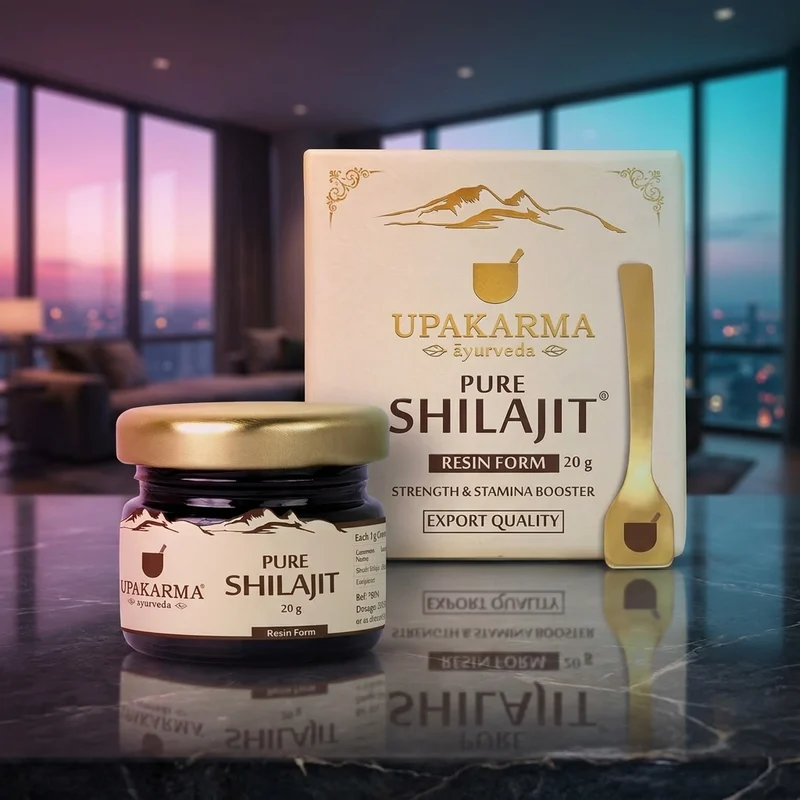
UPAKARMA Pure Shilajit Resin
UPAKARMA · 100% Ayurvedic semi-liquid resin, 85+ minerals · 20 g jar7.6/10SAC Product Score™SAC Product Score™ — how it breaks down- Purity & source transparency30%7.6
- Form & dose honesty25%7.6
- Safety & testing disclosure20%7.6
- Value per month15%8.2
- Real-world use10%6.9
The Ayurvedic-heritage value pick: an Indian Ayurveda brand whose listing actually cites a 3rd-party NABL-accredited lab-test report and Ayush approval, with 85+ minerals and urolithin A mentioned, at a near-budget price.
- Form
- 100% Ayurvedic semi-liquid resin (spoon included)
- Fulvic %
- Not disclosed (no number stated)
- Dose
- Pea-sized ball in lukewarm water/milk/tea, twice daily after meals (per listing)
- Testing
- Title states a 3rd-party lab-test report; bullets cite NABL-accredited lab testing + Ayush approval — report not shown on-page
- Extras
- 85+ essential minerals, magnesium, and urolithin A cited
Pros- Title states a 3rd-party lab-test report; bullets cite NABL-accredited lab testing and Ayush approval
- Authentic Ayurvedic semi-liquid resin positioning with 85+ minerals plus urolithin A mentioned
- Around $22 for 20 g — strong value for resin with a stated testing claim
Cons- No fulvic-acid percentage or per-serving mg stated; pea-sized, twice-daily dosing is imprecise
- Listing copy is rougher than US brands and the lab report itself is not shown on the page
- NABL report is cited but not published on-listing — still not a heavy-metal panel you can read
Our take — UPAKARMA is the most credible of the budget Ayurvedic resins: an Indian heritage brand whose listing actually names a third-party NABL-accredited lab-test report and Ayush approval, with the traditional 85+ minerals positioning and urolithin A called out, all for around $22. For a buyer who wants authentic Ayurvedic resin and values a testing claim over polish, it's a smart-value choice. It ranks #6 because the execution is rougher than the US brands — the lab report is cited but not shown, there's no fulvic percentage or per-serving mg, and the pea-sized twice-daily dosing is guesswork. A cited NABL report is more than most budget resins offer, but it's still not a published heavy-metal panel you can actually read.
- #7Best premium-lifestyle resin
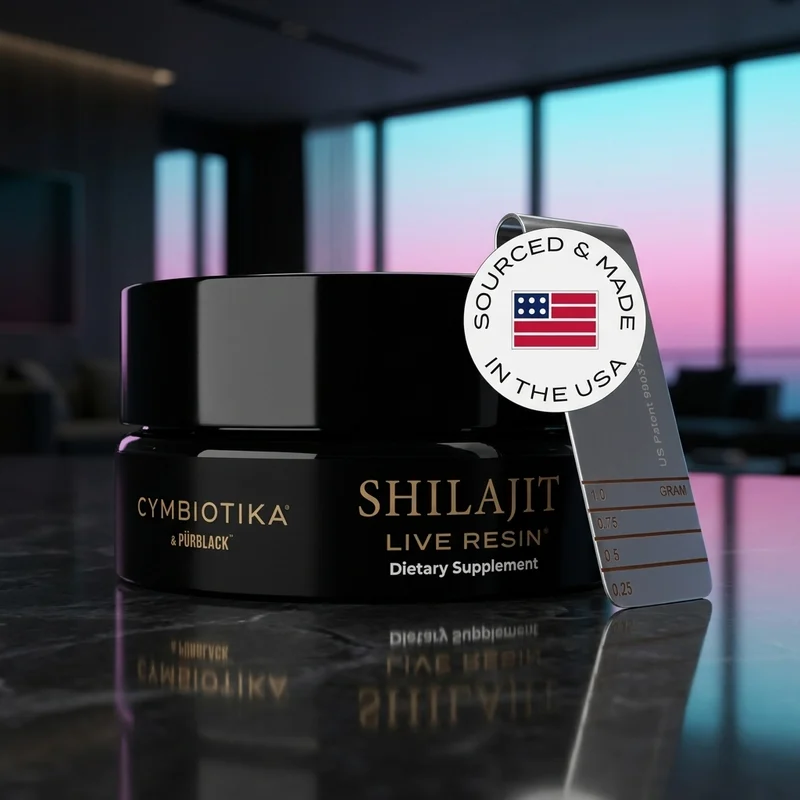
Cymbiotika Shilajit (Black Gold)
Cymbiotika · Patented 'Black Gold' live resin with 84+ minerals + elemental gold · ~30 servings7.2/10SAC Product Score™SAC Product Score™ — how it breaks down- Purity & source transparency30%7.3
- Form & dose honesty25%7.3
- Safety & testing disclosure20%7.3
- Value per month15%6.5
- Real-world use10%7.8
The premium-lifestyle pick: Cymbiotika's gold-bearing 'Black Gold' live resin in a clean-label 500 mg-scoop format — for buyers who want a luxury wellness brand and defined dosing rather than a commodity jar.
- Form
- Patented 'Black Gold' live resin, 84+ trace minerals + elemental gold, fulvic + humic acids
- Fulvic %
- Not disclosed (no number stated)
- Dose
- 500 mg resin per serving (defined scoop; dissolve in warm water/tea/coffee)
- Testing
- No third-party testing statement on the Amazon listing itself
- Diet
- Gluten-free, soy-free, vegan, no additives or preservatives per listing
Pros- Patented live-resin format with 84+ minerals, elemental gold, fulvic and humic acids
- Clean-label per listing: vegan, gluten-free, soy-free, zero additives, alcohols, or preservatives
- Defined 500 mg scoop dosing is more precise than pea-sized guesswork
Cons- About $67 for 30 servings — among the highest cost-per-serving in the category
- No fulvic percentage AND no third-party testing statement on the Amazon listing itself
- You're paying a lifestyle-brand premium without the safety language the top picks at least state
Our take — Cymbiotika is the lifestyle-brand resin: a patented "Black Gold" live resin with elemental gold, a genuinely clean label (vegan, no additives or preservatives), and a defined 500 mg scoop that beats pea-sized guesswork on consistency. If you're already in the Cymbiotika world and want a premium daily ritual, it delivers that. But it drops to #7 on the axes this ranking actually weights: it's among the priciest per serving, it discloses no fulvic percentage, and — unlike the picks above it — its Amazon listing carries no third-party testing statement at all. In a category defined by an invisible contamination risk, paying a luxury premium for a product that says less about safety than a $20 capsule is a hard trade to justify.
- #8Best for taste (gummies)
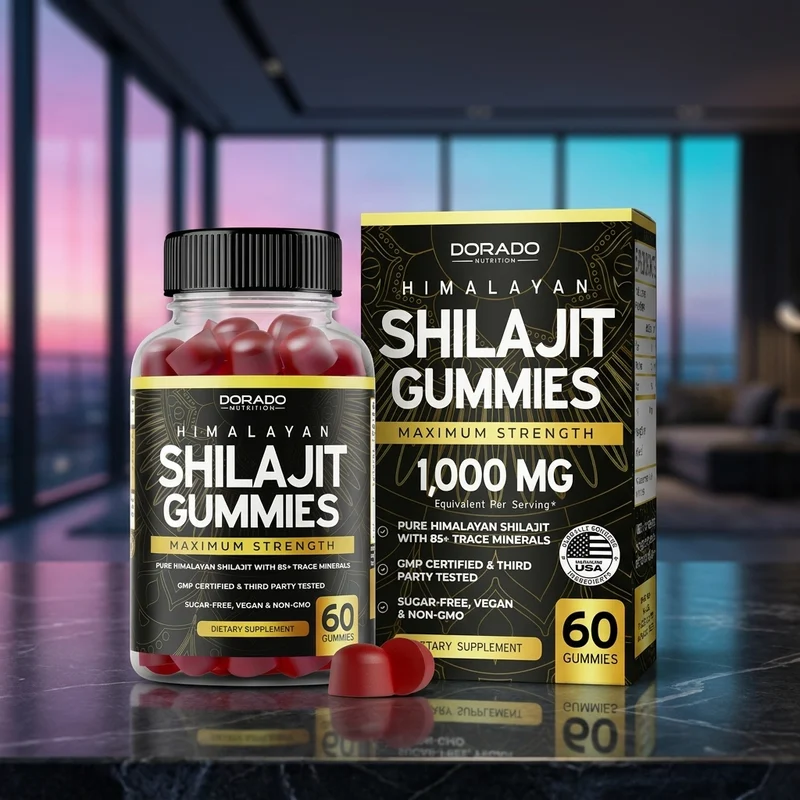
Dorado Nutrition Shilajit Gummies
Dorado Nutrition · Gold-grade shilajit extract gummies, Raspberry Watermelon · 60 countSAC Product Score™ — how it breaks down- Purity & source transparency30%7.2
- Form & dose honesty25%6.3
- Safety & testing disclosure20%7.2
- Value per month15%7.2
- Real-world use10%7.6
The gummies pick: a third-party-tested (per title), vegan, US-made gummy in a raspberry-watermelon flavor for people who will never dissolve tar off a spoon — solving shilajit's biggest adherence problem at the cost of dose.
- Form
- Gummy (gold-grade shilajit extract, 85+ trace minerals + fulvic acid)
- Fulvic %
- Not disclosed (no number stated)
- Dose
- 50 mg shilajit extract per gummy — a fraction of typical 200-500 mg resin servings
- Testing
- Title states third-party tested, non-GMO, vegan, made in USA — no explicit heavy-metal panel shown
- Trade-off
- Adds sweeteners the resin purists avoid; lowest active dose in the lineup
Pros- Title states third-party tested, non-GMO, vegan, and made in USA
- Raspberry-watermelon flavor solves shilajit's biggest adherence problem — the taste
- 60 servings around $16 makes it an easy, low-commitment entry point
Cons- Only 50 mg shilajit extract per gummy — far below the 500 mg dose used in the human trials
- No fulvic-acid percentage disclosed; gummy format adds sweeteners purists avoid
- A 'third party tested' title claim is still not a published heavy-metal panel
Our take — The honest case for Dorado is adherence: shilajit's single biggest real-world failure mode is that people buy a jar of bitter tar, take it twice, and quit. A pleasant raspberry-watermelon gummy that's third-party tested (per its title), vegan, and US-made fixes that — you'll actually take it. The honest case against it is dose: at 50 mg of extract per gummy, you're getting a fraction of the 500 mg that moved the needle in the human trials, so treat it as a gentle daily touch of shilajit, not a therapeutic dose. It ranks #8 because format convenience can't outweigh a sub-clinical dose and an undisclosed fulvic percentage. Great on-ramp, weak engine.
- #9Cheapest capsule trial
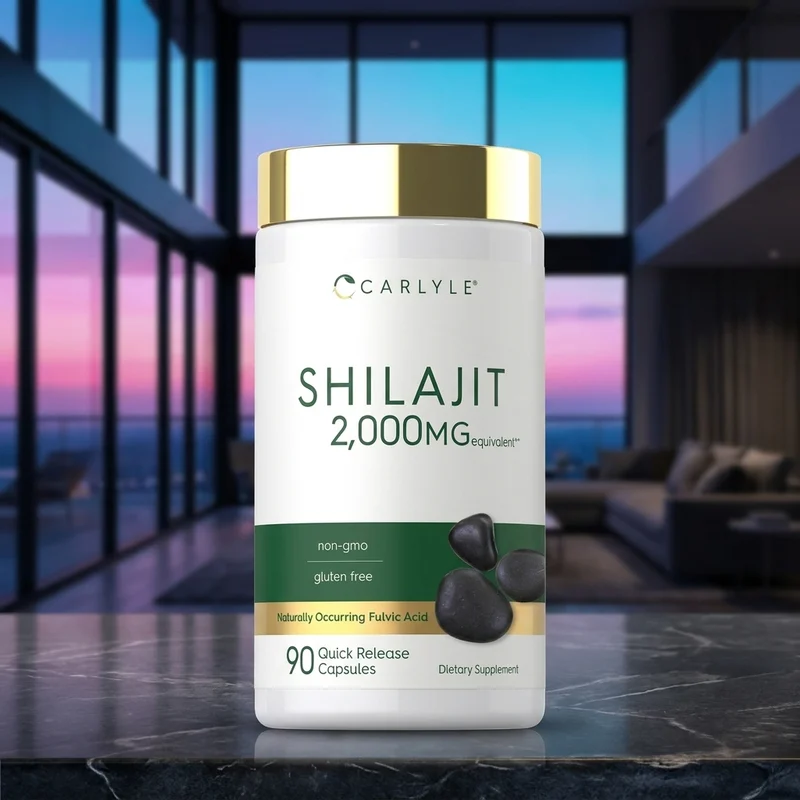
Carlyle Shilajit Capsules
Carlyle · Shilajit extract from Indian-Himalayan resin · 90 quick-release capsules6.6/10SAC Product Score™SAC Product Score™ — how it breaks down- Purity & source transparency30%6.5
- Form & dose honesty25%5.0
- Safety & testing disclosure20%4.5
- Value per month15%9.0
- Real-world use10%8.0
The budget pick: about $11 for 90 capsules from an established value brand, for buyers who want the cheapest way to trial shilajit in capsule form — with the catch that the live Amazon listing no longer states the mg per capsule.
- Form
- Shilajit extract in quick-release capsule (Indian-Himalayan source per listing)
- Fulvic %
- Not disclosed (no number stated)
- Dose
- mg strength NOT stated on the live Amazon listing (Carlyle's own site sells this SKU as 2,000 mg)
- Testing
- In-house 'laboratory tested' claim only — no third-party seal, no heavy-metal panel
- Diet
- Non-GMO; free of gluten, wheat, yeast, lactose, soy, artificial flavor and preservatives
Pros- Lowest price in the lineup (~$11 for 90 capsules; brand site lists $10.59)
- Indian-Himalayan source stated on the listing; naturally free of gluten, wheat, yeast, lactose, soy, artificial flavors and preservatives; non-GMO
- Established value brand — an easy, cheap way to trial the capsule format
Cons- The live Amazon listing does not state the mg strength per capsule — the 2,000 mg figure appears only on Carlyle's own site and other retailers, so you can't confirm your dose from the listing
- In-house laboratory testing only — no third-party seal and no fulvic-acid percentage disclosed
- Weakest safety language in the lineup: an in-house claim, not even a generic third-party badge
Our take — Carlyle is the cheapest way to put shilajit capsules in your cart, and for a bare-bones trial that's a real use case. But it ranks last for two honest reasons that matter more than price. First, dose opacity: the live Amazon listing no longer states the mg per capsule — the widely-quoted 2,000 mg figure lives only on Carlyle's own site and other retailers, so from the listing alone you literally cannot confirm what you're taking. Second, safety: the listing offers only an in-house "laboratory tested" claim, the weakest language here — not even the generic third-party badge the picks above carry. In a category where the unseen risk is heavy metals, the cheapest jar with the least disclosure is the one to approach with the most caution.

▸ Affiliate disclosure: every Amazon link uses our Associates tag (superachieverclub-20). We earn a small commission at no cost to you; it funds independent reviews. We never accept payment to change a ranking.
Shilajit: The One Supplement Where the Warning Matters More Than the Benefit
- 01
The most important sentence on a shilajit label is a warning, not a benefit.
Shilajit is a tar-like resin that concentrates trace minerals — the good ones (fulvic acid, dibenzo-alpha-pyrones) and the toxic ones (lead, arsenic, mercury, cadmium, thallium). A 2025 BMC Chemistry analysis measured thallium up to roughly 0.5 micrograms per gram in commercial supplements, sometimes higher than the raw rock. That makes it a buy-purified-or-don't-buy category.
- 02
Not one of these nine products actually proves it's clean.
The single most valuable thing a brand can show — a third-party heavy-metal panel with real numbers — is something no listing here publishes. The strongest claims are generic: "third-party tested," "tested for safety," a badge. The site refuses to claim testing a listing doesn't state, so the safety score is capped for the whole category and no pick scores in the 9s.
- 03
The upside is real but small — two purified-extract trials, not a mountain of evidence.
In Pandit 2016, about 75 men took 500 mg/day of purified shilajit for 90 days and saw significant rises in total and free testosterone and DHEAS. In Keller 2019, 500 mg/day helped 63 subjects hold onto strength under fatigue. Both trials used a purified, lab-grade extract, never a raw jar.
- 04
Most brands hide the two numbers that matter — and only one pick discloses either.
Shilajit sells in three genuinely different forms: traditional resin (full-spectrum but pea-sized guesswork), capsules (precise mg), and gummies (a sweet micro-dose). Only Double Wood states a fulvic-acid percentage — 20%, or 200 mg per 1,000 mg serving. Every other pick cites "fulvic acid" with no number.
Human evidence: Pandit 2016 (PMID 26395129, testosterone) and Keller 2019 (PMID 30728074, fatigue/strength), both on purified PrimaVie extract; heavy-metal risk from Qadir 2025 BMC Chemistry (PMID 39827344) — full scoring in the methodology below.
How we ranked these nine
Shilajit can't be ranked like a vitamin, because the thing that can hurt you is invisible on the label. So purity and source transparency carries the most weight: where the resin comes from, whether the brand is honest about origin, and how purified the product actually is. Form-and-dose honesty is next, because shilajit is sold in three genuinely different formats — traditional resin (full-spectrum but pea-sized guesswork), capsules (precise mg, less romance), and gummies (a sweet micro-dose) — and because most brands hide the two numbers that matter: the fulvic-acid percentage and the per-serving mg. Safety and testing disclosure is its own axis and it is the category's #1 real-world risk: raw shilajit can carry lead, arsenic, mercury, cadmium, and thallium, and NONE of these nine listings publishes an explicit heavy-metal panel — so we score the strength of each listing's stated testing claim and cap the whole category, never inventing a panel that isn't there. Value per month is the tiebreaker. Real-world use — whether you'll actually keep taking it given the taste and format — settles ties at the margin.
- Purity & source transparency30%
Where does the resin come from, and is the brand honest about it? Single-origin Himalayan sourcing with a named region and a clear purification story scores high; vague "high-altitude ranges" or a brand name that contradicts its own origin bullet (a Himalayan name on Siberian-sourced resin) scores lower. Resin grade and a documented purification process count here — raw, unpurified shilajit is the thing we're protecting buyers against.
- Form & dose honesty25%
Resin, capsule, or gummy — each is a real choice, and we reward the listing that tells you the actual numbers. A disclosed fulvic-acid percentage (only Double Wood states one: 20%) and a clear per-serving mg earn the most credit. Pea-sized resin dosing and a gummy's tiny 50 mg are marked for imprecision; a listing that omits the mg strength entirely (Carlyle) loses the most points on this axis.
- Safety & testing disclosure20%
The category's #1 risk: heavy metals (lead, arsenic, mercury, cadmium, thallium) concentrated in raw resin. A 2025 BMC Chemistry study found thallium up to ~0.5 µg/g in commercial supplements — sometimes above the raw source. CRITICAL: none of these nine listings publishes an explicit heavy-metal panel, so we never claim one. We score the strength of each listing's stated testing language — independent third-party / FDA-registered cGMP lab "tested for safety" beats a generic badge beats an in-house-only claim — and we cap the entire category because the real number nobody shows is the metals panel.
- Value per month15%
Real monthly cost at the listing's stated serving. Resin jars range from about $11/month (budget capsules) to roughly $90+ for premium gold-infused resin; the gummy is cheap per bottle but tiny per dose. Strong value only counts when paired with a credible purity story — a cheap jar with no testing language is not a bargain, it's a gamble.
- Real-world use10%
Will you actually keep taking it? Resin is authentic but messy and bitter — you dissolve a sticky, tar-like blob in warm liquid. Capsules are effortless and tasteless. The gummy solves shilajit's single biggest adherence problem (the taste) at the cost of dose. Defined-scoop resins beat pea-sized guesswork on consistency. This axis settles ties at the margin, not the podium.

The bottom line
- 01
Lotus Blooming Herbs is the most credible authentic resin (#1).
It earns the top spot not because it proves it's clean — no listing here does — but because it makes the strongest, most specific safety statement in the category: independent third-party, FDA-registered, cGMP lab testing for safety, on top of direct Himalayan sourcing with no middlemen. You pay the steepest per-gram price and accept pea-sized dosing and an undisclosed fulvic percentage.
- 02
The honest alternatives sort by what you value: transparency, the studied extract, or a premium splurge.
Double Wood (#2) is the value-and-transparency leader — the only product that discloses a fulvic percentage (20%) at about $0.17 a serving. Youtheory PrimaVie (#4) is the exact patented, purified extract used in Pandit 2016 and Keller 2019, at the studied 500 mg dose. Purblack (#3) is the premium-resin splurge.
- 03
The rule that overrides every pick: purity first, evidence second, hype never.
Buy the most purified, most transparently-sourced product you can, dose it at the studied 500 mg/day, and pair it with patience. The science is real but modest — promising single trials, not a mountain of evidence — and no listing here publishes the heavy-metal panel that matters most. If a brand can't show you credible safety testing, walk away.
Every claim ranked above traces back to one of these
Peer-reviewed studies, meta-analyses and clinical trials behind the picks. Click any citation to read the abstract on PubMed.
- [1]Pandit 2016
Clinical evaluation of purified Shilajit on testosterone levels in healthy volunteers
Randomized, double-blind, placebo-controlled trial in healthy men aged 45-55 (~75 analyzed). Purified shilajit 250 mg twice daily (500 mg/day) for 90 days significantly increased total testosterone, free testosterone, and DHEAS versus placebo, while LH and FSH were maintained. The anchor human testosterone trial — and it used a PURIFIED extract, which is the category's whole point.
- [2]Keller 2019
The effects of Shilajit supplementation on fatigue-induced decreases in muscular strength and serum hydroxyproline levels
8-week randomized, double-blind, placebo-controlled trial (n=63). 500 mg/day of purified PrimaVie shilajit promoted retention of maximal muscular strength after a fatiguing protocol and decreased baseline serum hydroxyproline (a connective-tissue/collagen-breakdown marker), suggesting favorable muscle and connective-tissue adaptation. The fatigue/strength signal — again with a purified extract.
- [3]Stohs 2014
Safety and efficacy of shilajit (mumie, moomiyo)
Review concluding that PURIFIED shilajit can be used safely in clinical research (e.g., 500 mg/day for 56 days; 1,000 mg/day for 30 days without safety problems), and identifying dibenzo-α-pyrones and fulvic acid as the key active constituents. Underlines that safety hinges on purification — raw shilajit is not the same product, which is the basis for our 'buy purified or don't buy' framing.
- [4]Carrasco-Gallardo 2012
Shilajit: a natural phytocomplex with potential procognitive activity
Review of shilajit as a phytocomplex whose principal actives are fulvic acid and dibenzo-α-pyrones; reports that fulvic acid blocks tau self-aggregation in vitro, the basis for interest in cognitive aging. Cited for the mechanism (fulvic acid + dibenzo-α-pyrones), not as proof of a clinical cognitive benefit.
- [5]Qadir 2025 (thallium in shilajit)
Quantifying of thallium in Shilajit and its supplements to unveil the potential risk of consumption of this popular traditional medicine
Elemental analysis detected thallium up to ~0.5 µg/g in commercial shilajit supplements — in some cases HIGHER than the raw shilajit they were made from, indicating inadequate purification can leave a product more contaminated than the source rock. The hard evidence behind treating heavy-metal testing as the category's #1 buyer-protection axis.