
Top 9 Best Rhodiola Rosea Supplements (2026)
 01 · Best Overall✓ Label verified · Supplement Facts read Aug 27, 2026
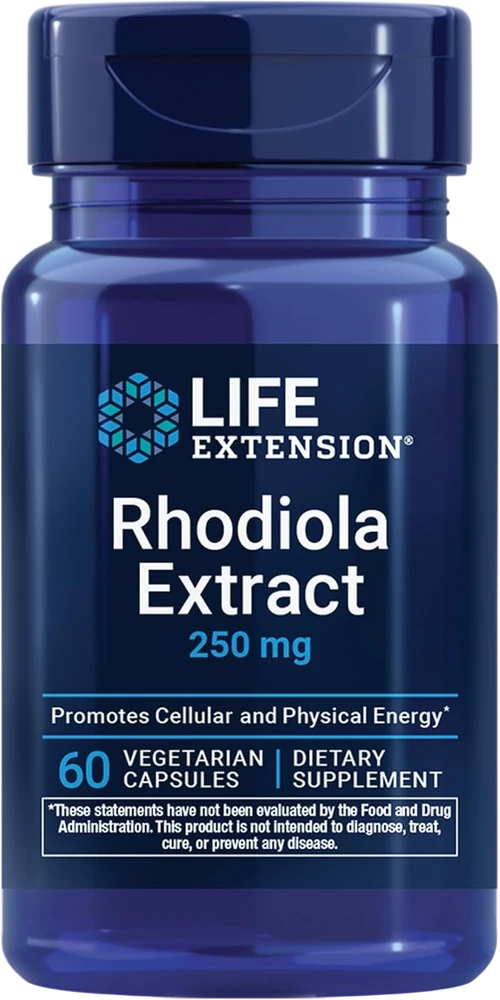
Best Overall — Clinical-Dose Match: Life Extension Rhodiola Extract (3% Rosavins) 250 mg
The only product on this list where the dose per capsule lands squarely in the studied 200-400 mg window with the correct SHR-5-style standardization — you take one or two capsules and you are inside the trial range, no math, no overshoot.
~$13~$0.22 per 250 mg capsule
Why it wins: all five scores, pros & cons, full label
- 250 mg per capsule sits dead-center in the 200-400 mg trial window
- Correct 3% rosavins / 1% salidroside profile matching the studied extract
- Established practitioner-facing brand with NSF GMP-registered manufacturing
- Flexible: one capsule for a low dose, two for the upper range
- Label directs 2/day (500 mg total), so a 60-count bottle is only a 30-day supply
- Facility is GMP-registered, but no rhodiola on this list is confirmed as NSF Certified for Sport; Thorne Rhodiola is NSF contents-certified instead
- Standardization
- 3% rosavins / not-less-than 1% salidroside
- Cost per dose
- ~$0.22 per 250 mg (one-cap clinical dose)
- Dose
- 250 mg extract per capsule
- Form
- Veg capsule (root extract)
- Count
- 60 veg capsules
- Testing
- NSF GMP-registered facility, non-GMO, gluten-free
Our take — This is the cleanest match between what you swallow and what the trials actually tested. A single 250 mg capsule hits the clinical window with the right rosavins-to-salidroside ratio, and the price is reasonable even at the label's 2/day. It wins on substance, not sticker price.
 02
 03
 04
 05
 06
 07
 08
 09
Who Wins Which Aspect
Sorted by overall SAC Product Score™ — the official ranking.
| # | Pick | Score | Standardization & Extract Match30% | Dose vs Clinical Range25% | Third-Party Testing20% | Form & Bioavailability10% | Value per Clinical Dose15% | Cost Per Dose | Buy |
|---|---|---|---|---|---|---|---|---|---|
| 01 | | 8.4 | 8.51 | 9.01 | 8.02 | 7.52 | 8.51 | ~$0.22 / 250 mg | Check price |
| 250 mg per capsule sits dead-center in the 200-400 mg trial windowLabel directs 2/day (500 mg total), so a 60-count bottle is only a 30-day supply | |||||||||
| 02 | | 8.0 | 8.51 | 8.02 | 9.01 | 7.52 | 6.0 | ~$0.37 / 100 mg cap | Check price |
| NSF contents-certified (NSF/ANSI 173) — label contents verified, contaminants screened, facility auditedReaching 200-400 mg needs 2-4 capsules, so a 60-count bottle empties in 2-4 weeks | |||||||||
| 03 | | 7.6 | 8.02 | 7.03 | 8.02 | 7.52 | 7.53 | ~$0.27 / 500 mg cap | Check price |
| Correct min 3% rosavins / min 1% salidroside standardization500 mg per capsule overshoots the 200-400 mg trial window | |||||||||
| 04 | | 7.3 | 7.53 | 7.03 | 6.5 | 7.52 | 8.02 | ~$0.25 / 500 mg cap | Check price |
| Standardized, but only to 2.3% rosavins / 0.5% salidroside — below the studied 3/1 profile at the lowest cap price of the standardized setValue brand with thinner sourcing transparency than practitioner lines | |||||||||
| 05 | | 6.9 | 7.53 | 6.5 | 6.0 | 7.03 | 7.53 | ~$0.17 / 600 mg cap | Check price |
| High 5% salidroside concentration — salidroside is the compound some trials favorStandardized to salidroside only, NOT the 3% rosavins / 1% salidroside SHR-5 ratio used in the classic fatigue trials — different chemistry than the studied extract | |||||||||
| 06 | | 6.8 | 8.02 | 6.0 | 6.5 | 6.0 | 6.5 | ~$0.12 / 500 mg cap | Check price |
| Correct 3% rosavin / 1% salidroside SHR-5 ratioAdded black-pepper 'enhanced absorption' claim is unproven for rhodiola specifically — the piperine data comes from curcumin and other compounds | |||||||||
| 07 | | 6.8 | 6.0 | 8.02 | 7.03 | 8.01 | 5.0 | ~$0.43 / ~240 mg cap | Check price |
| Liquid phyto-cap format for potentially faster absorption than powderNOT standardized to a stated rosavins/salidroside percentage — you cannot verify active content, which fails the core standardization axis a data-driven buyer relies on | |||||||||
| 08 | | 5.5 | 4.0 | 5.5 | 6.0 | 7.03 | 7.0 | ~$0.15 / 500 mg cap | Check price |
| Third-party tested, single-ingredient, made in USARatio is inverted (3% salidroside / 1% rosavin) versus the 3% rosavin / 1% salidroside SHR-5 extract used in most human fatigue trials | |||||||||
| 09 | | 4.8 | 6.0 | 4.0 | 5.5 | 4.0 | 3.5 | ~$0.57 / 250 mg tablet | Check price |
| Standardized, but only to 2.3% rosavins / 0.5% salidroside — below the studied 3/1 profileExtended-release is a delivery marketing claim with no rhodiola-specific evidence it outperforms a standard capsule | |||||||||
The Other 8, Ranked
- 02
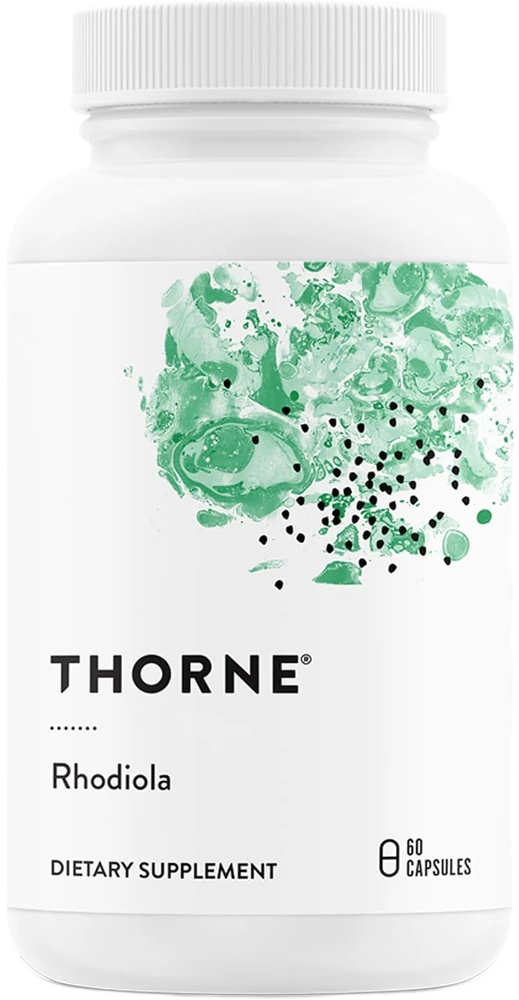
Best Tested — NSF Contents Certified: Thorne Rhodiola
8.0SAC Score™Strong testing credentials: NSF contents-certified (NSF/ANSI 173), which verifies label contents, screens contaminants and audits the facility — and the 100 mg cap lets you titrate precisely to 200, 300, or 400 mg. Not NSF Certified for Sport.
StrongestThird-Party Testing9.01WeakestValue per Clinical Dose6.0- Standardization
- 3% rosavins / 1% salidroside (SHR-5-style ratio)
- Cost per dose
- ~$0.37 per 100 mg cap (~$1.10/day at 300 mg)
- Dose
- 100 mg extract per capsule (take 1-2 per label)
All five scores, pros & cons, full label
What We Like- NSF contents-certified (NSF/ANSI 173) — label contents verified, contaminants screened, facility audited
- Correct 3% rosavins / 1% salidroside profile
- Low 100 mg/cap allows precise titration across the full 200-400 mg range
- Practitioner-grade brand with strong quality reputation
What You Live With- Reaching 200-400 mg needs 2-4 capsules, so a 60-count bottle empties in 2-4 weeks
- Highest real cost-per-dose on the list once you multiply out the capsules
- Not NSF Certified for Sport (nsfsport.com, checked Oct 6, 2026) — tested athletes should check the certifier before buying
- Form
- Capsule (root extract)
- Count
- 60 capsules
- Testing
- NSF contents-certified (NSF/ANSI 173), third-party tested, cGMP
Our take — If independent testing matters most — you want verified label contents and contaminant screening — Thorne is the pick. It loses the top spot only because hitting the clinical dose burns 2-4 capsules a day, making it the most expensive way to get there. Tested athletes: Thorne is not NSF Certified for Sport, so check nsfsport.com before buying any rhodiola. Strong quality, poor dose economics.
- 03
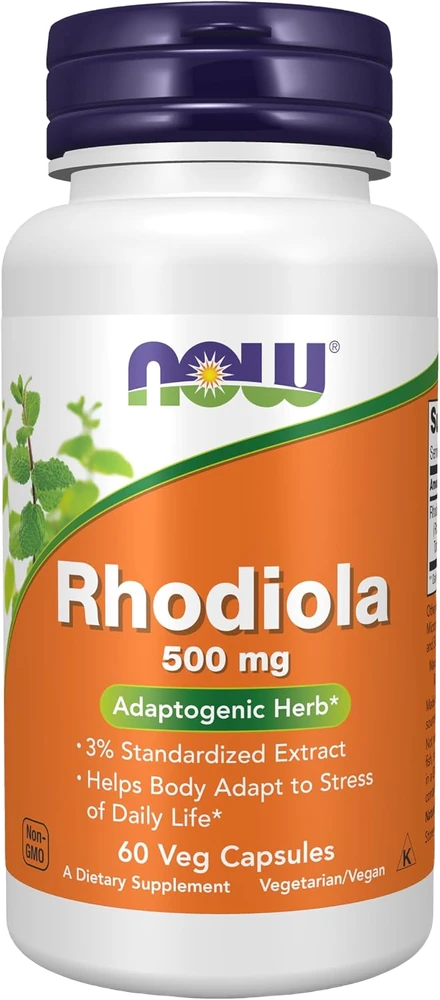
Best Value from a Verifiable Brand: NOW Rhodiola 500 mg
7.6SAC Score™A large, transparent manufacturer with in-house and third-party testing, guaranteed to the min 3% rosavins / min 1% salidroside standard — the safest single-cap-covers-your-day option if you're comfortable at the top of the dose range.
StrongestStandardization & Extract Match8.02WeakestDose vs Clinical Range7.0- Standardization
- Min 3% total rosavins / min 1% salidroside
- Cost per dose
- ~$0.27 per 500 mg cap
- Dose
- 500 mg extract per capsule
All five scores, pros & cons, full label
What We Like- Correct min 3% rosavins / min 1% salidroside standardization
- One of the most verifiable, transparently-manufactured brands in the category
- Single capsule covers a full day — no stacking
- Strong value from a large, accountable company
What You Live With- 500 mg per capsule overshoots the 200-400 mg trial window
- No easy way to take a smaller dose without splitting or emptying the cap
- Form
- Veg capsule (root extract)
- Count
- 60 veg capsules
- Testing
- UL GMP-certified, NPA A-rated facility, in-house + third-party tested
Our take — NOW is the reliable default: a real, testable brand with the correct standardization at a fair price. The only knock is the 500 mg cap, which sails past the studied dose. If you're fine near the upper edge of rhodiola's range, this is the value play from a company you can actually audit.
- 04
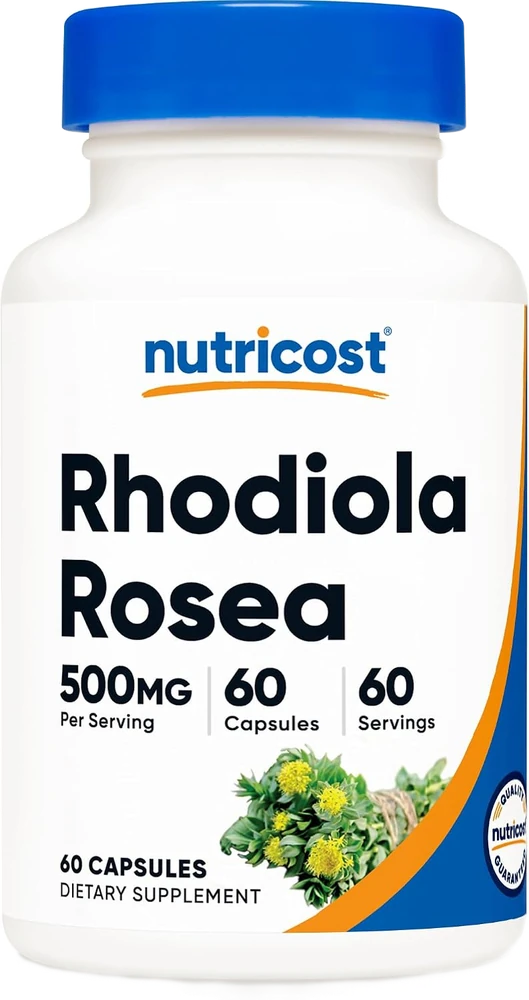
Cheapest Standardized Cap: Nutricost Rhodiola Rosea 500 mg
7.3SAC Score™The lowest per-capsule price among the correctly-standardized options, with ISO-accredited third-party testing and a clean single-ingredient formula — value shopping without abandoning the studied ratio.
StrongestValue per Clinical Dose8.02WeakestThird-Party Testing6.5- Standardization
- 2.3% total rosavins / 0.5% salidroside (label)
- Cost per dose
- ~$0.25 per 500 mg cap
- Dose
- 500 mg extract per capsule
All five scores, pros & cons, full label
What We Like- Standardized, but only to 2.3% rosavins / 0.5% salidroside — below the studied 3/1 profile at the lowest cap price of the standardized set
- ISO-accredited third-party lab testing
- Clean single-ingredient formula, non-GMO and gluten-free
What You Live With- Value brand with thinner sourcing transparency than practitioner lines
- 500 mg per capsule is above the low end of the effective dose
- Form
- Veg capsule (root extract)
- Count
- 60 veg capsules
- Testing
- ISO-accredited third-party tested, GMP, non-GMO, gluten-free
Our take — Nutricost delivers the right extract at the lowest price, and its ISO-accredited testing is more than many budget brands bother with. It ranks just behind NOW because NOW's manufacturing transparency and testing depth are a notch higher for essentially the same money. Still a genuinely good buy for the studied profile.
- 05
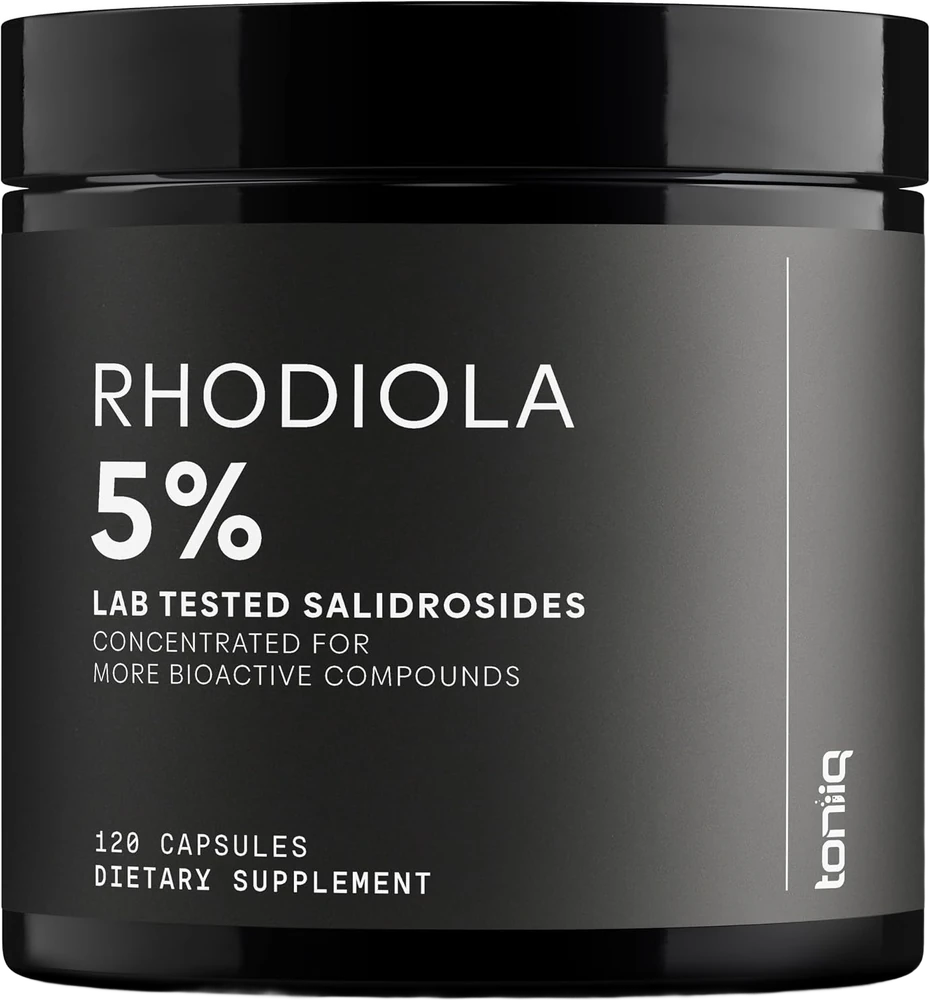
Salidroside-Forward — Off the Studied Profile: Toniiq Triple-Strength Rhodiola Rosea 600 mg
6.9SAC Score™Well-tested and cheap per capsule, but standardized to 5% salidroside only — a deliberately different chemistry from the 3:1 rosavins:salidroside SHR-5 extract used in the classic fatigue trials.
StrongestStandardization & Extract Match7.53WeakestThird-Party Testing6.0- Standardization
- 5% salidroside only (no stated rosavins ratio)
- Cost per dose
- ~$0.17 per 600 mg cap
- Dose
- 600 mg (standardized 5% salidroside)
All five scores, pros & cons, full label
What We Like- High 5% salidroside concentration — salidroside is the compound some trials favor
- Third-party batch tested in a GMP-certified USA facility
- 120-count bottle keeps cost-per-cap low
What You Live With- Standardized to salidroside only, NOT the 3% rosavins / 1% salidroside SHR-5 ratio used in the classic fatigue trials — different chemistry than the studied extract
- 600 mg dose sits above the 200-400 mg trial window
- Form
- Capsule (concentrated extract)
- Count
- 120 capsules
- Testing
- GMP-certified USA facility, third-party batch tested
Our take — Toniiq is a legitimately well-made product, just aimed at a different target. By concentrating salidroside and dropping the rosavins spec, it walks away from the exact extract the fatigue research validated. If you specifically want a salidroside-forward extract it's a fine choice; if you want the studied SHR-5 profile, it isn't it.
- 06
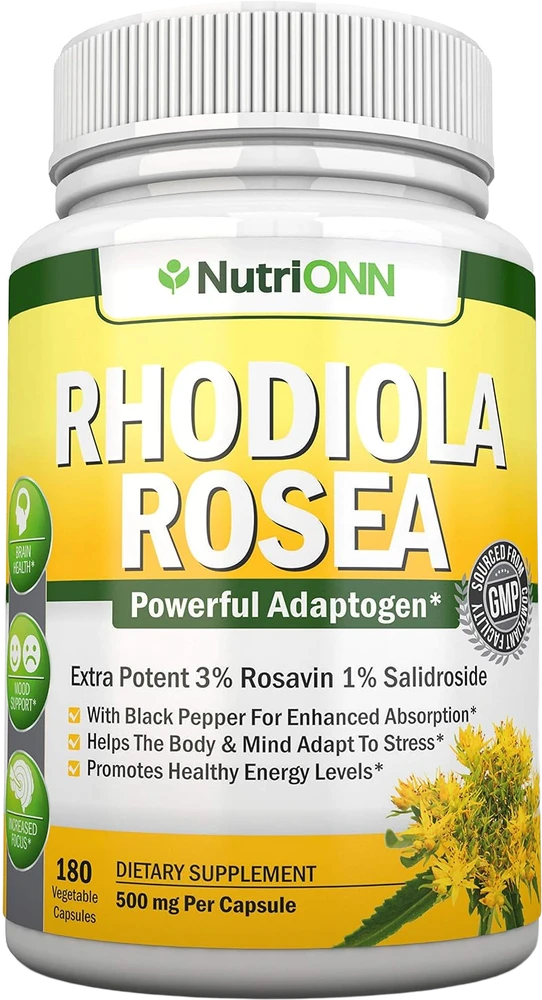
Best Cost-Per-Dose — 180-Count: NutriONN Rhodiola Rosea 500 mg with Black Pepper
6.8SAC Score™A 180-count bottle standardized to the correct SHR-5 ratio gives you the lowest true cost-per-dose here — just ignore the black-pepper absorption marketing, which has no rhodiola-specific evidence.
StrongestStandardization & Extract Match8.02WeakestDose vs Clinical Range6.0- Standardization
- 3% rosavin / 1% salidroside (SHR-5 ratio)
- Cost per dose
- ~$0.12 per 500 mg cap (lowest on list)
- Dose
- 500 mg extract per capsule
All five scores, pros & cons, full label
What We Like- Correct 3% rosavin / 1% salidroside SHR-5 ratio
- 180 capsules = roughly a 6-month supply and the lowest cost-per-dose here
- Vegan capsules, non-GMO, third-party tested
What You Live With- Added black-pepper 'enhanced absorption' claim is unproven for rhodiola specifically — the piperine data comes from curcumin and other compounds
- 500 mg per capsule overshoots the 200-400 mg trial range
- Form
- Vegan capsule + BioPerine (black pepper)
- Count
- 180 vegan capsules
- Testing
- Non-GMO, third-party tested, GMP
Our take — On pure cost-per-dose, NutriONN wins — 180 caps of the right extract for the price of a 60-count bottle. It ranks mid-pack because the BioPerine is a marketing flourish with no rhodiola evidence, the testing disclosure is thinner than the leaders, and the 500 mg cap still overshoots. Buy it for the value math, not the pepper.
- 07
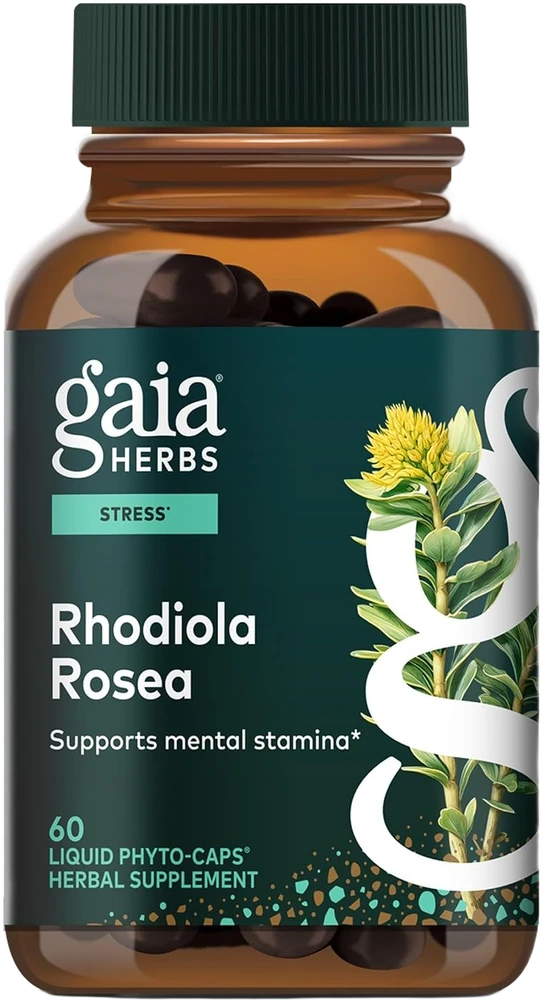
Trusted Brand, Unverifiable Actives: Gaia Herbs Rhodiola Rosea (Liquid Phyto-Caps)
6.8SAC Score™A well-loved herbalist brand with lot-level traceability and a liquid delivery format — but it publishes no rosavins or salidroside percentage, so you literally cannot verify how much active you're getting, which is the whole point of this category.
StrongestDose vs Clinical Range8.02WeakestValue per Clinical Dose5.0- Standardization
- None stated — no guaranteed rosavins/salidroside percentage
- Cost per dose
- ~$0.43 per ~240 mg cap
- Dose
- ~240 mg extract blend per capsule
All five scores, pros & cons, full label
What We Like- Liquid phyto-cap format for potentially faster absorption than powder
- Lot-number traceability via the Meet-Your-Herbs program
- Reputable herbalist brand, vegan, third-party tested for purity
What You Live With- NOT standardized to a stated rosavins/salidroside percentage — you cannot verify active content, which fails the core standardization axis a data-driven buyer relies on
- Most expensive per dose of the standardized-window options
- Form
- Liquid Phyto-Cap (Siberian root extract)
- Count
- 60 vegan liquid caps
- Testing
- Meet-Your-Herbs traceability, third-party tested, vegan
Our take — Gaia is a genuinely trustworthy company and the liquid format has appeal, but it ranks in the bottom third on purpose: with no published rosavins or salidroside content, there is no way to confirm you're getting the studied actives. For a substance whose entire evidence base is defined by its standardization, an unverifiable extract is the one thing this list can't reward.
- 08
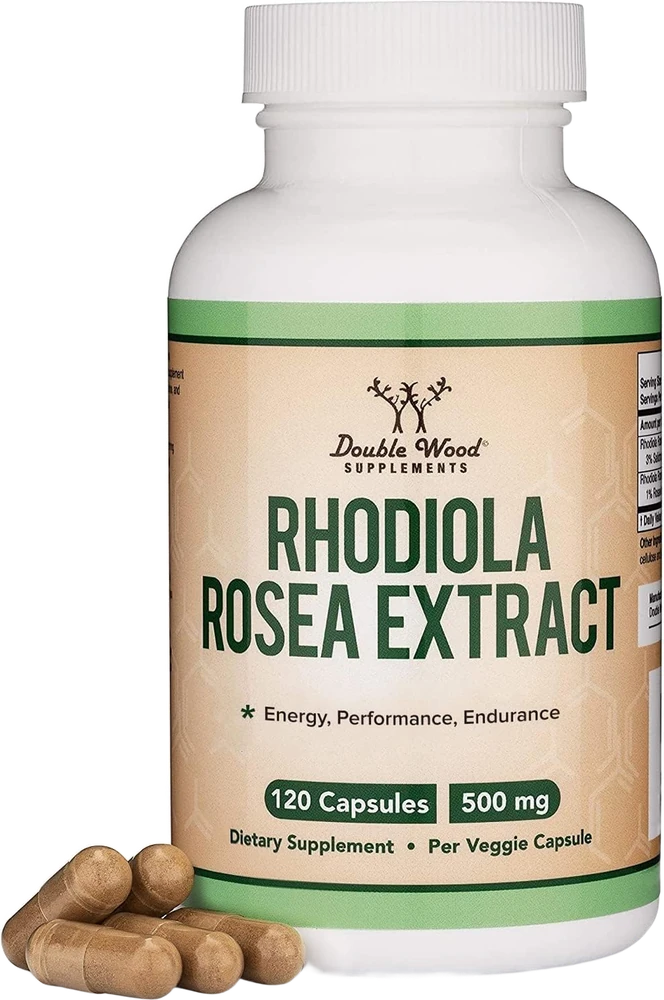
Inverted Ratio — Read the Label: Double Wood Rhodiola Rosea 500 mg
5.5SAC Score™Cheap, third-party tested, and a big 120-count bottle — but the standardization ratio is flipped to 3% salidroside / 1% rosavin, the mirror image of the extract most human trials used.
StrongestForm & Bioavailability7.03WeakestStandardization & Extract Match4.0- Standardization
- 3% salidrosides / 1% rosavins (inverted vs SHR-5)
- Cost per dose
- ~$0.15 per 500 mg cap
- Dose
- 500 mg extract per capsule
All five scores, pros & cons, full label
What We Like- Third-party tested, single-ingredient, made in USA
- 120-count at a low cost-per-cap is strong value
- Vegan capsules, gluten-free
What You Live With- Ratio is inverted (3% salidroside / 1% rosavin) versus the 3% rosavin / 1% salidroside SHR-5 extract used in most human fatigue trials
- 500 mg per capsule overshoots the 200-400 mg trial dose
- Form
- Vegan capsule (root extract)
- Count
- 120 vegan capsules
- Testing
- Third-party tested, gluten-free, made in USA
Our take — On paper the numbers look similar to the leaders, but the ratio is flipped — you get roughly triple the salidroside and a third the rosavins of the studied extract. That's a meaningfully different product than what the fatigue research tested. Good value and testing can't offset being the wrong chemistry for the goal.
- 09
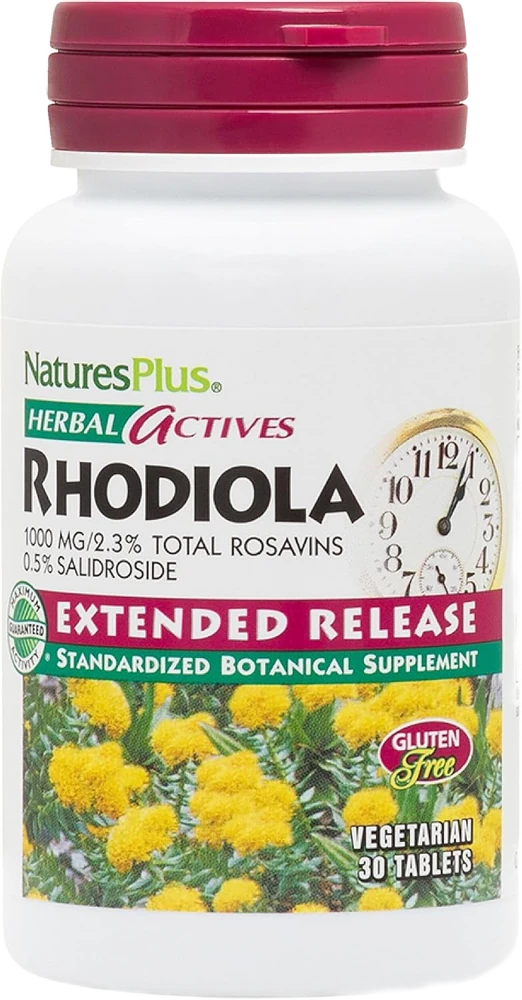
Right Dose, Wrong Value: NaturesPlus Rhodiola Extended Release
4.8SAC Score™A correctly-standardized 250 mg dose that lands right in the trial window — undercut by an extended-release delivery claim with no rhodiola-specific evidence and a tiny 30-tablet bottle that makes every day expensive.
StrongestStandardization & Extract Match6.0WeakestValue per Clinical Dose3.5- Standardization
- 2.3% total rosavins / 0.5% salidroside (label)
- Cost per dose
- ~$0.57 per 250 mg tablet
- Dose
- 250 mg extract per tablet
All five scores, pros & cons, full label
What We Like- Standardized, but only to 2.3% rosavins / 0.5% salidroside — below the studied 3/1 profile
- 250 mg per tablet sits right inside the 200-400 mg trial dose
- Hypoallergenic, vegetarian formulation
What You Live With- Extended-release is a delivery marketing claim with no rhodiola-specific evidence it outperforms a standard capsule
- Only 30 tablets makes cost-per-day among the highest here
- cGMP facility only — no stated independent third-party testing
- Form
- Bilayer extended-release tablet
- Count
- 30 tablets
- Testing
- cGMP, hypoallergenic, vegetarian (no stated third-party testing)
Our take — The extract and dose are right, which is why it isn't lower. But you pay a premium for an extended-release format that has no rhodiola evidence behind it, in a 30-count bottle that runs out in a month. Good chemistry wrapped in a weak value-and-testing package.
Rhodiola Rosea In Two Short Lessons
Look for 3% rosavins and 1% salidroside.
The trials used a standardized SHR-5 extract with that profile. Buy a different chemistry and you are extrapolating past the data.
Dose 200-400 mg a day.
That is the studied range; four weeks of SHR-5 improved stress-related fatigue in a placebo-controlled trial (Olsson 2009).
Do not expect a stimulant.
Rhodiola reduces mental fatigue under stress; it is not an energy surge. Systematic reviews call the evidence promising rather than proven.
Human trials of standardized SHR-5 / WS 1375 Rhodiola rosea extract at 200-400 mg/day (Olsson 2009; Darbinyan 2000; Spasov 2000; Edwards 2012), summarized in systematic reviews by Hung 2011 and Ishaque 2012.
Rhodiola's entire evidence base rests on a specific extract chemistry, so our score is weighted toward matching it. We reward products standardized to the studied 3% rosavins / 1% salidroside (SHR-5) ratio, doses that fall inside the 200-400 mg trial range, and verifiable third-party testing. Bioavailability format is a minor factor, and price is a deliberate tie-breaker only — capped at 15% and never a route to a top ranking. A cheap bottle of the wrong extract is not a bargain; it is the wrong product.
Standardization & Extract Match · 30%
Does the label guarantee the studied 3% rosavins / 1% salidroside SHR-5 ratio? Products with no stated standardization, an inverted ratio, or a salidroside-only spec lose heavily here — this is the axis that separates studied chemistry from generic 'root extract.'
Dose vs Clinical Range · 25%
Trials used roughly 200-400 mg/day. We reward products that let you hit that window cleanly. A 500-600 mg single cap overshoots; a 100 mg cap requires stacking multiple pills to get there.
Third-Party Testing · 20%
Independent verification of identity, potency, and contaminants. NSF contents certification (NSF/ANSI 173) and NSF Certified for Sport sit at the top; ISO/GMP third-party batch testing is solid; 'cGMP facility' with no stated independent testing is the floor.
Form & Bioavailability · 10%
Capsule vs liquid phyto-cap vs extended-release. A minor factor — rhodiola's actives are reasonably absorbed from standard capsules, and delivery claims rarely have rhodiola-specific evidence.
Value per Clinical Dose · 15%
Cost to actually reach a 200-400 mg daily dose across the bottle's real supply length — not sticker price. Capped tie-breaker only; it can move a product within a tier but never lift the wrong extract to the podium.
The bottom line
Want the studied extract at the studied dose? Buy Life Extension.
Its 250 mg capsule is the only product that puts the correct 3% rosavins / 1% salidroside ratio squarely inside the 200-400 mg trial window without stacking pills or overshooting. It's the closest thing on the market to 'the extract from the studies, at the dose from the studies.'
Testing is non-negotiable? Pay up for Thorne.
Thorne Rhodiola is NSF contents-certified (NSF/ANSI 173), an independent check that the label matches the capsule. It is not NSF Certified for Sport, so tested athletes should check nsfsport.com before buying any rhodiola here. You'll spend the most per dose because you need 2-4 of the 100 mg caps, but you get precise titration.
Skip rhodiola entirely if you want a stimulant.
The honest read of the data is that rhodiola blunts stress-related mental fatigue in small trials — it does not deliver caffeine-like energy. If your goal is an acute lift, this is the wrong shelf; if your goal is steadier resilience under chronic stress, start with a standardized SHR-5-style product at 200-400 mg and give it a few weeks.
Quick Answers
What is the best rhodiola rosea pick overall?
Life Extension Rhodiola Extract (3% Rosavins) 250 mg by Life Extension is our #1 pick (SAC score 8.4/10). This is the cleanest match between what you swallow and what the trials actually tested. A single 250 mg capsule hits the clinical window with the right rosavins-to-salidroside ratio, and the price is reasonable even at the label's 2/day. It wins on substance, not sticker price.
What is the best budget option?
NOW Rhodiola 500 mg at ~$16. NOW is the reliable default: a real, testable brand with the correct standardization at a fair price. The only knock is the 500 mg cap, which sails past the studied dose. If you're fine near the upper edge of rhodiola's range, this is the value play from a company you can actually audit.
How much do these picks cost?
Across our ranked picks, prices run from about $13 to $26 — exact price and cost per serving are listed on every pick card above.
How were these picks ranked?
Rhodiola's entire evidence base rests on a specific extract chemistry, so our score is weighted toward matching it. We reward products standardized to the studied 3% rosavins / 1% salidroside (SHR-5) ratio, doses that fall inside the 200-400 mg trial range, and verifiable third-party testing. Bioavailability format is a minor factor, and price is a deliberate tie-breaker only — capped at 15% and never a route to a top ranking. A cheap bottle of the wrong extract is not a bargain; it is the wrong product.
Every Claim Ranked Above Traces Back To One Of These
6 peer-reviewed sources, each linked to PubMed
- [1] Olsson EM, von Schéele B, Panossian AG. A randomised, double-blind, placebo-controlled, parallel-group study of the standardised extract SHR-5 of the roots of Rhodiola rosea in the treatment of subjects with stress-related fatigue. Planta Med. 2009;75(2):105-112. PMID 19016404 — A randomised, double-blind, placebo-controlled, parallel-group study of the standardised extract SHR-5 of the roots of Rhodiola rosea in the treatment of subjects with stress-related fatigue. Four weeks of standardized SHR-5 extract improved stress-related fatigue and attenuated the cortisol response to awakening versus placebo — the core RCT behind the dose and extract this list ranks against.
- [2] Darbinyan V, Kteyan A, Panossian A, et al. Rhodiola rosea in stress induced fatigue--a double blind cross-over study of a standardized extract SHR-5 with a repeated low-dose regimen on the mental performance of healthy physicians during night duty. Phytomedicine. 2000;7(5):365-371. PMID 11081987 — Rhodiola rosea in stress induced fatigue--a double blind cross-over study of a standardized extract SHR-5 with a repeated low-dose regimen on the mental performance of healthy physicians during night duty. A low-dose SHR-5 regimen reduced mental-fatigue and improved performance in night-shift physicians, demonstrating an anti-fatigue rather than stimulant effect.
- [3] Spasov AA, Wikman GK, Mandrikov VB, Mironova IA, Neumoin VV. A double-blind, placebo-controlled pilot study of the stimulating and adaptogenic effect of Rhodiola rosea SHR-5 extract on the fatigue of students. Phytomedicine. 2000;7(2):85-89. PMID 10839209 — A double-blind, placebo-controlled pilot study of the stimulating and adaptogenic effect of Rhodiola rosea SHR-5 extract on the fatigue of students during a stressful examination period. Students taking SHR-5 during exams showed improved mental fatigue, well-being, and test scores versus placebo, supporting use for stress-related fatigue.
- [4] Hung SK, Perry R, Ernst E. The effectiveness and efficacy of Rhodiola rosea L.: a systematic review of randomized clinical trials. Phytomedicine. 2011;18(4):235-244. PMID 21036578 — The effectiveness and efficacy of Rhodiola rosea L.: a systematic review of randomized clinical trials. Systematic review found encouraging RCT evidence for fatigue and mental performance but judged the trials small and methodologically limited, urging cautious interpretation.
- [5] Ishaque S, Shamseer L, Bukutu C, Vohra S. Rhodiola rosea for physical and mental fatigue: a systematic review. BMC Complement Altern Med. 2012;12:70. PMID 22643043 — Rhodiola rosea for physical and mental fatigue: a systematic review. Reviewed 11 trials and concluded evidence for rhodiola in fatigue is suggestive but inconsistent, with study quality and standardization varying widely.
- [6] Edwards D, Heufelder A, Zimmermann A. Therapeutic effects and safety of Rhodiola rosea extract WS 1375 in subjects with life-stress symptoms--results of an open-label study. Phytother Res. 2012;26(8):1220-1225. PMID 22228617 — Therapeutic effects and safety of Rhodiola rosea extract WS 1375 in subjects with life-stress symptoms--results of an open-label study. Standardized extract WS 1375 at 400 mg/day reduced self-reported stress and fatigue symptoms over 4 weeks with good tolerability in an open-label trial.
Affiliate disclosure: every Amazon link uses our Associates tag (superachieverclub-20). We earn a small commission at no cost to you; it funds independent reviews. We never accept payment to change a ranking.