
NaturesPlus Rhodiola Extended Release Review
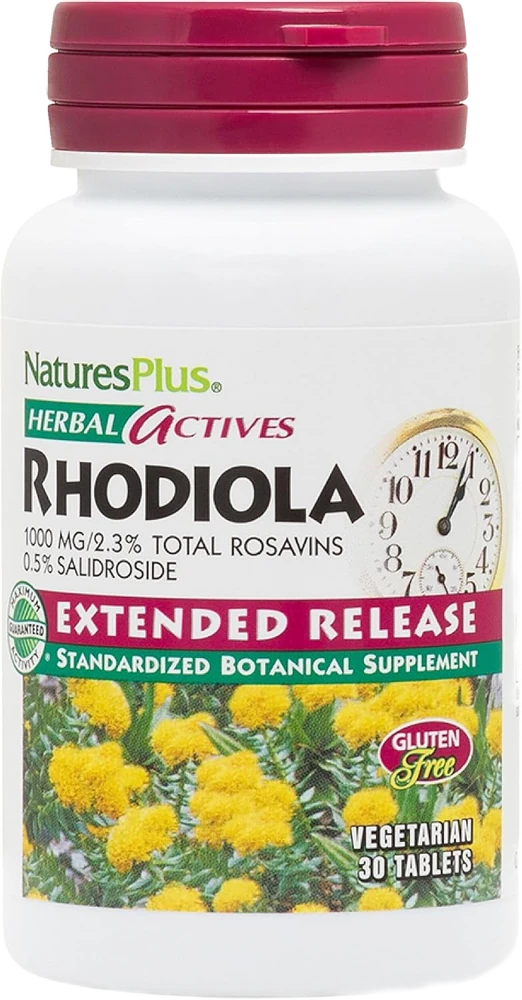 #9 of 9 · Right Dose, Wrong Value✓ Label verified · Supplement Facts read Aug 27, 2026
Real retailer photo, cut out. Label unedited.
Skip it. Oversized dose, weak ratio, bad value. The label prints 1000 mg of Rhodiola root per tablet — well above the 200-400 mg trial window, with no extract ratio stated — and the 2.3% rosavins / 0.5% salidroside standardization sits below the 3%/1% SHR-5 profile the fatigue trials used.
~$17~$0.57 per 250 mg tablet
Why It Scores 4.8 — And The Label Line Behind Each Number
Standardization & Extract Match
30% of scoreThe label guarantees 2.3% total rosavins and 0.5% salidroside — real standardization, but roughly a quarter to a half below the 3%/1% SHR-5 profile the trials used. Products that guarantee the full studied ratio (Life Extension, NOW) outrank it on this axis.
- Standardization
- 2.3% total rosavins / 0.5% salidroside (label)
Dose vs Clinical Range
25% of scoreThe label prints 1000 mg of Rhodiola root per tablet — well above the 200-400 mg window the SHR-5 fatigue trials used — and NaturesPlus states no extract ratio, so this can't be confirmed as equivalent to the concentrated extract those trials tested. The tablet does clearly quantify 23 mg rosavins and 5 mg salidroside, but the total printed dose is a mismatch with the studied range, not a match.
- Dose
- 1000 mg Rhodiola root/tablet (23 mg rosavins / 5 mg salidroside; extract ratio not stated on the label)
Third-Party Testing
20% of scorecGMP, hypoallergenic and vegetarian, but little in the way of published third-party testing or COA transparency relative to NOW or Thorne.
- Testing
- cGMP, hypoallergenic, vegetarian
Form & Bioavailability
10% of scoreA bilayer extended-release tablet. The extended-release delivery is not something the trials used or validated — there is no rhodiola-specific evidence it beats a standard capsule, and you pay a premium for it.
- Form
- Bilayer extended-release tablet
Value per Clinical Dose
15% of scoreOnly 30 tablets at ~$17 makes this among the most expensive per day on the list. The extended-release premium buys a benefit that isn't evidenced for rhodiola.
- Count
- 30 tablets (~30-day supply)
- Cost per dose
- ~$0.57/tablet
Label verified. Every figure read from the Supplement Facts photo, Aug 27, 2026.
Marketing Claims Vs. Reality
Extended-release delivery improves rhodiola's effect
The classic fatigue trials used standard extract capsules, not extended-release tablets. There is no rhodiola-specific evidence that a timed-release format outperforms a normal cap (Darbinyan 2000, PMID 11081987).
The printed dose falls within the clinically studied 200-400 mg range
The label prints 1000 mg of Rhodiola root per tablet — well above the 200-400 mg range used across the SHR-5 fatigue trials — and states no extract ratio, so it isn't confirmed as equivalent to the concentrated extract those trials tested (Olsson 2009, PMID 19016404).
What Our Test Actually Found
Correction: the label prints 1000 mg per tablet, not 250 mg
An earlier version of this review said this tablet delivers 250 mg of Rhodiola extract, inside the 200-400 mg trial window. The Supplement Facts panel reads 1,000 mg Rhodiola (Rhodiola rosea root) per tablet, standardized to 23 mg rosavins (2.3%) and 5 mg salidroside (0.5%) — well above that window, with no extract ratio stated. We re-read the label on Sep 7, 2026 and corrected the dose figure throughout this review, including the Dose vs Clinical Range score.
Oversized dose, wrong economics
The label's 1000 mg per tablet is well above the 200-400 mg trial window, with no extract ratio disclosed, and NaturesPlus wraps it in a costlier extended-release format and a 30-count bottle — so you pay a premium for a dose that isn't confirmed to match what the trials actually tested.
Extended release is a delivery claim, not a proven benefit
Timed-release can matter for some drugs, but rhodiola's trials never tested it. Absent that evidence, the format is a marketing differentiator, not a reason to pay a premium.
Full analysis: all pros & cons (6), buy if / skip if
- Rosavins (23 mg) and salidroside (5 mg) per tablet are clearly quantified on the label
- Standardized — but to 2.3% rosavins / 0.5% salidroside, below the studied 3/1 profile
- cGMP, hypoallergenic, vegetarian formulation
- 1000 mg per tablet is well above the 200-400 mg trial window, with no extract ratio disclosed
- Extended-release delivery has no rhodiola-specific evidence it helps
- Only 30 tablets — among the worst cost-per-day on the list
- Rosavins (23 mg) and salidroside (5 mg) per tablet are clearly quantified on the label
- cGMP, hypoallergenic, vegetarian formulation
- 1000 mg per tablet is well above the 200-400 mg trial window, with no extract ratio disclosed
- Standardized to 2.3% rosavins / 0.5% salidroside — below the studied 3/1 profile
- Extended-release delivery has no rhodiola-specific evidence it helps
- Only 30 tablets — among the worst cost-per-day on the list
The label prints 1000 mg of Rhodiola root per tablet — well above the 200-400 mg trial window, with no extract ratio stated — and the 2.3% rosavins / 0.5% salidroside standardization sits below the 3%/1% SHR-5 profile the fatigue trials used. Add an extended-release format with no rhodiola-specific evidence and a 30-count bottle at a steep price-per-day, and there's little here to recommend over a plainly-dosed, trial-matched alternative.
NaturesPlus's dose runs far hotter than we first reported: the label prints 1000 mg of Rhodiola root per tablet, not 250 mg — well above the 200-400 mg trial window — and NaturesPlus states no extract ratio, so it isn't confirmed as equivalent to the concentrated extract the trials used (we originally listed 250 mg; corrected 7 Sep 2026). It does guarantee 2.3% total rosavins and 0.5% salidroside, BELOW the 3%/1% SHR-5 profile the fatigue trials used (we originally repeated the 3/1 figure; the bottle does not back it — corrected 27 Aug 2026). Add the bilayer 'extended release' with no rhodiola-specific evidence and ~$17 for 30 tablets, and the value math stays among the worst here.
Oversized dose, hard to justify the price

The label's 1000 mg per tablet runs well past the 200-400 mg trial window, with no extract ratio to confirm it's comparable to the trials' concentrated extract, and the 2.3%/0.5% ratio sits below the 3%/1% SHR-5 profile those trials used. Life Extension delivers a plainly-dosed 250 mg tablet at the studied ratio for roughly half the cost-per-day, without the unproven extended-release format.
If This Doesn’t Fit — Try These
 01
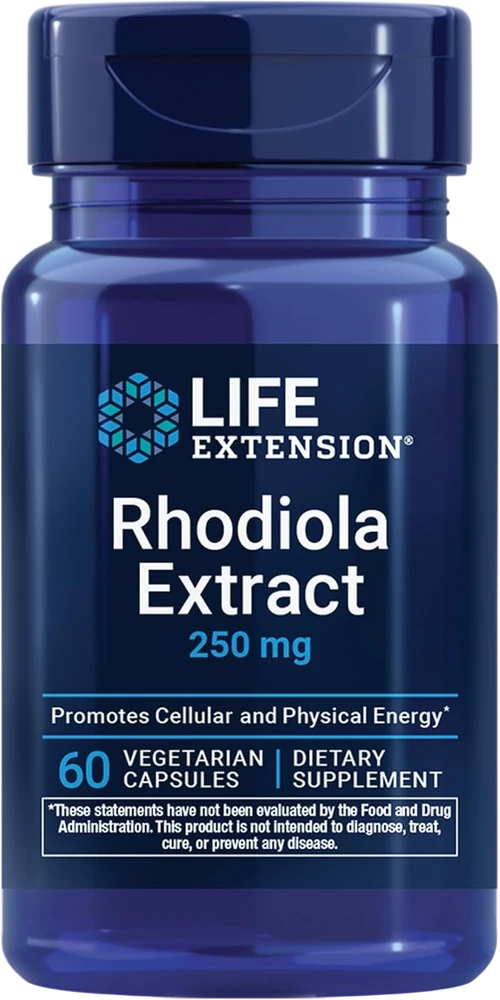
Life Extension Rhodiola 250 mg
This is the cleanest match between what you swallow and what the trials actually tested.
 02
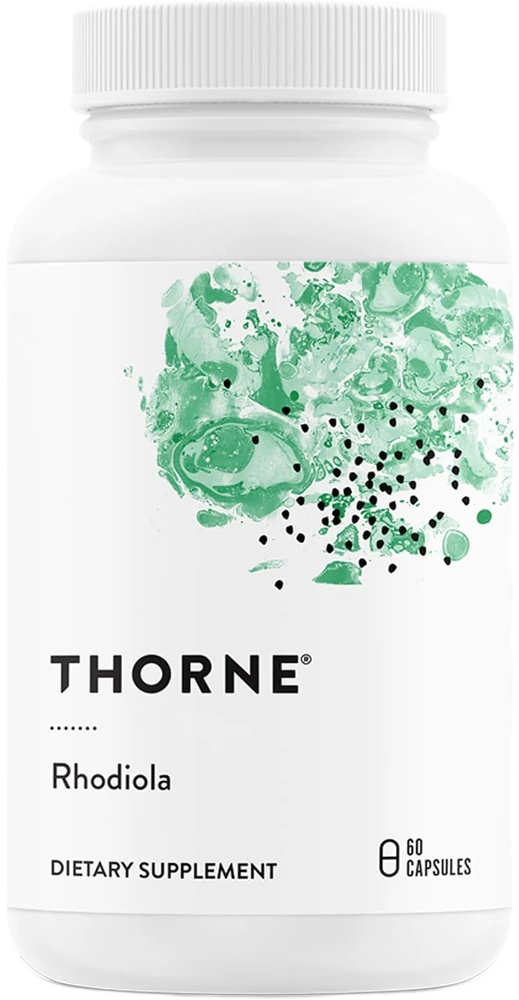
Thorne Rhodiola
If independent testing matters most — you want verified label contents and contaminant screening — Thorne is the pick.
Quick Answers
Is extended-release better for rhodiola?
There's no evidence it is. Rhodiola's trials used ordinary capsules, so the timed-release format is an unproven differentiator you're paying extra for.
Why is it ranked below cheaper 500 mg caps?
The label's 1000 mg dose actually overshoots the 200-400 mg trial window further than a 500 mg product would, and the 30-count bottle plus extended-release premium make the cost-per-day high — both push the value score down.
Sources & Further Reading
2 peer-reviewed sources, each linked to PubMed
- [1] Darbinyan V, Kteyan A, Panossian A, et al. Rhodiola rosea in stress induced fatigue--a double blind cross-over study of a standardized extract SHR-5. Phytomedicine. 2000;7(5):365-371. PMID 11081987 — Rhodiola rosea in stress induced fatigue — a double blind cross-over study of a standardized extract SHR-5 with a repeated low-dose regimen on the mental performance of healthy physicians during night duty. Standard (non-timed-release) SHR-5 capsules reduced stress fatigue, the format the evidence base actually rests on.
- [2] Olsson EM, von Schéele B, Panossian AG. A randomised, double-blind, placebo-controlled, parallel-group study of the standardised extract SHR-5 of the roots of Rhodiola rosea in the treatment of subjects with stress-related fatigue. Planta Med. 2009;75(2):105-112. PMID 19016404 — A randomised, double-blind, placebo-controlled, parallel-group study of the standardised extract SHR-5 of the roots of Rhodiola rosea in the treatment of subjects with stress-related fatigue. Effective doses fell in the low-hundreds of mg — well below this product's printed 1000 mg per tablet.
Affiliate disclosure: every Amazon link uses our Associates tag (superachieverclub-20). We earn a small commission at no cost to you; it funds independent reviews. We never accept payment to change a ranking.