
Top 9 Best Greens Powder (2026)
 01 · Best overall✓ Label verified · Supplement Facts read Sep 7, 2026
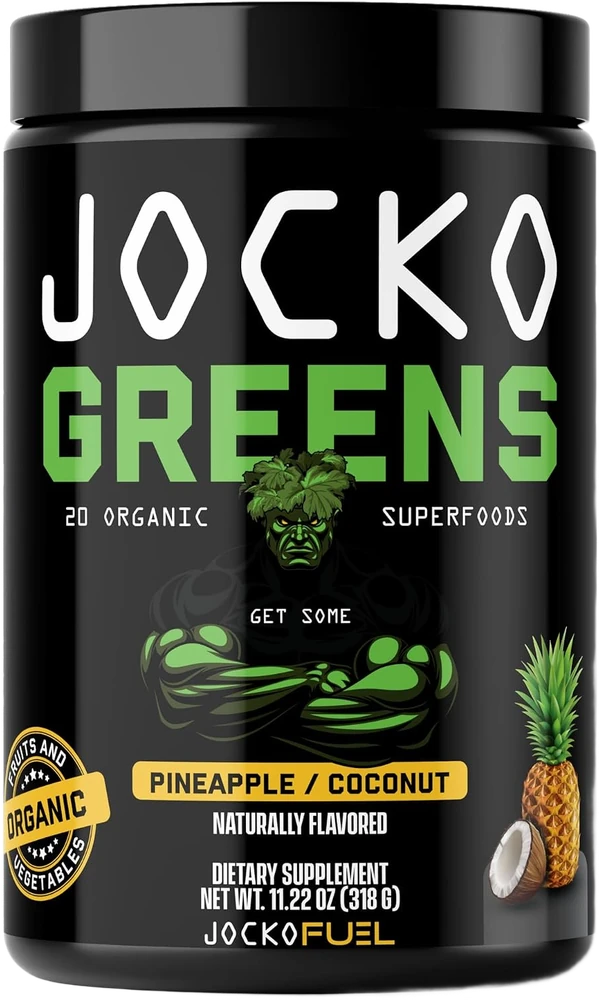
Best overall (most transparent): Jocko Fuel Daily Greens
The transparency pick in a category built on proprietary blends — the listing states the exact amount of each of its 23 organic greens (explicitly "no more proprietary blends") and carries the highest disclosed probiotic count here at 9 billion CFU.
$50 / 30 servings$1.67 / serving
Why it wins: all five scores, pros & cons, full label
- Exact per-ingredient amounts disclosed — the listing explicitly rejects proprietary blends
- 9 billion CFU probiotics plus digestive enzymes — the strongest stated gut support in this lineup
- Caffeine-free adaptogen stack (ashwagandha, milk thistle, rhodiola), no artificial sweeteners
- Premium price at about $1.67 per serving
- Pina-colada flavor is polarizing if you want a neutral greens taste
- No NSF or USP certification stated on the listing
- Greens / superfoods
- 23 organic greens & superfoods, per-ingredient amounts disclosed
- Probiotics
- 9 billion CFU per serving + digestive enzymes
- Extras
- Caffeine-free adaptogens: ashwagandha, milk thistle, rhodiola
- Sweetener
- Natural pineapple-coconut flavor, no artificial sweeteners
- Testing
- No NSF/USP certification stated on the listing

Our take — If the thing that bothers you most about greens powders is that you can never tell how much of anything you're actually getting, Jocko Fuel is the answer: it states the exact quantity of each of its 23 organic greens and carries the highest disclosed probiotic count here at 9 billion CFU. You pay a premium for that honesty and you have to tolerate a polarizing pineapple-coconut flavor, and it isn't NSF-certified — but for a transparency-first ranking, the most transparent label in the category is the right #1. Treat it as veggie-gap insurance, not a vegetable replacement.
 02
 03
 04
 05
 06
 07
 08
 09
Who Wins Which Aspect
Sorted by overall SAC Product Score™ — the official ranking.
| # | Pick | Score | Label transparency30% | Active content25% | Third-party testing & safety record20% | Value per serving15% | Taste & mixability10% | Cost Per Dose | Buy |
|---|---|---|---|---|---|---|---|---|---|
| 01 | | 9.2 | 10.01 | 9.72 | 8.5 | 7.5 | 9.02 | $1.67 / serving | Check price |
| Exact per-ingredient amounts disclosed — the listing explicitly rejects proprietary blendsPremium price at about $1.67 per serving | |||||||||
| 02 | | 8.9 | 8.52 | 9.81 | 10.01 | 6.5 | 9.02 | $2.47–$3.30 / serving | Check price |
| NSF International third-party certification stated on the listing — rare in this categoryMost expensive pick: $74 Amazon list / $79 subscription / $99 one-time DTC (about $2.47–$3.30 per serving) | |||||||||
| 03 | | 8.3 | 7.53 | 8.5 | 9.52 | 8.53 | 7.5 | $1.30 / serving | Check price |
| USDA Organic, Certified Vegan and Non-GMO; the brand's official page also states NSF Contents CertifiedGrassy, unsweetened taste — the trade-off for a no-stevia label | |||||||||
| 04 | | 7.5 | 7.0 | 7.0 | 8.5 | 8.0 | 7.0 | $1.10 / serving | Check price |
| USDA Organic AND a per-batch third-party-testing claim, both stated on the listingProbiotic CFU count not disclosed on the listing | |||||||||
| 05 | | 7.4 | 6.5 | 6.5 | 9.03 | 7.5 | 9.02 | $1.61 / serving | Check price |
| USDA Organic (CCOF) and third-party tested, both stated on the listing28 servings (not 30) at about $1.61 per serving — pricier than its blend depth suggests | |||||||||
| 06 | | 7.3 | 6.5 | 6.5 | 8.0 | 10.01 | 6.0 | $0.90 / serving | Check price |
| Lowest cost per serving here at about $0.90 ($26.99 for 30 servings DTC)Classic grassy taste — the original flavor is unsweetened and earthy | |||||||||
| 07 | | 7.1 | 3.0 | 9.53 | 8.0 | 9.02 | 9.02 | $1.50 / serving | Check price |
| 91 ingredients across 5 named blends — the broadest stack here under $2 per servingBlend-level disclosure on the big complexes, not per-ingredient amounts | |||||||||
| 08 | | 6.8 | 3.0 | 8.0 | 7.5 | 9.02 | 10.01 | $1.13 / serving | Check price |
| Repeatedly the category's taste benchmark — easy daily compliance for greens skepticsProprietary blends: no per-ingredient doses and no probiotic CFU count stated | |||||||||
| 09 | | 6.6 | 5.0 | 7.5 | 7.5 | 6.0 | 8.03 | $1.72 / serving | Check price |
| Broadest single-scoop variety here: 50+ superfoods spanning greens, mushrooms, adaptogens and turmericProprietary blends hide individual doses — 50+ ingredients in one scoop means most are sprinkles | |||||||||
The Other 8, Ranked
- 02
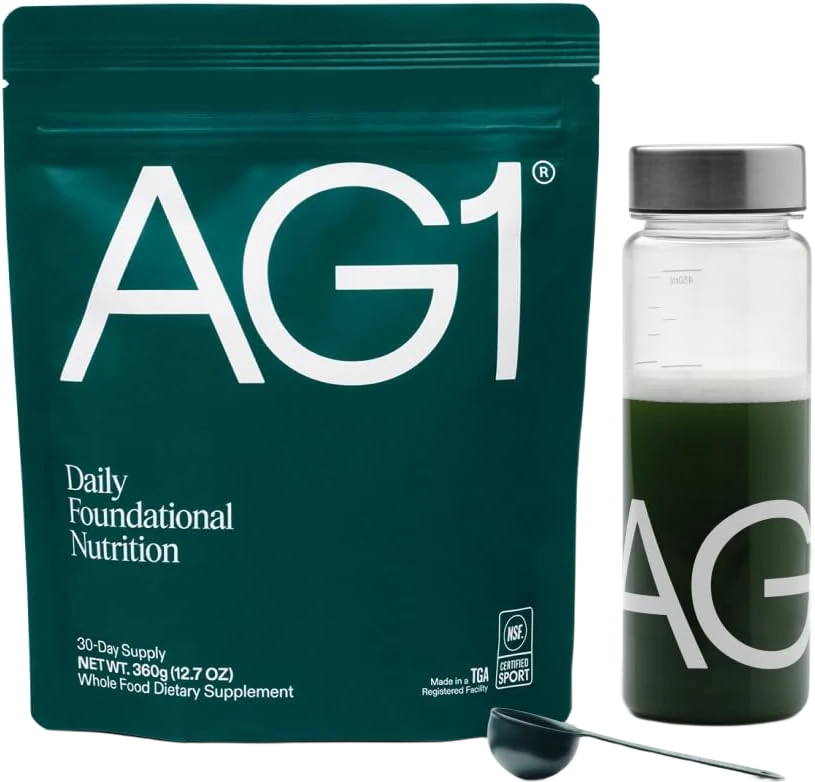
Best all-in-one (most tested): AG1 (Athletic Greens)
8.9SAC Score™The premium all-in-one benchmark: a multivitamin, 7.2B CFU probiotic and superfood blend in one NSF-certified scoop — the product every other greens powder is measured against, and the only one here with its own published trial.
StrongestThird-party testing & safety record10.01WeakestValue per serving6.5- Ingredients
- 75+ vitamins, minerals & superfoods in one scoop
- Probiotics
- 7.2 billion CFU two-strain probiotic (disclosed)
- Testing
- NSF International certified (listing: tested at 95× industry standard)
All five scores, pros & cons, full label
What We Like- NSF International third-party certification stated on the listing — rare in this category
- Replaces a multivitamin, probiotic and greens scoop in one (75+ ingredients, 7.2B CFU disclosed)
- The only product here with its own published trial (4-week microbiome + tolerability RCT)
What You Live With- Most expensive pick: $74 Amazon list / $79 subscription / $99 one-time DTC (about $2.47–$3.30 per serving)
- Core superfood complexes still disclosed at blend level, not fully per-ingredient
- Subscription-first DTC model; one-time buyers pay a steep premium
- Disclosure
- Partial — CFU & mushroom complex stated; core blends at blend level
- Diet
- Vegan, keto-friendly, <1g sugar
Our take — AG1 is the category's reference product for a reason: NSF-certified, 75+ ingredients, a disclosed 7.2 billion CFU probiotic, and the only greens powder here with its own published trial (a short, industry-funded microbiome study, not a hard-outcome efficacy trial — read it for what it is). What you're really buying is the testing pedigree and the all-in-one convenience, and you pay dearly for it at up to $3.30 a serving. It loses the top slot only because its core blends are still disclosed at blend level while Jocko states every dose. For a buyer who wants the most-tested scoop and treats price as secondary, this is the one.
- 03
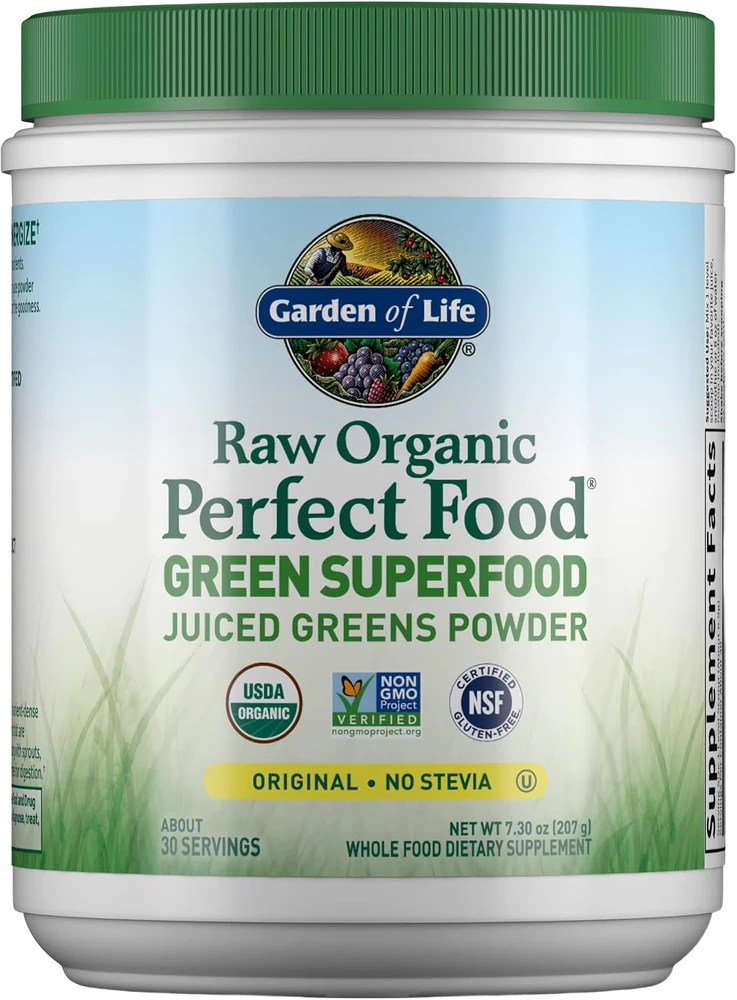
Best certified-organic whole-food: Garden of Life Raw Organic Perfect Food Green Superfood
8.3SAC Score™The certified-organic whole-food purist's pick — actual juiced-and-cold-dried farm greens with a named, CFU-quantified probiotic strain (DE111, 250M) and zero stevia, instead of flavored filler.
StrongestThird-party testing & safety record9.52WeakestLabel transparency7.5- Greens
- Juiced (not whole-leaf) greens, sprouts & vegetable juices, cold-dried
- Certifications
- USDA Organic, Certified Vegan, Non-GMO (brand page adds NSF Contents Certified)
- Probiotics
- Bacillus subtilis DE111, 250 million CFU (stated at expiration)
All five scores, pros & cons, full label
What We Like- USDA Organic, Certified Vegan and Non-GMO; the brand's official page also states NSF Contents Certified
- Juice-powder concentration (brand states 6× more grasses per gram than whole-leaf powders)
- Named probiotic strain with a stated CFU count (DE111, 250M) plus a full enzyme list; stevia-free
What You Live With- Grassy, unsweetened taste — the trade-off for a no-stevia label
- 250M CFU is modest next to Jocko's 9 billion or AG1's 7.2 billion
- Greens amounts shown per juice blend, not per individual grass
- Sweetener
- Stevia-free original — grassy, unsweetened
- Concentration
- Brand states 6× more grasses per gram than whole-leaf powders
Our take — Garden of Life is the pick for buyers who want their greens powder to be actual greens — juiced, cold-dried farm grasses and vegetable juices rather than a flavored blend, with USDA Organic certification (and NSF Contents Certified per the brand page), a named DE111 probiotic strain at a stated 250M CFU, and no stevia. The cost of that purity is a frankly grassy taste and a modest probiotic count next to the leaders. But if certified-organic, whole-food sourcing is what you care about, this is the most credible option here.
- 04
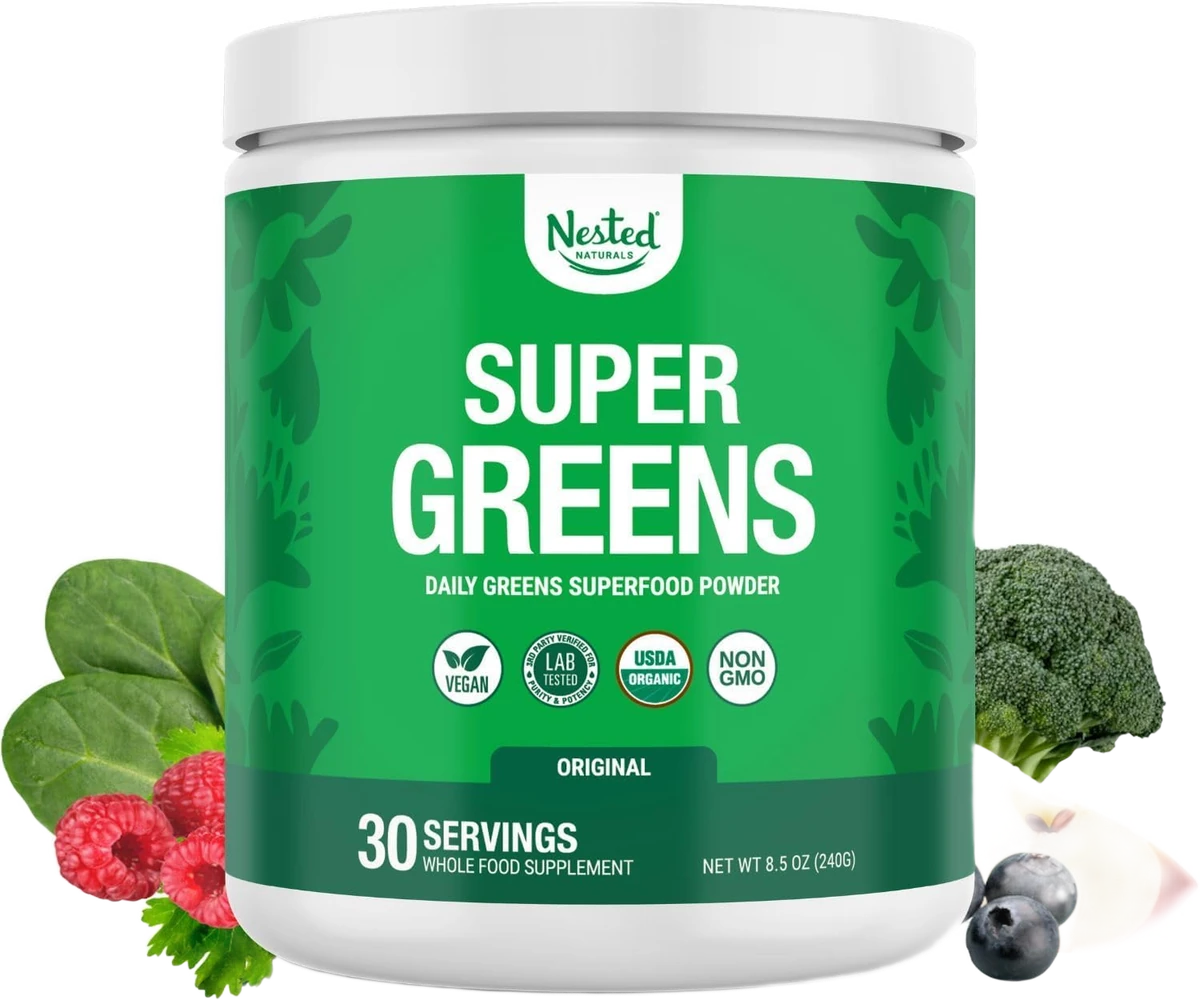
Best budget-organic with testing: Nested Naturals Super Greens
7.5SAC Score™The budget-organic pick with a paper trail — USDA Organic plus a stated per-batch third-party-testing claim, trust features that usually cost $45+, here at about $1.10 a serving.
StrongestThird-party testing & safety record8.5WeakestLabel transparency7.0- Certifications
- Certified USDA Organic, non-GMO, vegan
- Greens
- 20+ whole foods incl. spirulina, wheat & barley grass
- Testing
- Listing states every batch is third-party tested for purity & potency (GMP facility)
All five scores, pros & cons, full label
What We Like- USDA Organic AND a per-batch third-party-testing claim, both stated on the listing
- Fiber, probiotic and enzyme blends for digestion at a budget price (about $1.10 per serving)
- Caffeine-free energy positioning; vegan and non-GMO
What You Live With- Probiotic CFU count not disclosed on the listing
- Blend-level label — individual greens amounts not disclosed
- Smaller brand with less independent review coverage than AG1 or Garden of Life
- Gut support
- Fiber + probiotic + enzyme blends (probiotic CFU not stated)
- Positioning
- Caffeine-free energy; vegan, non-GMO
Our take — Nested Naturals punches above its price on the one axis that matters most for safety: it's USDA Organic and the listing states every batch is third-party tested for purity and potency — the kind of paper trail that usually carries a $45+ price tag, here for about $1.10 a serving. It loses ground on disclosure (no stated probiotic CFU, blend-level greens) and on brand recognition. But for a budget-organic greens with an actual testing claim, it's a quietly strong value — just don't expect the per-ingredient transparency of the leaders.
- 05
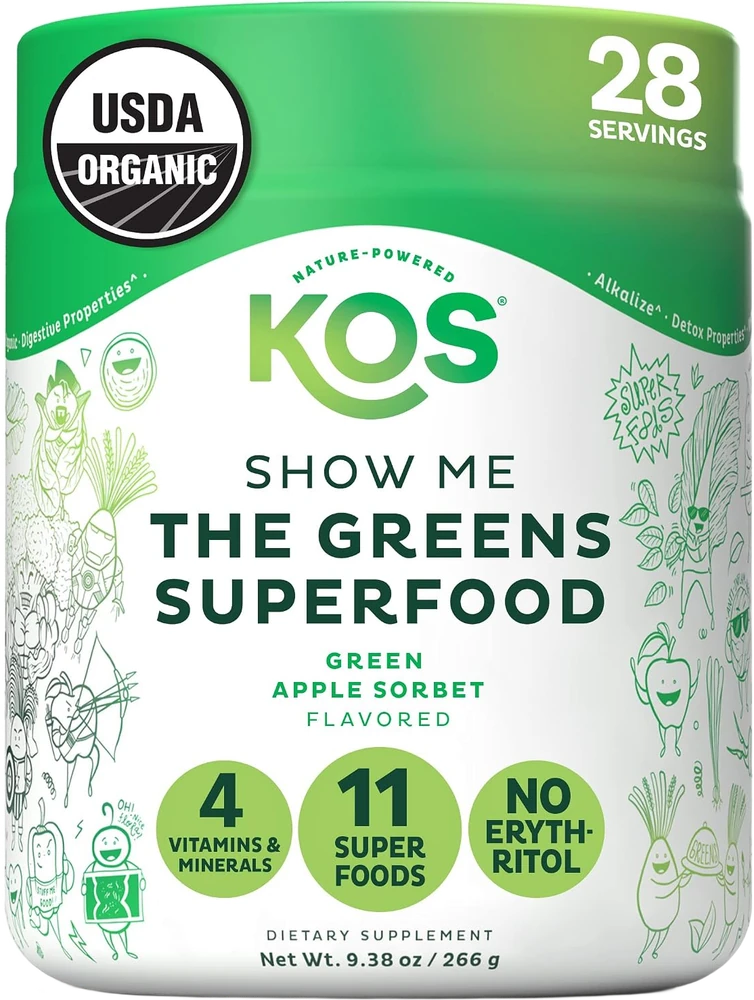
Best organic flavored: KOS Organic Super Greens
7.4SAC Score™The organic flavor-forward option that skips both erythritol and probiotic marketing — green-apple-sorbet taste with prebiotic fiber doing the gut work, for buyers who distrust sweetener loopholes and unstated CFU counts.
StrongestThird-party testing & safety record9.03WeakestLabel transparency6.5- Certifications
- USDA Certified Organic (CCOF), third-party tested per listing, GMP facility
- Gut support
- Prebiotic-based: organic prebiotic fiber + acacia gum (no probiotics claimed)
- Sweetener
- Erythritol-free; green apple, 1g sugar, 30 calories per serving
All five scores, pros & cons, full label
What We Like- USDA Organic (CCOF) and third-party tested, both stated on the listing
- Erythritol-free with real flavor (green apple, 1g sugar) — a rare combination in flavored greens
- Prebiotic fiber and acacia gum approach: regularity support without unverifiable probiotic claims
What You Live With- 28 servings (not 30) at about $1.61 per serving — pricier than its blend depth suggests
- No probiotics or enzymes — a weaker pick if you want a CFU-counted gut stack
- Wheatgrass/oat-grass blend amounts disclosed per blend, not per ingredient
- Disclosure
- Wheatgrass/oat-grass amounts shown per blend, not per ingredient
- Count
- 28 servings (not 30)
Our take — KOS earns its spot on certifications and an honest gut claim: it's USDA Organic and third-party tested, it's erythritol-free with a genuinely good green-apple taste, and it does its digestion work with prebiotic fiber rather than an unverifiable CFU number. The weaknesses are real — no probiotics or enzymes, only 28 servings at a $1.61-per-serving price, and blend-level disclosure. It's the right pick specifically for someone who wants a certified-organic, good-tasting daily greens and distrusts both sweetener loopholes and unstated probiotic claims.
- 06
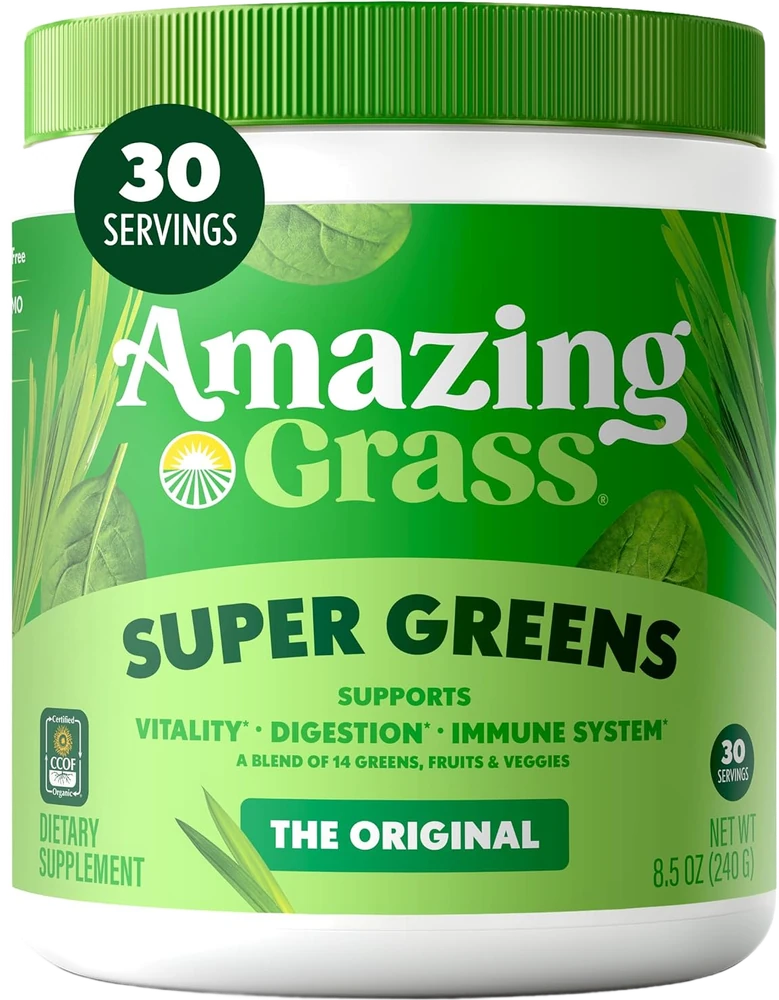
Best value: Amazing Grass Greens Blend Superfood
7.3SAC Score™The value workhorse — a CCOF-certified-organic farm-greens blend with a stated 1 billion CFU probiotic at about $0.90 a serving, the cheapest credible daily veggie-gap insurance in this lineup.
StrongestValue per serving10.01WeakestTaste & mixability6.0- Certifications
- Certified Organic by CCOF, Non-GMO, Kosher, no added sugar
- Greens
- Farm-grown wheat grass base; 2 full servings of fruits & vegetables per scoop
- Probiotics
- 1 billion CFU probiotics for digestive support (stated)
All five scores, pros & cons, full label
What We Like- Lowest cost per serving here at about $0.90 ($26.99 for 30 servings DTC)
- Certified Organic (CCOF), Non-GMO, Kosher and no added sugar — strong certifications for a budget price
- Farm-grown wheatgrass base with a stated 1 billion CFU probiotic; two decades on the market
What You Live With- Classic grassy taste — the original flavor is unsweetened and earthy
- Greens disclosed per blend, not per ingredient
- 1 billion CFU is the floor, not the ceiling, for probiotic support
- Disclosure
- Greens disclosed per blend, not per ingredient
- Track record
- Two decades on the market
Our take — If you just want the cheapest legitimate way to hedge your vegetable gap, Amazing Grass is it: about $0.90 a serving, CCOF-certified organic, non-GMO, kosher, with a stated 1 billion CFU probiotic and a two-decade track record. You give up flavor (it's grassy and unsweetened) and per-ingredient disclosure, and the probiotic count is the floor rather than the ceiling. But for credible certified-organic greens at the lowest price here, nothing else competes — the value pick, full stop.
- 07
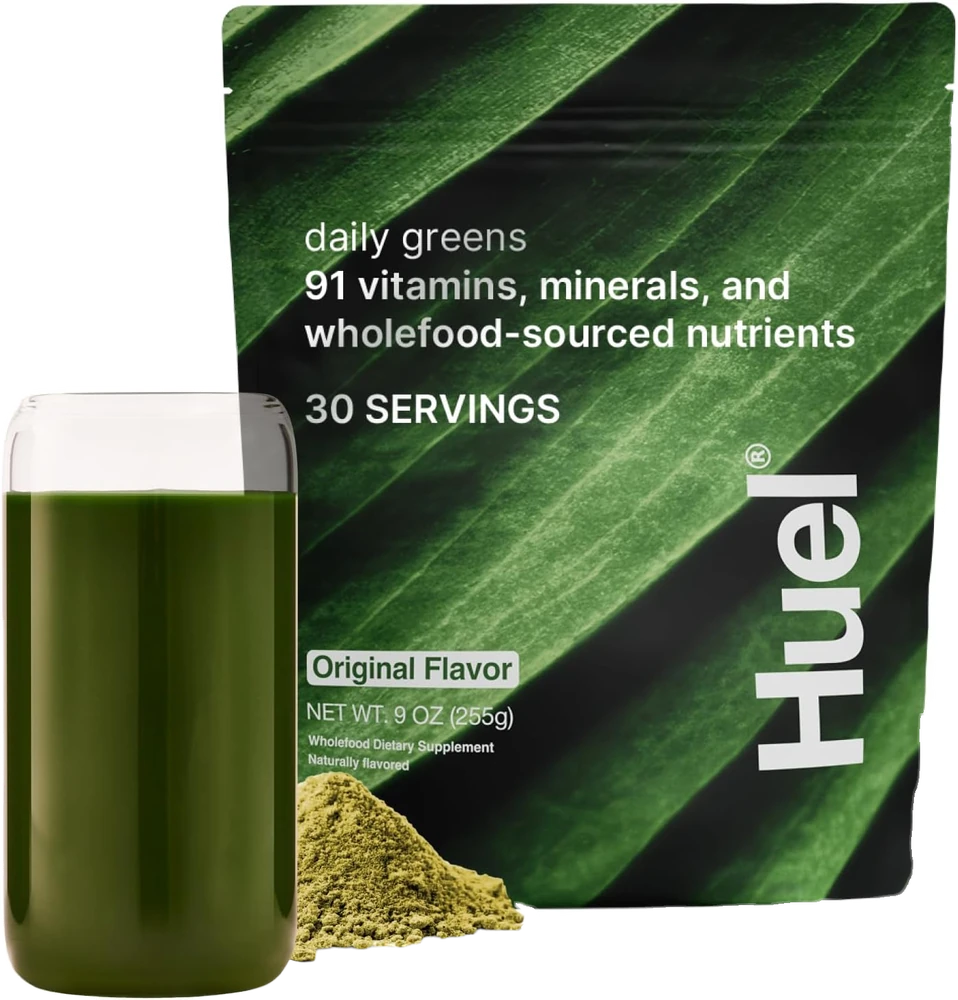
Best ingredient density: Huel Daily Greens
7.1SAC Score™The most ingredient-dense formula per dollar — 91 wholefood-sourced ingredients across five named blends at roughly $1.50 a serving on subscription, AG1-style breadth for about half the cost.
StrongestActive content9.53WeakestLabel transparency3.0- Ingredients
- 91 vitamins, minerals & wholefood-sourced ingredients (per title)
- Blends
- Super Greens, Superfruit, Mushroom Adaptogen, Plant Protein, Botanicals
- Probiotics
- Gut-friendly probiotics included (blend-level)
All five scores, pros & cons, full label
What We Like- 91 ingredients across 5 named blends — the broadest stack here under $2 per serving
- Tastes of crisp apple and pineapple with lime/mint freshness, not grass or medicine
- 100% vegan, no artificial sweeteners; about $1.50 a serving on subscription
What You Live With- Blend-level disclosure on the big complexes, not per-ingredient amounts
- Listing copy is internally inconsistent on ingredient count (title says 91, one bullet says 149)
- No third-party certification (NSF/USP) stated on the listing
- Sweetener
- Apple/pineapple with lime & mint, no artificial sweeteners
- Testing
- No NSF/USP certification stated on the listing
Our take — Huel Daily Greens is what you buy when you want AG1-style breadth without AG1's price: 91 wholefood-sourced ingredients across five named blends, a genuinely pleasant apple-pineapple-mint flavor, and a subscription price near $1.50 a serving. The trade-off is disclosure — the big complexes are listed at blend level, not per ingredient, and the listing can't even keep its own ingredient count straight (91 in the title, 149 in a bullet). No third-party certification, either. But for ingredient density per dollar from a transparency-leaning meal-replacement brand, it's the value-breadth pick.
- 08
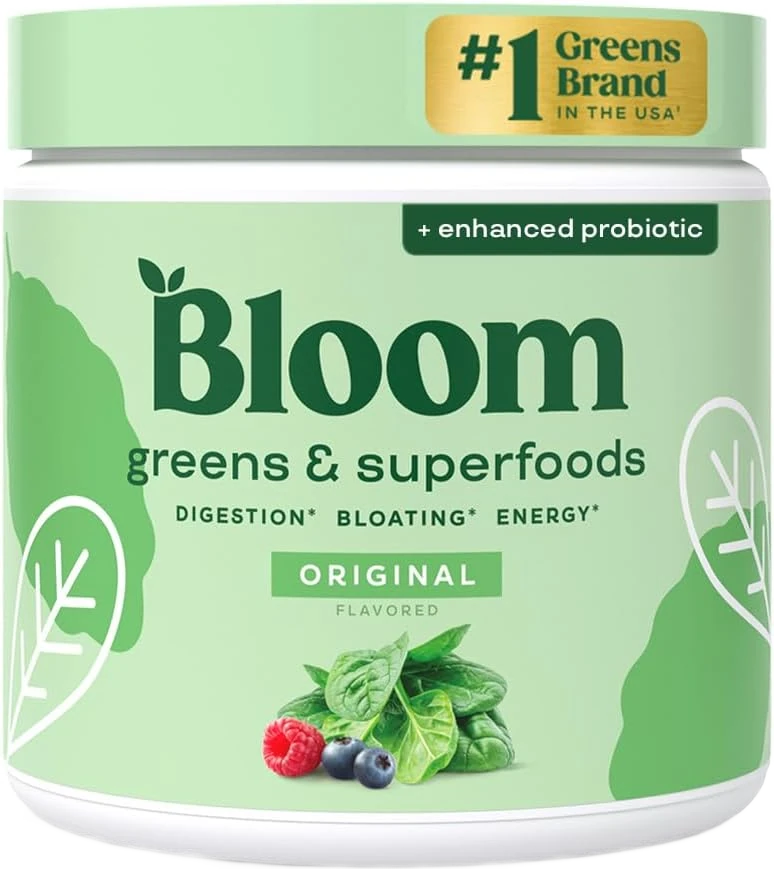
Best tasting (gut-focused): Bloom Nutrition Greens and Superfoods
6.8SAC Score™The taste-first gut pick and social-media bestseller — the easiest greens habit to actually keep for bloating and digestion goals, at a mid-tier price, as long as you accept a proprietary-blend label.
StrongestTaste & mixability10.01WeakestLabel transparency3.0- Ingredients
- 30+: prebiotics, probiotics, digestive enzymes, adaptogens, organic spirulina & chlorella
- Disclosure
- Amounts disclosed per blend (proprietary blends); probiotic CFU not stated
- Gut focus
- Prebiotic + probiotic + enzyme stack targeting bloating
All five scores, pros & cons, full label
What We Like- Repeatedly the category's taste benchmark — easy daily compliance for greens skeptics
- Gut-focused stack: prebiotics, probiotics and digestive enzymes targeting bloating
- Sugar-free, dairy/gluten-free, keto and non-GMO at about $1.13 per serving
What You Live With- Proprietary blends: no per-ingredient doses and no probiotic CFU count stated
- No third-party certification stated on the listing
- Marketed primarily around bloating — lighter on hard nutrient-coverage claims than AG1 or Huel
- Diet
- Sugar-free, dairy/gluten-free, keto, non-GMO
- Testing
- No third-party certification stated on the listing
Our take — Bloom is the one you'll actually keep drinking. It's repeatedly the category's taste benchmark, the stack is sensibly built around gut comfort (prebiotics, probiotics, enzymes), and at about $1.13 a serving it's reasonably priced. The catch — and the reason it sits mid-table on a transparency-first ranking — is that it's a proprietary-blend label: no per-ingredient doses, no stated probiotic CFU, no third-party certification. If daily compliance and a pleasant taste matter more to you than knowing exact amounts, Bloom is the pick; if you want disclosure, look higher up the list.
- 09
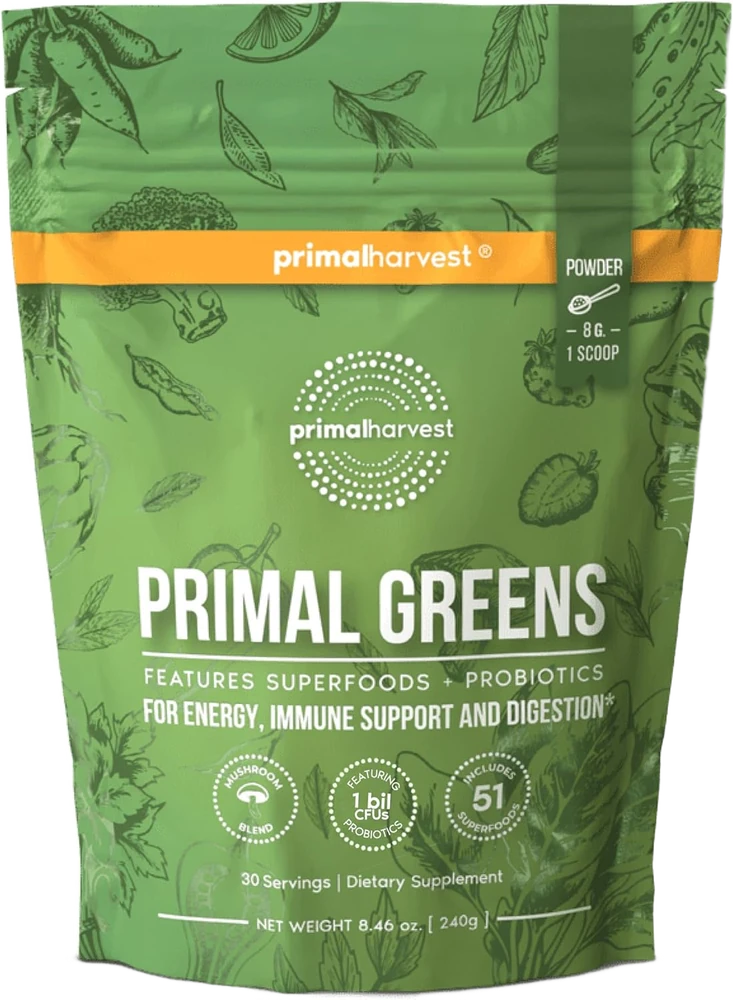
Best ingredient variety: Primal Harvest Primal Greens
6.6SAC Score™The kitchen-sink formula — 50+ superfoods, adaptogens, mushrooms and 1 billion CFU probiotics in one scoop, maximum ingredient breadth but the least label transparency per dollar in this lineup.
StrongestTaste & mixability8.03WeakestLabel transparency5.0- Ingredients
- 50+ superfoods incl. chlorella, wheatgrass, kale, green tea, turmeric, ashwagandha, reishi
- Probiotics
- 1 billion CFU probiotic blend + digestive enzymes
- Disclosure
- Amounts disclosed per blend (proprietary blends)
All five scores, pros & cons, full label
What We Like- Broadest single-scoop variety here: 50+ superfoods spanning greens, mushrooms, adaptogens and turmeric
- 1 billion CFU probiotics plus digestive enzymes; soy/gluten/dairy-free
- GMP-made in the USA and third-party lab tested, per the listing
What You Live With- Proprietary blends hide individual doses — 50+ ingredients in one scoop means most are sprinkles
- Highest DTC list price of the non-AG1 picks (about $1.72 per serving)
- No NSF/USP/organic certification stated on the listing
- Testing
- Third-party lab tested per listing; GMP-made in USA
- Diet
- Soy/gluten/dairy-free
Our take — Primal Greens is the maximalist option: 50+ superfoods, mushrooms, adaptogens and turmeric plus a 1 billion CFU probiotic and a stated third-party-lab-testing claim. The problem on a transparency-first ranking is right there in the design — 50+ ingredients behind proprietary blends means most are present in token amounts you can't verify, and at about $1.72 a serving it's the priciest non-AG1 pick with no organic or NSF certification. It rounds out the list as the variety pick for someone who values breadth over knowing what's actually in the scoop.
Greens Powder In Four Short Lessons
Look for per-ingredient amounts.
This category is built on proprietary blends that bury every dose behind one number. A label that publishes exact quantities, or at least a probiotic CFU count, is the exception.
Check the testing and safety record.
In early 2026 a popular greens brand was at the center of a Salmonella outbreak traced to its moringa powder. NSF, USDA Organic or a stated per-batch testing claim is worth 20% of our score.
Treat it as insurance, not a vegetable replacement.
A scoop carries little of the fiber or satiety of a plate of vegetables. Most of the supporting trials dose a single ingredient far above what a 30-ingredient scoop contains.
Lee 2022 (PMID 34990439), Shiri 2024 (PMID 39529406), Fallah 2018 (PMID 29037431) and La Monica 2024 (PMID 39352252); ranked on 30% label transparency, 25% active content, 20% third-party testing & safety, 15% value per serving, 10% taste & mixability — full scoring in the methodology below.
Greens powders are deceptively hard to compare because most of them hide their doses. Two scoops can list "30+ superfoods" and tell you nothing about how much of anything you're getting. So we weighted label transparency the heaviest: a product that publishes the exact quantity of each ingredient — or at least its probiotic CFU count — is doing the one thing this category routinely refuses to do, and it scores accordingly. Active content is next: we credit a genuinely useful probiotic dose (CFU stated on the label) and a substantive greens/superfood load, and we mark down "sprinkle" formulas that pad an ingredient count without meaningful amounts. Third-party testing and safety record is worth a full fifth of the score, and that is a deliberate response to the category's biggest real-world risk — a greens powder pools dozens of agricultural inputs (grasses, algae, moringa, fruits) into one scoop, and in early 2026 a contaminated moringa supply chain put a popular greens brand at the center of a multi-state Salmonella outbreak that hospitalized more than two dozen people. NSF certification, USDA Organic, or a stated per-batch third-party-testing claim earns real credit here; an opaque supply chain does not. Value per serving is the tiebreaker — these range from about $0.90 to over $3.00 a serving — and taste and mixability settle the rest, because the best greens powder is the one you'll actually drink every day. Every product was assessed on its real Amazon listing; we did not invent a single dose, CFU number, or certification, and we excluded the recalled brand rather than rank it.
Label transparency · 30%
Does the listing state exact per-ingredient quantities, or hide everything behind proprietary blends? In a category where most labels disclose amounts only per combined blend, full per-ingredient disclosure (or at minimum a stated probiotic CFU count) is the single strongest signal of an honest product — so it carries the most weight. Pure proprietary-blend labels with no CFU count score lowest.
Active content · 25%
The substance behind the scoop: a probiotic dose with a CFU count stated on the label, the breadth and quality of the greens/superfood load, and whether useful extras (enzymes, named strains, adaptogens) are present in meaningful amounts. A high stated CFU and a real greens load score high; an impressive-sounding ingredient count with no disclosed amounts does not.
Third-party testing & safety record · 20%
Greens powders pool dozens of agricultural inputs into one scoop, so contaminant screening matters — the 2026 Live it Up Salmonella outbreak (traced to moringa powder, 26 hospitalizations) is the cautionary case. NSF certification, USDA Organic (CCOF/QAI), or a stated per-batch third-party-testing claim earns credit; an opaque, uncertified supply chain scores lower. We excluded the recalled brand outright.
Value per serving · 15%
Cost per daily scoop, which ranges from roughly $0.90 (Amazing Grass) to over $3.00 (AG1 one-time DTC) across this lineup. Judged against what the scoop actually delivers — a cheap organic greens blend and a premium all-in-one are scored on different value propositions, not just the raw number. The tiebreaker between picks of similar substance.
Taste & mixability · 10%
The best greens powder is the one you'll keep drinking, so daily-compliance factors count: how it tastes (grassy-earthy vs flavored), how cleanly it mixes without grit or clumping, and whether the flavor relies on artificial sweeteners or sugar. Lowest weight because taste is the most personal axis — but it's the difference between a tub you finish and one that sits in the cupboard.

How greens powders work
- 1
Concentrated plant matter
Vegetables, grasses, algae and fruit are juiced or milled and dried into powder. What survives is a real slice of the micronutrients and polyphenols — what does not survive is most of the fiber and volume that make whole vegetables so effective.
- 2
The multivitamin core
Most formulas quietly add straight vitamins and minerals on top of the plants; a good chunk of any greens powder's measurable effect is simply a multivitamin doing multivitamin things. Honest, once you see it on the label.
- 3
Polyphenols and adaptogens
Spirulina, chlorella and the polyphenol-rich extracts carry modest but real evidence for antioxidant status and blood-pressure margins. Doses per scoop are usually below the studied amounts — transparency about that gap is what separates our top picks.
- 4
The blend problem
Proprietary blends let a label list 40 impressive plants at invisible doses. This ranking weights label transparency heaviest because in this category, the label IS the product.
What to expect from a daily greens habit
Ritual and digestion
The realistic early win is a consistent healthy-start ritual; some feel mild digestive settling from the enzymes and probiotics many formulas include. Detox feelings are marketing, not mechanism.
Micronutrient floor rises
If your diet ran low on vitamins and minerals, energy stability and general wellbeing edge up as the multivitamin core corrects the gaps. Eaters of actual vegetables will honestly feel little.
Margins, not milestones
Antioxidant status and blood-pressure margins can improve modestly per the spirulina/polyphenol data. Nothing visible in the mirror — this category maintains health, it does not transform it.
The vegetable test
Keep the scoop if it stops nutrient gaps you demonstrably have; drop it the month you consistently eat plants. A $2 scoop is insurance, and insurance you no longer need is just a bill.
The bottom line
Jocko Fuel Daily Greens (#1) is the most honest label in a category built on hiding doses.
It states the exact amount of every one of its 23 organic greens — explicitly rejecting proprietary blends — and carries the highest disclosed probiotic count here at 9 billion CFU. You pay a premium at about $1.67 a serving, tolerate a polarizing pineapple-coconut flavor, and accept that it isn't NSF-certified. But for a transparency-first ranking, the most transparent label in the category is the right #1.
The alternatives split cleanly by what you value most.
AG1 (#2) is the NSF-certified benchmark and the only product with its own published trial, if you can stomach up to $3.30 a serving. Huel (#3) gives the most ingredients per dollar, Garden of Life (#4) is certified-organic actual farm greens, Bloom (#5) is the tub you'll actually keep drinking, and Amazing Grass (#7) is the cheapest credible option at about $0.90 a serving.
Weight safety and transparency, then treat it as the supplement it is.
Reward certifications (NSF, USDA Organic, or a stated per-batch testing claim) and a label that discloses real amounts or at least a genuine CFU count. Keep eating your vegetables — every product here is insurance for the veggie gap that nine in ten US adults have, not a license to skip the broccoli, and the category's hard-outcome evidence is thin and mostly per-ingredient.
Quick Answers
What is the best greens powder pick overall?
Jocko Fuel Daily Greens by Jocko Fuel is our #1 pick (SAC score 9.2/10). If the thing that bothers you most about greens powders is that you can never tell how much of anything you're actually getting, Jocko Fuel is the answer: it states the exact quantity of each of its 23 organic greens and carries the highest disclosed probiotic count here at 9 billion CFU. You pay a premium for that honesty and you have to tolerate a polarizing pineapple-coconut flavor, and it isn't NSF-certified — but for a transparency-first ranking, the most transparent label in the category is the right #1. Treat it as veggie-gap insurance, not a vegetable replacement.
What is the best budget option?
Amazing Grass Greens Blend Superfood at $27 / 30 servings (8.5 oz). If you just want the cheapest legitimate way to hedge your vegetable gap, Amazing Grass is it: about $0.90 a serving, CCOF-certified organic, non-GMO, kosher, with a stated 1 billion CFU probiotic and a two-decade track record. You give up flavor (it's grassy and unsweetened) and per-ingredient disclosure, and the probiotic count is the floor rather than the ceiling. But for credible certified-organic greens at the lowest price here, nothing else competes — the value pick, full stop.
How much do these picks cost?
Across our ranked picks, prices run from about $27 to $74 — exact price and cost per serving are listed on every pick card above.
How were these picks ranked?
Greens powders are deceptively hard to compare because most of them hide their doses. Two scoops can list "30+ superfoods" and tell you nothing about how much of anything you're getting. So we weighted label transparency the heaviest: a product that publishes the exact quantity of each ingredient — or at least its probiotic CFU count — is doing the one thing this category routinely refuses to do, and it scores accordingly. Active content is next: we credit a genuinely useful probiotic dose (CFU stated on the label) and a substantive greens/superfood load, and we mark down "sprinkle" formulas that pad an ingredient count without meaningful amounts. Third-party testing and safety record is worth a full fifth of the score, and that is a deliberate response to the category's biggest real-world risk — a greens powder pools dozens of agricultural inputs (grasses, algae, moringa, fruits) into one scoop, and in early 2026 a contaminated moringa supply chain put a popular greens brand at the center of a multi-state Salmonella outbreak that hospitalized more than two dozen people. NSF certification, USDA Organic, or a stated per-batch third-party-testing claim earns real credit here; an opaque supply chain does not. Value per serving is the tiebreaker — these range from about $0.90 to over $3.00 a serving — and taste and mixability settle the rest, because the best greens powder is the one you'll actually drink every day. Every product was assessed on its real Amazon listing; we did not invent a single dose, CFU number, or certification, and we excluded the recalled brand rather than rank it.
Every Claim Ranked Above Traces Back To One Of These
7 sources — studies link to PubMed, product specs to the manufacturer
- [1] Lee 2022 PMID 34990439 — Adults Meeting Fruit and Vegetable Intake Recommendations — United States, 2019. Using 2019 national survey data, only 10.0% of US adults met the vegetable intake recommendation (and 12.3% met the fruit recommendation). This is the epidemiological backdrop for greens powders as veggie-gap insurance — and the honest frame that they supplement, rather than replace, the vegetables most adults still aren't eating.
- [2] La Monica 2024 PMID 39352252 — The effects of AG1 supplementation on the gut microbiome of healthy adults: a randomized, double-blind, placebo-controlled clinical trial. In 30 healthy adults over 4 weeks, AG1 enriched two probiotic taxa (Lactobacillus acidophilus and Bifidobacterium bifidum) and was well tolerated with no adverse changes in bowel frequency or stool consistency. The only product-specific RCT in this lineup — an industry-funded microbiome and tolerability study, not a hard-outcome efficacy trial, which is exactly how it should be read.
- [3] Chapple 2012 PMID 22093005 — Adjunctive daily supplementation with encapsulated fruit, vegetable and berry juice powder concentrates and clinical periodontal outcomes: a double-blind RCT. A double-blind RCT in which encapsulated fruit, vegetable and berry juice powder concentrates raised plasma micronutrient markers (including β-carotene) and improved a periodontal treatment outcome. Evidence that concentrated juice powders can measurably move micronutrient biomarkers — though this is a purer juice-concentrate product class than a multi-ingredient greens scoop.
- [4] De Spirt 2012 PMID 21822034 — An encapsulated fruit and vegetable juice concentrate increases skin microcirculation in healthy women. Over 12 weeks in healthy women, an encapsulated fruit and vegetable juice concentrate increased skin microcirculation (by ~39%), hydration and density versus placebo. A concentrated-juice-powder RCT with a real physiological endpoint — supportive of the 'concentrated produce does measurable things' premise, in a related but distinct product class.
- [5] Shiri 2024 PMID 39529406 — The Effect of Spirulina Supplementation on Blood Pressure in Adults: A GRADE-Assessed Systematic Review and Meta-Analysis of Randomized Clinical Trials. A GRADE-assessed meta-analysis of randomized trials found spirulina supplementation lowered systolic blood pressure by ~4.4 mmHg and diastolic by ~2.8 mmHg. Per-ingredient evidence for spirulina, a near-universal greens-powder algae — but trials typically dosed grams of spirulina, far above the amount in a multi-ingredient scoop.
- [6] Fallah 2018 PMID 29037431 — Effect of Chlorella supplementation on cardiovascular risk factors: A meta-analysis of randomized controlled trials. A meta-analysis of 19 randomized trials (797 subjects) found chlorella supplementation significantly reduced total cholesterol, LDL cholesterol, systolic and diastolic blood pressure, and fasting blood glucose. Per-ingredient evidence for chlorella, another common greens-powder algae — again typically at gram-level doses larger than a blended scoop provides.
- [7] SAC News — The World’s Most Famous Greens Powder Has Exactly One Clinical Trial — Its Own. AG1’s entire clinical record is a single company-funded study: 30 people, four weeks, surrogate endpoints. Meanwhile you pay ~$3.30 a day for megadosed water-soluble vitamins your body largely excretes.
Affiliate disclosure: every Amazon link uses our Associates tag (superachieverclub-20). We earn a small commission at no cost to you; it funds independent reviews. We never accept payment to change a ranking.