
Garden of Life Raw Organic Perfect Food Green Superfood Review
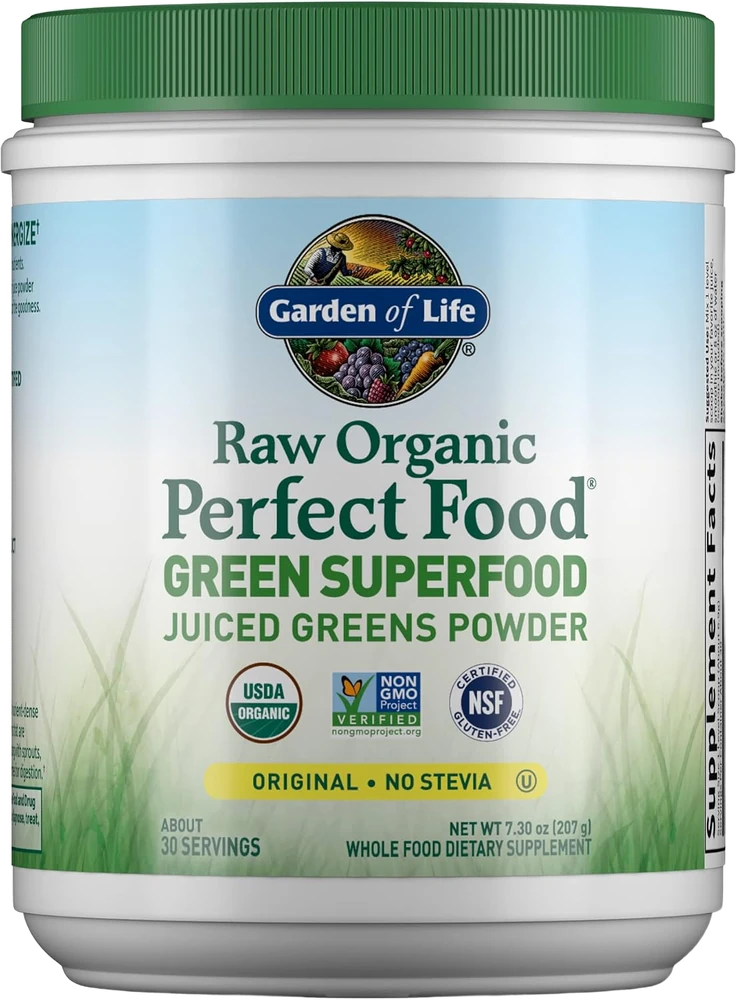 #3 of 9 · Best certified-organic whole-food✓ Label verified · Supplement Facts read Sep 7, 2026
Real retailer photo, cut out. Label unedited.
Buy it. Certified-organic juiced farm greens with a named probiotic — the whole-food purist's pick. Juiced, cold-dried grasses and vegetable juices rather than a flavored blend, with USDA Organic, Vegan and Non-GMO seals (NSF Contents Certified per the brand page), a named Bacillus subtilis DE111 strain at 250 million CFU, a full enzyme list and zero stevia — all for about $1.30 a serving.
$39 / 30 servings (7.3 oz)$1.30 / serving
Why It Scores 8.3 — And The Label Line Behind Each Number
Label transparency
30% of scoreA mixed but above-average picture. Garden of Life names its probiotic strain (Bacillus subtilis DE111) and states its CFU count (250 million at expiration), plus a full enzyme list — more specific than most. But the greens themselves are disclosed per juice blend rather than per individual grass, so you can't itemize each one. More transparent than a proprietary-blend product, less than Jocko's per-ingredient label.
- Certifications
- USDA Organic, Certified Vegan, Non-GMO (brand page: NSF Contents Certified)
Active content
25% of scoreConcentrated juiced greens (the brand states ~6× more grasses per gram than whole-leaf powders), sprouts, vegetable juices, live probiotics and a full enzyme list — a substantive, food-forward active load. The honest limiter is the probiotic dose: at 250 million CFU it's modest next to the leaders. Strong on greens concentration and enzymes; lighter on raw probiotic quantity.
Third-party testing & safety record
20% of scoreAmong the best here. USDA Organic, Certified Vegan and Non-GMO on the listing, with NSF Contents Certified stated on the brand's official page (attributed there, not on the Amazon listing). USDA Organic certification requires verified certified-organic sourcing — exactly the supply-chain control that matters in a category where contamination caused a 2026 recall elsewhere. Just behind AG1's NSF certification on the testing axis.
Value per serving
15% of scoreAbout $1.30 a serving ($39.19 for 30) for a certified-organic, whole-food juiced greens with a named probiotic strain and full enzyme list is strong value — cheaper than Jocko, KOS and AG1 while carrying more certifications than most. You're getting genuine organic sourcing for a mid-tier price, which is a good deal on this axis.
- Servings
- 30 per tub, 1 scoop per serving (net tub weight not printed on the Supplement Facts panel)
- Price
- $39.19 ≈ $1.30 per serving
Taste & mixability
10% of scoreThe weak spot, by design. The stevia-free original is grassy and unsweetened — there's no flavoring or sweetener masking the juiced-greens taste, which is exactly what purists want and exactly what taste-first buyers won't. It mixes fine; the issue is purely flavor. The honest trade-off for a no-stevia, whole-food label.
- More Specs
- Greens
- Juiced (not whole-leaf) greens, sprouts & vegetable juices, cold-temperature dried
- Concentration
- Brand states ~6× more grasses per gram than whole-leaf powders
- Probiotics
- Bacillus subtilis DE111, 250 million CFU (stated at time of expiration)
- Enzymes
- Full enzyme list included
- Sweetener
- Stevia-free original — grassy, unsweetened
Label verified. Every figure read from the Supplement Facts photo, Sep 7, 2026.
Marketing Claims Vs. Reality
USDA Organic, Certified Vegan and Non-GMO.
All three certifications are stated on the Amazon listing. USDA Organic in particular is an independently meaningful seal requiring verified certified-organic sourcing — a genuine, auditable trust signal and a key reason this product scores high on testing.
NSF Contents Certified.
This claim appears on Garden of Life's official brand page, not on the Amazon listing (which states USDA Organic and Vegan only). We attribute it as a brand-stated certification accordingly. Credible given Garden of Life's certification track record, but sourced from the brand's page rather than the retail listing — hence partial, for transparency about where the claim lives.
6× more grasses per gram than whole-leaf powders.
This is the brand's stated concentration figure for its juice-powder process (juicing then cold-drying rather than milling whole leaf). The mechanism is plausible — juice concentrates remove fiber/water and increase the grass fraction per gram — but the specific 6× multiple is a manufacturer figure, so we report it as brand-stated rather than independently verified.
Live probiotics and enzymes for digestion.
The product states a named probiotic strain (Bacillus subtilis DE111) at 250 million CFU at expiration plus a full enzyme list. The probiotic and enzyme content is real and specifically disclosed; the only caveat is that the CFU count is modest relative to the lineup's leaders.
Concentrated whole-food nutrition.
Accurate that it's a concentrated whole-food (juiced, dried produce) — among the most food-like greens powders here. But 'whole-food nutrition' shouldn't be read as a vegetable replacement: even concentrated juice powder lacks the fiber volume and satiety of eating whole vegetables. A food-forward supplement, not a substitute.
What Our Test Actually Found
Correction: net tub weight removed — not on the label
An earlier version of this review listed the servings line as "30 per tub (7.3 oz / 207 g)." The Supplement Facts panel we re-read on Sep 7, 2026 states Serving Size: 1 scoop and Servings Per Container: about 30 — it does not print a net tub weight anywhere on the panel. We re-read the label on Sep 7, 2026 and corrected the specs line to the confirmed 30-servings, 1-scoop-per-serving count and removed the unconfirmed 7.3 oz / 207 g figure.
It's actual juiced produce, not a flavored blend
The defining feature is the format: Garden of Life juices grasses, sprouts and vegetables and cold-dries the juice, rather than milling whole leaf or formulating a flavored superfood blend. The brand states this concentrates the grass fraction to about six times that of whole-leaf powders. For a purist, that's the appeal — you're drinking concentrated farm-greens juice, not a taste-engineered powder. It's also why it tastes grassy: nothing is added to mask it.
A named, expiration-dated probiotic — quality over quantity
Where most greens powders state an unnamed 'probiotic blend' or no CFU at all, Garden of Life names the strain (Bacillus subtilis DE111) and guarantees 250 million CFU at time of expiration — a more honest labeling standard than 'at manufacture.' The honest trade-off is the count: 250 million is modest next to Jocko's 9 billion. So this is a named, spore-forming, shelf-stable strain with an expiration-dated guarantee, not a high-CFU play.
Certifications are the strength
USDA Organic, Certified Vegan and Non-GMO on the listing (with NSF Contents Certified on the brand page) make this one of the best-certified products in the lineup. In a category where a contaminated supply chain caused a multi-state Salmonella recall elsewhere in 2026, certified-organic sourcing with verification is genuinely valuable — it's the second-strongest testing profile here after AG1's NSF certification.
Taste is the price of purity
The grassy, unsweetened, stevia-free profile is exactly what makes this the purist's pick and exactly what makes it a hard sell for taste-first buyers. There's no flavoring to hide behind. If a good taste is what keeps you consistent, this isn't your product — Bloom (#8), KOS (#5) or Huel (#7) are far more palatable. But if you'd rather have certified juiced greens with no sweetener at all, the taste is a feature, not a bug.
Full analysis: all pros & cons (8), buy if / skip if
- USDA Organic, Certified Vegan and Non-GMO (brand page adds NSF Contents Certified)
- Juiced, cold-dried whole-food greens — brand states ~6× more grasses per gram than whole-leaf powders
- Named probiotic strain with a stated, expiration-dated CFU (DE111, 250M) plus a full enzyme list
- Stevia-free and free of artificial flavoring
- Strong value at about $1.30 a serving for certified-organic juiced greens
- Grassy, unsweetened taste — the trade-off for a no-stevia label
- 250 million CFU is modest next to Jocko's 9 billion or AG1's 7.2 billion
- Greens amounts shown per juice blend, not per individual grass
- You want certified-organic, whole-food juiced greens rather than a flavored blend
- You value a named probiotic strain with a stated CFU count over an unnamed 'probiotic blend'
- You want a stevia-free, no-artificial-flavor label and can tolerate a grassy taste
- USDA Organic / Non-GMO certification is a priority for you
- You want a good taste — this is grassy and unsweetened by design (try Bloom #8 or KOS #5)
- You want a high probiotic dose — 250 million CFU is modest vs Jocko's 9 billion or AG1's 7.2 billion
- You want per-individual-ingredient disclosure — greens are listed per juice blend here
Juiced, cold-dried grasses and vegetable juices rather than a flavored blend, with USDA Organic, Vegan and Non-GMO seals (NSF Contents Certified per the brand page), a named Bacillus subtilis DE111 strain at 250 million CFU, a full enzyme list and zero stevia — all for about $1.30 a serving. You accept a grassy, unsweetened taste and a modest CFU count. The most credible certified-organic, whole-food greens here; buy it as a supplement to vegetables, not a replacement.
Garden of Life Raw Organic Perfect Food is the greens powder for people who want their greens powder to be actual greens. Instead of a flavored superfood blend, it's juiced grasses, sprouts and vegetable juices, cold-temperature dried into powder — a concentrated farm-greens juice that the brand says delivers about six times more grasses per gram than whole-leaf powders. It carries USDA Organic, Certified Vegan and Non-GMO seals (with NSF Contents Certified stated on the brand's own page), a named probiotic strain at a stated count (Bacillus subtilis DE111, 250 million CFU), a full enzyme list, and no stevia. The trade-offs are honest and predictable. The taste is grassy and unsweetened — that's the price of a no-flavoring, no-stevia label — and the 250 million CFU probiotic count is modest next to Jocko's 9 billion or AG1's 7.2 billion. Its greens are also disclosed per juice blend rather than per individual grass. But for the certified-organic, whole-food sourcing that defines its appeal, nothing else in the lineup matches it. This is the purist's pick: actual produce, certified, with a named probiotic — bought as a supplement to vegetables, never a replacement.
The certified-organic whole-food purist's pick — actual juiced greens, certified, with a named probiotic.

If you want your greens powder to be as close to actual vegetables as a powder gets, Garden of Life Raw Organic Perfect Food is the pick. It's juiced, cold-dried farm greens and vegetable juices rather than a flavored blend, carrying USDA Organic, Vegan and Non-GMO seals (plus NSF Contents Certified on the brand page), a named DE111 probiotic strain with a stated 250 million CFU, a full enzyme list, and no stevia — all for a reasonable $1.30 a serving. The trade-offs are exactly what you'd expect from a purity-first product: a grassy, unsweetened taste and a modest probiotic count, with greens disclosed per juice blend rather than per grass. If taste or a high CFU dose is your priority, look at the flavored picks (#5, #6) or the highest-CFU one (#1). But for certified-organic, whole-food sourcing — the thing this product is genuinely best at in the lineup — it's the most credible option. Drink it for what it is: a food-forward supplement layered on top of real vegetables, not a substitute for them.
If This Doesn’t Fit — Try These
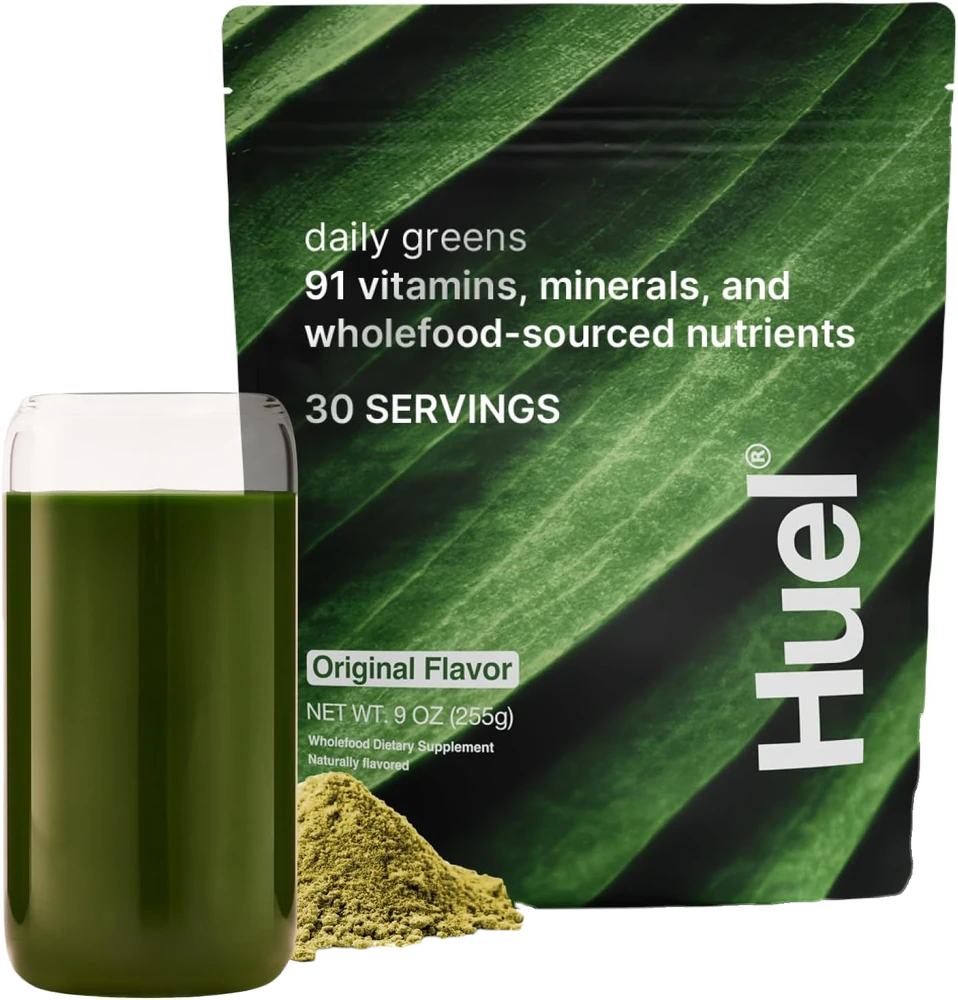 07
07Huel Daily Greens
Huel Daily Greens is what you buy when you want AG1-style breadth without AG1's price: 91 wholefood-sourced ingredients across five named blends, a genuinely pleasant apple-pineapple-mint flavor, and a subscription price near $1.50 a serving.
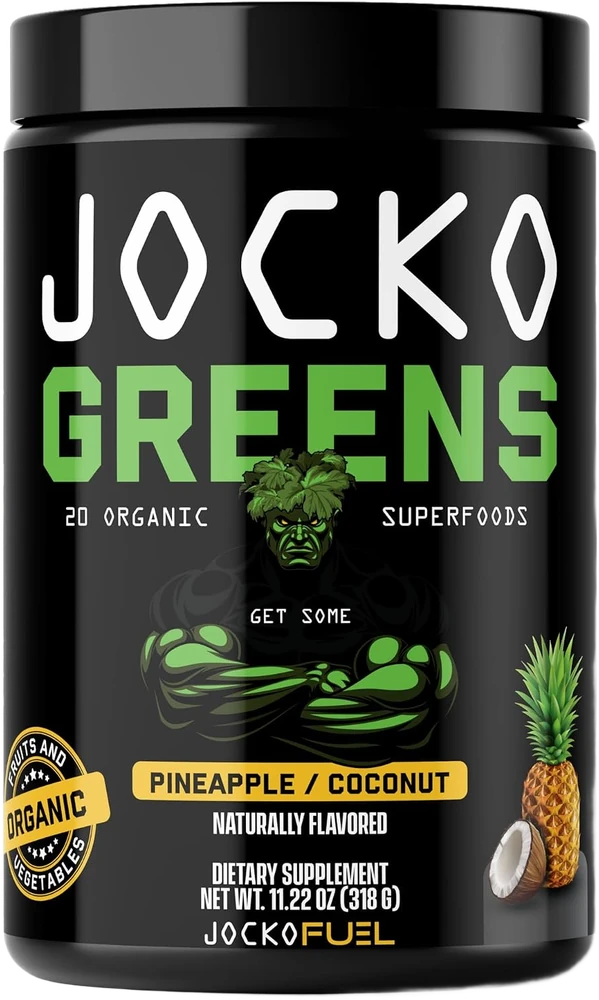 01
01Jocko Fuel Daily Greens
If the thing that bothers you most about greens powders is that you can never tell how much of anything you're actually getting, Jocko Fuel is the answer: it states the exact quantity of each of its 23 organic greens and carries the highest disclosed probiotic count here at 9 billion CFU.
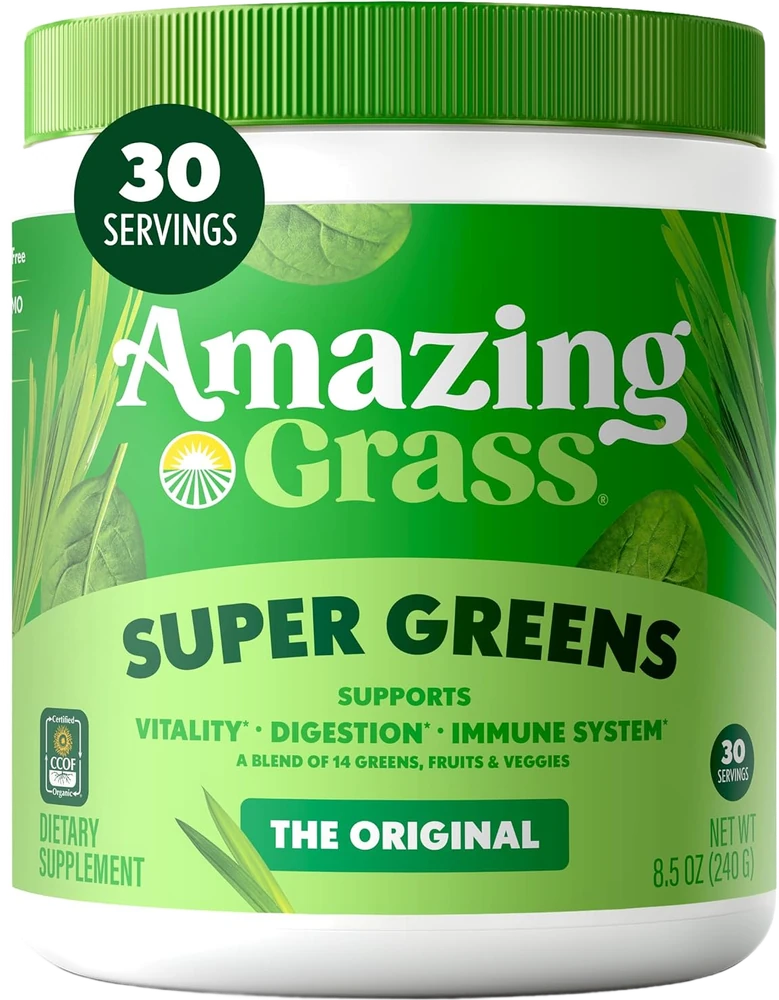 06
06Amazing Grass Greens Blend
If you just want the cheapest legitimate way to hedge your vegetable gap, Amazing Grass is it: about $0.90 a serving, CCOF-certified organic, non-GMO, kosher, with a stated 1 billion CFU probiotic and a two-decade track record.
Quick Answers
What makes this a 'whole-food' greens powder versus the others?
It's built from juiced greens rather than whole-leaf powder. Garden of Life juices the grasses, sprouts and vegetables and then cold-temperature dries the juice — the brand states this yields about six times more grasses per gram than whole-leaf powders. Practically, you're getting a concentrated farm-greens juice in powder form, plus live probiotics and enzymes, rather than a flavored superfood blend engineered for taste. That's the appeal for purists, and the reason it tastes grassy: there's no flavoring or sweetener masking what's actually in the tub.
Is the DE111 probiotic strain meaningful?
It's a genuine differentiator on transparency, if modest on dose. Most greens powders either don't state a CFU count or list an unnamed 'probiotic blend.' Garden of Life names the specific strain — Bacillus subtilis DE111 — and states 250 million CFU at time of expiration (a more honest way to label than 'at time of manufacture'). The honest caveat is the number: 250 million CFU is modest next to Jocko's 9 billion or AG1's 7.2 billion. So you trade raw CFU quantity for a named, spore-forming strain and an expiration-dated guarantee — a quality-over-quantity probiotic approach.
Is it really NSF certified?
Carefully stated: the Amazon listing shows USDA Organic, Certified Vegan and Non-GMO, and the brand's official Garden of Life page additionally states NSF Contents Certified. We attribute the NSF claim to the brand's own page rather than the Amazon listing, because that's where it appears — so treat it as a brand-stated certification. Either way, the USDA Organic seal on the listing is independently meaningful: it requires certified-organic sourcing and verification, which is exactly the kind of supply-chain control that matters in a category where contamination caused a 2026 recall elsewhere.
Will it replace my vegetables?
It's closer to actual vegetables than most greens powders — it's literally juiced, dried produce — but it's still a supplement, not a replacement. Even a concentrated greens juice powder lacks the fiber volume and satiety of eating whole vegetables, and the dose is a single scoop. Think of it as the most 'food-like' way to hedge the veggie gap that about nine in ten US adults have, layered on top of real produce. If anything, its whole-food, no-flavoring approach makes it the pick for someone who wants their supplement to resemble food rather than a flavored powder — but keep eating the broccoli.
Who should buy this over a flavored greens powder?
The buyer who prioritizes certified-organic, whole-food sourcing and is willing to trade taste for it. If you want USDA Organic juiced farm greens, a named CFU'd probiotic strain, a full enzyme list and no stevia or artificial flavoring — and you can tolerate a grassy taste — this is the most credible whole-food option in the lineup. If you instead want something that tastes good enough to look forward to, Bloom (#8), KOS (#5) or Huel (#7) will suit you far better. Garden of Life is purity-first; those are taste-first.
Sources & Further Reading
3 peer-reviewed sources, each linked to PubMed
- [1] Chapple 2012 PMID 22093005 — Adjunctive daily supplementation with encapsulated fruit, vegetable and berry juice powder concentrates and clinical periodontal outcomes: a double-blind RCT. Encapsulated fruit/vegetable/berry juice powder concentrates raised plasma micronutrient markers (including β-carotene) in a double-blind RCT. The most relevant evidence for a juiced-greens product like this one — concentrated produce powders can measurably move micronutrient biomarkers.
- [2] De Spirt 2012 PMID 21822034 — An encapsulated fruit and vegetable juice concentrate increases skin microcirculation in healthy women. A 12-week RCT found an encapsulated fruit and vegetable juice concentrate increased skin microcirculation, hydration and density. A juice-concentrate RCT with a real physiological endpoint — supportive of the premise that concentrated, juiced produce does measurable things.
- [3] Lee 2022 PMID 34990439 — Adults Meeting Fruit and Vegetable Intake Recommendations — United States, 2019. Only 10.0% of US adults met the vegetable recommendation in 2019. The gap a whole-food juiced-greens powder helps hedge — while remaining a supplement to vegetables, not a replacement for their fiber and satiety.
Affiliate disclosure: every Amazon link uses our Associates tag (superachieverclub-20). We earn a small commission at no cost to you; it funds independent reviews. We never accept payment to change a ranking.