
Top 8 Best GLP-1 Supplements for Weight Loss (2026)
 01 · Most transparent✓ Label verified · Supplement Facts read Sep 7, 2026
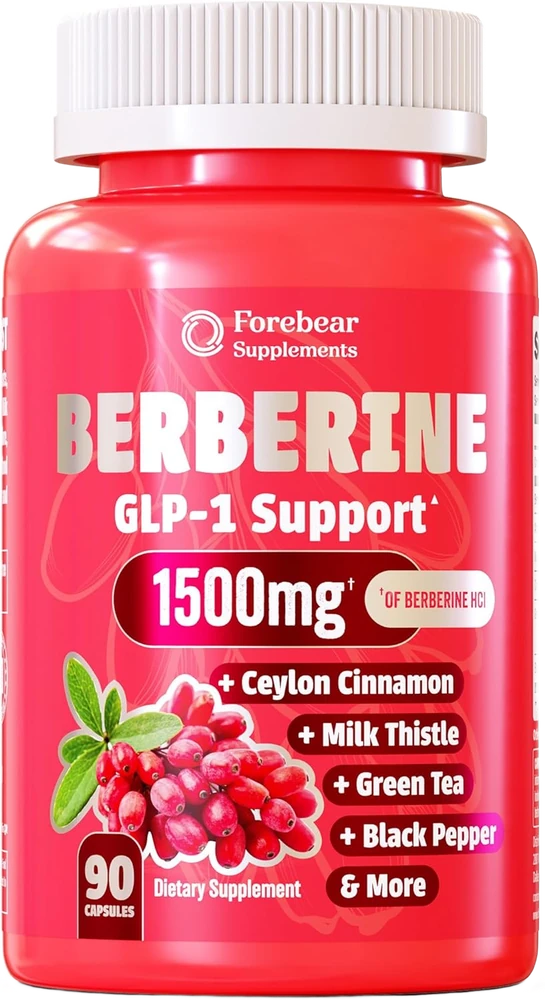
Most transparent (real berberine dose): Berberine 1500mg 'GLP-1' Weight Loss Supplement
The most honest product wearing a 'GLP-1' label: it leads with the one evidenced active at its real studied dose (1,500 mg berberine), clearly disclosed on the label instead of hidden in a 15-in-1 blend. Modest evidence, stated plainly.
Low-to-mid cost per servingLow-to-mid per serving (90 caps)
Why it wins: all four scores, pros & cons, full label
- Discloses a real 1,500 mg berberine dose — the studied amount — instead of hiding it in a proprietary blend
- Built around the one active with genuine human evidence, not a parade of fairy-dust botanicals
- Reasonably priced and close to standalone-berberine value
- Stimulant-free; the support ingredients (cinnamon, chromium) are at least metabolism-relevant
- Berberine's weight effect is modest and inconsistent (Amini 2020 found none; Xiong 2020 found small ↓BMI/waist) — a mild aid, not Ozempic
- You can still buy plain berberine for less; the 'GLP-1' label is marketing, and berberine can cause GI upset and interacts with medications
- Lead active
- Berberine HCl 1,500 mg per serving (the studied dose)
- Support
- Ceylon cinnamon, milk thistle, chromium, green tea, ALA
- Size
- 90 veggie capsules
- Label
- Dose disclosed (not a proprietary blend)

Our take — If you're going to buy a 'GLP-1' supplement at all, this is the one to start with — because it's the most honest. Instead of hiding behind a '15-in-1' label, it leads with 1,500 mg of berberine, which is the actual studied dose of the one ingredient in this category with real human evidence. We rank it #1 on transparency, but we keep the expectations honest: berberine's effect on weight is modest and the meta-analyses disagree (Amini 2020 found no significant change in weight, BMI, or waist; Xiong 2020 found a small significant drop in BMI and waist but still none on body weight), so think mild metabolic support, not fat loss. Two real caveats: you can buy plain berberine for less (the 'GLP-1' name is pure marketing), and berberine can cause GI upset and interacts with glucose-lowering and liver-metabolized medications — check with a doctor if that's you. As a transparent berberine product layered on top of a calorie deficit, it's the least-bad pick here. It is not, and we won't pretend it is, anything like a real GLP-1 drug.
 02
 03
 04
 05
 06
 07
 08
Who Wins Which Aspect
Sorted by overall SAC Product Score™ — the official ranking.
| # | Pick | Score | Active-ingredient transparency & dose35% | Evidence for the actives30% | Value vs buying standalone20% | Formulation quality15% | Buy |
|---|---|---|---|---|---|---|---|
| 01 | | 6.9 | 7.21 | 6.61 | 6.81 | 6.82 | Check price |
| Discloses a real 1,500 mg berberine dose — the studied amount — instead of hiding it in a proprietary blendBerberine's weight effect is modest and inconsistent (Amini 2020 found none; Xiong 2020 found small ↓BMI/waist) — a mild aid, not Ozempic | |||||||
| 02 | | 6.7 | 7.02 | 6.61 | 6.22 | 7.21 | Check price |
| The honest mechanism: soluble fiber before meals genuinely increases fullness — a real, modest effectStill not 'GLP-1' — it's fiber, and the appetite effect is modest, not a fat-loss drug | |||||||
| 03 | | 6.4 | 6.63 | 6.42 | 5.8 | 6.82 | Check price |
| Dihydroberberine is marketed for higher bioavailability than standard berberine HCl — plausible, and may mean fewer GI complaintsPremium price, and better absorption does NOT translate into a bigger weight-loss effect — berberine's evidence stays modest | |||||||
| 04 | | 6.0 | 5.8 | 5.83 | 6.03 | 6.82 | Check price |
| Among the better-disclosed blends — third-party tested, vegan, USA-made14-in-1 by design means each active — including berberine — is almost certainly under-dosed versus the studied amount | |||||||
| 05 | | 5.9 | 6.0 | 5.6 | 5.6 | 6.4 | Check price |
| Uses liposomal berberine, a delivery form marketed for better absorption15-in-1 means the berberine and every other active is spread thin — almost certainly under the studied dose | |||||||
| 06 | | 5.4 | 5.2 | 5.4 | 5.4 | 6.0 | Check price |
| Combines berberine with prebiotic fiber (inulin, beta-glucan) + probiotics for a gut-health angleStill 10-in-1, so the berberine dose is almost certainly below the studied amount | |||||||
| 07 | | 5.4 | 5.6 | 5.2 | 4.2 | 6.63 | Check price |
| Uses named, patented extracts (Supresa saffron, Morosil, Eriomin) at disclosed doses — better label transparency than anonymous blendsPremium celebrity-brand price — by far the weakest value-vs-standalone here | |||||||
| 08 | | 5.0 | 5.0 | 5.0 | 4.6 | 5.8 | Check price |
| Sensible 'before meals' timing for any appetite/glycemic effectA single small capsule cannot hold a real ~1-1.5 g berberine dose — so the evidenced active is badly under-dosed | |||||||
The Other 7, Ranked
- 02
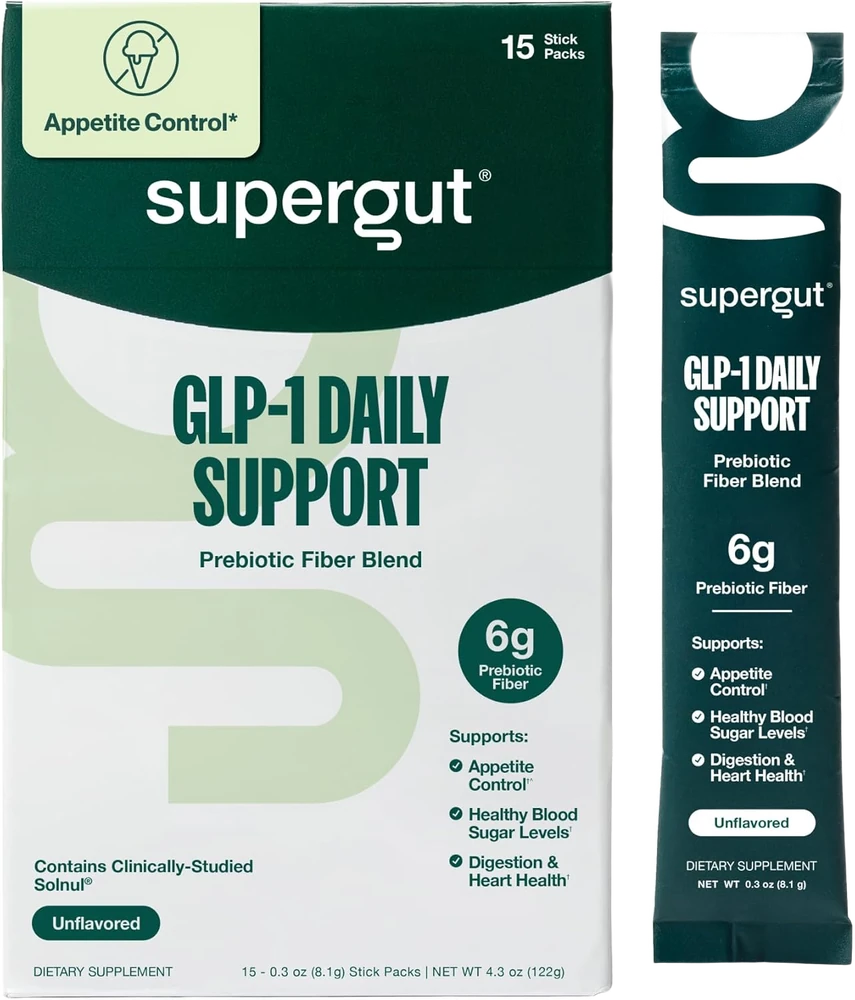
Best honest mechanism (soluble fiber): Supergut GLP1 Daily Support (Prebiotic Fiber)
6.7SAC Score™The most honest mechanism in the whole category: a real dose of viscous soluble fiber that fills the stomach and slows digestion before meals. No berberine, no fairy dust — just fiber, sugar-free.
StrongestFormulation quality7.21WeakestValue vs buying standalone6.2- Active
- Soluble prebiotic fiber (resistant starch + beta-glucan), ~6 g/serving
- Mechanism
- Viscous fiber → fullness + slower gastric emptying
- Label
- Fiber dose disclosed; plant-based, non-GMO
All four scores, pros & cons, full label
What We Like- The honest mechanism: soluble fiber before meals genuinely increases fullness — a real, modest effect
- No proprietary blend and no over-claimed berberine — just a transparent fiber dose, sugar-free
- Well-formulated and gentle; a brand that actually studies its fiber blend
- A sensible choice if 'feeling fuller' is your real goal
What You Live With- Still not 'GLP-1' — it's fiber, and the appetite effect is modest, not a fat-loss drug
- Plain glucomannan or psyllium delivers the same mechanism for less money
- Form
- Sugar-free drink mix
Our take — Supergut is the most honest product in this roundup, because it's essentially a soluble-fiber drink mix that doesn't pretend to be anything else. Viscous soluble fiber — here resistant starch and beta-glucan — absorbs water, swells, and slows gastric emptying, which genuinely makes you feel fuller when you take it before meals. That's the real, modest mechanism quietly underlying the entire 'GLP-1 / appetite' category, and Supergut delivers a transparent dose of it, sugar-free, without a berberine over-claim or a fairy-dust blend. It ranks #2 rather than #1 only because it isn't built around berberine (the one active with metabolic trial evidence), and because you can get the very same fiber mechanism from cheap glucomannan or psyllium (see our best-appetite-suppressant guide). But if your honest goal is to feel fuller and eat a bit less, this is a clean, well-made way to do it — just don't expect 'GLP-1' results, because it's fiber, not a drug.
- 03
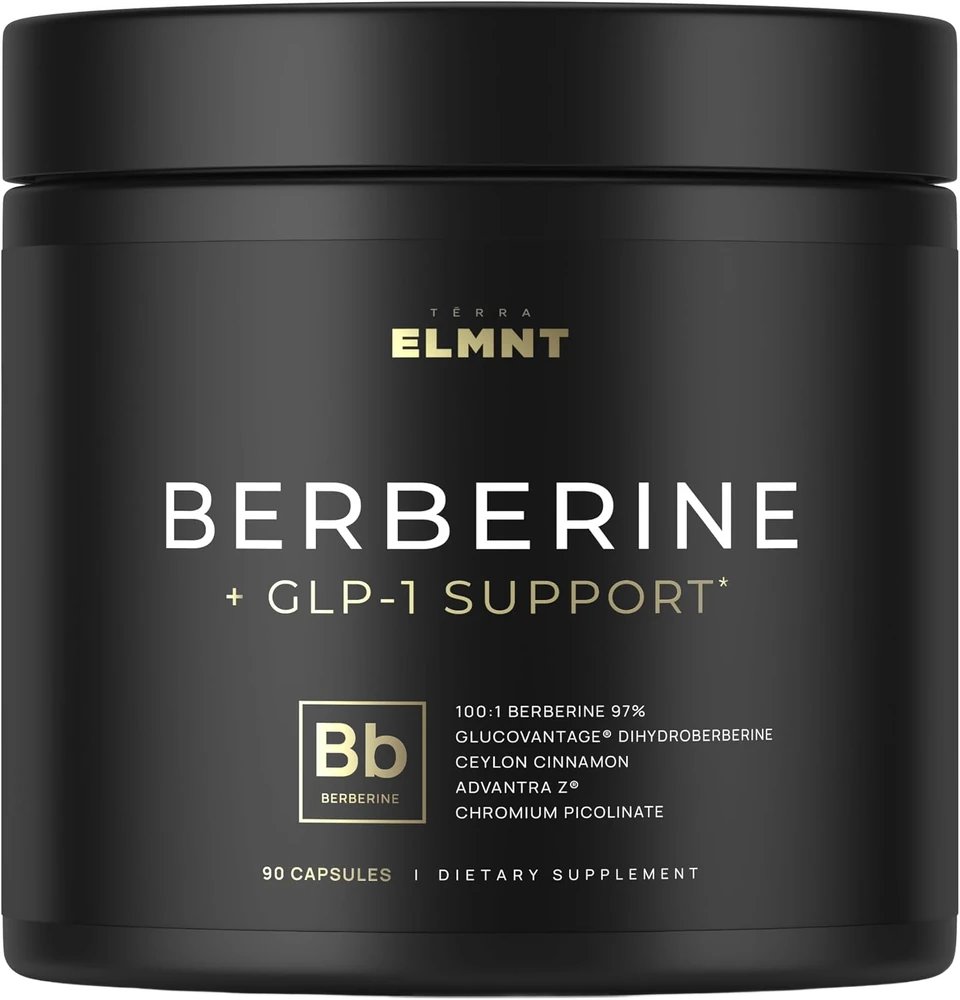
Best absorption (dihydroberberine): Super GLP-1 Berberine w/ Dihydroberberine
6.4SAC Score™Uses dihydroberberine, a reduced form of berberine marketed for higher absorption, so a smaller dose may go further. A reasonable pick if standard berberine upsets your stomach — at a premium price.
StrongestFormulation quality6.82WeakestValue vs buying standalone5.8- Lead active
- Dihydroberberine (reduced, better-absorbed berberine)
- Support
- Ceylon cinnamon, green tea, chromium picolinate
- Claim
- '100:1' high-potency / improved bioavailability
All four scores, pros & cons, full label
What We Like- Dihydroberberine is marketed for higher bioavailability than standard berberine HCl — plausible, and may mean fewer GI complaints
- Still built around the berberine family — the one evidenced active — not a fairy-dust blend
- Sensible support ingredients (cinnamon, chromium, green tea)
- A reasonable option for people who tolerate regular berberine poorly
What You Live With- Premium price, and better absorption does NOT translate into a bigger weight-loss effect — berberine's evidence stays modest
- Proprietary potency framing ('100:1') makes the exact dose harder to compare; standalone dihydroberberine also exists for less
- Use
- Berberine-family active in a more absorbable form
Our take — Super GLP-1 is the pick for someone who specifically wants the better-absorbed form of berberine. Dihydroberberine is a reduced form that the body is thought to absorb more efficiently than standard berberine HCl, so a lower milligram amount may deliver a similar blood level — which can also mean fewer of the GI complaints berberine is known for. That's a legitimate reason to choose it, and it keeps the formula anchored on the berberine family rather than a parade of under-dosed botanicals. But two honest caveats hold it at #3: better absorption is about getting berberine into you more comfortably, not about a bigger result — the underlying weight evidence is the same modest, inconsistent picture — and you pay a real premium for the form, when standalone dihydroberberine is also available for less. If regular berberine bothers your stomach and you want the absorbable version in a 'GLP-1' product, this is a fair choice; just keep the expectations modest and remember it's nothing like a prescription GLP-1.
- 04
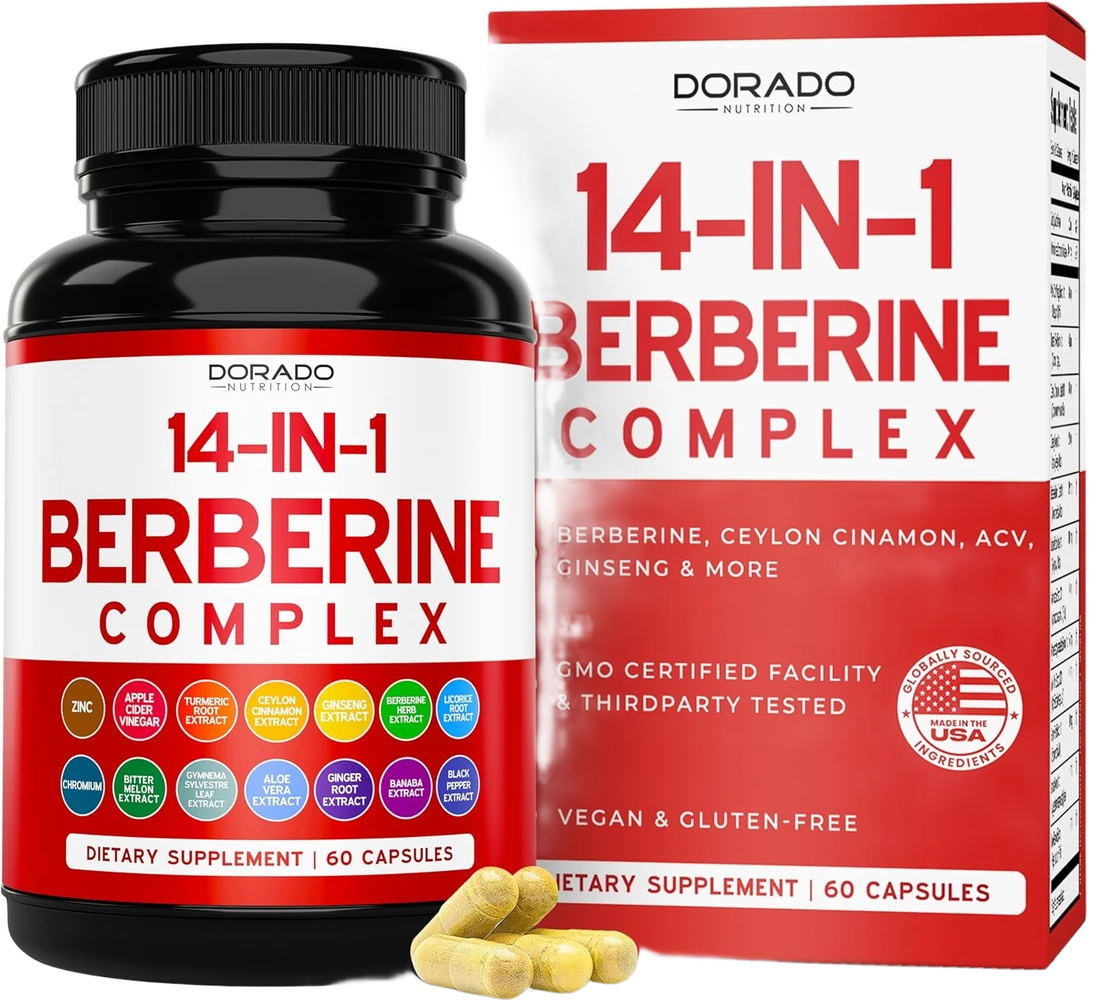
Best-disclosed blend (third-party tested): GLP-1 Supplement 14-in-1 (Berberine + ACV)
6.0SAC Score™If you want a multi-ingredient blend, this is among the better-run ones: third-party tested, vegan, USA-made, built around berberine + ACV + chromium. The catch is the 14-in-1 format itself — token doses by design.
StrongestFormulation quality6.82WeakestActive-ingredient transparency & dose5.8- Lead actives
- Berberine, ACV, chromium, Ceylon cinnamon, turmeric (+9 more)
- Testing
- Third-party tested
- Format
- 14-in-1 blend
All four scores, pros & cons, full label
What We Like- Among the better-disclosed blends — third-party tested, vegan, USA-made
- Anchored on berberine + chromium + cinnamon (metabolism-relevant) rather than pure filler
- Reasonable price for a multi-ingredient product
- A defensible choice if you specifically want an all-in-one capsule
What You Live With- 14-in-1 by design means each active — including berberine — is almost certainly under-dosed versus the studied amount
- ACV and most of the extras add little; you're paying for a long label more than a strong dose
- Quality
- Vegan, USA-made
Our take — This 14-in-1 is the best of the true 'kitchen-sink' blends here, and it earns its mid-table spot honestly. Credit where due: it's third-party tested, vegan, and USA-made, and it's anchored on berberine, chromium, and cinnamon — ingredients that at least relate to metabolism — rather than pure filler. But the format is the problem, and it's the reason it can't rank higher: cramming 14 ingredients into a serving almost guarantees that the one active that matters, berberine, is present well below the studied ~1,000-1,500 mg/day, and the ACV and assorted extras add little beyond a longer label. So this is the pick if you specifically want a single all-in-one capsule and value the testing and disclosure — but the honest truth is you'd get more of the evidenced active, more transparently and for less, from a standalone berberine product (#1 here, or our best-berberine-for-weight-loss guide). A well-run blend is still a blend.
- 05
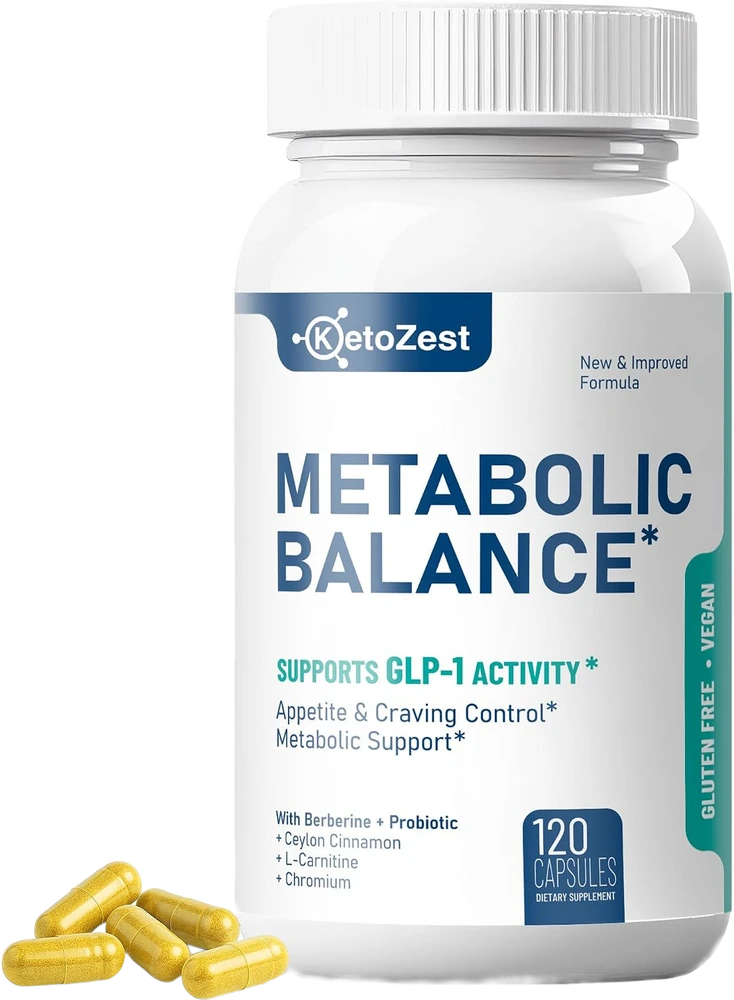
Liposomal berberine blend: KetoZest GLP-1 Support 15-in-1 (Liposomal Berberine)
5.9SAC Score™A 15-in-1 blend built on liposomal berberine (marketed for absorption) plus bitter melon and citrus bergamot. Cleaner-made than most, but the 15-in-1 format means the doses are spread thin.
StrongestFormulation quality6.4WeakestEvidence for the actives5.6- Lead active
- Liposomal berberine HCl (absorption-focused form)
- Support
- Bitter melon, citrus bergamot (+ 12 more)
- Format
- 15-in-1 blend
All four scores, pros & cons, full label
What We Like- Uses liposomal berberine, a delivery form marketed for better absorption
- Includes bitter melon and citrus bergamot, which have some glycemic-marker research
- Vegan, gluten-free, sugar-free, made in a GMP facility
- Reasonable if you want an absorption-focused berberine inside a blend
What You Live With- 15-in-1 means the berberine and every other active is spread thin — almost certainly under the studied dose
- Premium 'liposomal' framing without a clear standalone dose; the extras are mostly under-dosed
- Quality
- Vegan, gluten-free, sugar-free, GMP facility
Our take — KetoZest's 15-in-1 is a cleaner-made example of the absorption-focused berberine blend, and it lands mid-pack for honest reasons. On the plus side, it's built on liposomal berberine (a form marketed for better uptake) and adds bitter melon and citrus bergamot, two ingredients with at least some glycemic-marker research, in a vegan, sugar-free, GMP-made capsule. On the minus side, it's still a 15-in-1: the more names on the label, the less of each you actually get, and that almost certainly includes the berberine, which needs ~1-1.5 g/day to match the studies — hard to deliver alongside fourteen other things. The 'liposomal' and '15-in-1' framing also makes the real dose hard to pin down. It's a fair choice if you specifically want absorption-focused berberine wrapped in a broader formula and you value the clean manufacturing, but the transparent, full-dose, cheaper route is still standalone berberine plus fiber.
- 06
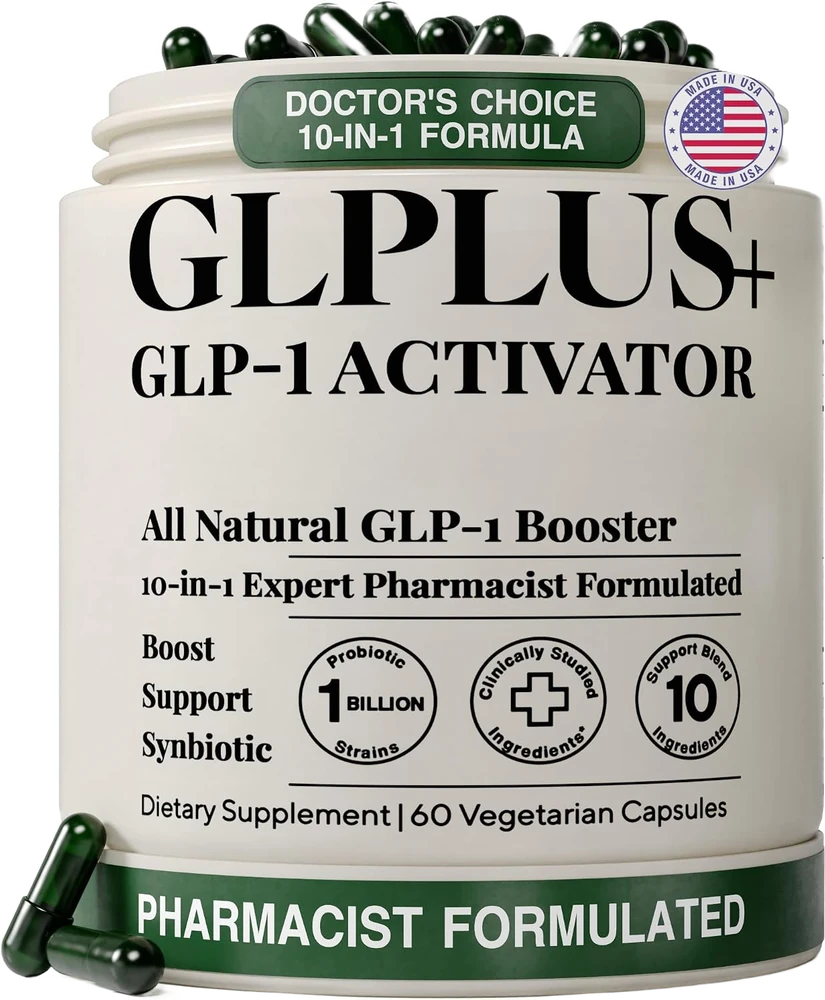
Berberine + probiotic blend: Plus Ultra GLP-1 10-in-1 (Berberine + Probiotics)
5.4SAC Score™A 10-in-1 berberine + probiotic/prebiotic blend pitched at gut health and metabolism. Slightly shorter ingredient list than the 15-in-1s, but the same core problem: the berberine is spread thin.
StrongestFormulation quality6.0WeakestActive-ingredient transparency & dose5.2- Lead active
- Berberine HCl 95% + turmeric, cinnamon, resveratrol
- Gut blend
- Inulin, beta-glucan + 5 probiotic strains
- Format
- 10-in-1 blend, 60 capsules
All four scores, pros & cons, full label
What We Like- Combines berberine with prebiotic fiber (inulin, beta-glucan) + probiotics for a gut-health angle
- Slightly shorter, more focused ingredient list than the 15-in-1 products
- Includes some soluble fiber, which is at least a real mechanism
- 60-capsule bottle at a mid-range price
What You Live With- Still 10-in-1, so the berberine dose is almost certainly below the studied amount
- Probiotic doses in such blends are usually modest; the 'GLP-1' framing oversells a basic gut + berberine combo
- Angle
- Gut health + metabolism support
Our take — Plus Ultra's 10-in-1 takes the berberine-plus-gut-health angle, and it's a slightly more focused blend than the 15-in-1s — which is why it edges them out but still sits low. The logic isn't crazy: it pairs berberine with prebiotic fiber (inulin, beta-glucan) and probiotic strains, and the fiber at least contributes a real fullness mechanism. But it runs into the same wall as every blend here: with ten ingredients sharing the formula, the berberine is almost certainly under the ~1-1.5 g/day the studies used, and probiotic doses in products like this tend to be modest. The 'GLP-1' name dresses up what is really a basic berberine + gut-support combo. If a gut-health spin genuinely appeals to you it's a defensible buy, but for the evidenced active at a real dose you're back to standalone berberine — plus, if you want the gut angle, a dedicated fiber or probiotic. It ranks #6 because it's an honest mid-tier blend, not because it does anything better than buying the parts.
- 07
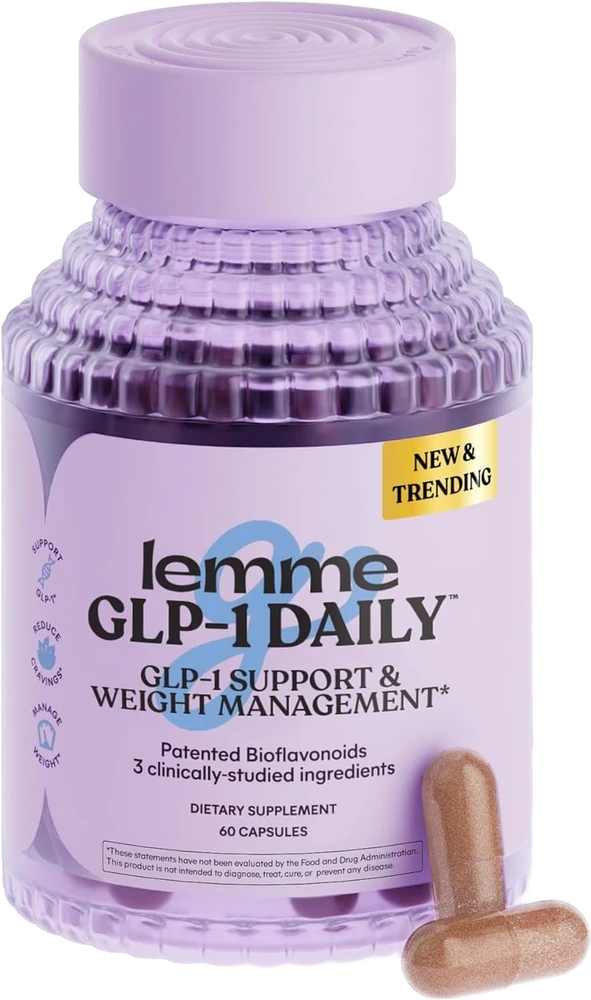
Branded non-berberine formula (premium): Lemme GLP-1 Daily
5.4SAC Score™A polished, well-branded formula using patented saffron (Supresa), Morosil red orange, and Eriomin lemon extracts — different actives from the berberine pack, with small studies behind them. The knock is the premium price.
StrongestFormulation quality6.63WeakestValue vs buying standalone4.2- Actives
- Supresa™ saffron, Morosil™ red orange, Eriomin® lemon extract
- Angle
- Appetite/snacking + metabolic markers (patented extracts)
- Size
- 60 capsules (2/day)
All four scores, pros & cons, full label
What We Like- Uses named, patented extracts (Supresa saffron, Morosil, Eriomin) at disclosed doses — better label transparency than anonymous blends
- Saffron has small studies on reduced snacking; Morosil and Eriomin have small metabolic-marker trials
- Polished, clean formulation: plant-based, sugar-free, non-GMO
- A coherent appetite/metabolic angle rather than a random kitchen sink
What You Live With- Premium celebrity-brand price — by far the weakest value-vs-standalone here
- The studies behind these extracts are small and industry-linked; it's still not GLP-1, and the effect is modest
- Label
- Plant-based, sugar-free, non-GMO; named patented doses
Our take — Lemme GLP-1 Daily is the polished, well-marketed outlier of this list: instead of berberine, it's built on three named, patented extracts — Supresa saffron, Morosil red orange, and Eriomin lemon — at disclosed doses, which is genuinely better label transparency than the anonymous blends. Each extract has a little science: saffron has small trials on reduced snacking, and Morosil and Eriomin have small studies on body-composition or metabolic markers. So the formula is coherent and clean (plant-based, sugar-free), not a random kitchen sink. What drags it to #7 is value and honesty about the evidence: it carries a steep celebrity-brand price, the supporting studies are small and often industry-funded, and — like everything here — it contains no GLP-1 and won't behave like the drug. If you specifically want a saffron-based appetite formula and don't mind paying for the brand, it's a legitimate, transparent choice; on pure cost-per-evidence, standalone berberine or fiber still wins.
- 08
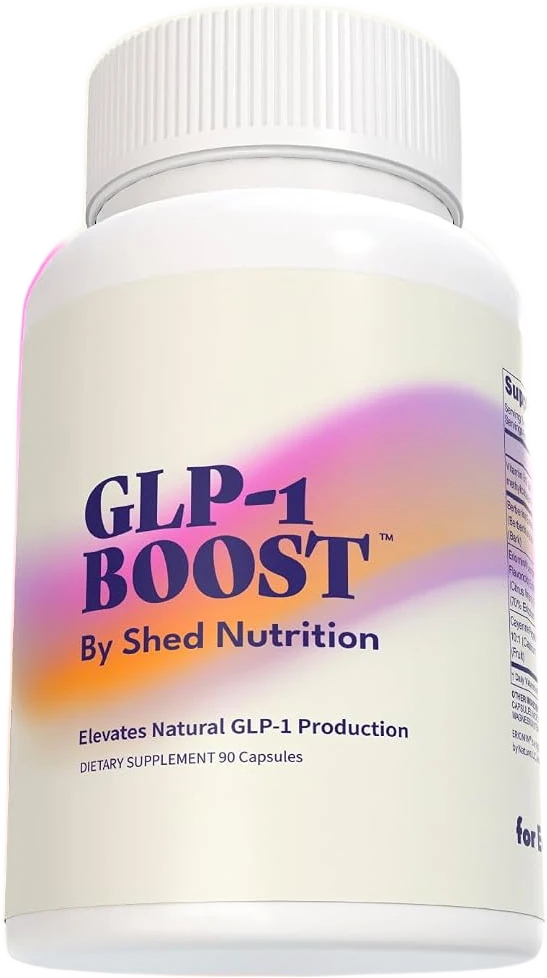
'Before meals' blend — weakest value: GLP-1 Boost (Eriomin + Berberine + Capsaicin)
5.0SAC Score™A 'one capsule before meals' formula combining Eriomin lemon extract, berberine, and capsaicin. The before-meals timing is sensible, but a single small capsule can't hold a real berberine dose.
StrongestFormulation quality5.8WeakestValue vs buying standalone4.6- Actives
- Eriomin® lemon extract, berberine, capsaicin
- Use
- 1 capsule before meals
- Size
- 90 capsules
All four scores, pros & cons, full label
What We Like- Sensible 'before meals' timing for any appetite/glycemic effect
- Includes Eriomin (small metabolic-marker studies) and some berberine
- Capsaicin has minor thermogenic data; the concept is coherent
- Convenient single-capsule dosing
What You Live With- A single small capsule cannot hold a real ~1-1.5 g berberine dose — so the evidenced active is badly under-dosed
- Capsaicin can cause GI/heartburn discomfort; weakest value-vs-standalone, and still not GLP-1
- Angle
- Pre-meal appetite/metabolic support
Our take — GLP-1 Boost rounds out the list, and it's a clear example of why format matters. The idea is reasonable on paper — Eriomin lemon extract, a little berberine, and capsaicin, taken as one capsule before meals, which is at least the right timing for any appetite or post-meal-glucose effect. But the single-capsule, before-meals format is also its undoing: there is simply no way to fit a real ~1,000-1,500 mg berberine dose into one small capsule alongside Eriomin and capsaicin, so the one active with genuine evidence is badly under-dosed by design. Capsaicin can also bring heartburn for some people, and the value-versus-standalone math is the weakest here. It isn't a scam — it's a coherent little formula — but it's the furthest from delivering the evidenced active at a meaningful dose, which is exactly the job this category keeps failing at. For a real berberine dose, buy it standalone; for fullness, take fiber before meals. That combination beats this comfortably, and neither is 'natural Ozempic' either.
The Guide In Four Short Lessons
What the evidence actually shows (and doesn't)
- Rx only
- Real GLP-1 drugs (semaglutide, tirzepatide) are prescription injectables — not on Amazon — and far more effective than any supplement here
- No effect
- 'Carb-insulin / natural Ozempic' hype: with calories equal, lower-carb diets did NOT raise energy expenditure or fat loss across 32 feeding studies (Hall 2017)
- ~1-1.5 g
- Berberine per day is the studied dose — and even then the weight effect is modest and inconsistent across meta-analyses (Amini 2020; Xiong 2020)
- Buy 1, not 15
- Standalone berberine + fiber before meals beats a 15-in-1 'fairy dust' blend on transparency, dose, and price
Sources: Hall & Guo 2017 (PMID 28193517; 32-study controlled-feeding meta-analysis; carb-insulin model); Amini 2020 (PMID 32147051; berberine anthropometrics meta-analysis); Xiong 2020 (PMID 32379652; berberine obesity-indices dose-response meta-analysis).
Know that no capsule contains GLP-1.
Semaglutide and tirzepatide are prescription injectables that produce roughly 15-20% weight loss in trials. None of the pills on this page acts as a GLP-1 agonist; that result is a doctor conversation.
Demand a disclosed dose of the actives.
Reward labels that state a real berberine or fiber dose. Penalize 15-in-1 blends that hide token amounts behind one number.
Compare the blend with buying its parts.
Berberine is the one active with real evidence, and even that is modest and inconsistent. You are almost always better off with standalone berberine plus fiber before meals.
Ranked by transparency (35%), evidence for the actives (30%), value vs buying standalone (20%) and formulation (15%) — grounded in 3 verified PMIDs: Hall & Guo 2017 (28193517), Amini 2020 (32147051), Xiong 2020 (32379652). Full scoring in the methodology below.
Each pick was scored 0-10 across four criteria, then weighted to a final composite. Active-ingredient transparency and dose carries the most weight (35%) because this category's biggest failure is hiding token amounts of the one or two evidenced actives inside a long 'proprietary blend' — we reward products that disclose a real berberine dose (~1,000-1,500 mg/day) or a real fiber dose, and we penalize 15-in-1 fairy-dust labels. Evidence for the actives (30%) asks whether the formula actually leans on the ingredients with some human evidence (berberine, soluble fiber) rather than a parade of botanicals with none — and we judge that evidence honestly as modest, citing the meta-analyses and their disagreement. Value versus buying standalone (20%) is the killer question for this category: since you can buy berberine and fiber alone cheaply and transparently, a blend has to justify its premium, and most don't. Formulation quality (15%) covers clean form, third-party testing, and the absence of pointless filler. Scores are honestly modest throughout — this is a hype category, so even the winner is 'least-bad and most transparent,' not a strong recommendation. We do not invent numbers; the only clinical figures we cite are the published studies, and we state their limits — and the 'natural Ozempic' hype — plainly.
Active-ingredient transparency & dose · 35%
Does the label disclose a real, usable dose of the actives that actually have evidence — berberine ~1,000-1,500 mg/day, or several grams of soluble fiber — rather than burying token amounts in a 'proprietary 15-in-1 blend'? A clear, full dose of the evidenced active scores high; a long ingredient list with hidden, under-dosed amounts scores low. This is the dominant criterion because hidden under-dosing is the category's central dishonesty.
Evidence for the actives · 30%
Does the formula lean on ingredients with real (if modest) human evidence — berberine for metabolic markers, soluble fiber for fullness — or on a parade of botanicals with little or none? We judge that evidence honestly: berberine's weight effect is small and inconsistent across meta-analyses, and the 'natural Ozempic' carb-insulin story is not supported by controlled-feeding research. Products built on the evidenced actives score higher than fairy-dust blends.
Value vs buying standalone · 20%
Since you can buy berberine and soluble fiber as cheap, transparent standalone products, every blend here has to justify its price. We compare cost per real dose of the evidenced active against simply buying that active alone. Products that charge a premium mainly for extra under-dosed ingredients are penalized; the closer a 'GLP-1' product gets to plain-berberine value, the better it scores.
Formulation quality · 15%
Clean form, third-party testing or GMP manufacturing, sensible delivery (e.g. dihydroberberine for absorption, or a real fiber dose), and the absence of pointless filler. This category is lightly regulated and full of hype labels, so verifiable quality is part of an honest recommendation — but it can't rescue a product that under-doses the actives or oversells the 'GLP-1' name.

What 'GLP-1 supplements' do in the body (honestly)
- 1
They contain no GLP-1 — the name is borrowed
Despite the label, these products contain no GLP-1 hormone and don't act as GLP-1 agonists. The real GLP-1 drugs (semaglutide, tirzepatide) are engineered peptides that powerfully mimic the hormone to slow gastric emptying and crush appetite — that's why they're prescription-only and 15-20%+ effective. A capsule of berberine and fiber is a completely different, far weaker thing.
- 2
Berberine: a mild metabolic nudge
Berberine is the one active with real human trials, mostly on blood sugar and metabolic markers; it activates AMPK and modestly affects glucose handling. On weight, the meta-analyses are split and the effect is small at best (Amini 2020 null; Xiong 2020 small ↓BMI/waist, none on weight). At ~1-1.5 g/day it's a mild aid — not a fat-loss drug, and not 'natural Ozempic.'
- 3
Fiber fills the stomach; the rest is mostly hype
Any honest 'appetite' effect comes from soluble fiber (glucomannan, beta-glucan, resistant starch, inulin) swelling into a gel and slowing digestion before meals — real but modest. The carb-insulin / 'natural Ozempic' story behind these blends isn't supported by controlled-feeding research (Hall 2017). The long lists of extra botanicals are mostly under-dosed marketing.
What to honestly expect
Mostly a new habit (maybe mild GI effects)
You'll mainly notice a daily routine. Berberine can cause some GI upset (cramping, loose stools) as you start; fiber before meals may make you feel a bit fuller. Many people feel nothing specific. That's normal and expected for this category.
Maybe a small glycemic/appetite nudge
At a real berberine dose, some people see modestly steadier post-meal energy or slightly easier portion control; fiber adds some fullness. Any scale movement here is almost certainly your diet, not the supplement. Compare honestly against what your eating explains.
Decide honestly
Track weight, waist, and appetite. If nothing has shifted beyond your diet — that's the expected result; this isn't Ozempic. Keep it only if it's genuinely helping, consider switching to cheaper standalone berberine + fiber, and if you want real results talk to a doctor about actual options.
The bottom line
If you must buy a "GLP-1" label, the Berberine 1500mg supplement (#1) is the most honest one.
It leads with a real, disclosed 1,500 mg dose of the one evidenced active instead of hiding it inside a 15-in-1 blend. We rank it #1 on transparency while keeping expectations honest: berberine's weight effect is modest and inconsistent (Amini 2020 null; Xiong 2020 small ↓BMI/waist), so it's mild metabolic support layered on a calorie deficit, not Ozempic.
For fullness, the honest mechanism is fiber — Supergut (#2); for tolerance, the better-absorbed form — dihydroberberine (#3).
Supergut is the most honest mechanism in the category: viscous soluble fiber that fills the stomach before meals — though cheap glucomannan or psyllium does the same job. Super GLP-1 with dihydroberberine (#3) is the better-absorbed berberine option if standard berberine upsets your stomach, at a premium. Below those, the 14-in-1 (#4), KetoZest 15-in-1 (#5), Plus Ultra 10-in-1 (#6), Lemme (#7) and the before-meals capsule (#8) spread the actives too thin to recommend.
The smartest move isn't on this list at all — spend your effort on the deficit, not the pill.
Buy standalone berberine at a clean ~1,000-1,500 mg/day, take soluble fiber before meals for the honest appetite mechanism — cheaper, transparent, the same actives. Then put your real effort into a sustained calorie deficit, protein and movement. Used as a mild add-on with eyes open, a transparent berberine product is fine; sold as "natural Ozempic," none of these is one.
Quick Answers
Do 'GLP-1 supplements' work like Ozempic?
No — and this is the most important thing to understand. The real GLP-1 medications, semaglutide (Ozempic/Wegovy) and tirzepatide (Mounjaro/Zepbound), are prescription injectable drugs that produce roughly 15-20% or more body-weight loss in clinical trials by powerfully mimicking the GLP-1 hormone. The 'GLP-1 supplements' on Amazon contain no GLP-1 at all and are not GLP-1 agonists. They're mostly berberine, soluble fiber, probiotics, cinnamon, and chromium — a long-standing supplement blend re-branded as 'natural Ozempic' to ride the wave. At best they offer a mild metabolic nudge. They are not comparable to the drugs, and any marketing that implies otherwise is hype. If you want a clinical-grade GLP-1 effect, that's a conversation with a doctor, not a supplement.
Is there really a 'natural Ozempic'?
No. 'Natural Ozempic' is a marketing phrase, not a real thing. The pitch usually leans on the carbohydrate-insulin model — the idea that carbs spike insulin, insulin makes you store fat, so blunting it is 'natural Ozempic.' But when researchers actually tested it under controlled conditions, the story didn't hold: Hall and Guo's 2017 meta-analysis of 32 controlled-feeding studies found that, with calories held equal, lower-carb diets did NOT increase energy expenditure or fat loss — if anything, very slightly the opposite. So we don't endorse the 'natural Ozempic' claim. The closest thing to a genuinely helpful active in these products is berberine, and its real-world effect is modest at best, nowhere near a GLP-1 drug.
Does berberine actually cause weight loss?
It might help a little, but the honest answer is 'modest and inconsistent.' Berberine is the one ingredient in these blends with real human trials behind it, mostly for blood sugar and metabolic markers. On weight specifically, the meta-analyses disagree: a 2020 review (Amini) found no significant effect on body weight, BMI, or waist circumference, while another 2020 dose-response review (Xiong) found a small but significant reduction in BMI (about -0.29 kg/m²) and waist (about -2.75 cm) — but still none on body weight. So berberine is best thought of as a mild glycemic/metabolic aid at the studied dose of roughly 1,000-1,500 mg per day (split into 2-3 doses), not a weight-loss drug. And if berberine is what you want, you're better off buying it standalone than inside a 'GLP-1' blend.
Should I buy a 15-in-1 'GLP-1' blend or just standalone berberine?
For most people, standalone berberine is the smarter buy. The '15-in-1' (or 10-, or 17-in-1) framing sounds comprehensive, but in practice a long ingredient list usually means each active is present in a small, under-dosed amount — often hidden inside a 'proprietary blend' so you can't even see how much berberine you're getting. The studied berberine dose is roughly 1,000-1,500 mg/day, which is hard to fit alongside a dozen other ingredients in a couple of capsules. Buying plain berberine (and, separately, soluble fiber for the appetite mechanism) gets you a transparent, full dose for less money, without paying for fairy-dust extras. See our best-berberine-for-weight-loss guide for clean standalone options.
What's the honest mechanism behind any 'appetite' effect?
Soluble fiber, not magic. Several of these products include glucomannan, beta-glucan, resistant starch, or inulin — viscous soluble fibers that absorb water, swell, and slow gastric emptying, which genuinely makes you feel fuller when taken before meals. That's a real, if modest, mechanism, and it's the most honest thing in the category. Berberine may also modestly blunt post-meal glucose. But neither is 'GLP-1.' If appetite control is your goal, taking soluble fiber before meals with a full glass of water (see our best-appetite-suppressant guide) is the boring, effective, cheap version of what these blends are gesturing at — minus the 'natural Ozempic' label and markup.
Are these 'GLP-1 supplements' safe?
For most healthy adults at the labeled dose they're generally well tolerated, but there are real caveats — mostly from the berberine. Berberine can cause GI upset (cramping, diarrhea, constipation), and more importantly it can interact with medications: it lowers blood sugar (a concern if you take metformin or other glucose-lowering drugs), and it inhibits liver CYP enzymes, which can change the levels of many prescription drugs. It's not recommended in pregnancy or breastfeeding. The proprietary 'kitchen-sink' blends also make it harder to know exactly what — and how much — you're taking. If you're on any medication, pregnant, nursing, or managing a health condition, talk to your doctor before starting, and don't treat any of this as a replacement for medical care.
If the evidence is weak, why does this list exist at all?
Because the search demand is enormous and the honest information is scarce — so the most useful thing we can do is be the truthful voice. People are typing 'GLP-1 supplement' and 'natural Ozempic' into Google by the million, and most of what they find is hype that oversells these blends and never mentions that the real drugs are prescription-only and vastly stronger. Our job isn't to refuse the topic; it's to rank what's actually on the shelf by transparency and real dose, name the hype as hype, point people toward the cheaper standalone alternatives, and tell them plainly when a doctor — not a supplement — is the right call. That's the Trust standard: meet the question honestly rather than either hyping it or ignoring it.
Every Claim Ranked Above Traces Back To One Of These
5 sources — studies link to PubMed, product specs to the manufacturer
- [1] Hall & Guo 2017 PMID 28193517 — Obesity Energetics: Body Weight Regulation and the Effects of Diet Composition. Meta-analysis of 32 controlled-feeding studies that varied the carbohydrate-to-fat ratio while holding calories constant. When calories were equated, lower-fat (higher-carb) diets were associated with slightly GREATER energy expenditure (~26 kcal/day) and fat loss (~16 g/day) than lower-carb diets — the opposite of what the carbohydrate-insulin model predicts. This is the honest counterweight to the 'insulin makes you fat, so this is natural Ozempic' pitch used to sell these supplements: under controlled conditions, cutting carbs does not unlock a metabolic advantage, so the 'natural Ozempic' framing is not supported.
- [2] Amini 2020 PMID 32147051 — Effects of berberine and barberry on anthropometric measures: A systematic review and meta-analysis of randomized controlled trials. Systematic review and meta-analysis of randomized controlled trials (12 trials, ~849 subjects). Pooled analysis found NO statistically significant effect of berberine/barberry on body weight (WMD ≈ -0.11 kg), BMI (≈ -0.16 kg/m²), or waist circumference (≈ -0.58 cm). One half of the honest berberine picture: at the trial level, berberine did not reliably reduce these anthropometric measures, which is why we frame berberine as a mild metabolic aid rather than a weight-loss drug.
- [3] Xiong 2020 PMID 32379652 — The effect of berberine supplementation on obesity indices: A dose-response meta-analysis and systematic review of randomized controlled trials. Dose-response meta-analysis of 10 randomized controlled trials. Found a small but statistically significant reduction in BMI (WMD: -0.29 kg/m², p = 0.006) and waist circumference (WMD: -2.75 cm, p = 0.01) with berberine, but NO significant change in body weight (WMD: -0.11 kg, p = 0.79). The other half of the honest picture: this analysis is more favorable than Amini 2020 on BMI/waist but still null on body weight — the two meta-analyses disagreeing is exactly why berberine's weight effect is best described as modest and inconsistent, not as 'natural Ozempic.'
- [4] SAC News — Berberine Isn't 'Nature's Ozempic': Pooled Trials Show −0.11 kg of Body Weight (p = 0.79). Berberine genuinely lowers blood sugar — HbA1c fell 0.63% across 37 trials in 3,048 patients. But the weight claim that made it go viral does not hold: pooled randomized trials found no significant change in body weight at all. Use it for glucose, not your waistline.
- [5] SAC News — Everyone's Fibermaxxing — Almost Nobody Knows Why It Works: Fermentable Fiber Makes Your Own GLP-1. The trend is right that fiber matters, but for the wrong reason. Fermentable fiber feeds gut bacteria that release GLP-1 — the same appetite hormone the new weight-loss drugs mimic — for free. In a randomized trial, delivering fiber's propionate to the colon raised GLP-1, cut how much people ate, and cut weight gain. The catch the trend skips: jumping from 15 g to 40 g overnight backfires.
Affiliate disclosure: every Amazon link uses our Associates tag (superachieverclub-20). We earn a small commission at no cost to you; it funds independent reviews. We never accept payment to change a ranking.