
KetoZest GLP-1 Support 15-in-1 (Liposomal Berberine) Review
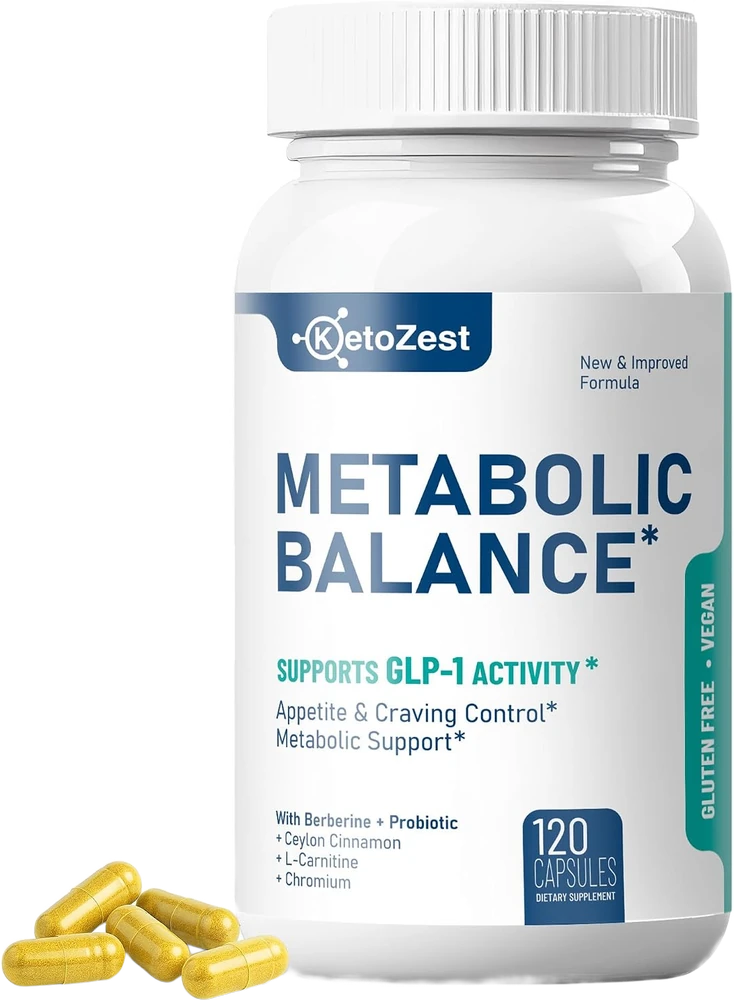 #5 of 8 · Liposomal berberine blend✓ Label verified · Supplement Facts read Sep 7, 2026
Real retailer photo, cut out. Label unedited.
Skip it. A cleaner-made 15-in-1 — but fifteen ingredients still spread the berberine too thin. KetoZest's 15-in-1 is a cleaner-made absorption-focused berberine blend: liposomal berberine plus bitter melon and citrus bergamot, in a vegan, sugar-free, GMP-made capsule.
Mid-to-premium cost per servingMid-to-premium per serving
Why It Scores 5.9 — And The Label Line Behind Each Number
Active-ingredient transparency & dose
35% of score15-in-1 means the berberine and every other active is spread thin. The label does disclose a standalone amount — Berberine HCI 250 mg per 3-capsule serving — which is genuinely transparent, but that number is well under the ~1,000-1,500 mg/day used in the studies, so the dose itself is confirmed low.
- Lead active
- Liposomal berberine HCl — 250 mg/serving (absorption-focused form)
Evidence for the actives
30% of scoreUses liposomal berberine (an absorption-focused form) plus bitter melon and citrus bergamot, which have some glycemic-marker research — but all are spread thin across fifteen ingredients.
Value vs buying standalone
20% of scoreBerberine HCI is disclosed at 250 mg per serving — well under the ~1,000-1,500 mg the studies used — and the extras are mostly under-dosed too, so value versus buying berberine alone is weak.
Formulation quality
15% of scoreVegan, gluten-free, sugar-free, made in a GMP facility — clean manufacturing is the one axis where it holds up.
- Quality
- Vegan, gluten-free, sugar-free, GMP facility
- More Specs
- Support
- Bitter melon, citrus bergamot (+ 12 more)
- Format
- 15-in-1 blend
- What it is NOT
- Contains no GLP-1; a berberine blend, not a GLP-1 drug
Label verified. Every figure read from the Supplement Facts photo, Sep 7, 2026.
Marketing Claims Vs. Reality
Uses liposomal berberine for better absorption.
Liposomal delivery is marketed for improved uptake, which is plausible, and the label does disclose a standalone dose — Berberine HCI 250 mg per 3-capsule serving — but that is well under the ~1,000-1,500 mg the studies used, so it does not reach the studied amount. PARTIAL.
A 15-in-1 GLP-1 support formula.
The ingredient list is long and includes some glycemic-marker actives (bitter melon, citrus bergamot), but 15 ingredients per serving means each is spread thin. Contains no GLP-1; the framing is marketing.
Vegan, gluten-free, sugar-free, GMP-made.
The listing states a vegan, gluten-free, sugar-free formula made in a GMP facility — genuine clean-manufacturing points and the product's strongest axis.
What Our Test Actually Found
Correction: the label discloses Berberine HCI 250 mg per serving
An earlier version of this review said the listing does not disclose a clear standalone berberine amount. The Supplement Facts panel reads Berberine HCI 250 mg per 3-capsule serving (Berberis aristata). We re-read the label on Sep 7, 2026 and corrected every place that claimed the dose was undisclosed, and re-scored the transparency & dose criterion to reflect that the dose is disclosed, just low.
Liposomal berberine is a plausible absorption angle
Berberine is poorly absorbed, so a liposomal delivery form is a reasonable attempt to improve uptake. Bitter melon and citrus bergamot also have some small glycemic-marker research, so the actives are not random.
But 15-in-1 spreads everything too thin
The structural problem is unavoidable: with fifteen ingredients sharing a couple of capsules, the berberine is almost certainly below the ~1,000-1,500 mg/day the trials used. Better absorption of an under-dosed amount is still an under-dosed amount.
The label discloses the dose — and it is low
The Supplement Facts panel prints Berberine HCI 250 mg per 3-capsule serving — a real, checkable number, not a hidden one. The problem is the number itself: 250 mg is well under the ~1,000-1,500 mg/day the studies used, so even with full disclosure this is a confirmed under-dose.
Clean manufacturing is the real plus
Where it genuinely earns points is formulation quality — vegan, gluten-free, sugar-free, GMP-made. That keeps it out of the bottom tier, but clean manufacturing cannot rescue an under-dosed active.
Full analysis: all pros & cons (6), buy if / skip if
- Uses liposomal berberine, a delivery form marketed for better absorption
- Includes bitter melon and citrus bergamot, which have some glycemic-marker research
- Vegan, gluten-free, sugar-free, made in a GMP facility
- Reasonable if you want an absorption-focused berberine inside a blend
- 15-in-1 means the berberine and every other active is spread thin — almost certainly under the studied dose
- Berberine HCI is disclosed at only 250 mg per serving — well under the ~1,000-1,500 mg the studies used — and the other extras are mostly under-dosed too
- You specifically want an absorption-focused (liposomal) berberine inside a broader formula
- You value clean manufacturing — vegan, gluten-free, sugar-free, GMP facility
- You accept that fifteen ingredients means each is spread thin
- You want a real, trial-level berberine dose — a 15-in-1 cannot deliver it
- You want more than the disclosed 250 mg of berberine — well under the ~1,000-1,500 mg the studies used
- You want the best value on the evidenced active — standalone berberine wins
KetoZest's 15-in-1 is a cleaner-made absorption-focused berberine blend: liposomal berberine plus bitter melon and citrus bergamot, in a vegan, sugar-free, GMP-made capsule. But it is still a 15-in-1 — the more names on the label, the less of each you get, and that includes the berberine: the label discloses Berberine HCI 250 mg per 3-capsule serving, well under the ~1-1.5 g/day the studies used. The transparent, full-dose, cheaper route is still standalone berberine plus fiber.
KetoZest's 15-in-1 is a cleaner-made example of the absorption-focused berberine blend: built on liposomal berberine plus bitter melon and citrus bergamot, in a vegan, sugar-free, GMP-made capsule. But it is still a 15-in-1 — the more names on the label, the less of each you get, and that almost certainly includes the berberine, which needs ~1-1.5 g/day to match the studies.
A cleaner blend that is still under-dosed — skip it for standalone berberine unless you want the absorption angle.

KetoZest's 15-in-1 is a cleaner-made example of the absorption-focused berberine blend, and it lands mid-pack for honest reasons. On the plus side, it is built on liposomal berberine (a form marketed for better uptake) and adds bitter melon and citrus bergamot, two ingredients with at least some glycemic-marker research, in a vegan, sugar-free, GMP-made capsule. On the minus side, it is still a 15-in-1: the more names on the label, the less of each you actually get, and that includes the berberine — the label discloses Berberine HCI 250 mg per 3-capsule serving, well under the ~1-1.5 g/day the studies used — hard to fix while sharing capsules with fourteen other things. The dose is disclosed, just low. It is a fair choice if you specifically want absorption-focused berberine wrapped in a broader formula and you value the clean manufacturing, but the transparent, full-dose, cheaper route is still standalone berberine plus fiber — and none of this is a prescription GLP-1.
If This Doesn’t Fit — Try These
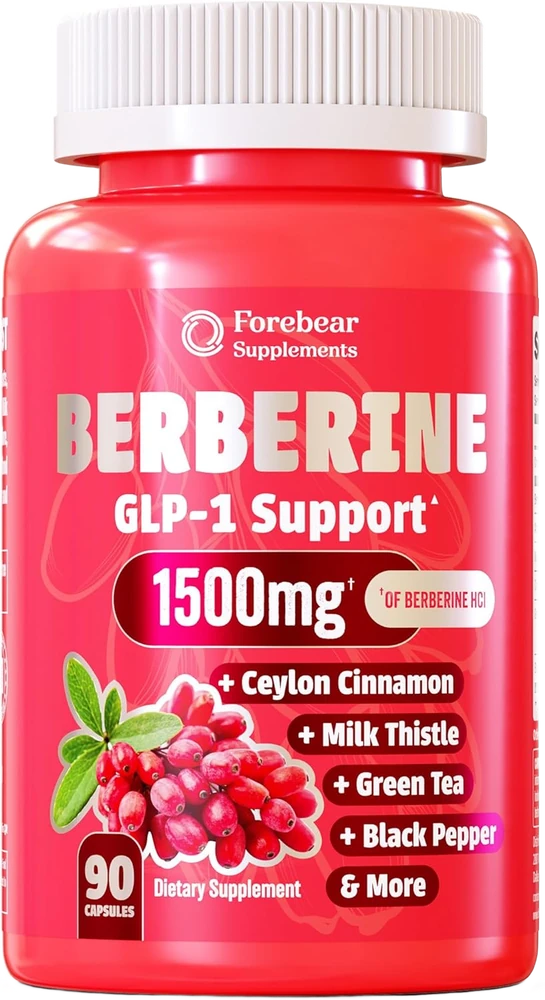 01
01Berberine 1,500 mg GLP-1 Support
If you're going to buy a 'GLP-1' supplement at all, this is the one to start with — because it's the most honest.
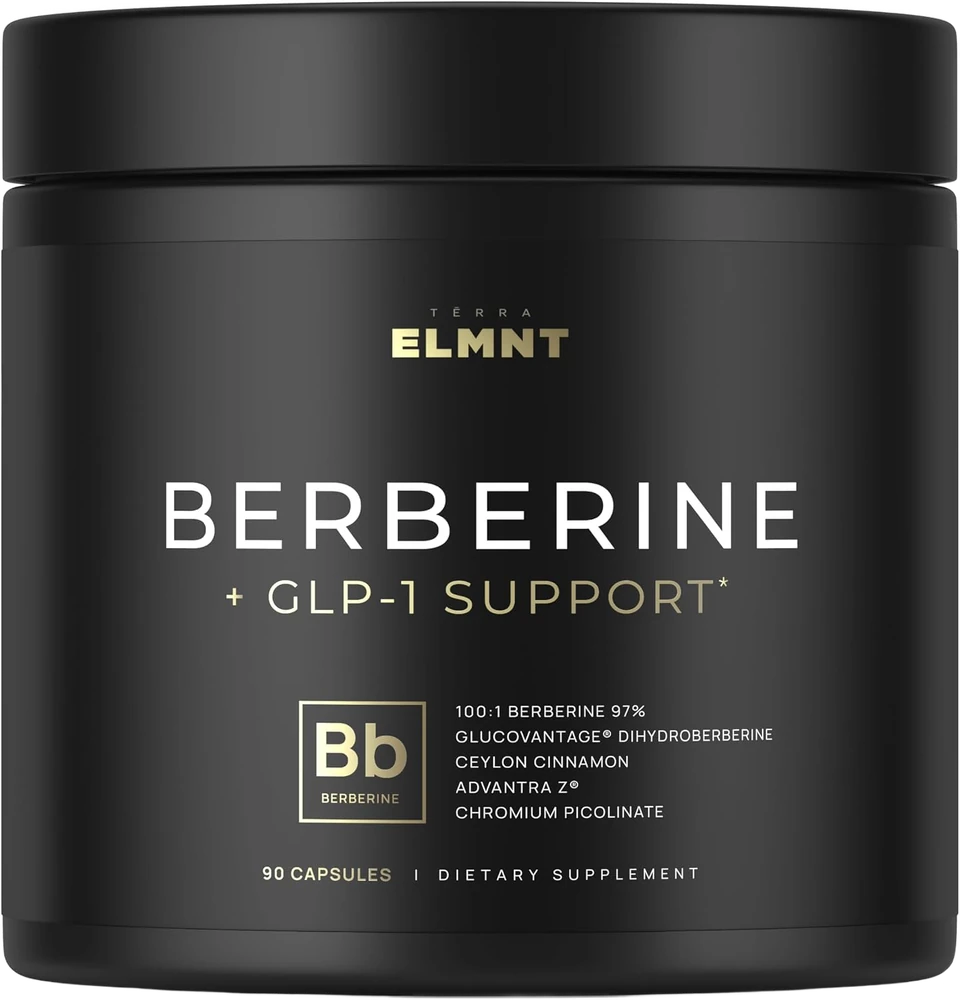 03
03Super GLP-1 Dihydroberberine
Super GLP-1 is the pick for someone who specifically wants the better-absorbed form of berberine.
Standalone berberine (~1,000-1,500 mg/day)
Full trial-level dose, transparent, cheaper.
Quick Answers
Is liposomal berberine worth it here?
Liposomal delivery is a plausible way to improve berberine's poor absorption, so the concept is reasonable. The Supplement Facts panel does disclose a standalone dose — Berberine HCI 250 mg per 3-capsule serving — but that is well under a quarter of the ~1,000-1,500 mg/day the studies used, so better absorption of a confirmed under-dose is hard to bank on.
Why does a 15-in-1 rank below simpler picks?
Because the format guarantees under-dosing. The studied berberine dose is ~1,000-1,500 mg/day, which cannot fit alongside fourteen other ingredients in a couple of capsules. More names on the label means less of each — including the one active that actually has evidence.
What is genuinely good about it?
Clean manufacturing. It is vegan, gluten-free, sugar-free, and made in a GMP facility, and bitter melon and citrus bergamot have some small glycemic-marker research. That formulation quality keeps it mid-pack rather than at the bottom.
Is it like Ozempic?
No. It contains no GLP-1 and is not a GLP-1 agonist — it is a berberine blend with a 'GLP-1' label. The real GLP-1 drugs are prescription injectables far stronger than any supplement. For a real berberine dose, buy it standalone; for fullness, take fiber before meals.
Sources & Further Reading
3 peer-reviewed sources, each linked to PubMed
- [1] Hall & Guo 2017 PMID 28193517 — Obesity Energetics: Body Weight Regulation and the Effects of Diet Composition. Meta-analysis of 32 controlled-feeding studies varying the carbohydrate-to-fat ratio at equal calories. When calories were equated, lower-carb diets did NOT raise energy expenditure or fat loss (if anything, slightly the reverse) — the honest counterweight to the 'natural Ozempic' / carb-insulin pitch used to sell 'GLP-1' supplements.
- [2] Amini 2020 PMID 32147051 — Effects of berberine and barberry on anthropometric measures: A systematic review and meta-analysis of randomized controlled trials. Systematic review and meta-analysis of RCTs (12 trials, ~849 subjects). Found NO statistically significant effect of berberine/barberry on body weight (WMD ~= -0.11 kg), BMI (~= -0.16 kg/m2), or waist circumference (~= -0.58 cm). One half of the honest berberine picture — a mild metabolic aid, not a weight-loss drug.
- [3] Xiong 2020 PMID 32379652 — The effect of berberine supplementation on obesity indices: A dose-response meta-analysis and systematic review of randomized controlled trials. Dose-response meta-analysis of 10 RCTs. Found a small but significant reduction in BMI (WMD -0.29 kg/m2, p=0.006) and waist (WMD -2.75 cm, p=0.01), but NO significant change in body weight (p=0.79). More favorable than Amini 2020 on BMI/waist but still null on weight — the disagreement is why berberine's effect is 'modest and inconsistent'.
Affiliate disclosure: every Amazon link uses our Associates tag (superachieverclub-20). We earn a small commission at no cost to you; it funds independent reviews. We never accept payment to change a ranking.