
Berberine 1500mg 'GLP-1' Weight Loss Supplement Review
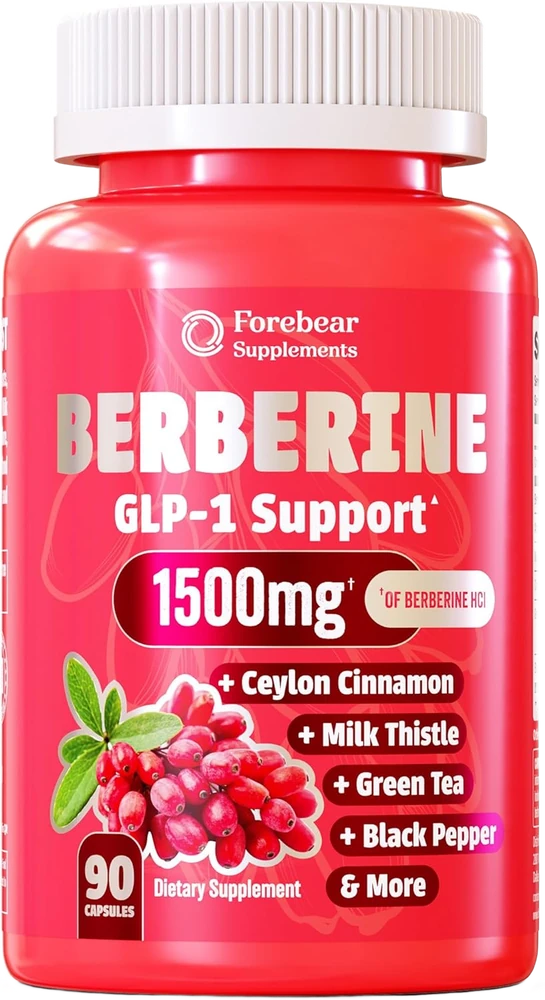 #1 of 8 · Most transparent✓ Label verified · Supplement Facts read Sep 7, 2026
Real retailer photo, cut out. Label unedited.
Consider it. The most transparent 'GLP-1' label here — a real 1,500 mg berberine dose, honest modest evidence. If you are going to buy a 'GLP-1' supplement at all, this is the one to start with, because it is the most honest: it leads with 1,500 mg of berberine (the actual studied dose of the one evidenced active) instead of hiding it in a '15-in-1' blend.
Low-to-mid cost per servingLow-to-mid per serving (90 caps)
Why It Scores 6.9 — And The Label Line Behind Each Number
Active-ingredient transparency & dose
35% of scoreDiscloses a real 1,500 mg berberine dose — the studied amount — on the label rather than burying it in a proprietary blend. The single most transparent 'GLP-1'-labeled product in the lineup, which is exactly why it ranks first.
- Lead active
- Berberine HCl 1,500 mg per serving (the studied dose)
- Label
- Berberine dose disclosed — not a proprietary blend
Evidence for the actives
30% of scoreBuilt around berberine, the one active in this category with genuine human trials, rather than a parade of fairy-dust botanicals. Judged honestly: the weight evidence is small and inconsistent (Amini 2020 null; Xiong 2020 small ↓BMI/waist).
Value vs buying standalone
20% of scoreClose to plain-berberine value — fair for a labeled product, though you can still buy standalone berberine for less. The support ingredients add little to justify a premium.
- Size
- 90 veggie capsules
Formulation quality
15% of scoreStimulant-free veggie capsules; the support ingredients (Ceylon cinnamon, chromium, ALA) are at least metabolism-relevant rather than pure filler.
- Form
- Veggie capsule, stimulant-free
- More Specs
- Support
- Ceylon cinnamon, milk thistle, chromium picolinate, green tea, ALA
- What it is NOT
- Contains no GLP-1; not a GLP-1 agonist; not comparable to prescription semaglutide/tirzepatide
Label verified. Every figure read from the Supplement Facts photo, Sep 7, 2026.
Marketing Claims Vs. Reality
Delivers 1,500 mg of berberine per serving — the studied dose.
The listing discloses a 1,500 mg berberine HCl dose on the label, matching the ~1,000-1,500 mg/day range used in the clinical trials. This is the product's central transparency claim and it holds up.
A 'GLP-1' weight-loss supplement.
It is marketed as 'GLP-1' but contains no GLP-1 and is not a GLP-1 agonist — it is a berberine product. We mark PARTIAL: the berberine is real and disclosed, but the 'GLP-1' framing is marketing, and berberine's weight effect is modest and inconsistent (Amini 2020; Xiong 2020).
Supports healthy metabolism and weight management.
Directionally plausible — berberine has metabolic/glycemic trial evidence — but the weight-specific evidence is small and split across meta-analyses. Reasonable as a mild-support claim, not a proven weight-loss outcome.
What Our Test Actually Found
The transparency is the headline — and it is genuinely rare here
Most 'GLP-1' products bury their berberine inside a proprietary '15-in-1' blend so you cannot see the dose. This one prints 1,500 mg on the label — the actual studied amount — which lets you compare potency on a real number. That single fact is why it outranks flashier blends.
Berberine's weight evidence is modest and the meta-analyses disagree
Berberine is the one active in these blends with real human trials, mostly on blood sugar and metabolic markers. On weight specifically, Amini 2020 found no significant effect on weight, BMI, or waist, while Xiong 2020 found a small significant drop in BMI and waist but still none on body weight. Treat it as a mild glycemic/metabolic aid at ~1-1.5 g/day, not a fat-loss drug.
You can still buy plain berberine for less
The 'GLP-1' name is pure marketing markup. A standalone berberine bottle at the same ~1,000-1,500 mg/day is cheaper and equally transparent. This pick is the least-bad way to get a 'GLP-1' label, not the cheapest way to get berberine.
Real caveats: GI upset and drug interactions
Berberine can cause cramping and loose stools, and it interacts with medications — it lowers blood sugar (a concern with metformin or other glucose-lowering drugs) and inhibits liver CYP enzymes, changing the levels of many prescription drugs. Check with a doctor if that is you.
Full analysis: all pros & cons (7), buy if / skip if
- Discloses a real 1,500 mg berberine dose — the studied amount — not hidden in a proprietary blend
- Built around the one active with genuine human evidence, not a parade of fairy-dust botanicals
- Reasonably priced and close to standalone-berberine value
- Stimulant-free; support ingredients (cinnamon, chromium) are at least metabolism-relevant
- Berberine's weight effect is modest and inconsistent (Amini 2020 null; Xiong 2020 small ↓BMI/waist) — a mild aid, not Ozempic
- You can buy plain berberine for less; the 'GLP-1' label is marketing
- Berberine can cause GI upset and interacts with glucose-lowering and liver-metabolized medications
- You want a 'GLP-1'-labeled product but insist on seeing a real, disclosed dose of the evidenced active (1,500 mg berberine)
- You want the one active with genuine human trials, not a long fairy-dust ingredient list
- You want stimulant-free capsules at close-to-standalone-berberine value
- You accept berberine as a mild metabolic aid layered on a calorie deficit
- You want Ozempic-level results — that is a prescription injectable and a doctor conversation, not any supplement here
- You want the lowest cost — standalone berberine is cheaper and just as transparent
- You take metformin, other glucose-lowering drugs, or liver-metabolized medications without checking with a doctor first
If you are going to buy a 'GLP-1' supplement at all, this is the one to start with, because it is the most honest: it leads with 1,500 mg of berberine (the actual studied dose of the one evidenced active) instead of hiding it in a '15-in-1' blend. Keep expectations honest — berberine's weight effect is modest and the meta-analyses disagree — so it is mild metabolic support on top of a calorie deficit, not Ozempic. You can also buy plain berberine for less.
The Berberine 1500mg 'GLP-1' supplement is the most honest product wearing a 'GLP-1' label: it leads with the one active that actually has human evidence — berberine — at its real studied dose of 1,500 mg, clearly disclosed on the label instead of hidden inside a 15-in-1 blend. It is not GLP-1 and not Ozempic; berberine's weight effect is modest and inconsistent, so treat it as mild metabolic support layered on a calorie deficit, not a fat-loss drug.
The least-bad 'GLP-1' pick — buy it for the honest dose, not for Ozempic-like results.

If you are going to buy a 'GLP-1' supplement at all, this is the one to start with, because it is the most honest. Instead of hiding behind a '15-in-1' label, it leads with 1,500 mg of berberine — the actual studied dose of the one ingredient in this category with real human evidence. We rank it #1 on transparency while keeping expectations honest: berberine's effect on weight is modest and the meta-analyses disagree (Amini 2020 found no significant change in weight, BMI, or waist; Xiong 2020 found a small significant drop in BMI and waist but still none on body weight), so think mild metabolic support, not fat loss. Two real caveats define where it sits. You can buy plain berberine for less — the 'GLP-1' name is pure marketing — and berberine can cause GI upset and interacts with glucose-lowering and liver-metabolized medications, so check with a doctor if that is you. As a transparent berberine product layered on top of a calorie deficit, it is the least-bad pick in a hype-flooded category. It is not, and we will not pretend it is, anything like a real prescription GLP-1 drug.
If This Doesn’t Fit — Try These
 02
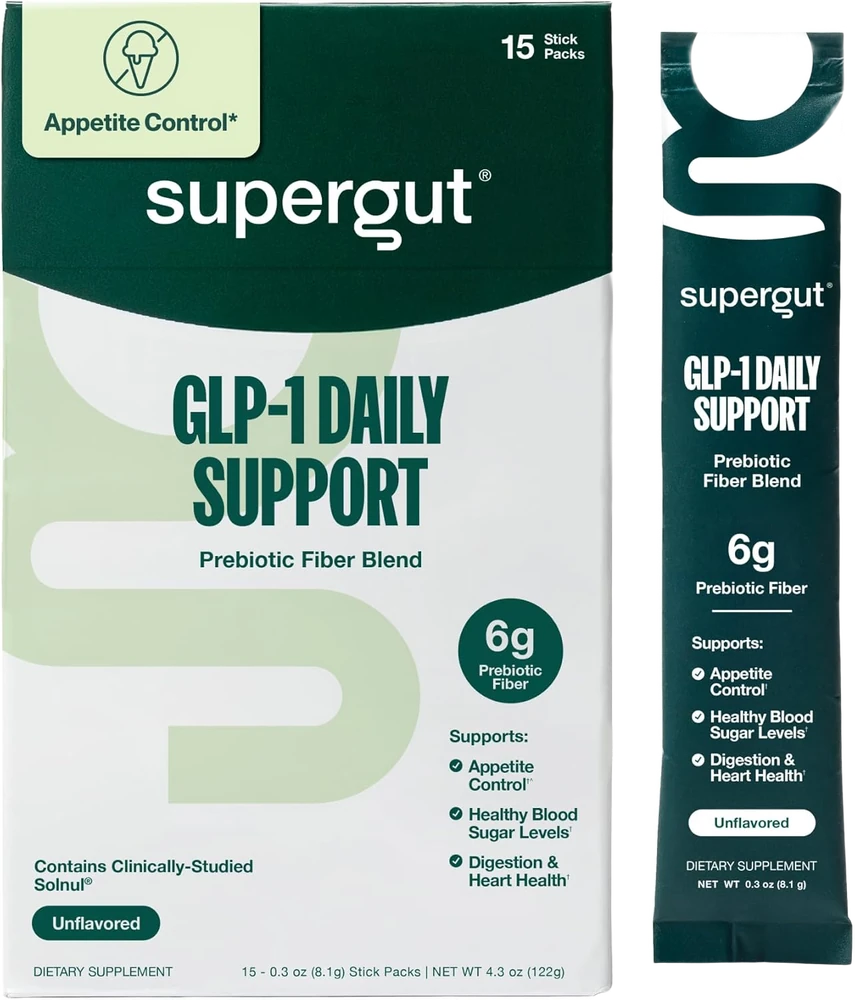
02Supergut GLP1 Daily Support
Supergut is the most honest product in this roundup, because it's essentially a soluble-fiber drink mix that doesn't pretend to be anything else.
 03
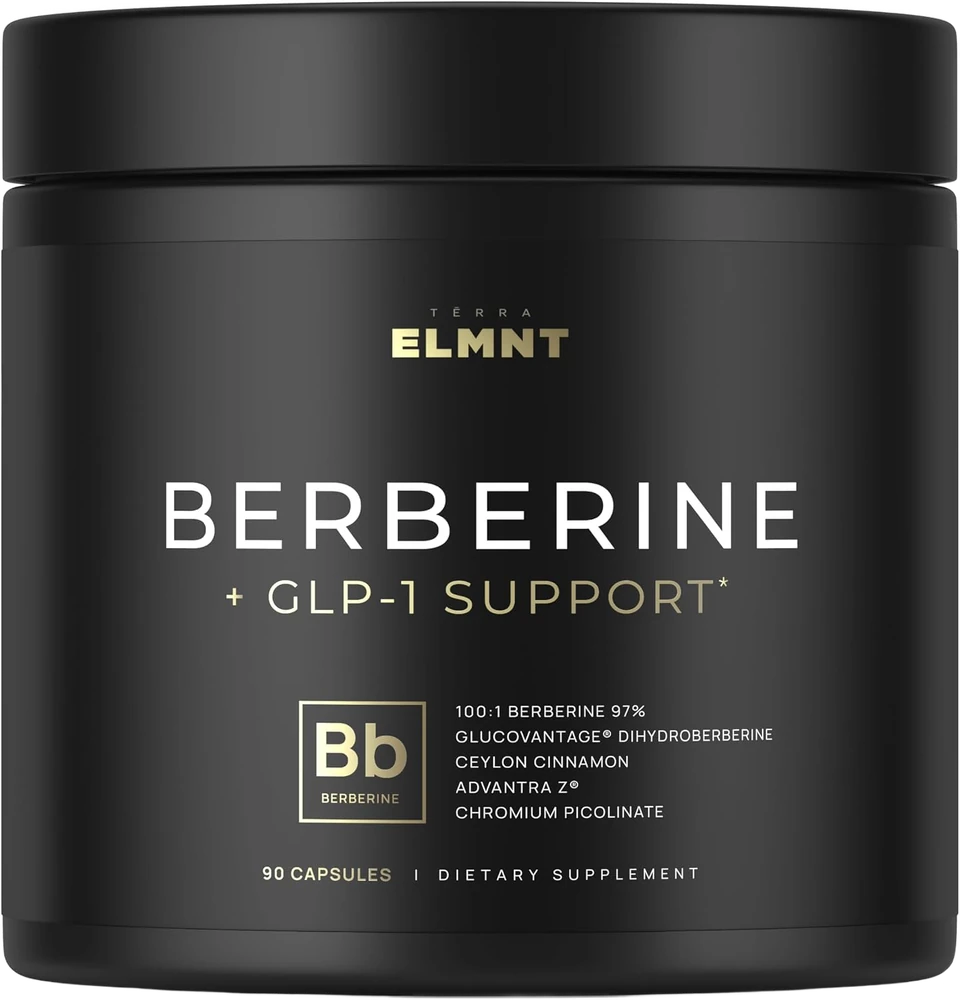
03Super GLP-1 Dihydroberberine
Super GLP-1 is the pick for someone who specifically wants the better-absorbed form of berberine.
Standalone berberine (~1,000-1,500 mg/day)
Cheaper and equally transparent, without the 'GLP-1' markup.
Quick Answers
Is this the same as Ozempic or a 'natural Ozempic'?
No. It contains no GLP-1 and is not a GLP-1 agonist — it is a berberine supplement with a 'GLP-1' label. The real GLP-1 drugs (semaglutide/Ozempic/Wegovy, tirzepatide/Zepbound) are prescription injectables that produce roughly 15-20%+ body-weight loss in trials and are not sold on Amazon. The 'natural Ozempic' pitch usually rests on the carb-insulin model, which controlled-feeding research (Hall & Guo 2017) does not support. This is a mild metabolic aid, nothing like the drug.
What is the berberine dose, and is it the right one?
The label discloses 1,500 mg of berberine per serving, which sits at the top of the ~1,000-1,500 mg/day range used in the clinical trials — typically split into 2-3 doses with meals. That real, disclosed dose is the whole reason this ranks #1: most rivals hide the berberine inside a proprietary blend where it is almost certainly under-dosed.
Does berberine actually cause weight loss?
Modestly and inconsistently, at best. Berberine has real human trials for blood sugar and metabolic markers, but on weight the meta-analyses disagree: Amini 2020 found no significant effect on weight, BMI, or waist, while Xiong 2020 found a small significant drop in BMI (-0.29 kg/m2) and waist (-2.75 cm) but still none on body weight. Think mild glycemic/metabolic support at ~1-1.5 g/day, not a fat-loss drug.
Should I just buy standalone berberine instead?
For many people, yes — standalone berberine at ~1,000-1,500 mg/day is cheaper and equally transparent, and you skip the 'GLP-1' markup. This pick earns its #1 spot only among 'GLP-1'-labeled products. Either way, pair it with soluble fiber before meals and put your real effort into a sustained calorie deficit, protein, and movement.
Sources & Further Reading
3 peer-reviewed sources, each linked to PubMed
- [1] Hall & Guo 2017 PMID 28193517 — Obesity Energetics: Body Weight Regulation and the Effects of Diet Composition. Meta-analysis of 32 controlled-feeding studies varying the carbohydrate-to-fat ratio at equal calories. When calories were equated, lower-carb diets did NOT raise energy expenditure or fat loss (if anything, slightly the reverse) — the honest counterweight to the 'natural Ozempic' / carb-insulin pitch used to sell 'GLP-1' supplements.
- [2] Amini 2020 PMID 32147051 — Effects of berberine and barberry on anthropometric measures: A systematic review and meta-analysis of randomized controlled trials. Systematic review and meta-analysis of RCTs (12 trials, ~849 subjects). Found NO statistically significant effect of berberine/barberry on body weight (WMD ~= -0.11 kg), BMI (~= -0.16 kg/m2), or waist circumference (~= -0.58 cm). One half of the honest berberine picture — a mild metabolic aid, not a weight-loss drug.
- [3] Xiong 2020 PMID 32379652 — The effect of berberine supplementation on obesity indices: A dose-response meta-analysis and systematic review of randomized controlled trials. Dose-response meta-analysis of 10 RCTs. Found a small but significant reduction in BMI (WMD -0.29 kg/m2, p=0.006) and waist (WMD -2.75 cm, p=0.01), but NO significant change in body weight (p=0.79). More favorable than Amini 2020 on BMI/waist but still null on weight — the disagreement is why berberine's effect is 'modest and inconsistent'.
Affiliate disclosure: every Amazon link uses our Associates tag (superachieverclub-20). We earn a small commission at no cost to you; it funds independent reviews. We never accept payment to change a ranking.