
Plus Ultra GLP-1 10-in-1 (Berberine + Probiotics) Review
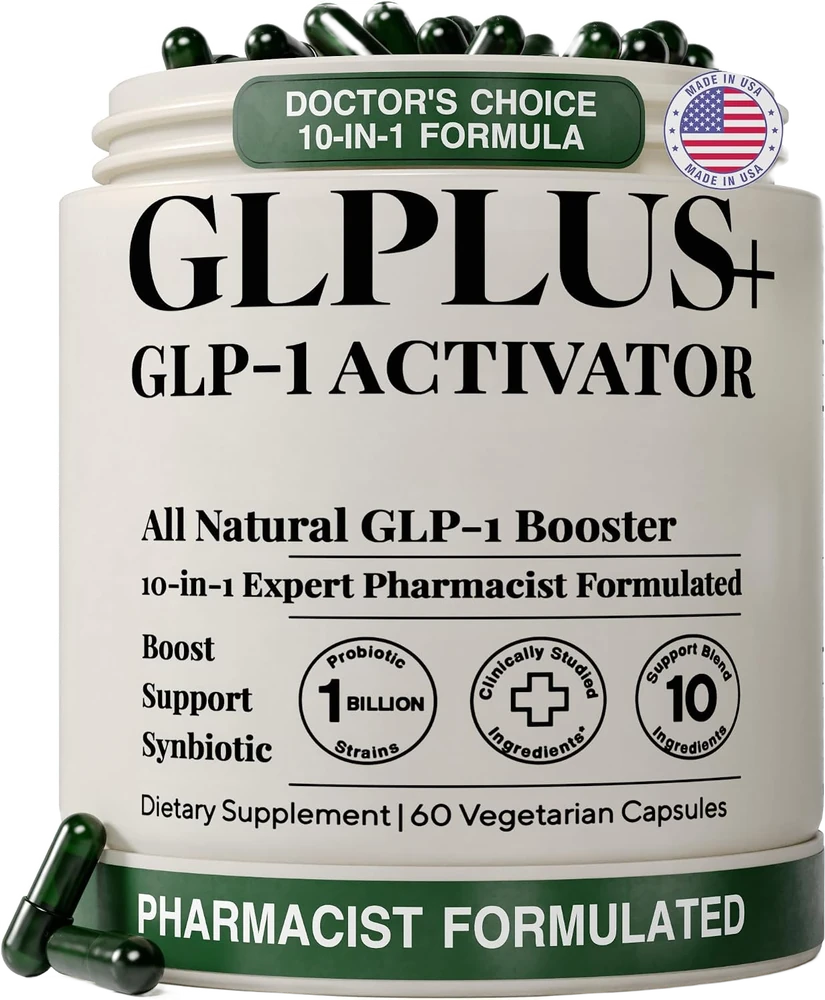 #6 of 8 · Berberine + probiotic blend✓ Label verified · Supplement Facts read Sep 7, 2026
Real retailer photo, cut out. Label unedited.
Skip it. A berberine + gut-health blend — more focused than the 15-in-1s, but the berberine is still thin. Plus Ultra's 10-in-1 takes the berberine-plus-gut-health angle and is a slightly more focused blend than the 15-in-1s, which is why it edges them out but still sits low.
Mid cost per servingMid per serving (60 caps)
Why It Scores 5.4 — And The Label Line Behind Each Number
Active-ingredient transparency & dose
35% of scoreStill 10-in-1, so the berberine dose is almost certainly below the studied amount, and probiotic counts in such blends are usually modest — the structural under-dosing caps the score.
- Lead active
- Berberine HCl 95% + turmeric, cinnamon, resveratrol
Evidence for the actives
30% of scorePairs berberine with prebiotic fiber (inulin, beta-glucan) and probiotics; the fiber adds a real fullness mechanism, but the 'GLP-1' framing oversells what is a basic berberine + gut-support combo.
Value vs buying standalone
20% of scoreYou would get the evidenced active at a real dose — plus dedicated fiber or probiotics — more cheaply by buying the parts separately.
Formulation quality
15% of scoreA slightly shorter, more focused ingredient list than the 15-in-1s, in a 60-capsule bottle at a mid-range price.
- More Specs
- Gut blend
- Inulin, beta-glucan + 5 probiotic strains
- Format
- 10-in-1 blend, 60 capsules
- Angle
- Gut health + metabolism support
- What it is NOT
- Contains no GLP-1; a berberine + gut-support combo, not a GLP-1 drug
Label verified. Every figure read from the Supplement Facts photo, Sep 7, 2026.
Marketing Claims Vs. Reality
Combines berberine HCl 95% with prebiotics and probiotics for gut + metabolic support.
The ingredients are real and the fiber contributes a genuine fullness mechanism, but a 10-in-1 format means the berberine is almost certainly under the studied dose and the probiotic counts are likely modest. PARTIAL.
A 'GLP-1' support supplement.
It carries a 'GLP-1' label but contains no GLP-1 — it is a berberine + gut-support combo. The framing oversells a basic formula.
Includes 5 probiotic strains.
The strains are listed, but blends like this rarely disclose meaningful CFU counts per strain, so the probiotic contribution is likely modest. Reasonable as a feature, not a proven dose.
What Our Test Actually Found
The gut-health logic is not crazy
Pairing berberine with prebiotic fiber (inulin, beta-glucan) and probiotics is a coherent angle — the fiber genuinely adds a fullness mechanism, and it is a slightly more focused blend than the 15-in-1 products, which is why it edges them out.
But 10-in-1 still under-doses the berberine
With ten ingredients sharing a 60-capsule bottle, the berberine is almost certainly below the ~1,000-1,500 mg/day the trials used. The gut extras do not change that the one evidenced active is thin.
Probiotic doses in blends like this are usually modest
Multi-strain probiotic claims sound comprehensive, but products that bundle probiotics into a 10-in-1 rarely deliver meaningful CFU counts per strain. The 'gut health' angle is more marketing than dose.
Buy the parts if you want the gut angle
For the evidenced active at a real dose, standalone berberine wins; if you also want the gut angle, a dedicated fiber or probiotic does it better than token amounts in a blend. That is why this ranks #6.
Full analysis: all pros & cons (6), buy if / skip if
- Combines berberine with prebiotic fiber (inulin, beta-glucan) + probiotics for a gut-health angle
- Slightly shorter, more focused ingredient list than the 15-in-1 products
- Includes some soluble fiber, which is at least a real mechanism
- 60-capsule bottle at a mid-range price
- Still 10-in-1, so the berberine dose is almost certainly below the studied amount
- Probiotic doses in such blends are usually modest; the 'GLP-1' framing oversells a basic gut + berberine combo
- A gut-health spin (prebiotic fiber + probiotics) alongside berberine genuinely appeals to you
- You prefer a slightly more focused 10-in-1 over a 15-in-1 blend
- You accept that the berberine and probiotic doses are modest
- You want a real, trial-level berberine dose — a 10-in-1 cannot deliver it
- You want meaningful probiotic counts — blend doses here are usually modest
- You want the best value — buying berberine plus a dedicated fiber/probiotic separately is cheaper
Plus Ultra's 10-in-1 takes the berberine-plus-gut-health angle and is a slightly more focused blend than the 15-in-1s, which is why it edges them out but still sits low. It pairs berberine with prebiotic fiber (inulin, beta-glucan) and probiotic strains, and the fiber at least contributes a real fullness mechanism. But with ten ingredients sharing the formula, the berberine is almost certainly under the ~1-1.5 g/day the studies used, and probiotic doses in products like this tend to be modest. For the evidenced active at a real dose, you are back to standalone berberine.
Plus Ultra's 10-in-1 takes the berberine-plus-gut-health angle: berberine paired with prebiotic fiber (inulin, beta-glucan) and probiotic strains. It is a slightly more focused blend than the 15-in-1s, and the fiber at least contributes a real fullness mechanism. But it runs into the same wall as every blend here — with ten ingredients sharing the formula, the berberine is almost certainly under the ~1-1.5 g/day the studies used.
An honest mid-tier blend — skip it for the parts unless the gut-health spin really appeals.

Plus Ultra's 10-in-1 takes the berberine-plus-gut-health angle, and it is a slightly more focused blend than the 15-in-1s — which is why it edges them out but still sits low. The logic is not crazy: it pairs berberine with prebiotic fiber (inulin, beta-glucan) and probiotic strains, and the fiber at least contributes a real fullness mechanism. But it runs into the same wall as every blend here: with ten ingredients sharing the formula, the berberine is almost certainly under the ~1-1.5 g/day the studies used, and probiotic doses in products like this tend to be modest. The 'GLP-1' name dresses up what is really a basic berberine + gut-support combo. If a gut-health spin genuinely appeals to you it is a defensible buy, but for the evidenced active at a real dose you are back to standalone berberine — plus, if you want the gut angle, a dedicated fiber or probiotic. It ranks #6 because it is an honest mid-tier blend, not because it does anything better than buying the parts. And, like everything in this category, it contains no GLP-1 and is not Ozempic.
If This Doesn’t Fit — Try These
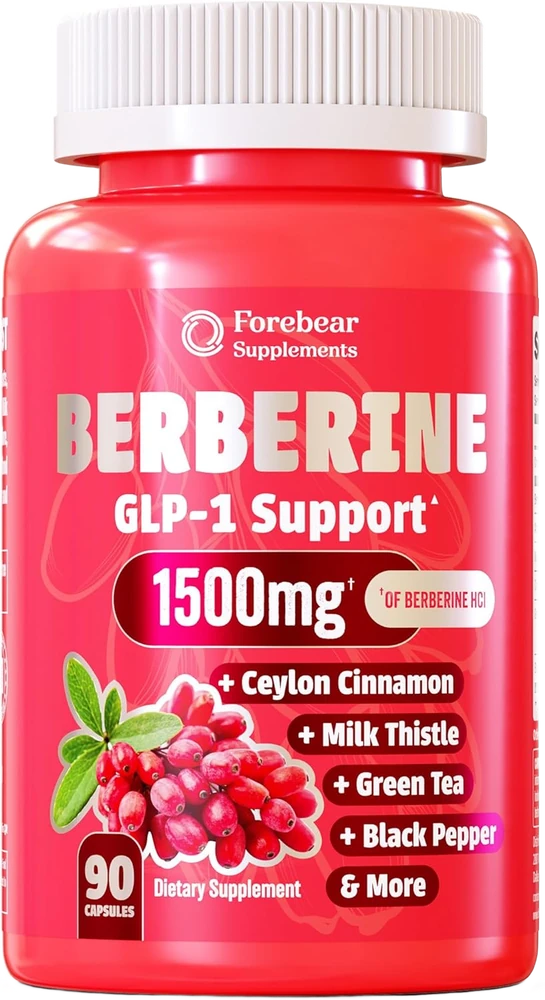 01
01Berberine 1,500 mg GLP-1 Support
If you're going to buy a 'GLP-1' supplement at all, this is the one to start with — because it's the most honest.
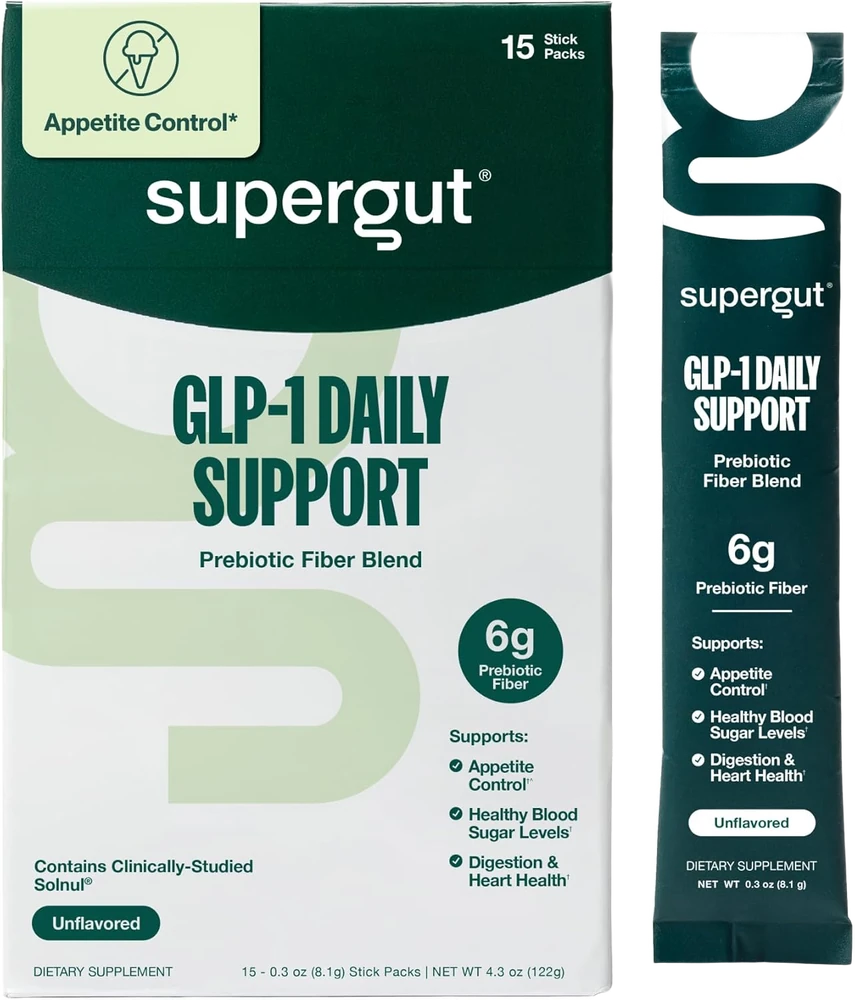 02
02Supergut GLP1 Daily Support
Supergut is the most honest product in this roundup, because it's essentially a soluble-fiber drink mix that doesn't pretend to be anything else.
Standalone berberine + a dedicated probiotic
Buy the parts: full berberine dose plus a real probiotic beats token amounts in a blend.
Quick Answers
What is the gut-health angle about?
It pairs berberine with prebiotic fiber (inulin, beta-glucan) and probiotic strains, on the idea that gut health supports metabolism. The fiber genuinely adds a fullness mechanism, so the concept is coherent — but the doses are spread across ten ingredients, so none is delivered at a strong amount.
Are the probiotics meaningful?
Probably modest. Blends that bundle multiple probiotic strains into a 10-in-1 formula rarely disclose meaningful CFU counts per strain, so the probiotic contribution is likely small. If gut flora is your real goal, a dedicated probiotic does it far better.
Why does it rank below the simpler picks?
Because ten ingredients still under-dose the berberine — the one active with real evidence needs ~1,000-1,500 mg/day, which cannot fit alongside nine other things. It edges out the 15-in-1s for being more focused, but standalone berberine plus a dedicated fiber or probiotic beats it on both dose and value.
Is it like Ozempic?
No. It contains no GLP-1 and is not a GLP-1 agonist — it is a berberine + gut-support blend with a 'GLP-1' label. The real GLP-1 drugs are prescription injectables far stronger than any supplement. Treat this as a mild add-on to a calorie deficit.
Sources & Further Reading
3 peer-reviewed sources, each linked to PubMed
- [1] Hall & Guo 2017 PMID 28193517 — Obesity Energetics: Body Weight Regulation and the Effects of Diet Composition. Meta-analysis of 32 controlled-feeding studies varying the carbohydrate-to-fat ratio at equal calories. When calories were equated, lower-carb diets did NOT raise energy expenditure or fat loss (if anything, slightly the reverse) — the honest counterweight to the 'natural Ozempic' / carb-insulin pitch used to sell 'GLP-1' supplements.
- [2] Amini 2020 PMID 32147051 — Effects of berberine and barberry on anthropometric measures: A systematic review and meta-analysis of randomized controlled trials. Systematic review and meta-analysis of RCTs (12 trials, ~849 subjects). Found NO statistically significant effect of berberine/barberry on body weight (WMD ~= -0.11 kg), BMI (~= -0.16 kg/m2), or waist circumference (~= -0.58 cm). One half of the honest berberine picture — a mild metabolic aid, not a weight-loss drug.
- [3] Xiong 2020 PMID 32379652 — The effect of berberine supplementation on obesity indices: A dose-response meta-analysis and systematic review of randomized controlled trials. Dose-response meta-analysis of 10 RCTs. Found a small but significant reduction in BMI (WMD -0.29 kg/m2, p=0.006) and waist (WMD -2.75 cm, p=0.01), but NO significant change in body weight (p=0.79). More favorable than Amini 2020 on BMI/waist but still null on weight — the disagreement is why berberine's effect is 'modest and inconsistent'.
Affiliate disclosure: every Amazon link uses our Associates tag (superachieverclub-20). We earn a small commission at no cost to you; it funds independent reviews. We never accept payment to change a ranking.