
Electrolyte Powder: Benefits, Dosage & Side Effects (2026)
An electrolyte powder is a drink mix of sodium, potassium and magnesium that replaces what heavy sweat, keto/fasting or endurance deplete — not an everyday-for-everyone supplement.
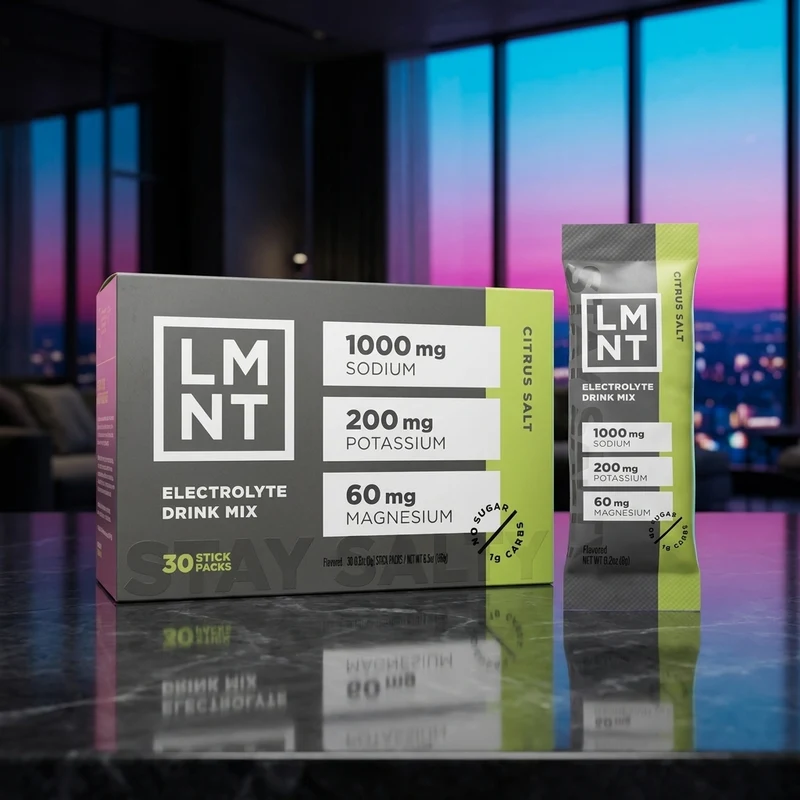
LMNT Zero Sugar Electrolytes
What is Electrolyte Powder?
An electrolyte powder is a flavored drink mix you stir into water to replace the minerals — chiefly sodium, potassium and magnesium, sometimes with calcium, chloride and trace minerals — that your body loses through sweat or flushes out on a low-carb or fasting diet. It comes as single-serve stick packs or a bulk tub, and the pitch is simple: water alone doesn't replace what you sweat out, so add the salts back. That pitch is true for the right person and oversold for everyone else.
The single fact that reorganizes the entire category is that SODIUM is the headline electrolyte. It's the electrolyte you lose the most of in sweat, the one a keto or fasting diet depletes the fastest, and the one whose shortfall actually leaves you foggy, crampy and flat. Potassium and magnesium matter, but sodium leads — and it's exactly the mineral most mixes quietly under-dose. So the real divide in this aisle isn't 'how many electrolytes does the label list,' it's REAL DOSE vs TOKEN AMOUNTS: a product with genuine content (LMNT runs about 1000 mg sodium per stick, Redmond Re-Lyte about 810 mg) versus the many 'hydration' mixes that hand you 50–250 mg of sodium and pad the label with a long electrolyte list. A long ingredient list is not the same as an effective dose.
The honest catch cuts two ways, and you should know both before buying. First, several of the most recognizable products are mostly sugar — Liquid I.V., for example, carries about 11 g of added sugar per packet. That sugar is functional (it helps drive fluid absorption), but it disqualifies the product for keto, fasting, or anyone simply cutting sugar. Second, a lot of the zero-sugar mixes are under-dosed on the electrolyte that counts, dressing up a '6 electrolytes!' claim with a sodium number too small to matter for a heavy sweater. The defining buyer decisions are therefore your actual sodium need first, then your sugar tolerance — not the headline electrolyte count.
How it works
Electrolyte powders work by replacing minerals lost through sweat and restoring the sodium balance that governs how much fluid your body actually retains — and the honest evidence picture splits cleanly into 'well-established for a specific job' and 'not established for everyday use.'
The physiology of the use-case is solid. Thermoregulatory sweat carries water AND electrolytes, and both sweating rate and sweat-sodium concentration vary widely from person to person (Baker 2017, PMID 28332116) — which is why a heavy, salty sweater can lose far more sodium than a light one and why one dose doesn't fit all. Crucially, replacing the fluid isn't enough on its own: in controlled post-exercise rehydration trials, both the volume consumed AND the drink's sodium content determined recovery — drink enough water but with too little sodium and the extra fluid is simply lost as urine (Shirreffs 1996, PMID 8897383). That's the mechanistic core of 'sodium is the limiting electrolyte.' The American College of Sports Medicine's position stand formalizes it: include sodium in fluids during prolonged exercise and recovery to offset sweat losses and help retain fluid and drive thirst (Sawka 2007, PMID 17277604), and a dedicated review documents that heavy sweating can produce fluid deficits of 1–8% of body mass, with sodium-chloride replacement recommended to maintain fluid homeostasis (Sharp 2006, PMID 16772634). This is why a real sodium dose — not a token sprinkle — is what makes an electrolyte mix do its job for heavy sweat, keto/fasting and endurance.
But the same evidence base draws the honest boundary. More is not better: the consensus on exercise-associated hyponatremia identifies overdrinking hypotonic fluid (plain water) relative to sodium losses — not under-supplementation — as the primary cause of dangerously low blood sodium in endurance events (Hew-Butler 2015, PMID 26227507). The takeaway is that electrolyte BALANCE protects athletes, and that most casual exercisers don't need aggressive supplementation at all. There is no good evidence that a daily electrolyte scoop benefits a person eating a normal diet, whose food and ordinary fluid intake already cover their needs. So the realistic expectation is targeted, not transformative: an electrolyte powder is a tool for replacing real losses during heavy sweat, keto/fasting, endurance and heat — and for most people, on most days, it's an answer to a problem they don't have.
At-a-glance facts
- What it actually is
- A sodium-led drink mix that replaces sweat/keto/fasting losses — not an everyday-for-everyone supplement
- Headline electrolyte
- Sodium — the one you lose most and the one most mixes under-dose
- The real divide
- Real dose (LMNT ~1000 mg sodium/stick) vs token amounts (many mixes give 50–250 mg)
- Typical dose
- 1 stick or scoop in ~8–32 oz water, taken around heavy sweat / fasting / training
- Watch the sugar
- Some are mostly sugar — Liquid I.V. ~11 g/packet; ORS-style mixes 5–7 g (functional for absorption, not for keto)
- Full spectrum
- Potassium and magnesium round it out; calcium and trace minerals appear in some
- Biggest buyer decision
- Your actual sodium need first, then sugar tolerance — not the length of the electrolyte list
- Who needs one
- Heavy sweaters, keto/fasting, endurance, heat — most people eating normally don't need one daily
- Cost range (US)
- ~$0.83 to ~$1.56 per serving across mainstream picks
- Stack synergy
- Magnesium glycinate for sleep/cramps; creatine pulls water into muscle, so sodium support pairs well in hard training
Evidence: Two-tier and honest. The hydration physiology is well established: sweat carries substantial, person-variable sodium (Baker 2017, PMID 28332116); rehydration depends on BOTH fluid volume and the drink's sodium content — too little sodium and the extra water is urinated out (Shirreffs 1996, PMID 8897383); and authoritative bodies recommend including sodium in fluids for prolonged exercise and recovery (Sawka 2007, PMID 17277604; Sharp 2006, PMID 16772634). But more is not better — overdrinking water relative to sodium losses, not under-supplementation, causes exercise-associated hyponatremia (Hew-Butler 2015, PMID 26227507). Strong evidence for the heavy-sweat / keto-fasting / endurance / heat use-case; no good evidence that a daily scoop benefits a normally-fed person.
Who it's for — and who it isn't
- Heavy and salty sweaters — people who finish a workout with white salt rings on their clothes lose large, person-specific amounts of sodium
- Keto and fasting dieters — low-carb eating and fasting flush sodium hardest, and replacing it is what relieves the 'keto flu' fog, cramps and flatness
- Endurance athletes and anyone doing prolonged (60+ minute) efforts where sweat losses are large and sodium — not just water — limits rehydration
- People training or working in real heat, where sweat rate is high and fluid plus sodium replacement genuinely matters
- Anyone managing acute dehydration from illness or a heatwave, who is better served by an ORS-ratio mix than by plain water
- Buyers who will read the label for the actual sodium figure and choose a real dose over a token sprinkle dressed up with a long electrolyte list
- People eating a normal diet who just want 'better hydration' — food and water already cover you, and a daily scoop is solving a problem you don't have
- Anyone on keto or fasting reaching for a sugar-heavy mix (e.g. Liquid I.V. at ~11 g) — the functional sugar defeats the purpose
- Bargain shoppers chasing the longest electrolyte list — a '6 electrolytes!' label with 50–250 mg of sodium is a token dose, not an effective one
- People watching blood pressure or on a sodium-restricted diet, for whom a high-sodium mix (~1000 mg/stick) may be the wrong direction — check with a clinician
Week-by-week, what happens
- Same sessionFor heavy sweat or a hard effort, a real-sodium dose helps you retain the fluid you drink and can blunt cramping and the foggy, flat feeling of salt depletion within the workout — this is the one acute, real effect, and it depends on actually getting enough sodium, not a token amount.
- First few days (keto/fasting)Starting low-carb or a fast flushes sodium fastest; replacing it is what relieves the classic 'keto flu' — headache, fatigue, lightheadedness and cramps — often within a day or two. This is the clearest non-athletic use-case.
- Ongoing (right user)For heavy sweaters, endurance athletes and people working in heat, the benefit is steady: consistent fluid-and-sodium replacement around the sessions that actually deplete you. The value is targeted to the losses, not a daily ritual.
- Ongoing (everyday user)For someone eating a normal diet, expect no meaningful change — food and water already cover your needs, and any early 'energy' from a scoop is easily just hydration from drinking more water. There's no evidence of accumulating benefit from daily use.
Safety & contraindications
- More is not better. Overdrinking plain water relative to your sodium losses — not under-supplementing — is the primary cause of exercise-associated hyponatremia (dangerously low blood sodium), which can be serious. Match intake to actual sweat losses rather than drinking and dosing maximally (Hew-Butler 2015).
- High-sodium mixes (~1000 mg per stick) are a feature for heavy sweat and keto, but a drawback if you have high blood pressure, heart or kidney conditions, or are on a sodium-restricted diet. Check the sodium figure against your own needs and talk to a clinician before daily high-salt use.
- Read the label for sugar. Several popular products are effectively sugar drinks — Liquid I.V. at ~11 g, ORS-style mixes at 5–7 g glucose. That sugar is functional for absorption but disqualifies them for keto, fasting or sugar-cutting, and adds calories you may not want every day.
- Magnesium is a common laxative at higher doses — magnesium-forward mixes (e.g. ~100–200 mg per serving in some products) can loosen stools in sensitive people. Start with a partial serving if you're prone to GI upset.
- It's not an everyday-for-everyone supplement. If you eat a normal diet and aren't sweating heavily, fasting or doing endurance work, you likely don't need an electrolyte powder daily — plain water and food already cover you.
- Specs vary by flavor and reformulation. Electrolyte mg amounts reflect documented brand label specs for the named flavor/size and can shift slightly; confirm the live label if a precise sodium or magnesium figure matters to you. No third-party certification (NSF / Informed Sport / USP) is claimed for any product here because none was recorded.
All articles on Electrolyte Powder
Best Electrolyte Powder
The 9 best electrolyte powders ranked on sodium and electrolyte dose (real content vs token amounts), clean formula (zero/low sugar), full mineral spectrum, value and taste — honest that sodium is the headline electrolyte and that most people eating normally don't need one daily.
Read →Cure Hydration Hydrating Electrolyte Mix — Lemonade Review
The cleanest label in the lineup — light on sodium, but uniquely additive-free.
Read →DripDrop ORS Electrolyte Hydration — Berry Review
The doctor-developed ORS — the right tool for acute rehydration, not daily keto.
Read →Key Nutrients Electrolyte Recovery Plus — Refreshing Lemonade Review
The cheapest credible zero-sugar daily mix — modest on label transparency.
Read →Liquid I.V. Hydration Multiplier — Lemon Lime Review
The mainstream fast-hydration pick — excellent for everyday use, wrong for keto.
Read →LMNT Zero Sugar Electrolytes — Citrus Salt Review
The category's high-sodium benchmark — buy it if salt is what you're actually short on.
Read →Redmond Re-Lyte Hydration — Mango Review
The fullest high-sodium profile in the lineup — our premium all-rounder.
Read →Skratch Labs Hydration Sport Drink Mix — Lemon & Lime Review
The best-tasting training mix here — light fuel, thin on electrolytes.
Read →Trace Minerals Power Pak — Raspberry Review
The mineral-and-immunity loadout — best magnesium here, but it carries sugar.
Read →Ultima Replenisher Daily Electrolyte — Original Variety Pack Review
The sugar-free, magnesium-forward pick — minerals without the salt load.
Read →FAQ
Do I actually need an electrolyte powder?
For most people eating a normal diet, no — this is the honest headline. Your food and ordinary fluid intake already cover your electrolyte needs, and any 'energy' you feel from a scoop is easily just the effect of drinking more water. Electrolyte powders genuinely earn their place for a specific list: heavy and salty sweaters, people on keto or fasting protocols, endurance athletes, and anyone training or working in real heat. If you're not in one of those groups, you're mostly buying flavored salt you don't need.
Why is sodium the most important electrolyte?
Because it's the one you lose the most of and the one whose shortfall actually causes problems. Sweat carries substantial sodium (and how much varies a lot from person to person), keto and fasting flush sodium out fastest, and controlled rehydration trials show that unless a drink's sodium content is high enough, the extra water you drink is simply lost as urine rather than retained. Potassium and magnesium matter too, but sodium is the limiting electrolyte for rehydration — which is exactly why it's the figure to check first, and exactly the one most 'hydration' mixes under-dose.
What counts as a 'real dose' versus a token amount?
The real divide in this category is dose, not the length of the electrolyte list. A genuine dose looks like LMNT's ~1000 mg of sodium per stick or Redmond Re-Lyte's ~810 mg — enough to matter for a heavy sweater or someone on keto. A token amount is the 50–250 mg of sodium many 'hydration' mixes provide while padding the label with a '6 electrolytes!' claim. A long ingredient list is not the same as an effective dose, so read the actual sodium number in milligrams rather than counting how many electrolytes are named.
Are sugary electrolyte drinks like Liquid I.V. bad?
Not bad — just the wrong tool for some jobs. Liquid I.V. carries about 11 g of added sugar per packet, and ORS-style rehydration mixes use 5–7 g of glucose; that sugar is functional, because the sodium-glucose pairing genuinely speeds fluid absorption, which is useful for everyday dehydration, travel, a rough morning, or acute rehydration when you're sick or overheated. But it's disqualifying if you're doing keto, fasting, or simply cutting sugar. Match the product to your goal: glucose-paired mixes for fast rehydration, zero-sugar high-sodium mixes for keto/fasting and clean daily use.
What's the best electrolyte powder for keto or fasting?
A zero-sugar, high-sodium mix — because keto and fasting flush sodium hardest, and replacing it is what relieves the classic 'keto flu' fog, cramps and fatigue. That points to the high-salt, no-sugar end of the category: LMNT at ~1000 mg sodium per stick is the benchmark, with Redmond Re-Lyte (~810 mg, plus calcium and trace minerals) as the fuller-profile alternative. Avoid the sugar-heavy mixes here — their functional glucose defeats the purpose of fasting and breaks ketosis. See our ranked picks for the full keto-appropriate lineup.
Can electrolytes help with muscle cramps?
They can help when the cramp is driven by heavy fluid and sodium loss — which is the classic heat-and-sweat exercise cramp. Replacing sodium (and retaining fluid, which sodium enables) is the relevant mechanism there, and it's part of why a real-dose mix matters during long, hot, sweaty efforts. That said, exercise cramps have multiple causes including neuromuscular fatigue, so electrolytes aren't a guaranteed fix for every cramp. If cramps are frequent and unrelated to heavy sweating, an electrolyte powder is unlikely to be the whole answer.
Sources & further reading
- Sawka 2007American College of Sports Medicine position stand. Exercise and fluid replacement
The ACSM's authoritative position stand on hydration: the goal is to begin exercise euhydrated with normal plasma electrolyte levels, to limit fluid deficits, and — because sweat contains substantial sodium — to include sodium in fluids during prolonged exercise and recovery to offset losses and stimulate thirst and fluid retention. The foundational evidence that electrolyte (especially sodium) replacement, not water alone, matters when sweat losses are large.
- Baker 2017Sweating Rate and Sweat Sodium Concentration in Athletes: A Review of Methodology and Intra/Interindividual Variability
A review documenting that athletes lose water and electrolytes through thermoregulatory sweating, and that both sweating rate and sweat sodium concentration vary widely within and between individuals. The basis for the hub's core point — heavy sweaters can lose large, person-specific amounts of sodium, which is exactly the gap a high-sodium electrolyte mix is meant to fill, and why one dose doesn't fit all.
- Sharp 2006Role of sodium in fluid homeostasis with exercise
A review of the interactive effects of sodium and fluid ingestion in maintaining fluid balance during and after heat and exercise. Heavy sweating can produce fluid deficits of 1–8% of body mass, and including sodium chloride in the replacement beverage is recommended to maintain fluid homeostasis and reduce the risk of hyponatremia from over-drinking plain water during efforts longer than four hours.
- Shirreffs 1996Post-exercise rehydration in man: effects of volume consumed and drink sodium content
In a controlled rehydration trial, both the volume consumed and the drink's sodium content interacted to determine fluid recovery: a drink volume greater than sweat loss must be ingested to restore balance, but unless the beverage's sodium content is sufficiently high, the extra fluid is simply lost as urine. Direct experimental evidence for why sodium — not just water — is the limiting electrolyte for effective rehydration, and why a real sodium dose beats a token one.
- Hew-Butler 2015Statement of the 3rd International Exercise-Associated Hyponatremia Consensus Development Conference, Carlsbad, California, 2015
The expert consensus on exercise-associated hyponatremia, which identifies overdrinking of hypotonic fluid (water) relative to sodium losses as the primary cause of dangerously low blood sodium during endurance events. The honest counterweight on this hub: more is not better — electrolyte (sodium) balance, not maximal fluid intake, is what protects endurance athletes, and most casual exercisers don't need aggressive supplementation at all.