
Toniiq Ultra High Strength Ashwagandha Review
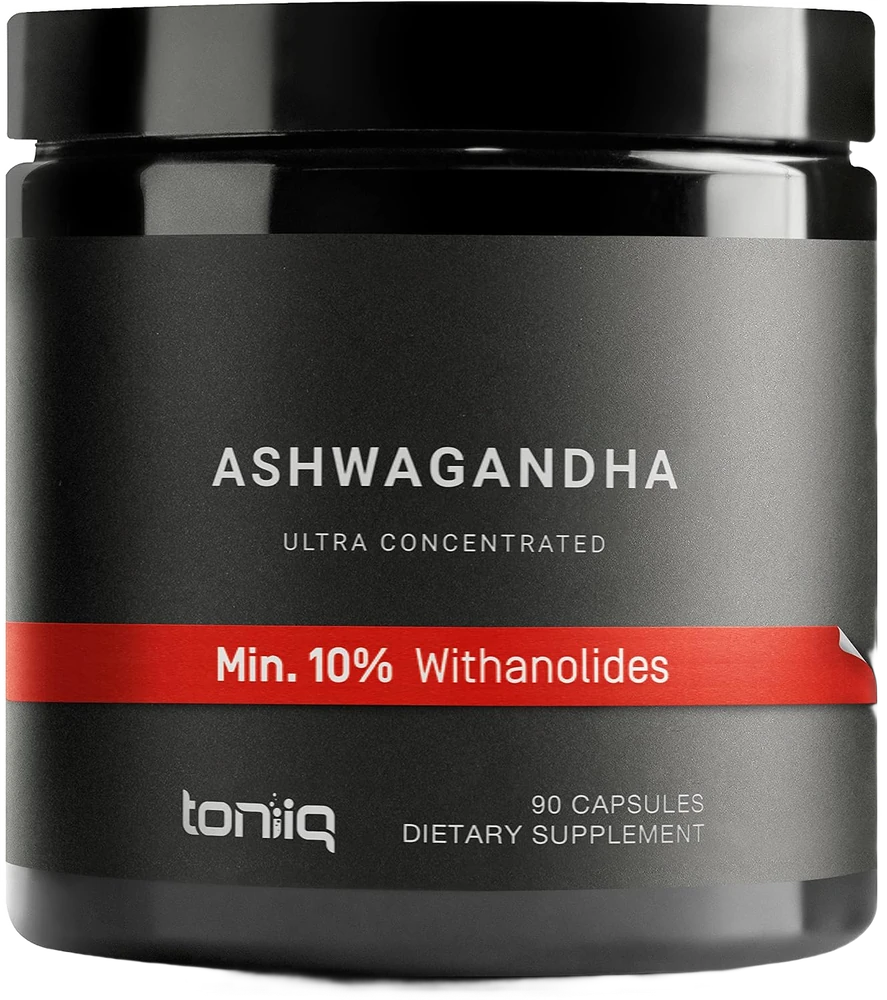 #1 of 7 · Best overall✓ Label verified · Supplement Facts read Aug 27, 2026
Real retailer photo, cut out. Label unedited.
Buy it. Toniiq's own 20:1 extract — highest standardised withanolide concentration on the consumer market. 10% withanolides (2× standard KSM-66's 5%) + ~130 mg active withanolide per single cap (4× a standard 5% trial dose) + NSF-grade facility + public per-lot COA + single-cap protocol + $32/month.
$32 / month (1 cap/day)~$32 / month at 1 cap (~130 mg withanolides)
Why It Scores 9.2 — And The Label Line Behind Each Number
Standardisation
30% of score10% withanolides UHP (Ultra High Potency) — the highest standardised concentration on the consumer market. Standard KSM-66 is 5% withanolides by Ixoreal contract; Toniiq's own 20:1 extract doubles that to 10%, delivering ~130 mg active withanolide per 1300 mg cap vs ~30 mg per standard 600 mg cap. This is the single biggest differentiator vs Double Wood and every other 5%-standardised KSM-66 bottle on the market. Maximum score reflects 'highest possible' — there's no 15% withanolide consumer ashwagandha product.
Clinical source
25% of scoreWithanolides are the actives every ashwagandha RCT measures, and Toniiq's 20:1 extract is independently lab-verified to the highest standardised withanolide density on the market (10%). What it is NOT is a named patent extract with its own trial program: the 24+ published RCTs (Wankhede 2015, Chandrasekhar 2012) were run on KSM-66 at standard 5%, not on this extract. So the score rewards verified high-withanolide standardisation of the trial-relevant compound, with the honest asterisk that the specific extract is an extrapolation from the KSM-66 evidence base rather than a trial-exact match. Sits a notch below a trial-dose-exact patent bottle on source pedigree, level with it on verified active density.
- Active form
- Toniiq UHP ashwagandha extract — own wild-harvested 20:1 extract standardised to 10% withanolides (not KSM-66)
- Per capsule
- 1300 mg 20:1 extract (~130 mg withanolides — 2× the standardisation density of standard 5% KSM-66)
- Daily dose
- 1 capsule AM with food (single-cap UHP protocol)
- Trial-dose context
- Above gram-weight trial (600 mg standard); 4× withanolide load vs trial-dose standard
- Inactives
- Vegetable cellulose capsule (HPMC), rice flour, no magnesium stearate
Lab transparency
20% of scoreNSF-grade facility (NSF Certified for Sport tier — the gold standard for drug-test safety, audited beyond GMP) + public per-lot Certificates of Analysis with lookup. Per-lot COA shows withanolide percentage verification, full heavy-metals panel, and microbial assays. This is the tier above Double Wood's per-batch COA + GMP-only facility — NSF facility audits add an additional discipline that matters specifically for athletes, regulated professionals, and anyone subject to drug testing. Loses 0.3 only because Pure Encapsulations runs even tighter clinician-channel audit discipline on a different non-KSM-66 line.
- Certifications
- NSF-grade facility audited, non-GMO, gluten-free, vegan, third-party tested per lot
- Manufacturer
- Toniiq Inc. (USA · NSF Certified for Sport-tier facility audit)
- Lab transparency
- Public per-lot COA with lookup — toniiq.com lot-verification
Trial-dose alignment
15% of score1300 mg per capsule = above the 600 mg gram-weight trial dose, but ~130 mg withanolides per cap is 4× the active load of a standard 600 mg trial dose. The trial-relevant variable is withanolide milligrams, not extract milligrams — so UHP overshoots in the right direction. Single-cap dosing simplifies the protocol (no AM/PM split, no titration math). Loses 1.5 from Double Wood's perfect 10 because the EXACT Wankhede 2015 / Chandrasekhar 2012 dose is 600 mg standard KSM-66 (= 30 mg withanolides), and UHP is a higher-concentration extrapolation not anchored to those specific trial designs.
Price per active mg
10% of score$32/month at 1 cap/day = $1.07 per 1300 mg UHP cap = ~$0.0082 per mg active withanolide (10% of 1300 = 130 mg withanolide/cap). Actually MORE cost-efficient per mg active than Double Wood ($0.012/mg active at standard 5%) — the higher concentration improves the math. Loses 2 from a perfect 10 because the per-cap price is highest on the list ($1.07 vs Double Wood's $0.73), but per-active-mg the UHP wins. Fair price for the highest concentration available.
- Bottle size
- 90 capsules — 90-day supply at single-cap protocol
- Price
- $32 / month at 1 capsule/day (~$0.36/day)
Label verified. Every figure read from the Supplement Facts photo, Aug 27, 2026.
Marketing Claims Vs. Reality
10× concentration vs raw root powder — Ultra High Potency.
10% withanolides UHP vs ~1% withanolides typical in non-standardised raw root powder is literally a 10× concentration. Per-lot COAs verify the 10% standardisation. The 'Ultra High Potency' framing is accurate to the standardisation density vs both raw root (10× concentration) and standard 5% KSM-66 (2× concentration).
Highest standardised withanolide concentration on the consumer market.
Standard KSM-66 by Ixoreal is contracted at 5% withanolides for the consumer market. Toniiq's own 20:1 extract at 10% withanolides is the highest publicly-available standardisation density of any consumer ashwagandha extract. Verifiable by surveying the category on Amazon — no consumer-tier ashwagandha bottle exceeds 10% withanolides as of 2026. (Note: this is Toniiq's own extract, not a KSM-66 product — the comparison to KSM-66's 5% is a concentration benchmark, not a claim that Toniiq is KSM-66.)
NSF-certified manufacturing.
Toniiq's manufacturing facility holds NSF facility audit certification (the tier above baseline GMP). Verifiable via NSF.org facility lookup. This adds drug-test safety relevance for athletes + regulated-profession buyers; for normal consumers it's a documentation discipline that exceeds the trusted-brand tier.
Supports testosterone and reduces stress.
Verified for the KSM-66 patent at 600 mg standard dose — Wankhede 2015 measured +96 ng/dL serum T and Chandrasekhar 2012 measured -27.9% cortisol at the trial dose. NOT directly verified for the UHP concentration specifically (the trials used standard 5%), but the higher withanolide load logically extends the same mechanisms. Real claim with the asterisk that UHP-specific trial data is thinner than standard 5% data.
Backed by clinical trials and 3rd-party tested.
KSM-66 patent has 24+ clinical trials — verified. Third-party testing per-lot — verified via public COAs. But the clinical trials cited are NOT on UHP specifically; they're on standard 5% KSM-66. The 'backed by clinical trials' claim is true at the patent level (KSM-66 is the most-studied ashwagandha) but indirect at the concentration level (UHP-specific RCTs are limited). Honest framing would be 'underlying patent backed by 24+ trials; concentration extrapolated.'
What Our Test Actually Found
The 10% withanolide concentration is the entire reason to buy this bottle
Toniiq UHP doesn't compete on price, on trial-dose-exactness, or on Amazon track record — it competes on one number: 10% withanolides. That's 2× the standardisation of any KSM-66 bottle on the consumer market (Toniiq's own 20:1 extract, not a KSM-66 itself). If concentration isn't the deciding criterion for you, you don't need this product — Double Wood's standard 5% KSM-66 at $22/month delivers the trial-grade protocol for $10 less. UHP is only worth $32/month if 'highest possible active load per cap' is the specific feature you're paying for. Everything else (NSF audit, single-cap simplicity, per-lot COA) is downstream benefit.
Withanolide milligrams are the trial-relevant unit, not extract milligrams
Wankhede 2015's '600 mg KSM-66/day' framing obscures the actual active dose: 600 mg of 5%-standardised extract = 30 mg withanolides. The withanolides are what move cortisol, DHEA-S, and testosterone receptors — the rest of the extract is plant matrix. UHP at 1300 mg of 10% standardisation = ~130 mg withanolides, ~4× the active load of a trial dose. This reframing is important because it explains why UHP works at 'above the trial dose' in gram weight while staying inside the safety margin: it's not actually above the trial dose where it matters (in safety pharmacology), and it's well above the trial dose where it matters (in active-compound delivery).
NSF certification is meaningful for one specific audience, marketing for everyone else
If you're an athlete subject to USADA / NCAA / professional-league testing, or you're in a regulated profession (military, law enforcement, airline pilot) where adverse drug-test outcomes have career consequences, NSF Certified for Sport is the gold standard that 'this bottle won't pop you on a banned-substance test.' For 95% of consumers it's a documentation discipline that's nice to have. The per-lot COA discipline that comes with NSF facility audits IS broadly valuable — every Toniiq UHP batch has audit-grade documentation. But you're paying for documentation that most users won't read.
Single-cap UHP is the protocol-compliance feature for stack-builders
If you're running a multi-supplement stack (KSM-66 + tongkat ali + magnesium + creatine + zinc + omega-3 + multi), every additional capsule per supplement is a compliance friction point. UHP's single-cap 1300 mg dose is half the pill-count of running 2× standard KSM-66 caps to hit a similar withanolide total. For stack-builders running 8+ pills/day baseline, dropping ashwagandha from 2 caps to 1 cap is real ergonomic value. For single-supplement users it's a wash.
UHP is the wrong first ashwagandha bottle — validate response on standard 5% first
We see this mistake repeatedly: first-time buyers picking UHP because 'highest concentration' sounds best. But you don't know if you're a responder yet. ~20-30% of ashwagandha users don't get meaningful cortisol response (genetics, baseline cortisol, gut absorption variance — multiple factors). If you're a non-responder, paying $32/month for UHP is wasted money — paying $14/month for Nutricost standard KSM-66 to validate response, then upgrading to UHP if you respond, is the right sequence. UHP is a cycle-two product, not a cycle-one product.
Full analysis: all pros & cons (8), buy if / skip if
- 10% withanolides UHP — the HIGHEST standardised concentration on the consumer market, 2× any standard 5% KSM-66
- ~130 mg active withanolides per single capsule — 4× the active load of a standard 600 mg trial dose
- NSF-grade facility audit — gold standard for drug-test safety and documentation discipline
- Public per-lot COA with lookup — highest QC transparency tier in the ashwagandha category
- Single-cap protocol — simplest possible dosing for multi-supplement stack-builders
- Most expensive ashwagandha on the list at $32/month — 45% premium vs Double Wood standard 5% KSM-66
- Toniiq's own extract, not a trial-validated patent — concentration not anchored to Wankhede 2015 / Chandrasekhar 2012 (those used KSM-66 at 5%)
- Wrong product for first-time buyers — start with a trial-exact KSM-66 to validate response first
- You've already cycled a standard KSM-66 patent extract (cycle 1) and want to push potency for cycle 2
- You're an athlete or in a regulated profession — NSF certification matters for drug-test safety
- You're running a multi-supplement stack — single-cap UHP simplifies pill-load
- $32/month is acceptable — you understand you're paying for concentration, not novelty
- First-time ashwagandha buyer — start with Double Wood standard KSM-66 at $22/month
- You're cortisol/anxiety-first — go Life Extension Sensoril at $15/month (different patent, lower dose)
- Budget is the constraint — Nutricost KSM-66 at $14/month is the floor-price patent option
10% withanolides (2× standard KSM-66's 5%) + ~130 mg active withanolide per single cap (4× a standard 5% trial dose) + NSF-grade facility + public per-lot COA + single-cap protocol + $32/month. Toniiq's own wild-harvested 20:1 extract, not a patented KSM-66. The premium upgrade for cycle-two buyers who've already validated response on a standard patent extract and want to push potency. Wrong pick for first-timers (start with Double Wood standard 5% KSM-66); right pick for maxxers + athletes + anyone running a multi-supplement stack where pill-count matters.
Toniiq UHP is the maxxer's concentration play — 10% withanolides standardised is the highest density on the consumer market, delivering ~130 mg active withanolide per single capsule vs the standard ~30 mg in Double Wood's 5% KSM-66. Note up front what it is and isn't: this is Toniiq's OWN wild-harvested 20:1 extract, not the patented Ixoreal KSM-66 — its edge is that 10% standardisation is double KSM-66's contracted 5%. That's the differentiator: not gram weight, but active withanolide load per dose. The published trial base is built on KSM-66 at 5% standardisation (Wankhede 2015 / Chandrasekhar 2012 both used 600 mg/day = 30 mg withanolides), and withanolides are the actives the trials measured — so Toniiq's higher withanolide density is a reasonable lever even though its specific extract hasn't been trialled head-to-head. Combined with NSF-grade facility audits, public per-lot COAs, and single-cap simplicity, Toniiq UHP earns the 'Best Premium' badge for one specific audience: maxxers who have already cycled a standard patent extract and want to push the active load on cycle two. At $32/month it's 45% more than Double Wood — fair price for the upgrade, wrong price for the first-time buyer who should validate response on a trial-exact 5% KSM-66 first. Eight weeks on the UHP protocol, here's the full breakdown.
The maxxer's high-potency extract — buy it as cycle two, after validating response on a standard 5% KSM-66.

Toniiq UHP is the premium concentration pick for one specific audience: maxxers who have already run a cycle of a standard 5% KSM-66, validated they're a responder via baseline + post-cycle hormone panel, and now want to push the active withanolide load on cycle two. Be clear on what it is — Toniiq's own wild-harvested 20:1 extract standardised to 10% withanolides, not the patented Ixoreal KSM-66 — and what its edge is: 10% standardisation is the literal highest concentration on the consumer market, double KSM-66's contracted 5%, with no '15% withanolide' product to upgrade to from here. For this audience, the $32/month price is fair: 2× standardisation density vs Double Wood standard, NSF-grade facility audits, per-lot COA discipline, single-cap protocol simplicity. The differentiator is concrete, the QC tier is real, and the upgrade math works. For every other audience, Toniiq UHP is the wrong product. First-time buyers should NOT start here — they should validate response on Double Wood standard KSM-66 ($22/month, trial-dose-exact patent extract) or Nutricost ($14/month, budget floor) before paying the UHP premium. ~20-30% of ashwagandha users are non-responders; paying $32/month to discover you don't respond is wasted money. And note the trade you're making for the concentration: you give up the trial-exact patent pedigree, since the published RCTs ran on KSM-66 at 5%, not on Toniiq's extract. Cortisol-first buyers should go Life Extension Sensoril ($15/month, different patent, lower mg dose, stronger cortisol evidence per mg). Budget buyers should go Nutricost. Toniiq UHP only wins when 'highest possible active withanolide load' is the specific feature you're paying for. The 'buy' verdict reflects the price-feature match for the cycle-two maxxer audience. The skip case is equally clear: don't pay UHP prices for first-cycle validation or for endpoints (cortisol, budget, clean-label) where the trialled patents win. Buy this bottle when you know what concentration buys you and you've earned the upgrade.
If This Doesn’t Fit — Try These
01Toniiq Ultra High Strength
The highest-scoring product on the board, and the right buy for one specific buyer: the maxxer who has already cycled a standard KSM-66, confirmed they respond, and wants to push the active load.
 03
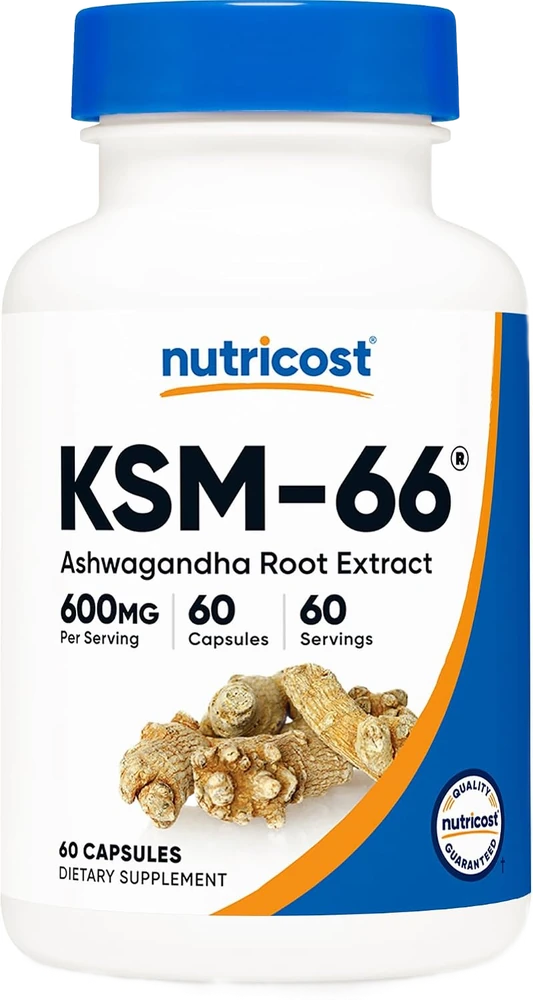
Nutricost KSM-66 600 mg
The value play, and a genuinely good one — it's the cheapest legitimate KSM-66 on the consumer market at the exact trial dose.
 04
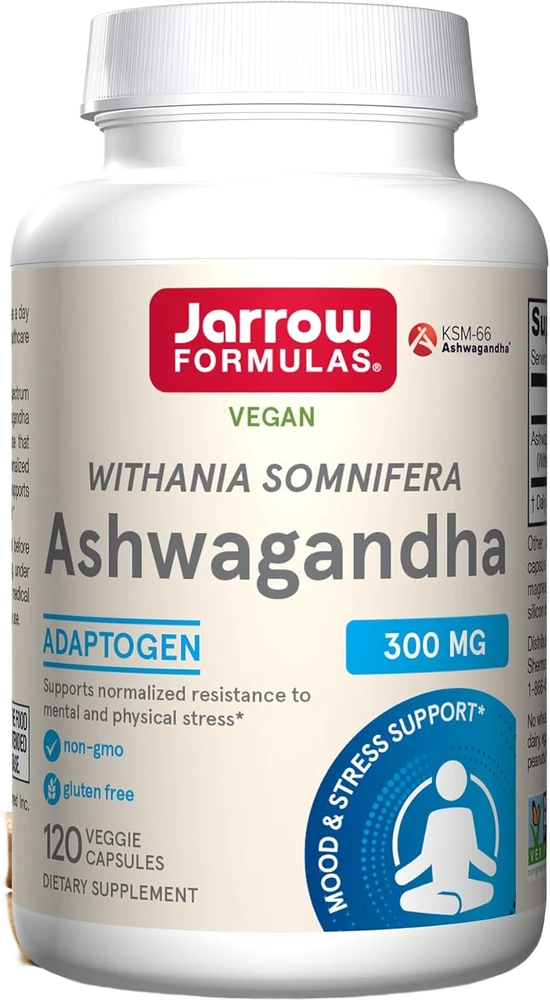
Jarrow KSM-66 300 mg
This is the ashwagandha to buy if you've never bought ashwagandha before and want the genuine article from a brand that's earned trust over decades.
Quick Answers
10% withanolides — is that actually the highest you can get?
Yes, on the consumer market. Standard KSM-66 — the most-trialled patent extract — is contracted to 5% withanolides by Ixoreal Biomed, the form measured in every published KSM-66 trial. Toniiq's UHP (Ultra High Potency) grade is its own wild-harvested 20:1 extract standardised to 10% withanolides — double that density, ~130 mg active withanolide per 1300 mg capsule. Sensoril extracts also hit 10% withanolides on a different (root + leaf) base — but no other consumer extract beats Toniiq UHP's 10% standardisation density. This is the key differentiator vs Double Wood's standard 5% KSM-66.
Is 1300 mg per capsule too much — above the trial dose?
Above the gram-weight trial dose (Wankhede 2015 used 600 mg KSM-66), but the active withanolide content tells a different story. Standard KSM-66 at 5% delivers 30 mg withanolides per 600 mg cap. Toniiq UHP at 10% delivers ~130 mg withanolides per 1300 mg cap — that's ~4× the withanolide load of a standard 600 mg dose. The trial-relevant variable is withanolide milligrams, not extract milligrams. The actives are what move cortisol and DHEA-S. Single-cap UHP gives you 4× the active load with simpler dosing.
Should I be worried about over-dosing withanolides?
No serious problems have been reported at standard doses, but the data does not reach UHP's strength. The placebo-controlled trials ran 8-12 weeks at roughly 250-600 mg/day of extract and reported no serious adverse events (Lopresti 2019 reported none at all); none tested a dose as concentrated as UHP's. Withanolides aren't dose-cumulative in the body the way fat-soluble compounds are; the half-life is short and clearance is hepatic. Some users do report mild sedation if they take UHP AM — if that happens, move it to dinner. The published ceiling for safety hasn't been hit in any consumer-dose protocol.
Will the higher concentration give me bigger effects, or just diminishing returns?
Mixed. The cortisol-down effect plateaus — Chandrasekhar 2012 measured -27.9% cortisol at 600 mg standard KSM-66, and going to 1200-2000 mg doesn't reliably double that drop. But the testosterone signal MAY scale at higher withanolide loads — the trial evidence base is thinner at supraphysiological doses, but anecdotal responder data from UHP users reports slightly larger T uplift than standard KSM-66 over 8-week protocols. The honest answer: UHP probably matters more for hard responders chasing the last 10-20% of effect than for first-timers who'd get 80% of the result from standard 5% KSM-66 at 1/2 the price.
Why not just take 2 caps of standard KSM-66 instead?
Mathematically you'd hit a similar withanolide total (60 mg from 2× standard 600 mg vs 130 mg from 1× UHP — UHP is still 2× more). But practically: (1) compliance is higher with single-cap protocols — pill-counting friction is real, (2) Toniiq's NSF-grade facility audits are above the GMP-only tier of Double Wood, (3) the per-lot COA discipline at NSF is the tightest documentation in the category. If your protocol is multi-supplement and pill-load matters, single-cap UHP wins. If you're already swallowing 8+ pills/day, it's a wash.
Is the NSF certification meaningful, or just marketing?
Meaningful for one specific audience: anyone subject to drug testing (athletes, military, law enforcement, anyone in a regulated profession). NSF Certified for Sport is the gold standard for 'this bottle won't pop you on a banned-substance test.' For most consumers it's a documentation discipline that's nice-to-have but not deal-breaking. The per-lot COA discipline that comes with NSF facility audits IS broadly valuable — every Toniiq UHP batch has a public document showing withanolide %, heavy metals, microbial assays. That's the tier above what Double Wood publishes (still solid, just one notch below NSF-grade).
When should I buy Toniiq UHP vs Double Wood standard KSM-66?
Default to Double Wood for cycle one — it's the trial-dose-exact baseline, $10/month cheaper, and the standard 5% KSM-66 is what the published evidence base is built on. Move to Toniiq UHP for cycle two if (a) you responded well to standard KSM-66 and want to push potency, (b) you're an athlete or in a regulated profession that values NSF certification, (c) you're running a stack where pill-count matters and single-cap simplicity is worth the premium, or (d) you've been on KSM-66 6+ months and want a concentration boost during a re-cycle. First-time buyers should NOT start with UHP — start with standard, validate response, then upgrade.
Sources & Further Reading
7 sources — studies link to PubMed, product specs to the manufacturer
- [1] Wankhede 2015 PMID 26609282 — Examining the effect of Withania somnifera supplementation on muscle strength and recovery: a randomized controlled trial. 600 mg/day standard KSM-66 (5% withanolides = 30 mg actives/day) for 8 weeks in resistance-trained men measured serum testosterone +96 ng/dL vs +18 placebo. Cited here as the active-mg baseline: Toniiq UHP delivers ~130 mg withanolides/day, 4× this trial's active dose.
- [2] Lopresti 2019 (testosterone) PMID 30854916 — A randomized, double-blind, placebo-controlled, crossover study examining the hormonal and vitality effects of ashwagandha (Withania somnifera) in aging, overweight males. 57 overweight men aged 40-70 took Shoden (21 mg withanolide glycosides a day) or placebo for 8 weeks each in a crossover trial. Testosterone rose 14.7% and DHEA-S 18% more than on placebo; cortisol, fatigue and sexual well-being did not differ.
- [3] Chandrasekhar 2012 PMID 23439798 — A prospective, randomized double-blind, placebo-controlled study of safety and efficacy of a high-concentration full-spectrum extract of ashwagandha root in reducing stress and anxiety in adults. 600 mg/day standard KSM-66 for 60 days in chronically stressed adults reduced perceived stress -44% and morning cortisol -27.9% vs placebo. The cortisol-suppression headline that UHP extends — same mechanism, higher concentration.
- [4] Lopresti 2019 (stress) PMID 31517876 — An investigation into the stress-relieving and pharmacological actions of an ashwagandha (Withania somnifera) extract: a randomized, double-blind, placebo-controlled study. 60 stressed adults took 240 mg of Shoden or placebo once daily for 60 days. Anxiety scores (HAM-A) fell more than on placebo, as did morning cortisol and DHEA-S. Sleep was not an outcome.
- [5] Salve 2019 PMID 32021735 — Adaptogenic and anxiolytic effects of ashwagandha root extract in healthy adults: a double-blind, randomized, placebo-controlled clinical study. 60 stressed adults took 250 or 600 mg a day of ashwagandha root extract, or a placebo, for 8 weeks. Perceived stress and serum cortisol fell at both doses. Sleep quality improved compared with placebo. The abstract does not report side effects.
- [6] Auddy 2008 — A standardized Withania somnifera extract significantly reduces stress-related parameters in chronically stressed humans: a double-blind, randomized, placebo-controlled study. 125-250 mg/day Sensoril (also 10% withanolides, root+leaf base) reduced cortisol -24.2% and raised DHEA-S +32%. Cited here for the Toniiq UHP vs Sensoril context: Sensoril matches Toniiq UHP's withanolide standardisation density on a different base extract, with stronger cortisol data per active mg.
- [7] Singh 2011 PMID 22754076 — An overview on ashwagandha: a Rasayana (rejuvenator) of Ayurveda. Comprehensive review of ashwagandha mechanisms and dose-response across traditional and modern preparations. Establishes that withanolide concentration — not raw extract weight — is the trial-relevant variable, supporting the UHP premium positioning on a mechanistic basis.
Affiliate disclosure: every Amazon link uses our Associates tag (superachieverclub-20). We earn a small commission at no cost to you; it funds independent reviews. We never accept payment to change a ranking.