
Thorne Basic Nutrients 2/Day Review
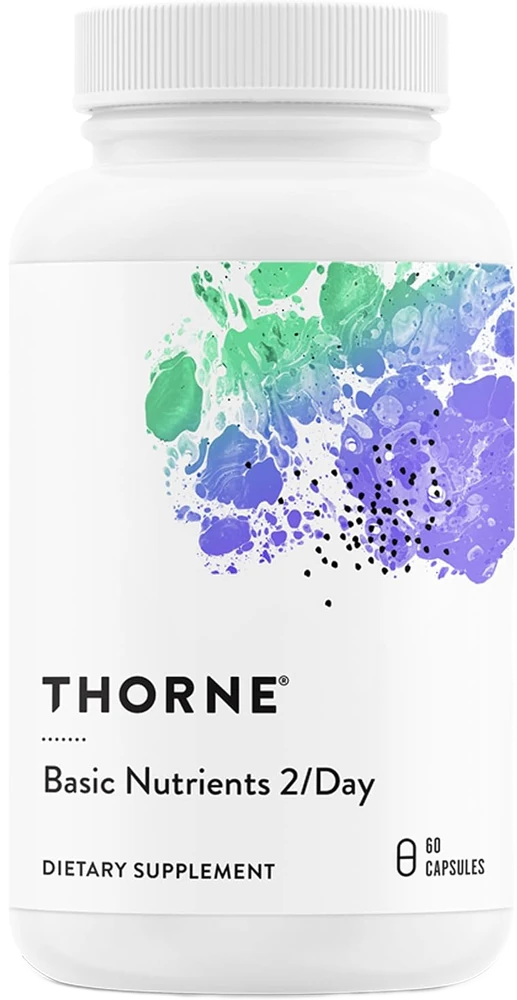 #1 of 10 · Best overall✓ Label verified · Supplement Facts read Sep 7, 2026
Real retailer photo, cut out. Label unedited.
Buy it. The cleanest execution of a multivitamin — the category benchmark. Fully methylated folate and B12, bisglycinate-chelated minerals, NSF-certified, no megadosed fat-solubles, in a sane two-capsule iron-free dose.
$32 / 60 capsules (30 days)~$1.07 / day (2 capsules)
Why It Scores 9.2 — And The Label Line Behind Each Number
Nutrient forms & bioavailability
30% of scoreFlawless on the decisive axis. Folate as L-5-MTHF (667 mcg DFE), B12 as methylcobalamin (600 mcg), and minerals as bisglycinate chelates throughout — the active, best-absorbed forms across the board, usable regardless of an individual's folate-conversion efficiency (Pietrzik 2010). No folic acid, no oxide minerals. This is the form quality every other pick is measured against.
Sensible dosing (no megadose)
25% of scoreTextbook restraint. Doses fill gaps toward ~100% of needs without megadosing fat-soluble vitamins (A, E), and it's deliberately iron-free so it can't over-supply iron to people who don't need it. A balanced gap-insurance profile rather than a flashy-number label — exactly what a multivitamin should be. Held a hair below perfect only because a few nutrients sit modestly above gap-level.
Third-party testing
20% of scoreNSF Certified and made to Thorne's clinician-grade QC — independent verification that the bottle contains what the label claims, plus contaminant testing. Among the strongest QC pedigrees in the supplement industry and a genuine trust differentiator over in-house-GMP-only competitors (NOW ADAM, Opti-Men).
- Testing
- NSF Certified · clinician-grade third-party QC
Value per day
15% of score~$1.07/day from a $32, 30-day bottle — the premium end of the category and the only axis where Thorne is beatable. You are paying for forms and certification, not filler. Versus Kirkland's ~$0.03/day it looks expensive; versus the inferior forms you'd get at that price, it's defensible. The weakest axis, by design.
- Count
- 60 capsules · 30-day supply
- Price
- $32 / 60 capsules = ~$1.07 / day
Real-world fit (pill burden / audience)
10% of scoreA sane two-capsule daily dose — more than a one-a-day but far from the four-capsule whole-food servings. Iron-free positioning fits men and post-menopausal women perfectly and is the safer unisex default. Loses a touch only for menstruating women who need iron and must add it separately.
- Audience
- Unisex (men & women) · iron-free
- More Specs
- Folate form
- L-5-MTHF (methylfolate), 667 mcg DFE
- B12 form
- Methylcobalamin, 600 mcg
- Minerals
- Bisglycinate chelates (calcium, magnesium, zinc)
- Caps per day
- 2 capsules
Label verified. Every figure read from the Supplement Facts photo, Sep 7, 2026.
Marketing Claims Vs. Reality
Fully methylated and chelated — bioavailable forms throughout.
Confirmed by the label: folate as L-5-MTHF, B12 as methylcobalamin, and minerals as bisglycinate chelates. These are the active/best-absorbed forms (Pietrzik 2010 supports methylfolate's advantage), and the claim is accurate rather than marketing — it's the central reason this product ranks #1.
NSF Certified for quality and label accuracy.
Thorne's third-party / NSF certification is genuine and is one of the strongest QC pedigrees in the industry — independent verification that contents match the label and meet contaminant limits. A real trust signal, not a self-applied badge.
A clinician-grade multivitamin trusted by practitioners and athletes.
Thorne is widely used in clinical and professional-sports settings and is NSF Certified for Sport across much of its range. The 'practitioner brand' positioning is accurate and reflects real adoption, not just marketing.
Supports overall health and wellness.
True in the gap-insurance sense — correcting real dietary shortfalls in bioavailable forms supports normal function. But 'overall health and wellness' should not be read as disease prevention or longevity: the largest multivitamin RCT found a modest cancer-incidence reduction and NO cardiovascular benefit (Gaziano 2012; Sesso 2012). Honest as nutritional insurance; overstated if taken as a health transformation.
What Our Test Actually Found
The forms are the whole story — and they're perfect
Everything that makes a multivitamin good or mediocre comes down to forms, and Thorne uses the best ones throughout: L-5-MTHF folate, methylcobalamin B12, and bisglycinate-chelated minerals. The practical payoff is twofold. First, absorption and GI tolerance are better than oxide-mineral one-a-days. Second — and more important — the methylated folate works regardless of how efficiently your particular genetics convert folate (Pietrzik 2010), so you're not relying on a conversion step a large fraction of people do poorly. This is the single clearest reason it's the #1 pick.
Sensible dosing is a feature: no megadose theatre
Thorne resists the industry's worst instinct — megadosing one flashy vitamin to win the label-comparison game. Doses sit at gap-filling levels, fat-soluble vitamins (A, E) aren't pushed into accumulation territory, and there's no iron to over-supply people who don't need it. That restraint is exactly right for a product whose job is insurance, not heroics, and it's why this is a multivitamin you can take indefinitely without worrying about overdoing any single nutrient.
NSF certification is the trust layer the budget tier can't match
Independent NSF certification means a third party has verified the bottle's contents against the label — a meaningful safeguard in a category with real label-accuracy problems. This is the concrete advantage Thorne has over honestly-disclosed but in-house-GMP-only competitors like NOW ADAM and Opti-Men: you're trusting an independent body, not the manufacturer's own QC. Combined with Thorne's clinician-grade reputation, it's why this bottle is the default in professional settings.
The premium is real — and so is what it buys
At ~$1.07/day, Thorne costs roughly 35× more per day than Kirkland. That sounds dramatic until you ask what the extra buys: methylated folate instead of folic acid, chelated minerals instead of oxides, and independent certification instead of none. For a buyer optimizing on form quality and testing, that premium is justified. For a buyer optimizing purely on cost-per-day who converts folate fine, Kirkland's USP-verified basics are the rational call. Both are defensible — they're just answering different questions.
Keep expectations honest, even for the best product
Thorne earns the top spot on quality, but quality doesn't change what a multivitamin is. The PHS II trial — the largest and longest — found a daily multivitamin produced a modest 8% reduction in total cancer incidence (Gaziano 2012) and zero reduction in cardiovascular events (Sesso 2012). The newer COSMOS trials add an encouraging older-adult cognition signal. So buy Thorne as the best way to get high-quality gap-insurance, with a small long-run cancer edge and possible cognitive benefit in older age — not as a longevity intervention. Right expectations make it a genuinely smart, sustainable purchase.
Full analysis: all pros & cons (8), buy if / skip if
- Active forms throughout — methylfolate, methylcobalamin, and bisglycinate-chelated minerals
- NSF Certified with clinician-grade QC — independent label-accuracy verification
- Sensible gap-level dosing with no megadosed fat-soluble vitamins
- Iron-free — the safer default for men and post-menopausal women
- Trusted by practitioners and tested athletes; a true category benchmark
- No iron — menstruating women who need it must supplement separately
- ~$1.07/day from a 30-day bottle — the premium end of the category
- Two capsules a day rather than a single pill
- You want the highest-quality forms — methylated folate and B12, chelated minerals — without researching the category
- You're a man or post-menopausal woman who wants an iron-free daily
- You value independent NSF certification and a clinician-grade brand
- You'll happily take two capsules a day and pay a premium for forms + testing
- You need iron — choose a women's formula like Ritual or Garden of Life Women's, or add iron separately
- You want the lowest possible cost — Kirkland is USP-Verified at ~$0.03/day with basic forms
- You'll only take one pill a day — Pure Encapsulations O.N.E. or MegaFood One Daily are true once-dailies
Fully methylated folate and B12, bisglycinate-chelated minerals, NSF-certified, no megadosed fat-solubles, in a sane two-capsule iron-free dose. It wins on the two axes that actually matter — forms and testing — and is the multivitamin clinicians and athletes trust. You pay a premium (~$1.07/day) for a 30-day bottle, and there's no iron (a plus for most, a gap for menstruating women). Buy it as excellent gap-insurance, not as a longevity pill.
Thorne Basic Nutrients 2/Day is what we hand to anyone who wants a multivitamin done right and doesn't want to study the category. It nails every axis that actually decides multivitamin quality: fully methylated folate (L-5-MTHF) and B12 (methylcobalamin), bisglycinate-chelated minerals, NSF certification, and a restrained two-capsule dose with no megadosed fat-soluble vitamins. It's iron-free — ideal for men and post-menopausal women — and it's the multivitamin practitioners and tested athletes reach for. Keep the honest frame in view, though, because it applies to even the best product here: a multivitamin is gap-insurance, not a longevity or heart drug. The largest trial found a daily multivitamin trimmed cancer incidence modestly but did nothing for cardiovascular events (Gaziano 2012; Sesso 2012). Thorne is the cleanest way to buy that insurance in forms your body can genuinely use. Here's the full breakdown.
The best-overall multivitamin — buy it for forms and testing, not for longevity.

Thorne Basic Nutrients 2/Day is the multivitamin we recommend to anyone who wants it done right with zero research. It wins decisively on the two axes that determine multivitamin quality: forms (fully methylated folate and B12, bisglycinate-chelated minerals) and testing (NSF certification, clinician-grade QC), all delivered in a restrained, iron-free, two-capsule dose with no megadose theatre. For a man or post-menopausal woman who wants the highest-quality daily insurance, this is simply the bottle. Two cases to look elsewhere. If you need iron, choose an iron-containing women's formula (Ritual, Garden of Life Women's) or add iron separately after testing. If cost-per-day is your hard constraint and you convert folate well, Kirkland gives you USP-verified basics at a fraction of the price. And keep the frame honest even here: a multivitamin is gap-insurance — a modest long-run cancer-incidence edge and an emerging older-adult cognition benefit (Gaziano 2012; Baker 2022), but no cardiovascular or longevity payoff (Sesso 2012). Within that honest frame, Thorne is the best buy on the list — take two capsules daily and treat it as the high-quality insurance it is.
If This Doesn’t Fit — Try These
 03
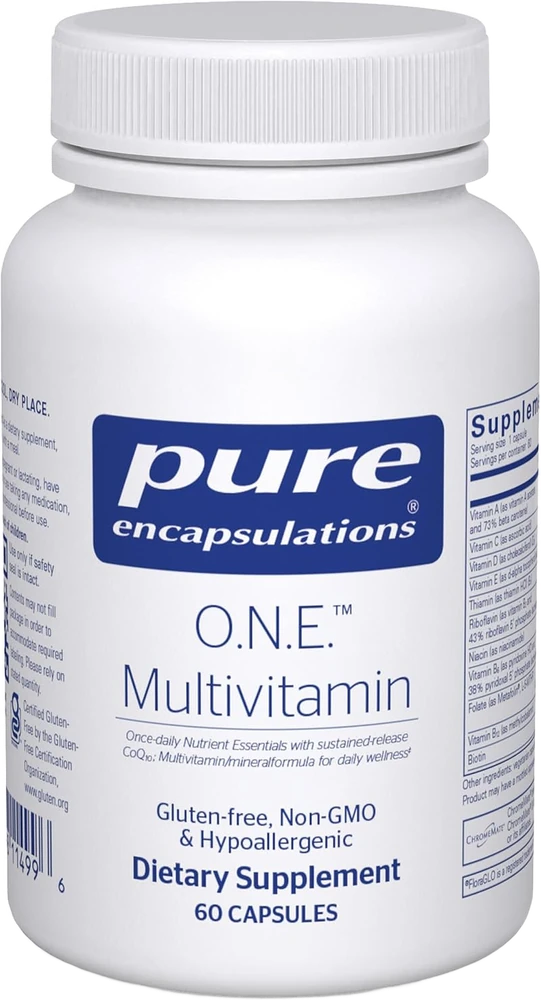
Pure Encapsulations O.N.E.
O.N.E. is the pick when you want clinician-grade forms but refuse to swallow more than one capsule a day.
 02
Ritual Essential for Women 18+
Ritual is the women's pick because it gets the two things right that matter most for women of reproductive age: bioavailable forms (methylated folate and B12, gentle chelated iron that avoids the classic iron-nausea) and verification you can trust (USP Verified, plus the rare distinction of a published clinical trial on the finished product).
 07
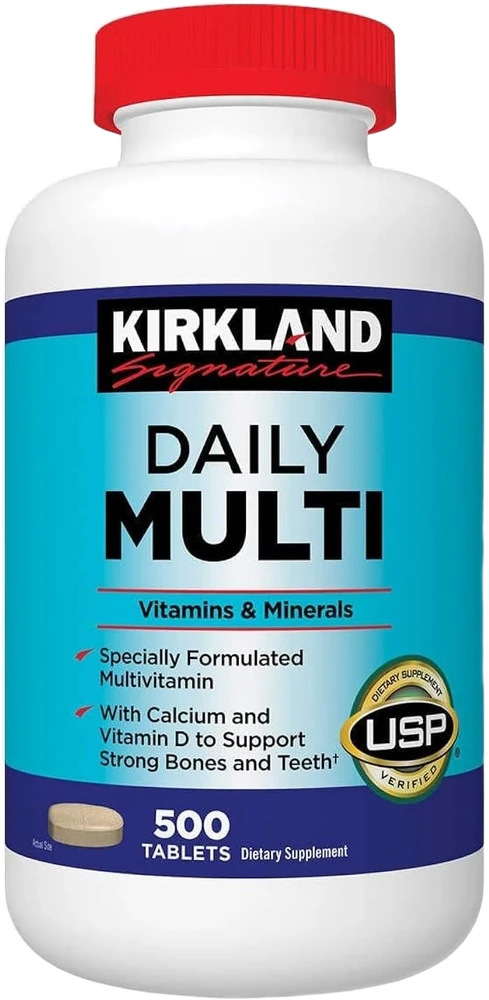
Kirkland Signature Daily Multi
Kirkland Signature is the budget pick, and it's a genuinely smart one: at roughly three cents a day it is the cheapest serious option on the list, and — crucially — it's USP Verified, meaning an independent body has confirmed the tablet actually contains what the label claims.
Quick Answers
Why is Thorne the #1 pick when it costs more than a drugstore multivitamin?
Because a multivitamin's value lives in its FORMS and its TESTING, not its price, and Thorne wins on both. It uses fully methylated folate (L-5-MTHF) and B12 (methylcobalamin) — the active, circulating forms your body uses directly — plus bisglycinate-chelated minerals, and it's NSF certified, meaning an independent body has verified the bottle contains what the label claims. A cheap one-a-day with folic acid and oxide minerals costs less per day but gives you inferior forms and (often) no third-party check. At ~$1.07/day Thorne is a premium, but you're paying for exactly the two things that determine whether a multivitamin is any good.
There's no iron — is that a problem?
For most people it's a feature, not a bug. Men and post-menopausal women generally do NOT need supplemental iron and can slowly accumulate too much from iron-containing multis, so a deliberately iron-free formula is the safer default for them. The exception is menstruating women, who lose iron monthly and often genuinely need it — if that's you, either pair Thorne with a separate iron supplement (ideally after a blood test confirms you need it) or choose an iron-containing women's multivitamin like Ritual or Garden of Life Women's. Don't take iron you don't need just to 'be safe' — that's how iron overload happens.
What does 'fully methylated and chelated' actually mean for me?
It means the nutrients are in forms your body can use immediately. 'Methylated' refers to folate as L-5-MTHF and B12 as methylcobalamin — the active forms, versus folic acid and cyanocobalamin which must be enzymatically converted first (a step many people do inefficiently, per Pietrzik 2010). 'Chelated' means the minerals (calcium, magnesium, zinc) are bound to glycine as bisglycinates, which are gentler on the stomach and better absorbed than cheap oxides. In practice: better absorption, less GI upset, and effectiveness that doesn't depend on how well your particular genetics convert folate.
Will taking this make me healthier or help me live longer?
Be realistic. Thorne is an excellent multivitamin, but no multivitamin is a longevity drug — the largest trial (PHS II, 14,641 men over 11+ years) found a multivitamin produced no reduction in cardiovascular events or death, alongside a modest 8% drop in total cancer incidence (Gaziano 2012; Sesso 2012). What a high-quality multivitamin like this genuinely does is fill the dietary gaps a real diet leaves, in forms you can use. If you have gaps (and national data say most people do), that's worthwhile insurance. If you already eat a varied, nutrient-dense diet, the marginal benefit is small. Buy it as good insurance, not as a health transformation.
Two capsules a day — can I just take one?
You can, but you'll get roughly half the intended gap-filling. The formula is designed as a two-capsule daily serving (that's how it delivers a full, balanced top-up without megadosing any single nutrient), so two is the dose to match the label. If pill count is a real obstacle for you, that's a legitimate reason to prefer a true once-daily like Pure Encapsulations O.N.E. (one capsule) or MegaFood One Daily (one tablet) instead — the best multivitamin is the one you'll actually take consistently. But if you can manage two capsules, Thorne's forms and testing make it worth it.
Sources & Further Reading
3 peer-reviewed sources, each linked to PubMed
- [1] Pietrzik 2010 PMID 20608755 — Folic acid and L-5-methyltetrahydrofolate: comparison of clinical pharmacokinetics and pharmacodynamics. L-5-methyltetrahydrofolate (methylfolate) is the active, circulating folate, while folic acid is a synthetic that must be enzymatically converted — a step many do inefficiently. The basis for crediting Thorne's L-5-MTHF folate as a genuine quality advantage.
- [2] Gaziano 2012 (PHS II — cancer) PMID 23162860 — Multivitamins in the prevention of cancer in men: the Physicians' Health Study II randomized controlled trial. 14,641 men, 11.2 years: a daily multivitamin produced a modest 8% reduction in total cancer incidence. Cited to size the realistic upside honestly — a small long-run cancer-incidence edge, not a health transformation.
- [3] Sesso 2012 (PHS II — cardiovascular) PMID 23117775 — Multivitamins in the prevention of cardiovascular disease in men: the Physicians' Health Study II randomized controlled trial. Same cohort: NO reduction in major cardiovascular events or death. The null result behind the honest framing — even the best multivitamin is gap-insurance, not a cardiovascular or longevity drug.
Affiliate disclosure: every Amazon link uses our Associates tag (superachieverclub-20). We earn a small commission at no cost to you; it funds independent reviews. We never accept payment to change a ranking.