
Seed DS-01 Daily Synbiotic Review
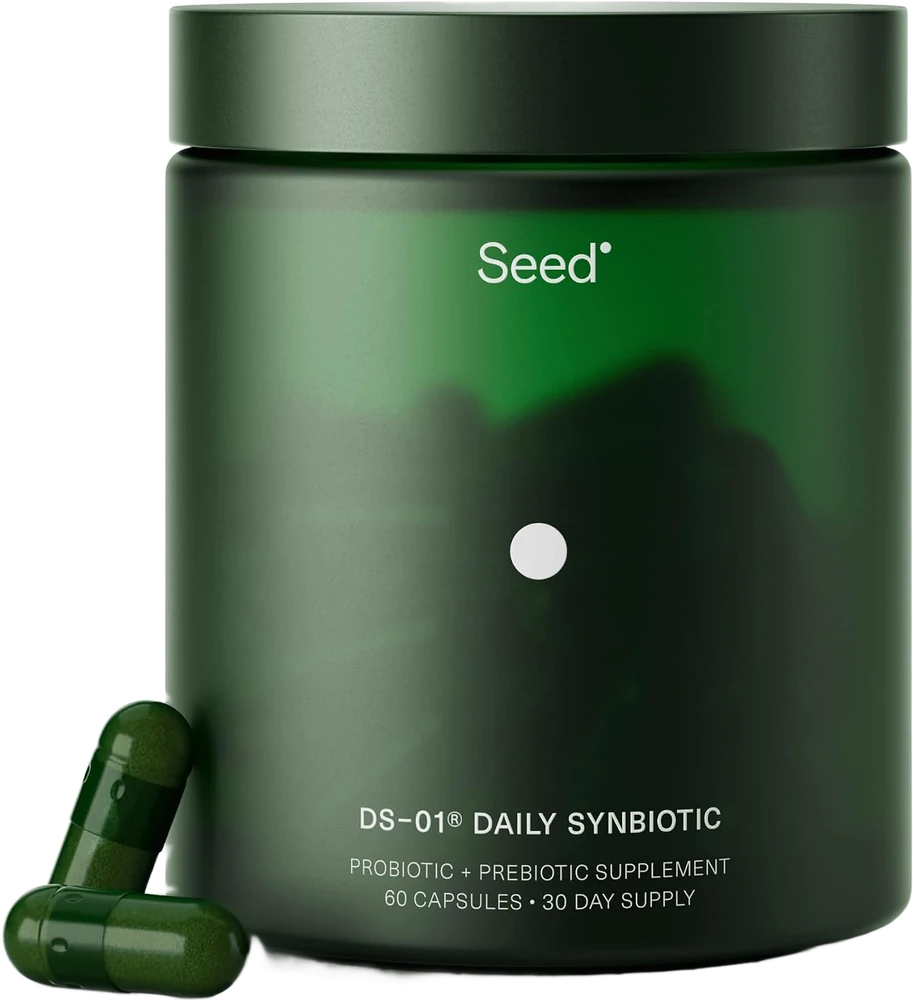 #1 of 11 · Best overall✓ Label verified · Supplement Facts read Sep 7, 2026
Real retailer photo, cut out. Label unedited.
Buy it. The survivability-engineered default for general gut health. A broad 24-strain synbiotic that names and documents its strains, reports a viability-based AFU count guaranteed through expiry, ships those strains to your gut alive via a capsule-in-capsule design, and feeds them with a built-in prebiotic.
$50 / month$1.67 / 2-capsule daily dose
Why It Scores 9.6 — And The Label Line Behind Each Number
Strain specificity + clinical match
35% of scoreBroadest documented panel here — 24 named strains across Lactobacillus and Bifidobacterium, disclosed rather than hidden in a proprietary blend, and positioned for general gut health rather than one diagnosis. Loses half a point only because a broad reset isn't a single studied strain matched to a specific indication the way Align's B. infantis 35624 is for IBS (Whorwell 2006).
- Daily dose
- 2 capsules/day on an empty stomach (53.6B AFU per daily dose)
Survivability to the gut
25% of scoreThe ViaCap 2-in-1 capsule-in-capsule nests the probiotic inside an outer prebiotic shell, shielding the organisms through stomach acid and releasing them lower in the GI tract — directly solving the failure mode (acid kills naked bacteria) that makes most label CFU counts meaningless at the colon. Best-in-class survivability design on the list.
Formulation completeness
20% of scoreA true synbiotic: the Indian-pomegranate prebiotic is built into the outer capsule to feed the strains, so it's a complete tool rather than bacteria with nothing to eat. Broad Lactobacillus + Bifidobacterium coverage with a sensible AFU dose for a general-reset product, not a CFU number inflated for marketing.
- Delivery
- ViaCap 2-in-1 capsule-in-capsule (inner probiotic protected by outer prebiotic shell)
Third-party testing + transparency
12% of scoreReports a viability-based AFU count (53.6B) guaranteed through expiry rather than a manufacture-date CFU, documents its strains, and states third-party testing. The transparency story is among the strongest here. Short of a perfect 10 only because AFU isn't cleanly comparable to the CFU figures every competitor uses.
- Testing
- Third-party tested; strains documented; AFU guaranteed through expiry
Value / cost-per-day
8% of scoreRoughly $1.67/day ($50/month) — the most expensive per day on the entire list, and subscription-first. The strains, documentation, and survivability engineering justify the premium for the general-gut buyer, but Physician's Choice offers a lower-cost 10-species blend with a prebiotic at about half the per-day cost, which is why value is the one axis Seed loses.
- Bottle
- 60 capsules (30-day supply at 2/day), vegan, dairy-free, shelf-stable (no fridge)
- Price
- ~$50/month subscription = ~$1.67 per 2-capsule daily dose
- More Specs
- Strains
- 24 named probiotic strains (broad Lactobacillus + Bifidobacterium panel)
- Potency
- 53.6 billion AFU (Active Fluorescent Units — viable cells, not manufacture-date CFU)
- Synbiotic
- Includes Indian-pomegranate prebiotic to feed the strains — probiotic + prebiotic in one
Label verified. Every figure read from the Supplement Facts photo, Sep 7, 2026.
Marketing Claims Vs. Reality
53.6 billion AFU — guaranteed viable cells, a more honest count than manufacture-date CFU.
AFU (Active Fluorescent Units) is a flow-cytometry count of viable cells, and Seed guarantees it through end of shelf life rather than at manufacture — a genuinely more honest viability claim than the manufacture-date CFU most bottles print. Real and a meaningful differentiator. The only caveat is that AFU isn't directly interchangeable with the CFU numbers on competing labels.
Capsule-in-capsule (ViaCap) delivers the strains alive past stomach acid.
The mechanism is sound — nesting the probiotic inside an outer prebiotic shell shields it through the stomach, directly addressing the survivability problem that kills most naked bacterial probiotics. The design and intent are real; we can't independently verify the exact survival percentage from the label, so the specific survival figures are accepted in principle but not audited here.
A true synbiotic — probiotic plus a prebiotic to feed it, in one capsule.
The Indian-pomegranate prebiotic is built into the outer capsule, so the product genuinely combines probiotic and prebiotic rather than being bacteria alone. Accurate, and it makes Seed a more complete tool than the plain-probiotic picks lower on the list.
Clinically studied strains for digestive health, including bloating and gas.
Probiotics as a class have real RCT support for digestive symptoms (Ford 2014, PMID 25070051 for IBS), and Seed's panel is named and documented — but 'clinically studied' is a class-level and strain-documentation claim, not proof that this specific 24-strain combination was trialed end-to-end for your symptom. Honest framing: strong documentation, class-level evidence, not a single-product RCT.
Shelf-stable — no refrigeration required, travels anywhere.
Seed is engineered for shelf stability and ships without a cold chain, and the capsule design supports room-temperature storage. Verifiable from the product and a real convenience advantage over refrigerated picks like Garden of Life Women's (#2) and many Renew Life lots.
What Our Test Actually Found
Seed gets the two things right that almost everything else gets wrong
The category has two hard problems: naming a studied strain (so you can match it to your goal) and getting that strain to your colon alive (so the count means something). Most bottles solve one or neither — a 'proprietary 30-strain' label fails the first; a naked-capsule budget probiotic fails the second. Seed solves both: 24 documented strains and a capsule-in-capsule survivability design with a built-in prebiotic. That combination, not the headline AFU number, is why it's the benchmark for the general-gut-health buyer.
AFU is more honest than manufacture-date CFU — but don't compare it head-to-head with CFU
Seed's choice to report 53.6B AFU (viable cells, guaranteed through expiry) is a step up in honesty from the manufacture-date CFU most competitors print, which can be far higher than what's alive when you swallow it. But the trap is treating '53.6B AFU' and '60B CFU' as the same currency — they're measured differently, so the comparison is apples-to-oranges. The right takeaway is the guarantee-through-expiry and the survivability design, not a billions arms race.
It's a general reset, not a single-strain prescription
Seed is deliberately broad — 24 strains for ecosystem support — which is exactly right for 'general gut health and bloating' and exactly wrong for a specific named diagnosis. The IBS evidence is strain-specific (Whorwell 2006: B. infantis 35624 at 1×10⁸ CFU/day); the post-antibiotic evidence points to S. boulardii and LGG (McFarland 2010; Szajewska 2015). If you have one of those targets, the matched single strain beats a broad blend. Seed is the default when you don't.
The subscription + price is the real cost — and Physician's Choice is the value alternative
At ~$50/month, Seed is the priciest per day on the list and subscription-first. For the buyer who values documentation and survivability, the premium is defensible. But Physician's Choice 60B is a lower-cost option — a 10-species blend with an added prebiotic and high CFU, though with no strain codes and a plain vegetable capsule on its panel — at roughly half the per-day cost and with no subscription. If money or commitment is the constraint, that's the smart-money swap; if you want the most defensible everyday probiotic, Seed earns it.
The benefit is transient — this is a daily continuity product
Like essentially all probiotics, most of Seed's strains are transient: they do competitive-exclusion and metabolite work while you take them, then clear within days to weeks of stopping. That's the honest reason it's a subscription — the value depends on daily continuity, and the benefit fades when you stop. Judge it over a few weeks of consistent dosing, not a few days, and don't expect it to permanently re-engineer your microbiome.
Full analysis: all pros & cons (8), buy if / skip if
- Reports a viability-based AFU count guaranteed through expiry — a more honest measure than manufacture-date CFU
- Capsule-in-capsule (ViaCap) shields the strains through stomach acid, directly solving the survivability problem that sinks most probiotics
- True synbiotic — the built-in prebiotic feeds the strains, so it's a complete tool rather than bacteria with nothing to eat
- Broadest documented strain panel here (24 named strains) — transparent, not a 'proprietary blend'
- Shelf-stable and vegan — no refrigeration, travels well
- Subscription-first and the most expensive per day on the list — roughly $50/month
- A broad 24-strain reset, not a single-strain tool for one diagnosis like IBS (Align) or antibiotic recovery (Florastor)
- AFU isn't directly comparable to the CFU numbers on competing labels — harder to benchmark for CFU-shoppers
- You want one credible daily probiotic for general gut health, bloating, and gas — with no single diagnosis to target
- You care that the strains are named and documented, not hidden in a 'proprietary blend'
- You want survivability engineering (capsule-in-capsule) so the organisms actually reach your colon alive
- You want a true synbiotic — a built-in prebiotic to feed the strains — and shelf-stable convenience for travel
- Your problem is specifically IBS-type pain and bloating — buy the studied strain, Align's B. infantis 35624
- You're on or about to start antibiotics — a bacterial synbiotic gets killed; use Florastor (S. boulardii)
- Cost is the constraint or you won't commit to a subscription — Physician's Choice 60B is a lower-cost 10-species blend at ~half the price (no strain codes on its label)
A broad 24-strain synbiotic that names and documents its strains, reports a viability-based AFU count guaranteed through expiry, ships those strains to your gut alive via a capsule-in-capsule design, and feeds them with a built-in prebiotic. The most defensible 'everyday probiotic' on the shelf — at the highest cost per day on the list. For a single diagnosis (IBS, post-antibiotic, women's flora), a targeted pick beats it; for the general reset, this is it.
Seed DS-01 is the probiotic we point most people to when they don't have a specific diagnosis and just want a credible daily product for general gut health and bloating. It's the benchmark the rest of this list is measured against, and it earns that for a simple reason: it does the two genuinely hard things in this category, where almost everything else does one or neither. First, it names and documents a broad 24-strain panel instead of hiding behind a 'proprietary blend' — you can see what you're actually getting. Second, it solves survivability, the problem that quietly sinks most probiotics: stomach acid kills naked bacteria before they reach the colon, so Seed nests the probiotic inside an outer prebiotic shell (the ViaCap capsule-in-capsule) to shield the organisms through the stomach, with the prebiotic built in to feed them once they arrive. The catch is cost and commitment — it's a subscription and the priciest per day on the list. Here's the full breakdown of what you're paying for, and the cases where a cheaper or more targeted pick beats it.
The most defensible everyday probiotic — if you don't have a specific diagnosis.

Seed DS-01 is what we recommend to the reader who wants one credible probiotic for general gut health, bloating, and gas, and doesn't want to overthink it. It does the two hard things right — it names and documents a broad 24-strain panel, and it actually gets those strains to your colon alive through the capsule-in-capsule design, with a prebiotic built in to feed them. The transparency (AFU guaranteed through expiry) and survivability engineering are the real product; the headline billions are not the point. For the general-reset question — 'which probiotic should most people take?' — this is the strongest answer on the shelf. The cases to look elsewhere are specific and clear. If your problem is IBS-type pain and bloating, buy the studied strain — Align's B. infantis 35624 — because the evidence there is strain-specific, not breadth-specific. If you're on or about to start antibiotics, a bacterial synbiotic gets killed; use Florastor (S. boulardii). And if cost or the subscription is the constraint, Physician's Choice 60B is a lower-cost 10-species blend at about half the per-day price, though its label prints species names rather than strains. For everyone else, Seed is the pick — take 2 capsules daily, give it a few weeks, and keep in mind the benefit is continuity-dependent.
If This Doesn’t Fit — Try These
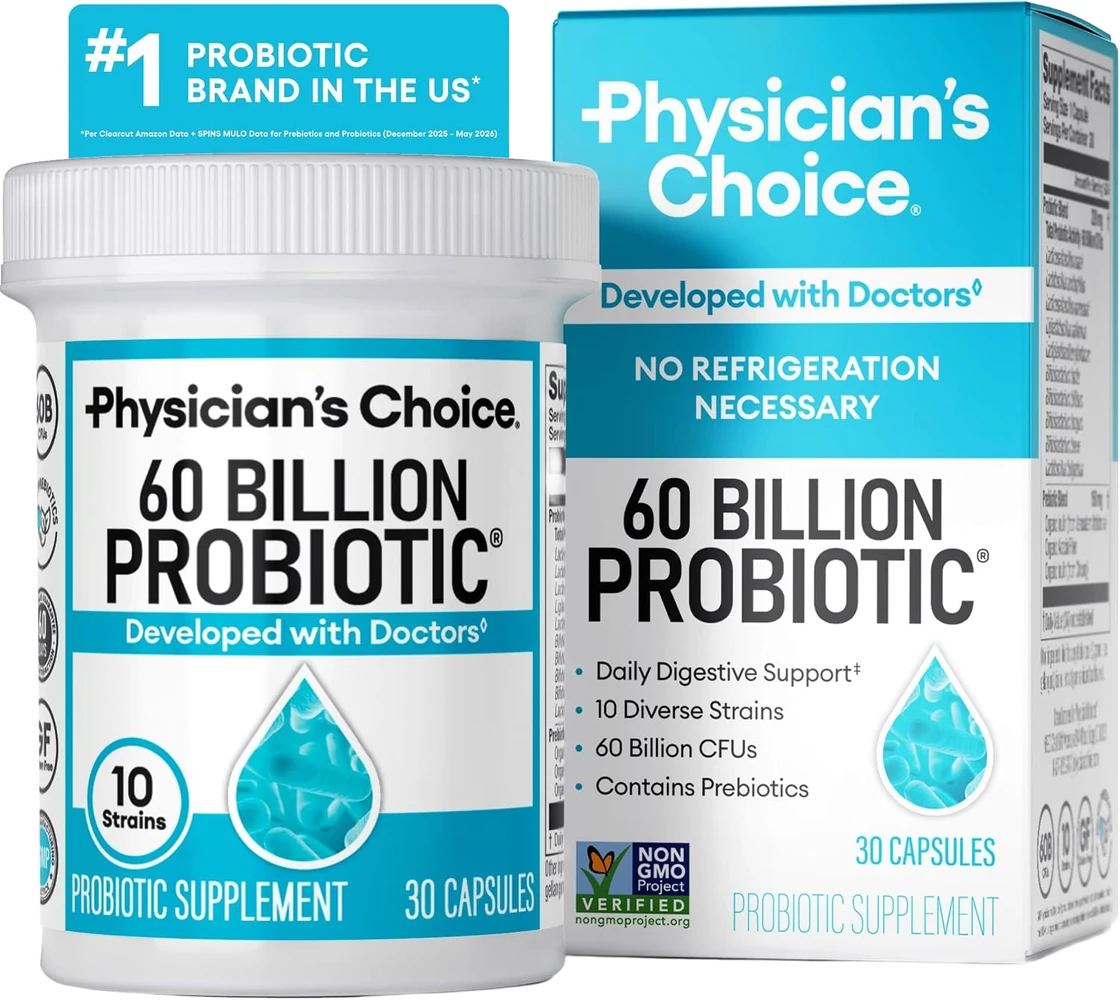 10
10Physician's Choice 60 Billion
Physician's Choice is a low-cost high-CFU generalist — the bottle to grab when you want broad daily gut support without a subscription or a premium price.
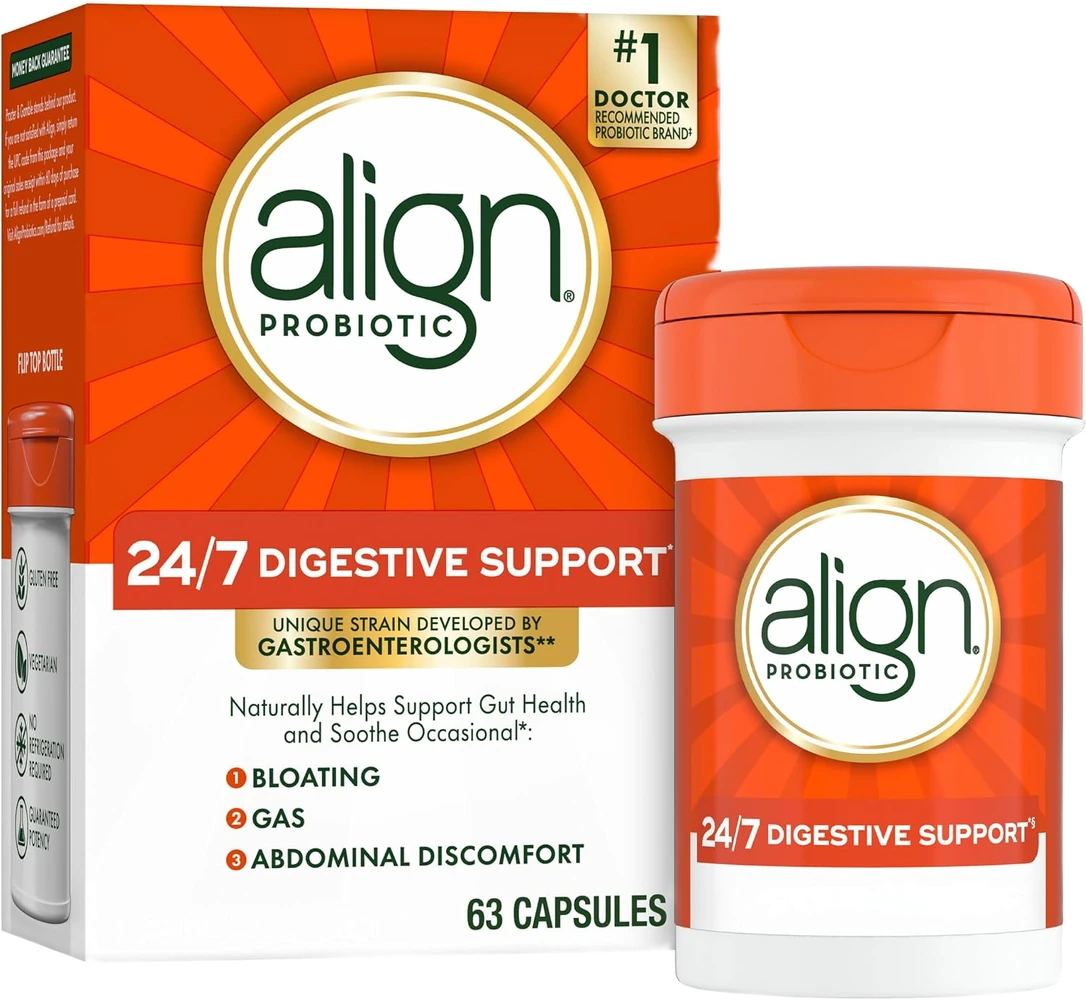 04
04Align Probiotic 24/7
Align is the answer to one specific question: 'I have IBS-type cramping, bloating, and irregularity — what's the evidence-backed strain?' That strain is Bifidobacterium 35624 (Bifantis), and Align is how you buy it.
 05
05Florastor Daily Probiotic
Florastor is the pick for one situation that catches everyone out: you've just been prescribed antibiotics.
Quick Answers
Is a 24-strain blend better than a single studied strain like Align's B. 35624?
It depends entirely on your problem, and this is the central decision in the whole category. For general gut health, bloating, and a daily reset — no single diagnosis — a broad, documented, survivability-engineered synbiotic like Seed is the right tool, because you're trying to support the ecosystem rather than treat one named condition. But if your problem is specifically IBS-type cramping and bloating, the evidence is strain-specific: Whorwell 2006 (PMID 16863564) showed Bifidobacterium infantis 35624 at 1×10⁸ CFU/day relieved IBS pain and bloating, and that exact strain is sold as Align. More strains is not automatically better — it's better for breadth, not for matching one studied indication. Buy Seed for the reset; buy the named strain for the diagnosis.
What is AFU, and why does Seed report it instead of CFU?
AFU stands for Active Fluorescent Units — a flow-cytometry count of viable cells. CFU (colony-forming units) counts only cells that grow into colonies on a plate, which undercounts some viable organisms and is usually measured at manufacture rather than at the end of shelf life. Seed reports 53.6B AFU and guarantees it through expiry. The honest read: AFU is a defensible viability measure, but it isn't directly interchangeable with the CFU numbers on every other bottle, so you can't cleanly compare '53.6B AFU' to '60B CFU' head-to-head. What matters more than the unit is that the count is guaranteed to the end of shelf life and the strains are engineered to arrive alive — both of which Seed does.
Does the capsule-in-capsule design actually improve survival to the gut?
That's the design's entire purpose, and it targets the real failure mode. Stomach acid and bile kill most naked probiotic bacteria before they reach the colon, so a big CFU printed at manufacture can be mostly dead by the time it acts. Seed's ViaCap nests the probiotic capsule inside an outer prebiotic shell, so the inner organisms are shielded through the stomach and released lower in the GI tract. We can't independently verify the exact survival percentage from the label, so treat the specific marketing figures with appropriate skepticism — but the mechanism is sound, and survivability engineering is one of the two things (alongside named strains) that separates a serious probiotic from CFU theater.
Is Seed worth roughly $50/month when Physician's Choice 60B is about half that?
For the general-gut-health buyer who values documentation and survivability, yes — but it's a real premium and Physician's Choice is a lower-cost alternative, though its label names species rather than strains. What the extra money buys: a broader documented strain panel (24 vs 10), a capsule-in-capsule survivability design, AFU guaranteed through expiry, and a built-in prebiotic. Physician's Choice offers a 10-species, 60B-CFU blend with a prebiotic at about $26/month without a subscription, but its panel prints no strain codes and a plain vegetable capsule. If you want the most defensible 'everyday probiotic' and the cost doesn't sting, Seed is the pick; if value matters more than maximal documentation, Physician's Choice is the smart-money call. Neither is a targeted tool for IBS or antibiotics.
Will Seed permanently fix my gut, or do I have to keep taking it?
You have to keep taking it — and that's true of essentially every probiotic, not a Seed-specific limitation. Most probiotic strains are transient passengers: they're present and doing competitive-exclusion and metabolite work while you take them, then largely clear from the gut within days to weeks of stopping. Probiotics manage symptoms and support the ecosystem during transit; they don't permanently re-engineer your microbiome. That's part of why Seed is a subscription — it's built for daily continuity. Judge it over a few weeks of consistent dosing, and understand that the benefit fades when you stop, the same as it would with any bacterial probiotic.
I'm about to start antibiotics — should I use Seed for that?
No — use Florastor for that specific job. The post-antibiotic evidence is strongest for Saccharomyces boulardii, a yeast that antibacterial antibiotics can't kill (McFarland 2010, PMID 20458757), and for Lactobacillus rhamnosus GG (Szajewska 2015, PMID 26365389); the meta-analytic case that probiotics cut antibiotic-associated diarrhea is solid (Hempel 2012). Seed is a bacterial synbiotic, so a course of antibacterial antibiotics will kill much of it on contact — it's the wrong tool for taking alongside antibiotics. Seed is your everyday general-gut-health probiotic; keep a separate bottle of S. boulardii on hand for the next time a doctor hands you a prescription.
Sources & Further Reading
3 peer-reviewed sources, each linked to PubMed
- [1] Ford 2014 PMID 25070051 — Efficacy of prebiotics, probiotics, and synbiotics in irritable bowel syndrome and chronic idiopathic constipation: systematic review and meta-analysis. Meta-analysis of 43 RCTs: probiotics as a class significantly reduced persistent IBS symptoms versus placebo (RR 0.79), with benefits on global symptoms, pain, bloating, and flatulence — while explicitly noting which strains work best remains uncertain. The class-level support for a broad synbiotic like Seed, with the strain-specificity caveat that sends single diagnoses to targeted picks.
- [2] Whorwell 2006 PMID 16863564 — Efficacy of an encapsulated probiotic Bifidobacterium infantis 35624 in women with irritable bowel syndrome. RCT in 362 women: B. infantis 35624 at 1×10⁸ CFU/day significantly relieved IBS pain and bloating versus placebo. The strain-specific benchmark — proof that for a defined diagnosis the matched single strain (Align) is the tool, where Seed is the broad-reset default.
- [3] Hungin 2018 PMID 29460487 — Systematic review: probiotics in the management of lower gastrointestinal symptoms — an updated evidence-based international consensus. International primary-care consensus over 70 RCTs: specific probiotics reduce overall symptom burden and abdominal pain in some patients, and specified strains help prevent antibiotic-associated diarrhea. The clinical-practice synthesis — endorses probiotics where the strain matches the indication, the logic behind buying a documented panel like Seed for general support.
Affiliate disclosure: every Amazon link uses our Associates tag (superachieverclub-20). We earn a small commission at no cost to you; it funds independent reviews. We never accept payment to change a ranking.