
Renew Life Ultimate Flora Extra Care 50 Billion Review
 #7 of 11 · Best for sensitive gut✓ Label verified · Supplement Facts read Sep 7, 2026
Real retailer photo, cut out. Label unedited.
Consider it. A broad high-potency blend for sensitive guts — with LGG and delayed-release doing the work. A 50B-CFU, 12-strain blend led by LGG (the most-studied strain) in a delayed-release capsule that genuinely protects the dose past stomach acid.
$28 / month$0.47 / 1-capsule daily dose
Why It Scores 7.5 — And The Label Line Behind Each Number
Strain specificity + clinical match
35% of scoreA real workhorse plus breadth. It's led by Lactobacillus rhamnosus GG — the most-studied single strain, with documented antibiotic-associated-diarrhea evidence (Szajewska 2015, PMID 26365389) — anchoring a 12-strain blend. Above a generic blend because LGG is named and studied; short of the targeted picks because, beyond LGG, the rest of the blend is general coverage rather than strains matched to a specific indication.
- Daily dose
- 1 capsule per day
Survivability to the gut
25% of scoreGenuine engineering, and the reason the 50B count means something. The delayed-release capsule protects the organisms past stomach acid and releases them lower in the GI tract — directly addressing the failure mode the substance hub warns about, where acid kills naked bacteria before they reach the colon. Not the capsule-in-capsule of Seed (#1), but a real, credited survivability mechanism well ahead of the plain-capsule picks.
Formulation completeness
20% of scoreHigh-potency and broad, but not complete. 50B CFU across 12 strains is genuine multi-strain coverage suited to broad ecosystem support — but there's no prebiotic, so it's a probiotic, not a synbiotic. Seed (#1), Physician's Choice, and Culturelle all bring a prebiotic to feed the strains; Renew Life delivers the bacteria alone. Solid breadth, missing the 'feed them' half of a complete tool.
- Delivery
- Delayed-release capsule to protect strains past stomach acid
Third-party testing + transparency
12% of scoreReasonable but not standout. The lead strain is named (LGG), which is the transparency that matters most, and Renew Life is an established broad-spectrum brand. Held back because many lots need refrigeration — and as the hub notes, a refrigerated product that sat warm in shipping may have lost potency — and there's no prominent public COA or NSF certification surfaced for the line.
Value / cost-per-day
8% of scoreStrong value. Roughly $0.47 per 1-capsule daily dose (~$28/month) with a large 60-count bottle — a reasonable per-day cost for a high-potency, delayed-release, LGG-led blend. Cheaper per day than Seed (#1), Ritual (#3), or Align, and you get genuine survivability engineering for the money. Value is one of this pick's clearer strengths.
- Bottle
- 60 capsules (~2-month supply at 1/day)
- Price
- ~$28/month = ~$0.47 per 1-capsule daily dose
- More Specs
- Strains
- 12 strains, led by Lactobacillus rhamnosus GG (LGG)
- Potency
- 50 billion CFU
- Synbiotic
- No prebiotic — a probiotic, not a synbiotic
- Storage
- Many lots need refrigeration to best preserve potency — check the label
Label verified. Every figure read from the Supplement Facts photo, Sep 7, 2026.
Marketing Claims Vs. Reality
50 billion CFU across 12 strains in a delayed-release capsule.
The potency, strain count, and delivery format are as labeled — a high-potency 12-strain blend with a genuine delayed-release capsule. The delayed-release design is real survivability engineering that addresses the stomach-acid failure mode the substance hub describes, so the 50B count has a real chance of arriving alive. Accurate and a genuine strength.
Led by Lactobacillus rhamnosus GG (LGG).
The blend is anchored by LGG, the most-studied single probiotic strain, with a documented role in antibiotic-associated diarrhea (Szajewska 2015, PMID 26365389). Naming the lead strain down to the code is exactly the transparency the category needs — it means a genuinely studied workhorse is doing real work in the blend, not twelve anonymous strains.
Extra Care 50 billion — a high-potency formula for digestive support.
The potency is real and the delayed-release delivery makes it meaningful, but 'high-potency' shouldn't be read as 'better than lower-CFU picks.' The substance hub is clear the right dose is strain-specific — Align's 1B for B. infantis 35624 isn't inferior to 50B of a general blend. Renew Life is broad ecosystem support; the 50B matters because it's protected, not because bigger is automatically better.
Formulated for sensitive or reactive guts.
Reasonable positioning — a delayed-release capsule and a broad, balanced blend led by a gentle studied strain suit a reactive gut. But the substance hub's universal caveat holds: the most common early effect of any probiotic is transient gas or bloating in the first few days as the gut adjusts. 'For sensitive guts' is a sensible design intent, not a guarantee of zero adjustment period.
A complete daily probiotic for gut balance.
Overstates 'complete.' It's high-potency and broad, but there's no prebiotic in the formula, so it's a probiotic rather than a synbiotic — the bacteria arrive with nothing to eat. It's a solid broad blend with genuine delayed-release survivability, but 'complete' belongs to the synbiotic tools like Seed (#1) that bundle a prebiotic, not to this one.
What Our Test Actually Found
The delayed-release capsule is what makes the 50B meaningful
The headline on this bottle is '50 billion CFU,' but the number that should reassure you is the delivery format. A high CFU printed at the label is worthless if stomach acid kills the organisms before they reach the colon — that's the failure mode the substance hub hammers. Renew Life's delayed-release capsule is genuine survivability engineering: it protects the organisms past the stomach and releases them lower in the GI tract, so more of the 50 billion actually arrives alive. It's not Seed's capsule-in-capsule (#1), but it's a real, credited mechanism that puts this well ahead of the plain-capsule picks. Survivability, not the raw count, is the point.
LGG anchors the blend — that's a real workhorse, not filler
Plenty of 12-strain blends are twelve anonymous bugs. Renew Life isn't, because it's led by Lactobacillus rhamnosus GG — the most-studied single probiotic strain, with documented antibiotic-associated-diarrhea evidence (Szajewska 2015, PMID 26365389). Having a named, genuinely studied strain doing the heavy lifting is what separates this from a generic high-CFU blend, and it's why it out-scores the budget generalists on strain specificity. The honest limit: beyond LGG, the rest of the blend is general ecosystem coverage rather than strains matched to a specific indication. You're getting one workhorse plus breadth, not twelve targeted tools.
Refrigeration is the real inconvenience — and a hidden potency risk
The biggest practical knock on Renew Life is storage: many lots need refrigeration to best preserve potency, and the substance hub flags the hidden risk this creates — a refrigerated product that sat warm in shipping may have lost potency before it ever reached you. So check the label (always the source of truth over marketing), keep the bottle cold, and look for the end-of-shelf-life potency guarantee. If shelf-stability and travel convenience matter to you, an engineered-for-it product like Seed (#1) or Florastor is the better fit. For a home-based daily where you'll keep it in the fridge, it's a manageable trade-off.
It's broad support for a sensitive gut — not the targeted IBS tool
The listicle positions this for general IBS-type and sensitive-gut use, and that's the right framing: Ford 2014 (PMID 25070051) shows probiotics as a class help IBS while flagging that strain selection is unsettled, and the Hungin 2018 consensus (PMID 29460487) endorses specific probiotics for some IBS patients. Renew Life's broad blend fits that class-level support well. But if IBS is your specific, defined problem, the strain-specific evidence points to B. infantis 35624 — Align — at its studied 1B dose. Use Renew Life for broad multi-strain support of a reactive gut; use Align when you want the exact strain the IBS trial studied.
Strong value, with one formulation gap to know about
On price, Renew Life is one of the better deals here — roughly $0.47 per daily capsule with a large 60-count bottle, and you get genuine delayed-release survivability and a named LGG workhorse for the money. The gap to know: it's a probiotic, not a synbiotic, so there's no prebiotic to feed the strains, where Seed (#1), Physician's Choice, and Culturelle all include one. Whether that matters depends on your diet — if you eat plenty of fiber you're feeding your flora anyway. It's an honest formulation gap, not a flaw, and at this per-day cost the overall package is a sensible buy for its intended user.
Full analysis: all pros & cons (8), buy if / skip if
- Includes LGG as the lead strain, so it pairs a studied workhorse with broad multi-strain coverage
- Delayed-release capsule targets survivability — genuine engineering that protects the dose past the stomach
- Large 60-count bottle at a reasonable ~$0.47/day — strong value for a high-potency, delayed-release blend
- Higher-potency option still positioned for sensitive, reactive guts
- LGG is named to the code (Szajewska 2015), so a genuinely studied strain anchors the blend rather than anonymous bugs
- Beyond the named LGG, the rest of the 12-strain blend is general coverage, not tied to a single studied indication
- Many lots require refrigeration for best potency — less convenient and a hidden shipping-warmth risk
- No prebiotic — a probiotic, not a complete synbiotic like Seed (#1) or Physician's Choice
- You have a sensitive or reactive gut and want broad multi-strain coverage rather than a single strain
- You want at least one named, studied workhorse strain (LGG) anchoring a high-potency blend
- You want genuine survivability engineering — a delayed-release capsule that protects past the stomach
- You're fine refrigerating it and want a large 60-count bottle at a reasonable per-day cost
- Your problem is specifically IBS-type pain and bloating — buy the studied strain, Align's B. infantis 35624
- You want shelf-stable, travel-friendly convenience — many lots need refrigeration; use Seed (#1) or Florastor
- You want a complete synbiotic with a built-in prebiotic — this is a probiotic only; Seed (#1) or Physician's Choice
A 50B-CFU, 12-strain blend led by LGG (the most-studied strain) in a delayed-release capsule that genuinely protects the dose past stomach acid. A solid broad-spectrum pick for reactive guts at a reasonable per-day cost. The caveats: beyond LGG the blend is general rather than targeted, it's a probiotic not a synbiotic (no prebiotic), and many lots need refrigeration.
Renew Life Ultimate Flora Extra Care is the broad-spectrum pick for a reactive gut — a high-potency multi-strain blend that gets two important things right and a couple of things half-right. It pairs 50 billion CFU across 12 strains with a delayed-release capsule, which matters more than the headline number: the delayed-release design is genuine survivability engineering, protecting the organisms past stomach acid so more of the dose actually reaches the colon. And it's led by Lactobacillus rhamnosus GG, the most-studied single probiotic strain, so there's a real workhorse anchoring the blend rather than twelve anonymous bugs. Where it sits mid-pack is the rest of the picture: beyond LGG, the blend is more general than targeted, and many lots want refrigeration, which makes it less convenient than the shelf-stable options. It's also a probiotic, not a synbiotic — no prebiotic in the formula. None of that disqualifies it; it just places it as a good, sensibly-priced broad blend rather than a best-in-class engineered synbiotic. Here's the full breakdown.
A solid broad blend for a sensitive gut — LGG and delayed-release earn its place.

Renew Life Ultimate Flora Extra Care is a good broad-spectrum, high-potency pick for people with sensitive or reactive guts who want multi-strain coverage with at least one named, studied strain doing the heavy lifting. The delayed-release capsule means the 50 billion CFU has a real chance of surviving to the colon — genuine engineering, not just a big number — and LGG anchoring the blend gives you a real workhorse strain rather than twelve anonymous bugs. At roughly $0.47 a day with a large 60-count bottle, the value is strong. It sits mid-pack because of the parts that are half-right. Beyond LGG, the blend is more general than targeted; it's a probiotic, not a synbiotic, so there's no prebiotic to feed the strains; and many lots want refrigeration, which makes it less convenient than the shelf-stable options and carries the hidden risk that a bottle warm in shipping lost potency before reaching you. So the cases to look elsewhere are clear: for a specific IBS diagnosis, buy the studied strain in Align; for travel-friendly shelf-stability, Seed (#1) or Florastor; for a complete synbiotic, Seed (#1) or Physician's Choice. But if you respond well to broad Lactobacillus/Bifidobacterium blends, want delayed-release survivability and a named workhorse strain, and will keep it in the fridge, Renew Life is a sensible, well-priced pick.
If This Doesn’t Fit — Try These
 01
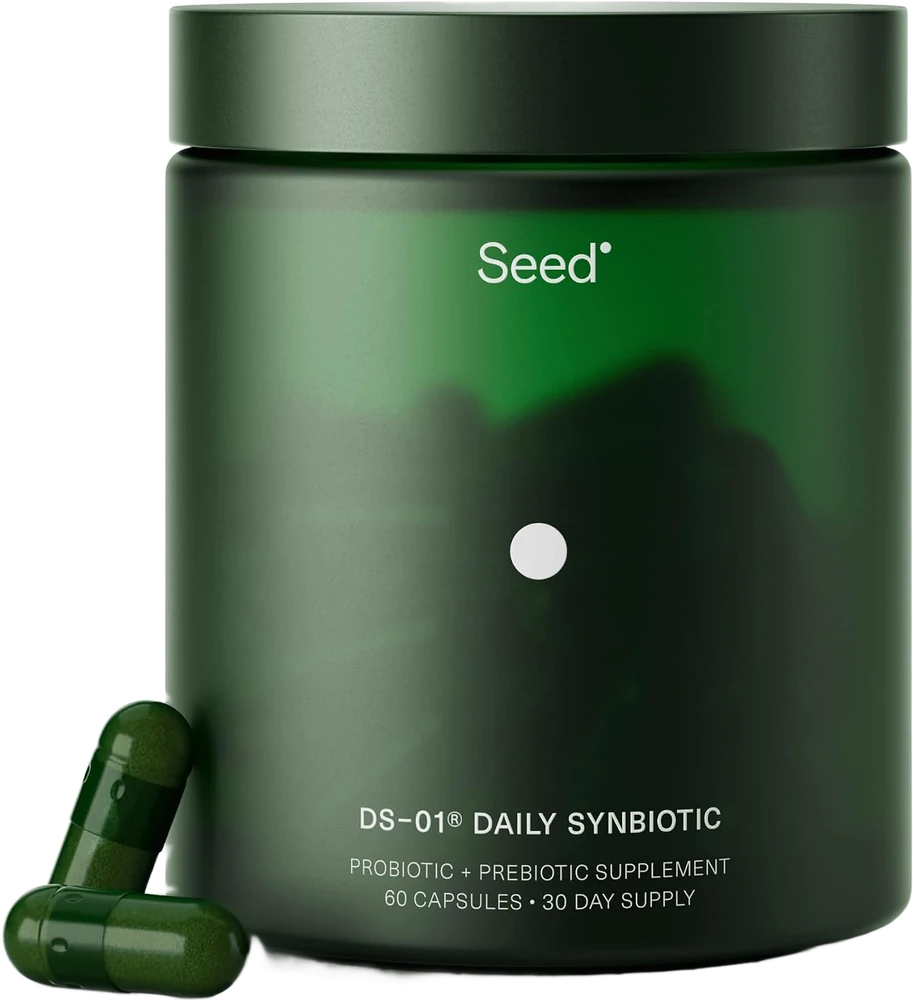
01Seed DS-01
If you want one probiotic for general gut health, bloating, and a credible daily synbiotic, Seed DS-01 is the pick and the benchmark the rest of this list is measured against.
 04
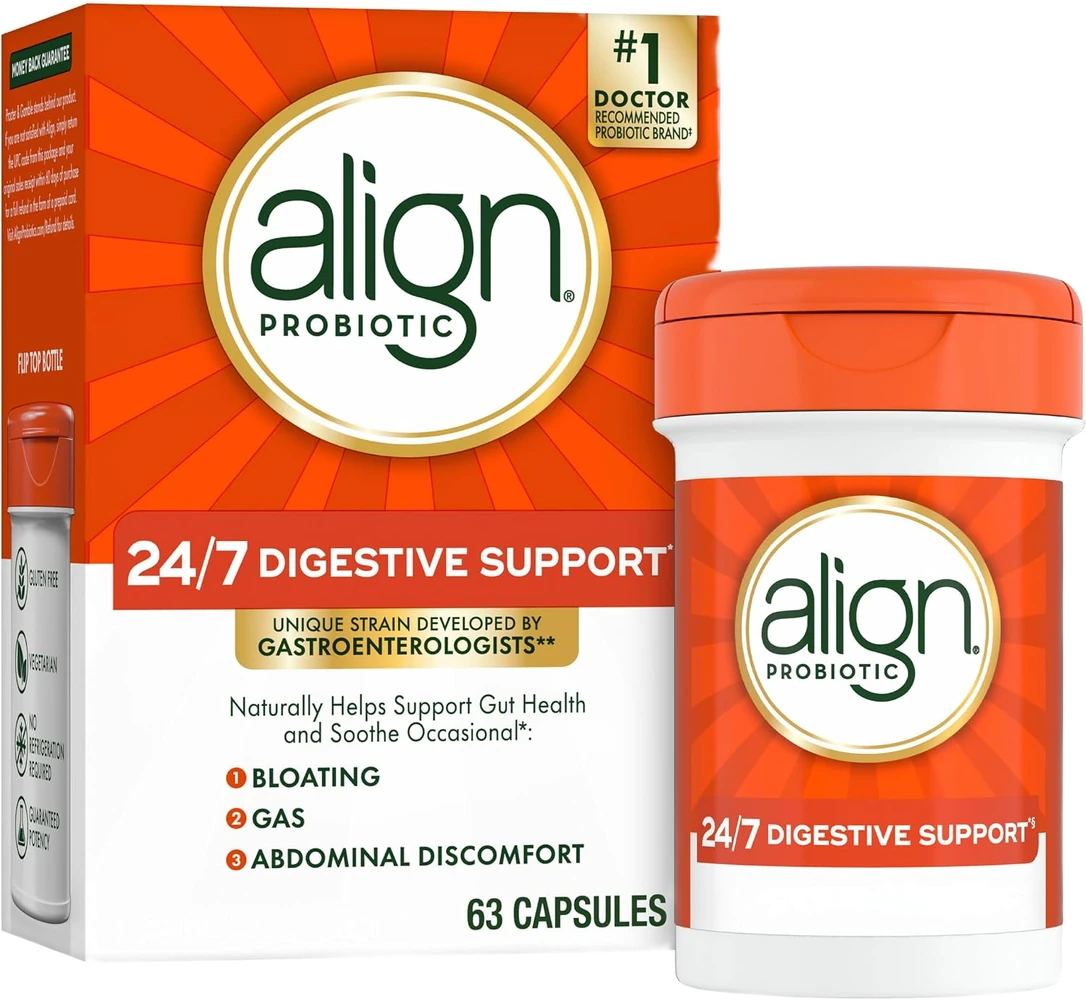
04Align Probiotic 24/7
Align is the answer to one specific question: 'I have IBS-type cramping, bloating, and irregularity — what's the evidence-backed strain?' That strain is Bifidobacterium 35624 (Bifantis), and Align is how you buy it.
 06
06Culturelle Daily Probiotic
Culturelle is the pick when you want the most-studied strain on earth, simply and affordably.
Quick Answers
What makes this a good pick for a sensitive or reactive gut?
Two things: the delayed-release capsule and the broad, balanced multi-strain blend led by a gentle, well-characterized workhorse strain. The delayed-release design means the organisms aren't dumped into the stomach all at once — they're protected past stomach acid and released lower in the GI tract, which can be easier on a reactive gut than a plain capsule. And the 12-strain Lactobacillus/Bifidobacterium blend, led by LGG, is a broad ecosystem-support approach rather than a single aggressive strain. That said, the substance hub's honest caveat applies to everyone: the most common early effect of any probiotic is transient gas or bloating in the first few days as the gut adjusts, usually settling within a week. Start consistently and give it time.
Is LGG the same as the strain in Culturelle?
Yes — LGG is Lactobacillus rhamnosus GG, the same well-studied strain that Culturelle is built around. The difference is the surrounding formulation: Culturelle delivers LGG as a clean single named strain at 10B CFU with an inulin prebiotic, while Renew Life uses LGG as the lead strain of a broader 12-strain, 50B-CFU blend with delayed-release. LGG is the most-studied single probiotic strain and has a documented role in antibiotic-associated-diarrhea contexts (Szajewska 2015, PMID 26365389). So both products give you a genuinely studied workhorse; pick Renew Life if you want LGG plus broad multi-strain coverage in a delayed-release capsule, and Culturelle if you want LGG alone, simply and a bit cheaper.
Does Renew Life need to be refrigerated?
Many lots do, and this is the product's main inconvenience — so check your specific bottle's label, which is always the source of truth over the marketing. The substance hub is clear that many traditional Lactobacillus/Bifidobacterium products contain fragile live cells that degrade at room temperature and need cold storage to stay viable, and Renew Life's high-potency blends often fall into that camp. The practical risk the hub flags: a refrigerated product that sat warm in shipping may have lost potency before it reached you. If shelf-stability and travel convenience matter to you, a product engineered for it — like Seed (#1) or Florastor — is the better fit. Otherwise, just keep this one cold and check the end-of-shelf-life potency guarantee.
Is 50 billion CFU better than the lower-CFU picks like Align?
Not inherently — and conflating 'more CFU' with 'better' is the category's classic trap. The substance hub is explicit: a huge CFU count of unstudied strains is not better than the trial dose of the right strain for your goal, and the IBS benefit in Whorwell 2006 (PMID 16863564) appeared at just 1×10⁸ CFU/day for B. infantis 35624. So Renew Life's 50B isn't 'better' than Align's 1B — they're different tools. Align is a single strain matched precisely to IBS; Renew Life is broad ecosystem coverage for a sensitive gut wanting multi-strain support. The 50B figure matters here mainly because the delayed-release capsule gives more of it a real chance of arriving alive — survivability, not the raw number, is what makes a high count meaningful.
Can I take Renew Life for IBS?
It can help as broad support, but it's not the targeted IBS tool — and the distinction matters. Ford 2014 (PMID 25070051) shows probiotics as a class improve overall IBS symptoms while flagging that which strains work best is unsettled, and the Hungin 2018 consensus (PMID 29460487) endorses specific probiotics for some IBS patients. Renew Life's broad blend fits that class-level support, and the listicle even tags it for general IBS-type/sensitive-gut use. But if IBS is your specific, defined problem, the strain-specific evidence points to B. infantis 35624 — sold as Align — at its studied 1B dose. Use Renew Life if you want broad multi-strain coverage for a reactive gut; use Align if you want the single strain the IBS trial actually studied.
Sources & Further Reading
3 peer-reviewed sources, each linked to PubMed
- [1] Szajewska 2015 PMID 26365389 — Systematic review with meta-analysis: Lactobacillus rhamnosus GG in the prevention of antibiotic-associated diarrhoea in children and adults. Meta-analysis of 12 RCTs (1,499 participants): Lactobacillus rhamnosus GG reduced the risk of antibiotic-associated diarrhea from 22.4% to 12.3% versus control. The strain-specific evidence behind Renew Life's named lead strain — proof that LGG is a genuinely studied workhorse anchoring the blend, not filler.
- [2] Ford 2014 PMID 25070051 — Efficacy of prebiotics, probiotics, and synbiotics in irritable bowel syndrome and chronic idiopathic constipation: systematic review and meta-analysis. Meta-analysis of 43 RCTs: probiotics as a class significantly reduced persistent IBS symptoms versus placebo (RR 0.79), while explicitly noting which strains work best remains uncertain. The class-level support for using a broad blend like Renew Life for general sensitive-gut/IBS-type support, with the strain-specificity caveat that sends a defined IBS diagnosis to a targeted pick.
- [3] Whorwell 2006 PMID 16863564 — Efficacy of an encapsulated probiotic Bifidobacterium infantis 35624 in women with irritable bowel syndrome. RCT in 362 IBS patients: B. infantis 35624 at 1×10⁸ CFU/day significantly relieved abdominal pain, bloating, and bowel dysfunction versus placebo. The strain-specific benchmark — proof that the right CFU depends on the strain (1 billion, not 50), and that for a defined IBS diagnosis the matched single strain (Align) is the tool where Renew Life is the broad-support option.
Affiliate disclosure: every Amazon link uses our Associates tag (superachieverclub-20). We earn a small commission at no cost to you; it funds independent reviews. We never accept payment to change a ranking.