
Remifemin Menopause Symptoms Relief, 120 Tablets Review
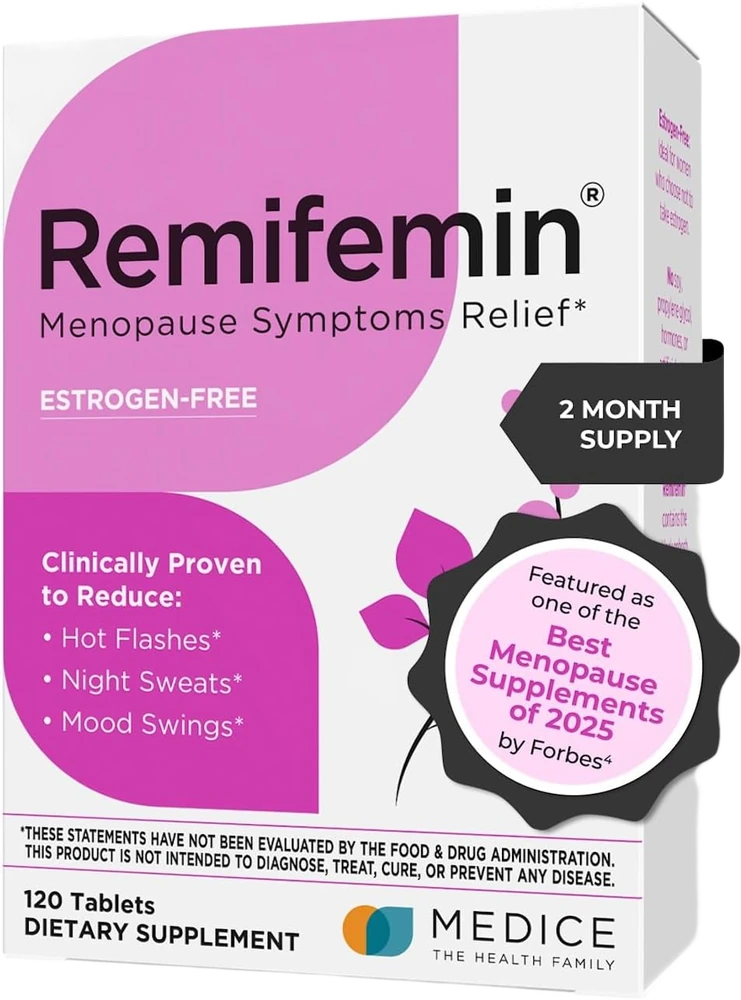 #1 of 9 · Clinical Gold Standard✓ Label verified · Supplement Facts read Sep 7, 2026
Real retailer photo, cut out. Label unedited.
Buy it. If you try black cohosh, try the one the studies used. Remifemin is the only pick whose exact extract has been trialed dozens of times, and a meta-analysis of its RCTs found no signal of the liver injury that dogs the category.
~$33.99~$1.13/day (4 tablets at 2 twice daily)
Why It Scores 7.9 — And The Label Line Behind Each Number
Standardization & Form
30% of scoreA defined, standardized extract: each tablet carries 2.5 mg of RemiSure black cohosh dry extract, an 8.5:1 concentrate equal to 21 mg of black cohosh root/rhizome. The label states the concentration ratio but not a specific triterpene-glycoside (27-deoxyactein) marker figure, so we can no longer credit the precise potency claim some competing extracts publish.
- Form
- Tablet (isopropanolic extract)
- Standardization
- 8.5:1 concentrated dry extract (RemiSure); specific triterpene-glycoside (27-deoxyactein) content not stated on the label
Third-Party Testing & Purity
25% of scoreManufactured in Germany to pharmaceutical-grade process controls where black cohosh is a registered product, not a loose supplement. No public USP/NSF seal, which is the only reason this isn't a 9.
- Testing
- German pharmaceutical-grade manufacturing; estrogen-free
Dose vs Clinical Range
20% of scoreLabel dose is 2 tablets (2×2.5 mg RemiSure extract, ≈42 mg black cohosh equivalent) twice daily — a total daily intake that falls within the range used across the trial literature, though the RemiSure standardization is not a confirmed match for the specific isopropanolic-extract dosing published in the older trials.
- Dose
- 2.5 mg RemiSure black cohosh extract per tablet (8.5:1 concentration; equal to 21 mg black cohosh root/rhizome); 2 tablets twice daily
Tolerability & Safety
15% of scoreA dedicated meta-analysis of the isopropanolic extract's RCTs found no hepatotoxicity signal above placebo, the strongest safety data in the category — but the rare class-wide liver caution still applies.
Value
10% of scoreAround $34 for 120 tablets works out to roughly a month at the full 4-tablet clinical dose, so cost-per-studied-dose is middling, not cheap.
- Count
- 120 tablets (~30 days at clinical dose)
- Cost per dose
- ~$1.13/day at 4 tablets
Label verified. Every figure read from the Supplement Facts photo, Sep 7, 2026.
Marketing Claims Vs. Reality
Most clinically studied black cohosh extract (35+ trials)
The isopropanolic/Remifemin preparation is the material used in the large majority of published black cohosh RCTs and systematic reviews (Borrelli & Ernst 2008; Leach & Moore Cochrane 2012).
Relieves menopausal hot flashes better than placebo
Some Remifemin RCTs (e.g. isopropanolic-extract trials reviewed by Borrelli & Ernst) show vasomotor benefit, but the independent HALT trial (Newton 2006) and the Cochrane review (Leach & Moore 2012) found no significant advantage over placebo.
Estrogen-free / not classically phytoestrogenic
Black cohosh does not measurably raise circulating estrogen and shows no consistent estrogenic action on breast or endometrial tissue; its mechanism appears serotonergic/central rather than hormonal.
What Our Test Actually Found
Correction: the label lists 2.5 mg RemiSure extract per tablet, not 20 mg
An earlier version of this review said each Remifemin tablet delivers 20 mg of standardized black cohosh extract, including a claimed ~1 mg of the marker compound 27-deoxyactein. The Supplement Facts panel actually lists 2.5 mg of RemiSure Dry Extract (black cohosh root/rhizome) per tablet — an 8.5:1 concentrate equal to 21 mg of black cohosh root — and does not state a 27-deoxyactein figure. We re-read the label on Sep 7, 2026 and corrected the dose, standardization wording, and the two affected criteria scores throughout this review.
The evidence is genuinely split
European RCTs of the isopropanolic extract tend to favor it for climacteric symptoms, while the largest and most rigorous US trial (HALT, Newton 2006) and the Cochrane meta-analysis found no benefit over placebo. Both can be true — small positive European trials plus null independent replication is the classic profile of a weak-to-modest real effect.
Best safety data in a category with a liver flag
Black cohosh carries a rare hepatotoxicity signal serious enough that regulators require liver-caution labeling. The reassuring counterpoint is that a meta-analysis restricted to this exact extract's RCTs (Naser 2011) found no excess liver enzyme changes versus placebo — safety evidence no whole-root competitor can match.
Full analysis: all pros & cons (7), buy if / skip if
- The precise extract used in the bulk of the clinical literature
- On-label dose (2.5 mg RemiSure extract per tablet, 8.5:1) sits within the range used across the trial literature
- Dedicated meta-analysis found no hepatotoxicity signal for this preparation
- Estrogen-free profile makes it an option where estrogen is unwanted
- Benefit over placebo is modest and inconsistent across trials
- Priciest cost-per-dose among the standardized picks
- No public USP/NSF third-party seal despite the pharma-grade process
- The precise extract used in the bulk of the clinical literature
- On-label dose (2.5 mg RemiSure extract per tablet, 8.5:1) sits within the range used across the trial literature
- Dedicated meta-analysis found no hepatotoxicity signal for this preparation
- Benefit over placebo is modest and inconsistent across trials
- Priciest cost-per-dose among the standardized picks
- No public USP/NSF third-party seal despite the pharma-grade process
Remifemin is the only pick whose exact extract has been trialed dozens of times, and a meta-analysis of its RCTs found no signal of the liver injury that dogs the category. Effect size over placebo is still modest and inconsistent, so treat it as a low-risk experiment, not a guaranteed fix. Give it 8–12 weeks and stop if you notice any jaundice, dark urine, or right-upper-quadrant pain.
Remifemin is the isopropanolic Cimicifuga racemosa extract (marketed in Germany as Remifemin) behind the large majority of the 35+ black cohosh trials. If you are going to try black cohosh at all, this is the exact preparation the science was actually done on: 2.5 mg RemiSure extract per tablet (8.5:1 concentration, equal to 21 mg black cohosh root/rhizome), taken two tablets twice daily. That pedigree is why it tops our ranking. But honesty is the brand here, and the honest read is that even for this benchmark extract the evidence versus placebo is mixed — some trials show real vasomotor relief, the largest independent US trial showed none.
The right black cohosh to try, with realistic expectations

If you want to test black cohosh for hot flashes, Remifemin is the only defensible starting point: it is a standardized black cohosh extract at a dose within the range the trials used, with the best safety record in the category. Just calibrate expectations to the data — a modest, not-guaranteed effect. Run an 8–12 week trial, keep it if your symptoms clearly improve, and stop immediately at any sign of liver trouble.
If This Doesn’t Fit — Try These
 02
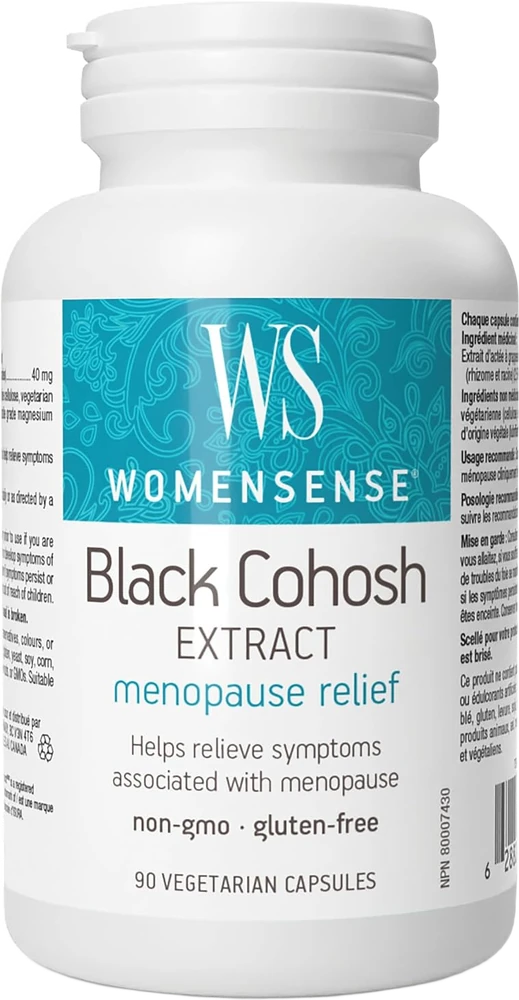
02Natural Factors WomenSense
This is the pick for anyone who wants a standardized extract with real independent verification behind it.
 03
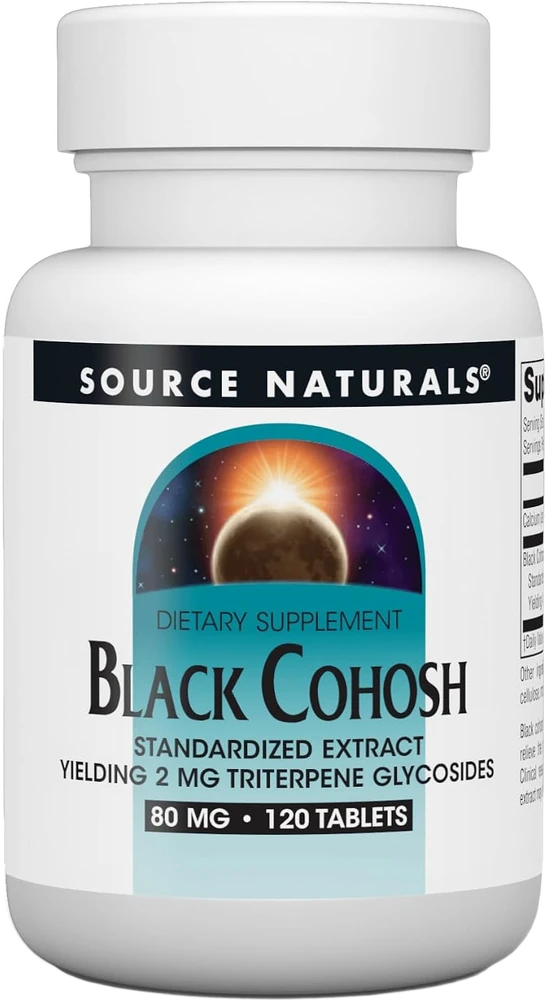
03Source Naturals
The value standout among genuinely standardized options: you get a full clinical-range dose per tablet without paying premium pricing.
Quick Answers
How long until Remifemin works?
Trials evaluate it over 8–12 weeks. If you see no meaningful change in hot flashes or night sweats by 12 weeks, it is unlikely to help you and you can stop.
Is Remifemin safe for my liver?
A meta-analysis of this extract's trials found no liver-enzyme signal above placebo, the best evidence in the category. Still, the rare class-wide caution applies: stop and see a doctor at any sign of jaundice, dark urine, or upper-right abdominal pain.
Sources & Further Reading
2 peer-reviewed sources, each linked to PubMed
- [1] Borrelli F, Ernst E. Black cohosh (Cimicifuga racemosa) for menopausal symptoms: a systematic review of its efficacy. Pharmacol Res. 2008;58(1):8-14. PMID 18585461 — Black cohosh (Cimicifuga racemosa) for menopausal symptoms: a systematic review of its efficacy. Most positive trials used the isopropanolic (Remifemin) extract, but methodological limits leave overall efficacy uncertain.
- [2] Newton KM, Reed SD, LaCroix AZ, et al. Treatment of vasomotor symptoms of menopause with black cohosh, multibotanicals, soy, hormone therapy, or placebo: a randomized trial. Ann Intern Med. 2006;145(12):869-879. PMID 17179056 — Treatment of vasomotor symptoms of menopause with black cohosh, multibotanicals, soy, hormone therapy, or placebo. In the HALT trial, black cohosh 160 mg/day was no better than placebo for hot flashes over 12 months.
Affiliate disclosure: every Amazon link uses our Associates tag (superachieverclub-20). We earn a small commission at no cost to you; it funds independent reviews. We never accept payment to change a ranking.