
Black Cohosh: Benefits, Dosage & Side Effects (2026)
A standardized root extract taken for menopausal hot flashes and night sweats, with real but mixed trial evidence and a rare liver-safety signal worth knowing.
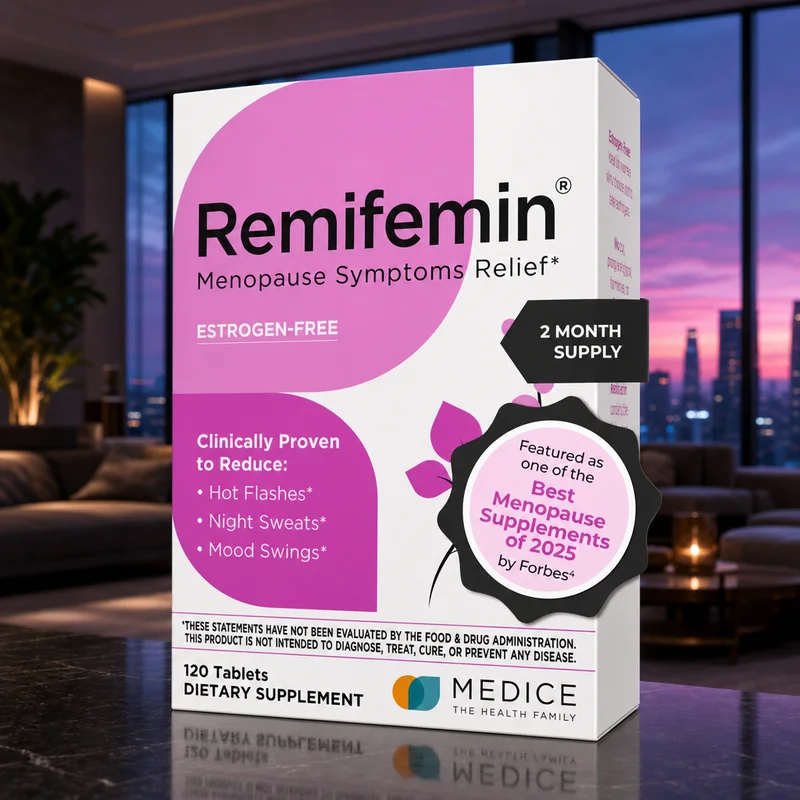
Remifemin Menopause Symptoms Relief, 120 Tablets
What is Black Cohosh?
Black cohosh (Actaea racemosa, formerly Cimicifuga racemosa) is a woodland plant native to eastern North America whose root and rhizome have been used for menopausal complaints for over a century. The supplement is a concentrated root extract, and the version studied most is a standardized isopropanolic extract sold as Remifemin, dosed at roughly 20 mg twice daily and standardized to triterpene glycosides such as 27-deoxyactein. Despite its "phytoestrogen" reputation, black cohosh does not measurably behave like estrogen in the body - it does not stimulate breast or uterine tissue in most studies - so its mechanism is genuinely uncertain. It is one of the best-selling menopause botanicals worldwide and also the one that has failed as many rigorous placebo-controlled trials as it has passed.
How it works
The honest answer is that nobody has pinned down how black cohosh works, and that ambiguity is central to understanding it. It was long marketed as a phytoestrogen, but controlled studies show it does not bind classical estrogen receptors in a meaningful way or raise estrogen levels, and it does not thicken the uterine lining - which is why it is often positioned for women who cannot or will not take estrogen. Current thinking is that its triterpene glycosides and other constituents act centrally, possibly through serotonergic, dopaminergic, GABA, or opioid pathways that help regulate the brain's temperature set-point and the vasomotor instability behind hot flashes and night sweats. Because the active mechanism is central rather than hormonal, effects (when they occur) show up as fewer and less intense flushes and better sleep rather than any change in hormone labs. The standardization to triterpene glycosides is a proxy for potency, not a guarantee the pathway is engaged - which partly explains why trial results are so inconsistent.
At-a-glance facts
- Primary use
- Menopausal hot flashes & night sweats
- Studied dose
- ~20 mg isopropanolic extract, twice daily
- Standardized to
- Triterpene glycosides (e.g. 27-deoxyactein)
- Time to assess
- 8-12 weeks
- Estrogenic?
- No - not classically phytoestrogenic in trials
- Best-studied product
- Remifemin (isopropanolic extract)
- Key safety flag
- Rare hepatotoxicity - stop with any liver symptoms
- Evidence verdict
- Mixed vs placebo; largest rigorous trials were null
Evidence: Despite 35+ trials, the evidence is genuinely mixed - some positive studies of the standardized isopropanolic extract exist, but the largest, best-controlled trials (and the Cochrane review) found no clear benefit over placebo.
Who it's for — and who it isn't
- Women in perimenopause or menopause whose main complaint is hot flashes and night sweats and who want to try a non-hormonal option first
- Women who cannot or prefer not to take estrogen (e.g. by personal choice) and want a widely available botanical to trial for 8-12 weeks
- People who value using the specific standardized extract that has actually been studied (isopropanolic, ~20 mg twice daily) rather than a random whole-root powder
- Those willing to run an honest self-test: try it for up to 12 weeks, track flush frequency, and stop if nothing changes
- Anyone with liver disease, a history of hepatitis, or elevated liver enzymes - a rare but documented hepatotoxicity signal makes this a real caution
- People taking other liver-stressing drugs or who drink heavily, where an added liver burden is unwise
- Women with a history of hormone-sensitive cancer should discuss it with their oncologist first even though it is not classically estrogenic
- Pregnant or breastfeeding women (it has traditionally been used to stimulate labor and is not considered safe)
- Anyone expecting relief for low libido, vaginal dryness, or mood as primary symptoms - the evidence is only for vasomotor symptoms and even there it is mixed
Week-by-week, what happens
- Week 0-2No meaningful change expected; black cohosh is not fast-acting and any early shift is likely placebo or normal day-to-day variation in flushes.
- Week 2-4Some responders report a modest drop in hot-flash frequency or intensity and slightly better sleep; many people feel nothing yet.
- Week 4-8If it is going to help, the effect is usually apparent by now - fewer or milder flushes and night sweats in responders.
- Week 8-12The honest decision point. Track your flush count: if there is no clear, sustained improvement over your own baseline by 12 weeks, it is not working for you and continued use is not justified.
Safety & contraindications
- Rare hepatotoxicity signal: case reports have linked black cohosh to liver injury, and regulators in several countries require a liver-warning label. Stop immediately and seek medical care for jaundice, dark urine, upper-right abdominal pain, unusual fatigue, or loss of appetite.
- If you have existing liver disease, hepatitis, elevated liver enzymes, or take other hepatotoxic medications, avoid it or use it only under medical supervision.
- Not classically estrogenic, but women with a history of hormone-sensitive cancer (breast, uterine) should clear it with their oncologist before use.
- Do not use during pregnancy or breastfeeding - it has a traditional use as a labor stimulant and is considered unsafe.
- Common mild side effects include stomach upset, headache, rash, and a feeling of heaviness; product quality varies widely and adulteration with the wrong Actaea species has been documented, so choose standardized, authenticated brands.
- Give it a defined 8-12 week trial and stop if it does not help - there is no benefit to open-ended use of an ineffective supplement that carries a liver caveat.
All articles on Black Cohosh
FAQ
Does black cohosh actually work for hot flashes?
Sometimes, for some women - but the evidence is honestly mixed. Several trials of the standardized isopropanolic extract (Remifemin) reported fewer hot flashes, yet the largest, most rigorous placebo-controlled studies, including a major NIH-funded trial, found no significant advantage over placebo, and the Cochrane review concluded there is insufficient evidence to support it. It is reasonable to trial for 8-12 weeks and judge by your own results, but do not expect a sure thing.
Is black cohosh a phytoestrogen or hormone replacement?
No. This is a persistent myth. In controlled studies black cohosh does not raise estrogen levels, does not meaningfully bind estrogen receptors, and does not thicken the uterine lining. Its likely mechanism is central (serotonin, dopamine, and related pathways affecting the brain's temperature control), not hormonal. That is actually why it is often chosen by women who cannot take estrogen - but it also means it will not help estrogen-dependent issues like vaginal dryness.
Is black cohosh safe for the liver?
For most people it appears well tolerated, but there is a rare, documented hepatotoxicity signal, and several regulators require a liver-warning label. Pooled analyses of standardized-extract trials have not proven a causal link, yet credible case reports of serious liver injury exist. Avoid it if you have liver disease, and stop and see a doctor at once if you notice jaundice, dark urine, right-upper abdominal pain, or unexplained fatigue.
What dose and form should I use?
Use the form that was actually studied: a standardized extract delivering roughly 20 mg of isopropanolic extract twice daily (the Remifemin regimen), standardized to triterpene glycosides such as 27-deoxyactein. Whole-root powders, gummies, and unstandardized 10:1 concentrates may not match the potency used in trials, and their active content can vary batch to batch.
How long until I know if it works, and when should I stop?
Give it a fair, time-boxed trial of 8-12 weeks while tracking your hot-flash frequency against your baseline. If there is no clear, sustained improvement by 12 weeks, it is not working for you and there is no reason to keep taking a supplement that carries a liver caution. Responders usually notice a change within 4-8 weeks.
Can I combine black cohosh with other menopause remedies?
Some products blend it with dong quai, licorice, red clover, or soy isoflavones, but this makes it impossible to know what (if anything) is helping and can add its own risks - and combination trials have not shown clear benefit. If you want to know whether black cohosh works for you, trial a single-ingredient standardized extract on its own first, and discuss any stacking with your clinician, especially if you take other medications.
Sources & further reading
- Leach MJ, Moore V. Black cohosh (Cimicifuga spp.) for menopausal symptoms. Cochrane Database Syst Rev. 2012;(9):CD007244.Black cohosh (Cimicifuga spp.) for menopausal symptoms
The landmark Cochrane review found insufficient evidence to support black cohosh for menopausal symptoms, citing inconsistent trial results and quality limitations.
- Newton KM, Reed SD, LaCroix AZ, et al. Treatment of vasomotor symptoms of menopause with black cohosh, multibotanicals, soy, hormone therapy, or placebo: a randomized trial. Ann Intern Med. 2006;145(12):869-879.Treatment of vasomotor symptoms of menopause with black cohosh, multibotanicals, soy, hormone therapy, or placebo: a randomized trial (HALT study)
In this rigorous NIH-funded trial, black cohosh alone or in multibotanical combinations was no better than placebo for vasomotor symptoms over one year.
- Osmers R, Friede M, Liske E, et al. Efficacy and safety of isopropanolic black cohosh extract for climacteric symptoms. Obstet Gynecol. 2005;105(5 Pt 1):1074-1083.Efficacy and safety of isopropanolic black cohosh extract for climacteric symptoms
A double-blind RCT of the standardized isopropanolic extract reported a significant reduction in a menopausal symptom score versus placebo, representing the positive side of the mixed evidence.
- Naser B, Schnitker J, Minkin MJ, et al. Suspected black cohosh hepatotoxicity: no evidence by meta-analysis of randomized controlled clinical trials for isopropanolic black cohosh extract. Menopause. 2011;18(4):366-375.Suspected black cohosh hepatotoxicity: no evidence by meta-analysis of randomized controlled clinical trials for isopropanolic black cohosh extract
A meta-analysis of controlled trials found no evidence of liver toxicity from the standardized isopropanolic extract, tempering (without eliminating) the case-report-based hepatotoxicity concern.
- Geller SE, Shulman LP, van Breemen RB, et al. Safety and efficacy of black cohosh and red clover for the management of vasomotor symptoms: a randomized controlled trial. Menopause. 2009;16(6):1156-1166.Safety and efficacy of black cohosh and red clover for the management of vasomotor symptoms: a randomized controlled trial
Neither black cohosh nor red clover significantly reduced vasomotor symptoms compared with placebo, though both were well tolerated with no adverse liver effects observed.