
Pure Encapsulations Ashwagandha 500 mg Review
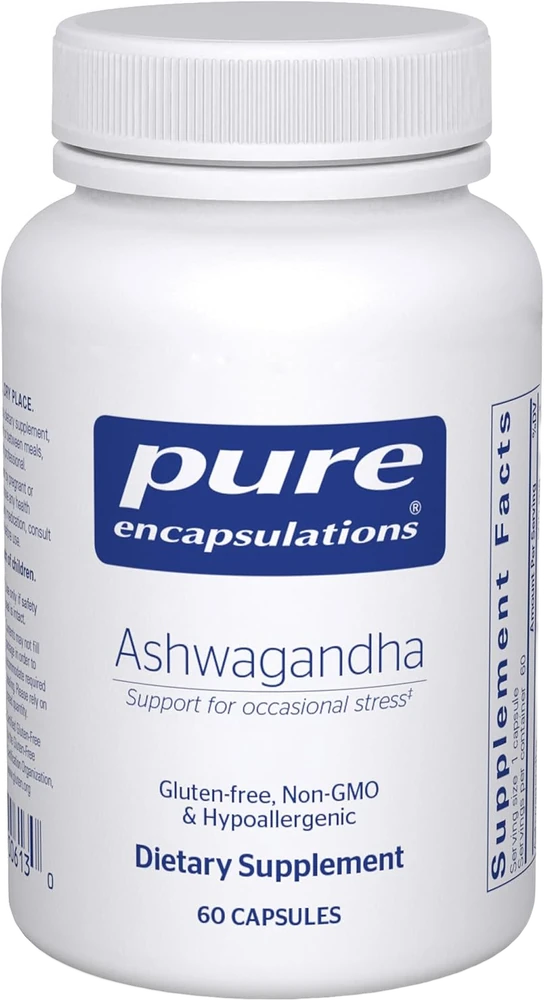 #7 of 7 · Best hypoallergenic✓ Label verified · Supplement Facts read Aug 27, 2026
Real retailer photo, cut out. Label unedited.
Consider it. The hypoallergenic premium pick — clean-label discipline at the cost of patent-locked trial evidence. Generic root extract standardised to 2.5% withanolides (label) + 500 mg/cap + a labeled serving of 1 capsule/day (12.5 mg withanolides — well under the trial active load; a self-directed second capsule reaches ~25 mg, still just under it) + practitioner-channel QC (Nestlé Health Science subsidiary) + a clean filler/allergen profile (one bulking excipient: cellulose plant fiber) + $14/month at the label serving, $28/month if you double it.
$28 / month (2 caps/day)~$28 / month at 2 caps (1000 mg); ~$14 / month at 1 cap low-dose
Why It Scores 6.7 — And The Label Line Behind Each Number
Standardisation
30% of scoreGeneric root extract standardised to 2.5% withanolides — half KSM-66's contracted 5%, with NO patent name on the label. (Corrected 27 Aug 2026: we originally scored this axis on a repeated 5% figure; the Supplement Facts panel says 2.5%.) Pure Encapsulations sources from vetted suppliers with internal lot-to-lot testing, and its QC discipline likely puts it at the top of the generic tier — but 2.5% is the same half-tier as NOW Foods' declared 2.5%, below every 5% patent bottle on both density and verifiability.
Clinical source
25% of scoreGeneric standardised extract — does NOT inherit KSM-66's 24+ RCTs or Sensoril's ~11 RCTs by virtue of patent. The trial evidence base for Pure Encapsulations' specific extract is essentially zero: no published placebo-controlled RCTs on this specific bottle's supply chain. The trial data on 'ashwagandha' generically extrapolates somewhat to standardised extracts at similar withanolide percentages, but the evidence-base claim is operationally weaker than for patent-locked bottles. Loses 3 points from KSM-66's 9.5 specifically on the patent-inherited-evidence dimension. The clinical foundation is generic extrapolation, not extract-specific replication.
- Active form
- Ashwagandha root extract standardised to 2.5% withanolides (label; generic, non-patented supply chain)
- Per capsule
- 500 mg root extract (~12.5 mg withanolides at the label's 2.5%)
- Daily dose
- Label directions: 1 capsule daily, with or between meals. No 2-capsule option and no AM/food-timing instruction printed on the bottle or listing
- Inactives
- Hypoallergenic plant fiber (cellulose), vegetarian capsule (cellulose, water) — NO magnesium stearate, NO hydrogenated oils
Lab transparency
20% of scorePure Encapsulations is the gold standard for consumer-channel QC discipline — practitioner-channel brand (Nestlé Health Science subsidiary) with sourcing audits, lot-to-lot consistency testing, clinical-channel documentation, and hypoallergenic-grade manufacturing protocols. QC documentation runs at the tier above NSF Certified for Sport on the clean-label dimension; QC documentation runs at parallel tier on the heavy-metals/microbial dimension. The 'practitioner-channel' framing isn't marketing — it operationally means the QC is designed for clinicians prescribing to patients with documented sensitivities. Maximum score on the lab-transparency criterion specifically; this is what you're paying for.
- Certifications
- Hypoallergenic, gluten-free (GFCO), dairy-free, soy-free, vegetarian, vegan, non-GMO (brand declaration, no third-party seal), no artificial colours/flavours/sweeteners
- Manufacturer
- Pure Encapsulations (Sudbury, MA · Nestlé Health Science subsidiary · practitioner-channel facility)
- Lab transparency
- Practitioner-channel QC with sourcing audits + lot-to-lot consistency testing
Trial-dose alignment
15% of scoreThe label's serving size is 1 capsule daily. At 2.5% withanolides, that's 12.5 mg withanolides per day — roughly 40% of the ~30 mg active withanolide load in the 600 mg/day Wankhede 2015 / Chandrasekhar 2012 KSM-66 trials this listicle anchors on. That's a real shortfall at the dose the bottle actually directs, not a marginal one. Doubling to 2 capsules (1000 mg/day = 25 mg withanolides) gets closer — still a touch under the trial's active load — but nothing on the label or the brand's own listing ('Take 1 capsule daily, with or between meals') tells you to do that; it's a self-directed increase, scored down accordingly rather than assumed as the default. (Re-scored 5.0, down from 7.5, on re-audit Sep 3, 2026 — the prior score was written against an invented 'practitioner-prescribed 1-2 capsule range' that isn't on this label.)
- Trial-dose alignment
- Label serving (1 cap/day) = 12.5 mg withanolides, well under the ~30 mg trial active load; a self-directed 2-cap/day protocol (25 mg) gets closer but is off-label
Price per active mg
10% of score60 capsules per bottle at ~$28 retail = $0.47 per cap. At the label's 1-capsule serving, that's $14/month; the 'priciest on the list' framing below assumes a self-directed 2-cap/day protocol ($28/month, 1000 mg total) — not the labeled dose. Either way, per active mg it's $0.47 ÷ 12.5 mg withanolides/cap = ~$0.038 per mg active withanolide, the highest per-active-mg cost on the list — premium for the QC pedigree, not for the active extract. Nutricost ($0.0078/mg) is ~4.8× cheaper per active mg for an arguably superior (patent-locked) extract. The cost premium is justified for the audiences that need practitioner-channel QC; it's NOT justified on a per-active-mg basis if QC clean-label isn't your specific need.
- Bottle size
- 60 capsules = 60 servings at the label's 1-capsule serving — a 60-day supply; 30 days if you run a self-directed 2-cap/day protocol
- Price
- $14 / month at the label's 1-capsule serving; $28 / month if you run a self-directed 2-capsule/day protocol
Label verified. Every figure read from the Supplement Facts photo, Aug 27, 2026.
Marketing Claims Vs. Reality
Made with the cleanest, purest ingredients — free of common allergens.
Hypoallergenic claim is verifiable against the label and brand listing: no wheat, gluten, dairy, soy, eggs, tree nuts, peanuts, sesame, artificial colours, flavours, sweeteners, preservatives, magnesium stearate, or hydrogenated oils (fish and shellfish aren't addressed on the label or listing, so we don't claim those). Capsule is vegetarian cellulose. This is among the strictest clean-label profiles in the consumer supplement category — operationally meaningful for buyers with documented sensitivities.
Sourced from premium ingredients with rigorous quality testing.
Pure Encapsulations' sourcing audits and lot-to-lot consistency testing are real and documented as part of the Nestlé Health Science practitioner-channel quality discipline. 'Premium ingredients' and 'rigorous quality testing' are accurate to the operational QC tier — though the active extract is generic standardised, not patent-locked.
Trusted by integrative medicine practitioners.
Pure Encapsulations is a recognised practitioner-channel brand stocked by integrative-medicine clinics, naturopathic practices, and functional-medicine practitioners. The 'trusted by practitioners' framing is accurate at the channel-credibility level. Verifiable via brand distribution data and clinician-channel reviews.
Support for occasional stress.
This is the front label's actual claim (footnoted, structure/function language, not FDA-evaluated). The stress-support mechanism extrapolates from ashwagandha generally (Chandrasekhar 2012, Lopresti 2019, etc.) — but those trials used patent extracts (KSM-66, Shoden), not Pure Encapsulations' generic supply chain, and this bottle's 2.5% withanolide density is half the trial extract's. Real claim with the asterisk that trial replication on this specific extract hasn't been published.
500 mg per capsule, standardised to 5% withanolides.
The 500 mg dose is confirmed on the Supplement Facts panel — but the panel says 'standardized to contain 2.5% withanolides', not 5%. The 5% figure circulates in listing and third-party copy, and the bottle does not back it: 2.5% of 500 mg is ~12.5 mg withanolides per capsule. We score and rank on the label's guaranteed number (corrected 27 Aug 2026).
What Our Test Actually Found
Correction: the label directs 1 capsule daily, not a 1-2 capsule practitioner range
An earlier version of this review described a '1-2 capsule, practitioner-prescribed' dosing range, called the bottle a '30-day supply,' and listed 'ascorbyl palmitate' among the inactive ingredients. The Supplement Facts panel reads: serving size 1 capsule, 60 servings per container; other ingredients are hypoallergenic plant fiber (cellulose) and a vegetarian cellulose/water capsule — no ascorbyl palmitate, no second-capsule direction anywhere on the label or brand listing (which says only 'Take 1 capsule daily, with or between meals'). We re-read the label on Sep 3, 2026 and revised the dosing, bottle-supply, and inactives text throughout; corrected two source citations that still said 'generic 5%' instead of the label's 2.5% withanolides; fixed a stale per-active-mg cost figure ($0.019/mg → $0.038/mg); and re-scored Trial-dose alignment against the labeled single-capsule serving (7.5 → 5.0; overallScore 7.1 → 6.7).
The clean-label discipline is the entire reason to buy Pure Encapsulations
Pure Encapsulations doesn't compete on patent (no KSM-66 or Sensoril), trial-dose-exactness (the labeled 1-cap serving is well under the trial active load), or per-active-mg cost ($0.038/mg is ~4.8× Nutricost). It competes on one criterion: clean-label discipline. No major allergens, no artificial colours/flavours/sweeteners, no magnesium stearate, no hydrogenated oils, vegetable cellulose capsule. For buyers with documented food allergies, multi-supplement stack-builders worried about filler-threshold accumulation, or integrative-medicine channel buyers whose practitioner prescribes Pure Encapsulations specifically, this clean-label tier is the operational differentiator. For everyone else, the premium isn't justifying itself with patent-locked trial evidence — you're paying for QC overhead you don't specifically need.
Generic standardised extract has real downside on trial evidence inheritance
The biggest cost of Pure Encapsulations' generic-extract approach is the loss of patent-locked trial evidence inheritance. KSM-66 has 24+ RCTs including direct testosterone measurement at +96 ng/dL (Wankhede 2015); Sensoril has ~11 RCTs anchored on cortisol -24.2% at 125 mg/day (Auddy 2008). Pure Encapsulations' specific extract has essentially zero published RCTs at the bottle level. The trial evidence on standardised ashwagandha extrapolates somewhat — but this bottle carries only 2.5% withanolides, half the trial extract's density, and the specific results that justify the most aggressive marketing claims are patent-locked. Buyers who care about 'this specific bottle has direct trial evidence' will lose that confidence with Pure Encapsulations.
Practitioner-channel QC IS meaningfully different from consumer-channel QC
The 'practitioner-channel' framing isn't marketing — it operationally means the QC is designed for clinicians prescribing to patients with documented conditions, sensitivities, and co-morbidities. The audit discipline runs tighter on sourcing chains, lot-to-lot consistency, allergen-cross-contamination protocols, and clinical-channel documentation than consumer-channel brands (Double Wood, Nutricost) optimise for. Whether you specifically NEED that tier depends on your buyer profile: if you're an integrative-medicine patient, a multi-allergen-sensitive consumer, or a stack-builder running 8+ bottles where filler-threshold matters, yes. If you're a generally-healthy adult shopping for cortisol/T support without documented sensitivities, no.
The labeled 1-capsule dose is well under the trial active load — and the label doesn't offer a second capsule
The bottle's actual instruction is 'Take 1 capsule daily, with or between meals' — 500 mg of root extract at 2.5% withanolides, or 12.5 mg withanolides/day. That's roughly 40% of the ~30 mg active withanolide load in the 600 mg/day Wankhede 2015 / Chandrasekhar 2012 trials this listicle anchors on. There is no practitioner-prescribed range printed on this label or the brand's listing — that framing was our own earlier addition, not the product's. If you want to close the gap toward trial-comparable withanolide exposure, taking a second capsule (1000 mg/day = 25 mg withanolides, still a touch under the trial load) is a self-directed choice, not a labeled one — and it doubles the monthly cost. Anyone considering it should treat it as an off-label adjustment, not a dose the manufacturer is telling them to take.
Best stacked with similarly clean-label tongkat — but those options are limited
The clean-label discipline you're paying for on Pure Encapsulations gets diluted if your stack includes tongkat ali bottles with heavier filler loads. Pure Encapsulations doesn't make a tongkat option themselves, so an ashwagandha + tongkat stack means mixing brands. Among tongkat options on the listicle, Double Wood's LJ100 has the cleanest filler profile of patent-licensed options — combining Pure Encapsulations Ashwagandha + Double Wood LJ100 Tongkat is the cleanest-label feasible double-lever stack at ~$46/month. For maximum clean-label discipline across the stack, this is the protocol.
Full analysis: all pros & cons (8), buy if / skip if
- Cleanest-label option on the list — no major allergens, no unnecessary fillers (the only excipient is a cellulose plant-fiber bulking agent), no artificial anything
- Practitioner-channel QC pedigree — Nestlé Health Science subsidiary, integrative-medicine trusted
- Sourcing audits + lot-to-lot consistency testing at clinical-channel tier
- Vegetable cellulose capsule, no magnesium stearate, no hydrogenated oils
- Right tool for allergen-sensitive buyers and multi-supplement stack-builders
- Generic standardised extract — no KSM-66 / Sensoril patent on the label
- No trial evidence base for this specific extract — and the label's 2.5% withanolides is half the density of the 5% patent extracts
- Most expensive per-cap price on the list at $0.47 — and at 2.5% withanolides, the highest cost per active mg
- Documented allergen sensitivities — you react to fillers in other supplement brands
- Multi-supplement stack-builder running 8+ bottles — filler-stacking threshold matters
- Integrative-medicine channel buyer — your practitioner prescribes Pure Encapsulations specifically
- You value clean-label discipline OVER patent-locked trial evidence
- Testosterone-evidence-base buyer — go Double Wood KSM-66 ($22, 24+ T-direct RCTs)
- Cortisol-first / anxiety-first buyer — go Life Extension Sensoril ($15, Auddy 2008 trial-exact)
- Budget-constrained — at the self-directed 2-cap dose Pure Encapsulations runs 2× Nutricost KSM-66's $14/month; at the label's 1-cap serving both are ~$14/month, but Nutricost's dose is trial-exact and patent-locked
Generic root extract standardised to 2.5% withanolides (label) + 500 mg/cap + a labeled serving of 1 capsule/day (12.5 mg withanolides — well under the trial active load; a self-directed second capsule reaches ~25 mg, still just under it) + practitioner-channel QC (Nestlé Health Science subsidiary) + a clean filler/allergen profile (one bulking excipient: cellulose plant fiber) + $14/month at the label serving, $28/month if you double it. The right tool for allergen-sensitive buyers, integrative-medicine channel buyers, and clean-label multi-supplement stack-builders. The wrong tool for buyers who specifically want the patent-locked KSM-66 trial evidence base or Sensoril's per-mg cortisol efficiency.
Pure Encapsulations Ashwagandha is the hypoallergenic clean-label premium pick — a generic root extract standardised to 2.5% withanolides at 500 mg/cap, $14/month at the label's 1-capsule serving ($28/month if you self-direct 2 caps), with the strictest clean-label discipline on the list. (Label truth: we originally repeated a 5% figure; the Supplement Facts panel says 2.5% — corrected 27 Aug 2026.) No KSM-66 or Sensoril patent, but the QC + sourcing pedigree behind the generic extract is practitioner-channel grade: Pure Encapsulations is a Nestlé Health Science subsidiary whose formulations are designed for integrative-medicine clinicians prescribing to patients with complex allergen sensitivities, autoimmune conditions, and multi-supplement protocols. The 'hypoallergenic' label is operational, not marketing: no major allergens, no artificial colours, no magnesium stearate, no hydrogenated oils, vegetable cellulose capsule. This matters for two specific audiences. First, buyers with documented food allergies who react to filler ingredients in other supplement brands. Second, multi-supplement stack-builders running 8+ bottles where filler-stacking can hit problematic allergen thresholds even when individual bottles claim allergen-free. The trade-off is the patent-locked evidence base: Wankhede 2015's +96 ng/dL T was a KSM-66-specific trial (and Lopresti 2019's +14.7% T was Shoden-specific); Pure Encapsulations' generic extract can't claim those specific results — and at the label's 2.5% withanolides it also carries half KSM-66's active density. The label's own serving is 1 capsule daily (12.5 mg withanolides — well under the trials' ~30 mg load); a self-directed second capsule (25 mg) closes most, not all, of that gap and isn't a dose the bottle actually tells you to take. Here's the full breakdown.
The hypoallergenic premium pick — consider it for allergen-sensitive buyers, skip for evidence-base buyers.

Pure Encapsulations Ashwagandha lands at the 'consider' verdict band (6.7) because it's the right tool for a narrow but real audience — and the wrong tool for the broader testosterone-evidence-base audience. The clean-label discipline is operationally meaningful: no major allergens, no artificial colours/flavours/sweeteners, no magnesium stearate, no hydrogenated oils, vegetable cellulose capsule. Practitioner-channel QC (Nestlé Health Science subsidiary) runs at the tier above NSF Certified for Sport on the clean-label dimension. For buyers with documented food allergies, multi-supplement stack-builders worried about filler-threshold accumulation across 8+ bottles, or integrative-medicine channel buyers whose practitioner prescribes Pure Encapsulations specifically, this is the right bottle. The premium ($14/month at the labeled 1-capsule serving, $28/month if you self-direct 2 caps — either way ~2× Nutricost per cap) is justified for that audience. The 'consider' (not 'buy') verdict reflects the audience mismatch with mainstream testosterone-endpoint buyers. The biggest cost of the generic-extract approach is loss of patent-locked trial evidence inheritance: KSM-66 has 24+ RCTs including direct testosterone measurement; Pure Encapsulations' specific extract has essentially zero published bottle-level RCTs. For testosterone-evidence-base buyers, Double Wood KSM-66 ($22/month) carries the trial evidence Pure Encapsulations lacks. For cortisol-first buyers, Life Extension Sensoril ($15/month) carries the Auddy 2008 trial-exact patent at half the price. For budget-constrained buyers, Nutricost KSM-66 ($14/month) is 2× cheaper for the patent-locked active extract at double the withanolide density. (Label truth, corrected 27 Aug 2026: the panel guarantees 2.5% withanolides, not the 5% we originally repeated. Re-audited Sep 3, 2026: the label's actual serving is 1 capsule/day, not the 1-2 capsule range we'd described, which moved Trial-dose alignment and the overall score from 7.1 to 6.7.) Pure Encapsulations wins only when clean-label discipline is the specific job to be done. Upgrade triggers: after the 8-week protocol, if allergen-sensitivity was the buying criterion and you tolerated Pure Encapsulations well, this is your indefinite-cycling bottle (likely no upgrade needed; clean-label discipline is a permanent feature, not a cycle-1 validation step). If you didn't respond and want to validate whether the extract was the issue or you're a non-responder, switching to Double Wood KSM-66 for cycle two isolates the variable — same dose, patent-locked extract, lower cost. If you responded but want better per-active-mg math without losing clean-label, you're out of luck — no other bottle on the list matches Pure Encapsulations' filler discipline. The clean-label premium is what you're locked into if you need it.
If This Doesn’t Fit — Try These
 01
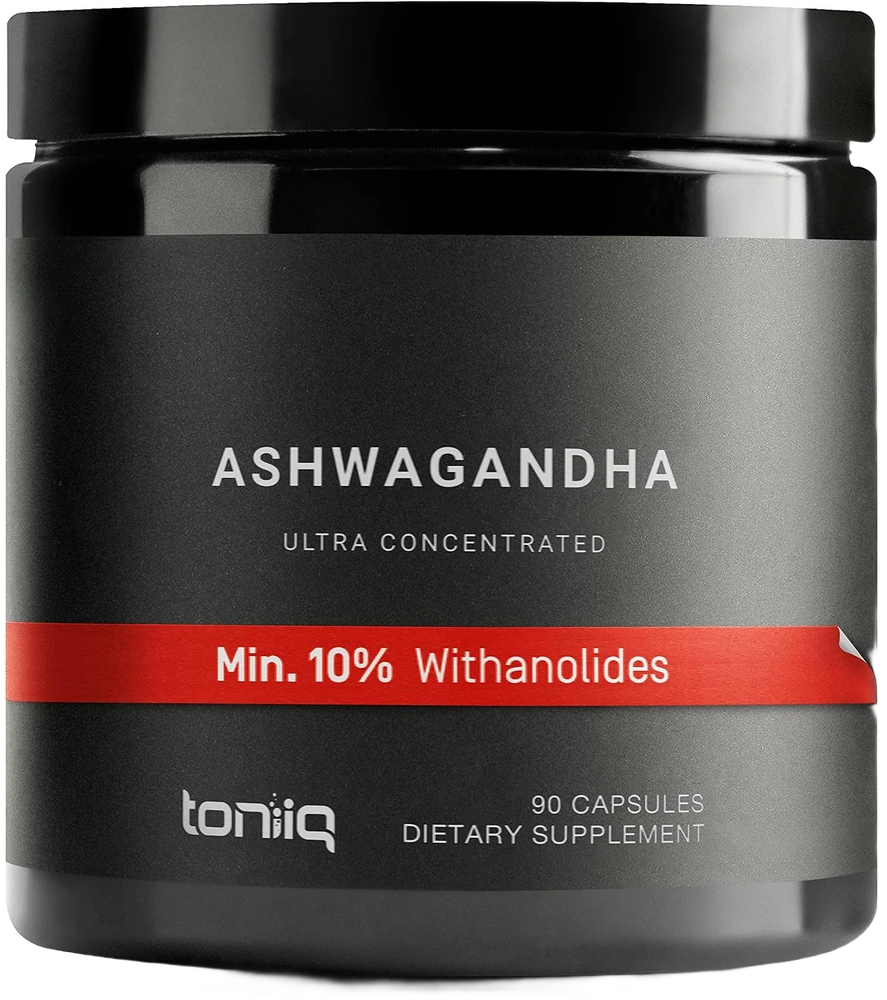
01Toniiq Ultra High Strength
The highest-scoring product on the board, and the right buy for one specific buyer: the maxxer who has already cycled a standard KSM-66, confirmed they respond, and wants to push the active load.
 04
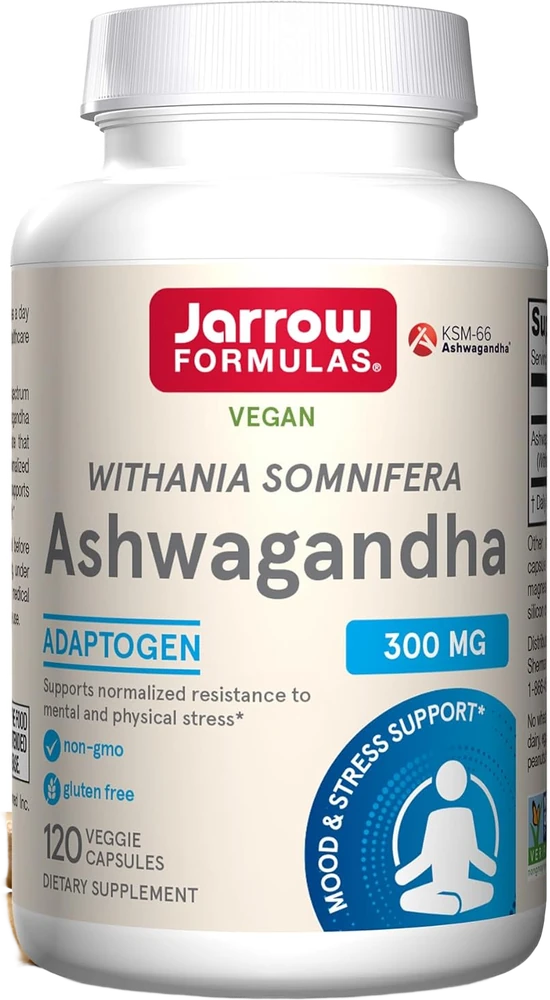
04Jarrow KSM-66 300 mg
This is the ashwagandha to buy if you've never bought ashwagandha before and want the genuine article from a brand that's earned trust over decades.
 03
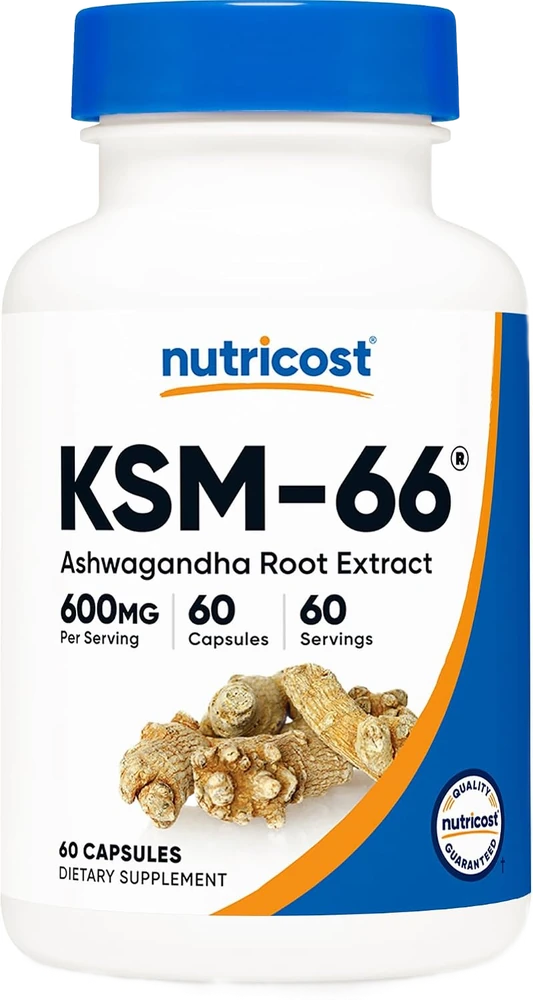
03Nutricost KSM-66 600 mg
The value play, and a genuinely good one — it's the cheapest legitimate KSM-66 on the consumer market at the exact trial dose.
Quick Answers
Why doesn't Pure Encapsulations use KSM-66 or Sensoril?
Pure Encapsulations is a practitioner-channel brand — their formulations are designed for integrative-medicine clinicians prescribing to patients with complex sensitivities, autoimmune conditions, multi-supplement protocols, and allergen restrictions. Their philosophy favours generic standardised extracts with maximum sourcing flexibility (lot-to-lot supplier optimisation for QC) over locked patent contracts. The trade-off: they lose the patent-locked trial evidence base (Wankhede 2015 +96 ng/dL T was KSM-66-specific; Pure Encapsulations' generic extract can't claim that specific result) but gain QC + sourcing flexibility their clinician channel values. For patient-end users in the clinician channel, the hypoallergenic clean-label QC matters more than the patent label.
Is a generic '2.5% withanolides standardised' extract as good as KSM-66?
No — and it starts with the number. The Supplement Facts panel guarantees 2.5% withanolides, half of KSM-66's contracted 5%. (We originally repeated a 5% figure; the bottle says 2.5% — corrected 27 Aug 2026.) Generic standardised extracts also exist on a wide quality spectrum — some are excellent (Pure Encapsulations' supplier-vetted generic likely lands in the top decile), most are mediocre (lot-to-lot withanolide variance can run 30-50%), and the bottom tier is functionally indistinguishable from non-standardised root powder despite the label claim. The KSM-66 patent locks in supplier consistency, manufacturing standardisation, and trial replicability that generic extracts can't guarantee at the same level. For Pure Encapsulations specifically, their QC pedigree likely puts them at the top of the generic distribution — but they still don't carry KSM-66's 24+ RCT evidence base.
What makes Pure Encapsulations 'hypoallergenic' specifically?
The label and brand listing declare it free from the major allergens they test for — wheat, gluten, dairy, soy, eggs, tree nuts, peanuts, and sesame (fish and shellfish aren't addressed anywhere on the label or listing, so we don't claim those) — plus no artificial colours/flavours/sweeteners, no preservatives, no magnesium stearate (a contentious filler), and no hydrogenated oils. It's non-GMO by the brand's own on-label declaration, not a third-party Non-GMO seal. The capsule is a vegetarian cellulose capsule (cellulose, water) — not gelatin; the label doesn't specify HPMC. This matters for two audiences: (1) buyers with documented food allergies or sensitivities who react to filler ingredients in other supplement brands, and (2) buyers running multi-supplement protocols where filler-stacking across 8+ bottles can hit problematic allergen thresholds even if individual bottles are 'allergen-free' in trace amounts. Pure Encapsulations' clean-label discipline is the operational standard, not marketing copy.
Why is it $28/month if it's a generic extract?
You're paying for the QC + sourcing pedigree, not the active extract. Pure Encapsulations is a Nestlé Health Science subsidiary with practitioner-channel QC discipline — their sourcing audits, lot-to-lot consistency testing, and clinical-channel documentation runs at a higher tier than most consumer brands. For practitioners prescribing to patients with conditions, that QC tier is non-negotiable. For consumer buyers, the question is whether you specifically need that tier — if you have allergen sensitivities, complex co-morbidities, or are part of an integrative-medicine treatment plan, yes. If you're a generally-healthy adult shopping for cortisol/T support, the premium isn't justifying itself with patent-locked trial evidence; you're paying for clinical-channel QC overhead.
Does the lack of patent mean the dose doesn't matter?
The dose still matters, and it's weaker than the patent question alone suggests. The label's serving size is 1 capsule daily — brand directions read 'Take 1 capsule daily, with or between meals,' with no second-capsule instruction anywhere on the bottle or listing. At the label's 2.5% withanolides, that one capsule delivers 12.5 mg withanolides per day — well under the ~30 mg active withanolide load in the 600 mg/day Wankhede 2015 / Chandrasekhar 2012 KSM-66 trials. Taking a second capsule (1000 mg/day = 25 mg withanolides) closes most of that gap, but it's an off-label doubling of the printed serving, not a direction on this label. And you can't claim to match the KSM-66 trial protocols either way, because those trials used the KSM-66 patent specifically. For Pure Encapsulations buyers, the honest read is: the labeled dose is meaningfully under the trial's active load, and closing that gap means going beyond what the bottle tells you to take.
Should I stack Pure Encapsulations with tongkat ali?
Same protocol logic as KSM-66 stacks — different mechanism (ashwagandha cortisol-down via HPA axis + tongkat SHBG displacement via different pathway) means additive outcomes. For allergen-sensitive buyers running Pure Encapsulations specifically, look for a similarly clean-label tongkat ali — most consumer tongkat bottles have heavier filler loads than KSM-66 bottles. Pure Encapsulations doesn't make a tongkat option themselves, so the stack would mix brands. The clean-label discipline you're paying for on ashwagandha gets diluted if your tongkat bottle carries fillers you're sensitive to.
When should I pick Pure Encapsulations vs Life Extension Sensoril?
Both are $15-28/month clinician-credibility brands, but they're solving different problems. Pure Encapsulations is the hypoallergenic clean-label choice — generic standardised extract with top-tier QC and the cleanest filler/allergen profile on the list. Right pick if allergen sensitivities or multi-supplement protocol clean-label discipline is your primary criterion. Life Extension Sensoril is the differentiated-patent choice — real Natreon patent (root + leaf, 10% withanolides) at the trial-exact 125 mg Auddy 2008 dose. Right pick if cortisol-first endpoint and patented-extract trial evidence matters. Allergen-sensitive AND cortisol-first buyers face a real trade-off; pick based on which criterion is more critical for your individual situation.
Sources & Further Reading
7 sources — studies link to PubMed, product specs to the manufacturer
- [1] Chandrasekhar 2012 PMID 23439798 — A prospective, randomized double-blind, placebo-controlled study of safety and efficacy of a high-concentration full-spectrum extract of ashwagandha root in reducing stress and anxiety in adults. 600 mg/day KSM-66 for 60 days in chronically stressed adults reduced perceived stress -44% and morning cortisol -27.9% vs placebo. Cited here for the cortisol-mechanism extrapolation — Pure Encapsulations' generic 2.5% standardised extract logically extends this mechanism, but at half the withanolide density and without the patent-specific replication.
- [2] Wankhede 2015 PMID 26609282 — Examining the effect of Withania somnifera supplementation on muscle strength and recovery: a randomized controlled trial. 600 mg/day KSM-66 for 8 weeks in resistance-trained men measured serum testosterone +96 ng/dL vs +18 placebo. Cited here for the testosterone-mechanism evidence — Pure Encapsulations cannot directly claim this result because the trial used KSM-66 patent specifically, not this bottle's generic 2.5% standardised extract.
- [3] Lopresti 2019 (testosterone) PMID 30854916 — A randomized, double-blind, placebo-controlled, crossover study examining the hormonal and vitality effects of ashwagandha (Withania somnifera) in aging, overweight males. 57 overweight men aged 40-70 took Shoden (21 mg withanolide glycosides a day) or placebo for 8 weeks each in a crossover trial. Testosterone rose 14.7% and DHEA-S 18% more than on placebo; cortisol, fatigue and sexual well-being did not differ. The extract was Shoden, not KSM-66.
- [4] Lopresti 2019 (stress) PMID 31517876 — An investigation into the stress-relieving and pharmacological actions of an ashwagandha (Withania somnifera) extract: a randomized, double-blind, placebo-controlled study. 60 stressed adults took 240 mg of Shoden or placebo once daily for 60 days. Anxiety scores (HAM-A) fell more than on placebo, as did morning cortisol and DHEA-S. Sleep was not an outcome. The extract was Shoden, not KSM-66.
- [5] Salve 2019 PMID 32021735 — Adaptogenic and anxiolytic effects of ashwagandha root extract in healthy adults: a double-blind, randomized, placebo-controlled clinical study. 60 stressed adults took 250 or 600 mg a day of ashwagandha root extract, or a placebo, for 8 weeks. Perceived stress and serum cortisol fell at both doses. Sleep quality improved compared with placebo. Pure Encapsulations' typical buyer fits this trial group.
- [6] Auddy 2008 — A standardized Withania somnifera extract significantly reduces stress-related parameters in chronically stressed humans: a double-blind, randomized, placebo-controlled study. 125-250 mg/day Sensoril for 60 days reduced serum cortisol -24.2% and raised DHEA-S +32%. Cited here for patent-context: Pure Encapsulations doesn't use Sensoril either, so the per-mg cortisol efficiency advantage of patented Sensoril is unavailable to generic-extract buyers.
- [7] Kelgane 2020 PMID 32226684 — Efficacy and tolerability of ashwagandha root extract in the elderly for improvement of general well-being and sleep: a prospective, randomized, double-blind, placebo-controlled study. 600 mg/day KSM-66 for 12 weeks in elderly adults improved sleep quality, general well-being, and mental alertness vs placebo. Cited here for the elderly-population evidence — Pure Encapsulations' practitioner channel includes elderly patients with multi-medication regimens where clean-label discipline is particularly valuable for cross-reaction avoidance.
Affiliate disclosure: every Amazon link uses our Associates tag (superachieverclub-20). We earn a small commission at no cost to you; it funds independent reviews. We never accept payment to change a ranking.