
One A Day Women's Multivitamin Review
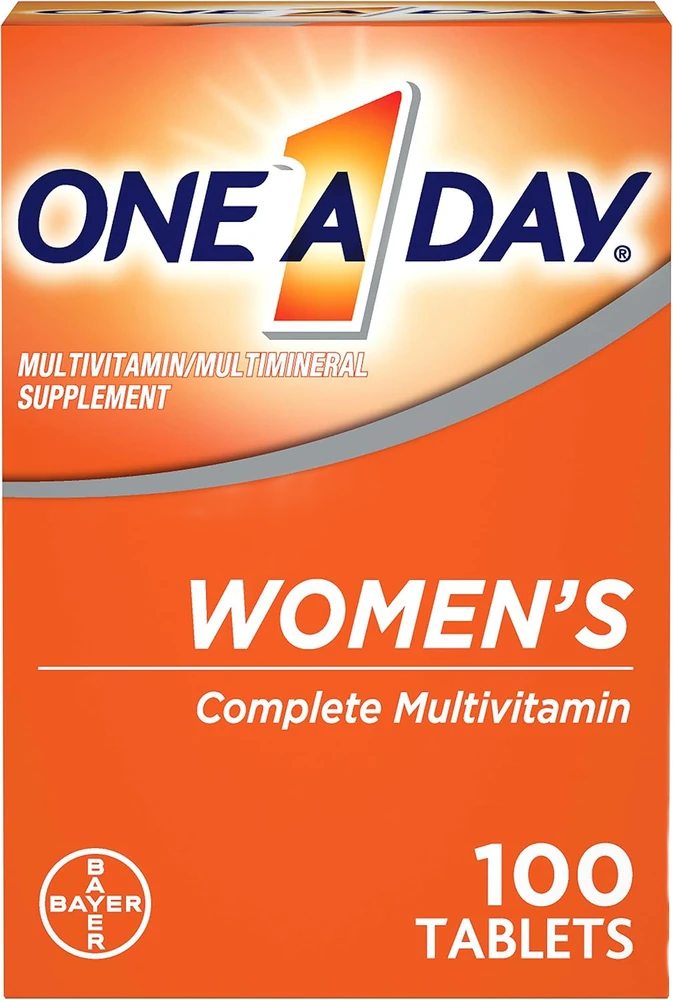 #8 of 9 · Best budget✓ Label verified · Supplement Facts read Sep 7, 2026
Real retailer photo, cut out. Label unedited.
Consider it. The cheap women-specific tablet — honest basics, every corner cost-engineered. Calcium plus iron in one daily tablet at a verified ~$0.16/day, from a brand your pharmacist has stocked for decades, free of gluten, dairy and artificial sweeteners.
$16 / 100 tablets (100 days)~$0.16 / day (1 tablet)
Why It Scores 6.8 — And The Label Line Behind Each Number
Nutrient forms & bioavailability
30% of scoreThe floor of our women's list, scored as such. Folic acid (the conversion-dependent synthetic — Pietrzik 2010) on the nutrient women most need covered; magnesium oxide, the textbook low-absorption mineral form; cyanocobalamin-tier B-vitamin economics throughout; gelatin in the coating. Coverage is real, forms are the cheapest that legally carry the label claims. Never upgraded, exactly as listed.
Women-specific fit (iron + life stage)
25% of scoreGenuine women-specific tuning at the budget tier: iron for the menstruating years plus calcium and vitamin D for the bone-health angle the label leads with — a sensible pairing for its intended buyer. Slightly behind Centrum Women's fuller 100%+ DV iron-and-biotin sweep, and the same life-stage boundary applies: wrong for post-menopausal women (skip daily iron), and emphatically not a prenatal.
- Iron
- Yes — paired with calcium for the bone-health angle
Third-party testing
20% of scoreNo USP/NSF or any third-party certification stated on the listing — brand-level QC from Bayer's pharmaceutical manufacturing is the only assurance, and the transitional FD&C-colorant situation (listed ingredients vs marketing bullets disagreeing during a reformulation) is precisely the kind of ambiguity an independent seal would resolve. The lowest trust score on our women's list, recorded without drama.
- Testing
- No third-party USP/NSF certification stated
Sensible dosing (no megadose)
15% of scoreThe axis mainstream one-a-days reliably get right: nutrients pegged around 100% DV, nothing megadosed, one small tablet sustaining the habit indefinitely. The restraint is genuine and earns its score — the formula's problems are kind (forms) and verification (testing), not quantity.
- Dose
- 1 tablet/day
Value per day
10% of scoreA verified ~$0.16/day ($16 for 100 tablets at the confirmed retail price) — among the cheapest women-specific coverage sold anywhere, and 100 days per purchase. Only generic Kirkland (~$0.03/day, USP-sealed but unisex) undercuts it meaningfully. For pure women-tuned pennies-per-day, this is the benchmark; the savings are exactly what the basic forms purchase.
- Count
- 100 tablets · 100-day supply
- Price
- $16 / 100 tablets = ~$0.16/day (verified retail price, 2026-06)
- More Specs
- Coverage
- Vitamins A, B6, C, D, E, K + riboflavin, thiamin, niacin + calcium and iron
- Folate form
- Folic acid (NOT methylfolate)
- Magnesium form
- Magnesium oxide (low-absorption budget form)
- Free of
- Gluten, wheat, dairy, artificial flavors, artificial sweeteners
- Colorants
- Listed ingredients still include FD&C Yellow #5/#6 — brand states newer pills drop them (transitional stock)
- Base
- Gelatin in tablet coating (not vegetarian)
Label verified. Every figure read from the Supplement Facts photo, Sep 7, 2026.
Marketing Claims Vs. Reality
Complete women's multivitamin supporting bone health, immunity and energy.
The formula genuinely targets those concerns — calcium plus vitamin D for bone maintenance, B-complex for energy metabolism, the standard immune micronutrients — and gap-filling support is real where diets fall short (Reider 2020). 'Supporting' must be read as nutrient adequacy, not treatment or prevention: no multivitamin has demonstrated disease-level bone, immune or cardiovascular outcomes (Sesso 2012).
Free of gluten, wheat, dairy, artificial flavors and artificial sweeteners.
Stated on the listing and consistent with the ingredient panel. Note what the claim deliberately omits: artificial COLORS — listed ingredients still include FD&C Yellow #5/#6 during the brand's transition to dye-free pills, recorded separately as a con.
No artificial coloring (newer pills).
True only for post-reformulation stock, per the brand's own bullet — while the listing's ingredient panel still carries FD&C Yellow #5/#6. During the transition you cannot know which version a given bottle is from the storefront. We record the ambiguity itself as the finding: check the physical label if dyes matter to you.
#1 doctor-recommended multivitamin brand heritage / trusted for over a century.
Brand-heritage marketing we can't and don't adjudicate — recommendation surveys are commissioned, methodology-opaque, and say nothing about this SKU's forms or testing. What's verifiable is on the panel: folic acid, magnesium oxide, no third-party seal. We score bottles, not heritage.
What Our Test Actually Found
What ~$0.16/day honestly buys — and what it doesn't
The value proposition is real: a women-specific formula with iron and calcium, one tablet, a hundred days, sixteen-ish verified dollars. Nothing else on our women's list delivers sex-specific tuning that cheap. What the money doesn't buy is equally concrete: methylfolate (you get folic acid — Pietrzik 2010 explains why that matters), absorbable magnesium (you get oxide), a vegetarian tablet (gelatin coating), or anyone outside Bayer confirming the label (no USP/NSF). This is the floor tier done by a competent pharmaceutical manufacturer — honest basics, every corner cost-engineered.
The bone-health angle is sensible framing, not a treatment claim
Leading a women's formula with calcium and vitamin D is reasonable product design — bone density is a genuine long-horizon women's concern, and both nutrients are common shortfalls (Reider 2020). Keep the effect size honest: a maintenance-dose tablet supports normal bone metabolism; it does not treat osteopenia or substitute for the interventions that actually move bone outcomes (resistance training, protein, clinician-managed vitamin D status, and where indicated, prescription therapy). Credit for targeting the right concern; no credit inflation for solving it.
The colorant transition is a small thing we refuse to round off
Here's the exact situation, as sourced: the listing's ingredient panel includes FD&C Yellow #5 and #6, while the brand's marketing bullet says newer pills are free of artificial coloring. Both are true mid-reformulation — channel stock is mixed, and the storefront can't tell you which bottle ships. For most buyers this is cosmetic; for the subset who specifically avoid azo dyes, it's a real uncertainty, and uncertainty is a cost. Our rule is to record what the label says today, not what the brand promises tomorrow — hence the con. If dyes are your dealbreaker: Ritual, the SmartyPants gummy or MegaFood never used them.
Where it lands among the budget options — the three-way value decision
The budget end of our women's list is really a three-way choice. One A Day Women's (~$0.16/day): cheapest women-specific tuning — iron plus calcium — with no seal and floor forms. Centrum Women: broader coverage (23 micronutrients, full 100% DV iron) and four months a bottle, but no price we could verify at fact-check. Kirkland (~$0.03/day): no women's tuning at all, but a genuine USP seal — the only independent verification in the budget tier. Decision rule: iron + women's label at minimum verified cost → One A Day; broadest drugstore formula → Centrum; verified label accuracy per dollar → Kirkland. All three lose to Ritual the moment forms and verification justify ~$1.10/day to you.
Hold the frame: gap-insurance at the cheapest women-specific tier — and not a prenatal
The honest expectations don't scale down with the price: a daily multivitamin is insurance against real, common dietary shortfalls (Reider 2020) — and that's all. The largest RCT showed a modest 8% cancer-incidence reduction and zero cardiovascular benefit (Gaziano 2012; Sesso 2012); the COSMOS trials add an older-adult memory benefit (Baker 2022). At ~$0.16/day, buying that insurance women-tuned is a perfectly rational floor-tier decision. The non-negotiable boundary, one more time because this is a women's product: it is NOT a prenatal — its folic acid dose and formula are general-maintenance, and pregnancy or conception planning means a clinician-chosen prenatal formula instead.
Full analysis: all pros & cons (8), buy if / skip if
- Verified ~$0.16/day — among the cheapest women-specific (iron + calcium) coverage sold anywhere
- One small tablet daily, 100 days per bottle — frictionless pharmacy-shelf logistics
- Sensible ~100% DV dosing with no megadose theatre
- Free of gluten, wheat, dairy, artificial flavors and artificial sweeteners
- Bone-health angle (calcium + vitamin D) targets a genuine long-horizon women's concern
- Floor-tier forms: folic acid (not methylfolate) and magnesium oxide, with gelatin in the tablet coating
- No third-party USP/NSF certification stated — brand QC only
- Transitional stock may still carry FD&C Yellow #5/#6 colorants (listed ingredients vs brand bullet disagree mid-reformulation)
- You menstruate and want iron plus calcium in one cheap daily tablet
- Cost is the binding constraint and ~$0.16/day women-specific coverage beats taking nothing
- You value the bone-health angle (calcium + vitamin D) in a women's formula
- Brand familiarity and pharmacy-shelf simplicity matter to you
- You're post-menopausal or iron-replete — daily iron is wrong for you; pick iron-free Thorne or O.N.E.
- You want active forms or any third-party verification — Ritual for both, or USP-sealed Kirkland at a fifth of the price
- You're avoiding synthetic dyes or gelatin — transitional stock may carry FD&C colorants, and the coating isn't vegetarian
Calcium plus iron in one daily tablet at a verified ~$0.16/day, from a brand your pharmacist has stocked for decades, free of gluten, dairy and artificial sweeteners. The floor-tier trade-offs are all present and stated: folic acid (not methylfolate), magnesium oxide, gelatin in the coating, no USP/NSF seal, and transitional stock that may still carry FD&C Yellow #5/#6. A reasonable budget buy for the menstruating woman who wants women-specific tuning at minimum cost; spend $0.13/day more on the premium tier if forms matter, or drop to USP-verified Kirkland if pure verified value is the goal.
One A Day Women's is the other pharmacy-shelf default — Bayer's century-old brand in its women's configuration: vitamins A, B6, C, D, E and K plus riboflavin, thiamin, niacin, calcium and iron, angled explicitly at the concerns its label leads with — bone health first, then immunity and energy. At a verified ~$0.16/day across a 100-tablet bottle, it's one of the cheapest ways to buy women-specific coverage that exists. It finishes near the bottom of our women's list not because it fails its job but because every axis we score sits at its floor: folic acid rather than methylfolate, magnesium oxide rather than a chelate, gelatin in the tablet coating, no third-party seal — and, recorded exactly as sourced, listed ingredients that still include FD&C Yellow #5/#6 colorants while the brand transitions newer stock to dye-free. None of that is dangerous; all of it is what fifteen-ish dollars per hundred days buys. For the menstruating woman who wants iron and calcium in one cheap tablet and accepts the tier, it's a legitimate consider. Here's the full breakdown.
Honest floor-tier women's coverage — a budget consider, with every trade-off priced in.

One A Day Women's does exactly what its price implies and nothing it doesn't: women-specific gap-insurance — iron for the menstruating years, calcium and D for the bone angle — in one small tablet at a verified ~$0.16/day. For the buyer whose realistic alternative is no multivitamin at all, or who simply refuses to spend premium money on the category, it's a legitimate consider: the dosing is sane, the brand's manufacturing is competent, and the women's tuning is real. We rank it near the bottom of our list not as a failure but as a floor — every axis that separates good from cheap (folate form, magnesium form, third-party verification, even colorant certainty) sits at its minimum here, stated plainly above. The upgrade paths are short and specific. Forms and verification matter to you: Ritual is the women's pick precisely because it fixes everything this product economizes — methylated folate, gentle chelated iron, USP plus a product-level clinical trial — at ~$1.10/day. You're post-menopausal: skip this entirely (daily iron is wrong for you) and take iron-free Thorne or O.N.E. You want verified-per-dollar above all: Kirkland carries the budget tier's only USP seal at ~$0.03/day, just without the women's label. And the frame holds at every price point: gap-insurance with a modest long-run cancer signal and an older-age memory benefit (Gaziano 2012; Baker 2022), no cardiovascular protection (Sesso 2012) — and never, at any tier, a substitute for a prenatal.
If This Doesn’t Fit — Try These
 02
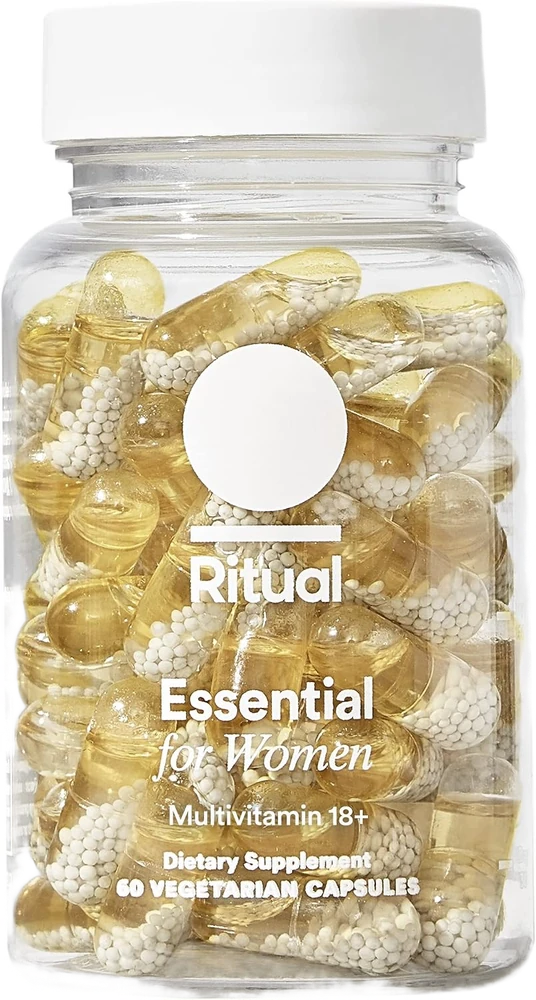
Ritual Essential for Women 18+
For a menstruating woman, Ritual is the most complete answer on this page: the folate is methylated, the iron is a gentle chelate in a delayed-release capsule (so it actually gets taken), and the verification is best-in-class — USP plus a published clinical trial on the actual product.
 07
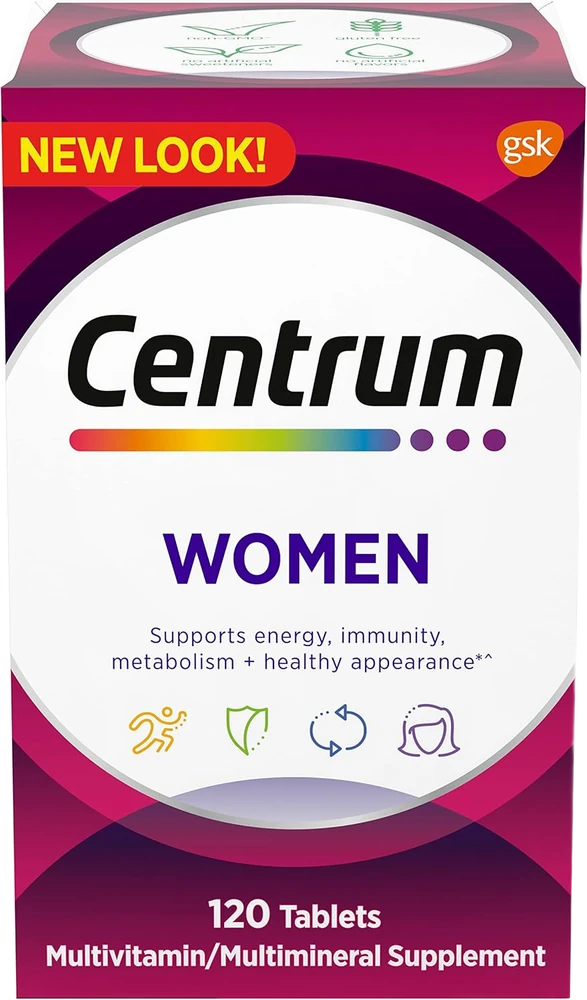
Centrum Women
Centrum Women is what most women are actually comparing everything else against, so here's the straight scoring: as drugstore formulas go it's the most complete — 23 micronutrients with a genuine 100% DV of iron, which makes it a serviceable iron-containing pick for menstruating women who want one small tablet and four months per bottle.
 06
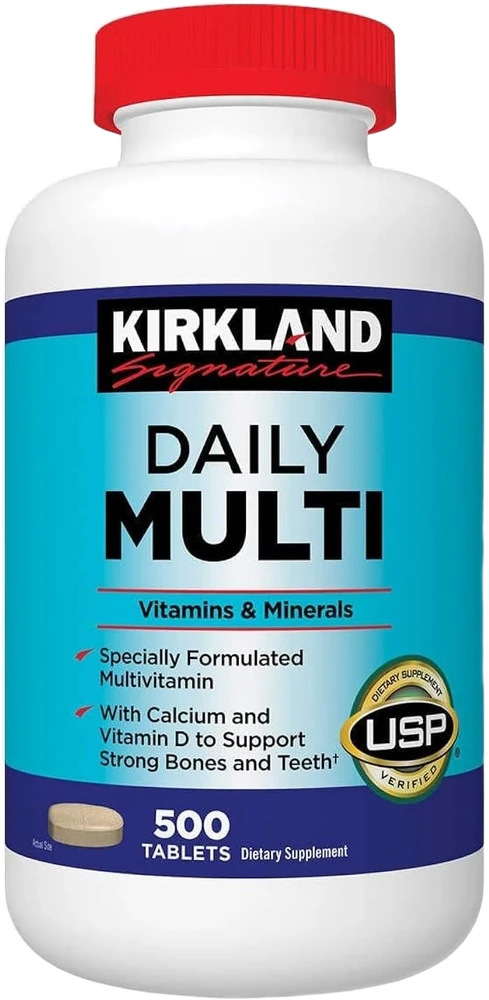
Kirkland Signature Daily Multi
Kirkland survives onto a women's cohort page for one reason: it's the only rock-bottom-budget multivitamin with an independent USP seal, which means the tablet verifiably contains what the label claims — at three cents a day.
Quick Answers
One A Day vs Centrum Women — which drugstore multivitamin should I buy?
They're closer than their marketing suggests — both are one small daily tablet, folic acid and conventional forms, iron included, no third-party seal — so the choice comes down to emphasis and verified price. Centrum Women is broader: 23 micronutrients with full 100%+ DV iron, biotin and D3, four months per bottle; it's the more complete formula, but we couldn't verify its live price at fact-check. One A Day Women's is narrower and bone-angled — calcium plus iron — at a verified ~$0.16/day across 100 days. If you want maximum drugstore coverage, Centrum; if you want the verified cheap women-specific tablet and care about the calcium angle, One A Day. If you want verified label accuracy at the absolute floor price, neither — that's USP-sealed Kirkland at ~$0.03/day, just without women-specific tuning.
Is the iron in this right for me?
Same fork as every iron-containing women's multi. If you menstruate, a maintenance dose of iron in your daily tablet is sensible insurance — monthly loss makes women in their reproductive years the one group that routinely runs low, and that's exactly who this formula targets. If you're post-menopausal or otherwise iron-replete, you should generally NOT take daily iron at all (excess accumulates; the body can't easily shed it), which rules this product out in favor of iron-free picks like Thorne or O.N.E. And if you have symptoms of genuine deficiency — exhaustion, heavy cycles — get ferritin tested and treat it properly with your clinician; no multivitamin's maintenance dose is a deficiency treatment.
What's the deal with the artificial-coloring issue?
It's a transitional-stock situation, and we record it exactly as sourced rather than rounding it in either direction. The product's listed ingredients still include FD&C Yellow #5 and #6 (synthetic colorants some buyers deliberately avoid), while Bayer's own marketing bullet states that newer pills are free of artificial coloring. Both things are simultaneously true during a formulation transition: bottles in the channel may be either version, and you can't tell from the storefront. If avoiding synthetic dyes is a priority for you, check the label of the physical bottle you receive — or pick a product that never used them, like Ritual or MegaFood. We list it as a con because uncertainty about what's in the bottle is itself a cost.
Why does the magnesium form matter? It's just magnesium, right?
Form decides how much you actually absorb, and magnesium is one of the clearest examples in the category. This formula uses magnesium oxide — the textbook cheap form, with absorption far below chelated forms like glycinate or citrate; a meaningful share of an oxide dose passes through unabsorbed. The same cost-engineering shows in the folate line (folic acid rather than methylfolate — the conversion-dependent synthetic, per Pietrzik 2010). At ~$0.16/day this is exactly the trade you're making: real coverage of the basics, in the forms that cost least and absorb worst. It's an honest trade as long as you know you're making it.
Will this actually help my bones, energy and immunity like the label says?
In the gap-filling sense, modestly and legitimately; in the transformation sense, no. The formula's calcium, vitamin D and B-vitamins support normal bone maintenance and energy metabolism where your diet falls short — and US intake data show those shortfalls are common (Reider 2020). But a multivitamin tops up nutrients; it doesn't treat or prevent disease: the largest trial found a modest 8% cancer-incidence reduction and no cardiovascular benefit whatsoever (Gaziano 2012; Sesso 2012). For bone health specifically, the bigger levers remain resistance exercise, protein, and adequate vitamin D status. And the standing women's-page boundary: this is a general multivitamin, NOT a prenatal — pregnancy or trying to conceive means a clinician-chosen prenatal formula.
Sources & Further Reading
4 peer-reviewed sources, each linked to PubMed
- [1] Pietrzik 2010 PMID 20608755 — Folic acid and L-5-methyltetrahydrofolate: comparison of clinical pharmacokinetics and pharmacodynamics. Methylfolate (L-5-MTHF) is the active, circulating folate; folic acid requires enzymatic conversion many people perform inefficiently. The basis for scoring this formula's folic acid at the floor of our forms axis — on the nutrient women most need covered.
- [2] Reider 2020 (NHANES — nutrient gaps) PMID 32531972 — Inadequacy of Immune Health Nutrients: Intakes in US Adults, the 2005-2016 NHANES. 26,282 US adults: widespread micronutrient inadequacy, including the vitamin D and calcium-adjacent shortfalls this formula's bone-health angle targets. The gaps are real; a budget tablet filling them is a rational floor-tier buy.
- [3] Gaziano 2012 (PHS II — cancer) PMID 23162860 — Multivitamins in the prevention of cancer in men: the Physicians' Health Study II randomized controlled trial. 14,641 adults, 11.2 years: a daily multivitamin produced a modest 8% reduction in total cancer incidence. The realistic ceiling for any multivitamin's long-run benefit — budget tier included.
- [4] Sesso 2012 (PHS II — cardiovascular) PMID 23117775 — Multivitamins in the prevention of cardiovascular disease in men: the Physicians' Health Study II randomized controlled trial. Same cohort: NO reduction in major cardiovascular events or death. The null result that keeps every label promise on this bottle — energy, immunity, bone support — honestly framed as nutrient adequacy, not protection.
Affiliate disclosure: every Amazon link uses our Associates tag (superachieverclub-20). We earn a small commission at no cost to you; it funds independent reviews. We never accept payment to change a ranking.