
NOW Probiotic-10 25 Billion Review
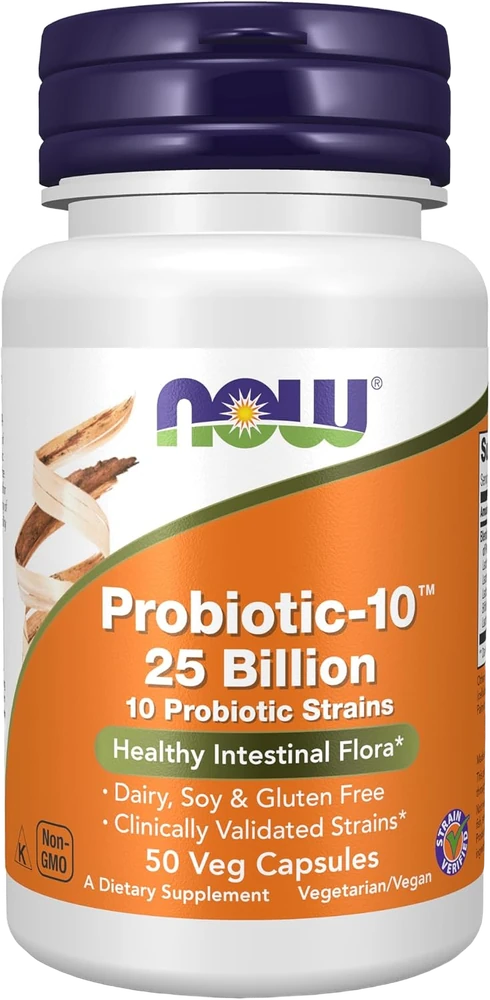 #8 of 11 · Best budget✓ Label verified · Supplement Facts read Oct 18, 2026
Real retailer photo, cut out. Label unedited.
Consider it. The honest value floor — cheap, coded strains, no frills. The lowest cost-per-day on the list from a family-owned brand with in-house QC.
$14 / month$0.28 / 1-capsule daily dose
Why It Scores 7.3 — And The Label Line Behind Each Number
Strain specificity + clinical match
35% of scoreEvery one of the ten strains is printed with its code — Lactobacillus acidophilus La-14, Bifidobacterium lactis Bl-04, Lactobacillus plantarum Lp-115, Lactobacillus casei Lc-11, Lactobacillus rhamnosus Lr-32, Lactobacillus paracasei Lpc-37, Bifidobacterium breve Bb-18, Streptococcus thermophilus St-21, Lactobacillus salivarius Ls-33 and Bifidobacterium longum Bl-05 — and the bottle carries a Strain Verified seal. That is real transparency, and it is why this scores at the level of Renew Life (7.0) rather than the generic-blend range. It does not score higher because the panel gives one combined 160 mg figure with no amount per strain, and none of these coded strains is tied on the label to a studied use; we cite no trial for any of them. Note that the panel prints Lr-32 for its L. rhamnosus entry and does not name LGG.
- Daily dose
- 1 capsule 1 to 2 times daily between meals or on an empty stomach (label directions)
Survivability to the gut
25% of scoreA plain vegetable capsule (hypromellose) with no delayed-release, enteric, or capsule-in-capsule engineering, so more of the 25B dose is at risk from stomach acid than with the engineered picks. The bottle does print that the product is formulated to deliver 25 billion CFU through the Best By date, which Sunergetic's panel and Culturelle's gallery do not, so it sits half a point above the plain-capsule baseline (6.0). The label also calls the strains acid-resistant, but that is a maker statement, not a delivery design. Directions are 1 capsule 1 to 2 times daily between meals or on an empty stomach.
Formulation completeness
20% of score25B CFU across 10 strains is a reasonable everyday level, not an inflated marketing number, and the other-ingredients line lists FOS (fructooligosaccharides), a prebiotic fiber. But FOS has no amount printed and sits beside microcrystalline cellulose, ascorbyl palmitate and silicon dioxide, so we credit it only as a small plus: a probiotic with a trace of prebiotic, not a quantified synbiotic like Culturelle (200 mg inulin) or Physician's Choice (150 mg blend). No postbiotic and no targeted-indication design.
- Delivery
- Plain vegetable capsule (hypromellose); no delayed-release or enteric design printed
- Other ingredients
- Microcrystalline cellulose, hypromellose (cellulose capsule), FOS, ascorbyl palmitate, silicon dioxide
Third-party testing + transparency
12% of scoreThe bottle prints a GMP Quality Assured seal, a Strain Verified seal, a statement that the strains are identity-verified using DNA fingerprinting, strain codes for every strain, and allergen statements (not manufactured with wheat, gluten, soy, milk, egg, fish, shellfish, tree nut or sesame ingredients). The gallery describes NOW's in-house testing and an Intertek GMP certification for its manufacturing process. We did not check Intertek's or any other certifier's database for this specific product, and no per-batch certificate is published. Short of top marks because the QC verifies identity and potency, not strain-to-indication matching.
- Testing
- Seals: GMP Quality Assured, Strain Verified; strains identity-verified by DNA fingerprinting (label statement); gallery describes NOW in-house QC and Intertek GMP certification
Value / cost-per-day
8% of scoreThe whole reason it's here: roughly $0.28 per 1-capsule daily dose (~$14/month) — the cheapest per day on the entire list by a wide margin, with a large 50-capsule bottle. For broad everyday coverage from an established brand, the value is unbeatable. This axis is where NOW wins outright, even as it trades away delivery engineering and a quantified prebiotic to get there.
- Bottle
- 50 veg capsules (~7-week supply at 1/day)
- Price
- ~$14/month = ~$0.28 per 1-capsule daily dose (lowest on the list)
- More Specs
- Strains
- 10 strains, each with its code: L. acidophilus La-14, B. lactis Bl-04, L. plantarum Lp-115, L. casei Lc-11, L. rhamnosus Lr-32, L. paracasei Lpc-37, B. breve Bb-18, S. thermophilus St-21, L. salivarius Ls-33, B. longum Bl-05
- Potency
- 25 billion CFU in one 160 mg blend (no per-strain amounts); the bottle says it is formulated to deliver 25 billion CFU through the Best By date
- Prebiotic
- FOS (fructooligosaccharides) listed among the other ingredients with no amount; not in the Supplement Facts box
Label verified. Every figure read from the Supplement Facts photo, Oct 18, 2026.
Marketing Claims Vs. Reality
10 probiotic strains at 25 billion CFU for daily digestive support.
The panel prints a blend of 10 strains (25 Billion CFU), 160 mg, each strain with its code. The count and CFU are as labeled. The nuance: 'digestive support' here is a general claim, not a studied strain matched to a specific indication, and the panel gives no amount per strain.
Lowest cost-per-day for broad probiotic coverage.
At roughly $0.28 per daily capsule (~$14/month), NOW Probiotic-10 is the cheapest per day on our list by a clear margin, with a large 50-capsule bottle. The value claim is real and is the product's defining strength.
Formulated to deliver 25 billion CFU through the Best By date.
The bottle prints this wording. It is the maker's own statement of how the product is formulated; we found no published batch report or independent potency test for it, so we credit it modestly in the survivability score rather than as proof of what arrives in the gut.
Strains identity-verified using DNA fingerprinting; Strain Verified seal.
Both are printed on the bottle. They are NOW's own statements, not an outside certification we could look up for this product, and they speak to identity, not to dose per strain or to clinical effect.
Suitable for vegetarians and free of major allergens.
The front says Vegetarian/Vegan and Dairy, Soy and Gluten Free, and the back says not manufactured with wheat, gluten, soy, milk, egg, fish, shellfish, tree nut or sesame ingredients, while noting it is produced in a GMP facility that processes other ingredients containing these allergens.
What Our Test Actually Found
It's a genuine value floor, not a cut-rate knockoff
The thing that makes NOW Probiotic-10 worth recommending is that 'budget' here doesn't mean 'untrustworthy'. The bottle prints a GMP Quality Assured seal, a Strain Verified seal and a DNA-fingerprint identity statement, and NOW says on the label that it is family owned since 1968. So at the lowest cost-per-day on the list, you're getting a credibly made product, not a mystery bottle. You're trading away features (delivery engineering, a quantified prebiotic, a trial-backed anchor strain), not honesty.
Every strain has a code, which is better than most budget labels
Cheap blends usually hide behind species names. This one prints the strain code for all ten, so you can look up exactly what is in it. What the panel still does not give you is an amount per strain (one 160 mg blend figure covers all ten) or any link between a coded strain and a studied use. The transparency is real; the clinical match is still general.
Stop chasing CFU — but understand what you're not getting on delivery
Two separate points here, and both come from the hub. First: 25 billion CFU is plenty for general coverage, and chasing a 50-billion number is the category's classic mistake — the IBS benefit in Whorwell 2006 (PMID 16863564) appeared at 1×10⁸ CFU/day, proving the right dose is strain-specific, not maximal. Second, the caveat: NOW's plain capsule has no delayed-release engineering, so the hub's warning applies — stomach acid kills naked bacteria. The bottle's promise of 25 billion CFU through the Best By date helps with shelf life, not with the stomach.
Take it the way the label says, not the way a generic rule says
A common tip for plain-capsule probiotics is to take them with a meal. NOW's own directions say the opposite: 1 capsule 1 to 2 times daily between meals or on an empty stomach. We follow the label here rather than the generic tip, and we do not claim that food improves survival for this product.
It's close to a plain probiotic — the prebiotic is a footnote
FOS appears in the other-ingredients line with no amount, next to the capsule filler and flow agent. That is a small plus, not a synbiotic dose. If your diet is fiber-poor, a product that prints a prebiotic amount (Culturelle at 200 mg of inulin, Physician's Choice at 150 mg) is the more complete tool; if you already eat plenty of fiber and fermented foods, the gap matters less.
Full analysis: all pros & cons (7), buy if / skip if
- Cheapest per day on the list by a wide margin — the value pick for everyday general support
- All 10 strains printed with their codes, plus a Strain Verified seal and a DNA-fingerprint identity statement
- Bottle states it is formulated to deliver 25 billion CFU through the Best By date
- GMP Quality Assured seal, a family-owned brand, and a large 50-capsule bottle with a no-marketing label
- No delivery-system engineering (no delayed-release/enteric design) — a plain capsule means more strain loss to stomach acid
- One 160 mg blend figure with no amount per strain, and no coded strain tied to a studied indication
- FOS appears only as an unquantified other ingredient, so it is not a quantified synbiotic
- Budget is the main constraint and you want the lowest cost-per-day on the list
- You want reasonable broad daily Lactobacillus/Bifidobacterium coverage with strain codes on the label
- You value a family-owned household brand with a GMP Quality Assured seal over premium features
- You're happy with a plain capsule and a label that prints the potency as formulated through the Best By date
- You want delivery engineering so more organisms reach the gut — Seed's capsule-in-capsule or a delayed-release pick
- You want a prebiotic dose printed on the panel — Culturelle (200 mg inulin) or Physician's Choice (150 mg blend)
- You have a specific problem (IBS, antibiotics) — match the studied strain: Align or Florastor
The lowest cost-per-day on the list from a family-owned brand with in-house QC. A 25B-CFU blend of 10 strains, each printed with its code, with potency stated as formulated through the Best By date. The honest gaps: a plain capsule with no delivery engineering, no amount per strain, and a prebiotic (FOS) that appears only as an unquantified other ingredient. A solid value floor — follow the label and take it between meals or on an empty stomach, and step up to a synbiotic if you want a quantified prebiotic.
NOW Probiotic-10 is the value floor of the category, and it earns that title honestly rather than by cutting corners. It's the cheapest per day on the entire list — by a wide margin — and it comes from NOW Foods, a family-owned brand that runs its own QC labs, so 'budget' here doesn't mean 'sketchy.' The Supplement Facts panel prints a blend of 10 strains at 25 billion CFU, and every strain carries its code: La-14, Bl-04, Lp-115, Lc-11, Lr-32, Lpc-37, Bb-18, St-21, Ls-33 and Bl-05. The bottle also says it is formulated to deliver that 25 billion CFU through the Best By date. What you don't get is delivery engineering, a quantified prebiotic, or an amount per strain: it is a plain capsule, FOS shows up only as an unquantified other ingredient, and the whole blend is one 160 mg figure. Here's the full breakdown of where that trade lands well, and where it doesn't.
The budget answer — buy it because it's cheap and clearly labeled.

NOW Probiotic-10 is the value floor of the list: the lowest cost-per-day from a family-owned brand with a GMP Quality Assured seal and a Strain Verified seal. For someone who just wants reasonable daily Lactobacillus/Bifidobacterium coverage without spending much, it does the job at 25 billion CFU across 10 strains, each printed with its code. The 25B count is plenty — chasing a bigger number is the category's classic mistake — so the dose is not the issue. The honest trade-offs are three things the premium picks do better. There is no delivery engineering, so as the substance hub warns, more of the dose is at risk from stomach acid than with the delayed-release picks. There is no amount per strain, only one 160 mg figure. And FOS appears only as an unquantified other ingredient, so if your diet is fiber-poor, a product that prints a prebiotic amount is the more complete tool. Follow the bottle's directions (between meals or on an empty stomach). Buy NOW Probiotic-10 for one reason — it's the cheapest credible everyday probiotic on the shelf — and if your reason is anything else (IBS, antibiotics, maximal delivery engineering), a more targeted or engineered pick is the better spend.
If This Doesn’t Fit — Try These
 06
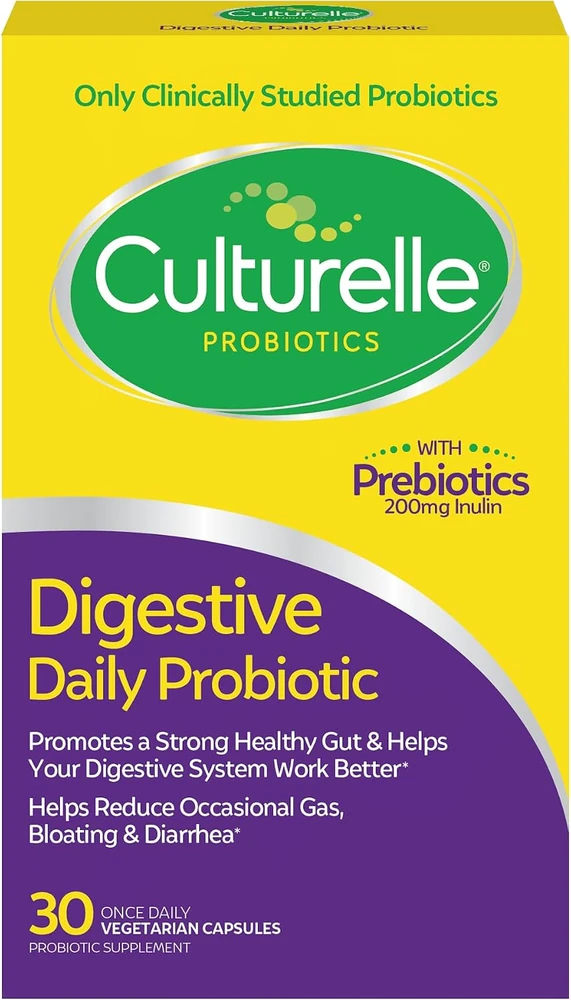
Culturelle Daily Probiotic
Culturelle is the pick when you want the most-studied strain on earth, simply and affordably.
 10
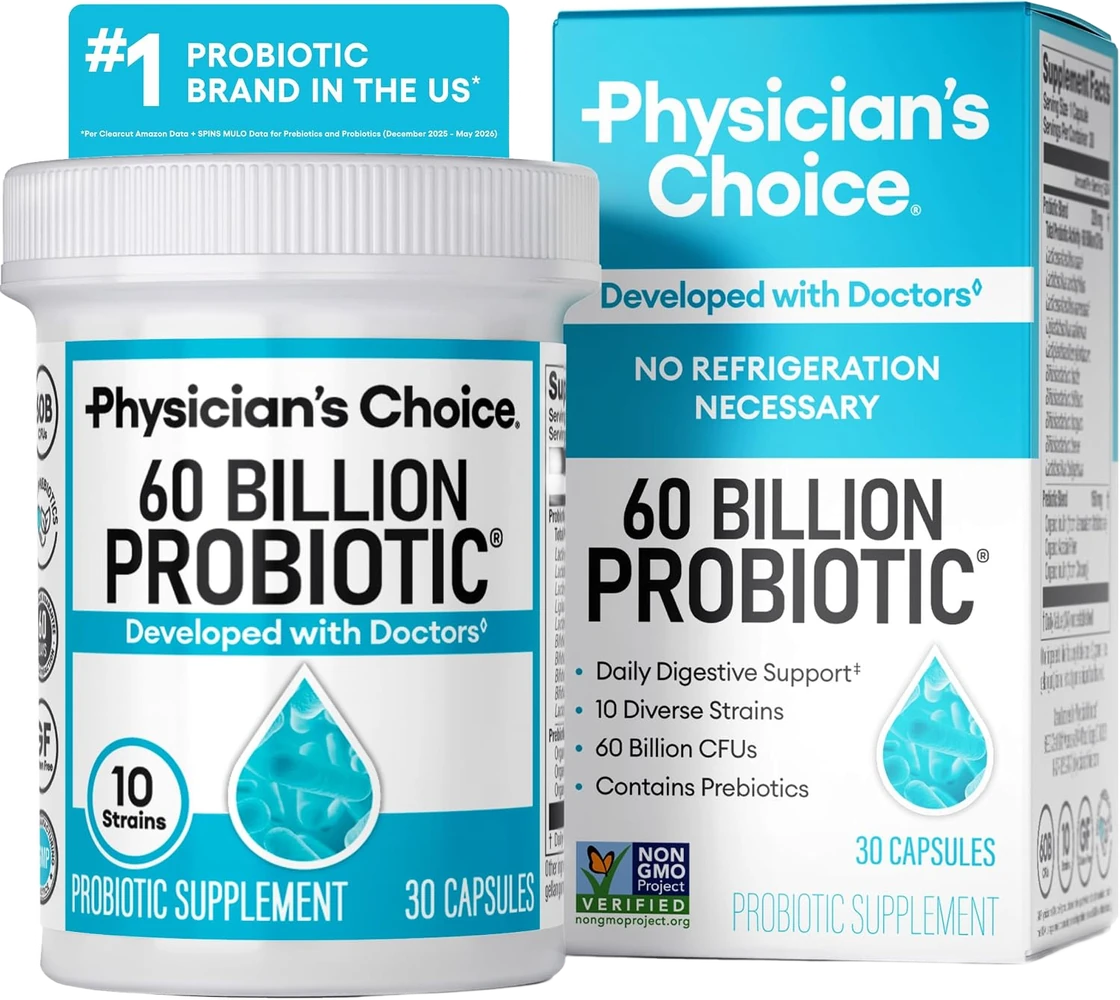
Physician's Choice 60 Billion
Physician's Choice is a low-cost high-CFU generalist — the bottle to grab when you want broad daily gut support without a subscription or a premium price.
 01
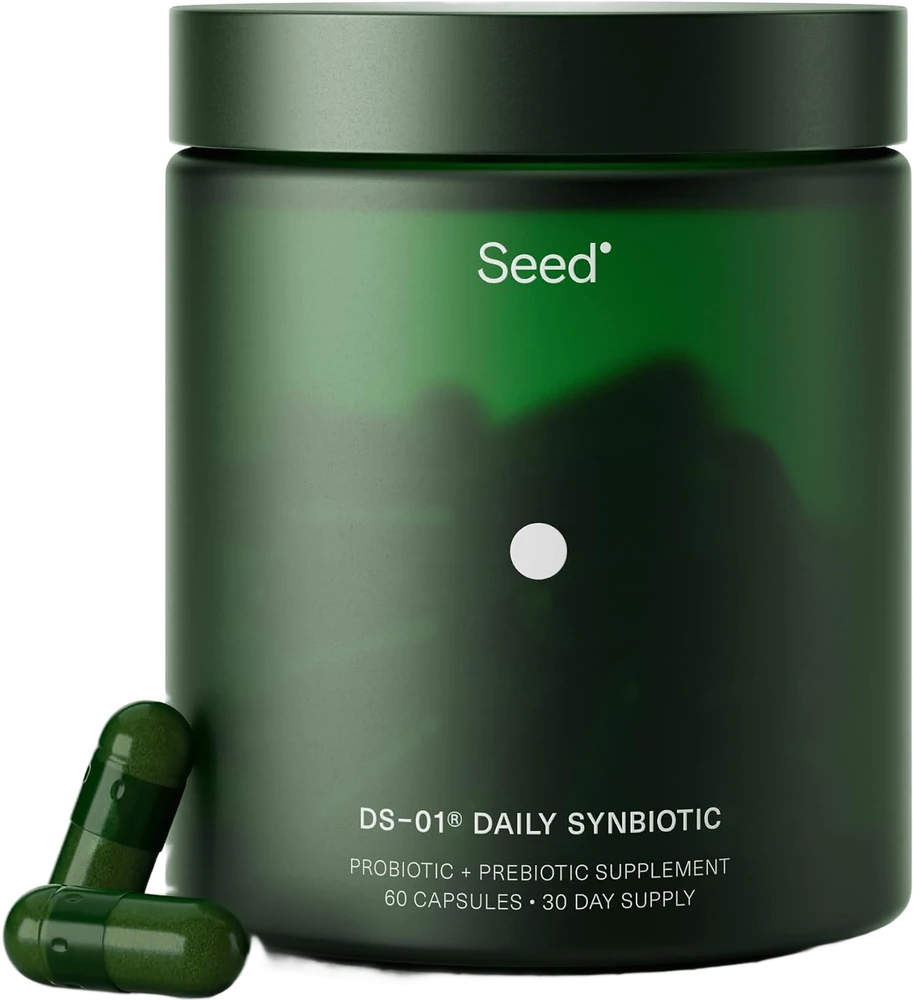
Seed DS-01
If you want one probiotic for general gut health, bloating, and a credible daily synbiotic, Seed DS-01 is the pick and the benchmark the rest of this list is measured against.
Quick Answers
Is 25 billion CFU enough, or do I need a 50-billion product?
For general everyday coverage, 25 billion across 10 strains is a sensible, balanced dose — and chasing a bigger number is usually the wrong instinct. The substance hub is blunt about this: a huge CFU count of unstudied strains is not better than the trial dose of the right strain for your goal, and the IBS benefit in Whorwell 2006 (PMID 16863564) showed up at just 1×10⁸ CFU/day for B. infantis 35624, not at the highest dose tested. So 'is 25B enough?' is the wrong question — the better question is whether the strains match your problem. For broad daily support with no specific diagnosis, NOW's 25B/10-strain blend is fine. For a targeted indication (IBS, antibiotics), the strain matters far more than the billions.
Does NOW Probiotic-10 survive stomach acid without a delayed-release capsule?
Less of it does than with the engineered picks — this is the product's main honest weakness. It's a plain vegetable capsule (hypromellose) with no delayed-release, enteric, or capsule-in-capsule design, and the substance hub is clear that stomach acid and bile kill many naked probiotic bacteria before they reach the colon. The bottle does say the strains are acid-resistant and that the product is formulated to deliver 25 billion CFU through the Best By date, but that is a maker statement, not a delivery mechanism, so we credit the printed potency date only modestly. One thing we do not recommend: taking it with food as a workaround. The bottle's own directions are 1 capsule 1 to 2 times daily between meals or on an empty stomach, so follow the label.
Why is NOW so much cheaper than the other probiotics?
Because it's a deliberately no-frills product: a coded 10-strain blend with no delivery engineering, no quantified prebiotic, no studied-indication anchor strain, and a plain label — from a family-owned brand (printed on the bottle: since 1968) that runs its own QC labs at scale. That combination strips out the cost drivers (subscription models, capsule-in-capsule tech, premium single strains, certifications) that push the other picks to $26-54/month. It's a genuine value floor — not a cut-rate knockoff, but also not a survivability-engineered synbiotic.
Is NOW Probiotic-10 a synbiotic?
Barely. There is no prebiotic in the Supplement Facts box. FOS (fructooligosaccharides) appears in the other-ingredients line, with no amount printed, so it may be present as a carrier or filler rather than a dose. That makes it a probiotic with at most a trace of prebiotic fiber, not a quantified synbiotic. Several pricier picks print a prebiotic amount (Seed, Culturelle at 200 mg of inulin, Physician's Choice at 150 mg), which makes them more complete tools. If you want a clear probiotic-plus-prebiotic dose in one capsule, step up to one of those.
Can I trust a budget probiotic from NOW Foods?
On what the bottle prints, there is real substance behind it: a GMP Quality Assured seal, a Strain Verified seal, and a statement that the strains have been identity-verified using DNA fingerprinting, plus a gallery that describes NOW's in-house testing. That is the trust gate the substance hub cares about — it means the bottle is likely to contain what the label says. The caveat is that this is the brand's own quality program (we did not check an outside certifier's database for this product), and QC about identity and potency is not the same as matching strains to your specific problem. As a cheap, honestly made everyday probiotic, NOW is a credible choice.
Sources & Further Reading
3 peer-reviewed sources, each linked to PubMed
- [1] Whorwell 2006 PMID 16863564 — Efficacy of an encapsulated probiotic Bifidobacterium infantis 35624 in women with irritable bowel syndrome. RCT in 362 IBS patients: B. infantis 35624 at 1×10⁸ CFU/day significantly relieved abdominal pain, bloating, and bowel dysfunction versus placebo. The proof that the right CFU is strain-specific (1 billion, not 'as high as possible') — context for why NOW's 25B/10-strain blend is plenty for general support and chasing higher CFU is the wrong instinct.
- [2] Ford 2014 PMID 25070051 — Efficacy of prebiotics, probiotics, and synbiotics in irritable bowel syndrome and chronic idiopathic constipation: systematic review and meta-analysis. Meta-analysis of 43 RCTs: probiotics as a class significantly reduced persistent IBS symptoms versus placebo (RR 0.79), while explicitly noting which strains work best remains uncertain. The class-level support for everyday probiotic use, with the strain-specificity caveat — a general blend like NOW's, even with a code on every strain, is not tied to a specific indication on its label.
- [3] Hungin 2018 PMID 29460487 — Systematic review: probiotics in the management of lower gastrointestinal symptoms — an updated evidence-based international consensus. International primary-care consensus over 70 RCTs: specific probiotics reduce overall symptom burden and abdominal pain in some patients. The clinical-practice synthesis — it endorses probiotics where the strain matches the indication, underscoring that a budget generalist like NOW is for broad support rather than a targeted therapeutic job.
Affiliate disclosure: every Amazon link uses our Associates tag (superachieverclub-20). We earn a small commission at no cost to you; it funds independent reviews. We never accept payment to change a ranking.