
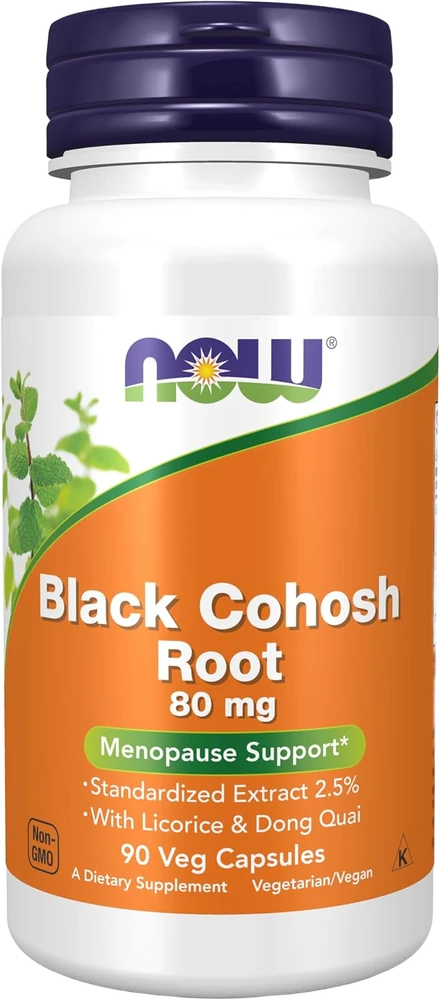
NOW Supplements Black Cohosh Root 80 mg with Licorice and Dong Quai, 90 Veg Capsules Review
 #4 of 9 · Cheapest Standardized✓ Label verified · Supplement Facts read Sep 7, 2026
Real retailer photo, cut out. Label unedited.
Consider it. Cheap and standardized, but not a clean black cohosh test. You get a properly standardized 80 mg extract at the lowest price of any standardized pick, from a GMP-audited brand.
~$10.99~$0.24/day (1 capsule twice daily)
Why It Scores 6.8 — And The Label Line Behind Each Number
Standardization & Form
30% of scoreThe black cohosh portion is genuinely standardized — 80 mg extract at 2.5% triterpene glycosides (2 mg 27-deoxyactein), matching the studied actives.
- Form
- Vegetarian capsule (combo formula)
- Standardization
- 2.5% triterpene glycosides = 2 mg 27-deoxyactein
Third-Party Testing & Purity
25% of scoreNOW runs an extensive in-house GMP lab program and is Non-GMO, but there is no independent third-party seal on this SKU.
- Testing
- GMP Quality Assured; Non-GMO; vegetarian
Dose vs Clinical Range
20% of score80 mg black cohosh extract at one capsule twice daily is in range, but the added botanicals mean the effective black cohosh exposure isn't the whole story.
- Dose
- 80 mg extract (2.5% triterpene glycosides) + licorice + dong quai; 1 cap twice daily
Tolerability & Safety
15% of scoreLicorice root can raise blood pressure and deplete potassium, and dong quai has anticoagulant and photosensitivity cautions — extra risks layered on top of black cohosh's liver flag.
Value
10% of scoreAround $11 makes it the cheapest standardized extract here, though the added herbs are why it's cheap rather than a pure black cohosh bargain.
- Count
- 90 veg capsules
- Cost per dose
- ~$0.24/day at 2 capsules
Label verified. Every figure read from the Supplement Facts photo, Sep 7, 2026.
Marketing Claims Vs. Reality
Standardized to 2.5% triterpene glycosides
The label lists 80 mg extract standardized to 2.5% triterpene glycosides (2 mg 27-deoxyactein), the marker actives used in research.
Effects come from black cohosh
The formula also contains licorice and dong quai, so any benefit cannot be attributed to black cohosh alone — a confounded combination.
Suitable for anyone seeking menopause support
Licorice can raise blood pressure and lower potassium, and dong quai has anticoagulant cautions, making this combo inappropriate for people with hypertension or on blood thinners.
What Our Test Actually Found
Standardized core, confounded formula
The black cohosh itself is well-standardized, which is why it ranks above the whole-root picks. But bundling licorice and dong quai turns it into a multi-herb product — you can't isolate black cohosh's contribution, and that's a real drawback if you're testing whether black cohosh works for you.
Licorice deserves a real caution
Glycyrrhizin in licorice root can cause sodium retention, hypertension and hypokalemia with regular use. Anyone with high blood pressure, heart or kidney concerns should treat this combo with more caution than a single-herb black cohosh.
Full analysis: all pros & cons (8), buy if / skip if
- Cheapest standardized (2.5% glycoside) extract in the lineup
- GMP-audited, Non-GMO manufacturer with strong in-house QC
- 80 mg standardized black cohosh core dose
- Vegetarian capsules
- Added licorice and dong quai confound the black cohosh effect
- Licorice carries blood-pressure and potassium cautions
- Dong quai adds anticoagulant and photosensitivity concerns
- No independent third-party seal
- Cheapest standardized (2.5% glycoside) extract in the lineup
- GMP-audited, Non-GMO manufacturer with strong in-house QC
- 80 mg standardized black cohosh core dose
- Added licorice and dong quai confound the black cohosh effect
- Licorice carries blood-pressure and potassium cautions
- Dong quai adds anticoagulant and photosensitivity concerns
You get a properly standardized 80 mg extract at the lowest price of any standardized pick, from a GMP-audited brand. The catch is the added licorice and dong quai: they confound what's working and add their own cautions (licorice can raise blood pressure and lower potassium). Fine if you want a combo formula; skip it if you want black cohosh isolated.
NOW's formula is the cheapest way to get a standardized black cohosh extract (80 mg at 2.5% triterpene glycosides, 2 mg 27-deoxyactein) from a GMP-audited maker. The complication is right on the label: it also contains licorice root and dong quai. Those additions mean any effect can't be attributed to black cohosh alone, and licorice in particular carries its own blood-pressure and potassium cautions. Great actives-per-dollar; less clean as a black cohosh study of one.
A bargain combo, not a clean black cohosh trial

NOW gives you a legitimately standardized black cohosh extract at the lowest price here, but the added licorice and dong quai make it a multi-herb formula with extra cautions rather than a clean single-herb test. Choose it only if you specifically want a combination product and have no blood-pressure or anticoagulant concerns; otherwise a single-herb standardized extract is the wiser buy.
If This Doesn’t Fit — Try These
 03
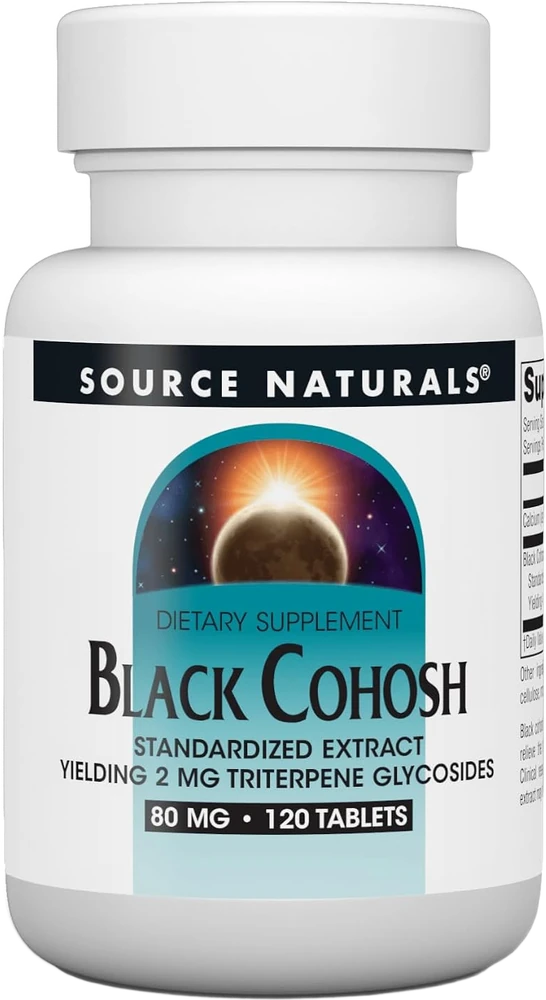
Source Naturals
The value standout among genuinely standardized options: you get a full clinical-range dose per tablet without paying premium pricing.
 02
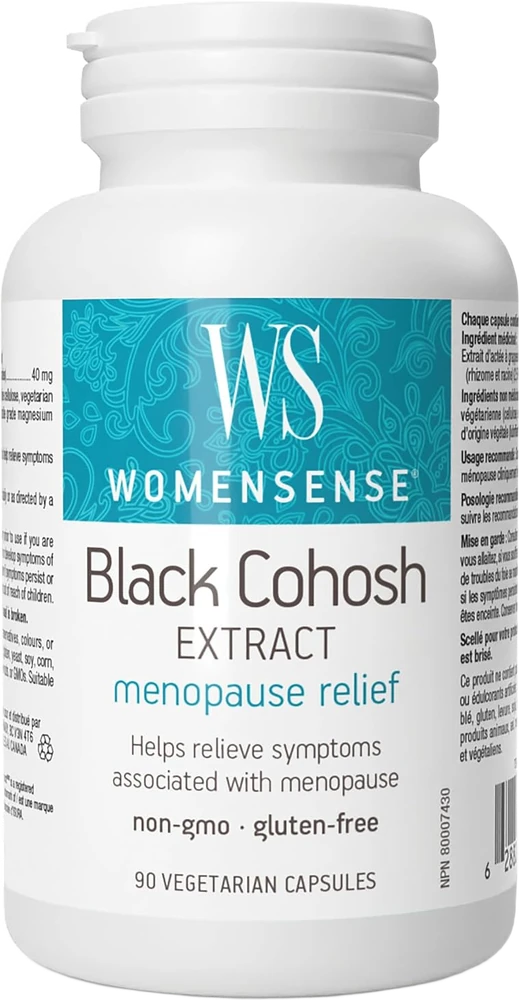
Natural Factors WomenSense
This is the pick for anyone who wants a standardized extract with real independent verification behind it.
Quick Answers
Why does it have licorice and dong quai?
These are traditional women's-health botanicals added for a combination effect. The downside is you can't tell what's doing the work, and licorice/dong quai bring their own cautions.
Should I avoid it if I have high blood pressure?
Yes, be cautious — the licorice root can raise blood pressure and lower potassium with regular use. A single-herb black cohosh is a safer choice in that case.
Sources & Further Reading
2 peer-reviewed sources, each linked to PubMed
- [1] Borrelli F, Ernst E. Black cohosh (Cimicifuga racemosa) for menopausal symptoms: a systematic review of its efficacy. Pharmacol Res. 2008;58(1):8-14. PMID 18585461 — Black cohosh (Cimicifuga racemosa) for menopausal symptoms: a systematic review of its efficacy. Efficacy of black cohosh is uncertain and combination products complicate attribution of any observed effect.
- [2] Leach MJ, Moore V. Black cohosh (Cimicifuga spp.) for menopausal symptoms. Cochrane Database Syst Rev. 2012;(9):CD007244. PMID 22972105 — Black cohosh (Cimicifuga spp.) for menopausal symptoms. Insufficient evidence that black cohosh, alone or combined, outperforms placebo for menopausal symptoms.
Affiliate disclosure: every Amazon link uses our Associates tag (superachieverclub-20). We earn a small commission at no cost to you; it funds independent reviews. We never accept payment to change a ranking.