
Kirkland Signature Daily Multi Review
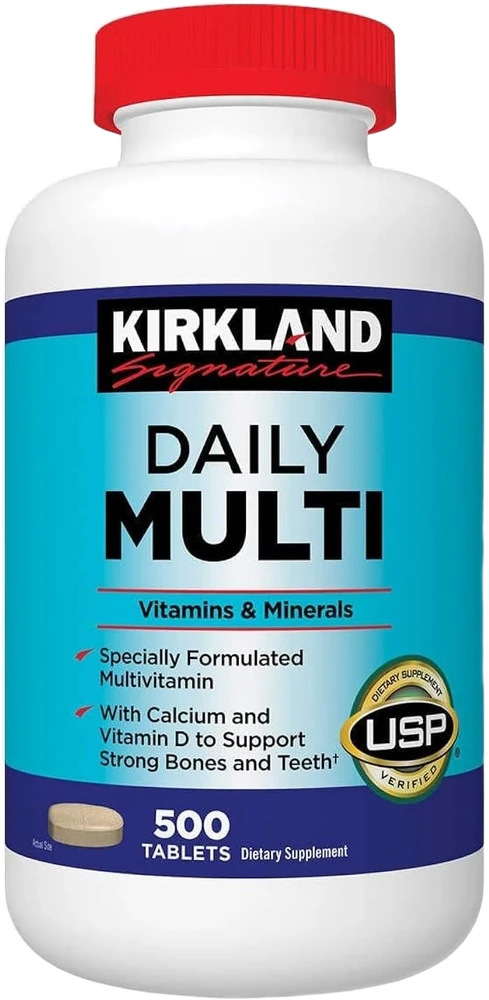 #7 of 10 · Best budget✓ Label verified · Supplement Facts read Sep 7, 2026
Real retailer photo, cut out. Label unedited.
Consider it. Listing claims USP Verification for ~$0.03/day — basic forms, unverified panel. A conventional one-a-day that the listing describes as containing calcium and vitamin D and being USP Verified, at roughly three cents a day from a 500-tablet bottle.
$13 / 500 tablets (500 days)~$0.03 / day (1 tablet)
Why It Scores 7.4 — And The Label Line Behind Each Number
Nutrient forms & bioavailability
30% of scoreThe clear weakness, per the listing: Kirkland uses folic acid (not methylfolate) and cyanocobalamin (not methylcobalamin) — basic synthetic forms that require conversion your body may do inefficiently (Pietrzik 2010), in what the listing describes as a conventional rather than chelated mineral profile. We could not confirm these forms against a legible Supplement Facts photo — the only available listing image is a front-of-bottle shot — so this score rests on the listing's own ingredient claims, not a verified read of the panel. It's still the lowest forms score on the list and the likely cost of the rock-bottom price: functional for people who convert folate well, not the active-form quality of the premium picks.
Sensible dosing (no megadose)
25% of scorePer the listing, this is conventional, gap-level dosing with no megadosing, and it includes calcium and vitamin D — reasonable, balanced coverage for a general one-a-day, though we could not confirm the exact amounts against a legible label photo. Solid on this axis; held a little below the top only because it's a generic profile not tuned to any specific need (and, per the listing, carries some iron as a general formula rather than being deliberately iron-free or iron-optimized).
Third-party testing
20% of scoreThe listing states Kirkland is USP Verified — independent confirmation, if accurate, that the tablet contains what the label claims, dissolves properly, and is free of harmful contaminants. We could not confirm that ourselves: the only available listing image is a front-of-bottle shot with no legible Supplement Facts panel or seal visible in it, so this score is built on the listing's word rather than a verified photo. That's why it sits meaningfully below what a genuinely confirmed USP mark would earn — real USP Verification is one of the strongest quality marks available and would be rare on a product this cheap, but until we (or you) can check a clear photo of the bottle, it's a claim, not a confirmed fact.
- Label check
- Not verifiable — no legible Supplement Facts photo in the listing (checked Sep 7, 2026)
- Testing
- Listing claims USP Verified — unconfirmed (no legible label/seal photo)
Value per day
15% of scoreUnbeatable — ~$0.03/day from a $13, 500-tablet bottle that lasts well over a year. By far the cheapest serious option on the list; this is a straightforward price and count fact, not something that depends on reading the Supplement Facts panel. On pure cost-per-day, nothing else comes close. A perfect score on this axis.
- Count
- 500 tablets · ~500-day supply
- Price
- $13 / 500 tablets = ~$0.03 / day
Real-world fit (pill burden / audience)
10% of scoreGood practical fit per the listing — a single tablet a day and an enormous bottle you rarely need to restock (we could not verify the dosing directions against a legible label photo, but this matches the listing's stated directions). The limitation is audience: it's a generic one-size unisex formula, not tuned to men (iron-free, prostate) or women (iron, reproductive needs), so it serves general buyers well but specific needs less so. Convenient and simple; just not tailored.
- Audience
- Unisex (general one-size)
- More Specs
- Folate form
- Listing states folic acid (NOT methylfolate) — panel not verified
- B12 form
- Listing states cyanocobalamin (NOT methylcobalamin) — panel not verified
- Notable minerals
- Listing states calcium and vitamin D (conventional profile) — panel not verified
- Caps per day
- 1 tablet (per listing)
Label verified. Every figure read from the Supplement Facts photo, Sep 7, 2026.
Marketing Claims Vs. Reality
USP Verified for potency and purity.
This is the listing's claim, not something we could confirm ourselves — the only available product image is a front-of-bottle shot, and no Supplement Facts panel or USP seal is legible in it. If genuine, USP Verification would mean an independent body has confirmed the tablet contains the stated ingredients and amounts, dissolves properly, and is free of harmful contaminants, which would be rare and valuable at this price — but until we (or you) can check a clear photo of the bottle, it can't be marked verified.
Complete broad-spectrum daily multivitamin with calcium and vitamin D.
The listing describes it as a conventional broad-spectrum one-a-day that includes calcium and vitamin D. We could not confirm the specific mineral inclusions against a legible Supplement Facts panel — no such photo is available for this listing — so this is the listing's description, not a confirmed panel read.
Extremely low cost per day in a 500-tablet bottle.
Confirmed — a $13, 500-tablet bottle works out to roughly $0.03/day, by far the lowest cost-per-day on the list. This is price and count math, not a Supplement-Facts-panel claim, so it's unaffected by the missing panel photo. The value claim is entirely accurate.
Quality nutrition comparable to national brands.
Fair on the framing, weak on confirmation: if the listing's USP Verification claim holds, it would put Kirkland on par with many national brands on independent quality assurance — but we could not confirm that claim ourselves. And 'comparable' overlooks forms: per the listing, it uses folic acid and cyanocobalamin, where better national brands use methylfolate and methylcobalamin. Partial at best — unconfirmed on verification, and overstated on nutrient-form quality even by the listing's own account.
Supports overall health and wellness.
Reasonable as general gap-insurance — correcting genuine dietary shortfalls supports normal function, and if the listing's USP Verification claim is accurate, that would support trusting the nutrients are present (though we could not confirm that claim ourselves). But 'health and wellness' is not disease prevention or longevity; multivitamin RCTs show only a modest cancer signal and no cardiovascular benefit (Gaziano 2012; Sesso 2012). Fair as cheap, listing-claimed insurance; overstated if read as a health transformation or as confirmed independent verification.
What Our Test Actually Found
Label not verifiable: only a front-of-bottle photo is available
The only product image supplied for this listing is a front-of-bottle shot; no Supplement Facts panel is visible anywhere in it. That means we could not independently confirm the folate form, B12 form, mineral profile, dosing directions, or — most importantly — the USP Verification claim this review leans on. Everything above and below reflects what the Amazon listing states, not a confirmed read of the printed label; we've reworded the review to say 'the listing states/claims' rather than asserting confirmation, and lowered the Third-party testing score because it previously credited verification we never actually saw. We checked again on Sep 7, 2026 and will update this review if a legible label or seal photo becomes available.
USP Verification is the listing's claim, not something we've confirmed
Kirkland's case for the budget pick rests heavily on USP Verification — the listing states an outside body has confirmed the tablet contains what the label says, dissolves, and is clean. We could not confirm that ourselves: the only available product image is a front-of-bottle shot, and no Supplement Facts panel or verification seal is legible in it. If the claim is genuine, that kind of assurance would be uncommon on a product costing ~$0.03/day and would be a real reason to rank Kirkland above un-certified competitors. Until we (or you) can check a clear photo, though, treat it as the listing's word, not a confirmed fact — which is why we've lowered the Third-party testing score below what a verified mark would earn.
The basic forms are the honest trade-off — per the listing
We won't dress this up: per the listing, Kirkland uses folic acid (not methylfolate) and cyanocobalamin (not methylcobalamin), the basic synthetic forms that require conversion your body may do inefficiently (Pietrzik 2010). We could not confirm these forms against a legible label photo, so this rests on the listing's own ingredient claims rather than a verified panel read. That's still the lowest form-quality on the list, and likely the price of the low price. For someone who converts folate normally and just wants cheap general gap-insurance, those forms would be perfectly functional. For someone who specifically wants active forms, this isn't the product — and the next rung up (Thorne, fully methylated) is where to go.
If the USP claim holds, verified-basic still beats unverified-premium — but confirm it first
The listing's implicit pitch is that independent verification of basic forms can be worth more than an unverified claim of better forms — a multivitamin you can't trust to contain what it says is worth little regardless of which folate it claims. That logic holds if Kirkland's USP Verification is genuine, but we could not confirm that claim ourselves: no legible Supplement Facts panel or seal is visible in the available listing image. Until you (or we, on a clearer photo) can verify the USP mark directly — on the physical bottle or via USP's own verified-product listings — treat 'verified-basic' as an unconfirmed pitch rather than an established advantage over pricier products' own unverified form claims.
It's generic — fine for general use, weaker for specific needs
Kirkland is a one-size unisex formula, which is exactly right for broad general gap-insurance and exactly wrong if your needs are specific. Per the listing, it isn't iron-free for men or iron-optimized for women, and it carries a conventional profile (including some iron and calcium) rather than sex-specific tuning — though we couldn't confirm those exact mineral amounts against a legible label photo. A menstruating woman who needs reliable iron, or a man who wants iron-free with prostate nutrients, is better served by a tailored formula (Ritual, the Garden of Life men's/women's). Match the formula to your situation — Kirkland wins on 'cheap and general,' not on 'tailored' or 'independently confirmed.'
The right expectations make it a defensible buy — with one caveat
Kirkland's pitch is appealing: listing-claimed, basic-form gap-insurance for almost no money — but the certification itself is a claim we haven't been able to confirm from a legible label photo. Hold it to that, verify the USP mark yourself if it matters to you, and it's still one of the more sensible purchases on the list for a budget-focused buyer. Expect more — active forms, sex-specific tuning, confirmed certification, or any health-transformation or longevity benefit — and it disappoints, but so would every multivitamin on the longevity front (Gaziano 2012; Sesso 2012). Buy it knowing exactly what it is: the cheapest multivitamin on the list, with a certification claim worth double-checking yourself.
Full analysis: all pros & cons (8), buy if / skip if
- Listing claims USP Verification for potency and purity — genuinely rare and valuable at this price if the claim holds, though we couldn't confirm it from a photo
- Extremely low cost per day (~$0.03) in a huge 500-tablet bottle
- Simple one-tablet-daily dosing that, per the listing, covers the basics including calcium and vitamin D
- If its USP claim holds, verified-basic would beat unverified-premium for a budget buyer who converts folate well — worth confirming the seal yourself
- Basic synthetic forms per the listing — folic acid (not methylfolate) and cyanocobalamin (not methylcobalamin); unconfirmed against a legible label photo
- Generic one-size unisex formula — not tuned for men (iron-free/prostate) or women (iron/reproductive)
- Conventional, not chelated, mineral profile (per the listing)
- The USP Verified claim is unconfirmed on our end — no legible Supplement Facts panel or seal photo was available; check the physical bottle or USP's own listings yourself if certification matters to you
- You want the lowest possible cost-per-day for a multivitamin (~$0.03/day)
- You're comfortable relying on the listing's USP Verification claim — we couldn't confirm it against a legible label photo
- You convert folate normally and don't specifically need active methylfolate
- You want simple, no-frills general gap-insurance in one tablet a day
- You want active forms confirmed on a legible panel — the listing states folic acid and cyanocobalamin; Thorne is fully methylated
- You need sex-specific tuning — it's a generic unisex formula (not iron-free for men, not iron-optimized for women)
- You want a certification you (or we) can actually verify from a clear label photo
A conventional one-a-day that the listing describes as containing calcium and vitamin D and being USP Verified, at roughly three cents a day from a 500-tablet bottle. Label check: not verifiable — the only listing image is a front-of-bottle shot, and no Supplement Facts panel is legible in it, so we could not confirm the USP claim or the exact nutrient forms ourselves. Per the listing, the trade-off is basic synthetic forms (folic acid, not methylfolate; cyanocobalamin, not methylcobalamin) in a generic unisex formula. Consider it if you want cheap general gap-insurance, don't need active forms, and are comfortable relying on the listing's certification claim. It's listing-claimed insurance, not a confirmed longevity pill.
Kirkland Signature Daily Multi is the budget pick, and it's a reasonable one if its claims hold up. At roughly three cents a day it is the cheapest serious option on the list, and the listing states it's USP Verified, meaning — if accurate — an independent body has confirmed the tablet actually contains what the label claims and meets purity standards. We could not confirm that claim ourselves: the only product photo available for this listing is a front-of-bottle shot, and no Supplement Facts panel is legible anywhere in it. Treat the USP claim as the listing's word, not something we've verified. The honest trade-off, per the listing, is in the forms: folic acid (not methylfolate) and cyanocobalamin (not methylcobalamin), in a generic one-size-fits-all formula — again, figures we could not check against a readable label. As always, the frame holds: a multivitamin is gap-insurance, not a longevity drug. For someone who wants cheap, no-frills gap-insurance and doesn't need active forms or sex-specific tuning, it's a reasonable buy if the listing's claims are accurate. If methylated forms matter to you, you'll pay more. Here's the full breakdown.
The budget pick — consider it for cheap gap-insurance if you don't need active forms (verify the USP claim yourself).

Kirkland Signature Daily Multi is a 'consider' that's a smart budget bet if its claims check out. Its case is precise: the listing states it's USP Verified — independent assurance the tablet contains what the label claims — at roughly three cents a day, a combination of trust and price that nothing else on the list matches on paper. We could not confirm that USP claim ourselves, though: the only available listing image is a front-of-bottle shot, and no Supplement Facts panel or verification seal is legible in it. We've scored the Third-party testing criterion down to reflect that it's an unverified claim, not a confirmed fact. For someone who wants cheap, no-frills general gap-insurance for almost no money and converts folate normally, it's still a reasonable buy — just confirm the USP mark on the physical bottle (or via USP's own verified-product listings) if that certification matters to your decision. The honest trade-off is forms: per the listing, it uses folic acid (not methylfolate) and cyanocobalamin (not methylcobalamin) in a generic unisex formula — again, figures we couldn't check against a readable label. If you specifically want active forms, step up to Thorne (fully methylated and NSF-certified), or to NOW ADAM for methylcobalamin and chelated minerals at a low price (its folate is folic acid too); if you need sex-specific tuning, choose a tailored women's or men's formula. And the frame holds, as it does for every product here: this is gap-insurance — not a longevity or heart drug (Gaziano 2012; Sesso 2012). Bought for what it is — the cheapest multivitamin on the list, with a certification claim worth double-checking yourself — Kirkland is a defensible, budget-minded choice.
If This Doesn’t Fit — Try These
 01
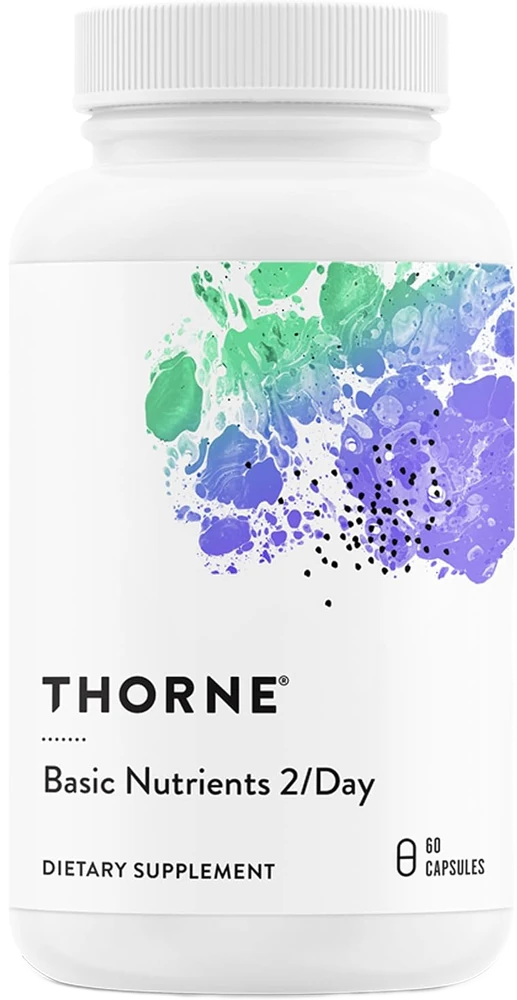
Thorne Basic Nutrients 2/Day
If you want the multivitamin done right and don't want to study the category, this is it.
 06
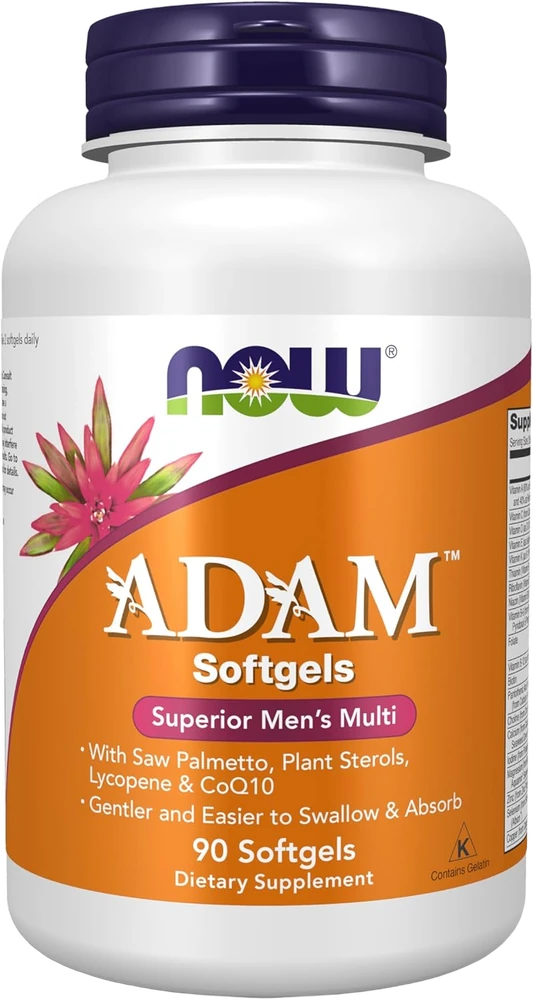
NOW ADAM Men's Multi
NOW ADAM is the value men's pick: a comprehensive iron-free softgel with zinc picolinate, Albion-chelated trace minerals and methylcobalamin B12, plus men's-health botanicals (saw palmetto, lycopene, plant sterols, CoQ10) at roughly $0.49/day.
 10
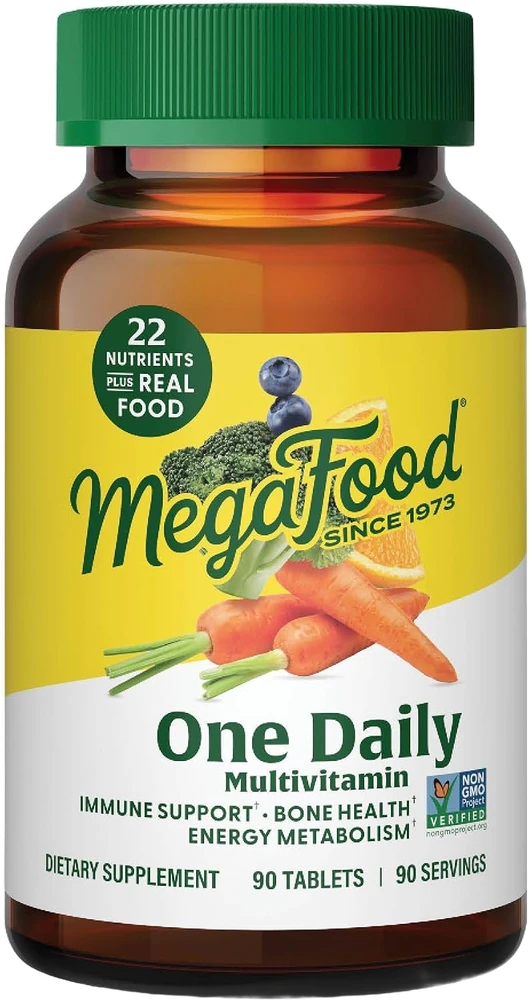
MegaFood One Daily
MegaFood One Daily solves the whole-food category's biggest annoyance — pill count — by delivering a food-based formula in a single tablet you can take on an empty stomach.
Quick Answers
If it uses folic acid, why isn't it ranked lower?
Because it still leads on cost, and — per the listing — carries independent verification that nothing else on the list approaches at this price. The Amazon listing states Kirkland is USP Verified, meaning an independent body has confirmed the tablet actually contains what the label claims and meets purity standards. We could not confirm that claim ourselves — the only available listing image is a front-of-bottle shot with no legible Supplement Facts panel — so we've scored the verification criterion down from what a confirmed mark would earn. If the claim is genuine, that kind of assurance is rare on a product this cheap (~$0.03/day), which is part of why Kirkland still ranks above the un-certified Opti-Men despite its basic forms. The honest trade-off is exactly those forms: it uses folic acid rather than methylfolate and cyanocobalamin rather than methylcobalamin, which require conversion your body may do inefficiently (Pietrzik 2010). So it's a reasonable budget buy IF you don't specifically need active forms and are comfortable relying on the listing's word on certification — basics for almost nothing, verification unconfirmed.
What does 'USP Verified' actually guarantee?
It's one of the strongest independent quality marks a supplement can carry — if it's genuinely present. USP (United States Pharmacopeia) Verified means an outside organization has tested the product to confirm it contains the ingredients and amounts stated on the label, that those ingredients will dissolve and be absorbed, and that it's free of harmful contaminant levels — and that it's made under good manufacturing practices. Crucially, it's third-party, not the manufacturer's own claim. The listing states Kirkland carries this mark; we could not confirm it against a legible label photo or seal, so treat it as the listing's claim rather than something we've personally verified. If genuine, finding that level of independent verification on a multivitamin that costs about three cents a day would be unusual — but until we (or you) can check a clear photo of the bottle, we can't give you that assurance ourselves.
Folic acid vs methylfolate — does it matter for me?
It depends on you. Methylfolate (the active form) is usable regardless of how well your genetics convert folate, whereas folic acid must be enzymatically converted first — a step a meaningful fraction of people do inefficiently (Pietrzik 2010). If you convert folate normally (most people do reasonably well) and your goal is general gap-insurance on a tight budget, folic acid is perfectly functional and Kirkland — per the listing's ingredient claims — is a smart buy. If you specifically want active forms — because you know you convert poorly, are planning pregnancy, or just prefer the better form — then step up to a methylfolate product like Thorne; NOW ADAM is cheaper and has better B12 and mineral forms, but it also uses folic acid. It's a real distinction, not a dealbreaker for budget buyers.
Is a generic one-size formula a problem?
It's a limitation, not a flaw. Kirkland is a unisex, one-size-fits-all formula — it isn't tuned to men (iron-free, prostate nutrients) or women (iron, reproductive-year needs) the way the sex-specific picks are. For broad general gap-insurance that's fine, and the single-tablet, calcium-and-D-containing formula (per the listing) covers the basics. But if you have specific needs — a menstruating woman needing iron, a man wanting iron-free with prostate support — a tailored formula serves you better. Note the listing indicates it does contain some iron and calcium as a general formula, so it's not the iron-free choice a man specifically wants either. Buy Kirkland for cheap, listing-claimed general coverage; buy a tailored formula if your needs are specific.
Will the cheapest multivitamin still 'work' or help me live longer?
It should work as well as any multivitamin for its actual job — and no multivitamin is a longevity drug. If the listing's USP Verification claim is accurate, you'd have real reason to trust it delivers the nutrients on its label, so as gap-insurance it would do the job at a fraction of the cost of premium brands; we just can't confirm that claim ourselves without a legible photo. What no multivitamin does — verified or not — is extend your life or prevent heart disease; the largest trials show only a modest cancer-incidence signal and no cardiovascular benefit over many years (Gaziano 2012; Sesso 2012). So the honest pitch for Kirkland is precise: it's cheap, basic-form gap-insurance with an unverified certification claim. That's genuinely all most people need a multivitamin to be, as long as you don't expect it to be more — and you check the certification yourself if it matters to you.
Sources & Further Reading
3 peer-reviewed sources, each linked to PubMed
- [1] Pietrzik 2010 PMID 20608755 — Folic acid and L-5-methyltetrahydrofolate: comparison of clinical pharmacokinetics and pharmacodynamics. Folic acid must be enzymatically converted before use — a step many do inefficiently — while methylfolate is the active form ready to use. The basis for flagging Kirkland's listed folic acid and cyanocobalamin as the honest form trade-off behind its rock-bottom price.
- [2] Gaziano 2012 (PHS II — cancer) PMID 23162860 — Multivitamins in the prevention of cancer in men: the Physicians' Health Study II randomized controlled trial. 14,641 participants, 11.2 years: a modest 8% reduction in total cancer incidence. Cited to keep the upside honest — even cheap gap-insurance offers only a small long-run signal, not a health transformation.
- [3] Sesso 2012 (PHS II — cardiovascular) PMID 23117775 — Multivitamins in the prevention of cardiovascular disease in men: the Physicians' Health Study II randomized controlled trial. Same cohort: NO cardiovascular benefit. The null behind the framing — even a budget multivitamin with a claimed certification is gap-insurance, not a heart or longevity drug.
Affiliate disclosure: every Amazon link uses our Associates tag (superachieverclub-20). We earn a small commission at no cost to you; it funds independent reviews. We never accept payment to change a ranking.