
Florastor Daily Probiotic Review
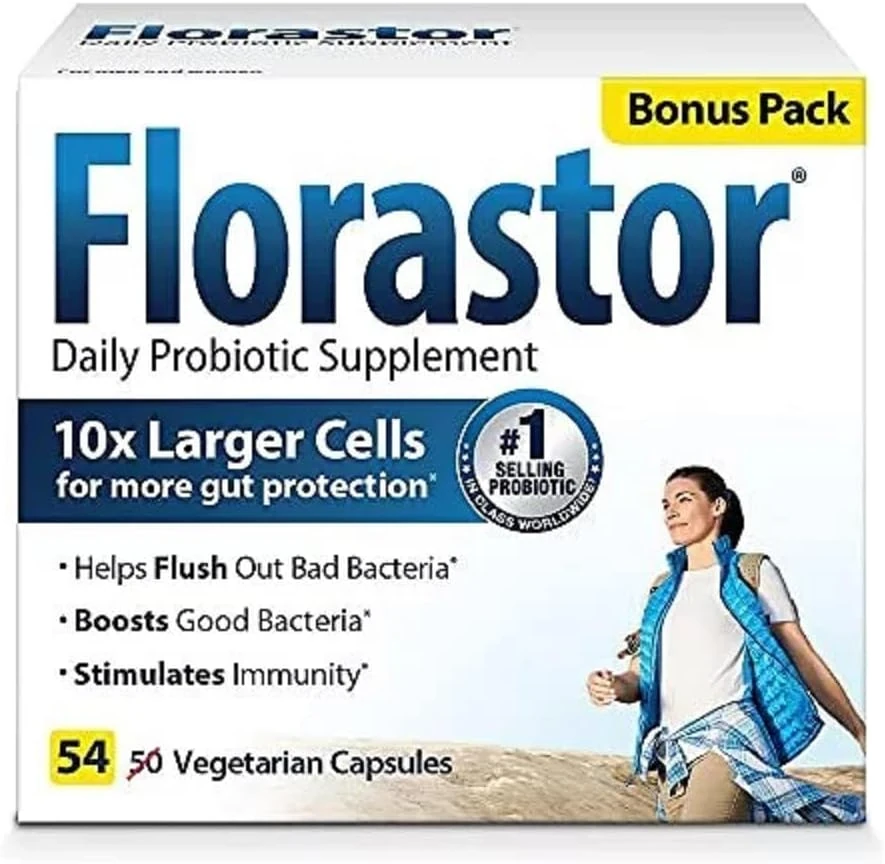 #5 of 11 · Best post-antibiotic✓ Label verified · Supplement Facts read Sep 7, 2026
Real retailer photo, cut out. Label unedited.
Consider it. The yeast antibiotics can't kill — the textbook pick for antibiotic-associated diarrhea. Saccharomyces boulardii CNCM I-745, a probiotic yeast, so antibacterial antibiotics don't touch it — you can take it during a course, not just after.
$36 / month$0.67 / 2-capsule daily dose
Why It Scores 8.0 — And The Label Line Behind Each Number
Strain specificity + clinical match
35% of scoreExact strain matched to a specific, well-evidenced indication. Florastor delivers Saccharomyces boulardii CNCM I-745, the studied form behind the antibiotic-associated-diarrhea data — McFarland 2010 (PMID 20458757) found 8 of 10 adult RCTs showed significant efficacy (pooled RR 0.47 for AAD prevention). Named to the code, matched to the problem. Below a perfect score only because the indication is narrow, not the match.
- Dose
- 500 mg of S. boulardii per 2-capsule serving (250 mg per capsule; the studied form)
- Daily dose
- 2 capsules per day (during/around an antibiotic course)
Survivability to the gut
25% of scoreThe standout mechanism on the entire list. As a yeast, S. boulardii survives stomach acid well AND is naturally resistant to antibacterial antibiotics — so unlike every bacterial pick, it isn't killed by the drug it's taken alongside. The substance hub flags exactly this as S. boulardii's advantage for the AAD use-case. Best-in-class survivability for its specific job.
Formulation completeness
20% of scoreComplete for one job, thin as a daily tool. A single yeast at the studied 250 mg dose with no prebiotic and no supporting bacterial strains — precisely right for antibiotic-associated and acute diarrhea, and precisely wrong if you want broad ecosystem coverage. It isn't a synbiotic like Seed (#1) or a multi-strain blend; it's a targeted single-organism specialist and doesn't pretend otherwise.
- Delivery
- Yeast survives stomach acid well; no enteric coating needed
Third-party testing + transparency
12% of scoreStrong on strain identity — named down to the CNCM I-745 code, so you know you're getting the studied organism that the AAD evidence is built on, not a generic 'S. boulardii.' Florastor is a long-established, clinically-positioned brand for this use. Short of top marks because there's no prominent public COA or NSF certification surfaced for the consumer line.
Value / cost-per-day
8% of scoreRoughly $0.67 per 2-capsule daily dose (~$36/month), mid-pack — pricier per day than budget bacterial blends, but you're buying a yeast specialist, not a commodity. The 50-count bottle is sensible for a course-length or keep-on-hand use rather than indefinite daily dosing. Fair value for the specific antibiotic-recovery job; poor value if misused as a daily generalist.
- Bottle
- 50 capsules (25 servings of 2); shelf-stable (no refrigeration)
- Price
- ~$36/month = ~$0.67 per 2-capsule daily dose
- More Specs
- Organism
- Saccharomyces boulardii CNCM I-745 — a probiotic YEAST, not a bacterium
- Key property
- Antibiotic-resistant — a yeast, so antibacterial antibiotics can't kill it; take alongside a course
- Indication
- Antibiotic-associated diarrhea, traveler's diarrhea, resilience during antibiotics
Label verified. Every figure read from the Supplement Facts photo, Sep 7, 2026.
Marketing Claims Vs. Reality
A yeast — antibiotics can't kill it, so you can take it during a course.
Mechanistically correct and the central differentiator. Saccharomyces boulardii is a yeast, and antibacterial antibiotics have no mechanism to kill yeast — the substance hub explicitly notes this as S. boulardii's advantage for the antibiotic-associated-diarrhea use-case. Unlike every bacterial probiotic here, it can be co-administered with the antibiotic. Real and the reason it's the post-antibiotic pick.
Evidence-backed for antibiotic-associated diarrhea.
Well substantiated for this specific indication. McFarland 2010 (PMID 20458757) found 8 of 10 adult S. boulardii RCTs showed significant efficacy (pooled RR 0.47 for AAD prevention), and McFarland 2006 (PMID 16635227) found probiotics as a class significantly cut antibiotic-associated diarrhea and helped with C. difficile disease. Florastor uses the studied CNCM I-745 strain. Strong indication-specific support — for AAD, not general wellness.
Uses the studied strain Saccharomyces boulardii CNCM I-745.
Florastor names the strain down to the CNCM I-745 code — the specific form behind much of the S. boulardii antibiotic-associated-diarrhea evidence. Strain-level naming is exactly the transparency the category needs, and it's how you confirm you're buying the studied organism rather than a generic yeast. Verifiable from the label.
Shelf-stable — no refrigeration required.
Consistent with the substance hub, which lists S. boulardii among the engineered shelf-stable options that survive without cold storage. A real convenience advantage for a keep-on-hand bottle you reach for on short notice when antibiotics are prescribed. Confirm the storage line on your specific lot, but room-temperature stability is genuine here.
A daily probiotic for everyday digestive health.
Misleading if read as a general-gut-health claim. Florastor's evidence is for antibiotic-associated and acute diarrhea, not broad daily maintenance — and as a yeast it won't colonize the gut with the Lactobacillus/Bifidobacterium bacteria that do everyday microbiome work. It's an excellent specialist for its indication, but 'daily' shouldn't be read as 'everyone's everyday probiotic.'
What Our Test Actually Found
Correction: the label reads 50 capsules and 500 mg per serving, not 54 capsules and 250 mg
An earlier version of this review said the bottle holds 54 capsules and listed the dose as 250 mg per serving. The Supplement Facts panel reads Serving Size: 2 capsules, Servings Per Container: 25, and Saccharomyces boulardii CNCM I-745: 500 mg per serving — that's 50 capsules per bottle (25 servings × 2 capsules) and 250 mg per single capsule, not per serving. We re-read the label on Sep 7, 2026 and corrected the capsule count and the per-serving dose throughout the review.
The yeast is the entire product — and it's a genuinely clever one
Florastor's whole value rests on one biological fact: Saccharomyces boulardii is a yeast, and antibacterial antibiotics can't kill yeast. That's why it's the rare probiotic you can take during an antibiotic course instead of waiting until after, and why the substance hub singles out S. boulardii's antibiotic-resistance as its advantage for the antibiotic-associated-diarrhea use-case. Every bacterial probiotic on our list — Lactobacillus, Bifidobacterium — gets wiped out by the same drug it's meant to coexist with. Florastor doesn't, and that single mechanism is what earns its place on the list.
Own it before you need it — this is a keep-on-hand bottle
The defining feature of the antibiotic-associated-diarrhea use-case is timing: you find out you need a probiotic the moment a doctor writes a prescription, often with no time to research. Florastor being shelf-stable (no fridge, per the substance hub's note on engineered S. boulardii products) makes it the bottle to keep in the medicine cabinet or travel bag for exactly that moment. Start it when you start the antibiotic, space the doses a couple of hours apart, and continue for several days to a week after the course — that's the protective protocol the hub describes.
It's a specialist, not your everyday probiotic
The honest limitation, and the reason this lands at 'consider' rather than 'buy' for most readers: a yeast is the wrong tool for general daily gut health. Florastor won't colonize your gut with the Lactobacillus/Bifidobacterium species that do most of the everyday microbiome work, and its evidence is specifically for antibiotic-associated and acute diarrhea — not broad maintenance. If your goal is general gut health and bloating, a broad bacterial synbiotic like Seed (#1) is the right pick. Use Florastor for the antibiotic episode, and run a bacterial probiotic as your daily.
The AAD evidence is unusually strong for a single strain
Where many probiotic claims rest on class-level or thin single-product data, Florastor's core claim is well-supported. McFarland 2010 (PMID 20458757) reviewed 10 adult S. boulardii RCTs and found 8 of 10 showed significant efficacy, with a pooled relative risk of 0.47 for antibiotic-associated diarrhea — roughly a halving of risk. The broader McFarland 2006 meta-analysis (PMID 16635227) reached the same conclusion for probiotics as a class, including a role against C. difficile disease. For its one indication, Florastor is on solid ground.
Strain naming and acid-survival are real quality signals
Two things separate Florastor from a generic 'S. boulardii' bottle. First, it names the strain down to the CNCM I-745 code — the specific form the evidence is built on, exactly the transparency the category needs. Second, as a yeast it survives stomach acid well without needing the enteric or delayed-release engineering bacterial probiotics rely on. Neither is marketing fluff: strain identity is what ties the product to the trials, and acid-survival is what gets the organism to where it acts. For the antibiotic-recovery job, both matter.
Full analysis: all pros & cons (8), buy if / skip if
- It's a yeast — so unlike every bacterial probiotic here, antibiotics don't kill it, and you can take it during a course, not just after (McFarland 2010; McFarland 2006)
- Uses the specific studied strain S. boulardii CNCM I-745, the form behind the antibiotic-associated-diarrhea evidence
- Strong, indication-specific evidence — 8 of 10 adult RCTs significant, pooled RR 0.47 for AAD prevention (McFarland 2010)
- Shelf-stable and resilient — survives stomach acid well and needs no fridge, ideal to keep on hand
- Clear, single-purpose tool: the textbook choice for anyone starting a round of antibiotics
- Purpose-built for antibiotic-associated and acute diarrhea — not a broad daily gut-maintenance probiotic for most people
- A yeast is the wrong tool if your goal is to colonize the gut with Lactobacillus/Bifidobacterium for general balance
- Single organism with no prebiotic — not a complete synbiotic like Seed (#1) or Ritual (#3)
- You've just been prescribed antibiotics and want to cut the risk of antibiotic-associated diarrhea
- You want a probiotic you can take during the course, not only after — a yeast antibiotics can't kill
- You want the specific studied strain (S. boulardii CNCM I-745) behind the AAD evidence
- You want a shelf-stable, acid-resistant bottle to keep on hand for the next prescription
- You want a broad daily probiotic for general gut health — a yeast won't colonize Lactobacillus/Bifidobacterium; use Seed (#1)
- Your goal is IBS-type pain and bloating — buy the studied bacterial strain, Align's B. infantis 35624
- You want a synbiotic with a prebiotic and multi-strain coverage — Florastor is a single-organism specialist
Saccharomyces boulardii CNCM I-745, a probiotic yeast, so antibacterial antibiotics don't touch it — you can take it during a course, not just after. Strong, indication-specific evidence for antibiotic-associated diarrhea (McFarland 2010), shelf-stable, and acid-resistant. But it's a single-purpose tool: a yeast won't colonize your gut with Lactobacillus/Bifidobacterium, so it's the wrong pick for general daily gut health.
Florastor is the probiotic to own before you need it, because the moment you need it tends to arrive without warning: a doctor hands you a course of antibiotics. Here's the catch almost everyone misses — the standard bacterial probiotics (Lactobacillus, Bifidobacterium) get killed by the same drug they're meant to coexist with, so taking your usual probiotic alongside antibiotics largely wastes it. Florastor sidesteps the problem entirely by not being a bacterium at all. It's Saccharomyces boulardii CNCM I-745, a probiotic yeast, and antibacterial antibiotics have no mechanism to kill a yeast. That single biological fact is the whole product: it's why S. boulardii has the strongest evidence for antibiotic-associated diarrhea, why you can take it during the course rather than after, and why it survives stomach acid and ships shelf-stable. The trade-off is that Florastor is a specialist, not a daily generalist — a yeast won't colonize your gut with the bacteria that do everyday microbiome work. Here's the full breakdown of when it's exactly right, and when it isn't.
The textbook antibiotic-recovery pick — a specialist, not a daily.

Florastor is the answer to one situation that catches everyone out: you've just been prescribed antibiotics. Standard bacterial probiotics get killed by the same drugs, but Florastor is Saccharomyces boulardii — a yeast — so it survives, which is exactly why it's the evidence-backed option for antibiotic-associated diarrhea (McFarland 2010, PMID 20458757) and why you can take it during the course rather than waiting until after. It's shelf-stable, acid-resistant, and named to the studied CNCM I-745 strain. For the antibiotic-recovery job specifically, it's the clearest pick on the shelf, and the bottle worth owning before you need it. The reason it lands at 'consider' rather than 'buy' is that it's a specialist, and most people most of the time aren't on antibiotics. Outside of antibiotic recovery or acute/traveler's diarrhea, a yeast won't colonize your gut with the Lactobacillus/Bifidobacterium species that do everyday microbiome work — so for general gut health and bloating, a broad bacterial synbiotic like Seed (#1) is the right call, and for IBS-type pain it's the studied bacterial strain in Align. The smart play is to keep Florastor on hand for the next prescription, run a bacterial probiotic as your daily, and reach for the yeast precisely when — and only when — antibiotics enter the picture.
If This Doesn’t Fit — Try These
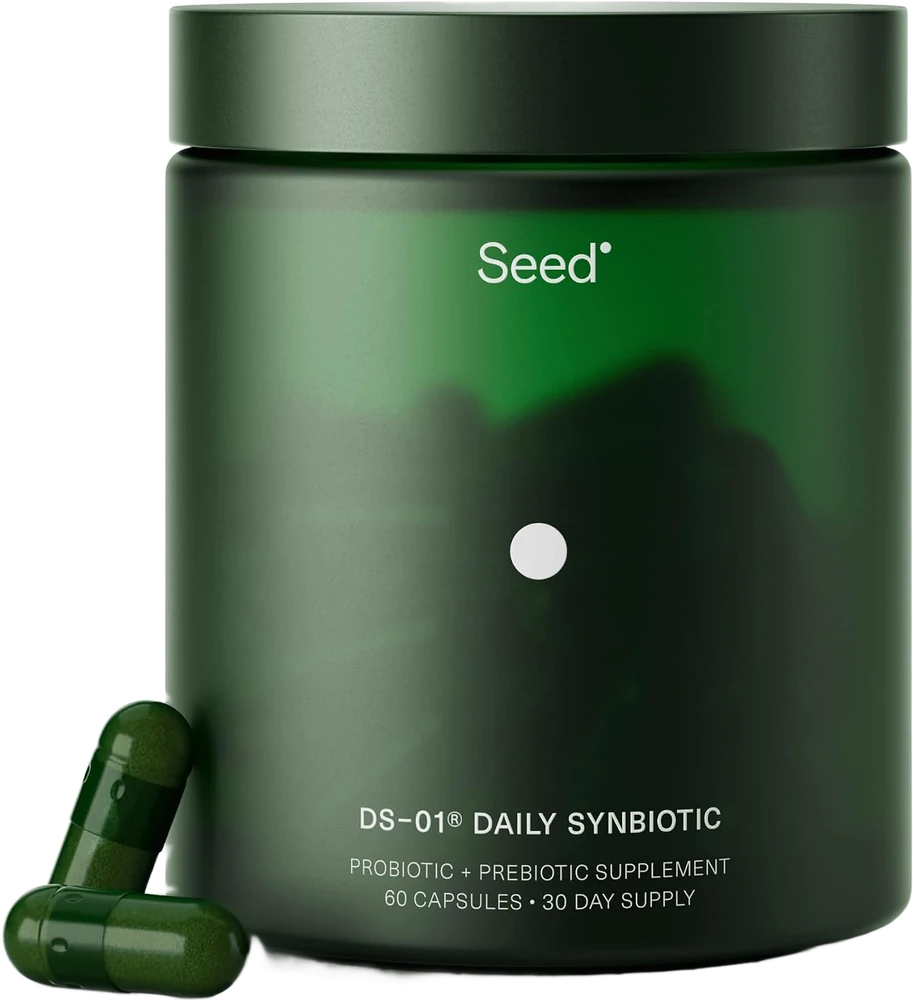 01
01Seed DS-01
If you want one probiotic for general gut health, bloating, and a credible daily synbiotic, Seed DS-01 is the pick and the benchmark the rest of this list is measured against.
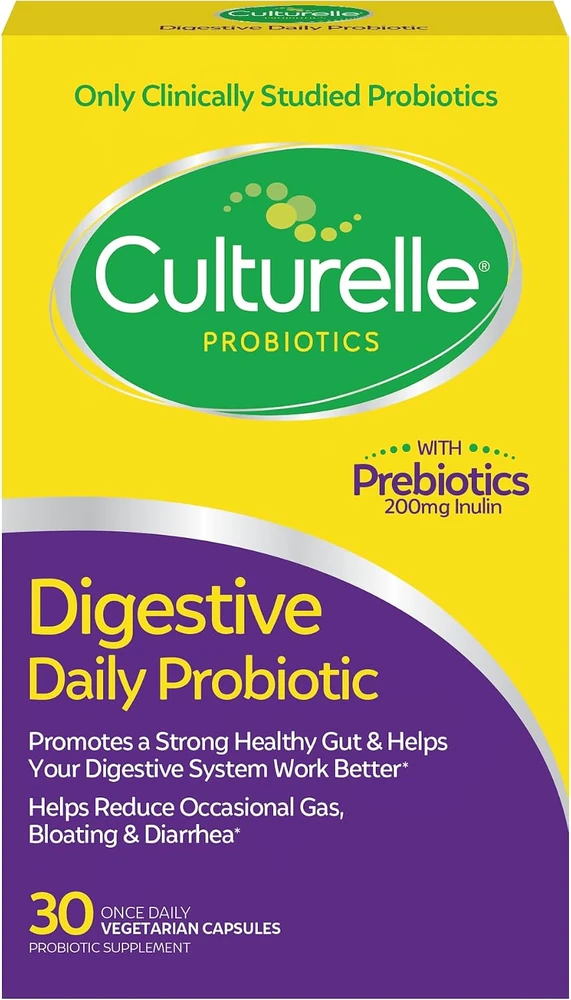 06
06Culturelle Daily Probiotic
Culturelle is the pick when you want the most-studied strain on earth, simply and affordably.
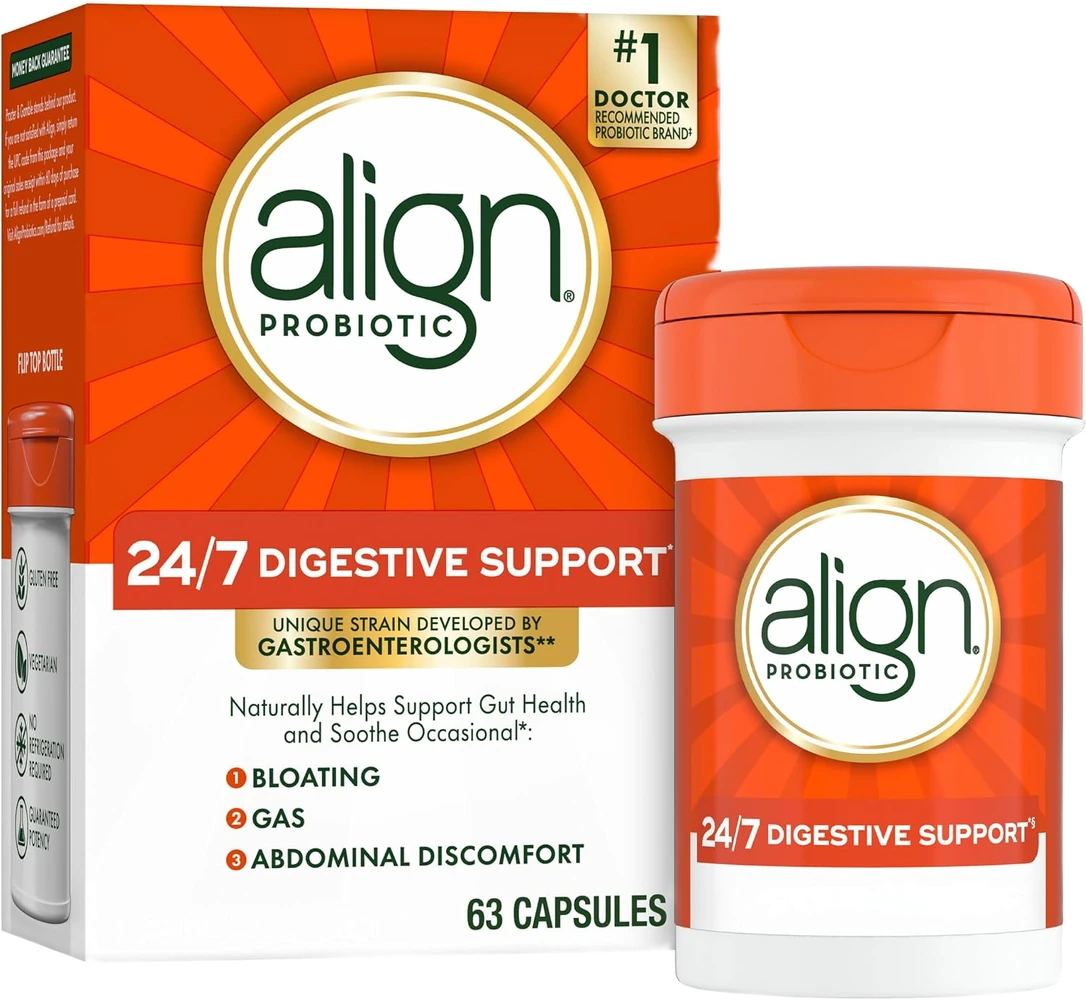 04
04Align Probiotic 24/7
Align is the answer to one specific question: 'I have IBS-type cramping, bloating, and irregularity — what's the evidence-backed strain?' That strain is Bifidobacterium 35624 (Bifantis), and Align is how you buy it.
Quick Answers
Can I really take Florastor at the same time as my antibiotic?
Yes — and that's the entire point of choosing a yeast. Saccharomyces boulardii is a yeast, not a bacterium, so antibacterial antibiotics have no mechanism to kill it; the substance hub flags this as S. boulardii's practical edge for exactly this use. Every bacterial probiotic on our list (Lactobacillus, Bifidobacterium) gets wiped out by the same drug it's meant to coexist with, which is why those are 'after the course' tools at best. Florastor isn't: McFarland 2010 (PMID 20458757) and McFarland 2006 (PMID 16635227) both support S. boulardii taken alongside antibiotics to cut antibiotic-associated diarrhea. Start it when you start the antibiotic and continue for several days to a week after the course ends.
Is Florastor a good everyday probiotic for general gut health?
No — and this is the honest limitation. Florastor is a single-purpose tool for antibiotic-associated and acute diarrhea, not a broad daily gut-maintenance probiotic. If your goal is to support the general Lactobacillus/Bifidobacterium ecosystem — the bacteria that do most of the day-to-day microbiome work — a yeast is the wrong organism, because it doesn't colonize the gut with those bacterial species. For everyday gut health and bloating, a broad bacterial synbiotic like Seed DS-01 (#1) is the right pick. The smart move is to keep Florastor on hand as your 'antibiotics just got prescribed' bottle, and run a separate bacterial probiotic as your daily.
What's the evidence that Florastor actually prevents antibiotic-associated diarrhea?
It's among the strongest single-strain probiotic evidence bases there is. McFarland 2010 (PMID 20458757) reviewed 10 adult RCTs of S. boulardii for antibiotic-associated diarrhea and found 8 of 10 showed significant efficacy, with a pooled relative risk of 0.47 for AAD prevention — roughly halving the risk. The broader McFarland 2006 meta-analysis (PMID 16635227) found probiotics as a class significantly reduced AAD and helped with Clostridioides difficile disease, and Florastor uses the specific studied strain (CNCM I-745) behind much of that yeast evidence. That's a well-substantiated, indication-specific claim — for antibiotic-associated diarrhea, not for general wellness.
Does Florastor need refrigeration?
No — it's shelf-stable and needs no fridge, which is a genuine convenience advantage. The substance hub notes that S. boulardii is one of the engineered shelf-stable options, alongside spore-formers and protectively-coated products, that survive without cold storage. That makes Florastor easy to keep in a travel bag or medicine cabinet for the next time a doctor hands you a prescription — exactly when you need it on short notice. It also survives stomach acid well as a yeast. Just confirm the storage line on your specific lot's label, since the label is always the source of truth over marketing, but Florastor is built for room-temperature stability.
Should I keep taking Florastor after I finish my antibiotics?
Continue for several days to about a week after the course, then stop — that matches how the protective use is framed. The substance hub's guidance is to start the probiotic when you start the antibiotic, space the doses a couple of hours apart, and continue for several days to a week after the course finishes, since the disruption to the microbiome lasts a little beyond the last antibiotic dose. After that short tail, there's no strong reason to keep taking a yeast specialist day after day for general health — that's not what it's for. If you want ongoing daily gut support once the antibiotic episode is behind you, switch to a broad bacterial synbiotic like Seed (#1).
Sources & Further Reading
3 peer-reviewed sources, each linked to PubMed
- [1] McFarland 2010 PMID 20458757 — Systematic review and meta-analysis of Saccharomyces boulardii in adult patients. Reviewed 10 adult RCTs of Saccharomyces boulardii for antibiotic-associated diarrhea: 8 of 10 showed significant efficacy, pooled relative risk 0.47 for AAD prevention. Establishes S. boulardii — a yeast, so antibiotic-resistant — as a leading strain for the antibiotic-recovery use-case, and the direct evidence behind Florastor's core claim.
- [2] McFarland 2006 PMID 16635227 — Meta-analysis of probiotics for the prevention of antibiotic associated diarrhea and the treatment of Clostridium difficile disease. Pooled the RCTs and found probiotics significantly reduced the risk of antibiotic-associated diarrhea and helped in the treatment/prevention of Clostridium difficile disease. The cornerstone meta-analysis behind probiotics' strongest indication — the context in which an antibiotic-resistant yeast like Florastor's S. boulardii is the targeted choice during a course.
- [3] Szajewska 2015 PMID 26365389 — Systematic review with meta-analysis: Lactobacillus rhamnosus GG in the prevention of antibiotic-associated diarrhoea in children and adults. Meta-analysis of 12 RCTs (1,499 participants): Lactobacillus rhamnosus GG reduced the risk of antibiotic-associated diarrhea from 22.4% to 12.3% versus control. The other best-studied AAD option — a bacterium, so unlike Florastor's yeast it's best continued after the course rather than co-administered during it.
Affiliate disclosure: every Amazon link uses our Associates tag (superachieverclub-20). We earn a small commission at no cost to you; it funds independent reviews. We never accept payment to change a ranking.