
Culturelle Daily Probiotic Review
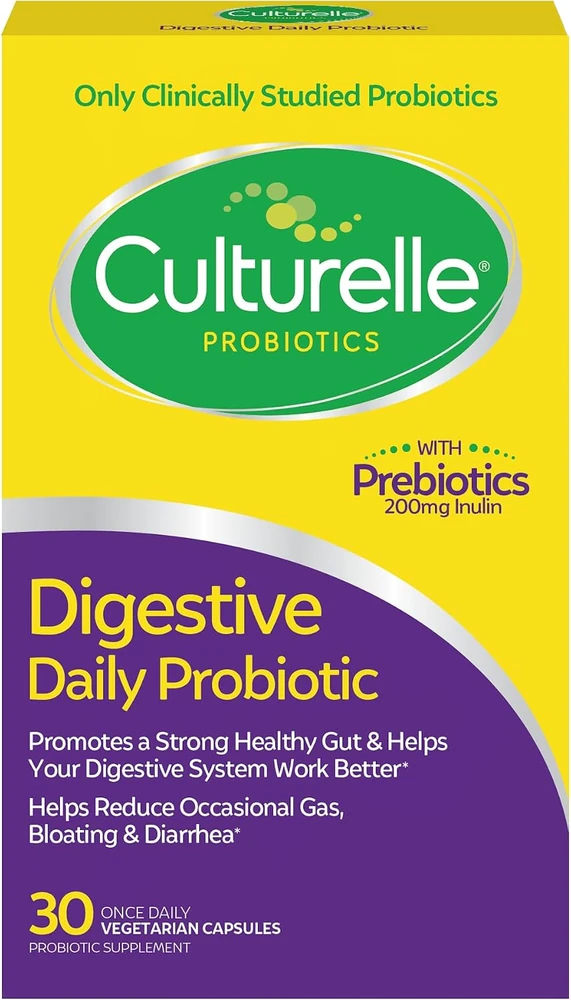 #6 of 11 · Most-studied strain✓ Label verified · Supplement Facts read Oct 18, 2026
Real retailer photo, cut out. Label unedited.
Consider it. The cleanest, most affordable way to get the most-studied strain. A single named strain — LGG, the most-researched probiotic in the world — at a sensible 10B CFU, with 200 mg of inulin, at ~$20/month.
$20 / month$0.67 / 1-capsule daily dose
Why It Scores 7.8 — And The Label Line Behind Each Number
Strain specificity + clinical match
35% of scoreCentered on LGG — the most-studied single probiotic strain, named by code, with real antibiotic-associated-diarrhea evidence (Szajewska 2015). You know precisely what you're taking and why, the ideal of the strain-specificity principle. Loses points only for breadth: a single strain is narrower than a multi-indication panel, and LGG isn't the single best IBS match (B. infantis 35624 is).
- Strain
- Lactobacillus rhamnosus GG (LGG) — the most-studied single probiotic strain
- Daily dose
- 1 capsule/day
Survivability to the gut
25% of scoreA plain hydroxypropyl methylcellulose capsule: the panel prints no delayed-release, enteric or capsule-in-capsule design, and no promise that the 10 billion CFU holds through expiration (we looked for one in every gallery frame and found none). That puts it at the plain-capsule baseline, behind the engineered picks (Seed's capsule-in-capsule, Ritual's delayed-release) on the actual delivery mechanism, and level with other plain-capsule picks that print no potency-through-date statement.
Formulation completeness
20% of scoreA genuine synbiotic — LGG plus 200 mg of chicory-root inulin to feed it — but a deliberately no-frills one: single strain, simple prebiotic, no postbiotic. Complete enough as a focused tool; one tier below Ritual's 3-in-1 and the broad multi-strain panels on completeness. The simplicity is the point, not an oversight.
- Delivery
- Standard capsule (hydroxypropyl methylcellulose, vegetable magnesium stearate, titanium dioxide as color); no delayed-release design printed
Third-party testing + transparency
12% of scoreA single named strain identified by its GG designation, with its weight (40 mg) and CFU printed, is itself a strong transparency signal — there's nothing hidden in a proprietary blend — and the gallery lists what the product is free from (wheat, dairy, soy, eggs, peanuts, tree nuts, artificial dyes). Short of the top tier because no certification and no potency-through-expiration statement is printed, and no testing detail is given (compare the NSF certification on Garden of Life, or Ritual's ingredient traceability). The capsule does carry titanium dioxide as a color.
- Testing
- No certification or testing detail printed in the gallery; free-from tile lists wheat, dairy, soy, eggs, peanuts, tree nuts and artificial dyes
Value / cost-per-day
8% of scoreAbout $0.67/day ($20/month), broadly available, no subscription — excellent value for the single most-studied strain. You're paying a fair price for a well-characterized organism, not a premium for engineering or breadth. One of the strongest value propositions on the list.
- Bottle
- 30 capsules (30-day supply at 1/day)
- Price
- ~$20/month = ~$0.67 per once-daily capsule, broadly available
- More Specs
- Potency
- 10 billion CFU per capsule (40 mg L. rhamnosus GG); the panel does not say whether the count is at manufacture or at expiration
- Synbiotic
- Inulin (chicory root extract) 200 mg included to feed the strain
Label verified. Every figure read from the Supplement Facts photo, Oct 18, 2026.
Marketing Claims Vs. Reality
Contains LGG — the most-studied probiotic strain.
Culturelle is built on Lactobacillus rhamnosus GG, identified by code, which is genuinely the most-researched single probiotic strain, with documented antibiotic-associated-diarrhea evidence (Szajewska 2015, PMID 26365389). Verifiable and the central, accurate reason to buy this product.
Supports digestive health and immune health.
LGG has real digestive-support evidence and a documented role around antibiotic-associated diarrhea (Szajewska 2015); 'immune health' is a softer, broader claim that the hub-verified sources don't specifically establish for this strain. Accurate on digestion; the immune framing is the kind of general wellness claim to treat with appropriate skepticism.
Potency guaranteed through expiration.
An earlier version of this review credited Culturelle with committing to the stated 10B CFU through the end of shelf life. We re-read all eight gallery frames, including the Supplement Facts panel, and none of them prints that promise: the panel gives 10 billion CFU (40 mg) of LGG per capsule with no date basis, and the gallery says only that the packaging maintains potency. So we treat it as an unverified marketing claim and give it no score credit.
Includes an inulin prebiotic to support the strain.
The panel prints inulin (chicory root extract) at 200 mg, making Culturelle a true synbiotic (probiotic + prebiotic) rather than bacteria alone. Verifiable — a simple but genuine completeness feature.
Free from common allergens.
The gallery's free-from tile lists sugar, wheat, dairy, eggs, soy, peanuts, tree nuts and artificial dyes (and Non-GMO). A gluten-free statement is not printed in the gallery frames we read, so we do not repeat it. Note that the capsule lists titanium dioxide as a color.
What Our Test Actually Found
One named strain by code is the entire value proposition
Culturelle's pitch is simple and honest: it gives you LGG — the most-studied single probiotic strain — identified by code, and nothing else to muddy it. That directness is the strength. You know precisely what you're taking and can match it to the literature (LGG has real AAD evidence — Szajewska 2015), instead of guessing what's inside a proprietary blend. In a category built on strain-specificity, a single named studied strain is the cleanest possible product. The trade-off is breadth, not honesty.
10B CFU is appropriate — don't read it as underpowered
Next to 50-60B blends, Culturelle's 10B looks small, but that's a misread. Those products spread their billions across mostly-unstudied strains; Culturelle concentrates a fair, strain-appropriate dose on the single most-researched organism. The category proves bigger isn't better (Align's B. 35624 works at 1B). Judge Culturelle on the strain, not the count — if you dismiss it on billions alone, you're shopping the wrong axis.
A sensible antibiotic companion — but Florastor is more foolproof
LGG is one of the two best-evidenced strains for antibiotic-associated diarrhea (Szajewska 2015; class effect in McFarland 2006), so Culturelle is a reasonable companion around antibiotics: start with the course, space doses a couple of hours from the drug, continue a few days after. The honest caveat is that LGG is a bacterium, so timing matters — Florastor's S. boulardii is a yeast antibiotics can't kill, making it the more foolproof antibiotic-companion. Culturelle is the pick when you want LGG specifically; Florastor when you want the yeast's timing-proof advantage.
Plain capsule is the honest limitation
Culturelle has no delivery engineering and prints no potency-through-expiration promise — it's a standard capsule with no delayed-release or acid-resistant design. That's the main thing you give up versus pricier picks: Seed's capsule-in-capsule (#1) and Ritual's delayed-release (#3) actively shield the strains through stomach acid, where Culturelle prints nothing about survival. It's not a dealbreaker for a well-characterized strain at a fair price, but it's a real difference, and taking it consistently is how you get the value.
Narrow by design — the focused, value alternative to a panel
Culturelle is deliberately one strain at a sensible dose, which makes it the focused, affordable counterpoint to the broad panels. If you want LGG specifically — for general digestive support or as an antibiotic companion — it's the cleanest, cheapest way to get it. If you want broad multi-strain ecosystem support, Seed (#1) or a larger multi-strain blend is the better fit; if you want the most complete formulation, Ritual (#3). The decision is breadth vs. focus, and Culturelle owns the focused-value corner.
Full analysis: all pros & cons (7), buy if / skip if
- Centered on LGG, the strain with the deepest single-strain research base — including digestive support and a role in antibiotic-associated diarrhea
- Short, readable label: one strain with its GG designation, 40 mg and 10 billion CFU, plus 200 mg of inulin
- Single, named, studied strain means you know precisely what you're taking and why
- Reasonable price and broadly available — easy to find and sustain
- Single-strain LGG is narrower than a multi-strain synbiotic if you want broad coverage
- 10B CFU and a simple inulin prebiotic make it a no-frills tool — fine, but not a complete 3-in-1 like Ritual (#3)
- Plain capsule with no delayed-release engineering, and no promise of potency through expiration printed on the panel
- You want the single most-studied strain (LGG), simply and affordably
- You value a single named, studied strain over a high-CFU mystery blend
- You want a sensible antibiotic companion — LGG has real antibiotic-associated-diarrhea evidence
- You want a broadly available, easy-to-sustain product with a short, readable label
- You want broad multi-strain coverage — a single strain is narrow; Seed (#1) or a larger multi-strain blend cover more
- You want the most complete formulation — Ritual's 3-in-1 adds a prebiotic and postbiotic on named strains
- Your dominant problem is IBS-type pain and bloating — the matched strain is Align's B. infantis 35624
A single named strain — LGG, the most-researched probiotic in the world — at a sensible 10B CFU, with 200 mg of inulin, at ~$20/month. No proprietary blend, no CFU theater. The right pick if you want LGG specifically for general digestive support or as an antibiotic companion. It's narrow by design and a no-frills tool — for broad coverage, Seed (#1); for a complete 3-in-1, Ritual (#3). Its panel prints no promise of potency through expiration.
Culturelle is the pick when you want the most-studied probiotic strain on earth, simply and affordably. LGG — Lactobacillus rhamnosus GG — is the workhorse of the probiotic literature, with a deeper single-strain research base than any other organism in the category, including real antibiotic-associated-diarrhea evidence. Culturelle delivers it the honest way: one named, studied strain identified by code, dosed at a sensible 10B CFU, with 200 mg of inulin to feed it. There's no proprietary blend, no CFU theater, no mystery. It's deliberately narrow — one strain, a sensible dose — and it doesn't have the survivability engineering or 3-in-1 completeness of the premium picks, and its panel makes no promise about potency through expiration. But if you want LGG specifically, this is the cleanest, most affordable way to get it. Here's the full breakdown.
The cleanest, most affordable way to get the most-studied strain.

Culturelle is the pick when you want LGG — the most-researched probiotic strain on earth — simply and affordably. It delivers that strain the honest way: one named, studied organism identified by code, at a sensible 10B CFU, with 200 mg of inulin to feed it. No proprietary blend, no CFU theater, no mystery. In a category built on strain-specificity, a single named studied strain at a fair price is one of the cleanest products you can buy, and LGG is an excellent strain to build around — strong for general digestive support and a sensible antibiotic companion. Be clear about what it isn't. It's deliberately narrow — one strain, a sensible dose — and a no-frills tool: a plain capsule with no delivery engineering and no potency-through-expiration promise on the panel. If you want broad multi-strain coverage, move up to Seed (#1) or a larger multi-strain blend; if you want the most complete formulation, Ritual's 3-in-1; and if your dominant problem is IBS-type pain and bloating, the matched strain is Align's B. infantis 35624. But if you want LGG specifically — and you should consider it as a default for general digestive support and around antibiotics — this is the cleanest, cheapest way to get it.
If This Doesn’t Fit — Try These
 01
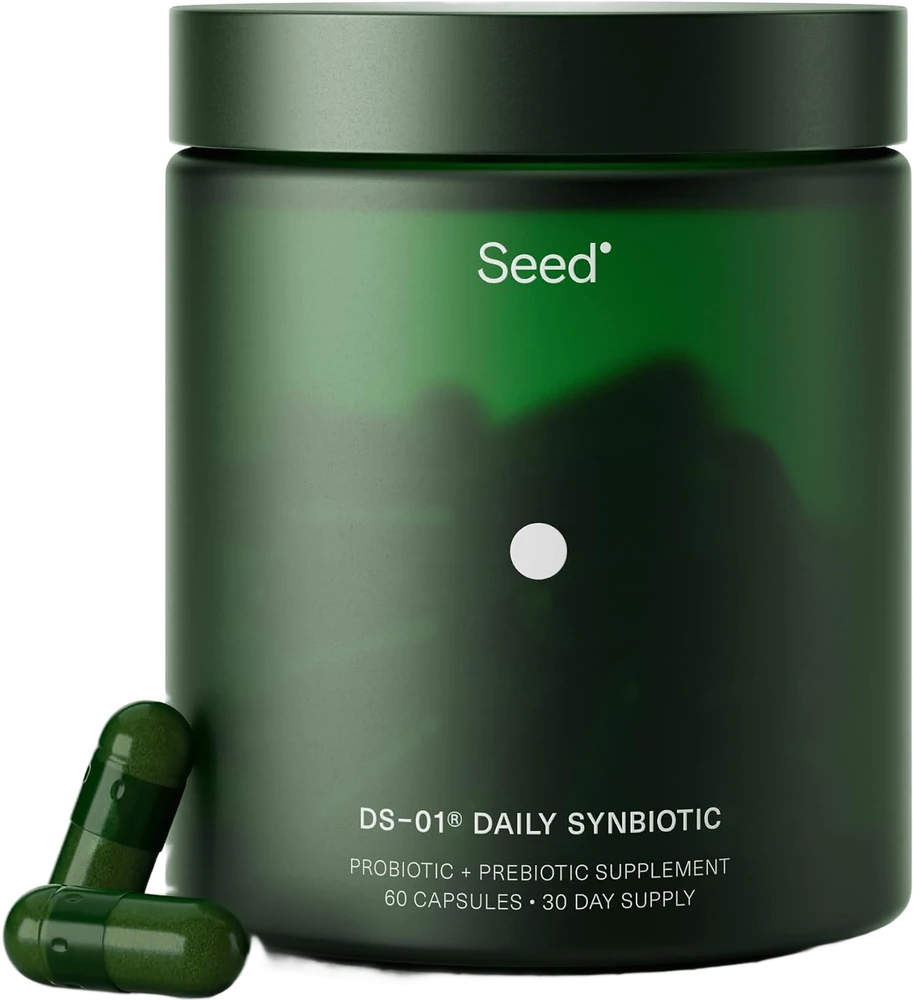
Seed DS-01
If you want one probiotic for general gut health, bloating, and a credible daily synbiotic, Seed DS-01 is the pick and the benchmark the rest of this list is measured against.
 03
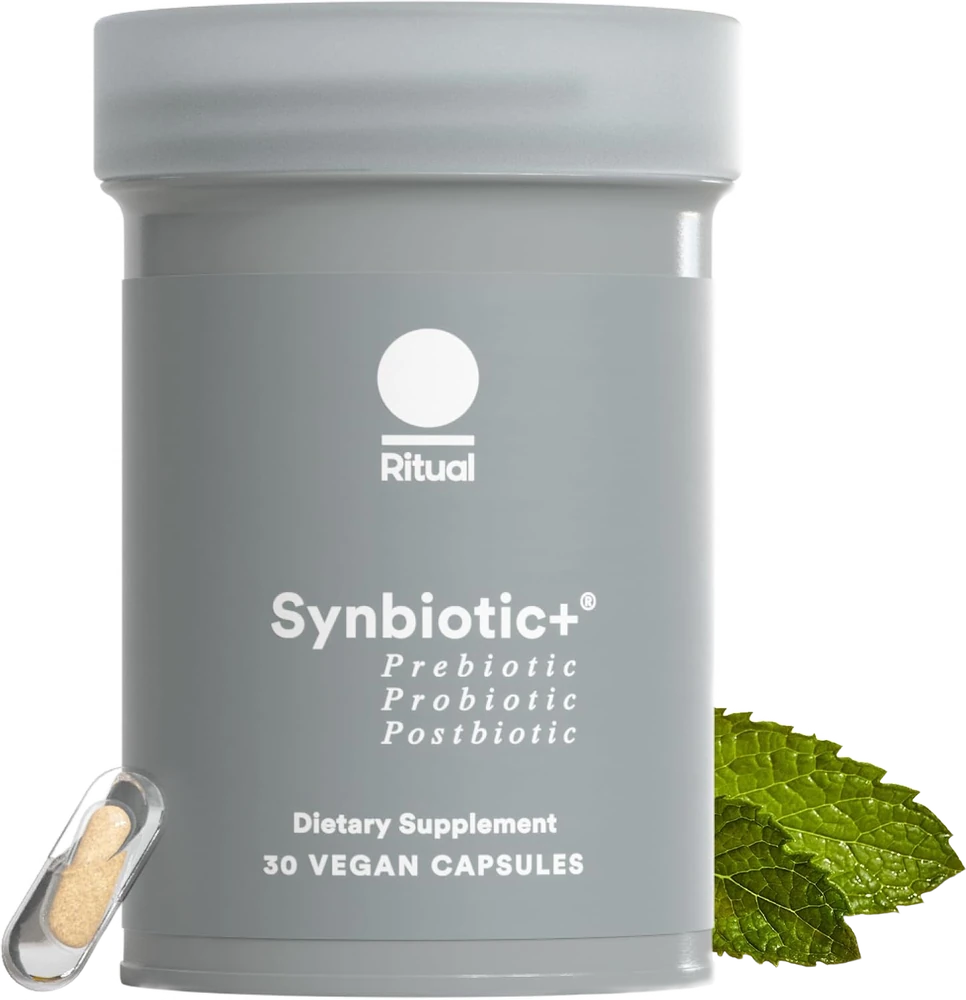
Ritual Synbiotic+
Ritual Synbiotic+ is for the buyer who wants the most complete formulation on paper and total ingredient transparency.
 05
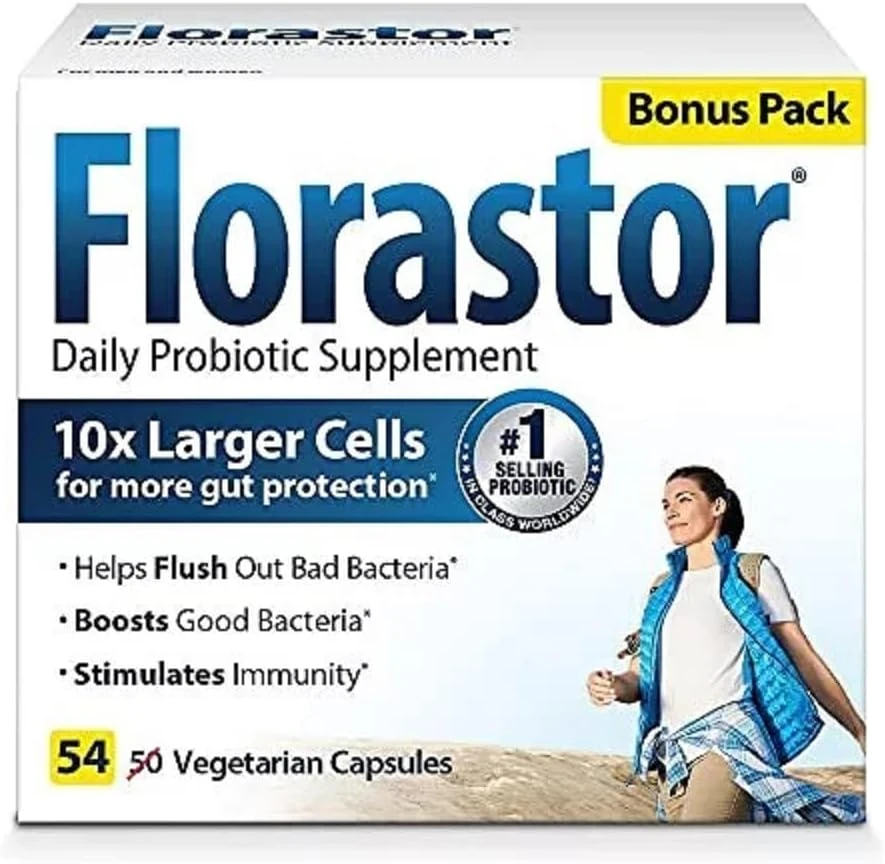
Florastor Daily Probiotic
Florastor is the pick for one situation that catches everyone out: you've just been prescribed antibiotics.
Quick Answers
What is LGG, and why is it called the most-studied strain?
LGG is Lactobacillus rhamnosus GG — a specific strain identified by its code (the 'GG' is the strain designation, after the researchers Gorbach and Goldin). It's the single most-researched probiotic strain in the world, with a deep literature spanning digestive support and antibiotic-associated diarrhea. Szajewska 2015 (PMID 26365389) — a meta-analysis of 12 RCTs — found LGG cut antibiotic-associated diarrhea risk from 22.4% to 12.3%, making it one of the two best-evidenced strains for that use. The key point: 'Lactobacillus rhamnosus' generically is not the same as 'Lactobacillus rhamnosus GG.' Culturelle delivers the specific studied strain by code, which is exactly what the strain-specificity principle demands — you're buying the organism the trials actually used.
Is 10 billion CFU enough?
Yes — 10B is a sensible, strain-appropriate dose for LGG, and the number isn't the reason to buy it; the named studied strain is. The recurring lesson of this category is that a bigger CFU of unmatched strains does nothing extra (B. infantis 35624 relieves IBS at just 1×10⁸ CFU/day — Whorwell 2006). Culturelle's 10B of LGG is an honest dose of a well-characterized strain. Don't compare it to a 50-60B blend and conclude it's underpowered — those products spread their billions across mostly-unstudied strains, while Culturelle concentrates a fair dose on the single most-researched one. Buy it for the strain, not the count.
Can I take Culturelle when I'm on antibiotics?
Yes — LGG is one of the two best-evidenced strains for antibiotic-associated diarrhea, so Culturelle is a sensible companion around antibiotics (Szajewska 2015, PMID 26365389; the class effect is confirmed in McFarland 2006, PMID 16635227). Practical protocol: start it when you start the antibiotic, space the doses a couple of hours apart so the drug doesn't kill the probiotic on contact, and continue for several days to a week after the course. One honest caveat: LGG is a bacterium, so the spacing matters — unlike Florastor's S. boulardii, a yeast that antibiotics can't kill and can be taken without timing concerns. If you want the most foolproof antibiotic-companion, Florastor has the edge; if you want LGG specifically, Culturelle is the clean, affordable way to get it.
Why choose Culturelle over a broad multi-strain probiotic?
Choose it when you specifically want LGG, simply and affordably, rather than broad coverage. Culturelle is deliberately narrow: one named strain, a sensible dose, 200 mg of inulin — no proprietary blend, no CFU theater. That's a strength if your goal is the most-studied single strain (great for general digestive support and a sensible antibiotic companion). It's a limitation if you want broad multi-strain ecosystem support, in which case Seed's documented 24-strain panel (#1) or Physician's Choice's high-CFU blend is the better fit. The decision is about breadth vs. focus: Culturelle is the focused, transparent, value pick for one excellent strain.
Does Culturelle guarantee its 10 billion CFU through expiration?
Not on anything we could read. The Supplement Facts panel prints 10 billion CFU of Lactobacillus rhamnosus GG (40 mg) per capsule, and none of the product's gallery photos says whether that count is measured at manufacture or at the end of shelf life; the gallery only says the packaging maintains potency. This matters because probiotic cells are alive and degrade over time, so a count printed without a date can be higher than what is viable when you swallow it months later. We earlier credited Culturelle with a through-expiration guarantee; because it is not printed on the panel, we removed that credit and lowered the survivability and transparency scores. For comparison, NOW Probiotic-10 prints on its bottle that it is formulated to deliver its stated potency through the Best By date.
Does Culturelle help with IBS?
It can contribute to general digestive support, but for IBS specifically the single best-evidenced strain is a different one. Ford 2014 (PMID 25070051) shows probiotics as a class improve IBS symptoms, and LGG is a well-studied general digestive strain, so Culturelle may help some people. But the landmark single-strain IBS result is Whorwell 2006 (PMID 16863564): Bifidobacterium infantis 35624 at 1×10⁸ CFU/day relieved IBS pain and bloating — and that strain is sold as Align. So if your dominant problem is IBS-type cramping and bloating, the matched strain (Align) is the more targeted choice; Culturelle is the pick when you want LGG specifically for general digestive support or as an antibiotic companion.
Sources & Further Reading
3 peer-reviewed sources, each linked to PubMed
- [1] Szajewska 2015 PMID 26365389 — Systematic review with meta-analysis: Lactobacillus rhamnosus GG in the prevention of antibiotic-associated diarrhoea in children and adults. Meta-analysis of 12 RCTs (1,499 participants): Lactobacillus rhamnosus GG reduced antibiotic-associated diarrhea risk from 22.4% to 12.3% versus control. The direct strain-specific evidence behind Culturelle — the studied strain it delivers, and why it's a sensible antibiotic companion.
- [2] McFarland 2006 PMID 16635227 — Meta-analysis of probiotics for the prevention of antibiotic associated diarrhea and the treatment of Clostridium difficile disease. Pooled meta-analysis: probiotics significantly reduced antibiotic-associated diarrhea and helped prevent/treat C. difficile disease. The cornerstone class-level evidence for the antibiotic use-case — context for LGG (Culturelle's strain) as one of the best-evidenced options.
- [3] Whorwell 2006 PMID 16863564 — Efficacy of an encapsulated probiotic Bifidobacterium infantis 35624 in women with irritable bowel syndrome. RCT in 362 women: B. infantis 35624 at 1×10⁸ CFU/day relieved IBS pain and bloating. The proof that the right CFU is strain-dependent — the principle behind Culturelle's sensible 10B dose, and the reason an IBS-dominant buyer should consider Align instead.
Affiliate disclosure: every Amazon link uses our Associates tag (superachieverclub-20). We earn a small commission at no cost to you; it funds independent reviews. We never accept payment to change a ranking.