
BioGaia Protectis Chewable Review
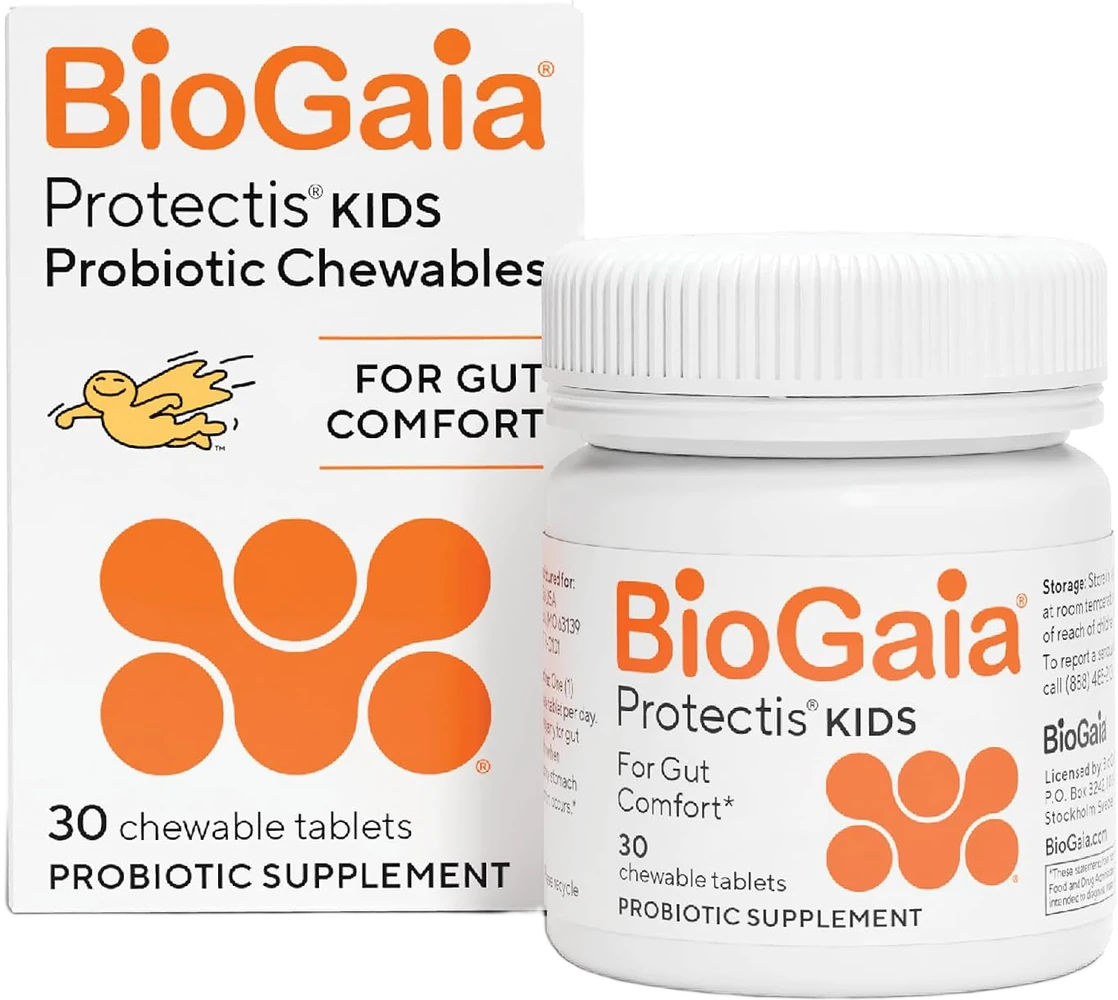 #9 of 11 · Best single-strain specialist✓ Label verified · Supplement Facts read Sep 7, 2026
Real retailer photo, cut out. Label unedited.
Consider it. A clean single-strain chewable — L. reuteri DSM 17938 and nothing else. A focused, well-characterized single strain (L. reuteri DSM 17938) at its studied 100M-CFU dose, in a shelf-stable chewable that's easy for sensitive stomachs and pill-averse buyers.
$18 / month$0.60 / 1 chewable tablet
Why It Scores 6.9 — And The Label Line Behind Each Number
Strain specificity + clinical match
35% of scoreA single, well-characterized strain delivered transparently — Lactobacillus reuteri DSM 17938 at its studied low dose, named to the code from the brand that researches it. That strain-level transparency is exactly what the substance hub prizes. Held back because this exact strain's specific trials aren't in our verified citation base, and because a single strain is narrow coverage versus a documented multi-strain panel.
- Strain
- Limosilactobacillus reuteri DSM 17938 — a single, specific well-characterized strain
- Daily dose
- 1 chewable tablet per day
Survivability to the gut
25% of scoreShelf-stable, which is a real plus — but the chewable format has no enteric or delayed-release engineering to protect the organisms past stomach acid, the failure mode the hub flags. It scores ahead of refrigeration-dependent picks on stability and convenience, but behind the engineered-delivery picks (Seed's capsule-in-capsule #1, the delayed-release picks) on actually getting organisms to the colon alive.
Formulation completeness
20% of scoreThe lowest-coverage formulation on the list, by design. A single strain at 100M CFU with no prebiotic — complete for the narrow want of taking exactly L. reuteri DSM 17938, but thin as a general tool. No multi-strain breadth like Renew Life, no synbiotic prebiotic like Seed (#1) or Culturelle. It's a precision instrument, not a complete everyday probiotic.
Third-party testing + transparency
12% of scoreA genuine strength. The strain is named down to the DSM 17938 code, and BioGaia is the brand that researches L. reuteri — so you know precisely what you're taking. Strain-level transparency is the quality signal the hub cares about, and BioGaia clears it well. Short of top marks only for the absence of a prominent public COA or NSF certification surfaced for the consumer line.
Value / cost-per-day
8% of scoreRoughly $0.60 per chewable tablet (~$18/month), mid-pack — reasonable for a single named specialist strain in a convenient format, though you're paying for the format and the brand's strain rather than broad coverage. The 30-count bottle is a clean 30-day supply. Fair value for the specific want; poor value if bought expecting broad everyday gut support.
- Bottle
- 30 chewable tablets (30-day supply at 1/day)
- Price
- ~$18/month = ~$0.60 per chewable tablet
- More Specs
- Potency
- 100 million CFU (the strain's studied dose — intentionally low)
- Format
- Chewable tablet — easy for sensitive stomachs and non-capsule-takers
- Storage
- Shelf-stable — no refrigeration required
- Synbiotic
- No prebiotic — a single-strain probiotic only
Label verified. Every figure read from the Supplement Facts photo, Sep 7, 2026.
Marketing Claims Vs. Reality
Delivers Lactobacillus reuteri DSM 17938 — one specific, named strain.
The product is built around a single, well-characterized strain named down to the DSM 17938 code, from BioGaia, the brand that researches L. reuteri. Naming the strain to its code is exactly the transparency the substance hub prizes — it's how you confirm you're getting the precise organism rather than a generic 'L. reuteri.' Verifiable from the label and a genuine strength.
100 million CFU is the studied dose for this strain — bigger isn't better.
Consistent with the category's core principle, which the substance hub states plainly: the right CFU is strain-specific, not maximal (Whorwell 2006's IBS benefit appeared at 1×10⁸ CFU/day for a different strain). BioGaia dosing L. reuteri DSM 17938 at its characterized low level is correct dosing, not an underpowered product. The 'low' number is a feature.
Shelf-stable — no refrigeration required.
Aligns with the substance hub's note that some probiotics are engineered to be shelf-stable and survive without cold storage. BioGaia Protectis is built for room-temperature stability, a real convenience advantage over refrigeration-dependent picks like many Renew Life lots. Confirm the storage line on your specific lot, but no-fridge stability is genuine here.
Clinically proven for digestive health.
We won't overstate this. This exact strain's specific trials are not in our verified citation base, so we don't claim a particular proven outcome for DSM 17938. The honest, grounded statements: probiotic benefits are strain-specific (the hub's central principle), and the class-level evidence for probiotics in digestive contexts is real (Ford 2014, PMID 25070051) — but class-level evidence is not proof of a specific DSM 17938 effect.
A convenient chewable suitable for sensitive stomachs.
The chewable format genuinely removes the swallow-a-capsule barrier, which helps people with sensitive stomachs and anyone who dislikes pills — a real, verifiable convenience. The honest trade-off (covered in the findings) is that a chewable has no enteric/delayed-release survivability engineering, but the format claim itself is accurate.
What Our Test Actually Found
Buy it for the strain — that's the entire proposition
BioGaia Protectis exists to do one thing: deliver Lactobacillus reuteri DSM 17938, a single well-characterized strain, transparently and conveniently. The strain is named down to the code, and BioGaia is the brand that researches L. reuteri — so you know precisely what you're taking, which is exactly the strain-level transparency the substance hub treats as a quality signal. If you specifically want this strain, this is the clean way to get it. If you don't have a reason to want this particular strain, you don't have a reason to buy this product — it's a precision tool, and the precision is the point.
100M CFU is correct dosing, not an underpowered product
Like Align, BioGaia is a deliberately low-CFU bottle, and it's the list's final reminder that the right number is strain-dependent, not maximal. The substance hub is explicit that a huge count of unstudied strains is worth less than the studied dose of the right strain — Whorwell 2006 (PMID 16863564) showed a real IBS benefit at just 1×10⁸ CFU/day. So 100 million isn't a shortfall; it's L. reuteri DSM 17938 dosed at its characterized level. A shopper who dismisses this bottle for its 'tiny' CFU is making the exact mistake the whole category punishes.
We're being deliberately careful about the evidence claim
Here's the honest boundary: this exact strain's specific trials are not part of the verified evidence base we cite, so we won't claim a particular proven outcome for DSM 17938. What we'll stand behind is grounded — probiotic benefits are strain-specific (the hub's central, well-evidenced principle), and BioGaia's value is delivering one such well-characterized strain transparently at its studied dose. The class-level evidence for probiotics in digestive contexts is real (Ford 2014, PMID 25070051), but that is not the same as proof for this strain. If you want a strain with a landmark single-strain trial in our cited base, that's B. infantis 35624 in Align.
The chewable + shelf-stable combo is a real convenience win
Two genuine practical advantages here. The chewable format removes the swallow-a-capsule barrier, which helps people with sensitive stomachs, anyone who dislikes pills, and those who prefer non-capsule dosing. And it's shelf-stable — no refrigeration — so it travels easily and doesn't carry the hidden warmth-in-shipping potency risk that the substance hub flags for refrigeration-dependent products. For a low-dose single-strain specialist taken for convenience, that combination is exactly right, and it's part of why this earns a spot despite being the narrowest pick.
It's the narrowest tool on the list — by design, not by failure
BioGaia lands at #9 because of coverage, not quality. A single strain at 100M CFU with no prebiotic and no survivability engineering is the lowest-coverage product here — and that's the deliberate trade-off of a specialist. For broad daily gut support, most people want a multi-strain synbiotic like Seed (#1); for a specific IBS diagnosis, the studied strain in Align; for a sensitive gut wanting breadth, the multi-strain Renew Life. BioGaia isn't trying to be any of those. It's the right answer only to a specific question — 'I want L. reuteri DSM 17938 in a convenient chewable' — and a precise, honest tool for exactly that.
Full analysis: all pros & cons (8), buy if / skip if
- Delivers one specific, well-characterized strain (L. reuteri DSM 17938) named to the code — you know exactly what you're taking
- Chewable and shelf-stable — convenient for sensitive stomachs and people who dislike capsules, with no refrigeration
- 100M CFU is the studied dose for this strain — another reminder that the right number is strain-dependent, not maximal
- From BioGaia, the brand that researches L. reuteri — strong strain-level transparency
- No refrigeration required, so it travels well and avoids the warmth-in-shipping potency risk
- 100M CFU and a single strain make it the narrowest, lowest-coverage pick here — not a general gut-health solution
- This exact strain's specific trials aren't in our verified citation base — we don't claim a particular proven outcome for DSM 17938
- No prebiotic and no survivability engineering — a chewable doesn't protect the organisms past stomach acid like an enteric capsule
- You specifically want Lactobacillus reuteri DSM 17938 — one named, well-characterized strain
- You have a sensitive stomach or dislike swallowing capsules and want a chewable
- You want a shelf-stable, no-refrigeration format that travels easily
- You understand that 100M CFU is the studied dose for this strain, not an underpowered one
- You want broad daily gut support — a single strain at 100M CFU is the narrowest pick; use Seed (#1)
- Your problem is specifically IBS-type pain and bloating — buy the studied strain, Align's B. infantis 35624
- You want maximal survivability or a synbiotic with a prebiotic — a chewable has neither; Seed (#1) or Renew Life
A focused, well-characterized single strain (L. reuteri DSM 17938) at its studied 100M-CFU dose, in a shelf-stable chewable that's easy for sensitive stomachs and pill-averse buyers. Named to the code from the brand that researches the strain. But it's the narrowest pick on the list — single strain, no prebiotic, no survivability engineering — so it's a specialist for one want, not a general gut-health tool.
BioGaia Protectis is the single-strain specialist's pick, and the cleanest example on the list of buying a probiotic for exactly one reason: you want a specific, named, well-characterized strain and nothing else. That strain is Lactobacillus reuteri DSM 17938, delivered as a shelf-stable chewable at 100 million CFU. Like Align, it's deliberately low-CFU — and for the same reason: 100 million is the studied dose for this strain, and the whole category's hardest lesson is that the right number depends on the strain, not on chasing billions. BioGaia is also the brand that researches L. reuteri, so naming the strain to its code is genuine, not marketing. The honest reason it lands at #9 is breadth, or rather the lack of it: a single strain at 100M CFU is the narrowest, lowest-coverage product here, it has no prebiotic, and as a chewable it has no survivability engineering. None of that makes it low-quality — it makes it a precision tool for a specific want. Here's the full breakdown of when that want is yours.
The single-strain specialist — buy it only if you want this exact strain.

BioGaia Protectis is the single-strain specialist's pick: a clean, chewable, shelf-stable way to take exactly Lactobacillus reuteri DSM 17938 and nothing else. The strain is named to its code from the brand that researches it, the chewable format genuinely helps sensitive stomachs and pill-averse buyers, and no-refrigeration makes it convenient to keep and travel with. Like Align, it's deliberately low-CFU — 100 million is the studied dose for this strain, a final reminder that in probiotics the right number depends entirely on the strain, not on chasing billions. It lands at #9 because it's the narrowest tool on the list, not because it's low quality. A single strain at 100M CFU with no prebiotic and no survivability engineering is the lowest-coverage product here, and we're deliberately careful not to overstate the evidence: this exact strain's specific trials aren't part of our verified citation base, so we won't claim a particular proven outcome for DSM 17938 — only that probiotic benefits are strain-specific and BioGaia delivers one such strain transparently. So the call is simple. Buy it if you specifically want L. reuteri DSM 17938, have a sensitive stomach, or prefer a chewable. For broad daily gut health, a multi-strain synbiotic like Seed (#1) is the better choice; for a defined IBS problem, the studied strain in Align. BioGaia is a precise answer to a narrow question — and an honest, well-made one if that question is yours.
If This Doesn’t Fit — Try These
 01
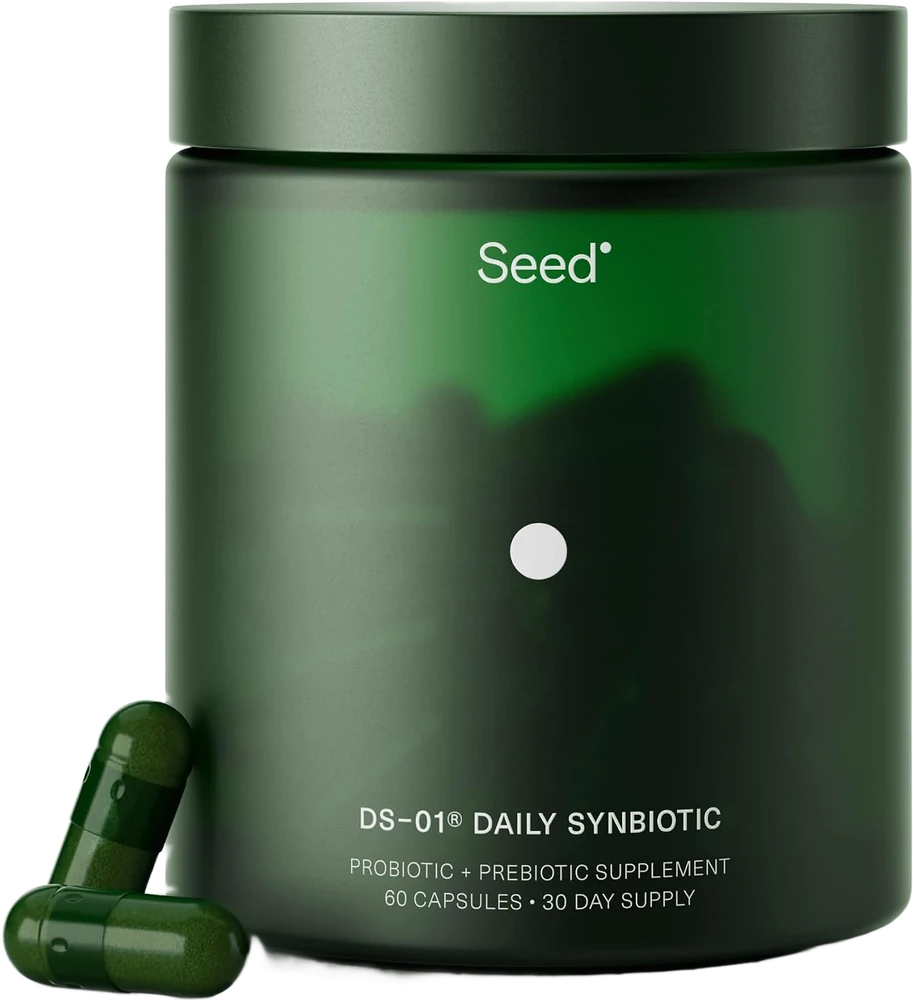
01Seed DS-01
If you want one probiotic for general gut health, bloating, and a credible daily synbiotic, Seed DS-01 is the pick and the benchmark the rest of this list is measured against.
 04
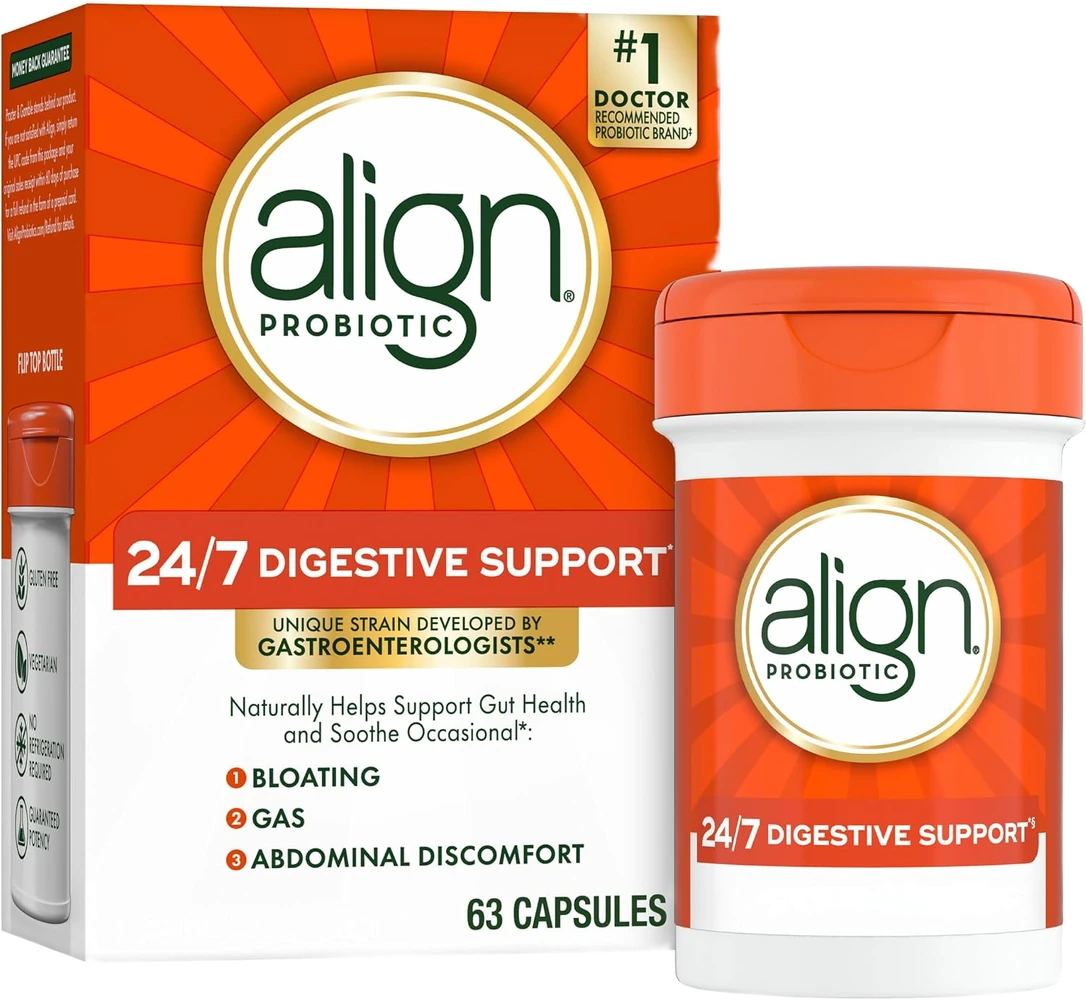
04Align Probiotic 24/7
Align is the answer to one specific question: 'I have IBS-type cramping, bloating, and irregularity — what's the evidence-backed strain?' That strain is Bifidobacterium 35624 (Bifantis), and Align is how you buy it.
 06
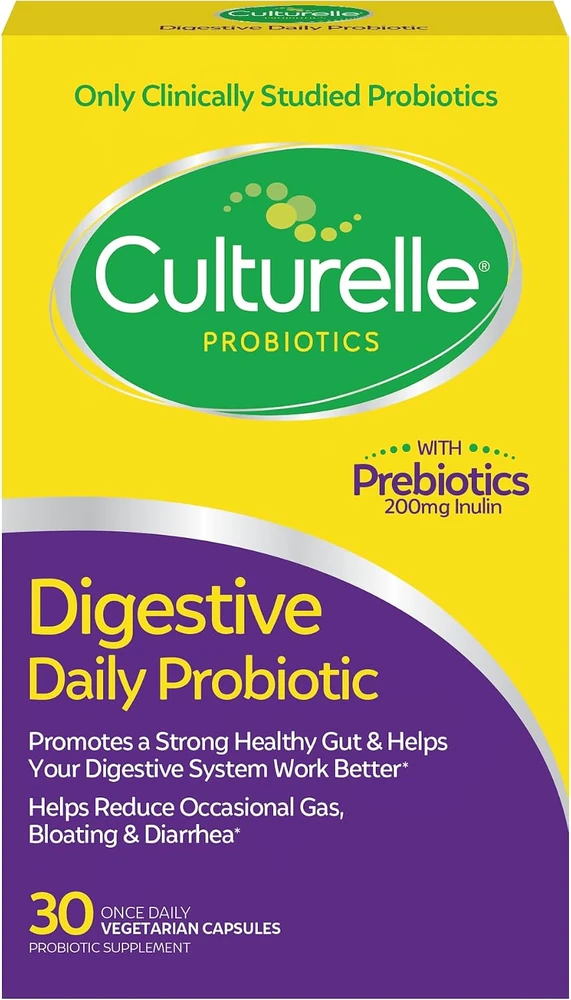
06Culturelle Daily Probiotic
Culturelle is the pick when you want the most-studied strain on earth, simply and affordably.
Quick Answers
Why is the CFU so low — only 100 million?
Because 100 million is the studied dose for this specific strain, and in probiotics the right number is strain-dependent, not 'as high as possible.' This is the same lesson Align teaches: the substance hub is explicit that a huge CFU count of unstudied strains is not better than the trial dose of the right strain, and Whorwell 2006 (PMID 16863564) showed a meaningful IBS benefit at just 1×10⁸ CFU/day for B. infantis 35624. BioGaia delivers L. reuteri DSM 17938 at its characterized low dose by design — the 100 million figure is a feature of dosing the strain correctly, not a sign of an underpowered product. If you're scanning bottles for the biggest number, you're using the wrong yardstick.
Who should actually buy BioGaia Protectis?
Three groups, and it's a narrow pick by design. First, anyone who specifically wants Lactobacillus reuteri DSM 17938 — a single, well-characterized strain — rather than a broad blend. Second, people with sensitive stomachs or anyone who dislikes swallowing capsules, since it's a chewable. Third, people who want a shelf-stable, no-refrigeration option that travels easily. What it is NOT is a general gut-health solution: at a single strain and 100M CFU it's the narrowest, lowest-coverage product on our list. For broad daily gut support most people want a multi-strain synbiotic like Seed (#1). Buy BioGaia when you want this exact strain in a convenient chewable format — not as your everyday all-purpose probiotic.
Does BioGaia need refrigeration?
No — it's shelf-stable and needs no fridge, which is one of its genuine conveniences. The substance hub notes that some probiotics are engineered to be shelf-stable and survive without cold storage, while many traditional Lactobacillus/Bifidobacterium products contain fragile cells that degrade at room temperature. BioGaia Protectis is built for room-temperature stability, which makes the chewable easy to keep in a bag or drawer and convenient for travel. As always, the label is the source of truth over the marketing, so check the storage line on your specific lot — but no-refrigeration is a real advantage here versus the picks that must be kept cold, like many Renew Life lots.
How strong is the evidence for L. reuteri DSM 17938 specifically?
Honestly, we won't overstate it: this exact strain's specific trials are not part of the verified evidence base we cite, so we're not going to claim a particular outcome for it. What we can say is grounded and accurate. The substance hub's central, well-evidenced principle is that probiotic benefits are strain-specific — they attach to a named strain identified by its code — and BioGaia's value is that it delivers one such well-characterized strain transparently, at its studied dose, from the brand that researches it. The broader class-level evidence for probiotics in digestive contexts is real (Ford 2014, PMID 25070051), but that's class-level, not proof of a specific DSM 17938 effect. If you want a strain with a landmark single-strain trial in our cited base, that's B. infantis 35624 in Align for IBS.
Is a chewable as effective as a capsule?
For getting a defined dose of this strain into you, the chewable format is fine — and for some people it's better. A chewable removes the swallow-a-capsule barrier, which genuinely helps people with sensitive stomachs, anyone who struggles with pills, or those who prefer a non-capsule format. The honest trade-off is survivability: a chewable has no enteric or delayed-release engineering, so it doesn't protect the organisms past stomach acid the way Seed's capsule-in-capsule (#1) or the delayed-release picks do — the failure mode the substance hub warns about. For a low-dose single-strain specialist taken for convenience, that's an acceptable trade. If maximizing how many organisms survive to the colon is your priority, an engineered capsule beats a chewable.
Sources & Further Reading
3 peer-reviewed sources, each linked to PubMed
- [1] Ford 2014 PMID 25070051 — Efficacy of prebiotics, probiotics, and synbiotics in irritable bowel syndrome and chronic idiopathic constipation: systematic review and meta-analysis. Meta-analysis of 43 RCTs: probiotics as a class significantly reduced persistent IBS symptoms versus placebo (RR 0.79), while explicitly noting which strains work best remains uncertain. Class-level support for probiotics in digestive contexts — but class-level evidence, not proof of a specific L. reuteri DSM 17938 effect, which is why this review doesn't claim a particular outcome for the strain.
- [2] Whorwell 2006 PMID 16863564 — Efficacy of an encapsulated probiotic Bifidobacterium infantis 35624 in women with irritable bowel syndrome. RCT in 362 IBS patients: B. infantis 35624 at 1×10⁸ CFU/day significantly relieved abdominal pain, bloating, and bowel dysfunction versus placebo. The proof that the right CFU is strain-specific — context for why BioGaia's deliberately low 100M-CFU dose of L. reuteri DSM 17938 is correct dosing, not an underpowered product.
- [3] Hungin 2018 PMID 29460487 — Systematic review: probiotics in the management of lower gastrointestinal symptoms — an updated evidence-based international consensus. International primary-care consensus over 70 RCTs: specific probiotics reduce overall symptom burden and abdominal pain in some patients, with benefit tied to the specified strain. The clinical-practice synthesis behind buying a single named, well-characterized strain — the transparency principle BioGaia satisfies even where this strain's own trials sit outside our cited base.
Affiliate disclosure: every Amazon link uses our Associates tag (superachieverclub-20). We earn a small commission at no cost to you; it funds independent reviews. We never accept payment to change a ranking.