
Align Probiotic 24/7 Digestive Support Review
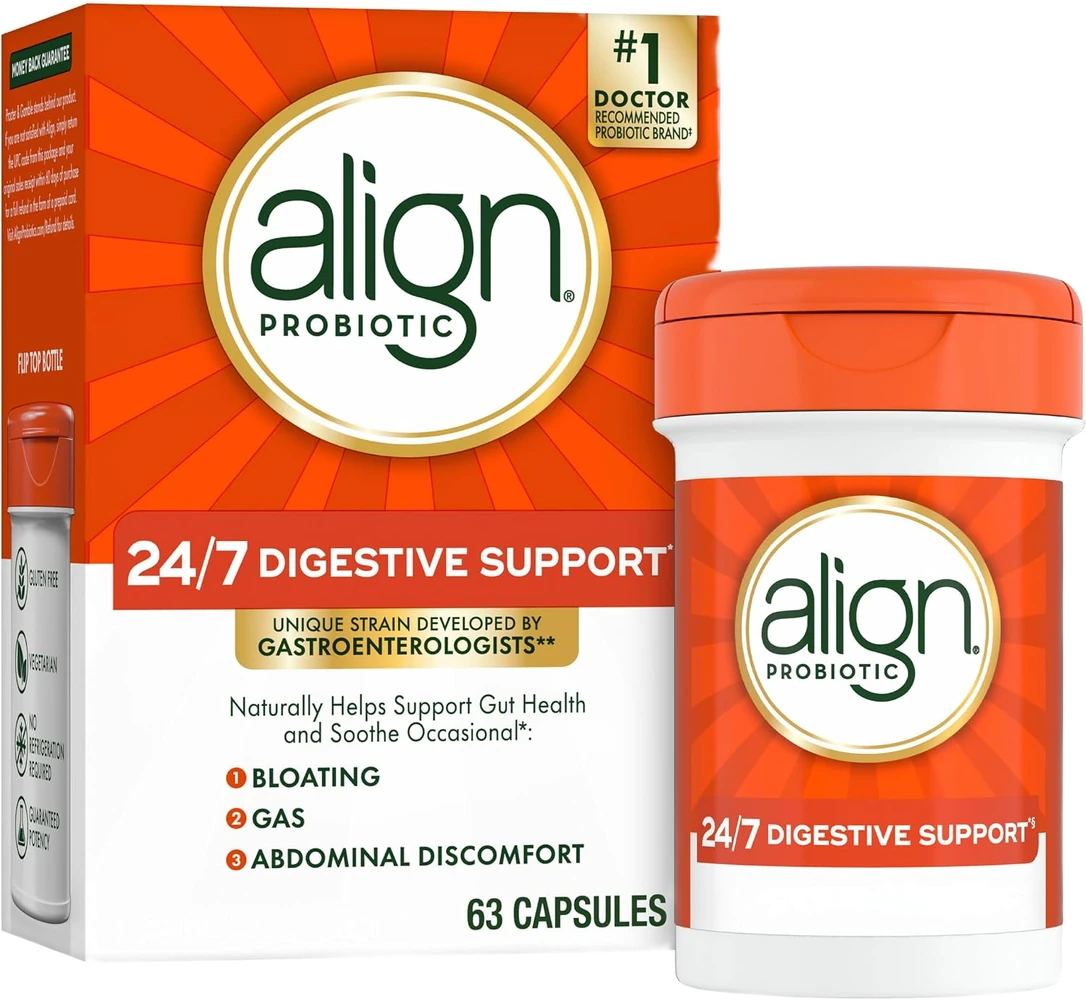 #4 of 11 · Best for IBS✓ Label verified · Supplement Facts read Sep 7, 2026
Real retailer photo, cut out. Label unedited.
Consider it. The evidence-backed strain for IBS — and only for IBS. A single strain (B. infantis 35624 / Bifantis) at its studied 1B CFU dose, matched precisely to the indication it was trialed for: IBS-type abdominal pain and bloating.
$32 / month$0.51 / 1-capsule daily dose
Why It Scores 8.1 — And The Label Line Behind Each Number
Strain specificity + clinical match
35% of scoreThe best strain-to-indication match on the entire list. Align delivers Bifidobacterium infantis 35624 — the precise strain Whorwell 2006 (PMID 16863564) ran at 1×10⁸ CFU/day in 362 IBS patients, significantly beating placebo for pain, bloating, and bowel dysfunction. Named to the code, matched to the problem. Loses half a point only because it's one strain for one indication, not breadth.
- Strain
- Bifidobacterium 35624 (B. infantis 35624, branded Bifantis) — the exact strain studied for IBS
- Daily dose
- 1 capsule per day
Survivability to the gut
25% of scoreAlign's real weak axis. It's a standard capsule without the documented delayed-release, enteric, or capsule-in-capsule engineering of Seed (#1), Ritual (#3), or Renew Life — so more of the dose is exposed to stomach acid. The counterweight is that the trial used an encapsulated form of this strain that did produce a measurable effect, so the delivery is good enough to have worked in the study.
Formulation completeness
20% of scoreComplete for its one job, thin as a general tool. A single strain at its studied dose with no prebiotic, postbiotic, or supporting strains — exactly right for the targeted IBS use-case and exactly wrong if you want a synbiotic that supports the whole ecosystem. Not a 3-in-1 like Ritual (#3) or a broad synbiotic like Seed (#1); it isn't trying to be.
- Delivery
- Standard capsule (no documented delayed-release/enteric engineering)
Third-party testing + transparency
12% of scoreStrong on the one thing that matters most here — the strain is named down to the 35624 code, so you know you're buying the studied organism rather than a generic 'B. infantis.' Align is also the most GI-/gastroenterologist-recommended brand, a meaningful trust signal for a symptom-driven purchase. Short of top marks because there's no prominent public COA or NSF certification.
Value / cost-per-day
8% of scoreRoughly $0.51 per 1-capsule daily dose (~$32/month), mid-pack on the list — cheaper per day than Seed (#1) or Ritual (#3), pricier than the budget NOW pick. The 63-count bottle gives a ~2-month runway. Fair value for a targeted, GI-recommended strain, though you're paying brand premium over a generic B. infantis if one with the same strain code existed.
- Bottle
- 63 capsules (~2-month supply at 1/day)
- Price
- ~$32/month = ~$0.51 per 1-capsule daily dose
- More Specs
- Potency
- 1 billion CFU (the strain's studied dose — deliberately not maximized)
- Indication
- IBS-type abdominal pain, bloating, gas, and irregular bowel habit
- Recommendation
- Most GI-/gastroenterologist-recommended probiotic brand
Label verified. Every figure read from the Supplement Facts photo, Sep 7, 2026.
Marketing Claims Vs. Reality
Bifidobacterium 35624 (Bifantis) — the strain studied for IBS symptoms.
Whorwell 2006 (PMID 16863564) is a randomized, double-blind, placebo-controlled trial in 362 IBS patients showing B. infantis 35624 at 1×10⁸ CFU/day significantly relieved abdominal pain, bloating, and bowel dysfunction over four weeks. Align delivers that exact named strain at roughly that dose. The strain-to-indication match is real and the strongest on the list.
The #1 GI-/gastroenterologist-recommended probiotic.
Align is widely cited as the most GI-recommended probiotic brand, and the strain-specific IBS evidence (echoed in the Ford 2014 review, PMID 25070051, and the Hungin 2018 consensus, PMID 29460487) underpins why clinicians point to it for IBS. We accept the recommendation framing as real for the IBS use-case; it does not mean it's the right pick for general gut health.
1 billion CFU is the right dose — bigger isn't better.
Genuinely true and the key teaching point. The Whorwell 2006 benefit appeared at 1×10⁸ CFU/day, not at the highest dose tested — probiotic dosing is strain-specific. A 50-billion count of different, unstudied strains does not replicate this strain's studied effect. Align's 'low' CFU is a feature, not a shortfall.
Supports digestive balance 24/7 with daily use.
The trial evidence is for IBS-type symptom relief over weeks of consistent dosing, which supports a daily-use positioning for that indication. But like essentially all probiotics, the strain is largely transient — the benefit depends on continued daily dosing and fades after stopping, so '24/7 balance' is accurate only while you keep taking it, and only for the IBS use-case.
Clinically studied to relieve abdominal pain and bloating.
Directly supported by Whorwell 2006 (PMID 16863564), which measured significant improvement in abdominal pain/discomfort and bloating versus placebo for this exact strain. This is one of the better-substantiated single-product probiotic claims on the shelf — provided your problem is IBS-type, which is the population the trial studied.
What Our Test Actually Found
This is the bottle that proves CFU is the wrong number
Everything about Align is a lesson in strain-specificity. At 1 billion CFU it looks underpowered next to the 50-billion blends, and a shopper scanning front-of-bottle numbers would walk right past it. That shopper would be making the central mistake of the category. The 1B figure is the dose Whorwell 2006 (PMID 16863564) used for B. infantis 35624, and that strain at that dose is what relieved IBS pain and bloating in 362 patients. A bigger count of unnamed or unstudied organisms is more of the wrong thing. If you only internalize one idea from our probiotics coverage, let it be this one — and Align is its cleanest example.
Buy it for IBS, not for 'gut health' in general
Align is a precision instrument for one indication. The strain matches IBS-type abdominal pain, bloating, and irregular bowel habit, and the evidence stops there — Ford 2014 (PMID 25070051) confirms probiotics as a class help IBS while flagging that which strains work best is unsettled, and Align is the standout single-strain answer. But a single strain with no prebiotic and no survivability engineering is not a general ecosystem-reset tool. If you don't have an IBS-type problem, you're buying a specialist for a generalist's job. Seed (#1) is the everyday pick; Align is the IBS pick.
Survivability is the honest weak spot
The higher-scoring picks all do something to get their organisms past stomach acid — Seed's capsule-in-capsule, Ritual's and Renew Life's delayed-release. Align is a standard capsule, so on the survivability axis it scores lower than the engineered competitors, and that's reflected in its 8.0 composite. The mitigating fact is that the trial used an encapsulated form of this strain that worked, so the delivery is good enough to have produced the published effect. Still, if you want belt-and-suspenders survivability engineering on top of a studied strain, Align isn't where you'll find it.
Give it four weeks before you judge it
IBS symptoms fluctuate, so a few days tells you nothing. The Whorwell 2006 trial measured its endpoints over four weeks, and the substance hub's timeline mirrors that: bloating and gas may ease in week one, but the abdominal-pain and bowel-habit improvements typically emerge across weeks two to four. Run one capsule daily for a full month and look for a trend, not a single good day. If there's genuinely no change after four consistent weeks, the strain may not match your responder profile — and it's reasonable to stop and try a different approach.
The strain is named to the code — that's a real transparency win
'Bifantis' is just Align's brand name for Bifidobacterium infantis 35624. Naming the strain down to the 35624 code is exactly what the category needs more of: it's how you know you're buying the studied organism and not a generic look-alike. Two products can both say 'B. infantis' and contain different strains that behave differently. The Hungin 2018 consensus (PMID 29460487) and Ford 2014 (PMID 25070051) both anchor probiotic recommendations to specified strains, and Align meets that bar where 'proprietary blend' labels don't.
Full analysis: all pros & cons (8), buy if / skip if
- Delivers B. infantis 35624 — the precise strain a 362-patient RCT showed relieves IBS pain and bloating (Whorwell 2006)
- 1B CFU is the studied dose for this strain — a textbook example of why bigger CFU isn't better
- The most GI-/gastroenterologist-recommended probiotic brand, meaningful for a symptom-driven IBS purchase
- Strain named down to the 35624 code — genuine transparency, not a 'proprietary blend'
- Long 63-count bottle gives a ~2-month runway at a fair mid-pack per-day cost
- Single strain at 1B CFU looks tiny next to 50-60B blends — easy to wrongly dismiss if you shop on the number
- No documented delivery-system engineering — survivability is the weak axis versus delayed-release picks
- Narrowly targeted at IBS-type symptoms; not the pick for general gut health or post-antibiotic recovery
- Your specific problem is IBS-type abdominal pain, bloating, gas, and irregular bowel habit
- You want the exact strain (B. infantis 35624) studied in the landmark IBS trial, at its studied dose
- You want a GI-/gastroenterologist-recommended single-strain tool rather than a broad blend
- You understand that 1B CFU is the right dose for this strain, not an underpowered one
- You want a general everyday probiotic for overall gut health — Seed DS-01 (#1) is the broad-reset pick
- You're on or about to start antibiotics — a bacterial strain gets killed; use Florastor (S. boulardii)
- You shop on CFU and survivability engineering — a single 1B capsule with no delayed-release will frustrate you
A single strain (B. infantis 35624 / Bifantis) at its studied 1B CFU dose, matched precisely to the indication it was trialed for: IBS-type abdominal pain and bloating. The most GI-recommended probiotic, and the textbook proof that CFU is the wrong number to shop on. But it's narrow — not a general-gut-health tool, and without the survivability engineering of the top picks. Buy it for IBS; choose something else for everything else.
Align is the clearest single-purpose pick on this list, and the clearest illustration of why the number on the front of a probiotic bottle is the wrong thing to read. It contains one strain — Bifidobacterium infantis 35624, which Align markets as 'Bifantis' — at roughly 1 billion CFU. Next to the 50- and 60-billion blends that dominate the shelf, that looks underpowered to the point of being a typo. It isn't. One billion is the dose the landmark IBS trial used for this exact strain, and the strain is the entire point: this is the most GI-recommended probiotic precisely because the evidence behind B. infantis 35624 for IBS-type symptoms is strain-specific and unusually clean. The flip side is that Align is narrow. It's a precision tool for one job — IBS abdominal pain, bloating, and irregular bowel habit — and it isn't engineered for survivability the way the top picks are, nor is it a general-purpose everyday probiotic. Here's the full breakdown of who should buy it, and who should look elsewhere.
The IBS specialist — buy the strain, not the billions.

Align answers one question and answers it well: 'I have IBS-type cramping, bloating, and irregularity — what's the evidence-backed strain?' That strain is Bifidobacterium infantis 35624, and Align is how you buy it at its studied 1-billion-CFU dose. The deliberately 'low' CFU is the whole lesson of this category — at 1 billion it looks underpowered next to the 50-billion blends, but 1 billion is the dose the trials used for this strain, and the strain is what relieves the symptoms. For a symptom-driven IBS purchase, backed by the most GI-recommended brand, Align is the clean, targeted choice. The cases to look elsewhere are clear, which is why this lands at 'consider' rather than a blanket 'buy.' If you want a general everyday probiotic for overall gut health, a broad documented synbiotic like Seed DS-01 (#1) covers more of the ecosystem and is engineered for survivability. If you're on or about to start antibiotics, a bacterial strain gets killed — use Florastor (S. boulardii), the yeast antibiotics can't touch. And if you shop on CFU and want belt-and-suspenders delivery engineering, Align's plain capsule will frustrate you. But for IBS specifically, buy the strain, not the number, give it a fair four weeks, and Align is the pick.
If This Doesn’t Fit — Try These
 01
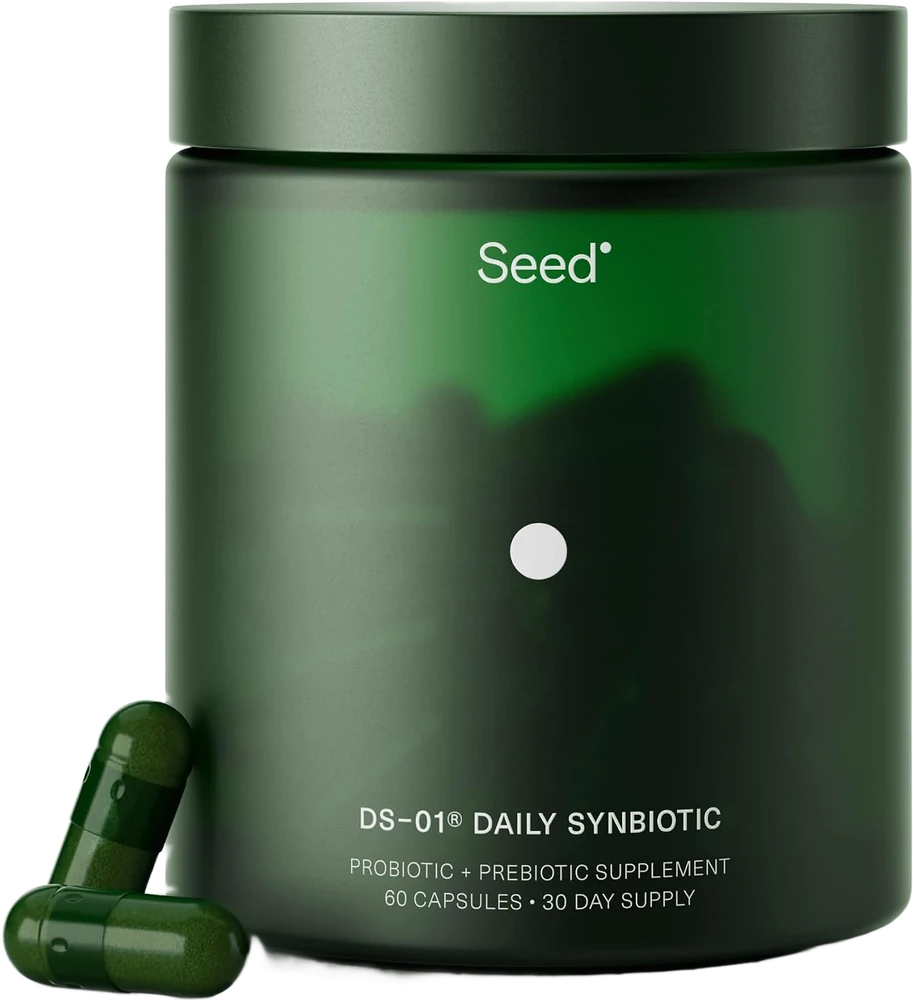
01Seed DS-01
If you want one probiotic for general gut health, bloating, and a credible daily synbiotic, Seed DS-01 is the pick and the benchmark the rest of this list is measured against.
 05
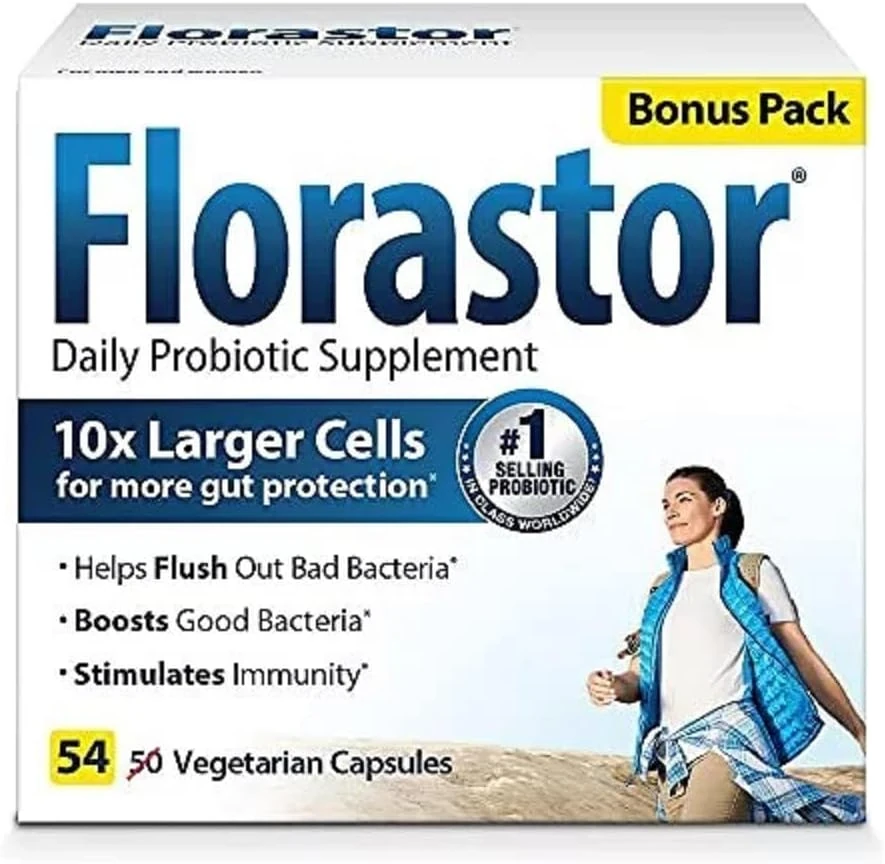
05Florastor Daily Probiotic
Florastor is the pick for one situation that catches everyone out: you've just been prescribed antibiotics.
 06
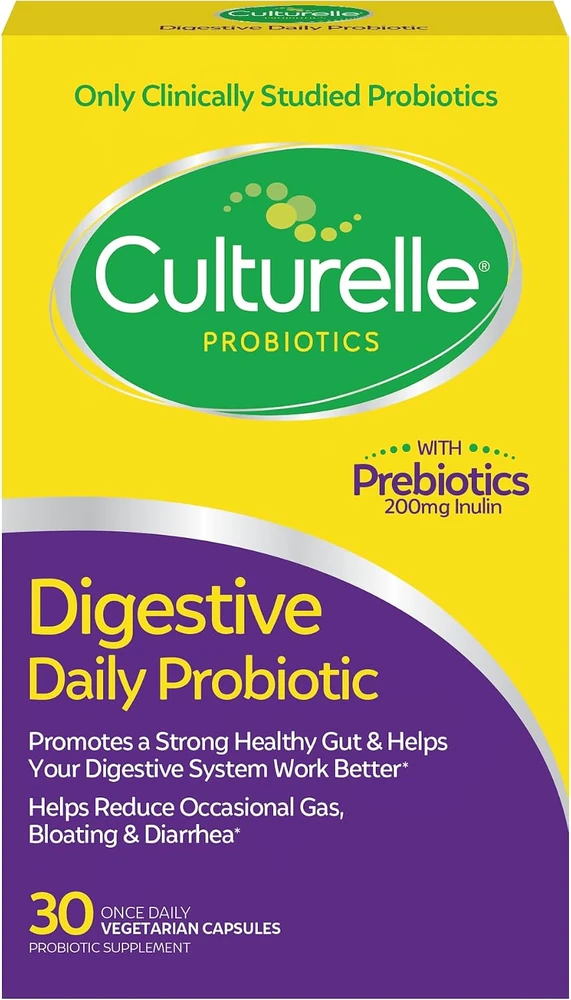
06Culturelle Daily Probiotic
Culturelle is the pick when you want the most-studied strain on earth, simply and affordably.
Quick Answers
Why only 1 billion CFU when other probiotics have 50 billion?
Because 1 billion is the dose the trial used for this strain — and in probiotics the right number is strain-specific, not 'as high as possible.' Whorwell 2006 (PMID 16863564) ran Bifidobacterium infantis 35624 at 1×10⁸ CFU/day in 362 IBS patients and significantly beat placebo for abdominal pain, bloating, and bowel dysfunction over four weeks. Align delivers roughly that studied dose of exactly that strain. A 50-billion blend of unnamed or unstudied strains is a bigger number of the wrong thing — it doesn't do what the 35624 trial showed. This is the single clearest illustration on our whole list of why shopping on CFU is the trap: buy the strain that was studied for your problem, at the dose it was studied at.
Is Align right for general gut health, or only IBS?
Only IBS-type symptoms, really — and that's the honest framing. Align is a single strain matched to a specific indication: B. infantis 35624 for IBS abdominal pain, bloating, and irregular bowel habit. It is not a broad ecosystem-reset tool. If you don't have a defined IBS-type problem and you just want a credible everyday probiotic, a broad documented synbiotic like Seed DS-01 (#1) is the better fit — it covers more of the gut and is engineered for survivability. Buying Align for 'general gut health' is using a precision instrument for a job it wasn't built for. Match the strain to the problem: Align is the IBS tool, not the everyday tool.
How long until I know if Align is working?
Give it a fair four weeks of consistent daily dosing before you judge it. The Whorwell 2006 trial measured its endpoints over four weeks, and the substance hub's timeline reflects the same window: some people notice less bloating and gas in week one, but the abdominal-pain and bowel-habit improvements typically emerge across weeks two to four as the gut ecosystem shifts. Don't write it off after a few days, and don't expect an overnight fix — IBS symptoms fluctuate, so you're looking for a trend over weeks, not a single good day. If you've run it daily for four weeks with no change, the strain may simply not be your responder profile, and it's reasonable to stop.
Does Align survive stomach acid to reach my gut?
This is Align's real weak point versus the survivability-engineered picks, and we won't pretend otherwise. Stomach acid and bile kill most naked probiotic bacteria before they reach the colon, and Align is a standard capsule without the documented delayed-release, enteric, or capsule-in-capsule engineering that the higher-scoring picks use (Seed's ViaCap, Renew Life's and Ritual's delayed-release). The counterweight is that the strain itself is what carries the evidence, and the trial used an encapsulated form that did produce a measurable effect — so the delivery is good enough to have worked in the study. But on the survivability axis specifically, Align scores lower than the engineered competitors. Take it consistently and give it the full four weeks.
Is 'Bifantis' different from Bifidobacterium infantis 35624?
No — Bifantis is simply Align's brand name for the strain Bifidobacterium infantis 35624 (also written as B. longum subsp. infantis 35624). Same organism, two labels. This matters because strain identity is everything in probiotics: the IBS evidence (Whorwell 2006, PMID 16863564; echoed in the Ford 2014 review, PMID 25070051, and the Hungin 2018 consensus, PMID 29460487) attaches to that exact strain code, not to 'Bifidobacterium' or 'B. infantis' generically. Two products can both say 'B. infantis' on the front and contain completely different strains that do different things. Align naming the strain down to the 35624 code is a genuine transparency point — it's how you know you're buying the studied organism and not a look-alike.
Sources & Further Reading
3 peer-reviewed sources, each linked to PubMed
- [1] Whorwell 2006 PMID 16863564 — Efficacy of an encapsulated probiotic Bifidobacterium infantis 35624 in women with irritable bowel syndrome. Randomized, double-blind, placebo-controlled trial in 362 IBS patients: Bifidobacterium infantis 35624 at 1×10⁸ CFU/day significantly relieved abdominal pain, bloating, and bowel dysfunction versus placebo over four weeks. The direct evidence behind Align and the textbook proof that the right CFU is strain-specific — 1 billion, not 'as high as possible.'
- [2] Ford 2014 PMID 25070051 — Efficacy of prebiotics, probiotics, and synbiotics in irritable bowel syndrome and chronic idiopathic constipation: systematic review and meta-analysis. Meta-analysis of 43 RCTs: probiotics as a class significantly reduced persistent IBS symptoms versus placebo (RR 0.79), with benefits on global symptoms, pain, bloating, and flatulence — while explicitly noting which strains work best remains uncertain. The class-level support for the IBS use-case, with the strain-specificity caveat that makes a matched single strain like Align's 35624 the targeted answer.
- [3] Hungin 2018 PMID 29460487 — Systematic review: probiotics in the management of lower gastrointestinal symptoms — an updated evidence-based international consensus. International primary-care consensus over 70 RCTs: specific probiotics reduce overall symptom burden and abdominal pain in some IBS patients (high evidence, 100% agreement). The clinical-practice synthesis behind pointing IBS patients to a specified, studied strain rather than a generic blend — the logic that makes Align the IBS pick.
Affiliate disclosure: every Amazon link uses our Associates tag (superachieverclub-20). We earn a small commission at no cost to you; it funds independent reviews. We never accept payment to change a ranking.