
Top 9 Best Vitamin C Supplements (2026)
 01 · Best Overall✓ Label verified · Supplement Facts read Sep 7, 2026
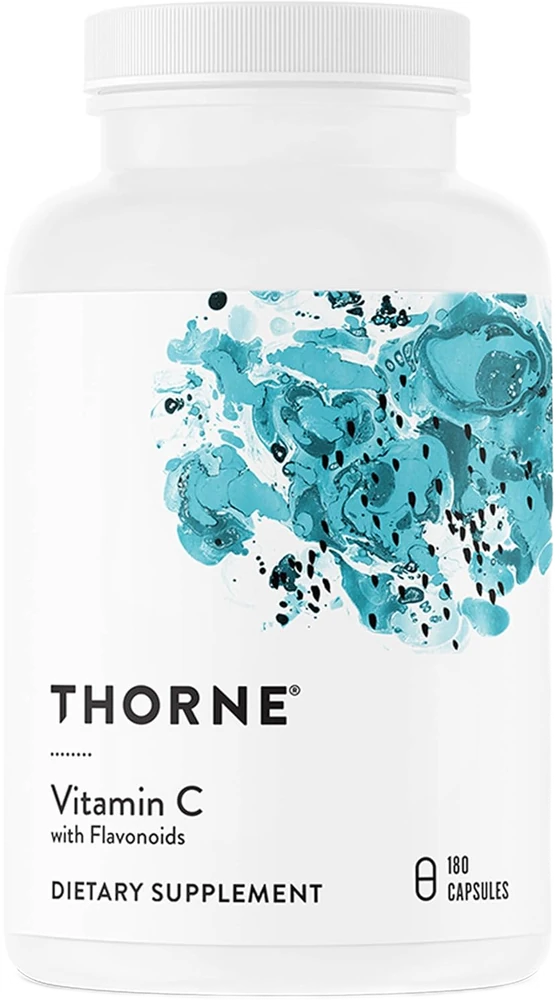
Best Overall: Thorne Vitamin C with Flavonoids, 180 Capsules
The pick whose design matches the science: a 500 mg dose built for split dosing, backed by Thorne's brand-wide third-party testing.
~$25~$0.14 / 500 mg capsule
Why it wins: all five scores, pros & cons, full label
- Modest 500 mg/cap is the smartest match to the ~200 mg absorption ceiling — split it across the day for better fractional uptake than one 1,000 mg bolus
- Thorne's clinician-trusted, brand-wide third-party testing is best-in-class for verification
- No corn-derived vitamin C and gluten-free — a genuinely clean formula
- You need 2 capsules to reach 1,000 mg, roughly doubling cost per gram
- The split-dose absorption advantage is real but small
- You're mainly paying for testing rigor, not a magic form
- Dose
- 500 mg vitamin C per capsule
- Testing
- Brand-wide third-party certified/tested
- Clean label
- Gluten-free, no corn-derived C
- Form
- Ascorbic acid + 75 mg citrus bioflavonoids
- Count
- 180 capsules / 180 servings
- Cost per 1,000 mg
- ~$0.28 (2 caps)

Our take — Our take: this wins on the two things that actually move the needle — independent testing and a dose you can use intelligently — rather than on a marketing form. The 500 mg cap is a feature, not a shortfall: it lets you dose near the saturation point instead of flushing a megadose. If you want one bottle you can trust and use correctly, start here.
 02
02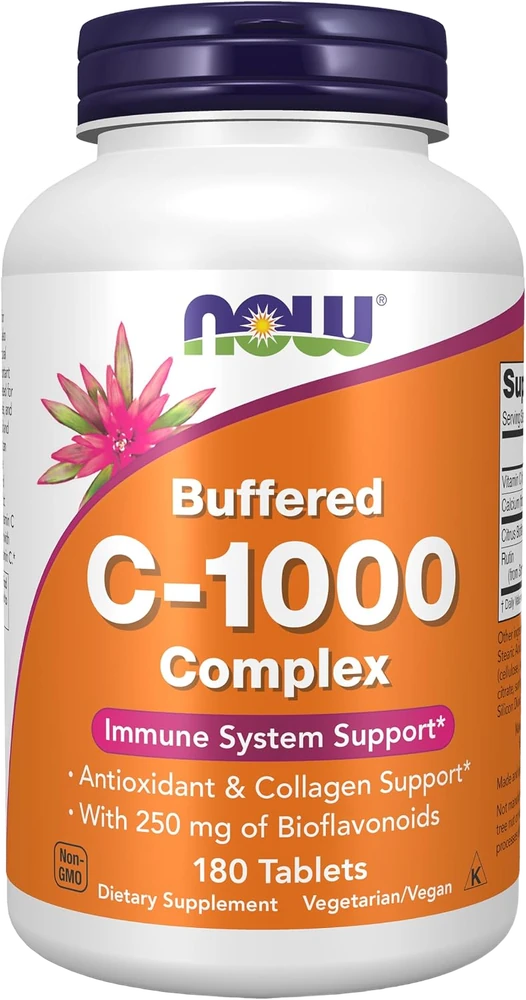 03
03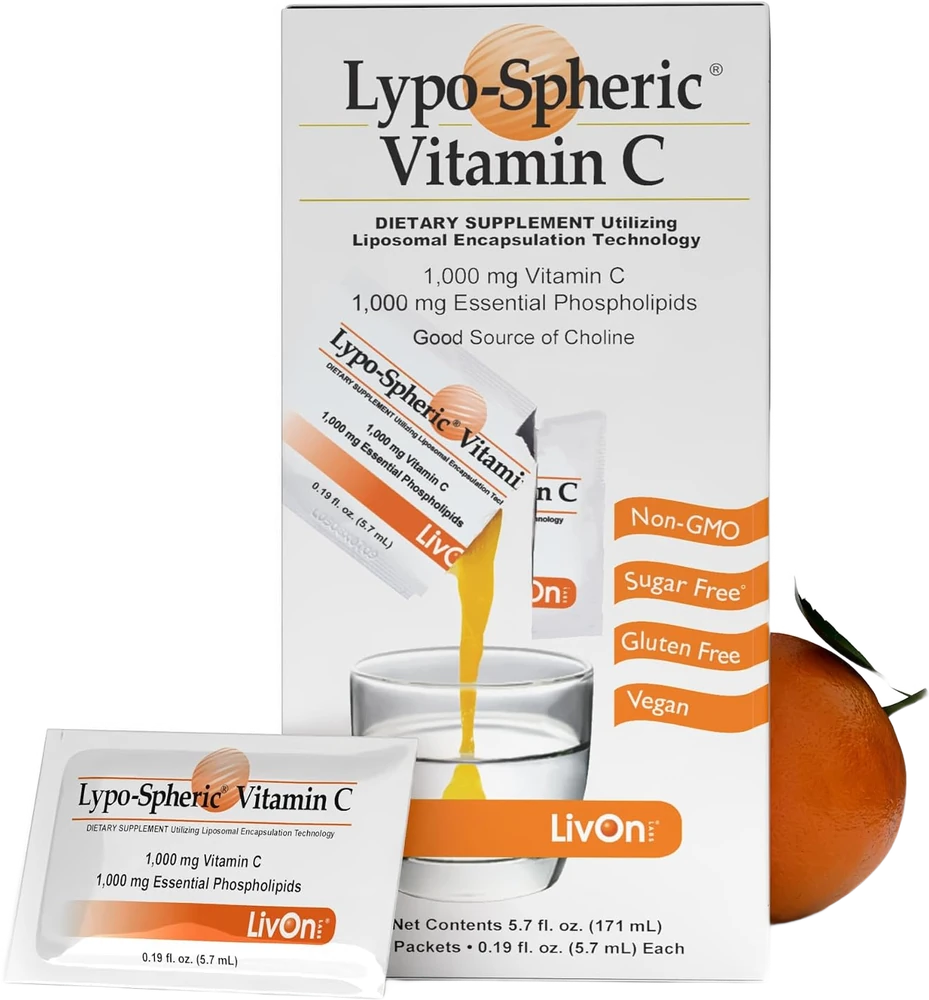 04
04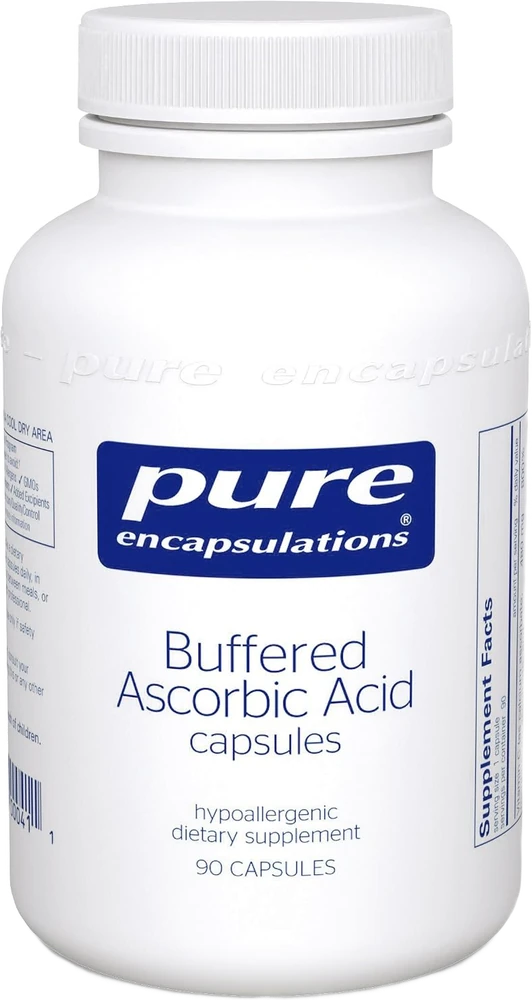 05
05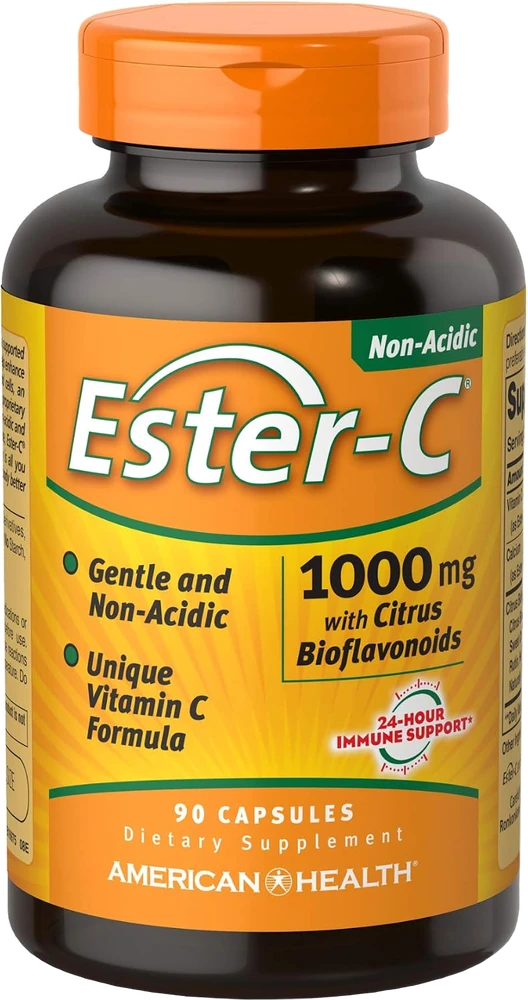 06
06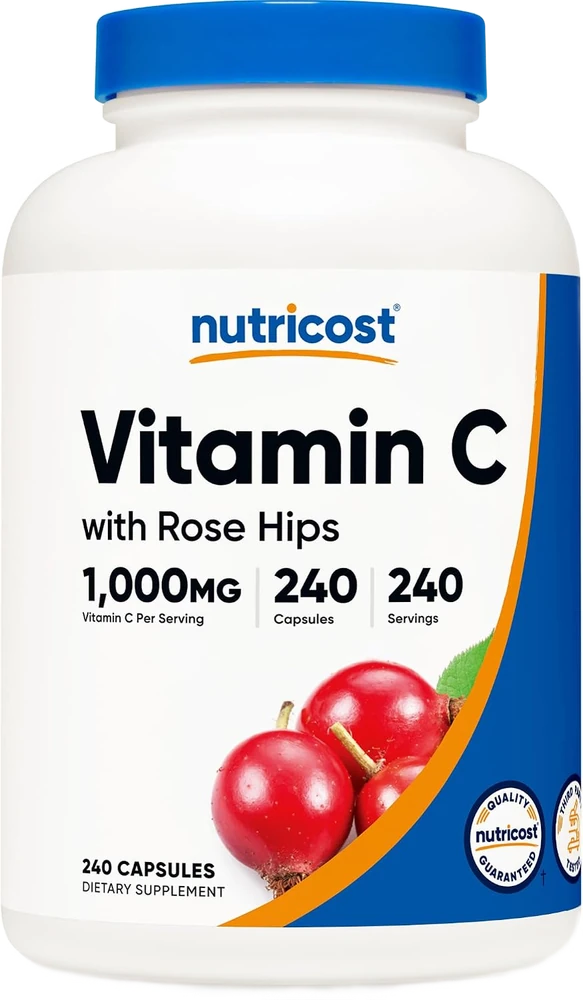 07
07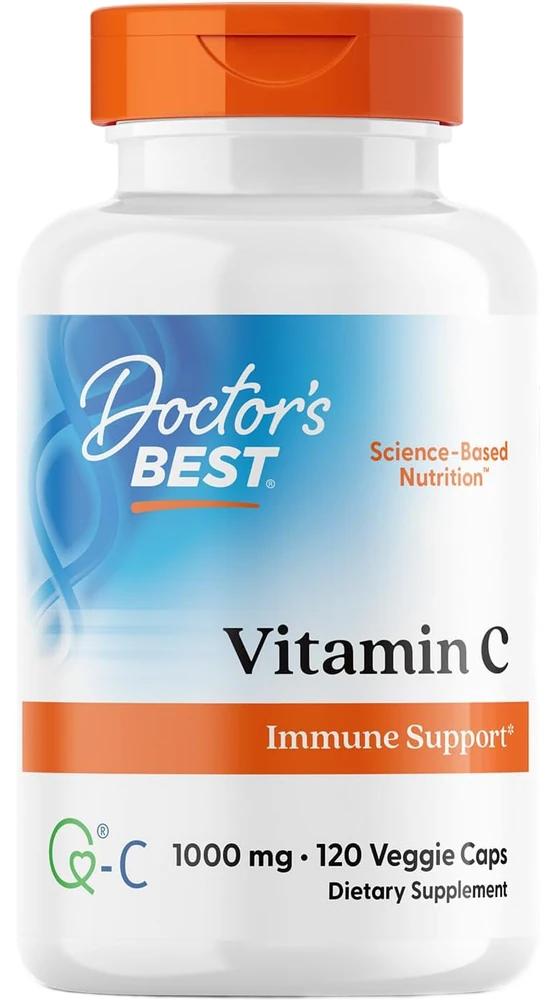 08
08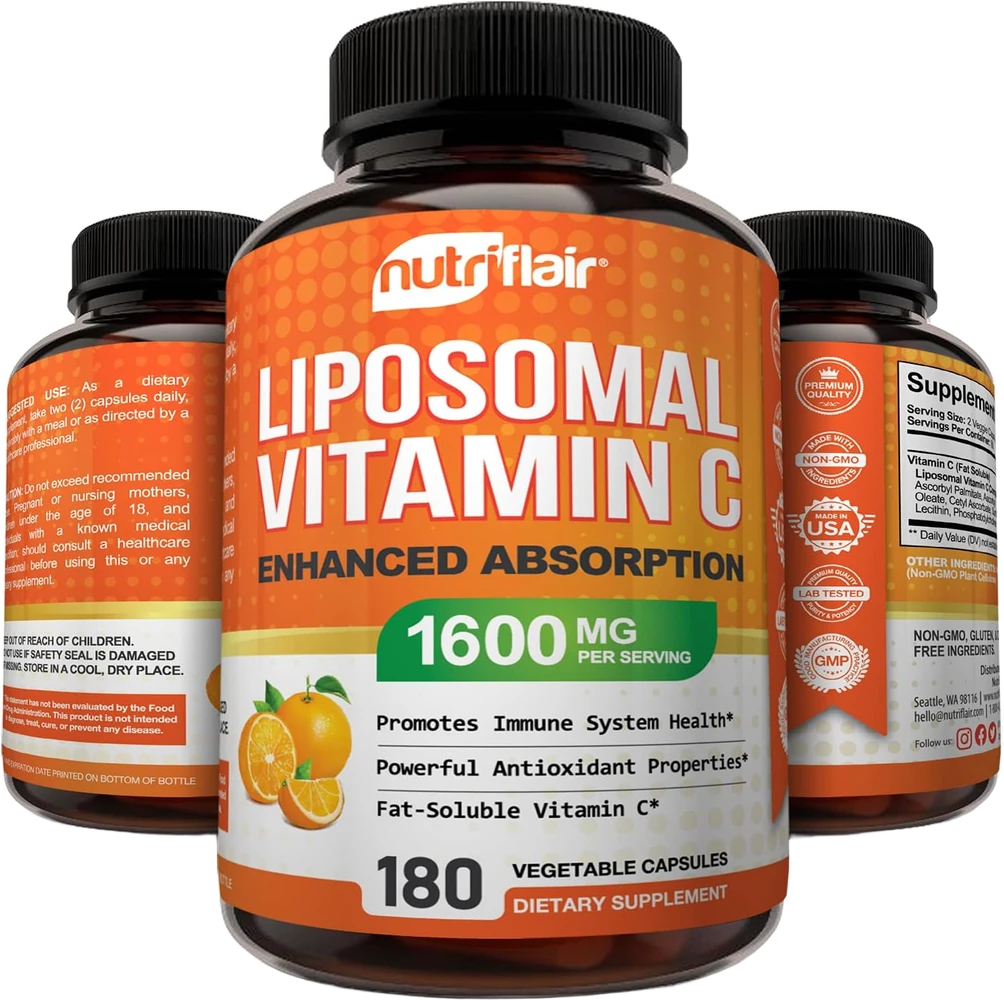 09
09Who Wins Which Aspect
Sorted by overall SAC Product Score™ — the official ranking.
| # | Pick | Score | Form & Bioavailability30% | Third-Party Testing & QA25% | Dose Strategy vs. Clinical Range15% | GI Tolerance & Suitability15% | Value per Serving15% | Cost Per Dose | Buy |
|---|---|---|---|---|---|---|---|---|---|
| 01 | | 7.4 | 6.82 | 9.01 | 8.51 | 6.5 | 5.8 | ~$0.14 / 500 mg capsule | Check price |
| Modest 500 mg/cap is the smartest match to the ~200 mg absorption ceiling — split it across the day for better fractional uptake than one 1,000 mg bolusYou need 2 capsules to reach 1,000 mg, roughly doubling cost per gram | |||||||||
| 02 | | 7.1 | 6.5 | 9.01 | 5.2 | 4.7 | 9.52 | ~$0.05 / tablet | Check price |
| USP Verified for potency, purity and disintegration — rare at this price and the gold-standard independent checkPlain unbuffered ascorbic acid at 1,000 mg is the harshest form on the stomach | |||||||||
| 03 | | 7.0 | 6.82 | 7.82 | 5.2 | 7.03 | 7.83 | ~$0.09 / tablet | Check price |
| Partial calcium-ascorbate buffering gives a gentler pH than plain ascorbic acidBuffering improves comfort but does not increase how much vitamin C you absorb | |||||||||
| 04 | | 6.7 | 9.01 | 6.5 | 6.52 | 6.5 | 2.8 | ~$1.33 / packet | Check price |
| Genuine phospholipid encapsulation produces the highest measured plasma absorption of the groupBy far the priciest per gram (~$1.35/serving) | |||||||||
| 05 | | 6.6 | 6.73 | 7.33 | 5.2 | 9.21 | 4.0 | ~$0.38 / capsule | Check price |
| Three mineral ascorbates make this the gentlest, most pH-neutral option in the setMost expensive per gram of all the capsules here | |||||||||
| 06 | | 6.4 | 6.2 | 6.0 | 5.0 | 8.52 | 7.0 | ~$0.18 / capsule | Check price |
| Calcium ascorbate plus threonate metabolites make it non-acidic and easy on the stomachThe '24-hour' and superior-retention claims rest largely on manufacturer-funded studies | |||||||||
| 07 | | 6.2 | 6.2 | 5.2 | 5.53 | 5.0 | 9.71 | ~$0.07 / capsule | Check price |
| 240 servings at the deepest per-capsule value of any capsule hereThe 25 mg rose hips is a token cofactor, not a real absorption lever — this is essentially plain ascorbic acid | |||||||||
| 08 | | 6.1 | 6.5 | 6.2 | 5.0 | 5.5 | 6.8 | ~$0.13 / capsule | Check price |
| Quali-C is a fully traceable, Scotland-made ascorbic acid — a genuine provenance and quality edge'Quali-C' is a premium SOURCE of ordinary ascorbic acid — bioavailability is identical to any L-ascorbic acid | |||||||||
| 09 | | 5.1 | 4.2 | 4.2 | 4.5 | 7.03 | 7.0 | ~$0.22 / 2-cap serving | Check price |
| Cheapest entry into the 'liposomal' category if you want to try the formatDry capsules rarely form true liposomes the way liquid liposomal does — the delivery claim is doubtful | |||||||||
The Other 8, Ranked
- 02
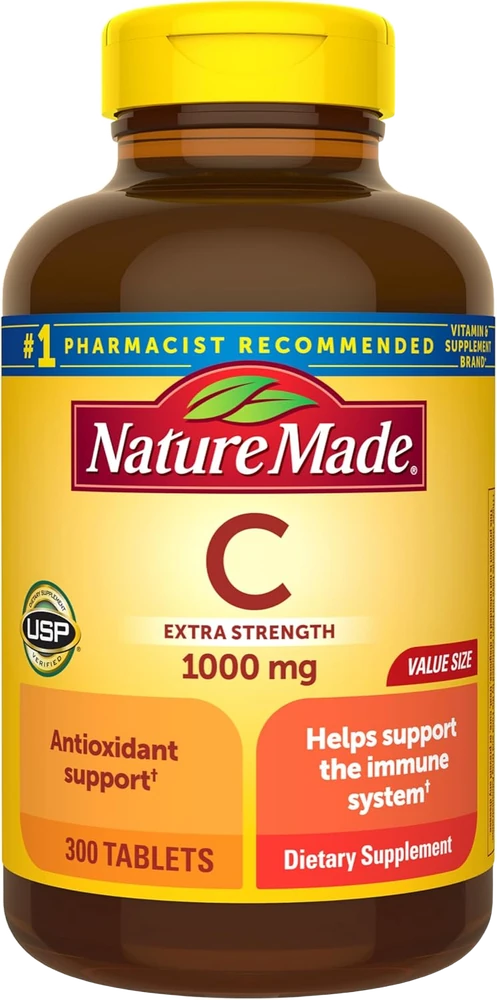
Best Value: Nature Made Extra Strength Vitamin C 1000 mg Tablets, 300 Count
7.1SAC Score™USP Verified — arguably the most credible independent mark in the aisle — at a benchmark-low cost per milligram.
StrongestValue per Serving9.52WeakestGI Tolerance & Suitability4.7- Dose
- 1,000 mg per tablet (1,111% DV)
- Testing
- USP Verified for potency, purity & disintegration
- Value
- 300-day supply, lowest cost/mg here
All five scores, pros & cons, full label
What We Like- USP Verified for potency, purity and disintegration — rare at this price and the gold-standard independent check
- 300-day supply at the lowest cost per milligram of the group
- Nature Made is the #1 Pharmacist Recommended brand
What You Live With- Plain unbuffered ascorbic acid at 1,000 mg is the harshest form on the stomach
- A single 1,000 mg tablet is hard to split and overshoots the ~200 mg ceiling — most is excreted
- The 'Extra Strength' dose is convenience, not proven extra benefit
- Form
- Plain L-ascorbic acid (unbuffered)
- Count
- 300 tablets / 300 servings
Our take — Our take: if you want a verified, no-nonsense vitamin C for pennies, nothing here beats it — USP Verification is the reason it sits at #2 despite the harshest form on the list. The only real trade-off is your stomach: unbuffered 1,000 mg can bite on an empty gut. Take it with food, or step up to a buffered pick if you're acid-sensitive.
- 03
Best Buffered All-Rounder: NOW Supplements Vitamin C-1000 Complex with Bioflavonoids, Buffered, 180 Tablets
7.0SAC Score™Partial calcium-ascorbate buffering, the highest cofactor dose here, and NPA-GMP backing at a friendly price.
StrongestThird-Party Testing & QA7.82WeakestDose Strategy vs. Clinical Range5.2- Dose
- 1,000 mg C + 250 mg bioflavonoids
- Testing
- NPA-GMP certified brand-wide
- Cofactor
- 250 mg citrus bioflavonoids (highest here)
All five scores, pros & cons, full label
What We Like- Partial calcium-ascorbate buffering gives a gentler pH than plain ascorbic acid
- NPA-GMP certification is a real independent audit, not just a brand claim
- Low cost per serving with the highest bioflavonoid dose in the set
What You Live With- Buffering improves comfort but does not increase how much vitamin C you absorb
- The bioflavonoid 'absorption-boost' claim has weak human evidence
- Still a 1,000 mg single-tablet bolus that overshoots the saturation ceiling
- Form
- Buffered (calcium ascorbate + ascorbic acid)
- Count
- 180 tablets / 180 servings
Our take — Our take: the best everyday all-rounder — gentler than plain C, cheaper than the boutique buffered options, from a brand that actually passes independent GMP audits. Just don't buy it for the 250 mg bioflavonoids; treat those as a bonus, not a reason. A smart default if unbuffered C upsets your stomach but you don't want to pay a premium.
- 04
Best Absorption (Specialist): LivOn Laboratories Lypo-Spheric Vitamin C, 30 Packets
6.7SAC Score™The only genuine liquid liposome here — real phospholipid encapsulation that measurably beats the oral saturation ceiling. And the only one that earns the absorption claim.
StrongestForm & Bioavailability9.01WeakestValue per Serving2.8- Dose
- 1,000 mg C + 1,000 mg essential phospholipids
- Delivery
- Bypasses gut-saturation ceiling
- Clean label
- Non-GMO, gluten-free, no added sugar
All five scores, pros & cons, full label
What We Like- Genuine phospholipid encapsulation produces the highest measured plasma absorption of the group
- The one product here that actually clears the gut-saturation ceiling ordinary oral C can't
- Single-dose packets, no sugar — a real tool when you specifically want elevated blood levels
What You Live With- By far the priciest per gram (~$1.35/serving)
- The gel is famously unpleasant to swallow
- For routine immune support it's overkill versus a cheap buffered C
- Form
- True liquid liposomal (phosphatidylcholine-encapsulated)
- Count
- 30 packets / 30 servings
Our take — Our take: this is the honest exception — liposomal absorption is real here, not marketing, which is why it outranks cheaper forms on our top-weighted axis. But 'absorbs more' isn't the same as 'you need more,' and at ~$1.33 a packet it's a specialist tool, not a daily driver. Buy it when you want to push plasma vitamin C hard for a short stretch; otherwise it's expensive water-soluble insurance.
- 05
Best for Sensitive Stomachs: Pure Encapsulations Buffered Ascorbic Acid, 90 Capsules
6.6SAC Score™Three mineral ascorbates, hypoallergenic, no fillers — the gentlest, most pH-neutral option for reactive stomachs.
StrongestGI Tolerance & Suitability9.21WeakestValue per Serving4.0- Dose
- 1,000 mg per capsule (per brand label)
- Formulation
- Hypoallergenic, no fillers or binders
- Testing
- Brand-stated third-party tested
All five scores, pros & cons, full label
What We Like- Three mineral ascorbates make this the gentlest, most pH-neutral option in the set
- Hypoallergenic with no fillers or binders — built for reactive individuals
- Reputable practitioner-grade brand with third-party testing
What You Live With- Most expensive per gram of all the capsules here
- The mineral buffering aids tolerance, not bioavailability — you pay for purity, not absorption
- Dose isn't surfaced in the listing meta; confirm on the label
- Form
- Calcium, magnesium & potassium ascorbates (fully buffered)
- Count
- 90 capsules / 90 servings
Our take — Our take: if plain vitamin C reliably upsets your gut and you value a clean, hypoallergenic formula, this is the most comfortable capsule on the list. Just be clear about what you're buying — formulation and tolerability, not extra absorption. At ~$0.38 a serving it's a considered choice for sensitive users, not a value play.
- 06
Gentle Branded Pick: American Health Ester-C 1000 mg with Citrus Bioflavonoids, 90 Capsules
6.4SAC Score™The best-known 'gentle' branded form — non-acidic calcium ascorbate with vitamin C metabolites for acid-sensitive users.
StrongestGI Tolerance & Suitability8.52WeakestDose Strategy vs. Clinical Range5.0- Dose
- 1,000 mg per capsule
- Feel
- Non-acidic, buffered by calcium
- Certification
- Non-GMO, gluten-free (stated)
All five scores, pros & cons, full label
What We Like- Calcium ascorbate plus threonate metabolites make it non-acidic and easy on the stomach
- The most recognizable 'gentle' branded form for acid-sensitive users
- Includes citrus bioflavonoids and is well-tolerated at 1,000 mg
What You Live With- The '24-hour' and superior-retention claims rest largely on manufacturer-funded studies
- Independent evidence that Ester-C beats ordinary buffered C is thin
- No USP/NSF certification, and pricier per serving than NOW's buffered tablet
- Form
- Ester-C (calcium ascorbate + metabolites) + bioflavonoids
- Count
- 90 capsules / 90 servings
Our take — Our take: a legitimately gentle option, but you're paying a brand premium for a claim the independent evidence doesn't back. Its genuine edge is GI comfort, not proven higher absorption or '24-hour' action. If tolerance is your goal, NOW (cheaper) or Pure Encapsulations (cleaner) generally make more sense — this is the pick if you specifically trust the Ester-C name.
- 07
Deepest Bulk Value: Nutricost Vitamin C with Rose Hips 1025mg, 240 Capsules
6.2SAC Score™240 splittable capsules at the deepest cost-per-serving here — as long as you ignore the rose-hips halo.
StrongestValue per Serving9.71WeakestGI Tolerance & Suitability5.0- Dose
- 1,000 mg C per capsule
- Value
- Deepest value-per-serving among capsules
- Label
- Non-GMO, gluten-free; GMP-manufactured (brand-stated)
All five scores, pros & cons, full label
What We Like- 240 servings at the deepest per-capsule value of any capsule here
- Capsule format is easier to split-dose than a 1,000 mg tablet
- Non-GMO and gluten-free with brand-stated GMP manufacturing
What You Live With- The 25 mg rose hips is a token cofactor, not a real absorption lever — this is essentially plain ascorbic acid
- Unbuffered, so it carries the same acidity and GI caveat as plain C
- QA is brand-stated only, with no independent USP/NSF verification
- Form
- Ascorbic acid + 25 mg rose hips
- Count
- 240 capsules / 240 servings
Our take — Our take: honest bulk value, provided you see through the 'with rose hips' badge — 25 mg does nothing meaningful. As plain, splittable ascorbic acid at rock-bottom cost, it's fine. But for a few dollars more, Nature Made adds USP Verification and NOW adds buffering, both of which we'd rather have.
- 08
Traceable Source (Quali-C): Doctor's Best Vitamin C 1000mg with Quali-C, 120 Veg Caps
6.1SAC Score™Fully traceable Scotland-made Quali-C in a vegan cap — premium provenance, but the same acidic ascorbic acid inside.
StrongestValue per Serving6.8WeakestDose Strategy vs. Clinical Range5.0- Dose
- 1,000 mg per capsule
- Sourcing
- Fully traceable, non-corn-derived
- Certification
- Non-GMO, gluten-free, soy-free, vegan (stated)
All five scores, pros & cons, full label
What We Like- Quali-C is a fully traceable, Scotland-made ascorbic acid — a genuine provenance and quality edge
- Vegan capsules with no corn-derived vitamin C
- Clean, transparent single-cap 1,000 mg dose
What You Live With- 'Quali-C' is a premium SOURCE of ordinary ascorbic acid — bioavailability is identical to any L-ascorbic acid
- Still unbuffered and acidic, with the standard GI caveat
- No independent USP/NSF certification, and weaker value than Nutricost or Nature Made
- Form
- Ascorbic acid (Quali-C, DSM-sourced, Scotland)
- Count
- 120 veg capsules / 120 servings
Our take — Our take: a good product with an honest asterisk — you're paying for source transparency, not a new mechanism. If traceable, non-corn, vegan ascorbic acid matters to you, it's a fair buy. But the 'Quali-C' branding shouldn't be mistaken for better absorption, and it doesn't out-verify Nature Made's USP mark or out-value Nutricost.
- 09
Overhyped 'Liposomal': NutriFlair Liposomal Vitamin C 1600mg, 180 Capsules
5.1SAC Score™The cheapest 'liposomal' badge on the shelf — but it's a dry lecithin-coated capsule, and the headline milligram number is inflated.
StrongestGI Tolerance & Suitability7.03WeakestForm & Bioavailability4.2- Dose
- 1,600 mg blend per 2 capsules (elemental C not broken out)
- Delivery
- Dry lecithin-coated, not liquid liposome
- Label
- Non-GMO, vegan (stated); third-party tested (brand claim)
All five scores, pros & cons, full label
What We Like- Cheapest entry into the 'liposomal' category if you want to try the format
- 90 servings per bottle, non-GMO and vegan
- Sunflower lecithin coating with no added sugar
What You Live With- Dry capsules rarely form true liposomes the way liquid liposomal does — the delivery claim is doubtful
- The headline '1,600 mg' bundles lecithin into the number, so actual vitamin C is lower and undisclosed
- Testing is a brand claim only, and the label opacity is a transparency red flag
- Form
- 'Liposomal' ascorbic acid + sunflower lecithin (dry capsule)
- Count
- 180 capsules / 90 servings
Our take — Our take: this is where the marketing outruns the biology. A dry capsule labeled 'liposomal 1,600 mg' implies both a delivery upgrade and a megadose, and delivers neither cleanly — the number includes lecithin and the elemental C isn't disclosed. If you want real liposomal absorption, pay for LivOn's liquid; if you want cheap C, buy Nature Made. This one is last precisely because the label overreaches.
Vitamin C In Two Short Lessons
Do not pay for megadoses.
Plasma vitamin C saturates at oral doses around 200 mg a day, and at 1,000 mg or more a large share is excreted. Extra-strength tablets are mostly convenience.
Buy buffered for comfort, not for absorption.
Mineral ascorbates reduce stomach acidity, a real benefit for sensitive users. They do not raise how much you absorb, and the bioflavonoid boost has weak human evidence.
Look for third-party testing, and take it daily.
Testing and quality assurance carry a quarter of our score. Routine use modestly shortened colds in the Cochrane review but did not prevent them, so it is baseline support, not a shield.
Padayatty et al. 2004, Ann Intern Med (PMID 15068981); Levine et al. 1996, PNAS (PMID 8623000); Hemilä & Chalker 2013, Cochrane Database Syst Rev (PMID 23440782).
Every product is graded 0-10 on five vitamin-C-specific axes, weighted to reflect what actually determines real-world benefit. Because oral vitamin C saturates near 200 mg/day (Padayatty 2004, PMID 15068981; Levine 1996, PMID 8623000), we weight verification, tolerability, and sensible dosing above raw milligrams. Price is a deliberate tie-breaker at 15%, never a path to the #1 slot. Each pick's five sub-scores reconcile to its headline score to one decimal, and no two products tie.
Form & Bioavailability · 30%
Does the form genuinely change how much vitamin C reaches your blood? Only true liquid liposomal (real phospholipid encapsulation) measurably lifts plasma levels past the gut-saturation ceiling. Buffered mineral ascorbates, Ester-C, 'Quali-C' sourcing, and bioflavonoid cofactors are graded honestly: they affect tolerance, purity, or provenance — not bioavailability.
Third-Party Testing & QA · 25%
The single most decision-relevant differentiator. USP Verified and independent third-party programs (Thorne, Pure Encapsulations) outrank brand-stated GMP, which outranks unverified 'tested' claims. We distinguish real certification marks from marketing language and manufacturer-funded studies.
Dose Strategy vs. Clinical Range · 15%
Rewards formats that fit the ~200 mg absorption ceiling. Splittable capsules and moderate per-dose amounts (e.g., 500 mg) allow fractional dosing that absorbs better than a single 1,000 mg bolus. A giant single-tablet megadose scores lower because most of it is excreted.
GI Tolerance & Suitability · 15%
Unbuffered L-ascorbic acid is the most acidic and GI-aggressive form. Buffered mineral ascorbates, Ester-C, and lower per-dose amounts are gentler on sensitive stomachs. This is where buffering earns its keep — comfort, not absorption.
Value per Serving · 15%
Cost per usable serving, held as a tie-breaker so quality wins. A cheap price cannot lift a weak product onto the podium, and the best value earns its own badge rather than the top rank.
The bottom line
The winner: Thorne, because it fits the science
Thorne takes #1 not on dose or form hype but on the two axes that decide real benefit — best-in-class third-party testing and a 500 mg cap you can split near the ~200 mg saturation point. It's the bottle you can trust and actually use correctly. You pay a little more per gram, and it's worth it.
Pick by need, not by milligrams
For cheapest verified C, Nature Made's USP-Verified tablet is the Best Value at ~$0.05 a serving. For sensitive stomachs, Pure Encapsulations' triple-buffered caps are gentlest, with NOW the budget buffered alternative. And for the one genuine absorption upgrade, LivOn's true liquid liposomal is the specialist tool — overkill for daily use, excellent for short high-need stretches.
The honest rule: buy verification, not megadoses
Because oral vitamin C saturates near 200 mg and the excess is excreted, chasing bigger numbers or fancier forms is mostly wasted money. Prioritize independent testing, a form your gut tolerates, and sensible dosing — then let price break the tie. The bottle that overreaches on its label (NutriFlair) lands last for exactly that reason.
Quick Answers
What is the best vitamin c pick overall?
Thorne Vitamin C with Flavonoids, 180 Capsules by Thorne is our #1 pick (SAC score 7.4/10). Our take: this wins on the two things that actually move the needle — independent testing and a dose you can use intelligently — rather than on a marketing form. The 500 mg cap is a feature, not a shortfall: it lets you dose near the saturation point instead of flushing a megadose. If you want one bottle you can trust and use correctly, start here.
What is the best budget option?
Nature Made Extra Strength Vitamin C 1000 mg Tablets, 300 Count at ~$14. Our take: if you want a verified, no-nonsense vitamin C for pennies, nothing here beats it — USP Verification is the reason it sits at #2 despite the harshest form on the list. The only real trade-off is your stomach: unbuffered 1,000 mg can bite on an empty gut. Take it with food, or step up to a buffered pick if you're acid-sensitive.
How much do these picks cost?
Across our ranked picks, prices run from about $14 to $40 — exact price and cost per serving are listed on every pick card above.
How were these picks ranked?
Every product is graded 0-10 on five vitamin-C-specific axes, weighted to reflect what actually determines real-world benefit. Because oral vitamin C saturates near 200 mg/day (Padayatty 2004, PMID 15068981; Levine 1996, PMID 8623000), we weight verification, tolerability, and sensible dosing above raw milligrams. Price is a deliberate tie-breaker at 15%, never a path to the #1 slot. Each pick's five sub-scores reconcile to its headline score to one decimal, and no two products tie.
Every Claim Ranked Above Traces Back To One Of These
5 sources — studies link to PubMed, product specs to the manufacturer
- [1] Hemilä H, Chalker E. Vitamin C for preventing and treating the common cold. Cochrane Database Syst Rev. 2013;(1):CD000980. PMID 23440782 — Vitamin C for preventing and treating the common cold. Across more than 11,000 participants, routine supplementation did not reduce the incidence of the common cold in the general population, but regular daily use modestly shortened cold duration.
- [2] Padayatty SJ, Sun H, Wang Y, et al. Vitamin C pharmacokinetics: implications for oral and intravenous use. Ann Intern Med. 2004;140(7):533-537. PMID 15068981 — Vitamin C pharmacokinetics: implications for oral and intravenous use. Oral vitamin C absorption is tightly controlled and plasma levels plateau at doses around 200 mg/day; higher oral doses yield diminishing returns as the excess is excreted.
- [3] Levine M, Conry-Cantilena C, Wang Y, et al. Vitamin C pharmacokinetics in healthy volunteers: evidence for a recommended dietary allowance. Proc Natl Acad Sci USA. 1996;93(8):3704-3709. PMID 8623000 — Vitamin C pharmacokinetics in healthy volunteers: evidence for a recommended dietary allowance. Depletion-repletion pharmacokinetics established that vitamin C bioavailability saturates near 200 mg/day, providing the evidentiary basis for the RDA and demonstrating that higher oral doses are largely excreted.
- [4] Douglas RM, Hemilä H, Chalker E, Treacy B. Vitamin C for preventing and treating the common cold. Cochrane Database Syst Rev. 2007;(3):CD000980. PMID 17636648 — Vitamin C for preventing and treating the common cold. An earlier iteration of the Cochrane review reached the same conclusion: prophylactic vitamin C did not prevent colds in the general population, though it slightly reduced duration and severity.
- [5] SAC News — Vitamin C Gummies: 12 of 25 Had Almost None in a Lab Test. How Much Your Body Keeps, and the 9 Vitamin C Supplements We Rank. A supplement maker bought 25 vitamin C gummies on Amazon and had them tested by HPLC at an independent accredited lab: 13 met their label, 12 had almost no vitamin C, and five that promised 1,000 mg held under 2 mg each. The tester sells its own gummy. Even a real 1,000 mg dose is mostly excreted. Here is how much your body keeps, and the vitamin C we rank.
Affiliate disclosure: every Amazon link uses our Associates tag (superachieverclub-20). We earn a small commission at no cost to you; it funds independent reviews. We never accept payment to change a ranking.