
Top 8 Best Spirulina Supplements for Immunity (2026)
 01 · Best Overall✓ Label verified · Supplement Facts read Sep 20, 2026
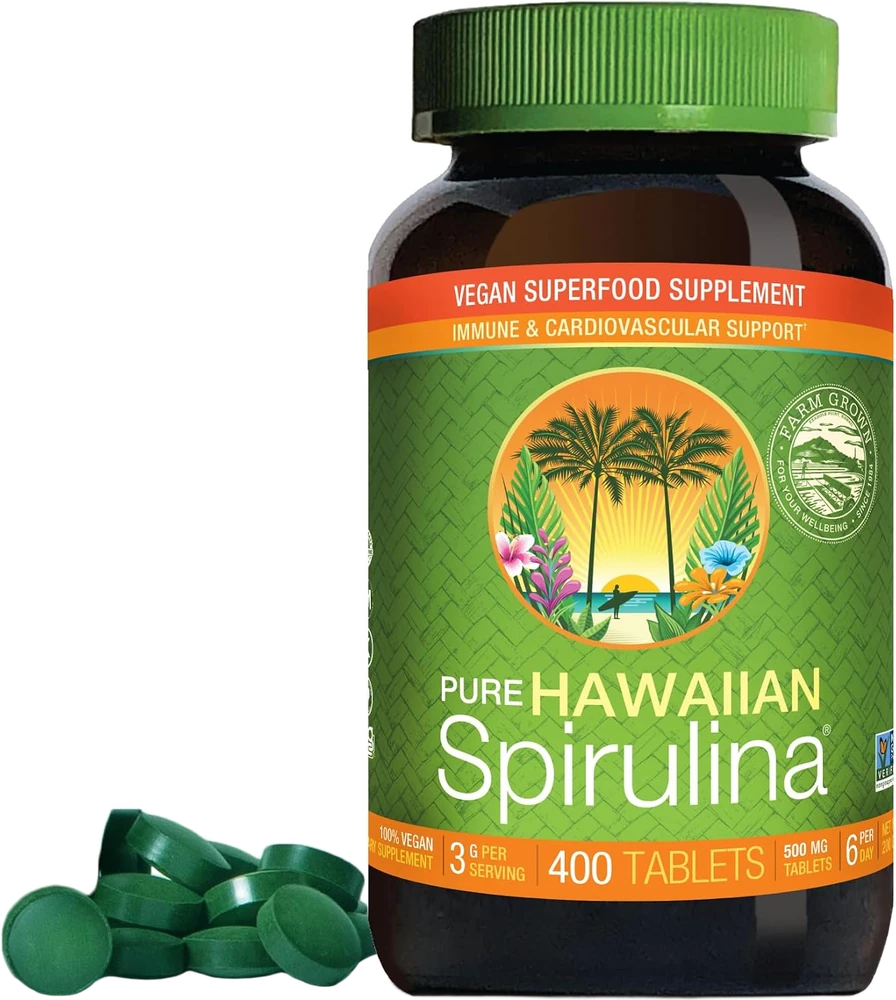
Best Overall: Nutrex Hawaii Pure Hawaiian Spirulina 500 mg Tablets
Hawaiian-pond spirulina that hits the full 3 g trial dose in one six-tablet serving, declares its iron and protein, and carries the longest seal list on the list.
$32-34~$0.50 per 6-tablet (3 g) serving
Why it wins: all five scores, pros & cons, full label
- Full 3 g trial dose in one printed serving
- Single named Hawaiian farm with stated third-party testing
- Iron, protein and sodium declared on the panel
- Longest list of real third-party seals in the group
- Not USDA Organic certified
- Six tablets a day is a lot of swallowing
- Three excipients where the organic tablets have none
- Cost per dose
- ~$0.50 per 3 g serving
- Disclosed per serving
- 2 g protein, 3 mg iron, 60 mg sodium
- Other ingredients
- Silica, chicory inulin, vegetable magnesium stearate
- Form
- Tablet, 500 mg each
- Serving
- 6 tablets (3 g)
- Count
- 400 tablets (66 servings)
- Seals
- Non-GMO Project, GFCO gluten-free, Certified Vegan, kosher, glyphosate residue free

Our take — It costs more than a bag of powder and it is not organic, but everything the science asks for is on the panel: 3 g per serving, a named controlled pond, third-party testing and disclosed iron and protein. If you buy one spirulina, buy this one.
 02
02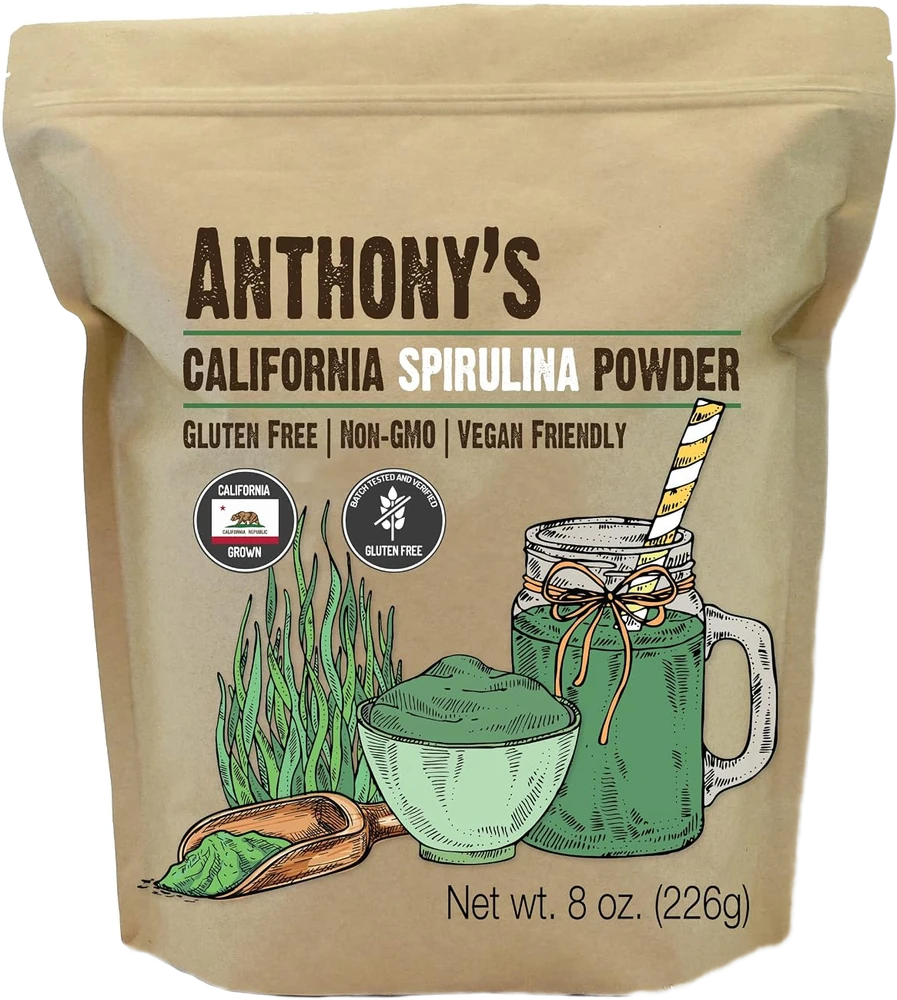 03
03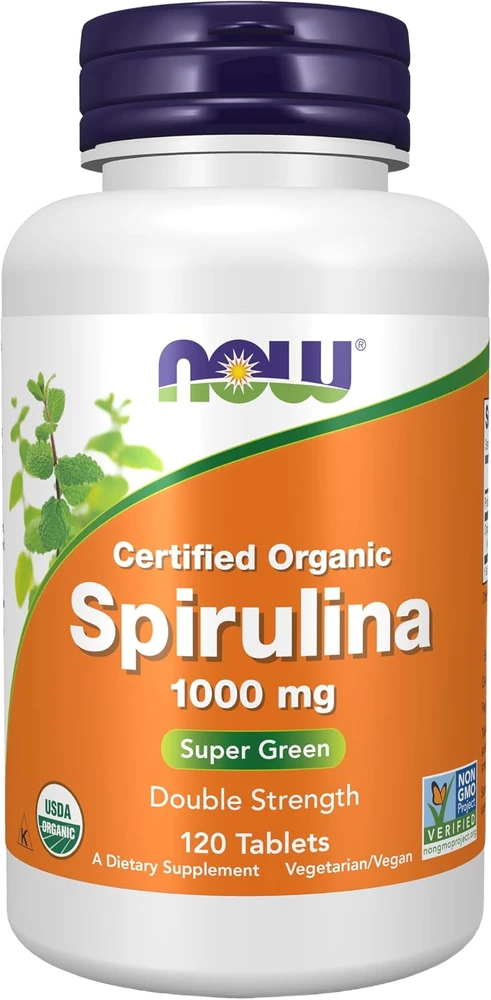 04
04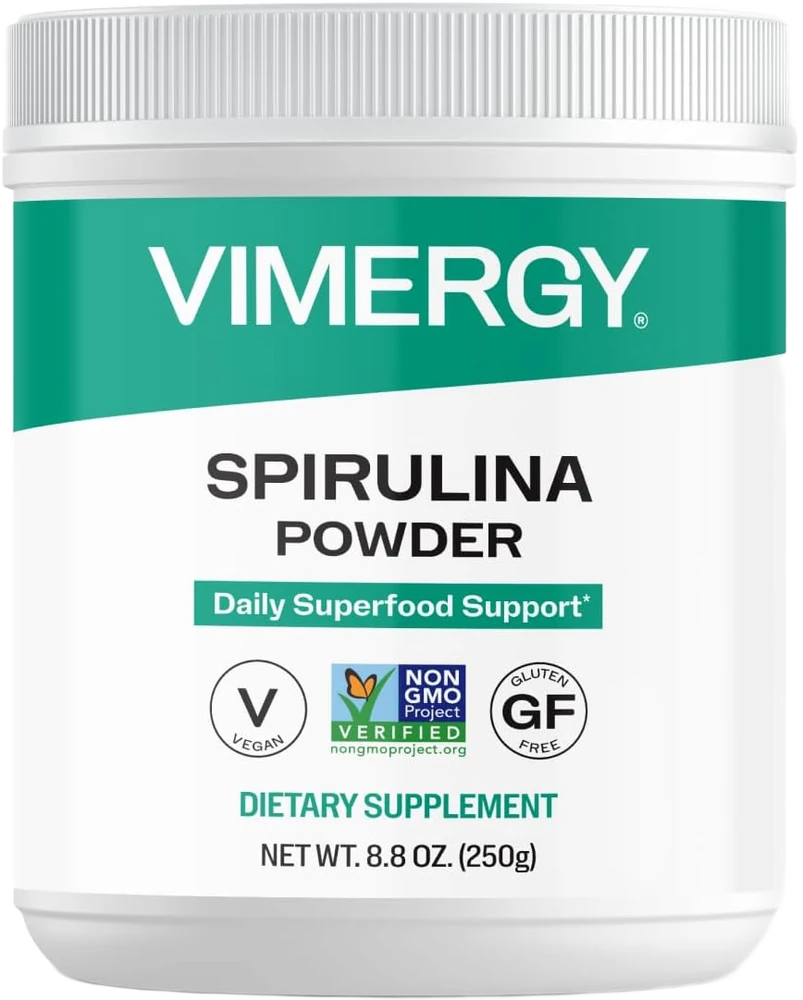 05
05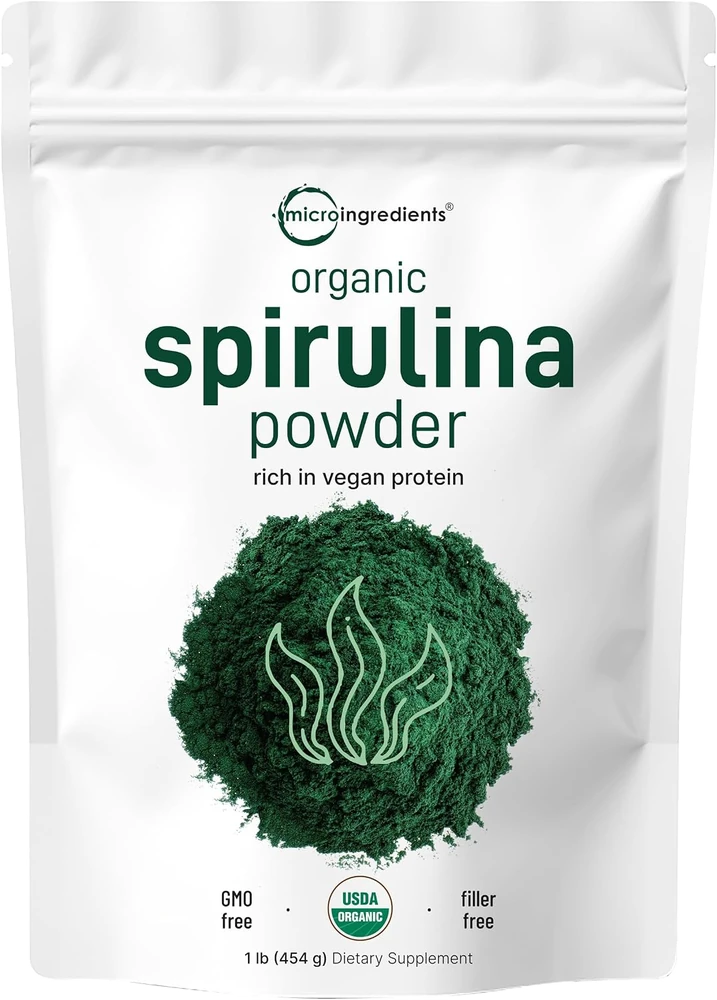 06
06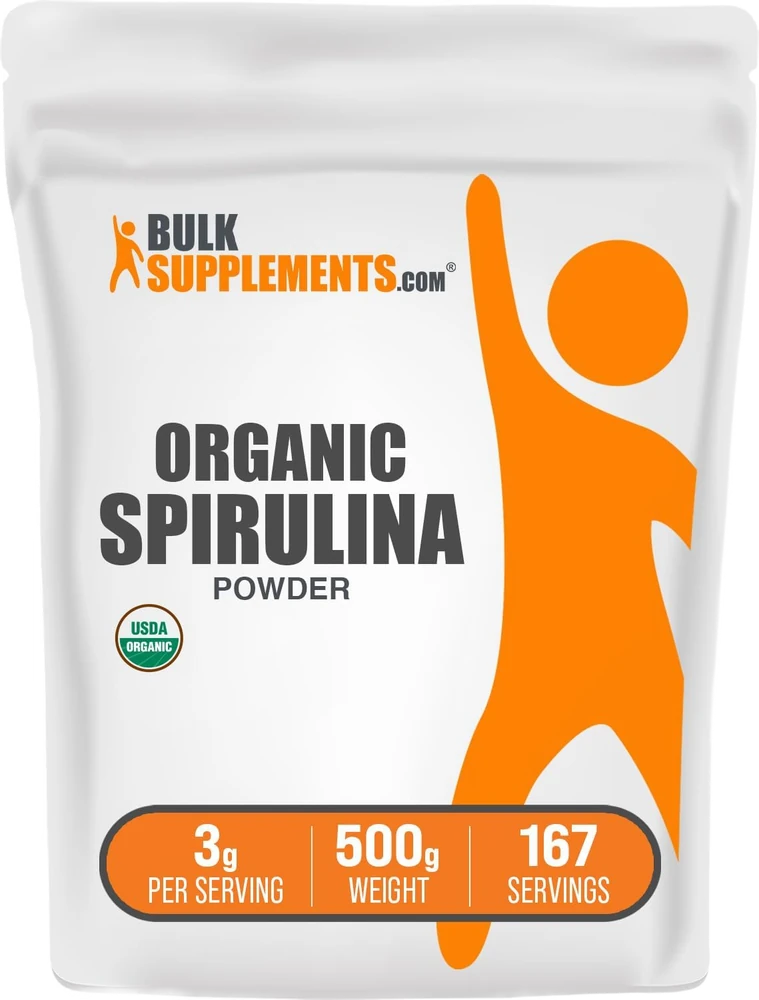 07
07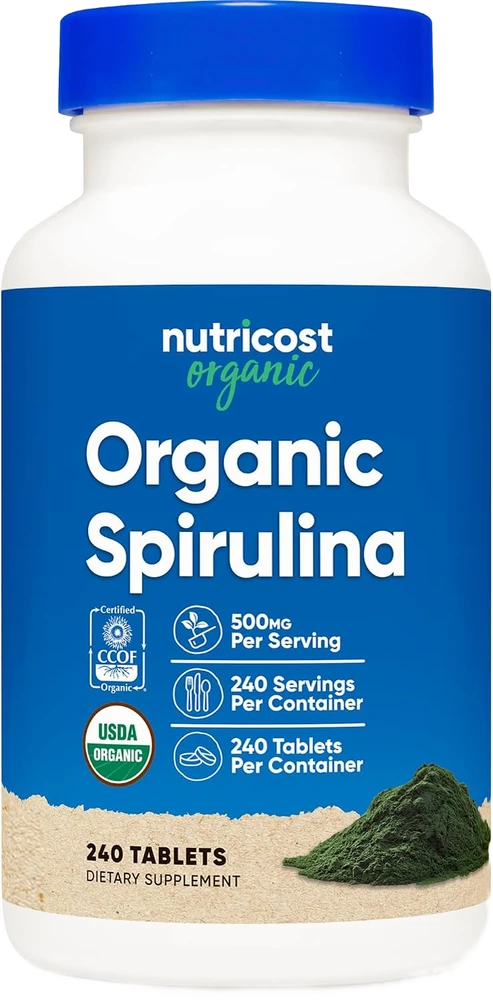 08
08Who Wins Which Aspect
Sorted by overall SAC Product Score™ — the official ranking.
| # | Pick | Score | Dose vs Clinical Range25% | Purity & Contaminant Control25% | Label Transparency20% | Certifications & Sourcing15% | Value15% | Cost Per Dose | Buy |
|---|---|---|---|---|---|---|---|---|---|
| 01 | | 8.8 | 9.02 | 9.31 | 9.02 | 8.62 | 7.4 | ~$0.50 / 3 g serving | Check price |
| Full 3 g trial dose in one printed servingNot USDA Organic certified | |||||||||
| 02 | | 8.6 | 9.02 | 9.02 | 9.61 | 8.0 | 6.2 | ~$0.64 / 3 g serving | Check price |
| Only product declaring c-phycocyanin contentHighest cost per dose on the list | |||||||||
| 03 | | 8.5 | 9.21 | 8.4 | 8.63 | 7.0 | 9.03 | ~$0.26 / 3 g serving | Check price |
| California-grown, Product of USANot organic certified | |||||||||
| 04 | | 8.4 | 8.03 | 8.83 | 8.0 | 9.01 | 8.6 | ~$0.11 / tablet | Check price |
| USDA Organic via QAI, Non-GMO Project verifiedPrinted serving is one tablet, a third of the studied dose | |||||||||
| 05 | | 8.3 | 9.21 | 8.83 | 7.6 | 9.01 | 6.4 | ~$0.48 / 3 g serving | Check price |
| Full 3 g scoop, single ingredientAbout $0.48 per dose, roughly three times the budget organic powders | |||||||||
| 06 | | 8.2 | 9.21 | 6.5 | 8.0 | 8.43 | 9.61 | ~$0.13 / 3 g serving | Check price |
| Lowest cost per 3 g dose on the listCalifornia Prop 65 lead warning printed on the label | |||||||||
| 07 | | 8.1 | 9.21 | 7.8 | 6.6 | 7.6 | 9.42 | ~$0.15 / 3 g serving | Check price |
| About $0.15 per 3 g doseNo protein, iron or phycocyanin disclosure | |||||||||
| 08 | | 8.0 | 7.4 | 8.2 | 7.6 | 8.62 | 8.8 | ~$0.05 / tablet | Check price |
| About $0.05 per tabletSix tablets to reach the studied dose | |||||||||
The Other 7, Ranked
- 02
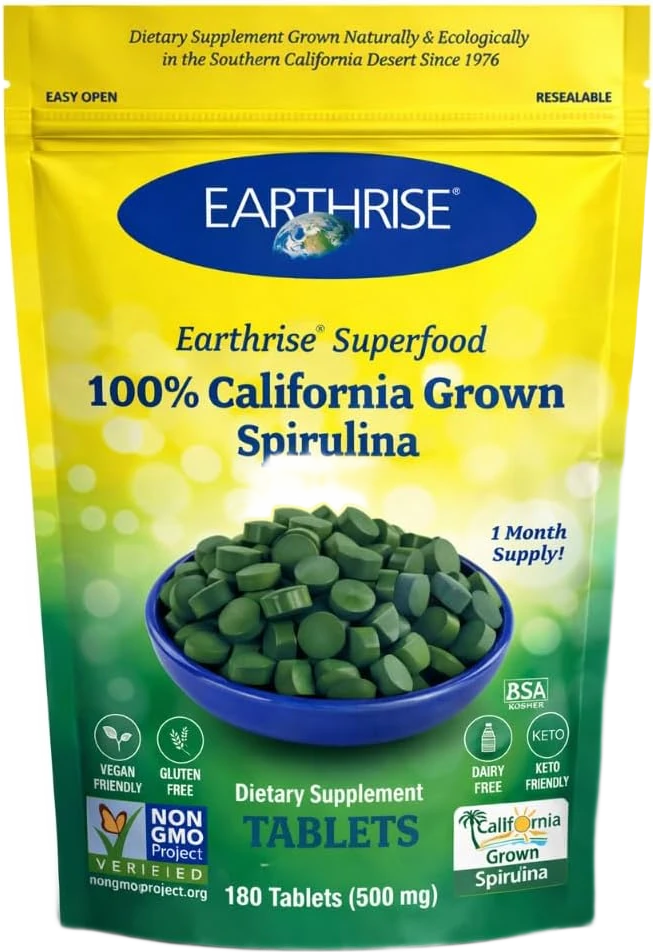
Best Premium: Earthrise California Spirulina 500 mg Tablets
8.6SAC Score™The only product here that prints its c-phycocyanin content, 165 mg per 3 g serving, from a single California farm; you pay for that transparency with the highest cost per dose on the list.
StrongestLabel Transparency9.61WeakestValue6.2- Cost per dose
- ~$0.64 per 3 g serving
- Disclosed per serving
- 165 mg c-phycocyanin, 2 g protein, 1.5 mg iron, 20 mg sodium
- Other ingredients
- Vegetable stearate, silica
All five scores, pros & cons, full label
What We Like- Only product declaring c-phycocyanin content
- Full 3 g serving from a single California farm
- Iron, protein and sodium disclosed
- Non-GMO and kosher seals on the panel
What You Live With- Highest cost per dose on the list
- Not organic certified
- No third-party testing statement printed on the pack
- Form
- Tablet, 500 mg each
- Serving
- 6 tablets (3 g)
- Count
- 180 tablets (30 servings)
- Seals
- Non-GMO, kosher (KSA), California Grown
Our take — If you take spirulina for its phycocyanin, Earthrise is the only brand that tells you how much you are getting. It matches Nutrex on dose and origin quality and beats it on disclosure; it loses on price and on the absence of a printed testing claim. A premium, honest tablet.
- 03
Best US-Grown Powder: Anthony's California Spirulina Powder, 8 oz
8.5SAC Score™A California-grown powder with a full food-style Nutrition Facts panel, 3 g per teaspoon, batch-tested gluten-free, at about a quarter per dose.
StrongestDose vs Clinical Range9.21WeakestCertifications & Sourcing7.0- Cost per dose
- ~$0.26 per 3 g serving
- Disclosed per serving
- 2 g protein, 2.4 mg iron, 9 mg calcium, 45 mg potassium, 20 mg sodium
- Other ingredients
- None
All five scores, pros & cons, full label
What We Like- California-grown, Product of USA
- Full 3 g teaspoon dose for about $0.26
- Iron, calcium, potassium and sodium disclosed
- No excipients; single ingredient
What You Live With- Not organic certified
- No heavy-metal or microcystin testing claim on the pack
- Plain powder taste; needs a smoothie
- Form
- Powder
- Serving
- 1 teaspoon (3 g)
- Count
- 8 oz (226 g), 75 servings
- Seals
- Gluten free (batch tested), Non-GMO, vegan friendly, Product of USA
Our take — If you want to know where your algae grew and do not need an organic seal, this is the cheapest way to a disclosed, 3 g, US-grown dose. It ranks above the organic powders because origin and mineral disclosure beat a seal on a bare panel.
- 04
Best Organic Tablet: NOW Certified Organic Spirulina 1,000 mg Double Strength Tablets
8.4SAC Score™A QAI-certified organic 1,000 mg tablet with no excipients at all, from a brand with in-house testing labs; three tablets reach the trial dose for about a third of a dollar.
StrongestCertifications & Sourcing9.01WeakestDose vs Clinical Range8.0- Cost per dose
- ~$0.11 per tablet
- Disclosed per serving
- 1 g organic spirulina, protein under 1 g
- Other ingredients
- None
All five scores, pros & cons, full label
What We Like- USDA Organic via QAI, Non-GMO Project verified
- No excipients at all
- GMP manufacturing with in-house labs
- Cheap: about $0.11 per 1,000 mg tablet
What You Live With- Printed serving is one tablet, a third of the studied dose
- No iron or phycocyanin disclosure
- Growing region not named on the pack
- Form
- Tablet, 1,000 mg each
- Serving
- 1 tablet (1,000 mg)
- Count
- 120 tablets (120 servings)
- Seals
- USDA Organic (QAI), Non-GMO Project Verified, GMP Quality Assured
Our take — If you want organic certification in a tablet, NOW is the pick: no binders, real seals, a testing-lab manufacturer and a low price. Take three to match the trials and it still costs about a third of a dollar a day.
- 05
Best Premium Organic Powder: Vimergy USDA Organic Spirulina Powder, 250 g
8.3SAC Score™The premium organic powder: USDA Organic, OU kosher, gluten-free, vegan and paleo seals on a 3 g scoop, with a price to match.
StrongestDose vs Clinical Range9.21WeakestValue6.4- Cost per dose
- ~$0.48 per 3 g serving
- Disclosed per serving
- 3 g spirulina algae, 2 g protein
- Other ingredients
- None
All five scores, pros & cons, full label
What We Like- Full 3 g scoop, single ingredient
- USDA Organic plus kosher, gluten-free, vegan and paleo seals
- No excipients or additives
What You Live With- About $0.48 per dose, roughly three times the budget organic powders
- No iron or phycocyanin disclosure
- Growing region not printed on the pack
- Form
- Powder
- Serving
- 1 scoop (3 g)
- Count
- 250 g (8.8 oz), about 83 servings
- Seals
- USDA Organic, kosher (OU), gluten free, vegan, paleo friendly
Our take — Vimergy earns a mid-table spot on dose and seals. It does not beat the tablets on disclosure or the budget powders on price, so it is the pick for buyers who specifically want the fullest certification row on an organic powder.
- 06
Best Value Organic Powder: Micro Ingredients Organic Spirulina Powder, 1 lb
8.2SAC Score™A pound of USDA Organic spirulina for about thirteen cents a dose, with chlorophyll and protein on the panel; docked hard for the Prop 65 lead warning printed on the label.
StrongestValue9.61WeakestPurity & Contaminant Control6.5- Cost per dose
- ~$0.13 per 3 g serving
- Disclosed per serving
- 3 g organic spirulina, 2 g protein, about 40 mg chlorophyll
- Other ingredients
- None
All five scores, pros & cons, full label
What We Like- Lowest cost per 3 g dose on the list
- USDA Organic, cGMP and third-party-lab-tested marks
- Chlorophyll and protein declared
- 151 servings per bag
What You Live With- California Prop 65 lead warning printed on the label
- Growing region not named
- Plain powder taste
- Form
- Powder
- Serving
- 1 scoop (about 3 g)
- Count
- 1 lb, 151 servings
- Seals
- USDA Organic, cGMP, GMO free, third party lab tested
- Warning
- California Prop 65 lead warning printed on the label
Our take — If price per dose is your ranking, this wins. Our ranking weights contaminant control at a quarter of the score, and a printed lead warning costs it the podium. Buy it knowingly, or pay a little more for Anthony's California powder without the warning.
- 07
Best Budget: BulkSupplements Organic Spirulina Powder, 500 g
8.1SAC Score™Half a kilo of USDA Organic spirulina, 167 teaspoon servings of 3 g, no additives, no warnings, for about fifteen cents a dose; the panel just does not tell you much.
StrongestValue9.42WeakestLabel Transparency6.6- Cost per dose
- ~$0.15 per 3 g serving
- Disclosed per serving
- 3 g organic spirulina powder
- Other ingredients
- None; allergens: none
All five scores, pros & cons, full label
What We Like- About $0.15 per 3 g dose
- USDA Organic, single ingredient, no allergens
- No Prop 65 warning
- 167 servings per bag
What You Live With- No protein, iron or phycocyanin disclosure
- No third-party testing statement on the pack
- Growing region not named
- Form
- Powder
- Serving
- 1 teaspoon (about 3 g)
- Count
- 500 g, 167 servings
- Seals
- USDA Organic; gluten free, soy free, dairy free, no added sugar, additive free
Our take — This is the sensible floor of the market: a real organic seal, a full 3 g teaspoon and a clean panel for fifteen cents. It cannot compete with the tablets on disclosure or origin, and it does not try.
- 08
Best Budget Tablet: Nutricost Organic Spirulina 500 mg Tablets, 240 Count
8.0SAC Score™The cheapest organic tablet on the market, USDA and CCOF certified, no excipients; but at 500 mg a tablet you need six to reach the trial dose.
StrongestValue8.8WeakestDose vs Clinical Range7.4- Cost per dose
- ~$0.05 per tablet
- Disclosed per serving
- 500 mg organic spirulina
- Other ingredients
- None
All five scores, pros & cons, full label
What We Like- About $0.05 per tablet
- USDA and CCOF organic
- No excipients
What You Live With- Six tablets to reach the studied dose
- No disclosure beyond the spirulina amount
- No testing claim or origin on the pack
- Form
- Tablet, 500 mg each
- Serving
- 1 tablet (500 mg)
- Count
- 240 tablets (240 servings)
- Seals
- USDA Organic, CCOF Certified Organic
Our take — Nothing is wrong with Nutricost's tablet; it is organic, clean and cheap. It ranks last because a 500 mg serving is far from the studied dose and the panel discloses the least of any product here. As a budget organic tablet it does its job.
Spirulina In Four Short Lessons
Count grams, not tablets.
The trials that showed anything used 2 g a day for allergy symptoms and 1-8 g for lipids and glucose. A 500 mg tablet once a day is a sixth of that. Check the serving size on the panel and work out how many pieces reach 3 g; that number, not the tablet count, tells you how long the bottle lasts.
Ask where the water came from.
Spirulina concentrates whatever is in its pond, which is why a 2017 analysis of algae supplements found cyanotoxins in some products and why one bag on this list prints a Prop 65 lead warning. A named farm in Hawaii or California, or a printed testing programme, is worth more than any superfood claim.
Read the panel for what it discloses, not what it promises.
Phycocyanin, iron and protein are the reasons people take spirulina; only some brands print them. Earthrise declares 165 mg phycocyanin per serving, Nutrex and Anthony's declare iron; the budget organic powders declare only the algae. Disclosure is the difference between knowing and hoping.
Cingi 2008 (PMID 18343939); Serban 2016 (PMID 26433766); Huang 2018 (PMID 30532573); Roy-Lachapelle 2017 (PMID 28245621).
Spirulina products differ less in what they contain than in how much you get per serving and where the algae grew. A 500 mg tablet is not a dose; the trials used 2-3 g a day and more. And because spirulina is grown in water and concentrates what is in it, the cultivation site and the testing regime matter more than for almost any other supplement. So our score weights dose and contaminant control at a quarter each, then rewards panels that disclose what is in the algae, seals that appear on the label rather than in the listing, and finally price per 3 g clinical dose as a tie-breaker. Every number we cite was read from the product's own Supplement Facts panel.
Dose vs Clinical Range · 25%
Did the label serving land on the 2-3 g a day that the human trials actually used? A 3 g scoop or six 500 mg tablets gets there in one serving; a 500 mg or 1,000 mg tablet taken once does not, so we score how many pieces it takes to reach a studied dose.
Purity & Contaminant Control · 25%
Spirulina is a cyanobacterium grown in water, so it concentrates whatever is in that water. We credited controlled-pond cultivation in a named region, stated heavy-metal and microcystin testing and organic certification, and we penalised a printed Prop 65 lead warning.
Label Transparency · 20%
Does the panel tell you what is in the algae, not just how much algae? Disclosed phycocyanin, iron and protein, a named species, and a clean 'other ingredients' line all earn points. A bare '3 g spirulina' panel does not.
Certifications & Sourcing · 15%
USDA Organic, Non-GMO Project, GFCO gluten-free and kosher seals, plus a stated country or state of cultivation. We checked seals against the panel, not the listing bullets.
Value · 15%
Cost per 3 g clinical dose, not per bottle or per tablet. Applied as a tie-breaker only: a cheap powder with a lead warning does not out-rank a tested one.
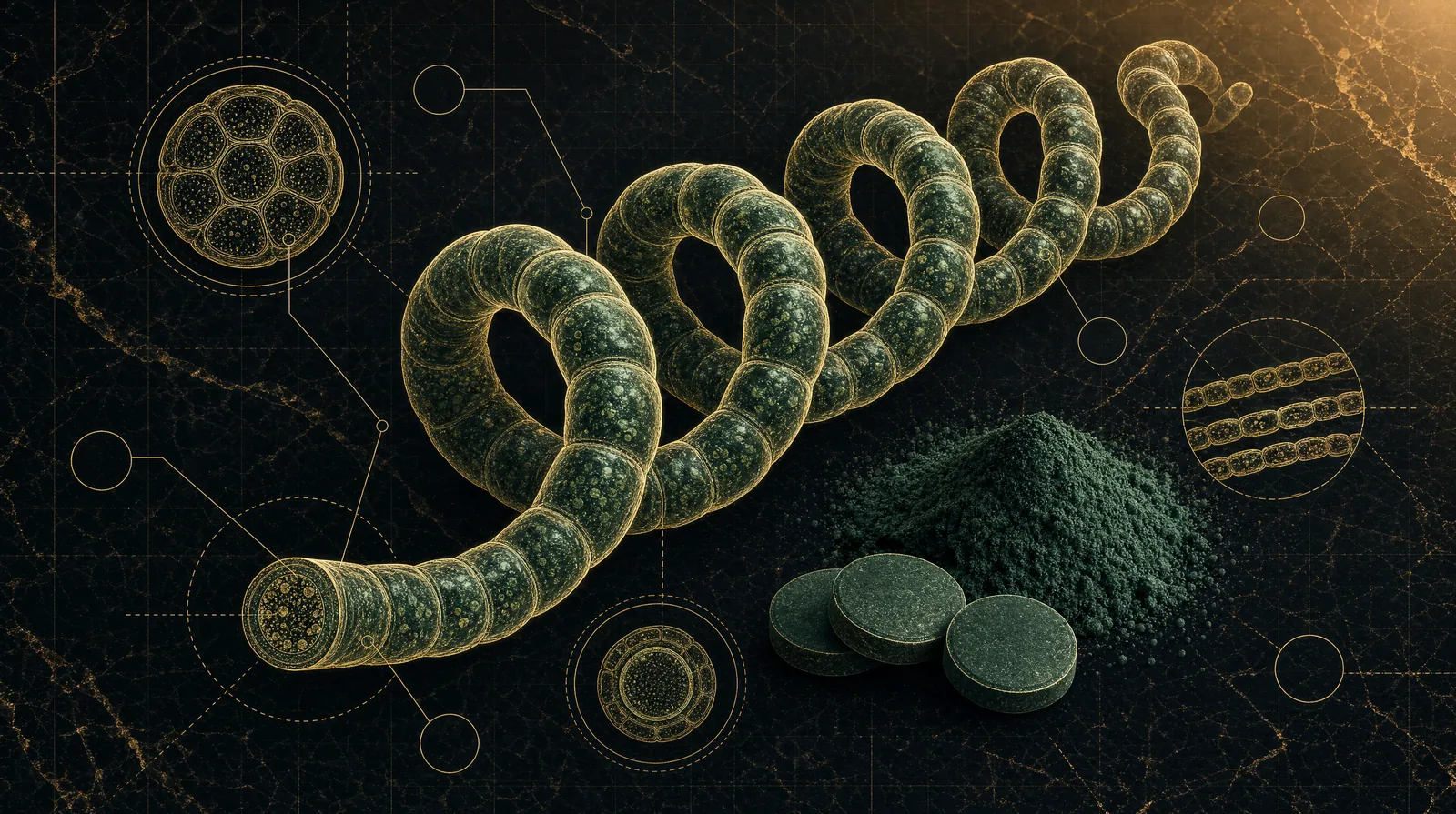
How Spirulina Works
- 1
A whole-cell food, not an extract
Spirulina (Arthrospira platensis) is roughly 60 percent protein by dry weight, with iron, B vitamins, gamma-linolenic acid and the blue pigment phycocyanin. You eat the whole organism, which is why dose is measured in grams.
- 2
Phycocyanin and the allergy signal
The blue pigment inhibits inflammatory pathways in cell and animal work, and in the six-month human trial 2 g a day cut nasal symptoms; a smaller trial showed reduced interleukin-4, the cytokine that drives allergic responses.
- 3
Lipids and glucose
Meta-analyses of randomized trials show lower total cholesterol, LDL, triglycerides and fasting glucose with 1-8 g a day, probably through the fibre-like polysaccharides and phycocyanin's effect on lipid handling in the liver.
- 4
Why the pond matters
Spirulina takes up metals and can be contaminated by toxin-producing cyanobacteria if grown in open, uncontrolled water. Controlled ponds, organic certification and finished-product testing are the difference between a food and a risk.
What to Expect From Spirulina
Nothing to feel
Spirulina is a food. Expect green-tinted stools and perhaps mild bloating as you start; no acute effect is expected or reported.
Allergy symptoms may ease
The rhinitis trial ran six months, but the cytokine study saw interleukin-4 fall by twelve weeks at 2 g a day. If seasonal symptoms are your reason, start well before the season.
Lipid and glucose shifts on a blood test
The meta-analyses pool trials of two to six months. Lower LDL and triglycerides are the most consistent finding; check with a lipid panel rather than by feel.
A daily food with a sourcing rule
Keep to 2-3 g a day from a controlled pond, and stop if you have phenylketonuria or an autoimmune condition without clinician input.
The bottom line
Nutrex Hawaii is the reference product.
Full 3 g serving, a single named Hawaiian pond, third-party testing and disclosed iron and protein: it is the one product where every question the evidence raises is answered on the panel.
Earthrise is the premium upgrade for disclosure.
It matches Nutrex on dose and origin and is the only brand that prints its phycocyanin content. You pay the highest cost per dose on the list for a monthly bottle.
Powder buyers should choose between origin and organic.
Anthony's gives you California-grown algae with minerals on the panel for a quarter; Vimergy, BulkSupplements and Micro Ingredients give you organic certification from an unnamed farm. Micro Ingredients is cheapest but prints a lead warning.
Small tablets are fine if you do the arithmetic.
NOW's 1,000 mg and Nutricost's 500 mg organic tablets are clean and cheap. Take three or six to reach 3 g, and price them by the day, not by the pill.
Quick Answers
What is the best spirulina pick overall?
Nutrex Hawaii Pure Hawaiian Spirulina 500 mg Tablets by Nutrex Hawaii is our #1 pick (SAC score 8.8/10). It costs more than a bag of powder and it is not organic, but everything the science asks for is on the panel: 3 g per serving, a named controlled pond, third-party testing and disclosed iron and protein. If you buy one spirulina, buy this one.
What is the best budget option?
BulkSupplements Organic Spirulina Powder, 500 g at $24-26. This is the sensible floor of the market: a real organic seal, a full 3 g teaspoon and a clean panel for fifteen cents. It cannot compete with the tablets on disclosure or origin, and it does not try.
How much do these picks cost?
Across our ranked picks, prices run from about $12 to $39 — exact price and cost per serving are listed on every pick card above.
How were these picks ranked?
Spirulina products differ less in what they contain than in how much you get per serving and where the algae grew. A 500 mg tablet is not a dose; the trials used 2-3 g a day and more. And because spirulina is grown in water and concentrates what is in it, the cultivation site and the testing regime matter more than for almost any other supplement. So our score weights dose and contaminant control at a quarter each, then rewards panels that disclose what is in the algae, seals that appear on the label rather than in the listing, and finally price per 3 g clinical dose as a tie-breaker. Every number we cite was read from the product's own Supplement Facts panel.
Every Claim Ranked Above Traces Back To One Of These
9 peer-reviewed sources, each linked to PubMed
- [1] Cingi C, et al. Eur Arch Otorhinolaryngol. 2008;265(10):1219-23. PMID 18343939 — The effects of spirulina on allergic rhinitis. In a six-month double-blind, placebo-controlled trial, 2 g of spirulina a day significantly reduced allergic-rhinitis symptoms including nasal discharge, sneezing, congestion and itching versus placebo.
- [2] Mao TK, Van de Water J, Gershwin ME. J Med Food. 2005;8(1):27-30. PMID 15857205 — Effects of a Spirulina-based dietary supplement on cytokine production from allergic rhinitis patients. Twelve weeks of 2,000 mg spirulina a day reduced interleukin-4 production by about a third in allergic-rhinitis patients, a shift away from the allergic cytokine profile; 1,000 mg did not.
- [3] Serban MC, et al. Clin Nutr. 2016;35(4):842-51. PMID 26433766 — A systematic review and meta-analysis of the impact of Spirulina supplementation on plasma lipid concentrations. Pooling seven randomized trials, spirulina supplementation lowered total cholesterol, LDL and triglycerides and raised HDL, with doses across the trials ranging from about 1 to 8 g a day.
- [4] Huang H, Liao D, Pu R, Cui Y. Diabetes Metab Syndr Obes. 2018;11:729-742. PMID 30532573 — Quantifying the effects of spirulina supplementation on plasma lipid and glucose concentrations, body weight, and blood pressure. A meta-analysis of randomized trials found spirulina reduced total cholesterol, LDL, triglycerides, fasting glucose and diastolic blood pressure, with the largest lipid effects at higher doses and longer durations.
- [5] Moradi S, et al. Complement Ther Med. 2019;47:102211. PMID 31780031 — Effects of Spirulina supplementation on obesity: A systematic review and meta-analysis of randomized clinical trials. Across five randomized trials, spirulina produced small reductions in body weight, body-fat percentage and waist circumference, with the weight effect concentrated in participants with obesity.
- [6] Karkos PD, et al. Evid Based Complement Alternat Med. 2011;2011:531053. PMID 18955364 — Spirulina in clinical practice: evidence-based human applications. A review of human studies concluded spirulina has the most consistent evidence for lipid-lowering and allergic-rhinitis symptom relief, with immune-marker effects that are promising but drawn from small trials.
- [7] Selmi C, et al. Cell Mol Immunol. 2011;8(3):248-54. PMID 21278762 — The effects of Spirulina on anemia and immune function in senior citizens. Twelve weeks of 3 g spirulina a day in adults over 50 raised haemoglobin, particularly in women, and increased markers of immune activity in a small open-label study of forty participants.
- [8] Kalafati M, et al. Med Sci Sports Exerc. 2010;42(1):142-51. PMID 20010119 — Ergogenic and antioxidant effects of spirulina supplementation in humans. Four weeks of 6 g spirulina a day in trained men increased time to fatigue and fat oxidation during a two-hour run and raised blood glutathione, in a crossover placebo-controlled design.
- [9] Roy-Lachapelle A, Solliec M, Bouchard MF, Sauvé S. Toxins (Basel). 2017;9(3):76. PMID 28245621 — Detection of Cyanotoxins in Algae Dietary Supplements. Analysis of eighteen algae dietary supplements detected cyanotoxins in a subset of products, underlining that cultivation control and finished-product testing, not the algae species alone, determine safety.
More Spirulina Guides
Affiliate disclosure: every Amazon link uses our Associates tag (superachieverclub-20). We earn a small commission at no cost to you; it funds independent reviews. We never accept payment to change a ranking.