
Nutrex Hawaii Pure Hawaiian Spirulina 500 mg Tablets Review
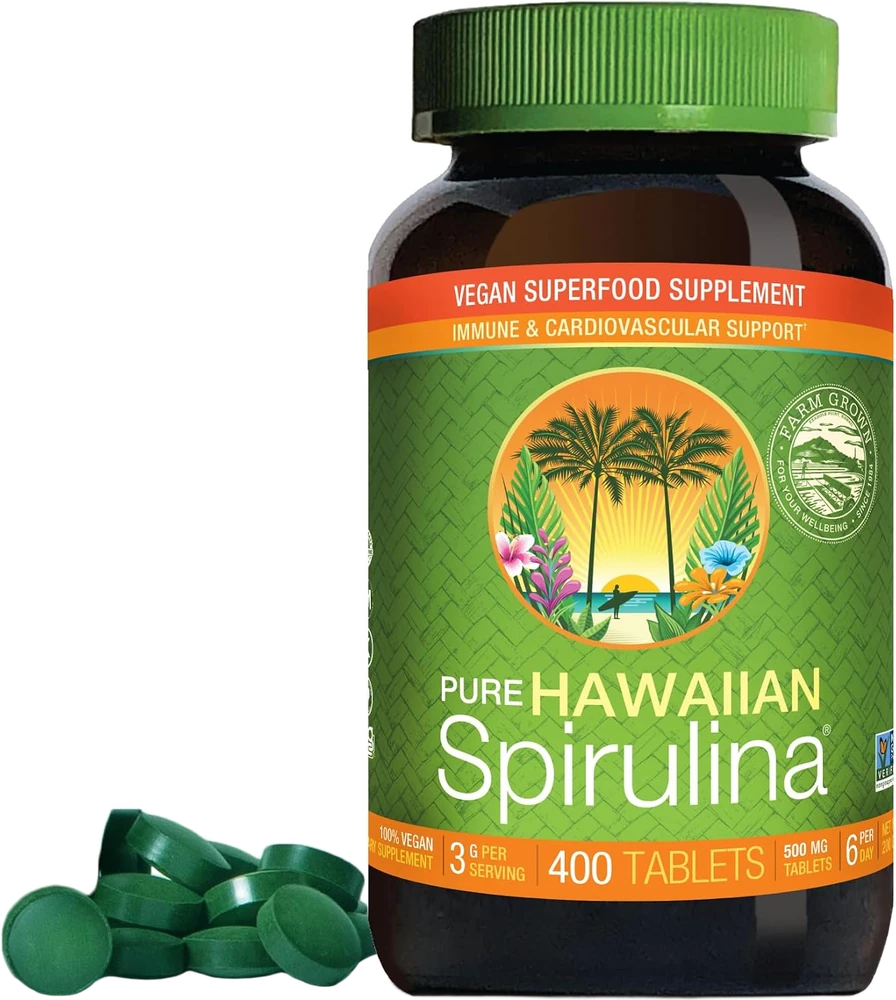 #1 of 8 · Best Overall✓ Label verified · Supplement Facts read Sep 20, 2026
Real retailer photo, cut out. Label unedited.
Buy it if you want the studied 3 g dose from a farm you can name. Six tablets deliver 3 g of spirulina, the same daily amount that cut allergic-rhinitis symptoms over six months in the Cingi trial.
$32-34~$0.50 per 6-tablet (3 g) serving
Why It Scores 8.8 — And The Label Line Behind Each Number
Dose vs Clinical Range
25% of scoreServing Size 6 Tablets (3 g) puts the full studied dose in one serving; no counting or splitting.
- Disclosed per serving
- 2 g protein, 3 mg iron, 60 mg sodium
Purity & Contaminant Control
25% of scoreSingle-farm Hawaiian cultivation with 'Third Party Tested' on the front and a Glyphosate Residue Free seal; no Prop 65 warning on the panel.
- Seals
- Non-GMO Project, GFCO gluten-free, Certified Vegan, kosher, glyphosate residue free
Label Transparency
20% of scoreThe panel declares 3 g spirulina, 2 g protein, 3 mg iron and 60 mg sodium per serving, plus a clean three-item excipient line.
Certifications & Sourcing
15% of scoreNon-GMO Project Verified, GFCO gluten-free, Certified Vegan and kosher seals on the panel; no USDA Organic mark.
- Form
- Tablet, 500 mg each
- Other ingredients
- Silica, chicory inulin, vegetable magnesium stearate
Value
15% of scoreAbout $0.50 per 3 g serving: fair for a tested single-origin tablet, but three to four times the cost of the bulk powders.
- Serving
- 6 tablets (3 g)
- Count
- 400 tablets (66 servings)
- Cost per dose
- ~$0.50 per 3 g serving
Label verified. Every figure read from the Supplement Facts photo, Sep 20, 2026.
Marketing Claims Vs. Reality
Pure Hawaiian spirulina, grown in Kona.
Nutrex Hawaii operates its own Cyanotech farm on the Kona coast; the front panel states 'Pure Hawaiian Spirulina' and 'Made in USA'.
Third-party tested.
The front label says Third Party Tested and carries a Glyphosate Residue Free seal, but no lot-specific certificate is printed on the pack; treat it as a stated programme, not a published COA.
A vegan superfood supplement.
Certified Vegan seal on the panel; 2 g protein and 3 mg iron per 3 g serving are declared, which is where the 'superfood' framing comes from.
What Our Test Actually Found
The dose is the reason it wins
Most spirulina tablets ask you to take one and hope. Nutrex prints a six-tablet, 3 g serving, which is the amount that produced the symptom reductions in the six-month allergic-rhinitis trial and sits inside the 1-8 g range pooled in the lipid meta-analyses.
Origin is the purity argument
Spirulina concentrates what is in its water. A single, named, ocean-fed Hawaiian pond with stated testing is the strongest contamination control on this list, and it is the reason this product edges the California tablet that discloses more but tests less publicly.
Full analysis: all pros & cons (7), buy if / skip if
- Full 3 g trial dose in one printed serving
- Single named Hawaiian farm with stated third-party testing
- Iron, protein and sodium declared on the panel
- Longest list of real third-party seals in the group
- Not USDA Organic certified
- Six tablets a day is a lot of swallowing
- Three excipients where the organic tablets have none
- You want the 3 g daily dose the trials used in one serving
- You care where the algae grew and want a named, controlled pond
- You prefer tablets over the taste of green powder
- You want iron and protein amounts printed on the panel
- You want USDA Organic certification; this product is Non-GMO but not certified organic
- You are on a strict budget; bulk powders cost a third as much per dose
- You cannot swallow six tablets a day
Six tablets deliver 3 g of spirulina, the same daily amount that cut allergic-rhinitis symptoms over six months in the Cingi trial. The panel discloses iron and protein, the seals are real third-party marks rather than listing bullets, and the cultivation site is a single Hawaiian farm. You pay roughly fifty cents per serving for that certainty, which is more than the bulk powders but less than the other California tablet.
Nutrex Hawaii grows its spirulina in open-air ponds on the Kona coast fed by deep ocean water, and the label reads like it: Serving Size 6 Tablets (3 g), 66 servings, 3 mg iron and 2 g protein per serving, with Non-GMO Project, GFCO gluten-free, Certified Vegan, kosher and glyphosate-residue-free seals. It is the one product on this list where the dose, the origin and the testing all line up with what the trials used, which is why it sits at number one despite a mid-pack price.
The spirulina to buy when you want the trial dose and a farm you can name

It costs more than a bag of powder and it is not organic, but everything the science asks for is on the panel: 3 g per serving, a named controlled pond, third-party testing and disclosed iron and protein. If you buy one spirulina, buy this one.
If This Doesn’t Fit — Try These
 02
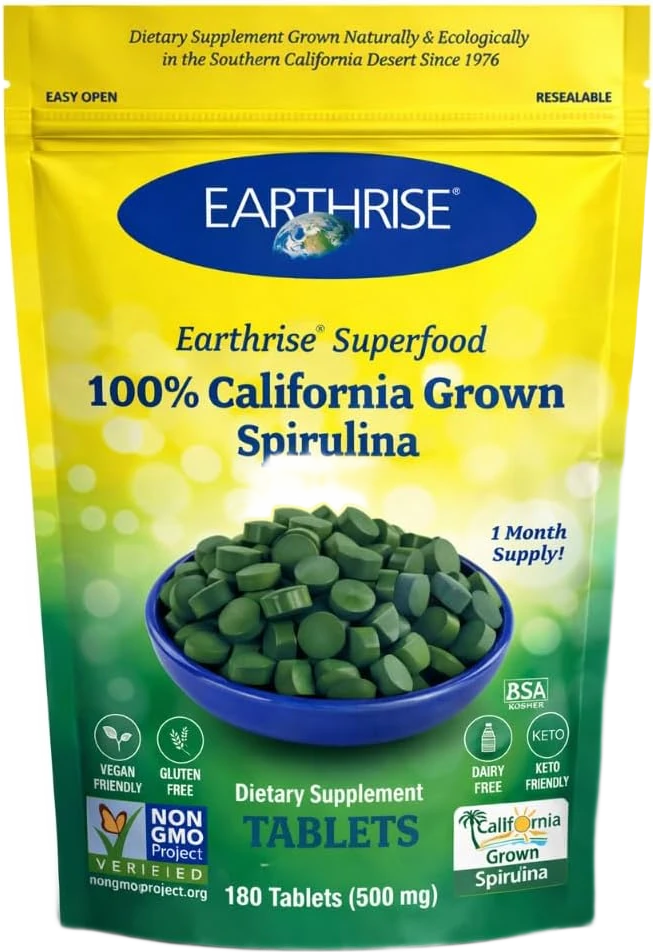
02Earthrise California Spirulina
If you take spirulina for its phycocyanin, Earthrise is the only brand that tells you how much you are getting.
 03
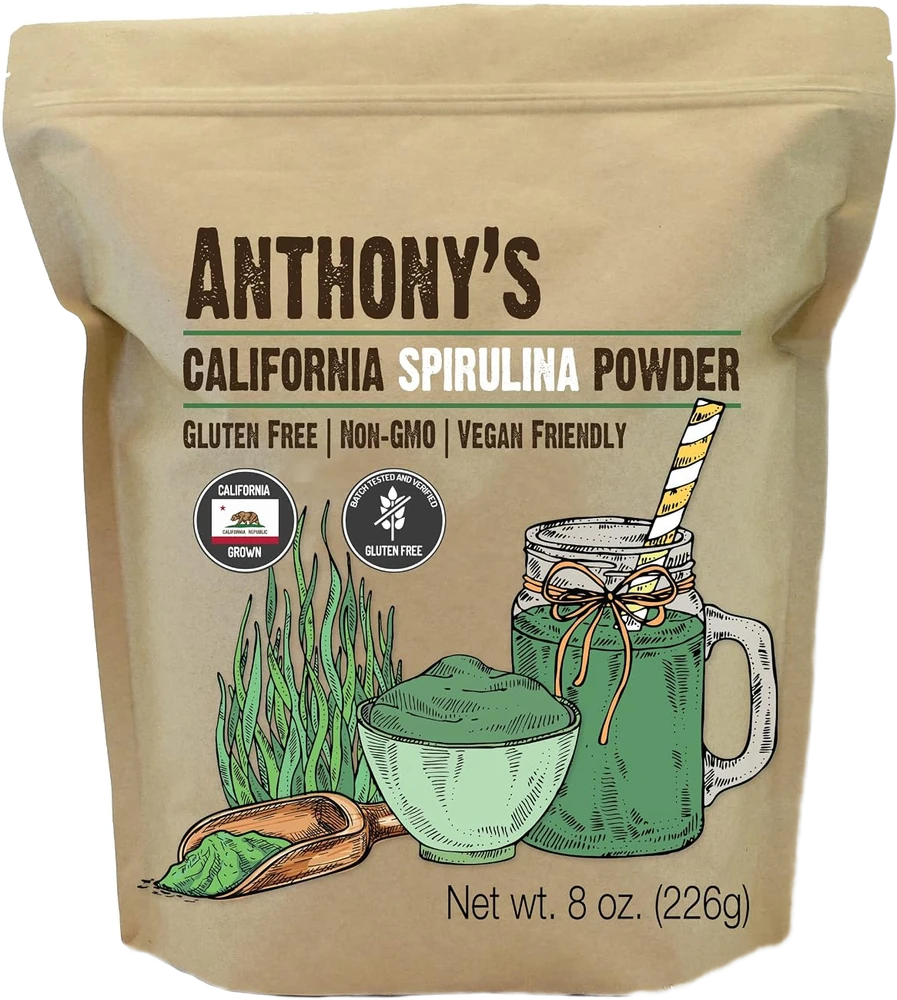
03Anthony's California Spirulina
If you want to know where your algae grew and do not need an organic seal, this is the cheapest way to a disclosed, 3 g, US-grown dose.
 04
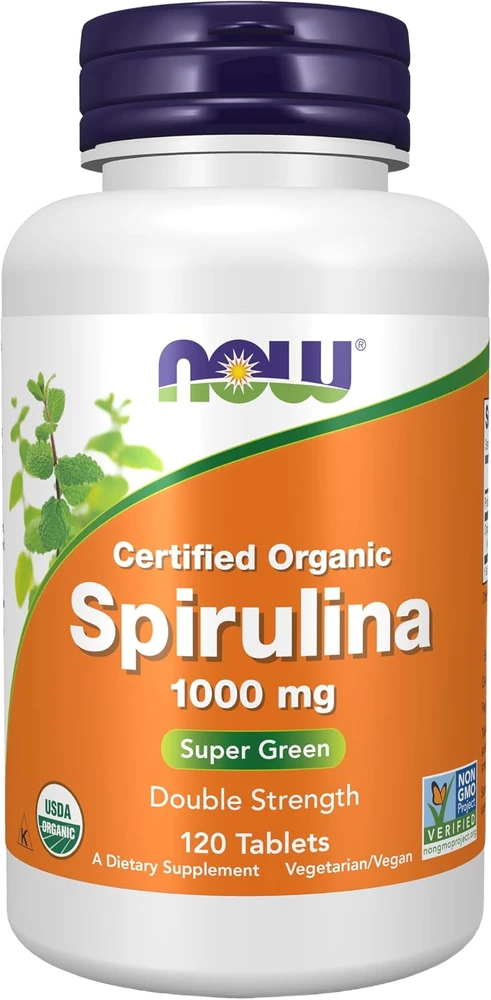
04NOW Organic Spirulina 1,000 mg
If you want organic certification in a tablet, NOW is the pick: no binders, real seals, a testing-lab manufacturer and a low price.
Quick Answers
How many tablets a day should I take?
The label serving is 6 tablets (3 g). That is the amount used in the six-month allergic-rhinitis trial and sits within the 1-8 g range pooled in the lipid meta-analyses, so there is no reason to guess.
Is Nutrex Hawaii spirulina organic?
No. It carries Non-GMO Project, GFCO gluten-free, Certified Vegan, kosher and glyphosate-residue-free seals, but not USDA Organic. If organic certification is your priority, NOW or Vimergy are the picks.
Sources & Further Reading
2 peer-reviewed sources, each linked to PubMed
- [1] Cingi C, et al. Eur Arch Otorhinolaryngol. 2008;265(10):1219-23. PMID 18343939 — The effects of spirulina on allergic rhinitis. In a six-month double-blind, placebo-controlled trial, 2 g of spirulina a day significantly reduced allergic-rhinitis symptoms including nasal discharge, sneezing, congestion and itching versus placebo.
- [2] Roy-Lachapelle A, Solliec M, Bouchard MF, Sauvé S. Toxins (Basel). 2017;9(3):76. PMID 28245621 — Detection of Cyanotoxins in Algae Dietary Supplements. Analysis of eighteen algae dietary supplements detected cyanotoxins in a subset of products, underlining that cultivation control and finished-product testing, not the algae species alone, determine safety.
Affiliate disclosure: every Amazon link uses our Associates tag (superachieverclub-20). We earn a small commission at no cost to you; it funds independent reviews. We never accept payment to change a ranking.