
Nutricost Organic Spirulina 500 mg Tablets, 240 Count Review
 #8 of 8 · Best Budget Tablet✓ Label verified · Supplement Facts read Sep 20, 2026
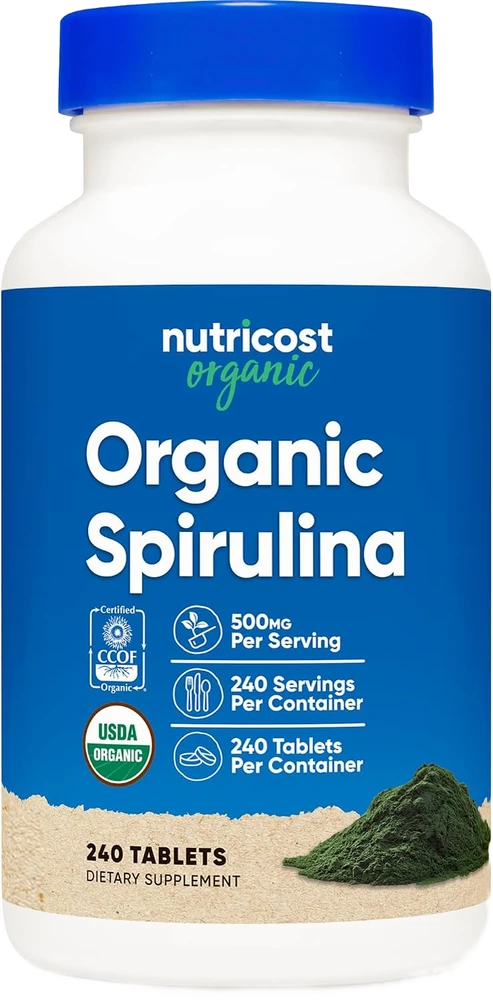
Real retailer photo, cut out. Label unedited.
Consider it. The budget organic tablet, if you are willing to take six. Organic, clean and cheap: the seals are real, the tablet is a single ingredient and six tablets cost about thirty cents.
$12-14~$0.05 per 500 mg tablet
Why It Scores 8.0 — And The Label Line Behind Each Number
Dose vs Clinical Range
25% of scoreA 500 mg tablet is one-sixth of the studied 3 g dose; the printed serving is one tablet.
- Disclosed per serving
- 500 mg organic spirulina
Purity & Contaminant Control
25% of scoreOrganic certification by USDA and CCOF limits pesticide inputs, but no testing statement or growing region is printed.
- Seals
- USDA Organic, CCOF Certified Organic
Label Transparency
20% of scoreThe panel declares 500 mg organic spirulina and nothing else; no protein, iron or phycocyanin.
Certifications & Sourcing
15% of scoreUSDA Organic and CCOF Certified Organic seals on the panel.
- Form
- Tablet, 500 mg each
- Other ingredients
- None
Value
15% of scoreAbout $0.05 per tablet, roughly $0.32 for a 3 g dose; the cheapest organic tablet route.
- Serving
- 1 tablet (500 mg)
- Count
- 240 tablets (240 servings)
- Cost per dose
- ~$0.05 per tablet
Label verified. Every figure read from the Supplement Facts photo, Sep 20, 2026.
Marketing Claims Vs. Reality
Organic spirulina.
USDA Organic and CCOF seals on the panel.
500 mg per serving, 240 servings.
One 500 mg tablet per serving, 240 tablets, as printed.
Non-GMO, gluten free.
These appear in the listing but not as seals on the panel we read; organic certification implies non-GMO inputs, but no gluten-free certification is printed.
What Our Test Actually Found
Cheap and clean, but small
A single-ingredient organic tablet for a nickel is a good thing. The 500 mg size is the problem: the trials that showed effects used 2-3 g a day, so a realistic serving is six tablets and the bottle is a forty-day supply.
The panel is the barest on the list
No protein, no iron, no phycocyanin, no farm, no testing statement. The two organic seals are doing all the work.
Full analysis: all pros & cons (6), buy if / skip if
- About $0.05 per tablet
- USDA and CCOF organic
- No excipients
- Six tablets to reach the studied dose
- No disclosure beyond the spirulina amount
- No testing claim or origin on the pack
- You want the cheapest organic tablet available
- You want zero excipients
- You do not mind six small tablets a day
- You want the trial dose in one or two tablets
- You want any mineral or pigment disclosure
- You want a named growing region or a printed testing claim
Organic, clean and cheap: the seals are real, the tablet is a single ingredient and six tablets cost about thirty cents. The panel discloses nothing beyond the 500 mg of spirulina and the pack does not name a farm or a testing programme, which is why it closes the list rather than leading it.
Nutricost's organic spirulina is a 240-tablet bottle of 500 mg tablets, one tablet per printed serving, 'Other ingredients: None', with USDA Organic and CCOF certified-organic seals. At around $13 that is about five cents a tablet. The trade-off is the same as with every 500 mg tablet: the studied 3 g dose is six of them, so the bottle is forty days, not 240.
The bottom of the list on merit, not on quality

Nothing is wrong with Nutricost's tablet; it is organic, clean and cheap. It ranks last because a 500 mg serving is far from the studied dose and the panel discloses the least of any product here. As a budget organic tablet it does its job.
If This Doesn’t Fit — Try These
 01
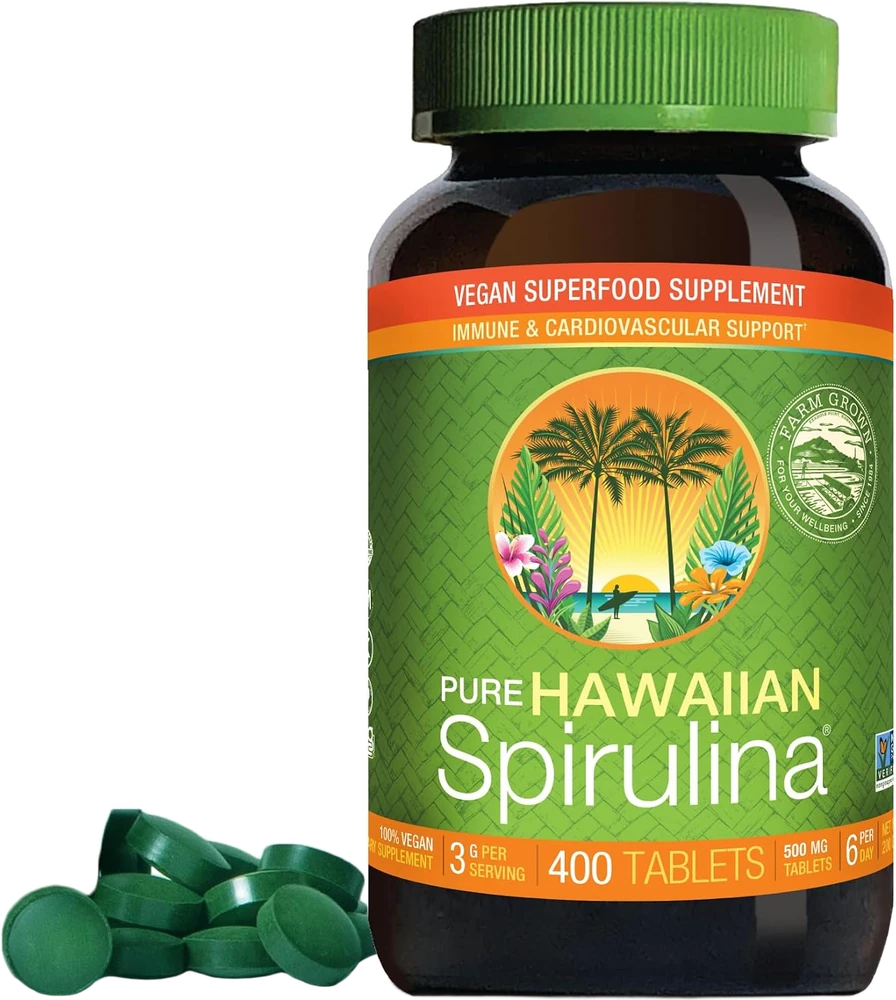
01Nutrex Hawaiian Spirulina
It costs more than a bag of powder and it is not organic, but everything the science asks for is on the panel: 3 g per serving, a named controlled pond, third-party testing and disclosed iron and protein.
 02
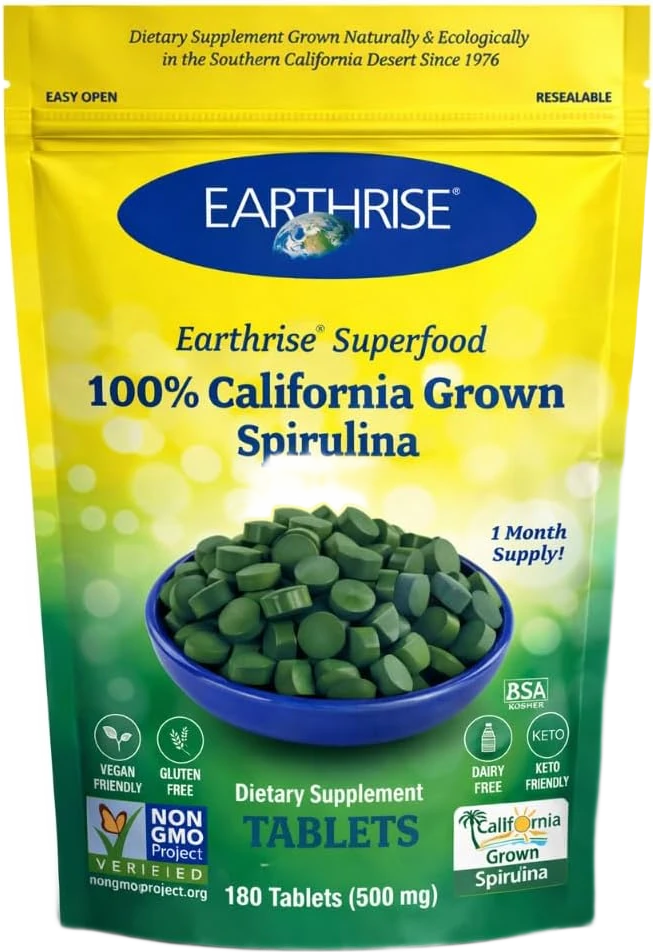
02Earthrise California Spirulina
If you take spirulina for its phycocyanin, Earthrise is the only brand that tells you how much you are getting.
 03
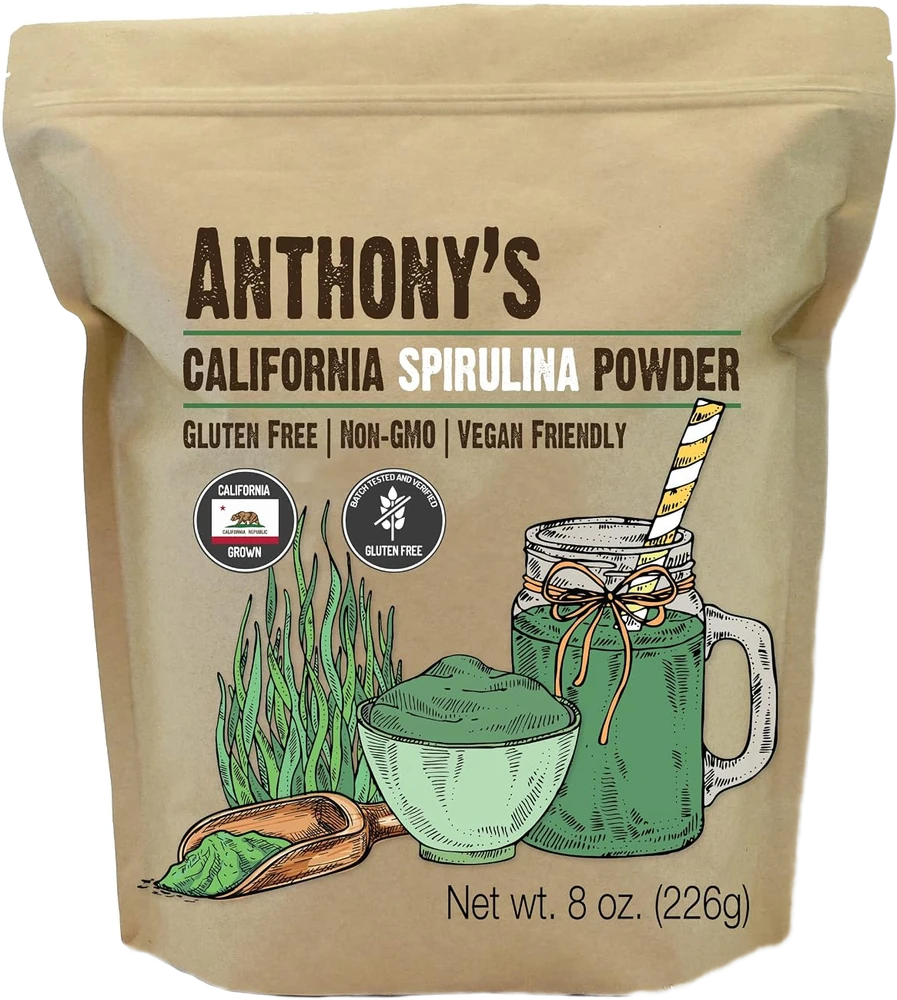
03Anthony's California Spirulina
If you want to know where your algae grew and do not need an organic seal, this is the cheapest way to a disclosed, 3 g, US-grown dose.
Quick Answers
How many Nutricost spirulina tablets a day?
The label serving is one 500 mg tablet. To match the 2-3 g used in the human trials you need four to six tablets; six tablets is 3 g and turns the 240-count bottle into a forty-day supply.
Is it third-party tested?
The pack prints USDA Organic and CCOF seals but no third-party testing statement. Nutricost states its products are made in a GMP facility and tested in-house; that is not on this label.
Sources & Further Reading
2 peer-reviewed sources, each linked to PubMed
- [1] Cingi C, et al. Eur Arch Otorhinolaryngol. 2008;265(10):1219-23. PMID 18343939 — The effects of spirulina on allergic rhinitis. In a six-month double-blind, placebo-controlled trial, 2 g of spirulina a day significantly reduced allergic-rhinitis symptoms including nasal discharge, sneezing, congestion and itching versus placebo.
- [2] Karkos PD, et al. Evid Based Complement Alternat Med. 2011;2011:531053. PMID 18955364 — Spirulina in clinical practice: evidence-based human applications. A review of human studies concluded spirulina has the most consistent evidence for lipid-lowering and allergic-rhinitis symptom relief, with immune-marker effects that are promising but drawn from small trials.
Affiliate disclosure: every Amazon link uses our Associates tag (superachieverclub-20). We earn a small commission at no cost to you; it funds independent reviews. We never accept payment to change a ranking.