
Top 9 Best Elderberry Supplements (2026)
 01 · Only Form With Human Trial Data✓ Label verified · Supplement Facts read Sep 7, 2026
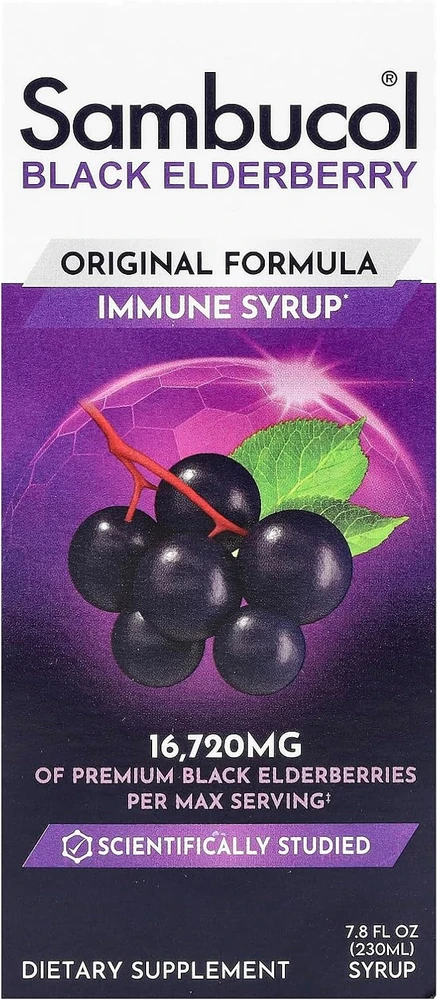
Only Form With Human Trial Data: Sambucol Black Elderberry Syrup, Original Formula
The single product on this list whose exact extract was used in published flu trials, in the liquid form those trials actually studied.
$16-18~$0.74 per 2 tsp serving
Why it wins: all five scores, pros & cons, full label
- It is literally the extract from the human flu trials, so any evidence for elderberry applies to this bottle first
- Liquid delivery makes it easy to reach the doses used in those studies
- Larger 7.8 oz bottle gives a better cost-per-dose than the 4 oz syrups
- The supporting RCTs were small and industry-linked, and later evidence is modest and mixed, so expect at most a 1-2 day symptom trim, not a cure
- Glucose-fructose syrup base adds sugar and is not ideal for diabetics
- Standardization
- The Sambucol BioActives extract used in the Zakay-Rones flu RCTs
- Cost per dose
- ~$0.74 per studied serving
- Dose
- ~1.9 g proprietary extract per 2 tsp (10 mL)
- Form
- Standardized black elderberry extract syrup
- Count
- 7.8 fl oz (~23 servings)
- Testing
- Gluten-free; branded proprietary extract, not an independent COA

Our take — If you want the one elderberry product whose actual extract has been through published human flu trials, this is it, and the liquid form reaches the studied dose. Just keep expectations honest: the trials were small and the real-world effect is a possible modest shortening of symptoms, not prevention. It earns the top spot on evidence provenance, not on hype.
 02
02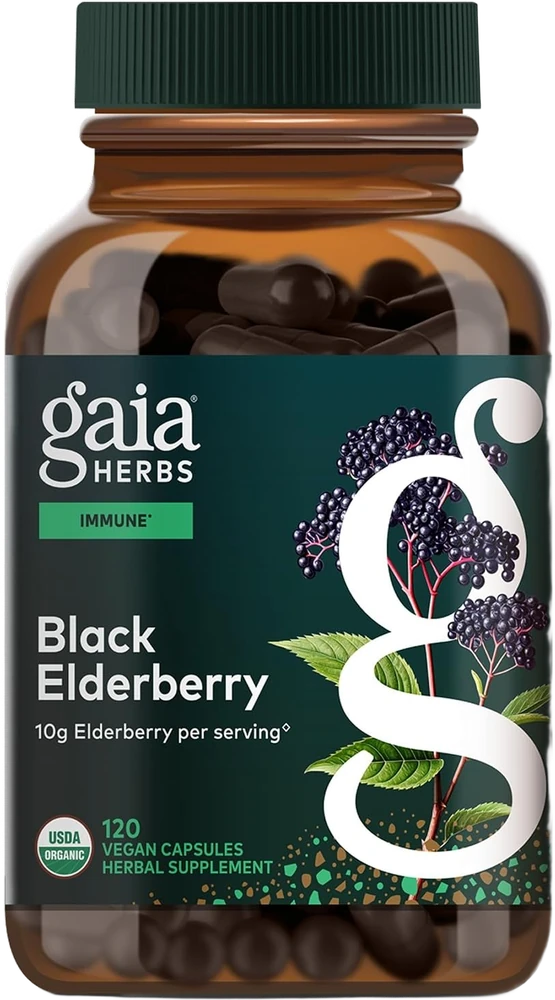 03
03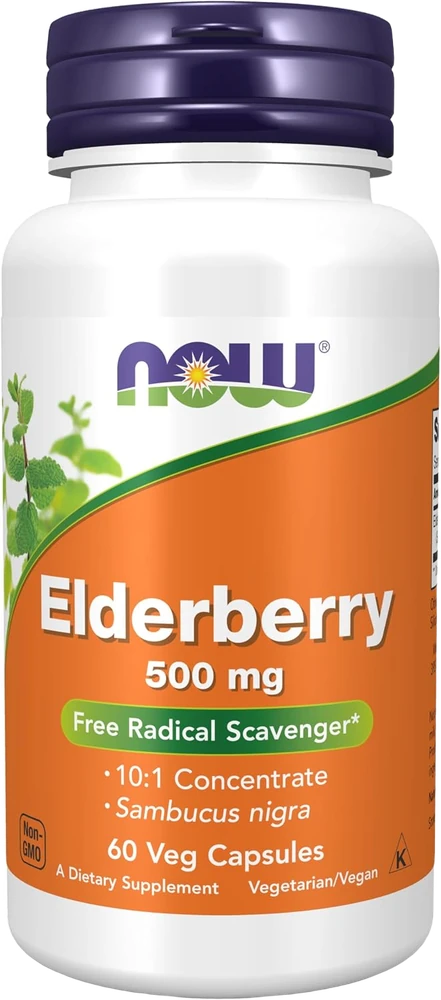 04
04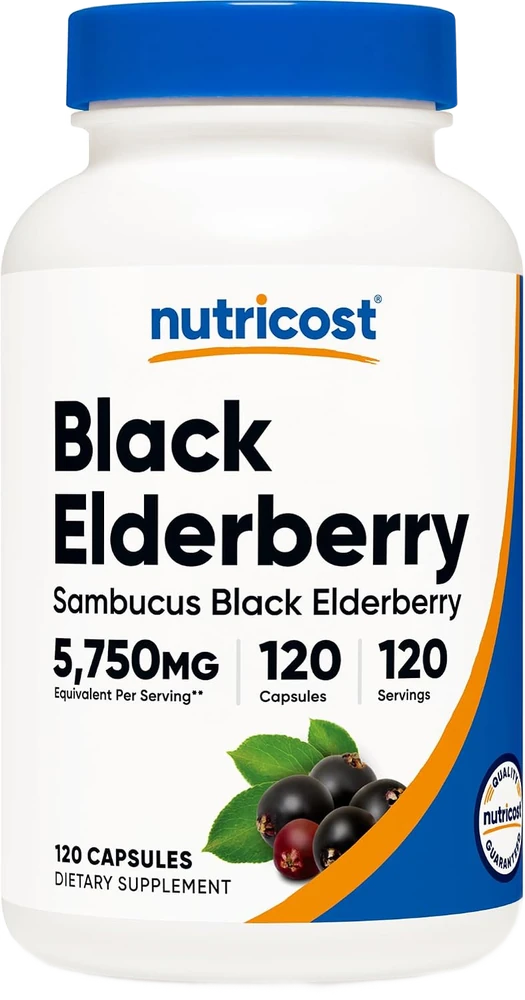 05
05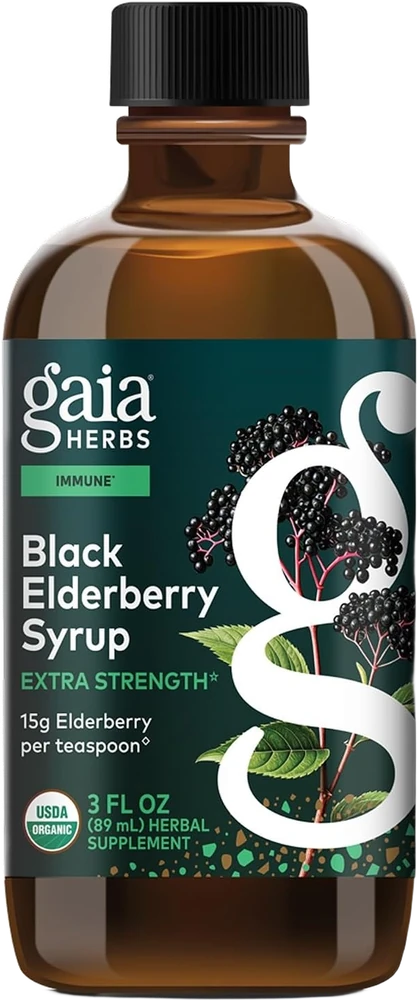 06
06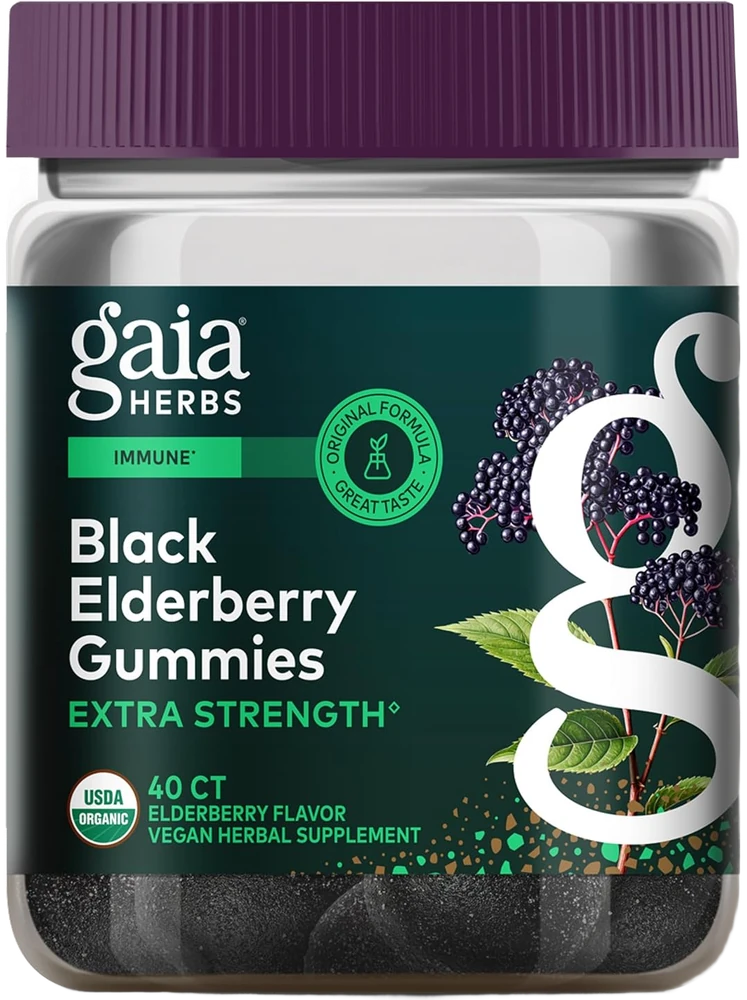 07
07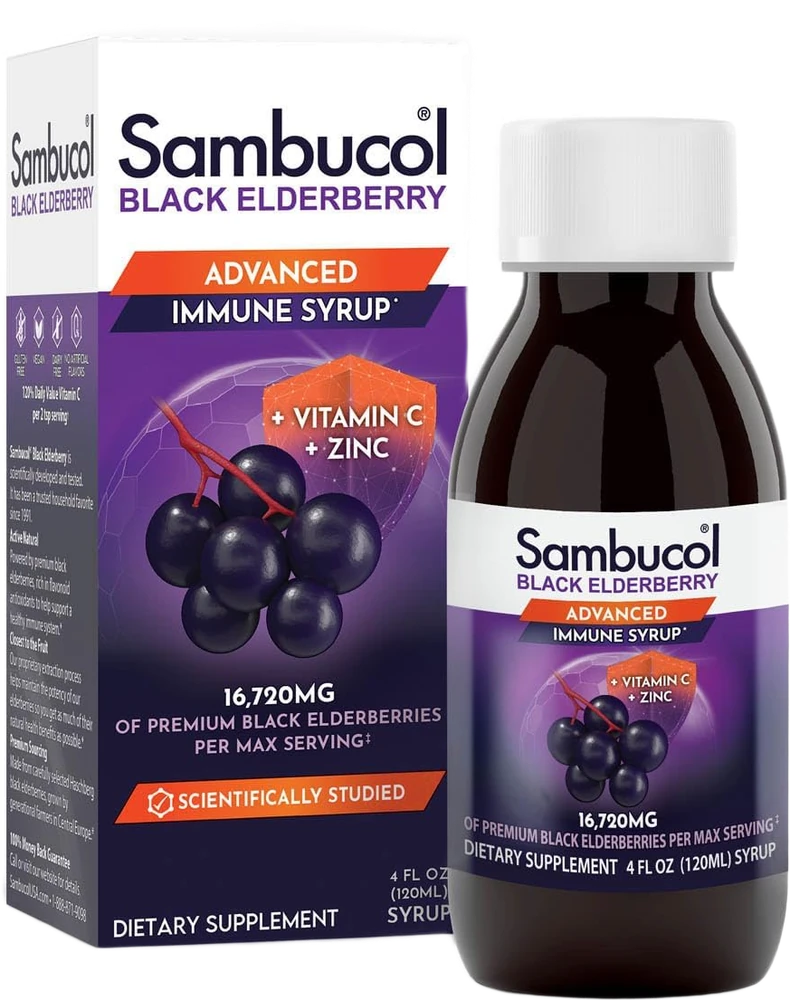 08
08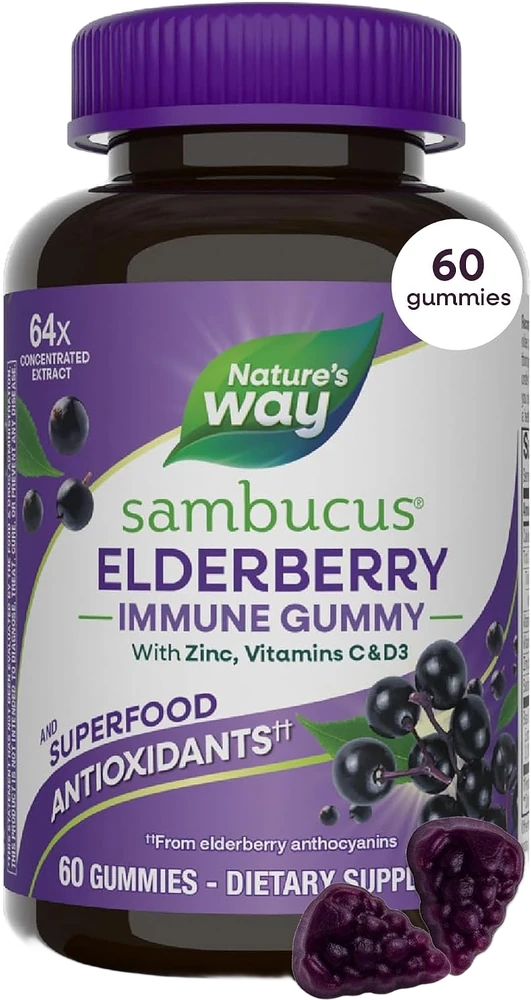 09
09Who Wins Which Aspect
Sorted by overall SAC Product Score™ — the official ranking.
| # | Pick | Score | Form & Bioavailability25% | Standardization & Dose vs Clinical25% | Third-Party Testing & Quality20% | Tolerability & Safety15% | Value15% | Cost Per Dose | Buy |
|---|---|---|---|---|---|---|---|---|---|
| 01 | | 8.4 | 9.01 | 8.81 | 7.52 | 8.01 | 8.51 | ~$0.74 / studied serving | Check price |
| It is literally the extract from the human flu trials, so any evidence for elderberry applies to this bottle firstThe supporting RCTs were small and industry-linked, and later evidence is modest and mixed, so expect at most a 1-2 day symptom trim, not a cure | |||||||||
| 02 | | 7.9 | 8.52 | 8.22 | 7.0 | 7.82 | 7.82 | ~$0.87 / serving | Check price |
| Explicitly standardized to anthocyanins, the compounds that matter, rather than raw berry mass aloneStandardization is to the brand's own spec, not an independent third-party assay | |||||||||
| 03 | | 7.4 | 7.03 | 6.83 | 8.51 | 8.01 | 6.8 | ~$0.40 / serving | Check price |
| Certified organic with per-lot traceability, an unusual level of sourcing transparency in this categoryNo numeric anthocyanin standardization on the label, so you are buying provenance rather than a guaranteed active dose | |||||||||
| 04 | | 7.0 | 6.5 | 6.2 | 7.52 | 8.01 | 7.2 | ~$0.18 / capsule | Check price |
| Made in a UL GMP-certified facility with genuine in-house testing, a real quality edge over no-name brandsNot standardized to a stated anthocyanin percentage, so you are buying berry mass, not a guaranteed active dose | |||||||||
| 05 | | 6.6 | 6.5 | 6.0 | 6.0 | 7.82 | 7.53 | ~$0.12 / capsule | Check price |
| Lowest cost per capsule of any extract pick here, and 120 caps is a long supplyNo published anthocyanin standardization and no public third-party COA, so the 10:1 claim rests on price and trust alone | |||||||||
| 06 | | 6.2 | 6.5 | 5.0 | 7.33 | 8.01 | 4.5 | ~$0.90-$1.20 / 1 tsp serving - pricier per serving than the capsule picks | Check price |
| USDA Certified Organic whole-berry syrup with a published Meet Your Herbs traceability ID - sourcing transparency few competitors matchNo standardized anthocyanin dose - the '14,500 mg' is a fresh-berry equivalence, not an active-compound figure | |||||||||
| 07 | | 5.9 | 5.5 | 5.5 | 7.52 | 6.03 | 5.0 | ~$0.90 / serving | Check price |
| USDA Organic and Non-GMO Project Verified, genuinely rare for a gummyThe '3,800 mg equivalent' is berry-equivalence marketing, not standardized active content | |||||||||
| 08 | | 5.7 | 6.5 | 5.0 | 6.5 | 6.03 | 4.0 | ~$1.29 / serving | Check price |
| Built on the same reputable Sambucol extract that has trial history behind itBundling zinc and vitamin C makes it impossible to attribute any benefit to elderberry itself | |||||||||
| 09 | | 5.5 | 5.5 | 4.5 | 6.5 | 6.03 | 5.5 | ~$0.45 / serving | Check price |
| Adds zinc, vitamin C and D3, all of which have their own immune evidenceOnly 200 mg elderberry per serving, a fraction of the studied syrup doses, so the elderberry is largely token | |||||||||
The Other 8, Ranked
- 02
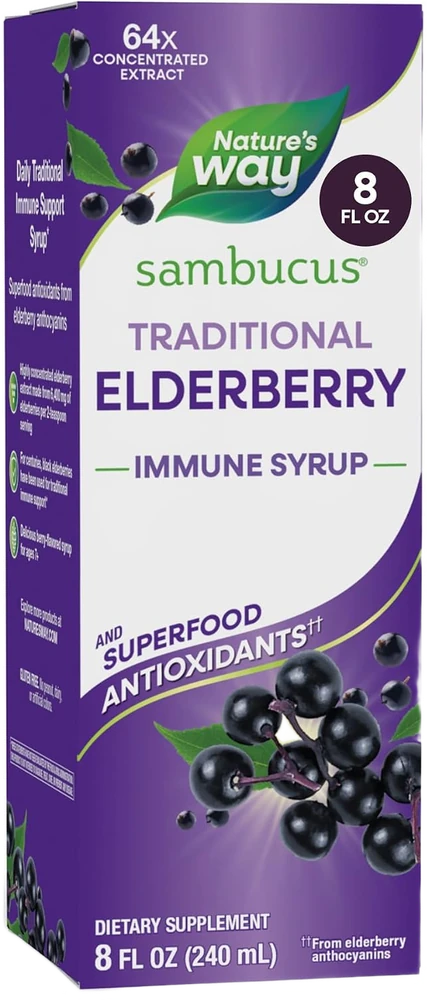
Best Standardized Syrup Value: Nature's Way Sambucus Original Traditional Elderberry Syrup
7.9SAC Score™The best-value liquid that actually names its actives, standardized to anthocyanins in a large 8 oz bottle.
StrongestForm & Bioavailability8.52WeakestThird-Party Testing & Quality7.0- Standardization
- Standardized to anthocyanins (the actives) per brand spec
- Cost per dose
- ~$0.87 per serving
- Dose
- 6,400 mg berry-equivalent per 2 tsp (10 mL)
All five scores, pros & cons, full label
What We Like- Explicitly standardized to anthocyanins, the compounds that matter, rather than raw berry mass alone
- Larger 8 oz bottle beats the 4 oz syrups on cost per dose
- Vegan and gluten-free with Non-GMO claims on some lots
What You Live With- Standardization is to the brand's own spec, not an independent third-party assay
- The '6,400 mg' figure is berry-equivalence, not the amount of active extract you actually swallow
- Sugar-syrup base; check grams per serving on the label
- Form
- Standardized black elderberry extract syrup
- Count
- 8 fl oz
- Testing
- Vegan, gluten-free, Non-GMO Project claim on some lots
Our take — A genuinely strong runner-up that does the one thing most elderberry products avoid: it names anthocyanins as the standardized active. The 8 oz size makes it the value pick among honest syrups. It sits just behind Sambucol only because that extract, not this one, is the one that went through the trials.
- 03
Most Transparent Sourcing: Gaia Herbs Black Elderberry (with Acerola)
7.4SAC Score™The cleanest, most traceable capsule on the list: certified organic, per-lot traceability, and no sugar.
StrongestThird-Party Testing & Quality8.51WeakestStandardization & Dose vs Clinical6.8- Standardization
- No numeric anthocyanin % disclosed
- Cost per dose
- ~$0.40 per serving
- Dose
- ~1,275 mg black elderberry + acerola per 2 capsules
All five scores, pros & cons, full label
What We Like- Certified organic with per-lot traceability, an unusual level of sourcing transparency in this category
- Membrane-filtration concentrate is designed to protect the anthocyanins
- No added sugar and vegan, a real advantage over every syrup and gummy here
What You Live With- No numeric anthocyanin standardization on the label, so you are buying provenance rather than a guaranteed active dose
- Capsule format cannot match the liquid doses used in the flu trials
- Premium price for what is, chemically, an unstandardized product
- Form
- Capsule (membrane-filtered concentrated powder)
- Count
- 120 vegan capsules (60 servings)
- Testing
- USDA Organic; Meet-Your-Herbs per-lot traceability; vegan
Our take — The best-sourced product on the list and the top capsule, with organic certification and traceability almost no competitor matches. What it will not give you is a stated anthocyanin dose, so the premium buys provenance and a clean, sugar-free format more than proven potency. A great pick for buyers who value transparency over trial-matched dosing.
- 04
Cleanest Capsule On A Budget: NOW Foods Elderberry (Sambucus nigra) 500 mg, 10:1 Concentrate
7.0SAC Score™A clean, GMP-tested, sugar-free capsule from one of the most reliable in-house labs in supplements.
StrongestTolerability & Safety8.01WeakestStandardization & Dose vs Clinical6.2- Standardization
- Not standardized to a stated anthocyanin %
- Cost per dose
- ~$0.18 per capsule
- Dose
- 500 mg 10:1 concentrate (~5,000 mg berry equivalent) per capsule
All five scores, pros & cons, full label
What We Like- Made in a UL GMP-certified facility with genuine in-house testing, a real quality edge over no-name brands
- No added sugar, unlike every syrup and gummy on this list
- Inexpensive and vegan
What You Live With- Not standardized to a stated anthocyanin percentage, so you are buying berry mass, not a guaranteed active dose
- Capsule format cannot reach the liquid doses used in the cold and flu trials
- No published third-party COA by default
- Form
- Capsule (10:1 concentrate)
- Count
- 60 veg capsules
- Testing
- UL GMP-certified facility with in-house testing; non-GMO; vegan
Our take — The quality-per-dollar champion among capsules, backed by NOW's well-run GMP lab and free of added sugar. It loses ground only because it is not standardized and the capsule format was never the one studied. For a clean, cheap daily elderberry with a trustworthy maker behind it, this is the pragmatic pick.
- 05
Best Price Per Capsule: Nutricost Elderberry 575 mg (10:1 Extract)
6.6SAC Score™The cheapest way to take a 10:1 elderberry extract daily, if you're comfortable trusting the label.
StrongestTolerability & Safety7.82WeakestStandardization & Dose vs Clinical6.0- Standardization
- No published anthocyanin standardization
- Cost per dose
- ~$0.12 per capsule
- Dose
- 575 mg 10:1 extract (~5,750 mg berry equivalent) per capsule
All five scores, pros & cons, full label
What We Like- Lowest cost per capsule of any extract pick here, and 120 caps is a long supply
- Made in a GMP/ISO-certified facility
- Vegetarian, gluten-free and non-GMO
What You Live With- No published anthocyanin standardization and no public third-party COA, so the 10:1 claim rests on price and trust alone
- Capsule cannot match trial-level liquid doses
- Sourcing transparency is thin compared with NOW or Gaia
- Form
- Capsule (10:1 extract)
- Count
- 120 capsules
- Testing
- GMP / ISO-certified facility; non-GMO; gluten-free; vegetarian
Our take — The value leader, plain and simple: if you just want a lot of elderberry capsules for the least money, nothing here is cheaper. But with no standardization and no published COA, you are trusting the label, which is exactly why it ranks below NOW despite the lower price. Fine for budget daily use, not for anyone who wants proof of potency.
- 06
Best USDA-organic syrup: Gaia Herbs Black Elderberry Syrup
6.2SAC Score™The certified-organic, fully traceable liquid on this list. Gaia concentrates the juice from ~14.5 g of organic black elderberries into each teaspoon of an alcohol-free, glycerin-based syrup, and backs every batch with a published Meet Your Herbs traceability ID. The honest catch: that '14,500 mg' is a fresh-berry equivalence, not a standardized anthocyanin dose, and elderberry's cold/flu evidence is modest and mixed. You are paying for clean sourcing and transparency, not proven superior potency.
StrongestTolerability & Safety8.01WeakestValue4.5- Standardization
- None stated - no declared anthocyanin/polyphenol content; the '14,500 mg' is label optics, not an active-compound figure
- Cost per dose
- ~$0.90-$1.20 per 1 tsp serving - pricier per serving than the capsule picks
- Dose
- 1 tsp (5 mL) concentrates the juice from ~14.5 g (14,500 mg) fresh organic elderberries - a fresh-berry equivalence, NOT a standardized anthocyanin dose
All five scores, pros & cons, full label
What We Like- USDA Certified Organic whole-berry syrup with a published Meet Your Herbs traceability ID - sourcing transparency few competitors match
- Alcohol-free vegetable-glycerin base - vegan, gluten-free, dairy-free, and kid-friendly
- Easy teaspoon dosing in a palatable food matrix; very well tolerated
What You Live With- No standardized anthocyanin dose - the '14,500 mg' is a fresh-berry equivalence, not an active-compound figure
- Small 3 fl oz bottle (~18 servings) empties fast and costs more per serving than the capsule picks
- Elderberry's cold/flu evidence is modest and mixed - the strongest recent trial (Macknin 2020) found no flu benefit
- Form
- Liquid syrup - organic black elderberry juice concentrate in a vegetable-glycerin base (alcohol-free)
- Count
- 3 fl oz bottle (~18 servings at 1 tsp/day)
- Testing
- USDA Certified Organic + Gaia Meet Your Herbs batch traceability ID; no NSF/USP third-party certification
Our take — A clean, certified-organic elderberry syrup for buyers who prioritise sourcing transparency and an alcohol-free liquid over cost-per-serving or a standardized dose. Just do not read the '14,500 mg' as a potency guarantee - it is a fresh-berry equivalence, and elderberry's cold/flu evidence is modest either way. If you want the cheapest per-serving elderberry, the capsule picks (including Gaia's own #3) win; if you want the best-studied syrup, Sambucol (#1) leads.
- 07
Best Organic Gummy: Gaia Herbs Black Elderberry Extra Strength Gummies
5.9SAC Score™The cleanest gummy here, organic and elderberry-only, but it is the priciest-per-day way to take it.
StrongestThird-Party Testing & Quality7.52WeakestValue5.0- Standardization
- No standardized active content; equivalence figure only
- Cost per dose
- ~$0.90 per serving
- Dose
- ~3,800 mg elderberry equivalent per 2 gummies
All five scores, pros & cons, full label
What We Like- USDA Organic and Non-GMO Project Verified, genuinely rare for a gummy
- Elderberry-only, so no added vitamins muddy what you can credit to the berry
- Pectin-based and free of gelatin, gluten, dairy and soy
What You Live With- The '3,800 mg equivalent' is berry-equivalence marketing, not standardized active content
- Added organic cane sugar and heat-processing typical of gummies
- Only 20 servings makes it the most expensive per day on the list
- Form
- Gummy (organic, pectin-based)
- Count
- 40 gummies (20 servings)
- Testing
- USDA Organic; Non-GMO Project Verified; gelatin/gluten/dairy/soy-free
Our take — If you insist on a gummy, this is the cleanest one: organic, verified, and free of confounding added vitamins. But gummies are the weakest format for actually delivering elderberry actives, and at 20 servings this is the priciest per day of anything here. Buy it for the format preference, not for potency.
- 08
Good Extract, Confounded Combo: Sambucol Advanced Black Elderberry Syrup (with Zinc & Vitamin C)
5.7SAC Score™The trusted Sambucol extract, bundled with zinc and vitamin C in a small, pricey-per-ounce bottle.
StrongestForm & Bioavailability6.5WeakestValue4.0- Standardization
- Uses Sambucol's studied elderberry extract base
- Cost per dose
- ~$1.29 per serving
- Dose
- Black elderberry extract + zinc + vitamin C per 2 tsp
All five scores, pros & cons, full label
What We Like- Built on the same reputable Sambucol extract that has trial history behind it
- Added zinc and vitamin C both have their own independent immune evidence
- Gluten-free liquid format
What You Live With- Bundling zinc and vitamin C makes it impossible to attribute any benefit to elderberry itself
- Small 4 oz bottle at ~12 servings is the highest cost per serving of any syrup here
- Added zinc means stacking with other zinc products can push past safe upper limits
- Form
- Standardized extract syrup (combination)
- Count
- 4 fl oz (~12 servings)
- Testing
- Gluten-free; branded proprietary extract
Our take — A good extract trapped in a confounded, expensive package. Because it stacks zinc and vitamin C, you can never know whether elderberry did anything, and this is an elderberry list. The tiny 4 oz bottle also makes it the costliest syrup per dose. Reach for the Original instead if you want the Sambucol extract on its own terms.
- 09
Skip It For The Elderberry: Nature's Way Sambucus Elderberry Gummies (with Vitamin C, D3 & Zinc)
5.5SAC Score™A pleasant immune gummy, but with only 200 mg of elderberry it is barely an elderberry product at all.
StrongestThird-Party Testing & Quality6.5WeakestStandardization & Dose vs Clinical4.5- Standardization
- Standardized to anthocyanins per brand spec, but tiny total dose
- Cost per dose
- ~$0.45 per serving
- Dose
- 200 mg elderberry (64:1 extract) + vitamin C, D3, zinc per 2 gummies
All five scores, pros & cons, full label
What We Like- Adds zinc, vitamin C and D3, all of which have their own immune evidence
- Standardized to anthocyanins on the brand spec, and pectin-based/vegetarian
- Inexpensive and palatable, genuinely kid-friendly
What You Live With- Only 200 mg elderberry per serving, a fraction of the studied syrup doses, so the elderberry is largely token
- Any benefit you feel is at least as likely from the zinc and vitamin C as from the berry
- Added sugar and a combination formula that cannot be credited to elderberry
- Form
- Gummy (combination)
- Count
- 60 gummies (30 servings)
- Testing
- Vegetarian (pectin); gluten-free
Our take — As a general immune gummy it is fine and cheap, but judged as elderberry, which is the point of this list, it comes last. The 200 mg dose is far below anything studied, and the added zinc and vitamin C do most of the plausible work. Buy it as a zinc/vitamin-C gummy that happens to contain elderberry, not the other way around.
Elderberry In Two Short Lessons
Look for standardized anthocyanins, not berry equivalents.
Most labels advertise fresh-berry equivalence such as 6,400 mg or 12,000 mg rather than standardized anthocyanin content. That number rarely means active dose.
Keep expectations modest.
Small, industry-linked trials reported flu symptoms about 3-4 days shorter (Zakay-Rones 2004). The best-designed independent trial found no benefit (Macknin 2020).
Check the testing and the form.
A systematic review rated the evidence low-certainty largely because doses and standardization vary so widely between products (Wieland 2021). Standardization and third-party testing are what you can verify.
Zakay-Rones 2004 (PMID 15080016); Tiralongo 2016 (PMID 27023596); Macknin 2020 (PMID 32929634); Wieland 2021 systematic review (PMID 33827515).
Elderberry is a case where the label number and the evidence rarely match. 'Berry-equivalent' figures like 6,400 mg or 12,000 mg describe how much fresh fruit was concentrated, not how much active anthocyanin you actually swallow, and only one branded extract has real human flu-trial data behind it. So we weighted the form and dose that were genuinely studied and honest, verifiable standardization far above headline milligrams. Third-party testing and clean safety come next, and price is only a tie-breaker, never a route to the top. We reward products that tell the truth about what is in the bottle and penalize equivalence-marketing and combination formulas that make elderberry's own contribution impossible to isolate.
Form & Bioavailability · 25%
Did the format match what was tested? Liquid syrups can easily hit the doses used in the flu RCTs; capsules and gummies usually cannot. We also credit no-added-sugar formats and penalize heavy processing that can degrade the anthocyanin actives.
Standardization & Dose vs Clinical Range · 25%
Is the product standardized to a stated anthocyanin content, and does a real serving land near the ~15-60 mL/day extract doses used in trials? 'Berry-equivalent' numbers with no active assay score low no matter how large they look.
Third-Party Testing & Purity · 20%
GMP certification, published or in-house COAs, organic and Non-GMO Project verification, and lot traceability. Manufacturer specs are not the same as an independent assay, and we grade honesty about that distinction.
Tolerability & Safety · 15%
Sugar load per serving, added actives like zinc that carry their own upper limits, allergen and vegan status, and whether the product is a safely prepared extract rather than a raw-berry risk.
Value · 15%
True cost per studied dose, not cost per bottle. A cheap 4 oz syrup that empties in two weeks can cost more per day than a larger bottle. Applied only as a tie-breaker, never to lift a weak formula onto the podium.
The bottom line
Buy the studied extract, in the studied form: Sambucol Original.
If you want the product with the strongest claim to the evidence, it is the one whose exact extract went through the human flu trials, delivered as the liquid those trials used. Nature's Way Original is the close, better-value alternative because it at least names anthocyanins as its standardized active.
For a clean daily capsule, quality beats the milligram race.
Gaia Herbs wins on organic sourcing and traceability, NOW Foods wins on GMP testing and price, and Nutricost is the raw budget pick. None are standardized to anthocyanins and none match trial doses, so choose on transparency and testing, not on the biggest berry-equivalent number.
Combination gummies and syrups are the wrong tool for judging elderberry.
Products that add zinc and vitamin C (Sambucol Advanced, Nature's Way Gummies) may work as immune support, but they make it impossible to credit elderberry, and the gummy doses are tiny. If your goal is elderberry specifically, skip the combos; if your goal is general immune support, buy a dedicated zinc or vitamin C product instead.
Quick Answers
What is the best elderberry pick overall?
Sambucol Black Elderberry Syrup, Original Formula by Sambucol is our #1 pick (SAC score 8.4/10). If you want the one elderberry product whose actual extract has been through published human flu trials, this is it, and the liquid form reaches the studied dose. Just keep expectations honest: the trials were small and the real-world effect is a possible modest shortening of symptoms, not prevention. It earns the top spot on evidence provenance, not on hype.
What is the best budget option?
Nature's Way Sambucus Original Traditional Elderberry Syrup at $18-22. A genuinely strong runner-up that does the one thing most elderberry products avoid: it names anthocyanins as the standardized active. The 8 oz size makes it the value pick among honest syrups. It sits just behind Sambucol only because that extract, not this one, is the one that went through the trials.
How much do these picks cost?
Across our ranked picks, prices run from about $9 to $22 — exact price and cost per serving are listed on every pick card above.
How were these picks ranked?
Elderberry is a case where the label number and the evidence rarely match. 'Berry-equivalent' figures like 6,400 mg or 12,000 mg describe how much fresh fruit was concentrated, not how much active anthocyanin you actually swallow, and only one branded extract has real human flu-trial data behind it. So we weighted the form and dose that were genuinely studied and honest, verifiable standardization far above headline milligrams. Third-party testing and clean safety come next, and price is only a tie-breaker, never a route to the top. We reward products that tell the truth about what is in the bottle and penalize equivalence-marketing and combination formulas that make elderberry's own contribution impossible to isolate.
Every Claim Ranked Above Traces Back To One Of These
6 peer-reviewed sources, each linked to PubMed
- [1] Zakay-Rones Z, Thom E, Wollan T, Wadstein J. Randomized study of the efficacy and safety of oral elderberry extract in the treatment of influenza A and B virus infections. J Int Med Res. 2004;32(2):132-140. PMID 15080016 — Randomized study of the efficacy and safety of oral elderberry extract in the treatment of influenza A and B virus infections. A standardized elderberry extract (the Sambucol extract) shortened influenza symptoms by about 3-4 days versus placebo, but in a small sample of fewer than 65 patients.
- [2] Zakay-Rones Z, Varsano N, Zlotnik M, et al. Inhibition of several strains of influenza virus in vitro and reduction of symptoms by an elderberry extract (Sambucus nigra L.) during an outbreak of influenza B Panama. J Altern Complement Med. 1995;1(4):361-369. PMID 9395631 — Inhibition of several strains of influenza virus in vitro and reduction of symptoms by an elderberry extract (Sambucus nigra L.) during an outbreak of influenza B Panama. The original small elderberry trial reporting faster symptom resolution during an influenza B outbreak, alongside in vitro viral inhibition; foundational but small and manufacturer-linked.
- [3] Tiralongo E, Wee SS, Lea RA. Elderberry supplementation reduces cold duration and symptoms in air-travellers: a randomized, double-blind placebo-controlled clinical trial. Nutrients. 2016;8(4):182. PMID 27023596 — Elderberry supplementation reduces cold duration and symptoms in air-travellers: a randomized, double-blind placebo-controlled clinical trial. Elderberry extract reduced cold duration and symptom severity in air travelers, but the effect was modest and the trial was a single moderate-sized study.
- [4] Hawkins J, Baker C, Cherry L, Dunne E. Black elderberry (Sambucus nigra) supplementation effectively treats upper respiratory symptoms: a meta-analysis of randomized, controlled clinical trials. Complement Ther Med. 2019;42:361-365. PMID 30670267 — Black elderberry (Sambucus nigra) supplementation effectively treats upper respiratory symptoms: a meta-analysis of randomized, controlled clinical trials. A pooled analysis found elderberry substantially reduced upper respiratory symptoms, but it aggregated only a few small trials, several industry-linked, limiting certainty.
- [5] Macknin M, Wolski K, Negrey J, Mace S. Elderberry extract outpatient influenza treatment for emergency room patients: a randomized controlled trial. J Gen Intern Med. 2020;35(11):3271-3277. PMID 32929634 — Elderberry extract outpatient influenza treatment for emergency room patients: a randomized controlled trial. In this larger, non-industry emergency-room trial, elderberry did not shorten influenza illness and symptoms trended slightly longer, the key counterweight to the positive studies.
- [6] Wieland LS, Piechotta V, Feinberg T, et al. Elderberry for prevention and treatment of viral respiratory illnesses: a systematic review. BMC Complement Med Ther. 2021;21(1):112. PMID 33827515 — Elderberry for prevention and treatment of viral respiratory illnesses: a systematic review. A broad systematic review concluded the overall evidence is low-certainty and inconsistent, with wide variation in dose and standardization across products and a need for larger trials.
Affiliate disclosure: every Amazon link uses our Associates tag (superachieverclub-20). We earn a small commission at no cost to you; it funds independent reviews. We never accept payment to change a ranking.