
Toniiq Lion's Mane Ultra High Potency 10:1 Extract Review
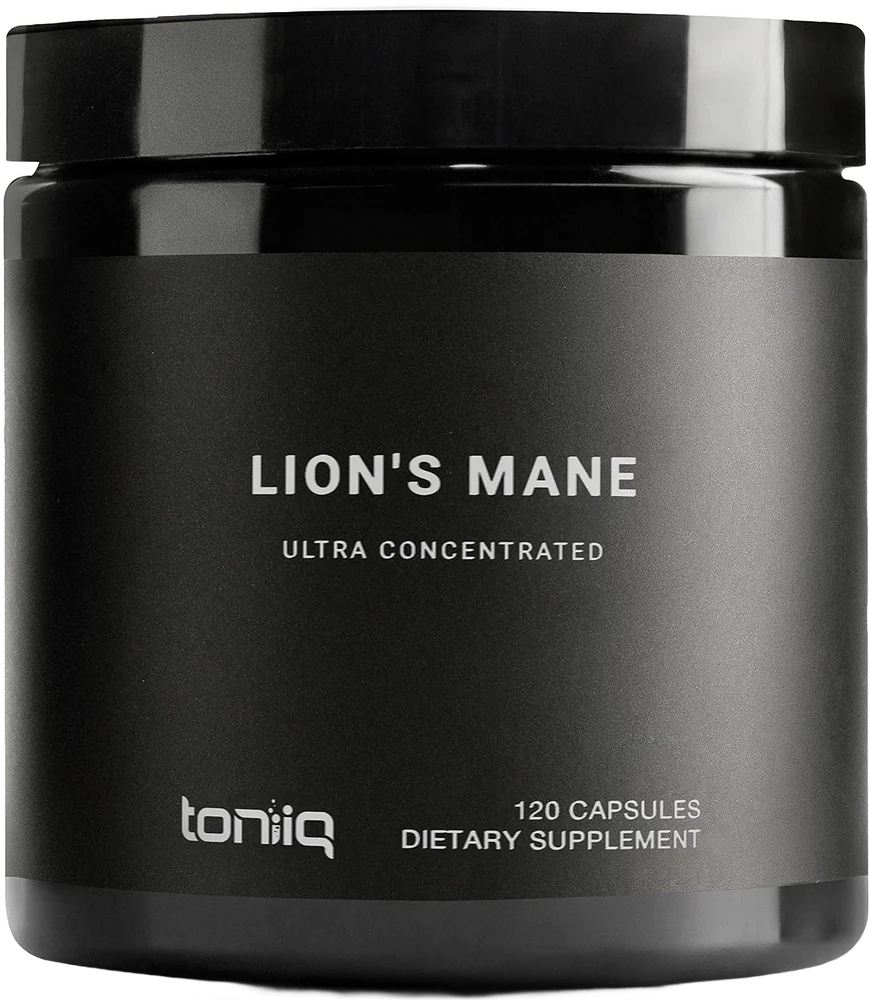 #6 of 10 · Highest potency✓ Label verified · Supplement Facts read Aug 27, 2026
Real retailer photo, cut out. Label unedited.
Consider it. A real 20% β-glucan budget pick — but the panel confirms a mycelium blend, and the leaders verify 30%+. 1,800 mg per 3-cap serving with a declared 360 mg (20%) β-glucans, third-party tested, ~$0.50/serving. (Corrected 27 Aug 2026: the old '30% polysaccharides' standardisation we criticised is gone — the current panel declares real β-glucans.) The trade-off is composition: the panel states 'mycelium & fruiting body' with no ratio, so this is a confirmed blend, and 20% sits below the leaders' verified 30/31% on pure fruiting body.
$19.97~$0.50 / 3-capsule serving
Why It Scores 7.0 — And The Label Line Behind Each Number
Form honesty (fruiting body vs mycelium-on-grain)
40% of scoreThe current panel declares 'Lion's Mane (mycelium & fruiting body)' — so the blend question our original review could only raise as a suspicion is now settled by the label itself (corrected 27 Aug 2026). Credit for the honest declaration; the substance still costs points: this is a confirmed mycelium-containing blend with no stated ratio, while the human trials used pure fruiting body and the leaders confirm '100% fruiting body' outright. Honest about being a blend, but a blend nonetheless.
- Active form
- Lion's Mane (Hericium erinaceus) — panel declares 'mycelium & fruiting body' blend, ratio not stated
- Inactives
- Hypromellose (vegetable capsule); rice flour
Verified beta-glucans (not 'polysaccharides')
25% of scoreThe panel now declares β-glucans directly — 360 mg on the 1,800 mg serving (20%) — and the listing's COA tile shows the same 20% as a third-party-measured beta-glucan fraction. (Corrected 27 Aug 2026: our original review criticised an older '30% polysaccharides' standardisation; that soft metric is gone, and the score on this axis rose from 5.5 accordingly.) What keeps it below the leaders: Real Mushrooms verifies >30% and FreshCap states 31% on pure fruiting body, and in a declared mycelium blend part of the glucan fraction can be mycelial.
- Standardization
- 360 mg β-glucans per 1,800 mg serving = 20%, matched by the listing's COA tile
- Beta-glucans
- Declared: 360 mg/serving (20%) — below the 30/31% fruiting-body leaders
Extraction + dose
15% of scoreThe current panel declares 1,800 mg of Lion's Mane material per 3-capsule serving with 360 mg β-glucans — a real, competitive active load in the ballpark of the trial masses (Mori 2009 used 3 g/day; Saitsu 2019, 2.4 g/day). (Corrected 27 Aug 2026: our original review described a 600 mg '10:1 extract' 2-cap serving; the current label declares material and glucans directly, with no extraction ratio stated.) The glucan load is genuine; the blend composition keeps the trial mapping imperfect.
- Per cap
- 600 mg Lion's Mane material (~120 mg β-glucans)
- Per serving
- 1,800 mg Lion's Mane (3 caps) with 360 mg β-glucans declared
- Trial-dose alignment
- 1,800 mg/day is near trial mass, but the trials used pure fruiting body — this is a declared mycelium blend
Third-party testing + transparency
12% of scoreThird-party lab tested with GMP manufacturing, and the listing's COA tile now shows contaminant panels (micro + heavy metals) plus the measured 20% beta-glucan fraction — the right number, tested. (Corrected 27 Aug 2026: our original criticism that the testing targeted 'polysaccharides, not beta-glucans' no longer matches the listing.) What still separates it from the leaders: no public per-batch lookup, and the blend ratio behind the glucan figure isn't broken out.
- Certifications
- Third-party lab tested, GMP, non-GMO, vegan — NOT USDA Organic
- Manufacturer
- Toniiq (standardized-extract specialist; third-party tested)
- Lab transparency
- Third-party tested; COA tile shows contaminant panels + measured 20% β-glucan fraction; no public per-batch lookup
Value / cost-per-serving
8% of score~$19.97 for 120 caps at the panel's 3-cap serving = 40 servings ≈ $0.50 per serving — still budget-tier, though not the '$0.33 cheapest on the list' our original review calculated from the old 2-cap serving (corrected 27 Aug 2026). Per declared glucan-mg it's genuinely competitive: ~$0.0014 per mg of β-glucan. The asterisk: an unknown share of those glucan mg comes from mycelium rather than fruiting body.
- Bottle size
- 120 capsules — 40 servings at the panel's 3-cap serving
- Price
- ~$19.97 / 120-cap bottle = ~$0.50 per 3-cap serving (40 servings)
Label verified. Every figure read from the Supplement Facts photo, Aug 27, 2026.
Marketing Claims Vs. Reality
Ultra high potency / ultra concentrated.
The current panel declares 1,800 mg of material with 360 mg β-glucans (20%) per serving — a genuinely competitive active load that supports the 'high potency' framing at the serving level. 'Ultra', though, is relative: the pure fruiting-body leaders verify 30-31% densities. High for the budget tier, not the highest on the market.
20% beta-glucans (COA tile and panel: 360 mg per 1,800 mg serving).
The Supplement Facts panel declares 360 mg of β-glucans on the 1,800 mg serving — exactly 20% — and the listing's third-party COA tile shows the same 20% as the measured beta-glucan fraction. (Corrected 27 Aug 2026: our original review addressed an older '30% polysaccharides' standardisation that no longer appears on the label; the current declaration is the right metric, honestly stated.)
Made from Lion's Mane mushroom (implied pure).
It's genuine Lion's Mane, and the panel is candid that the input is 'mycelium & fruiting body' — a declared blend, not the pure fruiting body the premium picks confirm and the human trials used. (Corrected 27 Aug 2026: our original review said the form was unconfirmed; the current panel confirms the mycelium share exists, though not how large it is.) Real mushroom, honestly-declared mixed form.
Supports cognitive function and focus.
Mori 2009 (PMID 18844328) supports the cognition claim at 3 g/day fruiting-body powder for 16 weeks, and Saitsu 2019 (PMID 31413233) adds a signal in healthy older adults — but those trials used pure fruiting-body material, while Toniiq is a declared mycelium-and-fruiting-body blend with an unstated ratio. The direction is trial-anchored; the inability to verify the bioactive content against the trial form is the honest asterisk, and the overall evidence base is early (PMID 40959699).
Third-party lab tested.
The third-party testing is real and a genuine point in Toniiq's favor — the listing's COA tile shows passed microbiological and heavy-metal panels plus the measured 20% beta-glucan fraction, the right potency metric. The asterisk: results are 'available upon request' rather than a public per-batch lookup, and the fraction isn't broken out by fruiting body versus mycelium.
What Our Test Actually Found
The declared glucan load is real — that part deserves credit
Give Toniiq its due: 360 mg of declared β-glucans per 1,800 mg serving is a genuinely competitive active load, backed by a third-party COA tile showing the same 20% fraction, at roughly $0.50 a serving with real contaminant testing behind it. For a buyer who wants glucan milligrams on a budget, the headline value is honest. The open question isn't the quantity — it's how much of it comes from fruiting body versus the declared mycelium share.
Correction: the '30% polysaccharides' trick is gone — the panel now declares real β-glucans
Our original review's load-bearing criticism was that Toniiq standardised to '30% POLYSACCHARIDES' — the category's softest metric — instead of beta-glucans. That no longer matches the product (corrected 27 Aug 2026): the current Supplement Facts panel declares 360 mg of β-glucans on the 1,800 mg serving, and the listing's COA tile shows the same 20% as a measured beta-glucan fraction. That's the right number, honestly stated, and this axis of the score rose accordingly. The remaining gap is size, not honesty: Real Mushrooms verifies >30% and FreshCap 31%, both on pure fruiting body — Toniiq's 20% on a mycelium-containing blend is a real but smaller number.
The panel confirms the mycelium — settling our old suspicion, against the top tier
Our original review inferred a possible mycelium share from Toniiq's silence. The current panel removes the guesswork: it reads 'Lion's Mane (mycelium & fruiting body)' — the blend is declared (corrected 27 Aug 2026). That's more honest labelling than before, and we credit it. But it also cements why Toniiq can't join the top tier: the human trials (Mori 2009, Saitsu 2019) used pure fruiting-body material, the leaders confirm '100% fruiting body', and a declared blend with no stated ratio means an unknown share of the 360 mg glucan figure is mycelial. You now know what's in the bottle; you still don't know how much of each.
Quantity and provenance are different axes — don't let one cover for the other
It's easy to read '360 mg β-glucans' and assume the number settles everything. It doesn't. Glucan quantity is one axis; glucan provenance — fruiting body versus mycelium — is the other, and it's the one the trials ran on. Toniiq genuinely delivers the quantity (declared, COA-matched, cheap per mg) while the declared blend leaves provenance mixed. The premium picks win on the axis that's harder and more expensive to deliver: 30%+ verified glucans in confirmed 100% fruiting body. Toniiq wins on glucan milligrams per dollar. Know which one you're actually buying.
Buy it as a deliberate budget concentrate — and stay honest about the evidence
Toniiq is a defensible pick IF you go in clear-eyed: a declared 360 mg of β-glucans per serving, third-party tested, at a budget price, bought with full knowledge that it is a declared mycelium-and-fruiting-body blend and that the leaders verify higher densities on pure fruiting body. Keep the broader evidence in frame too: the human data is real but early — a handful of small RCTs, mostly in older adults, with benefits that fade on stopping. The 2025 systematic review (PMID 40959699) calls it consistent but preliminary. Toniiq gives you glucan milligrams at a price; it doesn't give you the pure-fruiting-body provenance — or the certainty — that the premium tier does.
Full analysis: all pros & cons (8), buy if / skip if
- Declared 360 mg (20%) β-glucans per serving, matched by the listing's third-party COA tile
- Budget price (~$0.50 per 3-cap serving) with strong glucan-mg per dollar
- Real third-party lab testing — clears the contaminant bar the no-COA Amazon brands don't
- Panel honestly declares the mycelium & fruiting body composition
- 20% β-glucans is roughly two-thirds of the 30/31% the pure fruiting-body leaders verify
- Declared mycelium & fruiting body blend with no stated ratio — not the pure fruiting body the trials used
- Unknown share of the glucan figure is mycelial — cost per fruiting-body glucan can't be isolated
- NOT USDA Organic, and COA results are on-request rather than a public per-batch lookup
- You want a real declared β-glucan load (360 mg/serving) at a budget price
- You're okay with a declared mycelium-and-fruiting-body blend rather than pure fruiting body
- You want third-party lab testing (COA tile shows the 20% β-glucan fraction) at a budget price
- You're price-sensitive and treating Lion's Mane as an early-evidence bet, not a verified-potency purchase
- You want the highest verified beta-glucan % on pure fruiting body — go Real Mushrooms (#1) or FreshCap (#2)
- You want a mycelium-free bottle — Toniiq's panel declares 'mycelium & fruiting body'
- You want to know the blend ratio — the panel declares the mix but not the fruiting-body share
- You'd rather pay slightly more for NOW Foods (#5) and get confirmed organic fruiting body, even without an extract
1,800 mg per 3-cap serving with a declared 360 mg (20%) β-glucans, third-party tested, ~$0.50/serving. (Corrected 27 Aug 2026: the old '30% polysaccharides' standardisation we criticised is gone — the current panel declares real β-glucans.) The trade-off is composition: the panel states 'mycelium & fruiting body' with no ratio, so this is a confirmed blend, and 20% sits below the leaders' verified 30/31% on pure fruiting body. Buy it as the deliberate budget play. For maximum verified fruiting-body glucans, the premium picks (#1, #2) earn the upgrade.
Toniiq Lion's Mane is the high-potency budget pick: 1,800 mg of Lion's Mane per 3-capsule serving with a declared 360 mg of β-glucans — a real 20% density, matched by the listing's third-party COA tile — at roughly $0.50 per serving. Label truth (corrected 27 Aug 2026): our original review criticised an older '30% polysaccharides' standardisation and an unconfirmed form; the current panel declares real β-glucans and, notably, declares the input as 'mycelium & fruiting body'. That leaves two caveats as the reason it lands at #6 rather than near the top. First, 20% β-glucans is roughly two-thirds of the 30/31% the pure fruiting-body leaders (Real Mushrooms #1, FreshCap #2) verify and print. Second, the panel confirms mycelium in the blend with no stated ratio — more honest than the old silence, but still not the pure fruiting-body form the human trials measured, and mycelial glucans can ride along in the headline number. We read the current supplement-facts panel and the COA tile, and here's the full breakdown.
A real 20% glucan budget pick — honest panel, mycelium blend, below the fruiting-body leaders.

Toniiq Lion's Mane earns a 'consider' verdict honestly: 1,800 mg per serving with a declared 360 mg of β-glucans (20%), third-party tested with a COA tile confirming that fraction, at roughly $0.50 a serving. A correction first (27 Aug 2026): our original review criticised an older '30% polysaccharides' standardisation and an unconfirmed form — the current panel declares real β-glucans and openly states the input is 'mycelium & fruiting body', and the score rose from 6.8 to 7.0 accordingly. The two caveats that remain are why it stays at #5. First, 20% is roughly two-thirds of the verified 30/31% the pure fruiting-body leaders print. Second, the declared mycelium share — honest as the declaration is — means an unknown portion of the glucan figure is mycelial rather than the fruiting-body material the human trials measured. If you want maximum verified fruiting-body glucans, Real Mushrooms (#1) or FreshCap (#2) earn the upgrade. Buy Toniiq as the deliberate budget play, eyes open to the blend — and keep the evidence honest: early, mostly older-adult, fades on stopping.
If This Doesn’t Fit — Try These
 01
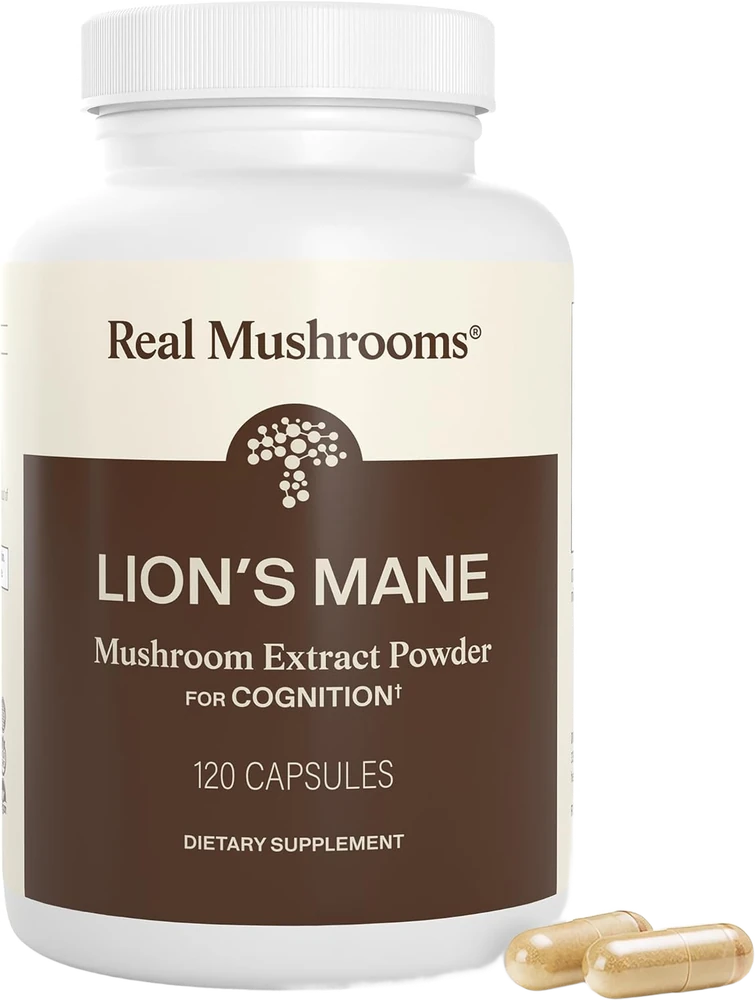
Real Mushrooms
If you want one Lion's Mane that does the single most important thing right, Real Mushrooms is the pick and the benchmark the rest of this list is measured against.
 02
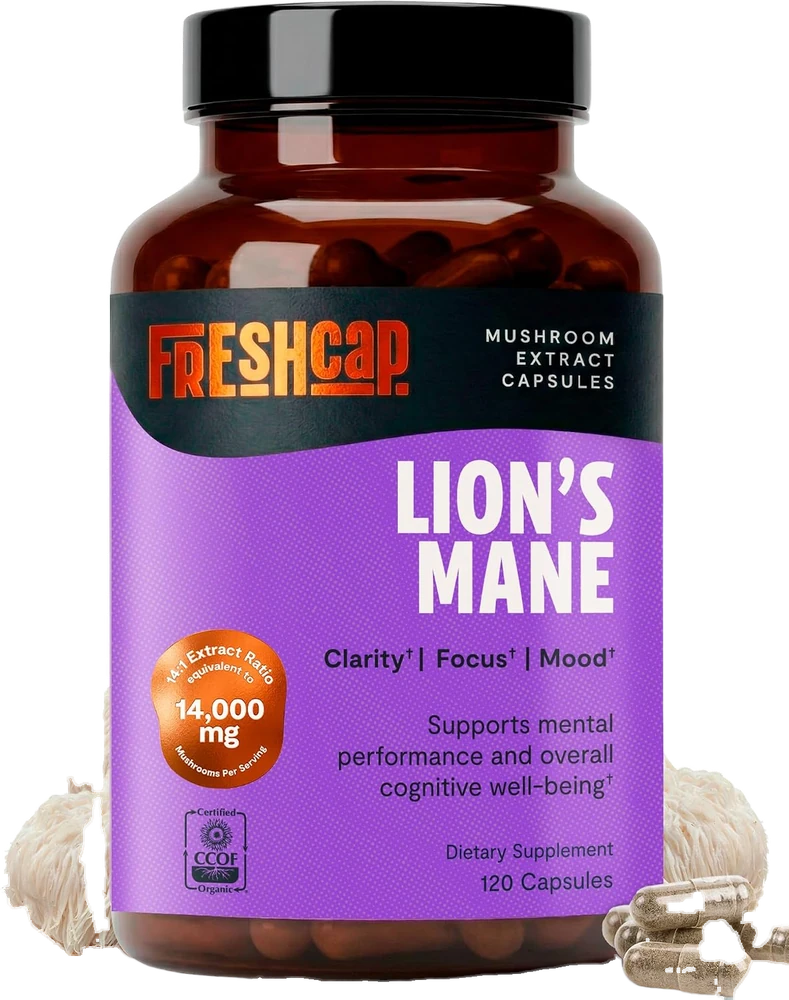
FreshCap
FreshCap is the value-meets-potency pick and a genuine rival to #1.
06Toniiq 10:1
Toniiq is the high-potency value play, but it's where the list crosses from 'pure' into 'blend.' Label re-read 27 Aug 2026: the old '30% polysaccharides' criticism no longer matches the bottle — the panel now declares 360 mg (20%) of real β-glucans per serving with a matching COA tile, and its score rose from 6.8 to 7.0.
Quick Answers
Toniiq's tiles say '20% beta-glucans' — is that a real number?
Yes — and it's a genuine improvement worth crediting. Our original review criticised an older '30% polysaccharides' standardisation, the category's softest metric. The current Supplement Facts panel declares β-glucans directly — 360 mg on the 1,800 mg serving, i.e. 20% — and the listing's COA tile shows the same 20% as a measured beta-glucan fraction from third-party testing (corrected 27 Aug 2026). Two things keep it below the leaders anyway: Real Mushrooms verifies >30% and FreshCap states 31%, both on pure fruiting body, so Toniiq's 20% is roughly two-thirds of their density — and because this is a declared mycelium-and-fruiting-body blend, some of that glucan fraction can come from mycelial material rather than the fruiting body the human trials used.
Is Toniiq fruiting body or mycelium?
Both — and now the label says so. The current Supplement Facts panel reads 'Lion's Mane (mycelium & fruiting body)', which settles what our original review could only suspect (corrected 27 Aug 2026): this is a blend, not the 100% fruiting body the premium picks confirm. Credit where due — declaring the mycelium is more honest than the silence we originally criticised. But the substance of the caveat stands: the human trials (Mori 2009, Saitsu 2019) used fruiting-body material, mycelium is typically grown on grain and carries a different composition, and the panel doesn't state the blend ratio. You know mycelium is in the bottle; you don't know how much.
How concentrated is it really?
The current panel declares 1,800 mg of Lion's Mane (mycelium & fruiting body) with 360 mg of β-glucans per 3-capsule serving — a straightforward 20% density, verified on the listing's COA tile. (Our original review described a 600 mg '10:1 extract' 2-cap serving; the current label declares the material and the glucans directly — corrected 27 Aug 2026.) That 360 mg of β-glucans per serving is a real, competitive active load — more glucan-mg per serving than several picks deliver. The catch is composition, not concentration: because the input is a declared mycelium-and-fruiting-body blend, part of that glucan fraction can come from mycelial material, which is not the form the human trials measured.
Is 1800 mg equivalent (2 caps) enough to do anything?
By raw-equivalent mass it's in a reasonable range, but the human trials used whole fruiting-body material at gram-level doses, so the comparison isn't clean. Mori 2009 (PMID 18844328) used 3 g/day of fruiting-body powder for 16 weeks for the cognition signal; Saitsu 2019 (PMID 31413233) used 2.4 g/day. Toniiq's 3-cap serving delivers 1,800 mg of declared material with 360 mg β-glucans, which is in the ballpark of the trial masses. The honest read: the dose is defensible on paper — but the trials used pure fruiting body, and this is a declared mycelium-and-fruiting-body blend with no stated ratio, so the mapping onto the trial material stays imperfect. Judge it over 8-12 weeks and keep in mind the whole evidence base is still early (2025 systematic review, PMID 40959699, calls it preliminary).
Who is Toniiq Lion's Mane right for?
The price-sensitive buyer who wants a concentrated extract and understands they're trading verification for cost. At ~$0.50 per 3-cap serving with a declared 360 mg (20%) of β-glucans and third-party lab testing, Toniiq is a legitimate budget pick — IF you go in clear-eyed that 20% is two-thirds of the leaders' 30/31% and that the panel declares a mycelium-and-fruiting-body blend, not the pure fruiting body the trials used. It's NOT the pick if you want maximum verified fruiting-body glucans (go Real Mushrooms #1 or FreshCap #2), or if a mycelium-free bottle matters to you. Buy it as the deliberate budget play, not as an equal to the premium tier.
Sources & Further Reading
4 peer-reviewed sources, each linked to PubMed
- [1] Mori 2009 PMID 18844328 — Improving effects of the mushroom Yamabushitake (Hericium erinaceus) on mild cognitive impairment: a double-blind placebo-controlled clinical trial. Double-blind, placebo-controlled trial in 30 adults aged 50-80 with mild cognitive impairment: 3 g/day of fruiting-body powder for 16 weeks significantly improved cognitive-scale scores vs placebo, with gains fading after stopping. The cornerstone cognition trial — and it measured pure fruiting-body material, the form Toniiq's declared mycelium-and-fruiting-body blend only partially matches.
- [2] Saitsu 2019 PMID 31413233 — Improvement of cognitive functions by oral intake of Hericium erinaceus. Trial in 31 healthy older adults: 2.4 g/day of Hericium erinaceus for 12 weeks significantly improved scores on a standardized Japanese cognitive test. A supporting cognition signal that again used confirmed fruiting-body material — context for Toniiq's ~1800 mg raw-equivalent serving, whose actual beta-glucan content is unverified.
- [3] Nagano 2010 PMID 20834180 — Reduction of depression and anxiety by 4 weeks Hericium erinaceus intake. Placebo-controlled study in 30 women eating Hericium erinaceus for 4 weeks: depression and anxiety measures were significantly lower than placebo. The primary human mood signal — a secondary reason a Lion's Mane bottle is worth a daily run, on a shorter ~4-week timeline than the cognition endpoint.
- [4] Menon 2025 PMID 40959699 — Benefits, side effects, and uses of Hericium erinaceus as a supplement: a systematic review. Systematic review of the Hericium erinaceus supplement literature: reports consistent neuroprotective and NGF/BDNF-stimulating signals and cognitive/mood benefits, while concluding the human evidence remains preliminary and calls for larger, longer trials. The honest 'early evidence' frame for any Lion's Mane bottle — declared glucan numbers describe the product, not the strength of the human evidence.
Affiliate disclosure: every Amazon link uses our Associates tag (superachieverclub-20). We earn a small commission at no cost to you; it funds independent reviews. We never accept payment to change a ranking.