
Thorne Milk Thistle Phytosome (Formerly Siliphos), 90 Capsules Review
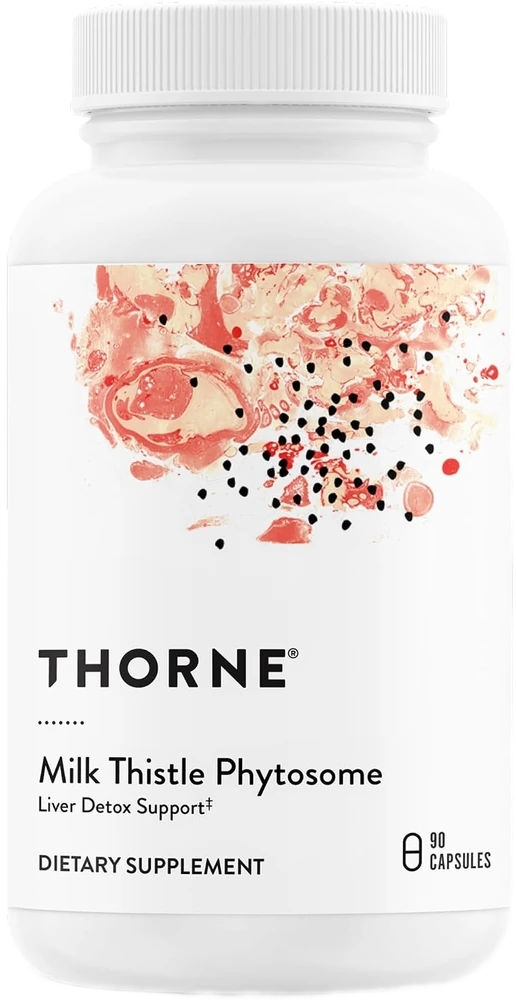 #1 of 9 · Best Overall✓ Label verified · Supplement Facts read Sep 7, 2026
Real retailer photo, cut out. Label unedited.
Buy it. The bioavailability play, done right and done clean. A real silybin-phytosome from the brand with the strongest quality reputation here, kept soy-, dairy- and gluten-free via a sunflower phospholipid.
~$29~$0.32/cap (~$0.64–0.97/day at 2–3 caps)
Why It Scores 8.6 — And The Label Line Behind Each Number
Form & Bioavailability
30% of scoreA genuine silybin-phytosome — silybin complexed with phosphatidylcholine — which targets milk thistle's single biggest weakness, the poor absorption of plain extract. This is the best-supported delivery form in the category and Thorne executes it cleanly with a sunflower (not soy) phospholipid.
- Form
- Silybin phytosome (silybin + sunflower phospholipid complex)
Silymarin/Silybin Dose vs Clinical Range
25% of scoreEach capsule carries 180 mg of silybin-phytosome complex — the complex weight, not 180 mg of free silybin. Absorbed silybin partly offsets the lower headline number, but the label's own 2–3 caps/day range exists precisely because one capsule sits below a full dose.
Third-Party Testing & Quality Assurance
20% of scoreThorne is the reference standard for QC in this set: third-party certification, cGMP manufacturing, and a reputation clinicians lean on. This axis is where it clearly outruns the budget field.
- Testing
- Third-party certified; cGMP facility
Value per Effective Serving
15% of scorePremium per milligram of silybin, and because you need 2–3 capsules for a meaningful dose the real daily cost is roughly $0.64–0.97 — well above the plain-extract value picks. You're paying for form and QC, not price.
- Supply
- 90 capsules (label: 1 cap 2–3× daily)
- Price
- ~$29
- Cost per serving
- ~$0.32/cap (~$0.64–0.97/day at 2–3 caps)
Formulation Suitability & Tolerability
10% of scoreGluten-, dairy- and soy-free, which is genuinely rare for a phytosome (most use soy lecithin). A clean allergen profile that suits sensitive users.
- Allergens
- Gluten-, dairy- & soy-free
- More Specs
- Silybin load
- 180 mg silybin-phytosome complex per capsule
Label verified. Every figure read from the Supplement Facts photo, Sep 7, 2026.
Marketing Claims Vs. Reality
Phytosome delivery improves silybin absorption versus plain extract
Pharmacokinetic studies of silybin-phospholipid complexes consistently show higher plasma silybin than unformulated extract; enhanced bioavailability is the best-established fact about this form.
Delivers 180 mg of silybin per capsule
The 180 mg is the weight of the silybin-phytosome complex, not free silybin. The actual silybin fraction is lower, which is why the label recommends 2–3 capsules daily.
Soy-free phytosome
Thorne uses a sunflower-sourced phospholipid rather than soy lecithin, and the label lists the product as gluten-, dairy- and soy-free.
Supports liver health
Mechanistic and narrative-review support exists (Gillessen 2020), but the highest-quality trials and Cochrane analysis (Rambaldi 2007) found no mortality benefit in liver disease, so a clinical 'protection' claim is not fully supported.
What Our Test Actually Found
The form is the whole point
Silymarin's oral bioavailability is notoriously poor. Complexing silybin with a phospholipid raises absorbed silybin substantially versus plain extract, which is exactly why the phytosome picks (#1, #2, #7) grade highest on the 30%-weighted Form axis. Thorne is the cleanest execution of it.
Read the 180 mg carefully
That number is the complex weight. Free silybin per capsule is meaningfully lower, so treat one capsule as a partial dose. The label's 2–3 caps/day guidance is the honest tell — budget for it when you price the bottle.
QC is the tiebreaker
On the 20%-weighted testing axis Thorne is the strongest name in the set — third-party certified, cGMP, and the brand clinicians reach for. That reputation is a large part of why it holds #1 despite a premium price and modest per-cap dose.
Evidence caveat applies to the whole category
Even a perfectly absorbed dose runs into mixed clinical data: high-quality trials show no mortality benefit for liver disease. Buy this as a well-made, well-absorbed supplement, not a proven treatment.
Full analysis: all pros & cons (7), buy if / skip if
- Phytosome delivery targets milk thistle's biggest weakness — poor plain-extract absorption
- Elite third-party QC reputation among clinicians
- Sunflower-sourced phospholipid, so it stays soy-free (rare for a phytosome)
- Clean allergen profile: gluten-, dairy- and soy-free
- The 180 mg is the complex weight, not 180 mg of free silybin
- Label wants 2–3 caps/day, so true cost-per-day is higher than the sticker
- Premium priced per milligram of silybin
- You want the phytosome form the absorption science supports
- You value elite third-party QC over rock-bottom price
- You need a soy-, dairy- and gluten-free option
- You want the lowest cost-per-milligram of silymarin
- You'd rather hit a full dose in a single capsule
A real silybin-phytosome from the brand with the strongest quality reputation here, kept soy-, dairy- and gluten-free via a sunflower phospholipid. Plan on 2–3 capsules a day to reach a meaningful dose — the sticker price understates true cost-per-day, but for a supplement defined by poor absorption, this is the smart money.
Milk thistle's whole problem is that plain silymarin barely absorbs. Thorne answers that directly by binding silybin to a sunflower-sourced phospholipid (a phytosome), then wraps it in the QC reputation most functional-medicine clinicians reach for by default. It's the most defensible splurge on this page — you pay a premium and the free-silybin load per capsule is modest, but the form is the one the bioavailability science actually points to.
The most defensible splurge in the category

If you want the form the bioavailability science actually points to, from the brand with the strongest quality reputation in this list, this is it. You are paying a premium and the per-capsule silybin is modest — plan on 2–3 capsules a day to reach a meaningful dose. But for a supplement whose entire problem is absorption, paying for a real phytosome from Thorne is the most defensible splurge on this page.
If This Doesn’t Fit — Try These
 02
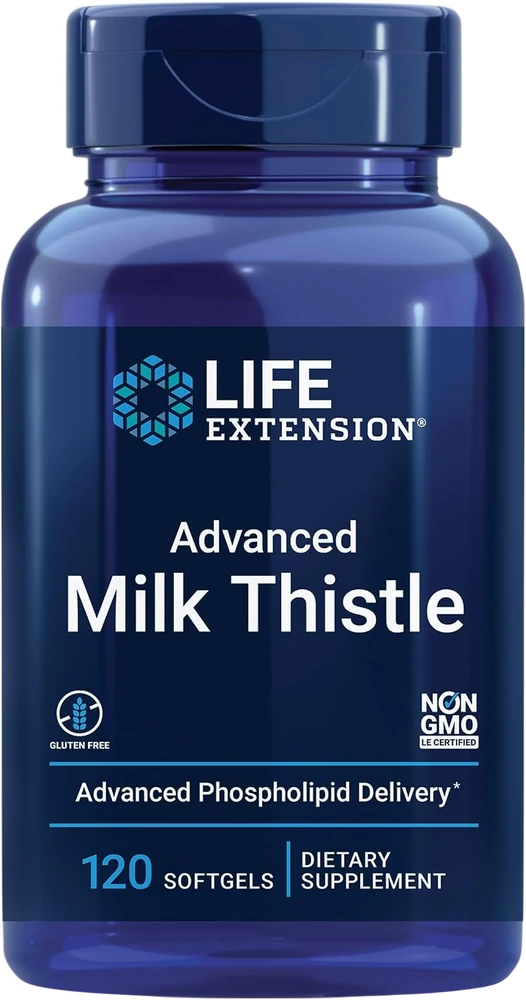
02Life Extension Advanced Milk Thistle
This is the pick if your goal is to hit a trial-level silymarin dose without counting out four capsules — one serving does it, and the Siliphos fraction hedges the absorption problem.
 07
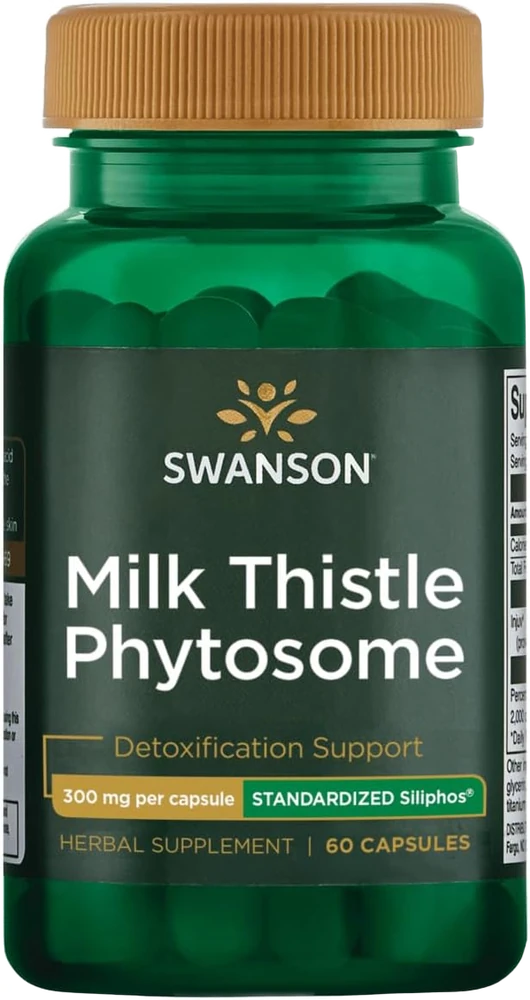
07Swanson Siliphos Phytosome
If the phytosome form matters to you but the premium price tags don't, this is the honest budget route to the absorption tech that makes milk thistle worth taking.
 03
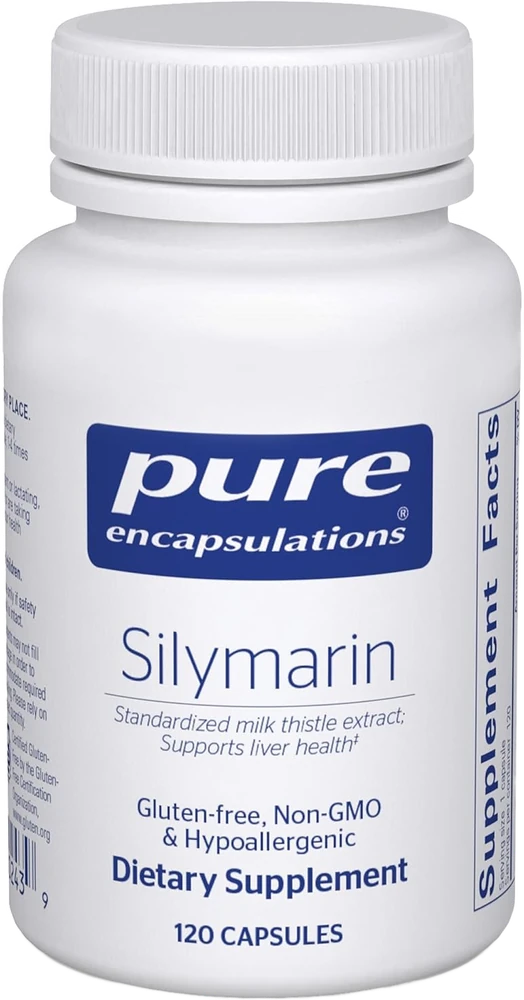
03Pure Encapsulations Silymarin
If you react to fillers or just want the cleanest possible silymarin, this is the one — a bare-bones, hypoallergenic capsule from a brand clinicians reach for by reflex.
Quick Answers
How many capsules a day should I take?
The label recommends one capsule two to three times daily. Because each capsule's 180 mg is the phytosome complex weight rather than free silybin, plan on 2–3 per day to reach a meaningful dose.
Is this really soy-free?
Yes. Unlike most phytosomes, which use soy lecithin, Thorne uses a sunflower-sourced phospholipid, and the product is labeled gluten-, dairy- and soy-free.
Is the phytosome actually worth the extra cost?
For milk thistle specifically, yes — poor absorption is the whole problem, and phospholipid complexation reliably raises plasma silybin. It's the most defensible reason to pay up in this category.
Sources & Further Reading
2 peer-reviewed sources, each linked to PubMed
- [1] Rambaldi A, Jacobs BP, Gluud C. Milk thistle for alcoholic and/or hepatitis B or C virus liver diseases. Cochrane Database Syst Rev. 2007;(4):CD003620. PMID 17943794 — Milk thistle for alcoholic and/or hepatitis B or C virus liver diseases. Meta-analysis found no significant effect of milk thistle on all-cause mortality in liver disease versus placebo.
- [2] Gillessen A, Schmidt HH. Silymarin as Supportive Treatment in Liver Diseases: A Narrative Review. Adv Ther. 2020;37(4):1279-1301. PMID 32065376 — Silymarin as Supportive Treatment in Liver Diseases: A Narrative Review. Narrative review reports favorable supportive effects of silymarin, but sits at a lower evidence tier than RCTs and meta-analyses.
Affiliate disclosure: every Amazon link uses our Associates tag (superachieverclub-20). We earn a small commission at no cost to you; it funds independent reviews. We never accept payment to change a ranking.