
Swanson Siliphos Milk Thistle Phytosome (Standardized) 300 mg, 60 Capsules Review
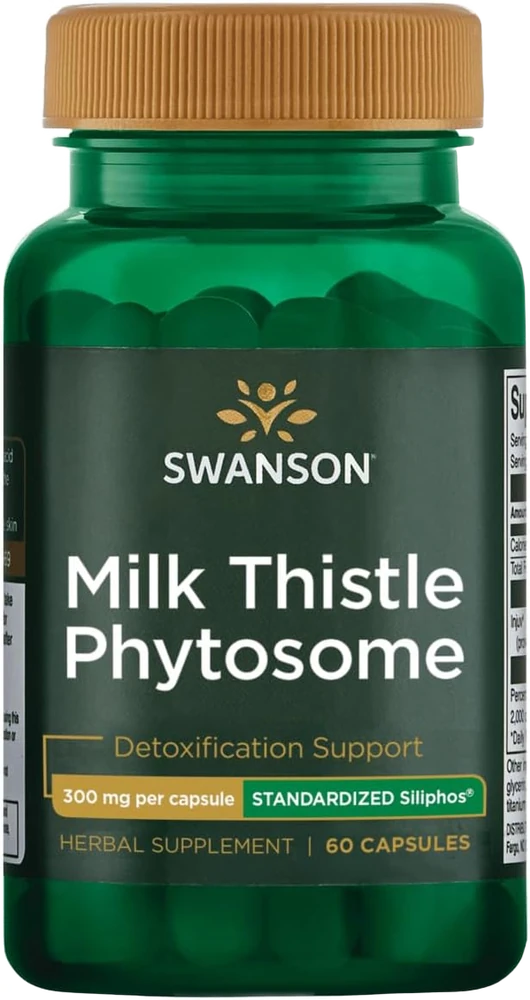 #7 of 9 · Best Budget Phytosome✓ Label verified · Supplement Facts read Sep 7, 2026
Real retailer photo, cut out. Label unedited.
Consider it. Phytosome absorption on a budget — with a thin QC paper trail. The same Siliphos silybin-phospholipid tech premium brands use, for about $16.
~$16~$0.27/cap (~$0.53–0.80/day at 2–3 caps)
Why It Scores 7.1 — And The Label Line Behind Each Number
Form & Bioavailability
30% of scoreA genuine Siliphos silybin-phytosome — the same patented silybin-phosphatidylcholine tech premium phytosomes use. On the highest-weighted axis it grades near the top, because this is the delivery form milk thistle actually needs.
- Form
- Siliphos silybin phytosome (silybin-phosphatidylcholine), gelatin cap
Silymarin/Silybin Dose vs Clinical Range
25% of score87 mg silybin per capsule — the label's printed minimum, 29% of the 300 mg Siliphos. Standardized to the bioactive isomer, but the per-cap load is modest, so reaching a full dose means 2–3 capsules a day.
Third-Party Testing & Quality Assurance
20% of scoreThe weak point: this is the only pick with no third-party testing claim — in-house GMP only. On the 20%-weighted QC axis that's the single biggest reason it sits outside the top tier.
- Testing
- In-house GMP facility only
Value per Effective Serving
15% of scoreThe lowest-cost phytosome in the set at ~$16. Even accounting for 2–3 caps/day to reach a full dose, it's the cheapest way to buy the absorption tech — strong value for the form.
- Supply
- 60 capsules (label: 1 cap 1–3× daily)
- Price
- ~$16
- Cost per serving
- ~$0.27/cap (~$0.53–0.80/day at 2–3 caps)
Formulation Suitability & Tolerability
10% of scoreGelatin capsules, so not vegan, and no allergen certifications highlighted. Generally tolerable, but the format limits suitability for plant-based users.
- More Specs
- Silybin load
- 87 mg silybin per capsule (label: minimum 29% of 300 mg Siliphos)
- Standardization
- Minimum 29% silybin — 87 mg per capsule (patented Siliphos raw material)
Label verified. Every figure read from the Supplement Facts photo, Sep 7, 2026.
Marketing Claims Vs. Reality
Uses patented Siliphos silybin-phospholipid phytosome
The label specifies the patented Siliphos raw material standardized to minimum 29% silybin (87 mg per capsule) — the same silybin-phosphatidylcholine complex used in premium phytosomes.
Phytosome improves absorption over plain extract
Silybin-phospholipid complexes are shown in pharmacokinetic studies to raise plasma silybin versus unformulated extract.
Third-party tested
No third-party testing claim is made; the product states in-house GMP manufacturing only, so testing is not independently attested.
Supports liver health
Better-absorbed silybin is a reasonable mechanism, but clinical outcomes remain mixed (Rambaldi 2007), so a liver-protection claim is only partially supported.
What Our Test Actually Found
Correction: label states 87 mg silybin, not a 90–108 mg range
An earlier version of this review said this capsule delivers ~90–108 mg silybin (29–36% standardization). The Supplement Facts panel reads "Standardized to minimum 29% silybin (87mg)" — one disclosed minimum, not a range running up to 36%. We re-read the label on Sep 7, 2026 and corrected the silybin figure everywhere it appeared (specs, criteria, claims, pros, and this findings section).
Same tech, lower price
Siliphos is the identical patented silybin-phospholipid raw material found in premium phytosomes. Getting it for ~$16 is the whole reason this pick exists — form-for-the-money, it's the best value on the page.
Modest silybin per cap
At 87 mg silybin per capsule (the label's printed minimum), one capsule is a partial dose; the label's 1–3 caps/day range reflects that. Budget for 2–3 daily, which still keeps the per-day cost low.
The QC gap is the story
It's the only pick here with no third-party testing claim — in-house GMP only. On a 20%-weighted axis that single gap is exactly what keeps a top-tier form out of the top tier.
Gelatin, not vegan
The capsule is gelatin, ruling it out for plant-based buyers. Combined with the thin QC paper trail, that's the trade you accept for the low price.
Full analysis: all pros & cons (7), buy if / skip if
- Budget entry into phytosome (Siliphos) bioavailability — milk thistle's key absorption lever
- Standardized to the bioactive silybin isomer (87 mg/cap minimum, per label)
- Lowest-cost phytosome option in the set
- Patented Siliphos raw material, same tech as premium brands
- The only pick with no third-party testing claim — in-house GMP only
- Gelatin capsules, so not vegan
- Modest silybin per cap means 2–3 caps/day for a full dose
- You want phytosome absorption without a premium price
- You're comfortable with in-house GMP and no independent seal
- You don't need a vegan capsule
- You require a documented third-party testing claim
- You need a vegan/gelatin-free capsule
The same Siliphos silybin-phospholipid tech premium brands use, for about $16. The compromises are real: no third-party testing claim (in-house GMP only), gelatin capsules, and modest silybin per cap that means 2–3 a day. Best form-for-the-money on the page, weakest QC.
If the phytosome form matters to you but the premium price tags don't, this is the honest budget route to the absorption tech that makes milk thistle worth taking. Swanson uses the same patented Siliphos silybin-phospholipid raw material as premium brands, standardized to the bioactive silybin isomer. Be clear-eyed about the compromises: it's the only pick here with no third-party testing claim, the capsule is gelatin, and the silybin per cap is modest.
Best form-for-the-money, weakest paper trail

If the phytosome form matters to you but the premium price tags don't, this is the honest budget route to the absorption tech that makes milk thistle worth taking. Be clear-eyed about the compromises: it's the only option here with no third-party testing claim, the capsule is gelatin, and the silybin per cap is modest. Best form-for-the-money on the page — just the weakest QC paper trail, which is exactly what keeps it out of the top tier.
If This Doesn’t Fit — Try These
 01
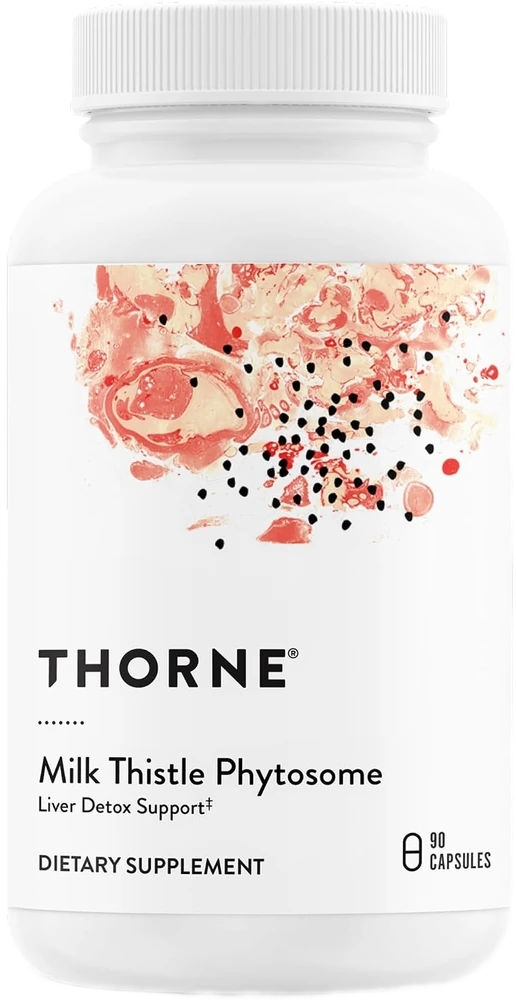
01Thorne Milk Thistle Phytosome
If you want the form the bioavailability science actually points to, from the brand with the strongest quality reputation in this list, this is it.
 02
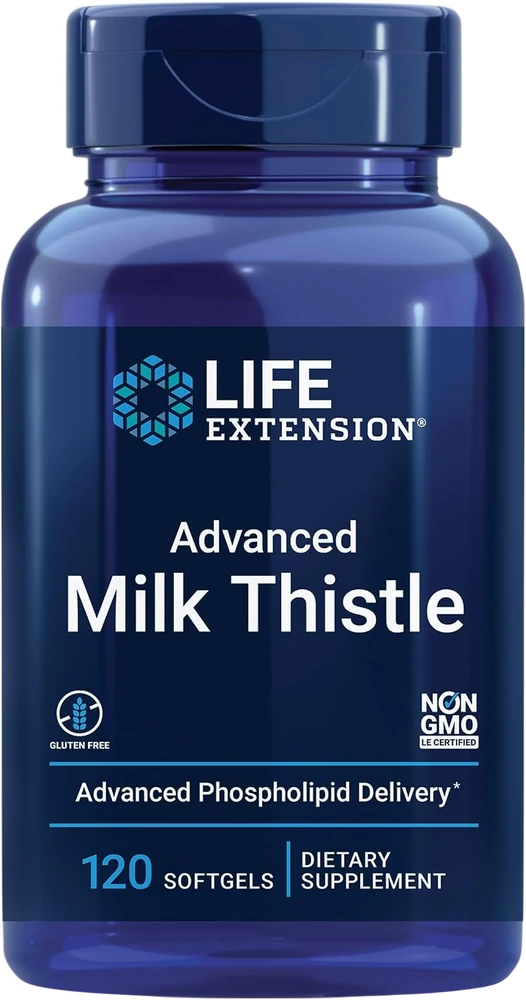
02Life Extension Advanced Milk Thistle
This is the pick if your goal is to hit a trial-level silymarin dose without counting out four capsules — one serving does it, and the Siliphos fraction hedges the absorption problem.
 04
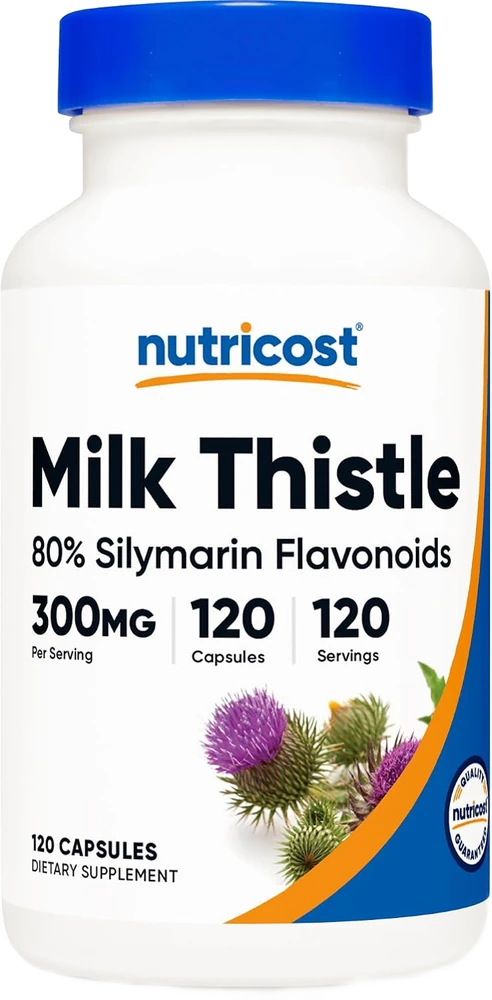
04Nutricost Milk Thistle 300 mg
This is the value winner and the sane default for most people — a legitimate 80% extract at a price that makes daily use painless.
Quick Answers
Is this the same phytosome tech as the premium brands?
Yes — it uses the patented Siliphos silybin-phospholipid raw material, the same complex found in premium phytosomes, which is why it's the cheapest genuine phytosome here.
Why is it ranked below the other phytosomes?
It's the only pick with no third-party testing claim — in-house GMP only. On a quality-weighted list, that thin paper trail is what keeps a strong form out of the top tier.
Is it vegan?
No. The capsules are gelatin, so it isn't suitable for vegans — choose Thorne's phytosome if you need a plant-based option.
Sources & Further Reading
2 peer-reviewed sources, each linked to PubMed
- [1] Rambaldi A, Jacobs BP, Gluud C. Milk thistle for alcoholic and/or hepatitis B or C virus liver diseases. Cochrane Database Syst Rev. 2007;(4):CD003620. PMID 17943794 — Milk thistle for alcoholic and/or hepatitis B or C virus liver diseases. Found no significant effect on mortality even where absorption is improved.
- [2] Gillessen A, Schmidt HH. Silymarin as Supportive Treatment in Liver Diseases: A Narrative Review. Adv Ther. 2020;37(4):1279-1301. PMID 32065376 — Silymarin as Supportive Treatment in Liver Diseases: A Narrative Review. Reports supportive effects of silymarin, noting bioavailability as a key limitation addressed by phytosome forms.
Affiliate disclosure: every Amazon link uses our Associates tag (superachieverclub-20). We earn a small commission at no cost to you; it funds independent reviews. We never accept payment to change a ranking.