
Swanson Organic Lion's Mane Mushroom 500 mg Review
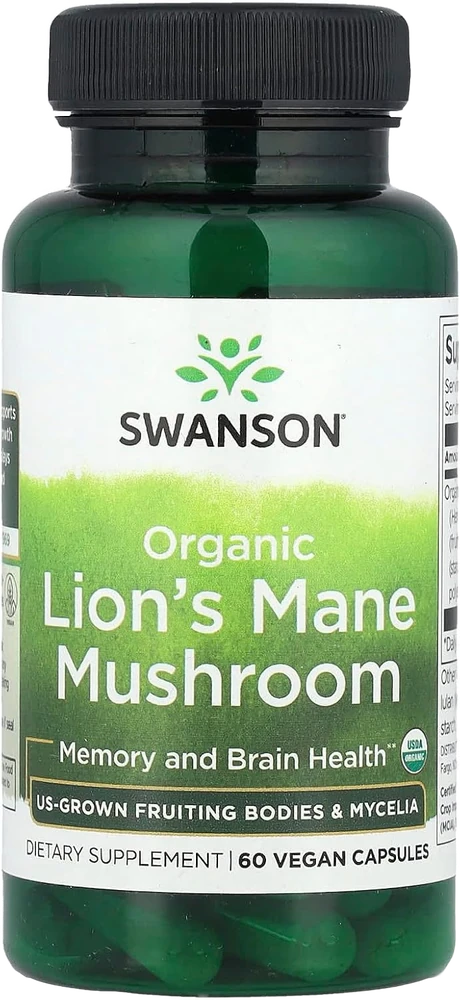 #7 of 10 · Budget pick✓ Label verified · Supplement Facts read Aug 27, 2026
Real retailer photo, cut out. Label unedited.
Consider it. The rock-bottom budget pick — fine as a cheap start, but '40% polysaccharides' isn't beta-glucans. Organic, the lowest price per serving on the list (~$0.40), and standardized to '40% polysaccharides.' The two linked asterisks: it's a fruiting body + mycelium blend (a step below pure fruiting body), and that polysaccharide number can count grain starch from the mycelium substrate, so it's NOT a verified beta-glucan %.
$11.99$0.40 / 2-capsule serving
Why It Scores 6.4 — And The Label Line Behind Each Number
Form honesty (fruiting body vs mycelium-on-grain)
40% of scoreFruiting body + mycelium blend. It contains real fruiting body (so it's above a pure-mycelium product like Host Defense #8), but the mycelium-on-grain portion dilutes the per-mg potency versus a 100% fruiting-body extract. This is the load-bearing quality criterion and Swanson sits on the middle rung: better than pure mycelium, clearly below the pure-fruiting-body leaders. The blend is part of how the price stays this low.
- Active form
- Organic Lion's Mane (Hericium erinaceus) — fruiting body + mycelium blend
- Inactives
- Vegetable capsule; organic, non-GMO
Verified beta-glucans (not 'polysaccharides')
25% of scoreStandardized to '40% polysaccharides' — and that's the category's most common trap, not a verified potency signal. Polysaccharides include grain starch, so a fruiting body + mycelium blend can hit a big polysaccharide number on substrate starch while carrying far less actual beta-glucan. Swanson does not publish a third-party-verified beta-glucan %. This is the criterion where the budget tier shows its seams most clearly versus Real Mushrooms (#1) and FreshCap (#2), which test and print beta-glucans.
- Standardization
- '40% polysaccharides' — NOT a verified beta-glucan % (polysaccharides can count grain starch)
- Beta-glucans
- NOT declared — the meaningful gap; label states polysaccharides instead
Extraction + dose
15% of scoreNot a concentrated extract — 500 mg caps of the raw blend served at 1000 mg (2 caps), well below the gram-level human-trial doses (Mori 2009, 3 g/day; Saitsu 2019, 2.4 g/day), and the mycelium-on-grain portion lowers the effective active dose further. There's no concentration or dual-extraction step; the blend is part of how the price stays this low.
- Per cap
- 500 mg organic Lion's Mane blend
- Per serving
- 1000 mg (2 caps) — below the gram-level human-trial doses
Third-party testing + transparency
12% of scoreOrganic and non-GMO/vegan with Swanson's standard QC and a long retail track record — above the no-COA Amazon floor. But the disclosure that matters most in this category (a per-batch beta-glucan number) is exactly what's missing; the label leans on a 'polysaccharides' figure instead. Adequate general transparency, with the one bioactive-specific gap that defines the category.
- Certifications
- USDA Organic, non-GMO, vegan
- Manufacturer
- Swanson Health Products (Fargo, ND · long direct-to-consumer value track record)
- Lab transparency
- Standard Swanson QC; no published per-batch beta-glucan number
Value / cost-per-serving
8% of score~$0.40 per 1000 mg (2-cap) serving — among the cheapest on the list, and genuinely good value on headline price. The honest discount: some of that 1000 mg is mycelium-on-grain rather than concentrated fruiting body, so on a per-mg-of-actual-beta-glucan basis the value gap with real-fruiting-body picks narrows. Cheap on paper; cheaper-looking than it is once you weight for the blend.
- Bottle size
- 60 capsules — 30-day supply at 2 caps/day
- Price
- ~$12 / 60-cap bottle = ~$0.40 per 1000 mg serving
Label verified. Every figure read from the Supplement Facts photo, Aug 27, 2026.
Marketing Claims Vs. Reality
Standardized to 40% polysaccharides.
Technically accurate but misleading as a potency signal — polysaccharides include grain starch, and for a fruiting body + mycelium blend that starch comes from the mycelium substrate. A high polysaccharide number can coexist with low actual beta-glucan content. Without a verified beta-glucan %, '40% polysaccharides' tells you little about real mushroom potency. The single most important caveat on this bottle.
Organic Lion's Mane mushroom.
It is organic and it is genuine Lion's Mane — but it's a fruiting body + mycelium blend, not pure fruiting body. The mycelium portion is grown on grain and dilutes the actives. 'Organic Lion's Mane' is true; the unstated part is that a chunk of it is mycelium-on-grain rather than the studied fruiting-body form.
Supports cognitive and nervous system health.
Mori 2009 (PMID 18844328) and Saitsu 2019 (PMID 31413233) support the cognition direction at gram-level fruiting-body doses — but Swanson's 1000 mg/day blend is well under those doses and the mycelium portion lowers the effective active further. The evidence base is also early (PMID 40959699). The direction is real; the dose, form, and preliminary evidence are the asterisks.
Non-GMO and vegan.
Both certifications are listed on the label and consistent with Swanson's organic product line. Standard at the budget tier and not in dispute — these aren't the claims that decide the ranking; the polysaccharide and form claims are.
Premium quality at a value price.
The 'value price' half is genuinely true — it's among the cheapest on the list. 'Premium quality' is brand language that the form (mycelium blend) and the unverified beta-glucan content don't support. Honest framing: real value, budget-tier quality, not premium.
What Our Test Actually Found
'40% polysaccharides' is the category's most common trap — and Swanson leans on it
This is the finding that decides the bottle. Beta-glucans are the mushroom cell-wall actives the research points to; 'polysaccharides' is a broader bucket that also counts starch. For a fruiting body + mycelium blend — where the mycelium is grown on grain — leftover substrate starch inflates a 'total polysaccharides' number, making a weak product look potent. Swanson's headline is '40% polysaccharides,' not a verified beta-glucan %. The premium picks (Real Mushrooms #1, FreshCap #2) publish beta-glucans precisely because it's the only honest potency metric. When a label reports polysaccharides and not beta-glucans, treat it as a flag, not a feature.
The fruiting body + mycelium blend is the middle rung — and it's why it's cheap
Swanson's blend contains real fruiting body (so it's a step above a pure-mycelium product like Host Defense #8), but the mycelium-on-grain portion dilutes the per-mg potency versus a 100% fruiting-body extract. That blending is part of how the price stays at the bottom of the list. It's a defensible middle position — above pure mycelium, below pure fruiting body — but you should know the low price is partly bought by mixing in mycelium-on-grain rather than shipping the studied fruiting-body form.
NOW Foods is the smarter buy at nearly the same price
The most useful comparison isn't with the premium tier — it's with NOW Foods (#5), which sits at a similar price. NOW ships real organic fruiting-body POWDER (not a mycelium blend) and, to its credit, doesn't pad its label with a 'total polysaccharides' number. So for roughly the same money, NOW gives you the studied form without the polysaccharide sleight-of-hand. Swanson edges it only on rock-bottom headline price; on the criteria that decide whether you're buying mushroom or substrate, NOW is the better value. If you're shopping the budget tier, that comparison should usually point you to NOW.
Cheap enough to test with — but know what 'no effect' would mean
If you just want to spend the minimum to see whether Lion's Mane does anything for you, Swanson is cheap enough to try. But interpret a null result carefully: because it's a blend with an unverified beta-glucan content, 'I felt nothing' could mean you're a non-responder OR that you got a low-active, substrate-heavy bottle. A verified-potency product (Real Mushrooms #1) removes that ambiguity. The honest move: if Swanson does nothing in 8 weeks, don't conclude 'Lion's Mane doesn't work' — try a verified fruiting-body product before deciding.
Keep the evidence honest — early, small, mostly older adults
Whatever the form, don't oversell the science. The human Lion's Mane data is real but early: a handful of small RCTs, mostly in older adults, with cognition benefits that fade after stopping (Mori 2009), a mood signal over 4 weeks (Nagano 2010), and a 2025 systematic review (PMID 40959699) that calls the evidence consistent but preliminary. A cheap blend at 1000 mg/day delivers less of the studied active than the trials used, at the studied direction. It's a low-cost bet on an early-evidence supplement — priced accordingly, asterisked accordingly.
Full analysis: all pros & cons (8), buy if / skip if
- Among the lowest prices per serving on the entire list (~$0.40/serving)
- USDA Organic, non-GMO, vegan — a legitimate organic budget entry point
- Contains real fruiting body, so it's a step above pure-mycelium products (e.g. Host Defense #8)
- Cheap enough to test whether you respond before committing to a premium fruiting-body bottle
- '40% polysaccharides' is NOT a verified beta-glucan % — it can count grain starch from mycelium substrate
- Fruiting body + mycelium blend, not pure fruiting body — lower per-mg potency than the leaders
- No third-party-verified beta-glucan number published
- NOW Foods (#5) ships real fruiting-body powder at a similar price without the polysaccharide sleight-of-hand
- Rock-bottom price is genuinely the constraint and you want an organic bottle to start with
- You understand it's a fruiting body + mycelium blend, not pure fruiting body
- You know '40% polysaccharides' is not a verified beta-glucan number and buy it anyway
- You're testing whether you respond at the lowest possible cost before upgrading
- You want real fruiting body at a similar price — NOW Foods (#5) is the smarter value
- You take the polysaccharide-vs-beta-glucan distinction seriously — go Real Mushrooms (#1) / FreshCap (#2)
- You want a verified beta-glucan % on the label, not a polysaccharide number that can count starch
Organic, the lowest price per serving on the list (~$0.40), and standardized to '40% polysaccharides.' The two linked asterisks: it's a fruiting body + mycelium blend (a step below pure fruiting body), and that polysaccharide number can count grain starch from the mycelium substrate, so it's NOT a verified beta-glucan %. Consider it as a cheap organic start. But NOW Foods (#5) gives you real fruiting-body powder at a similar price without the sleight-of-hand, and Real Mushrooms (#1) / FreshCap (#2) publish verified beta-glucans.
Swanson Organic Lion's Mane is the rock-bottom budget pick on the list — organic, standardized to '40% polysaccharides,' and the lowest price per serving here at ~$0.40. For a buyer whose constraint is genuinely price, it's an honest entry point to start with. But two linked asterisks decide where it ranks: it's a FRUITING BODY + MYCELIUM blend (a step below the pure-fruiting-body picks), and that headline '40% polysaccharides' is the category's most common trap — because polysaccharides can include grain starch from the mycelium substrate, the number is NOT the same as a verified beta-glucan percentage. That's why it sits at #7. It's above the pure-mycelium picks (it does contain real fruiting body), but clearly below the 100% fruiting-body leaders (Real Mushrooms #1, FreshCap #2) and even below NOW Foods (#5), which ships real fruiting-body powder at a similar price without the polysaccharide sleight-of-hand. We read the supplement-facts panel, checked the standardization and form claims against the web-verified evidence, and here's the full breakdown.
The rock-bottom budget pick — a fine cheap start, but know what '40% polysaccharides' really means.

Swanson Organic Lion's Mane earns a measured 'consider' verdict: it's the cheapest organic option on the list and a defensible entry point if price is genuinely your constraint. It contains real fruiting body, so it ranks above the pure-mycelium picks. But the two linked asterisks are load-bearing. It's a fruiting body + mycelium blend, not pure fruiting body — and its headline '40% polysaccharides' is the category's most common trap, because polysaccharides can count grain starch from the mycelium substrate, so the number is NOT a verified beta-glucan percentage. Real potency (beta-glucans) goes unmeasured on the label. The honest way to place this bottle: it's the rock-bottom 'test whether you respond' option, not the value champion. For roughly the same money, NOW Foods (#5) ships genuine organic fruiting-body powder without the polysaccharide sleight-of-hand — usually the smarter budget buy. And if you take the polysaccharide-vs-beta-glucan and fruiting-body-vs-mycelium distinctions seriously, Real Mushrooms (#1) or FreshCap (#2) publish verified beta-glucans and are the right upgrades. Buy Swanson if you want the cheapest possible organic start and you understand exactly what you're trading away; if Lion's Mane does nothing for you on it in 8 weeks, try a verified fruiting-body product before concluding the mushroom doesn't work for you.
If This Doesn’t Fit — Try These
 06
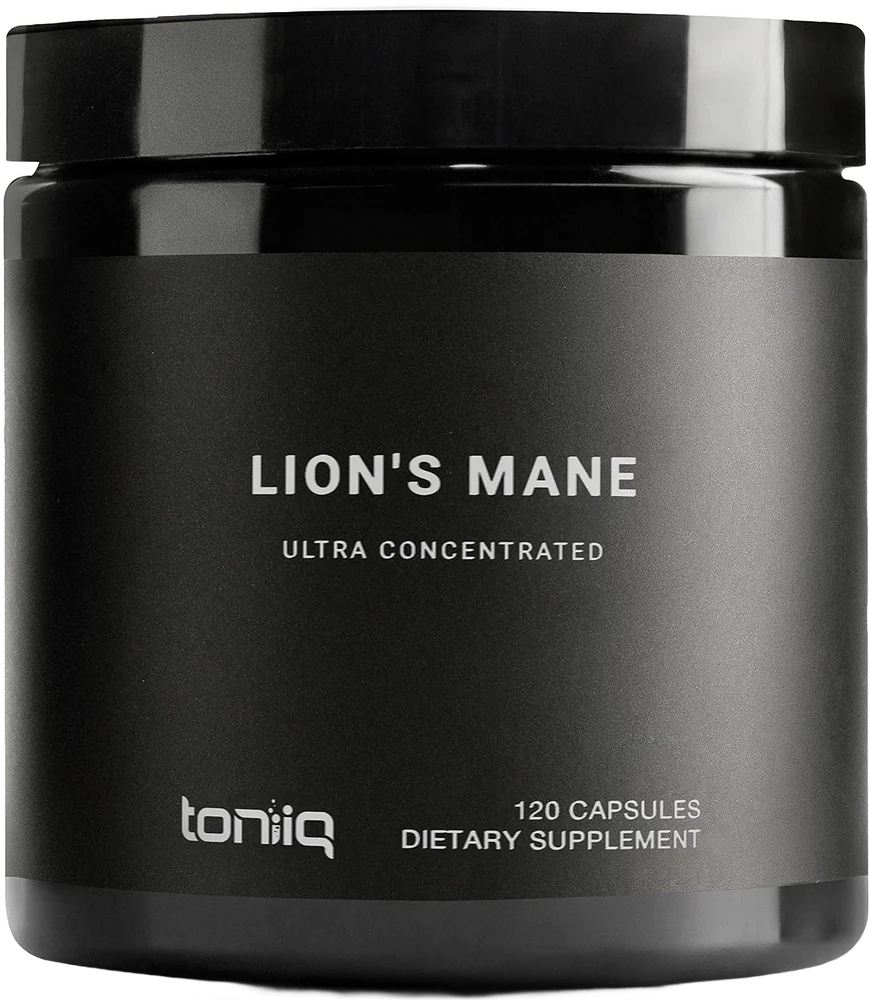
Toniiq 10:1
Toniiq is the high-potency value play, but it's where the list crosses from 'pure' into 'blend.' Label re-read 27 Aug 2026: the old '30% polysaccharides' criticism no longer matches the bottle — the panel now declares 360 mg (20%) of real β-glucans per serving with a matching COA tile, and its score rose from 6.8 to 7.0.
 01
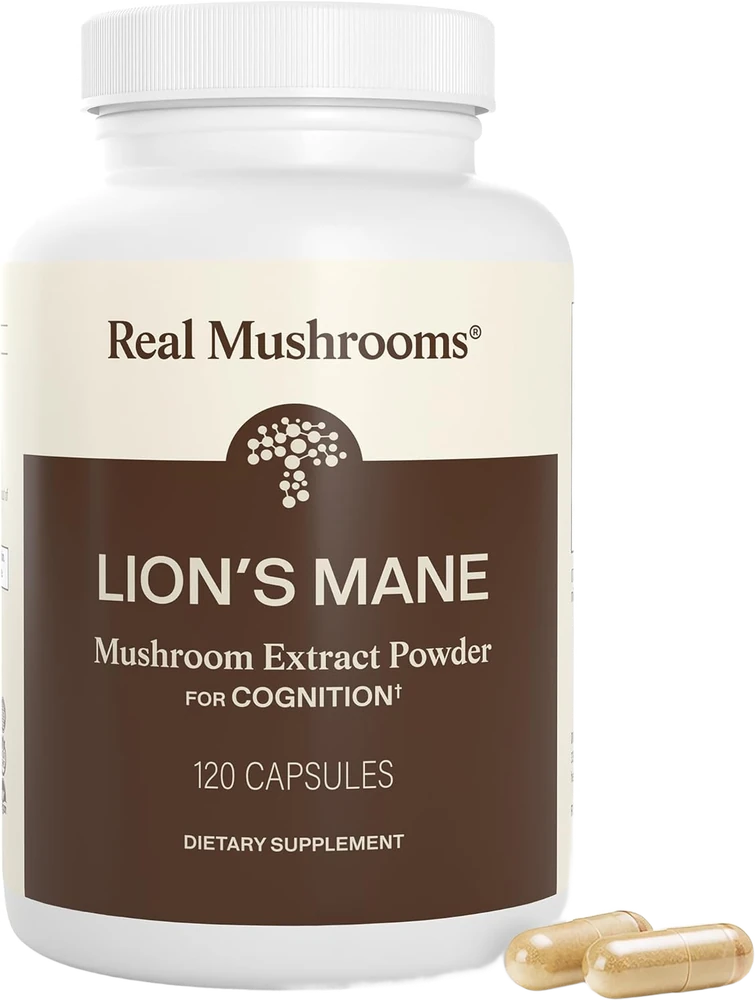
Real Mushrooms
If you want one Lion's Mane that does the single most important thing right, Real Mushrooms is the pick and the benchmark the rest of this list is measured against.
 02
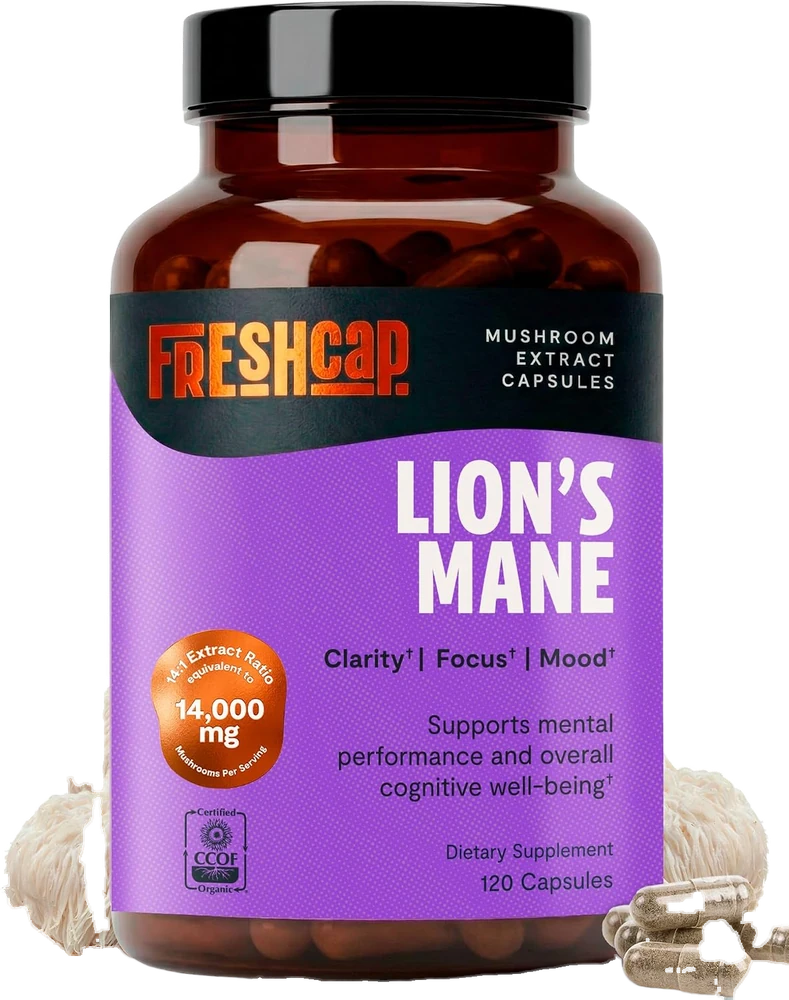
FreshCap
FreshCap is the value-meets-potency pick and a genuine rival to #1.
Quick Answers
Is '40% polysaccharides' a good thing or a marketing trick?
It's the single most important thing to understand about this bottle — and it's closer to a trap than a selling point. Beta-glucans are the specific mushroom cell-wall actives the research points to; 'polysaccharides' is a broader category that ALSO includes starch. When a product is a fruiting body + mycelium blend (and mycelium is grown on a grain substrate like rice or oats), leftover grain starch gets counted in a 'total polysaccharides' number — which can make a weak product look potent. So Swanson's '40% polysaccharides' tells you almost nothing about actual mushroom potency; a verified beta-glucan % (ideally >25%, third-party-confirmed) would. The premium picks (Real Mushrooms #1, FreshCap #2) publish beta-glucans; Swanson publishes polysaccharides. That difference is exactly why it ranks where it does.
How is Swanson this cheap?
Two reasons, one good and one that's the trade-off. The good one: Swanson's whole model is low-margin, direct-to-consumer value, so you genuinely pay less per serving (~$0.40) than almost anything on the list. The trade-off: it's a fruiting body + mycelium blend, not pure fruiting body. Mycelium grown on grain is the cheap industry shortcut — it dilutes the actual mushroom actives with substrate starch, which is part of how the price stays low and how that '40% polysaccharides' number gets hit. So the low price is real, but some of it is bought by blending in mycelium-on-grain rather than shipping 100% fruiting body. Honest budget value, with a form asterisk.
Fruiting body + mycelium — how much does the blend hurt it?
Enough to drop it below the pure-fruiting-body picks, not enough to make it worthless. The studied compounds (hericenones, beta-glucans) are concentrated in the fruiting body — the actual mushroom — while mycelium-on-grain carries far less active per gram and pads the mass with starch. Swanson's blend includes real fruiting body (better than a pure-mycelium product like Host Defense #8), but the mycelium portion dilutes the per-mg potency versus a 100% fruiting-body extract (Real Mushrooms #1, FreshCap #2). Think of it as a middle rung: above pure mycelium, below pure fruiting body. For the price, that's a defensible place to sit — as long as you know the blend is why it's cheap.
Is it enough Lion's Mane to actually do anything?
At the everyday dose, it's a maintenance habit rather than a trial-replicating protocol. Swanson's 2-cap serving is 1000 mg of the blend; the human cognition trials used gram-level fruiting-body material (Mori 2009 used 3 g/day, PMID 18844328; Saitsu 2019 used 2.4 g/day, PMID 31413233). Because a chunk of Swanson's 1000 mg is mycelium-on-grain rather than concentrated fruiting body, the effective active dose is lower still. For a cheap daily habit it's fine; to approximate the protocol you'd dose more capsules and burn the bottle fast. And keep the bigger picture honest: the human evidence is early and mostly in older adults (2025 systematic review, PMID 40959699, calls it preliminary).
Who should buy Swanson Organic Lion's Mane — and who shouldn't?
Buy it if rock-bottom price is genuinely the constraint and you want an organic bottle to start with, knowing it's a blend and the '40% polysaccharides' isn't a verified beta-glucan number. It's the honest budget entry point. Skip it if you take the fruiting-body-vs-mycelium and polysaccharide-vs-beta-glucan issues seriously — in which case NOW Foods (#5, real fruiting-body powder at a similar price) is the smarter value, and Real Mushrooms (#1) or FreshCap (#2) are the verified-potency upgrades. The score is 7.0: a deliberate 'consider' — fine as a cheap start, clearly below the fruiting-body leaders on the criteria that decide whether you're buying mushroom or substrate.
Sources & Further Reading
4 peer-reviewed sources, each linked to PubMed
- [1] Mori 2009 PMID 18844328 — Improving effects of the mushroom Yamabushitake (Hericium erinaceus) on mild cognitive impairment: a double-blind placebo-controlled clinical trial. Double-blind, placebo-controlled trial in 30 adults aged 50-80 with mild cognitive impairment: 3 g/day of fruiting-body powder for 16 weeks significantly improved cognitive-scale scores vs placebo, with gains fading after stopping. The cornerstone cognition trial — and it used fruiting body, the studied form Swanson only partially delivers as a blend, at 3× the everyday serving.
- [2] Saitsu 2019 PMID 31413233 — Improvement of cognitive functions by oral intake of Hericium erinaceus. Trial in 31 healthy older adults: 2.4 g/day of Hericium erinaceus for 12 weeks significantly improved scores on a standardized Japanese cognitive test. A supporting cognition signal at a gram-level fruiting-body dose — context for why Swanson's 1 g/day blend is an everyday habit, not a trial-replicating protocol.
- [3] Nagano 2010 PMID 20834180 — Reduction of depression and anxiety by 4 weeks Hericium erinaceus intake. Placebo-controlled study in 30 women eating Hericium erinaceus for 4 weeks: depression and anxiety measures were significantly lower than placebo. The primary human mood signal, on a shorter ~4-week timeline — a secondary reason even a budget bottle is worth an honest daily run.
- [4] Menon 2025 PMID 40959699 — Benefits, side effects, and uses of Hericium erinaceus as a supplement: a systematic review. Systematic review of the Hericium erinaceus supplement literature: reports consistent neuroprotective and NGF/BDNF-stimulating signals and cognitive/mood benefits, while concluding the human evidence remains preliminary and calls for larger, longer trials. The honest 'early evidence' frame — a cheap blend doesn't change how settled (or not) the science is.
Affiliate disclosure: every Amazon link uses our Associates tag (superachieverclub-20). We earn a small commission at no cost to you; it funds independent reviews. We never accept payment to change a ranking.