
Sports Research Collagen Peptides (Marine) Review
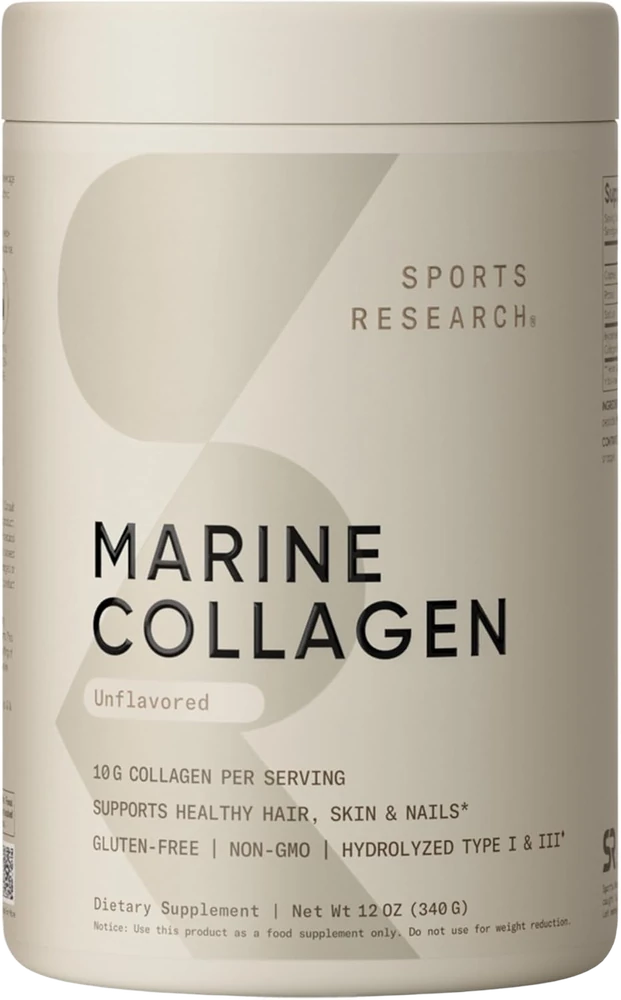 #7 of 12 · Best marine
Real retailer photo, cut out. Label unedited.
Buy it. The cleanest marine collagen — for fish-source and pescatarian buyers. Wild-caught fish-skin type I peptides, co-formulated with hyaluronic acid and vitamin C, from a transparent mid-premium brand.
$34 / tub (~30 servings)$1.13 / serving
Why It Scores 8.4 — And The Label Line Behind Each Number
Form + type matched to job
30% of scoreHydrolyzed marine type I peptides — the right form for the skin-and-connective job (Proksch 2014 tested type I/III peptides). Type I is the primary skin/bone/tendon collagen, so marine is well-matched for skin. Marked just below the bovine leaders because it's lighter on the type III bovine carries alongside type I, and like all peptides it's not an OA product.
- Active form
- Hydrolyzed marine collagen peptides (type I)
- Allergen note
- Fish product — avoid with fish/shellfish allergy
Dose accuracy
25% of score~10-11 g of marine peptides per serving — clears Clark 2008's 10 g joint dose and sits well above Proksch 2014's 2.5-5 g skin dose. In the productive 10-20 g window but at the lower end, so a buyer chasing the full 20 g would run two servings (and through the tub faster). Solid, trial-aligned dosing for skin; not maximal grams.
- Per serving
- ~10-11 g marine collagen peptides
- Trial-dose alignment
- Clears Clark 2008's 10 g joint dose; above Proksch 2014's 2.5-5 g skin dose
Third-party testing + source quality
20% of scoreWild-caught fish-skin source with transparent sourcing and Sports Research's solid mid-premium QC pedigree. Good contaminant-conscious testing for an animal-tissue concentrate. Held just below clinician-grade (Thorne, #4) but a genuinely clean, well-documented marine source — the best of the marine options here.
- Source
- Wild-caught fish skin (marine)
- Testing
- Wild-caught sourcing · Sports Research mid-premium QC
Cost per effective serving
15% of score$1.13 per serving — mid-premium. Cheaper than Vital Proteins (#2) but more expensive per effective gram than bovine value picks like NOW (#5), because wild-caught marine collagen costs more to source than bovine hide. The marine premium is the cost of the source preference; a grams-per-dollar buyer would pick bovine.
- Price
- $34 / tub = $1.13 per serving
Co-factors + real-world response
10% of scoreCo-formulated with hyaluronic acid and vitamin C — the cofactor-plus-hydration combo that makes sense for skin. Mixes cleanly hot or cold. Only real-world caveat: a faint fish note possible for the most sensitive palates (mild in this product, and it disappears in coffee or a smoothie). Strong co-factor execution for a marine peptide.
- Co-factors
- Added hyaluronic acid + vitamin C
- More Specs
- Best for
- Pescatarians + fish-source buyers; skin + connective tissue — NOT osteoarthritis (see UC-II, #6)
Marketing Claims Vs. Reality
Wild-caught marine collagen for better absorption.
The wild-caught marine source is real, and marine type I peptides do tend to run smaller in molecular weight than bovine, which can mean slightly more efficient absorption. But the edge is modest — both bovine and marine hydrolysates are already small, well-absorbed peptides. Accurate that marine is wild-caught and somewhat smaller; the 'better absorption' framing overstates a real-but-minor advantage.
Type I marine collagen supports skin, hair, and nails.
Type I is the correct skin/connective collagen and Proksch 2014 (PMID 23949208) backs the skin-elasticity effect for type I/III peptides. Skin and nails are well-supported; the hair claim is the weak link, as hair-specific collagen evidence is thin and mostly brand-funded. Honest for skin and nails, overstated for hair.
Added hyaluronic acid and vitamin C enhance skin benefits.
Both additions are sensible and real. Vitamin C is a required cofactor for collagen synthesis (genuine synergy, not filler), and hyaluronic acid is a well-established skin-hydration ingredient. Co-formulating them makes this a more complete skin product than peptides alone.
Mixes easily with a mild, neutral taste.
It does mix cleanly hot or cold, but 'neutral taste' isn't quite complete for a marine product — there's a faint fish note that the most sensitive palates can detect in plain water. It's mild in this product and disappears in coffee or a smoothie. Accurate for most users; the most fish-sensitive buyers should know the note exists.
Pescatarian-friendly, non-GMO collagen source.
Accurate — the marine (fish-skin) source is genuinely pescatarian-friendly and a real fit for buyers avoiding bovine or porcine collagen, and the non-GMO sourcing is documented. The flip side, clearly: it's a fish product and must be avoided by anyone with a fish or shellfish allergy.
What Our Test Actually Found
The reason to buy marine is dietary, not a dramatic absorption win
Marine collagen's marketing leans on 'smaller peptides, better absorption.' That's real but modest — both bovine and marine hydrolysates are already broken into small, well-absorbed peptides, and the trials behind collagen's skin and joint benefits used both. The stronger, honest reasons to choose Sports Research Marine are that it's pescatarian-friendly and avoids beef and pork. If you have no dietary reason to avoid bovine, you're paying a marine premium for a marginal absorption edge; if you do, marine is the right tool and this is the cleanest one.
Type I dominant means it's skin-matched but lighter on type III
Marine collagen is type I dominant, and type I is the primary skin, bone, and tendon collagen — so for the skin use case it's well-suited. The trade-off is that bovine peptides carry type III alongside type I, and marine is lighter on it. For skin endpoints this is a minor distinction (type I does the heavy lifting), but if broad type I + III coverage matters to you, a bovine peptide (#1, #5) supplies both. Match the type profile to what you actually care about.
The hyaluronic acid + vitamin C combo is a genuine plus for skin
Sports Research builds in two ingredients that make real sense for skin: vitamin C, the rate-limiting cofactor your body needs to assemble collagen, and hyaluronic acid, a well-established skin-hydration ingredient. That makes this a more complete skin product than a bare peptide scoop and means one product instead of three. For a skin-first marine buyer, the co-formulation is a meaningful part of the value.
Faint fish note exists — but it's mild and disappears in coffee
The one real-world caveat with any marine collagen is a faint fish note, and the most sensitive palates may detect it in plain water. In Sports Research's product it's mild, and it largely vanishes when mixed into coffee, a smoothie, or anything flavored. If you're highly fish-averse, bovine peptides (#1, #5) have no note at all; for most people, mixed into a drink, this is a non-issue.
It's a skin product — and a fish allergen, not an OA treatment
Two hard boundaries. First, like every peptide here, marine collagen is a skin-and-connective product and does not treat osteoarthritis — that needs UC-II at 40 mg (Lugo 2016 beat glucosamine + chondroitin on knee-OA), so OA buyers should choose NOW UC-II (#1). Second, marine collagen is a fish product and must be avoided with a fish or shellfish allergy. Get both right: this is a marine skin peptide for non-fish-allergic buyers, full stop.
Full analysis: all pros & cons (8), buy if / skip if
- Wild-caught marine type I peptides run smaller in molecular weight — a modest absorption edge over bovine
- Pescatarian-friendly and a fit for buyers avoiding beef or pork sources
- Co-formulated with hyaluronic acid and vitamin C for the skin use case
- Transparent, well-tested mid-premium brand with solid QC
- Mixes cleanly hot or cold; fish note is mild and disappears in flavored drinks
- Costs more per gram than bovine for the same peptide content — a marine premium
- Type I only — lighter on the type III that bovine carries alongside it
- It's a fish product (fish-allergy contraindication) and not an osteoarthritis treatment (UC-II, #6)
- You want a marine / fish-source collagen over beef or pork
- You're pescatarian or avoid bovine and porcine sources
- You want the modestly smaller marine peptides and a hyaluronic-acid + vitamin C skin formula
- You value a transparent, well-tested mid-premium brand
- You have a fish or shellfish allergy — marine collagen is a fish product, choose a bovine peptide instead
- You're source-agnostic and want maximum grams per dollar — NOW (#5) or Vital Proteins (#2) are cheaper bovine peptides
- Your real problem is osteoarthritis — buy NOW UC-II Type II Collagen (#1), a different mechanism
Wild-caught fish-skin type I peptides, co-formulated with hyaluronic acid and vitamin C, from a transparent mid-premium brand. Marine peptides run smaller (a modest absorption edge) and the source is pescatarian-friendly. The trade-offs: a premium per gram versus bovine, type I only (lighter on type III), and a faint fish note for sensitive palates. If marine is a genuine preference, buy this; if you're source-agnostic, a bovine tub gives you more grams per dollar.
Sports Research Marine Collagen earns its place for two genuine reasons: the peptides run smaller and the source suits pescatarians and anyone avoiding bovine or porcine collagen. It's wild-caught fish-skin type I collagen, co-formulated with hyaluronic acid and vitamin C — the cofactor-plus-hydration combo that makes sense for the skin use case — from a transparent mid-premium brand with solid quality control. Marine collagen has real trade-offs you should weigh. It costs more per gram than bovine for the same peptide content, it's type I dominant so it's lighter on the type III that bovine carries alongside it, and it's a fish product — which is exactly what makes it pescatarian-friendly but also rules it out for anyone with a fish allergy. If marine is a hard preference, this is the cleanest one to buy. If you're source-agnostic, a bovine peptide gives you more grams per dollar. Here's the full breakdown.
The marine pick — buy it if fish-source is a genuine preference, not by default.

Marine collagen earns its place for two real reasons: the peptides run smaller and the source suits pescatarians and anyone avoiding bovine or porcine collagen. Sports Research is the cleanest marine option here — wild-caught, transparent, and co-formulated with the hyaluronic-acid-plus-vitamin-C combo that makes sense for skin. The ~10-11 g serving clears the joint trial dose and sits comfortably in the skin window. For a buyer who specifically wants marine, this is the one to buy. The honest framing: you pay a premium per gram versus beef, you get type I without much type III, and there's a faint fish note for the most sensitive palates. If marine is a hard preference — dietary or otherwise — those trade-offs are worth it. If you're source-agnostic, Vital Proteins (#2) or NOW (#5) give you more bovine grams per dollar with no fish note. And two hard rules apply: avoid this entirely with a fish or shellfish allergy, and don't buy it for osteoarthritis — that's UC-II's job (#6). For the right marine buyer, run ~10-11 g daily (two servings for the full 20 g) for 8-12 weeks.
If This Doesn’t Fit — Try These
 02
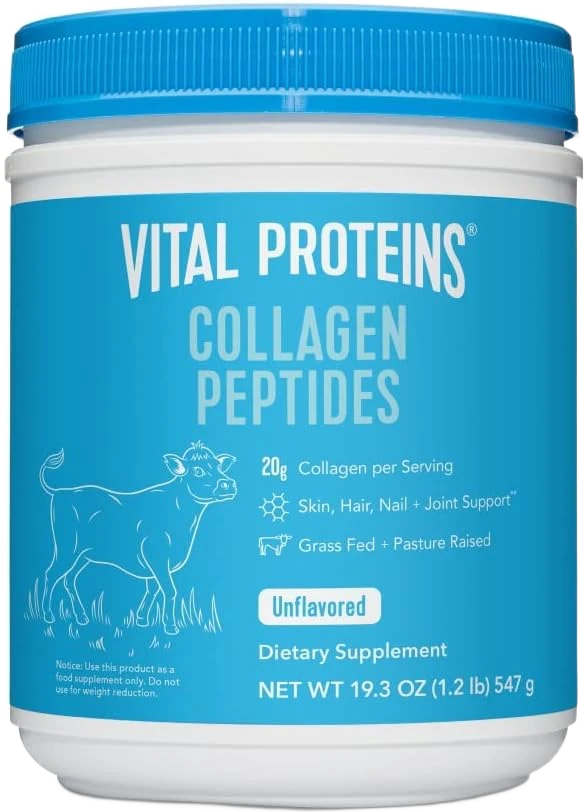
Vital Proteins Collagen Peptides
If you want one collagen tub for skin, nails, and overall connective tissue and you don't want to research the category, this is the safe default.
 05
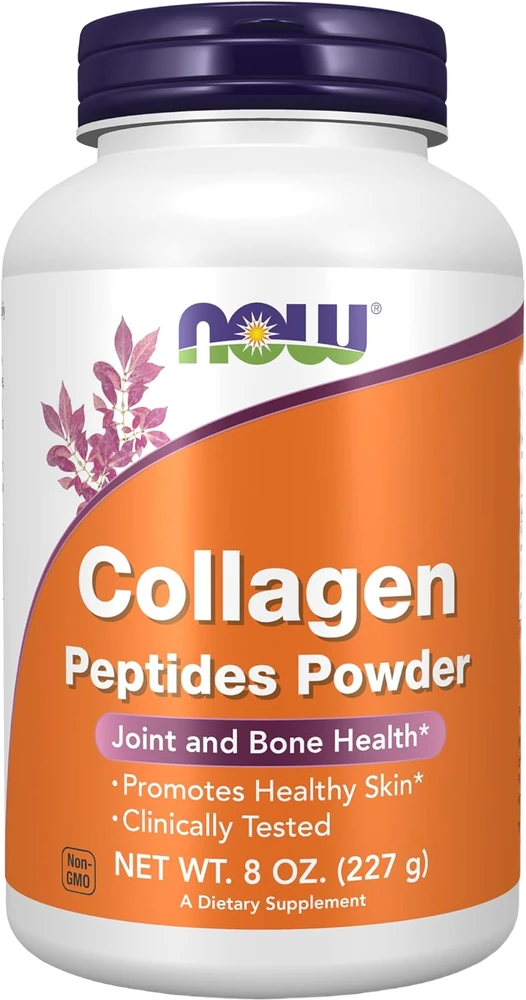
NOW Collagen Peptides
If you want to try a real collagen-peptide protocol at the lowest cost of entry, NOW is the right starting point.
 01
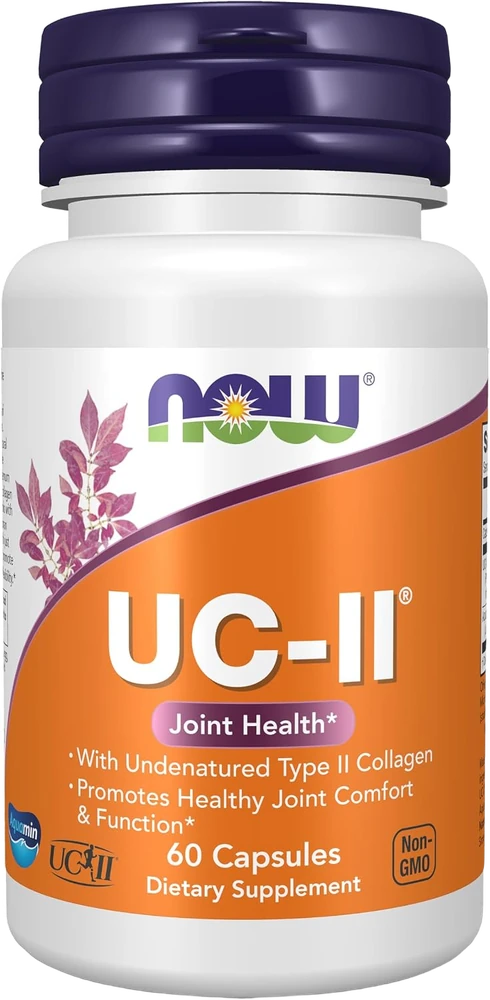
NOW UC-II Collagen
This is the single most misunderstood product in the category, and the most important to get right.
Quick Answers
Is marine collagen actually better-absorbed than bovine?
Marginally, and it's a smaller deal than the marketing suggests. Marine type I peptides tend to run smaller in molecular weight than bovine peptides, which can mean a slightly faster, more efficient absorption. But both bovine and marine hydrolysates are already broken into small di- and tri-peptides that absorb well, and the skin and joint trials (Proksch 2014, Clark 2008) used both types of source to good effect. The honest take: marine's absorption edge is real but modest. The stronger reasons to choose marine are dietary (pescatarian-friendly, avoids beef/pork) rather than a dramatic bioavailability win.
Will it taste fishy?
Mildly, at worst — and it's faint in this product. Marine collagen carries a faint fish note that the most sensitive palates may detect, especially in plain water. Sports Research's marine peptides are among the milder ones, and the note largely disappears when mixed into coffee, a smoothie, or anything flavored. If you're highly sensitive to fishy aftertaste, bovine peptides (Vital Proteins #2, NOW #5) have none at all. For most people, mixed into a drink, the fish note is a non-issue here.
Why does marine cost more than bovine for the same grams?
Wild-caught fish-skin collagen is simply more expensive to source and process than bovine hide, so you pay a premium per gram for the same peptide content. At roughly $1.13 per serving this is mid-premium — cheaper than Vital Proteins (#2) but pricier per effective gram than bovine value picks like NOW (#5). You're paying for the marine source and the wild-caught story, plus the co-formulated hyaluronic acid and vitamin C. If you're source-agnostic and chasing grams-per-dollar, bovine wins; if marine is a genuine preference, the premium is the cost of that preference.
Is this missing type III that bovine has?
Largely, yes — marine collagen is type I dominant and lighter on the type III that bovine carries alongside it. Type I is the primary skin, bone, and tendon collagen, so for the skin use case marine is well-matched; type III often accompanies type I in connective tissue and skin, and bovine peptides supply both. In practice this is a minor distinction for skin endpoints, where type I does the heavy lifting. If broad type I + III coverage matters to you specifically, a bovine peptide (#1, #5) gives you both; for marine's other advantages you accept a type-I-skewed profile.
Can I take this if I have a fish allergy?
No — marine collagen is a fish product and must be avoided with a fish or shellfish allergy. This is the one hard contraindication for marine collagen specifically. If you have a fish allergy and want collagen, choose a bovine peptide (Vital Proteins #2, NOW #5, Garden of Life #3) instead — they carry their own allergen considerations but are not fish-derived. The marine source is exactly what makes this product pescatarian-friendly, but it's also what rules it out for fish-allergic buyers.
Does it help osteoarthritis?
No — like all the peptide products here, Sports Research Marine is a skin-and-connective-tissue collagen, not an osteoarthritis treatment. OA responds to undenatured type II collagen (UC-II) at 40 mg/day via an immune-tolerance mechanism; Lugo 2016 (PMID 26822714) showed that dose beat glucosamine + chondroitin on knee-OA WOMAC over 180 days. Marine type I peptides can support general joint comfort (the Clark 2008 lever) but won't replicate the OA-specific effect. For diagnosed osteoarthritis, buy NOW UC-II Type II Collagen (#1).
Sources & Further Reading
3 peer-reviewed sources, each linked to PubMed
- [1] Proksch 2014 PMID 23949208 — Oral supplementation of specific collagen peptides has beneficial effects on human skin physiology: a double-blind, placebo-controlled study. 69 women, 8 weeks: 2.5-5 g/day collagen peptides produced objective skin-elasticity improvements versus placebo, persisting after dosing. The cornerstone skin trial for type I/III peptides — marine type I peptides are the skin-matched form, and Sports Research's added vitamin C supports the synthesis pathway.
- [2] Clark 2008 PMID 18416885 — 24-Week study on the use of collagen hydrolysate as a dietary supplement in athletes with activity-related joint pain. 147 athletes, 24 weeks: 10 g/day collagen hydrolysate significantly reduced activity-related joint pain versus placebo. Sports Research Marine's ~10-11 g serving clears this dose — supporting the general joint-comfort claim, distinct from osteoarthritis (UC-II).
- [3] Lugo 2016 PMID 26822714 — Efficacy and tolerability of an undenatured type II collagen supplement in modulating knee osteoarthritis symptoms: a multicenter randomized, double-blind, placebo-controlled study. 191 knee-OA subjects, 180 days: 40 mg/day UC-II beat both placebo AND glucosamine+chondroitin on WOMAC. Cited as the contrast — marine type I peptides are a skin product, not an osteoarthritis treatment; OA buyers should choose UC-II (#6).
Affiliate disclosure: every Amazon link uses our Associates tag (superachieverclub-20). We earn a small commission at no cost to you; it funds independent reviews. We never accept payment to change a ranking.