
Sports Research Biotin 10,000 mcg with Organic Coconut Oil, 120 Veggie Softgels Review
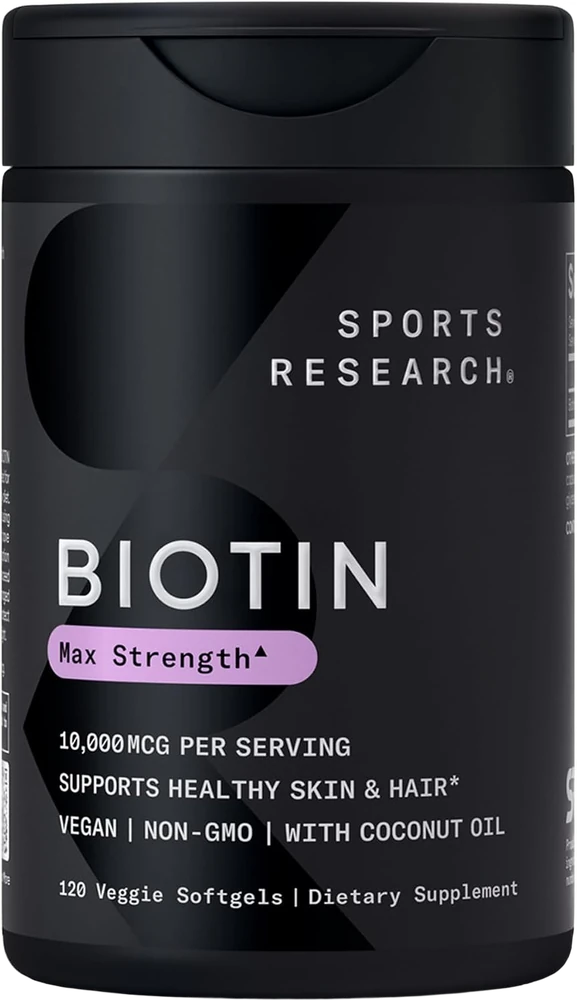 #8 of 9 · Skip: Absorption Gimmick✓ Label verified · Supplement Facts read Sep 7, 2026
Real retailer photo, cut out. Label unedited.
Skip it. A coconut-oil 'absorption' story on a 10 mg megadose -- marketing, not chemistry. Vegan Plantgel softgel, non-GMO, gluten- and soy-free, ~$0.14/serving.
~$17~$0.14/serving
Why It Scores 4.9 — And The Label Line Behind Each Number
Third-Party Testing & Purity
30% of scorecGMP-made but with no stated USP or NSF seal. Assurance rests on the manufacturing standard alone -- no independent verification of this SKU.
- Testing
- cGMP (no USP/NSF seal stated)
Dose Sensibility
25% of score10,000 mcg is a full megadose that carries the strongest lab-interference warning (Li 2017, PMID 28973622; Moerman 2022, PMID 32567529), with no dietary justification.
- Dose
- 10,000 mcg per softgel
Formulation Integrity
20% of scoreThe vegan Plantgel softgel is well-made and allergen-friendly, but the coconut-oil 'absorption' carrier adds no functional benefit for a water-soluble vitamin -- a formulation built around a non-need.
- Form
- Veggie softgel with organic coconut oil carrier
Value per Serving
15% of score~$0.14/serving is reasonable for a softgel, though you're partly paying for the coconut-oil delivery that does nothing.
- Count
- 120 veggie softgels / 120-day supply
- Serving size
- 1 veggie softgel daily
- Cost per serving
- ~$0.14
- Price
- ~$17
Suitability & Transparency
10% of scoreVegan and allergen-friendly suitability is a plus, but marketing an absorption benefit for an already-absorbed vitamin overstates the product and lowers transparency.
- More Specs
- Free-from
- Non-GMO, gluten & soy-free, vegan
Label verified. Every figure read from the Supplement Facts photo, Sep 7, 2026.
Marketing Claims Vs. Reality
Organic coconut oil improves biotin absorption
Biotin is water-soluble and already well-absorbed; there is no evidence that a coconut-oil carrier enhances its uptake or hair outcomes. The absorption benefit is unsupported.
Vegan Plantgel softgel; non-GMO, gluten and soy-free
The Plantgel softgel and label support the vegan, non-GMO, gluten- and soy-free attributes.
Made under cGMP
cGMP is a manufacturing standard, not an independent product certification; no USP or NSF seal is stated for this SKU.
10,000 mcg promotes hair growth
Biotin helps hair only in deficiency (Patel 2017, PMID 28879195); the 10 mg dose adds no benefit in healthy people and maximizes lab-interference risk.
What Our Test Actually Found
The coconut oil is marketing, not chemistry
Fat-soluble vitamins benefit from an oil carrier; biotin is water-soluble and absorbs fine on its own. The coconut-oil suspension is a delivery story that doesn't change how much biotin reaches your system.
A megadose with the strongest warning
At 10,000 mcg it carries the biggest lab-interference footprint in the group, distorting troponin and thyroid assays (Li 2017; Moerman 2022) -- for a hair benefit the evidence can't detect in healthy people.
The softgel is the one real plus
The vegan Plantgel format is nicely made and allergen-friendly. If a single daily softgel is genuinely what you want, that's the only reason to consider it over cleaner picks.
Better options at the same price
At ~$0.14/serving you can buy a cleaner, better-tested, more sensibly dosed product. The gimmick-plus-megadose combination is why it lands in skip territory.
Full analysis: all pros & cons (7), buy if / skip if
- Vegan Plantgel softgel; non-GMO, gluten and soy-free
- Reasonable ~$0.14/serving
- Single daily softgel
- Allergen-friendly format
- Coconut-oil 'absorption' claim is a gimmick -- biotin is water-soluble and already well-absorbed
- 10,000 mcg megadose carries the strongest lab-interference warning
- No independent USP/NSF seal
- The single-softgel format is genuinely the thing you want
- You specifically prefer a vegan Plantgel softgel over a capsule
- You want an allergen-friendly, non-GMO, soy-free format
- You recognize the coconut-oil absorption claim as marketing
- You want a sensible dose or independent third-party testing
Vegan Plantgel softgel, non-GMO, gluten- and soy-free, ~$0.14/serving. But biotin is water-soluble and absorbs fine without an oil carrier, the 10 mg dose carries the strongest lab-interference warning, and there's no independent seal. Skip unless the softgel format is all you care about.
Sports Research suspends 10,000 mcg of biotin in organic coconut oil and markets it as improving absorption. That's the problem: biotin is water-soluble and already well-absorbed, so the coconut-oil carrier is a delivery story, not chemistry. The vegan Plantgel softgel is genuinely nice -- non-GMO, gluten- and soy-free -- but stack the gimmick on a 10 mg megadose with no independent seal and there's little reason to choose it.
Skip unless the softgel is all you care about

The coconut-oil delivery is marketing, not chemistry -- biotin absorbs fine on its own. Stack that on a 10 mg megadose with no independent testing and there's little reason to choose it over cleaner, better-tested options. The vegan softgel format is its one genuine merit. Skip unless that format is the specific thing you want.
If This Doesn’t Fit — Try These
 03
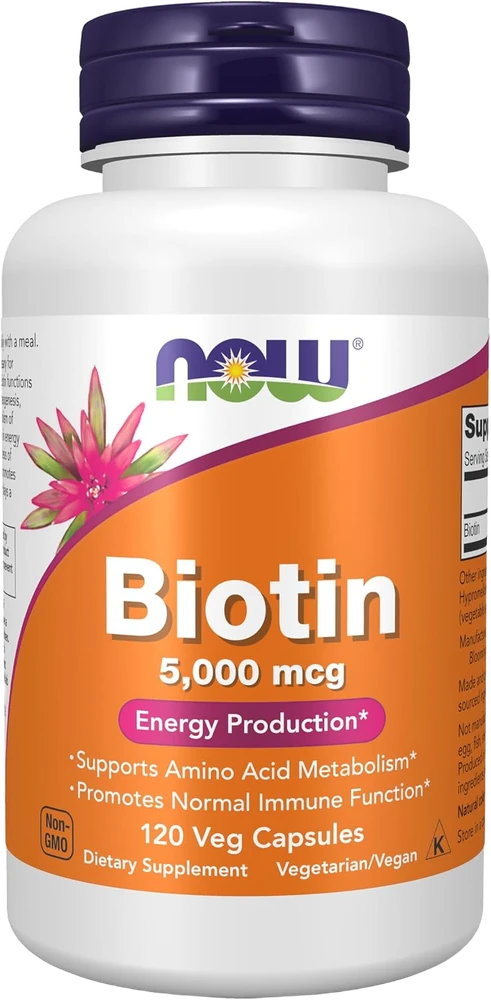
03NOW Biotin 5,000 mcg
Our take: The best pick for someone who wants a clean, allergen-friendly capsule from a brand that actually runs its own testing labs, without paying boutique prices.
 01
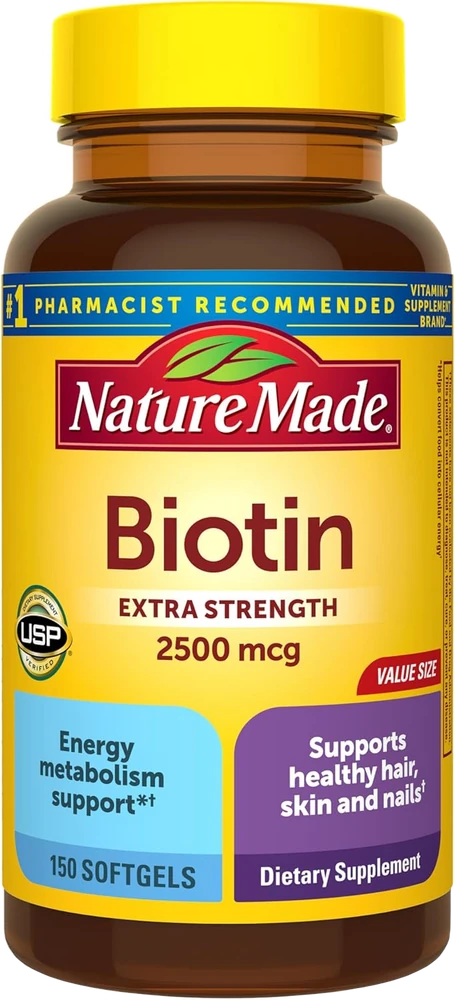
01Nature Made Biotin 2,500 mcg
Our take: If you're going to take biotin at all, this is the one to buy.
 07
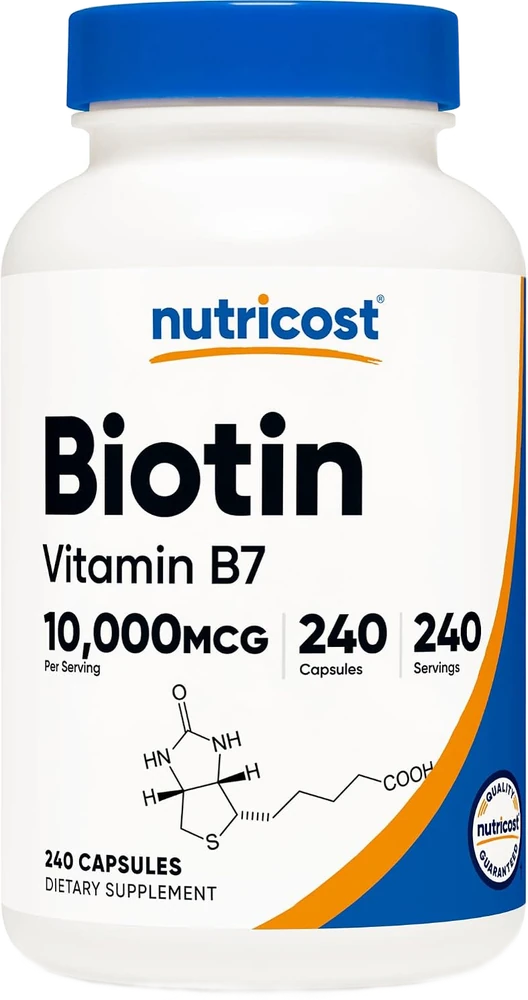
07Nutricost Biotin 10,000 mcg
Our take: If you've decided to buy biotin and want the most capsules for the least money, this is the value play -- hence the badge.
Quick Answers
Does coconut oil help biotin absorb better?
No. Coconut oil aids fat-soluble vitamins, but biotin is water-soluble and already well-absorbed. The carrier is a marketing feature, not a functional benefit.
Is the softgel format worth it?
Only if you specifically prefer a single vegan softgel to a capsule. On its own that's not enough to outweigh the megadose and lack of independent testing.
Is 10,000 mcg risky?
It's generally tolerated but carries the strongest lab-interference risk in the group. Stop several days before bloodwork and tell your doctor.
Why is it a 'skip'?
Because it charges for a delivery gimmick that changes nothing, pairs it with a megadose, and offers no independent seal -- cleaner, better-tested options cost the same or less.
Sources & Further Reading
2 peer-reviewed sources, each linked to PubMed
- [1] Patel DP, Swink SM, Castelo-Soccio L. A Review of the Use of Biotin for Hair Loss. Skin Appendage Disord. 2017;3(3):166-169. PMID 28879195 — A Review of the Use of Biotin for Hair Loss. Biotin improves hair only in genuine deficiency; neither a higher dose nor an oil carrier creates a hair benefit in non-deficient people.
- [2] Moerman KL, et al. Biotin interference in immunoassays. Clin Chim Acta. 2022. PMID 32567529 — Biotin interference in clinical immunoassays. Supplemental biotin interferes with biotin-streptavidin-based immunoassays; high doses such as 10 mg raise the risk of misleading results.
Affiliate disclosure: every Amazon link uses our Associates tag (superachieverclub-20). We earn a small commission at no cost to you; it funds independent reviews. We never accept payment to change a ranking.